- English
- French
- German
- Portuguese
- Spanish
- Russian
- Japanese
- Korean
- Arabic
- Irish
- Greek
- Turkish
- Italian
- Danish
- Romanian
- Indonesian
- Czech
- Afrikaans
- Swedish
- Polish
- Basque
- Catalan
- Esperanto
- Hindi
- Lao
- Albanian
- Amharic
- Armenian
- Azerbaijani
- Belarusian
- Bengali
- Bosnian
- Bulgarian
- Cebuano
- Chichewa
- Corsican
- Croatian
- Dutch
- Estonian
- Filipino
- Finnish
- Frisian
- Galician
- Georgian
- Gujarati
- Haitian
- Hausa
- Hawaiian
- Hebrew
- Hmong
- Hungarian
- Icelandic
- Igbo
- Javanese
- Kannada
- Kazakh
- Khmer
- Kurdish
- Kyrgyz
- Latin
- Latvian
- Lithuanian
- Luxembou..
- Macedonian
- Malagasy
- Malay
- Malayalam
- Maltese
- Maori
- Marathi
- Mongolian
- Burmese
- Nepali
- Norwegian
- Pashto
- Persian
- Punjabi
- Serbian
- Sesotho
- Sinhala
- Slovak
- Slovenian
- Somali
- Samoan
- Scots Gaelic
- Shona
- Sindhi
- Sundanese
- Swahili
- Tajik
- Tamil
- Telugu
- Thai
- Ukrainian
- Urdu
- Uzbek
- Vietnamese
- Welsh
- Xhosa
- Yiddish
- Yoruba
- Zulu
What floor deck machine does a small fabricator need first?
If you run a small fabrication shop and you're eyeing the composite deck market, the question isn't whether you need a floor deck machine — it's which one makes sense to buy first. A purpose-built composite deck roll forming machine shapes galvanized or Galvalume coil into structural steel floor profiles, including 0.6" form deck, 1.5" A/B rib, and 3.0" deep composite deck. Getting that first machine right determines how fast you break even, how cleanly you hit SDI tolerances, and how confidently you bid your next job.
Understanding Floor Deck Machines: A Quick Overview
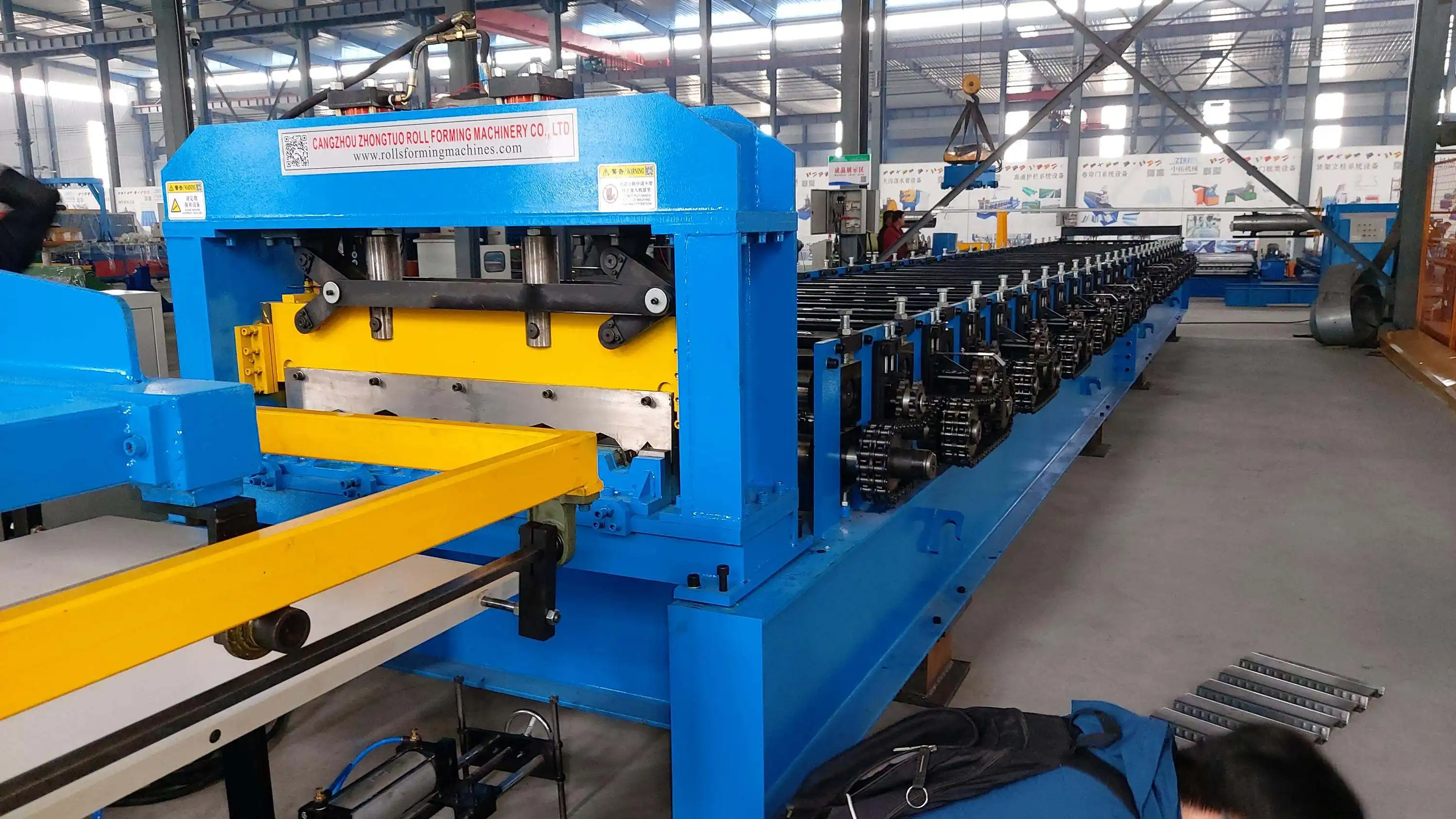
A sheet metal roller is not the same thing as a floor deck machine. This is a precise cold roll forming system that was made to meet the technical needs of structural floor patterns. You can spend your money wisely if you know what makes a good machine different from a simple sheet line.
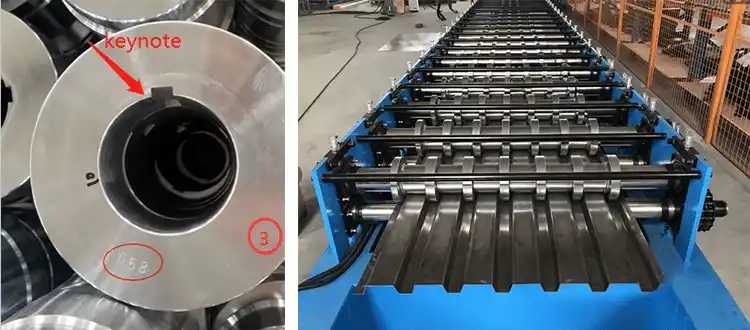
The forming stand is the most important part of any floor deck machine. On a well-designed machine, the forming roller shafts have a width of 95 mm. The embossing shaft, on the other hand, steps up to 120 mm to handle the extra force needed to press shear-bond holes into the steel web. The material of the rollers is very important. No. 45 steel that has been treated with chrome lasts much longer than steel that has not been treated. The cutter, which is probably the part that isn't described properly the most, should be made of CR12 mold steel that has been quench-treated to keep the cuts clean and free of deformation at a gauge of 1.0 to 1.2 mm.
The system of control makes it all work. A PLC and frequency converter work together to give operators accurate cut-to-length every time and smooth speed changes between 10 and 20 m/min. The torque is spread out evenly across the forming passes thanks to three 11-kW main motors instead of one large unit. This lowers shaft deflection and profile camber on long deck runs.
Identifying the Needs of a Small Fabricator: Which Deck Roll Former Fits Best?
Make a map of your true business situation before you compare models. The throughput needs of a small fabricator that works on warehouse mezzanines and mid-rise podium slabs are very different from those of a full-deck manufacturer that works 24-hour shifts.
Start with how thick the coil is. Most composite deck uses in the US market can be met with galvanized or galvalume coil in the 0.8–1.2 mm range with a yield strength of 235 MPa. A floor deck machine made for this range has hardened cuts and a strong hydraulic cutting unit that draws 5.5 kW. It can handle normal structural deck without having to buy a heavy-gauge line made for 1.5–3.0 mm plate.
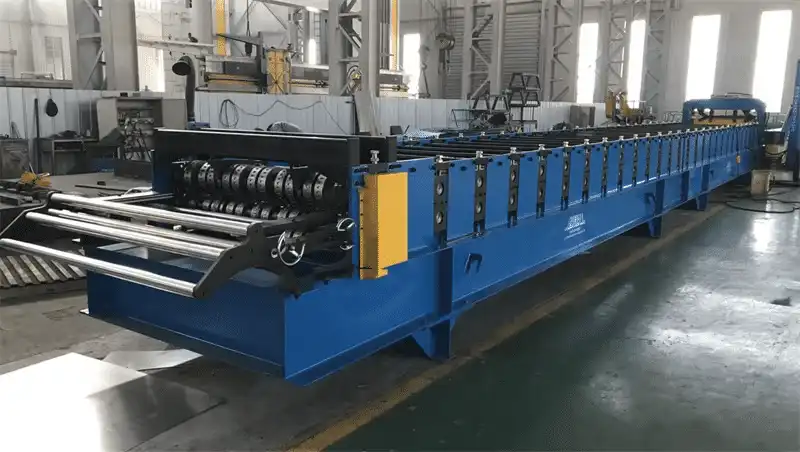
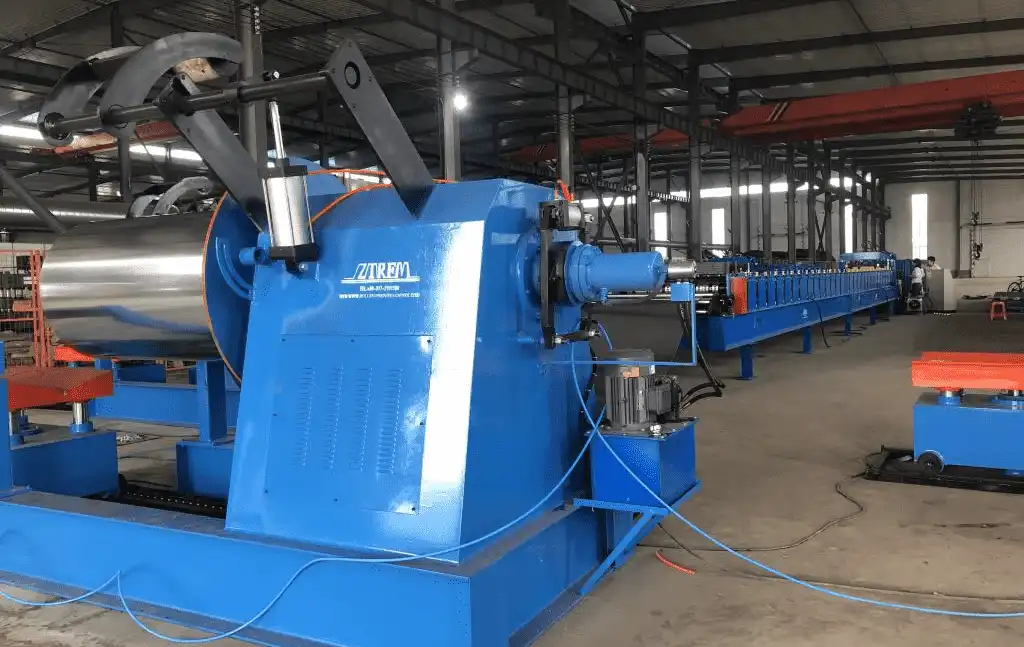
The size of the workshop is also very important. There is a decoiler, a deck floor machine, a straight stamping station, and a runout table with a stacker on a normal composite deck line. Compare that footprint to the space you have on the floor before you decide on a configuration.
Volume segmentation is straightforward:
- Low to medium volume (under 500 linear meters/shift): Most small producers who want to get into the floor deck machine market will need a semi-automatic line with manual coil loading and PLC-controlled cutting. It keeps capital costs low while giving structural engineers the profile accuracy they need.
- Medium to higher throughput: A powered decoiler and a customizable stacker on an automatic line with medium to high flow get rid of labor bottlenecks without needing a full production crew.
Matching machine tier to your current order book — not your optimistic forecast — protects cash flow during the ramp-up phase.
Comparing Floor Deck Machine Options: Features, Costs, and Benefits
A lot of the time, procurement managers compare automated roll forming lines to decking methods that are done by hand. The data always points to automation for structural profiles as the best option. When you bend composite deck by hand, the shapes aren't always the same, the depth of the embossment changes, and you can't get the ±2 mm effective-width accuracy that SDI standards need for side-lap integrity.
Here are the main things that set entry-level composite deck equipment apart from mid-range equipment:
- Forming speed: 10–20 m/min is the best speed for 0.8–1.2 mm composite deck. When orders are bigger than 3,000 square feet of deck, machines with speeds below 10 m/min slow down production.
- Embossing shaft diameter: A 120 mm embossing shaft doesn't bend when under the pressure needed to make an indentation that is more than 3 mm deep, which is the minimum depth required for a good shear bond in a composite piece according to AWS D1.3 guidelines.
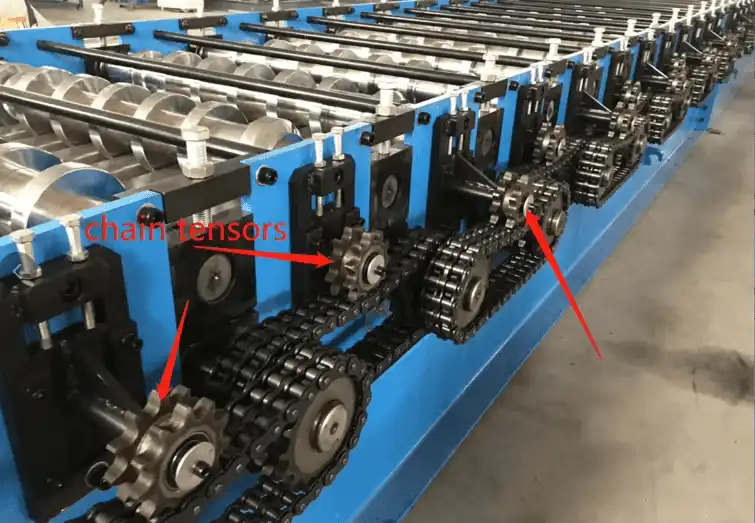
- Drive configuration: Three different 11 kW motors spread the load more widely than a single 33 kW motor. This means that the gearbox doesn't need to be serviced as often and doesn't get as hot during long production runs.
- Cutter specification: CR12 quench-treated cutting dies keep the sheet ends' dimensions accurate, which is very important for welding shear studs to deck flanges on-site.
These benefits directly fix the problems with quality and speed that small producers have when they try to use more automated methods. A floor deck machine that meets these requirements pays for itself faster than one that doesn't meet them and needs to be fixed or replaced with tools all the time.
Buying Guide: How to Choose and Procure the Right Floor Deck Machine
It takes both technical knowledge and knowledge of how to buy things to choose the right composite deck forming line. Every judgment should be based on three things.
Supplier Track Record and After-Sales Depth
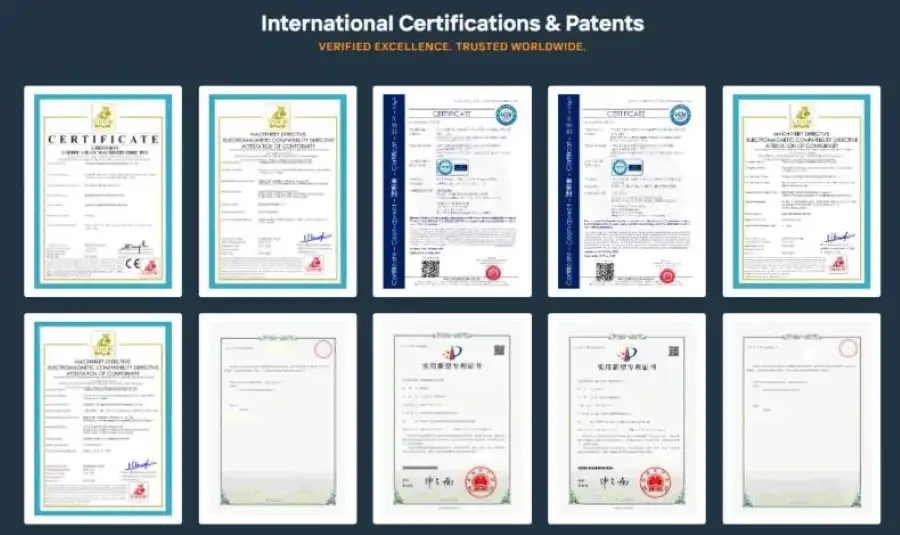
A floor decking machine seller with installations that can be checked in more than 150 countries and references from heavy-construction customers shows the operating reliability that small fabricators need from an investment from a single source. certifications like ISO 9001, CE, and CAS are must-haves, not extras that can be chosen.
The organization of after-sales help should also be carefully looked at. For example, Siemens-integrated cloud IoT and AI remote diagnostics let a supplier's engineering team find and fix emerging flaws or drive problems from afar, cutting down on downtime and the need for an on-site service call. That ability is really helpful for a small fabricator that doesn't have a maintenance engineer on staff.
Configuration Flexibility and OEM Tooling
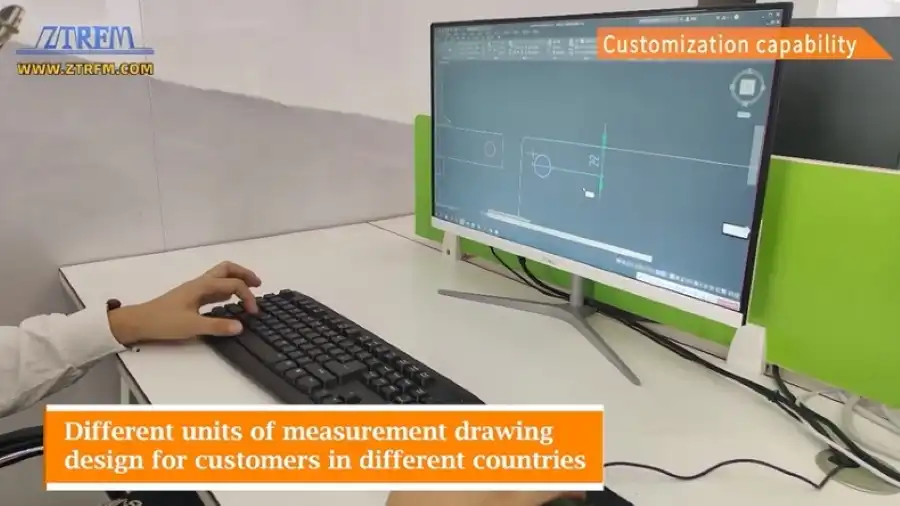
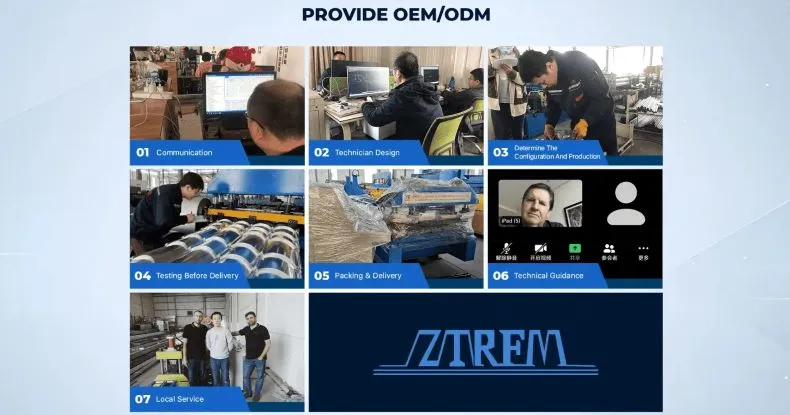
The US market for composite decks uses certain SDI-compliant profiles, such as a 0.6" form deck, a 1.5" Type A and B rib, and a 3.0" deep deck with dovetail options. If a provider offers profile-to-order OEM equipment, such as custom embossment rollers and galvanized Z275-Z600 coil compatibility, a small maker can add more profiles to their stock as demand grows without having to buy a whole new line.
Total cost of ownership is also affected by how the loan is structured. Think about whether renting something with a construction-cycle contract is a better deal financially than buying it outright, especially during the ramp-up phase.
Essential Operational and Maintenance Tips for Small Fabricators
Just putting the floor deck machine to work is only half the job. To keep the same output over thousands of linear feet, you need to start doing regular maintenance work right away.
Chrome-coated forming wheels need to be checked for micro-cracks on a regular basis, especially when they are going close to the 1.2 mm upper gage limit. When it comes to forming shaft bearings, lubrication plans should be based on the manufacturer's interval suggestions instead of spontaneous maintenance alerts. Every 50,000 cuts, CR12 cutters should be checked for edge wear and replaced before they start deforming sheet ends, which makes it hard to line up the deck when it's being installed on-site.
A resource that isn't used enough is the PLC diagnostic log. If you look over fault codes and speed variance data once a week, you can find building drift before it becomes a problem with profile tolerance. Structured onboarding training, ideally given directly by the equipment maker during startup, is very helpful for operators who are new to composite deck lines.
Conclusion
If a small maker wants to get into the composite deck business, they need a floor deck machine that can handle the amount of work they already do and still have room to grow. A roll former for a composite deck that can handle 0.8–1.2 mm zinc coil, a 120 mm embossing shaft, PLC-controlled cut-to-length, and 3x11 kW of drive power can make all SDI-standard floor shapes without having to over-specify on the first day. Trustworthiness of the supplier, adaptability of OEM tools, and the ability to do repairs remotely are all important factors in the decision process. If you get those right, the machine will pay for itself in its first construction cycle.
FAQ
1. What profile range should a first composite deck machine cover?
It is most important for US commercial and industrial construction that the floor deck machine can form 0.6" form deck through 1.5" A/B rib profiles. When your order book includes high-rise or long-span warehouse projects, adding a 3.0" deep deck becomes useful.
2. Is a semi-automatic line sufficient for a small fabricator starting out?
Yes. A semi-automatic composite deck line with PLC cut-to-length control and a making speed of 10–20 m/min can meet the requirements for structural correctness without the high cost of a fully automated production line. The line can be upgraded as the demand for throughput rises.
3. What material specs should the machine handle?
Check to see if it works with galvanized or Galvalume coil that is 0.8 to 1.2 mm thick and has a yield strength of 235 MPa. This range is good for normal structural deck uses in the US market, and it doesn't need heavy-gauge drive parts.
4. How critical is embossment depth for composite deck?
The shear bond strength between the steel deck and concrete is directly related to the depth of the depressions. Most of the time, the industry aims for a minimum depth of indentation to meet the needs of composite action. A 120 mm embossing stick keeps the pressure steady along the whole length of the sheet so that the desired depth can be reached.
Get Your First Composite Deck Line Right — Talk to ZTRFM
Fabricators of all sizes can get roll-forming options for composite decks from ZTRFM. Our floor deck machines are made in Botou, Cangzhou, which is known as the center of roll-forming machinery in China. They come with Siemens drive control, OEM profile tools, and ISO 9001/CE/CAS certification, so you can get everything you need in one place. We make sure that the specs fit your workshop and your order book, whether you need a single configured line or a smart production system that is ready to go. To get a quote from a reliable floor deck machine maker, email us at zhongtuorollforming@gmail.com.
References
1. Steel Deck Institute. SDI Manual of Construction with Steel Deck. Steel Deck Institute, 2017.
2. American Welding Society. AWS D1.3/D1.3M: Structural Welding Code – Sheet Steel. AWS, 2018.
3. American Institute of Steel Construction. Steel Construction Manual, 16th Edition. AISC, 2023.
4. Hancock, G.J., Murray, T.M., & Ellifritt, D.S. Cold-Formed Steel Structures to the AISI Specification. Marcel Dekker, 2001.
5. Yu, Wei-Wen, & LaBoube, Roger A. Cold-Formed Steel Design, 4th Edition. Wiley, 2010.
6. Metal Construction Association. Specifier's Guide to Metal Roofing and Wall Systems. MCA, 2020.