- English
- French
- German
- Portuguese
- Spanish
- Russian
- Japanese
- Korean
- Arabic
- Irish
- Greek
- Turkish
- Italian
- Danish
- Romanian
- Indonesian
- Czech
- Afrikaans
- Swedish
- Polish
- Basque
- Catalan
- Esperanto
- Hindi
- Lao
- Albanian
- Amharic
- Armenian
- Azerbaijani
- Belarusian
- Bengali
- Bosnian
- Bulgarian
- Cebuano
- Chichewa
- Corsican
- Croatian
- Dutch
- Estonian
- Filipino
- Finnish
- Frisian
- Galician
- Georgian
- Gujarati
- Haitian
- Hausa
- Hawaiian
- Hebrew
- Hmong
- Hungarian
- Icelandic
- Igbo
- Javanese
- Kannada
- Kazakh
- Khmer
- Kurdish
- Kyrgyz
- Latin
- Latvian
- Lithuanian
- Luxembou..
- Macedonian
- Malagasy
- Malay
- Malayalam
- Maltese
- Maori
- Marathi
- Mongolian
- Burmese
- Nepali
- Norwegian
- Pashto
- Persian
- Punjabi
- Serbian
- Sesotho
- Sinhala
- Slovak
- Slovenian
- Somali
- Samoan
- Scots Gaelic
- Shona
- Sindhi
- Sundanese
- Swahili
- Tajik
- Tamil
- Telugu
- Thai
- Ukrainian
- Urdu
- Uzbek
- Vietnamese
- Welsh
- Xhosa
- Yiddish
- Yoruba
- Zulu
Why pre-punched holes matter on a furring channel roll forming machine
Pre-punched holes are one of the most operationally significant features on a furring channel roll forming machine. When holes are punched inline during the forming process, fabricators eliminate the need for secondary drilling, reduce labor input, and deliver installation-ready sections straight off the line. For steel-structure fabricators, prefab building manufacturers, and purlin service centres, this single capability directly impacts throughput, job-site productivity, and overall product competitiveness in a market where speed and precision are non-negotiable.
Understanding Pre-Punched Holes on Furring Channels
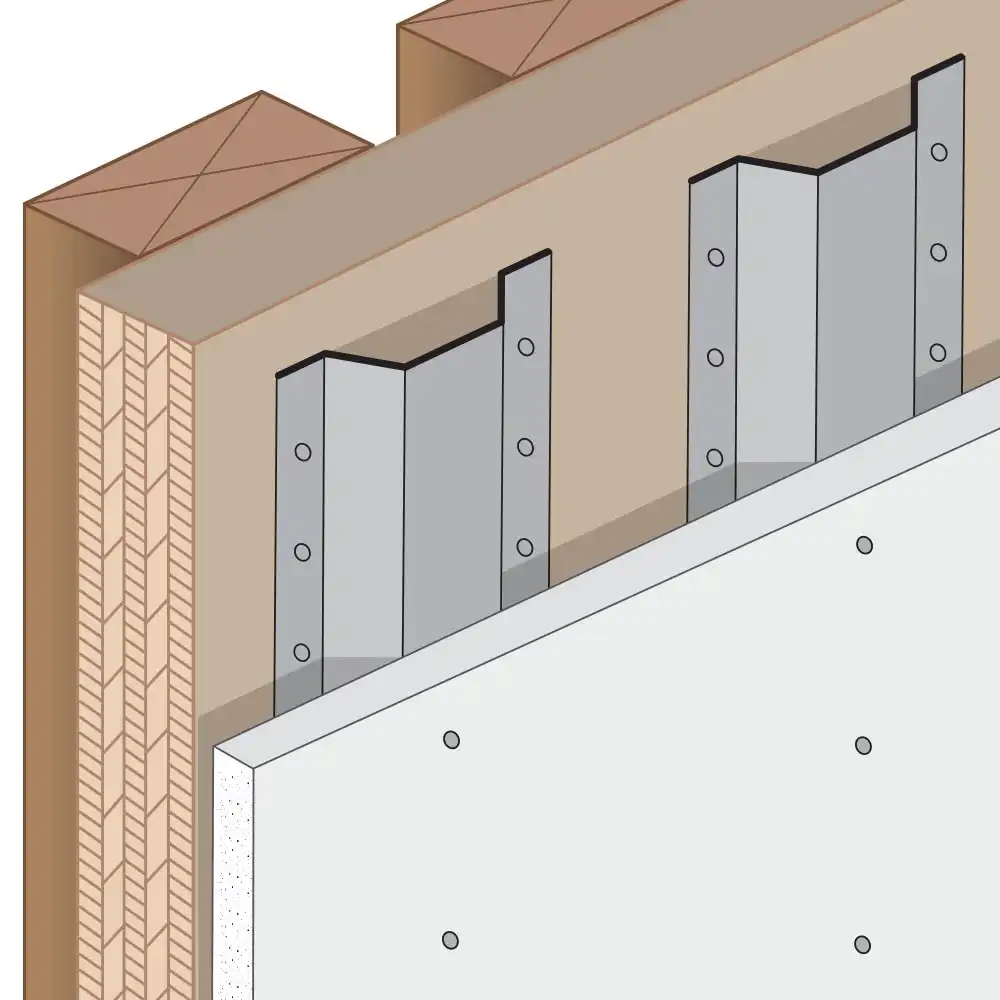
Precision holes are punched right into the web or lip of a channel piece as it rolls through the furring channel roll forming machine. These holes are called pre-punched holes. Instead of making holes as an extra step, current machines have a punching station built right in. This way, every part that is cut to length already has holes that are consistent and meet code.
What Inline Punching Actually Looks Like
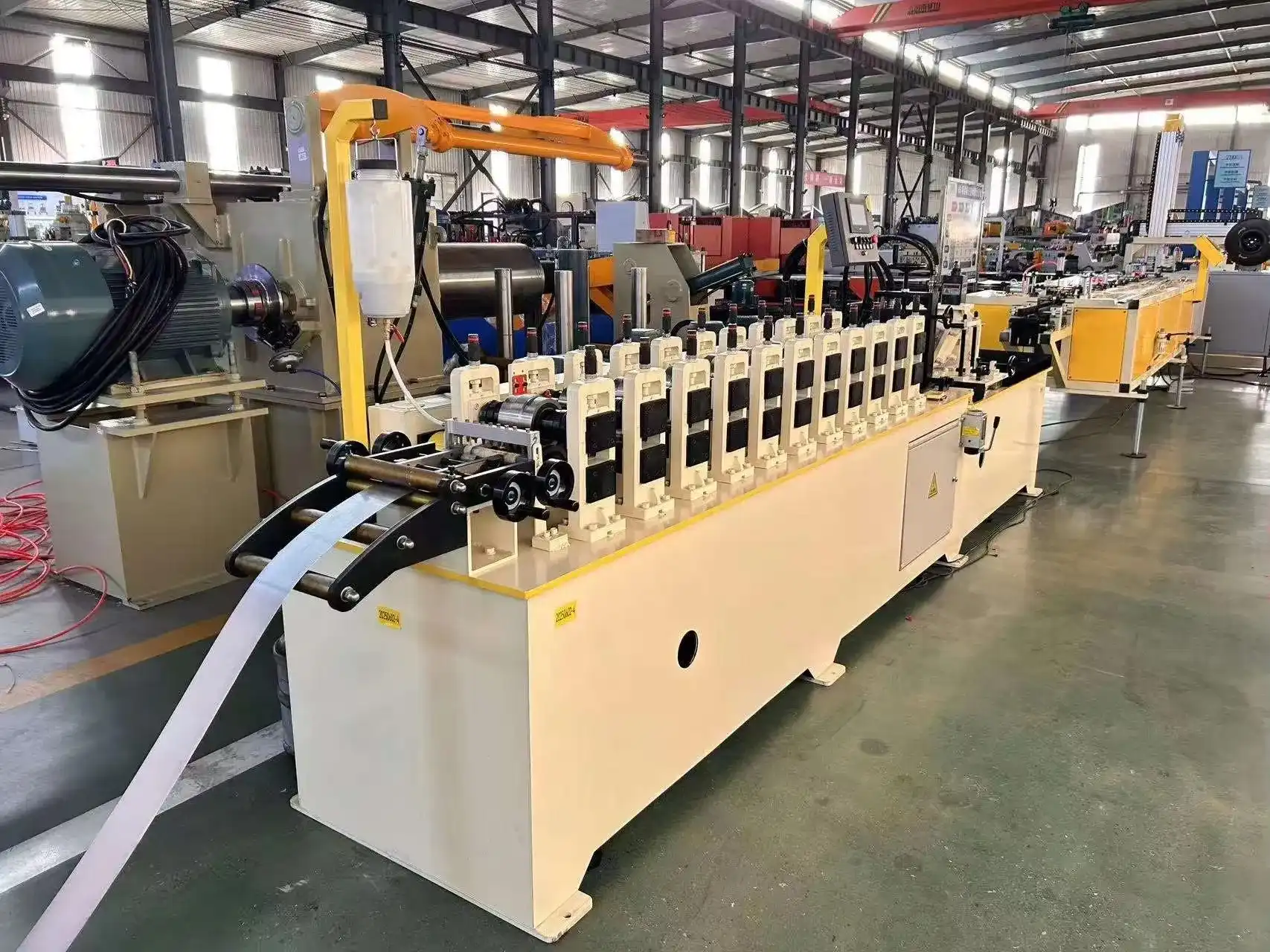
As the steel coil moves forward, a servo-driven or hydraulic punch head turns on at set times. The computer controls the automatic operation of the PLC processor, which syncs the punch stroke with the line speed, which on a well-built furring channel roll forming machine is between 15 and 22 m/min. The touch screen lets you set the hole size, diameter, and pattern, so it only takes minutes to switch between bolt-hole setups instead of a shift change.
Material and Geometry Considerations
To build things in the U.S., most furring channel roll forming machines are made from galvanized steel strip that is 1.0 mm to 3.5 mm thick. Profile heights are usually between 40 mm and 100 mm, and the web width can be changed to fit the needs of the job. GCr15 bearing steel, a chromium-alloy type known for being hard and resistant to wear, is used for the shafts of high-quality furring channel roll forming machines. This makes sure that punched dies stay accurate even when they are used to make a lot of parts.
Technical and Operational Benefits of Pre-Punched Holes
There are many more business reasons for inline punching besides just being convenient. Every hour saved on the job site is worth money, and pre-punched sections cut down on installation time in ways that secondary-drilled channels just can't.
This is what straight punching does for a furring channel roll forming machine that makes it useful:
- Elimination of secondary operations: Without inline punching, a made channel has to go to a different drilling station, which takes up space on the floor, machine time, and labor hours. Inline punching combines these steps into one continuous pass, cutting work-in-progress handling significantly.
- Dimensional repeatability: A servo-controlled punch tool places each hole within 0.5 mm of where it was programmed to be. That tolerance is rarely reached with manual or off-line drilling at volume, and the installation crew has to do expensive work over and over again because of the inconsistency.
- Galvanization integrity: Coils that have already been painted and galvanized can have their coatings damaged by rough handling further down the line. When you punch in line with polished, chrome-plated tools and synchronized roll speeds, you keep the zinc layer that gives the metal 25 years of corrosion resistance.
- Building-code compliance: AISI S100 rules for U.S. cold-formed steel frame say that fastener hole designs must be the same. Instead of letting an operator at a secondary station make decisions, inline punching makes sure that every piece is compliant.
Comparison: Roll Forming With vs Without Pre-Punched Holes
When you put the two ways of making things next to each other, you can see why inline punching has become the standard for serious buyers.
Hole-making is done by a stand-alone drill press or punch press for lines that can't punch. This setup adds a step for handling, changes where pieces are placed, and causes a slowdown when the secondary station can't keep up with the furring channel roll forming machine. When production floors are busy, that gap adds up to real daily losses.
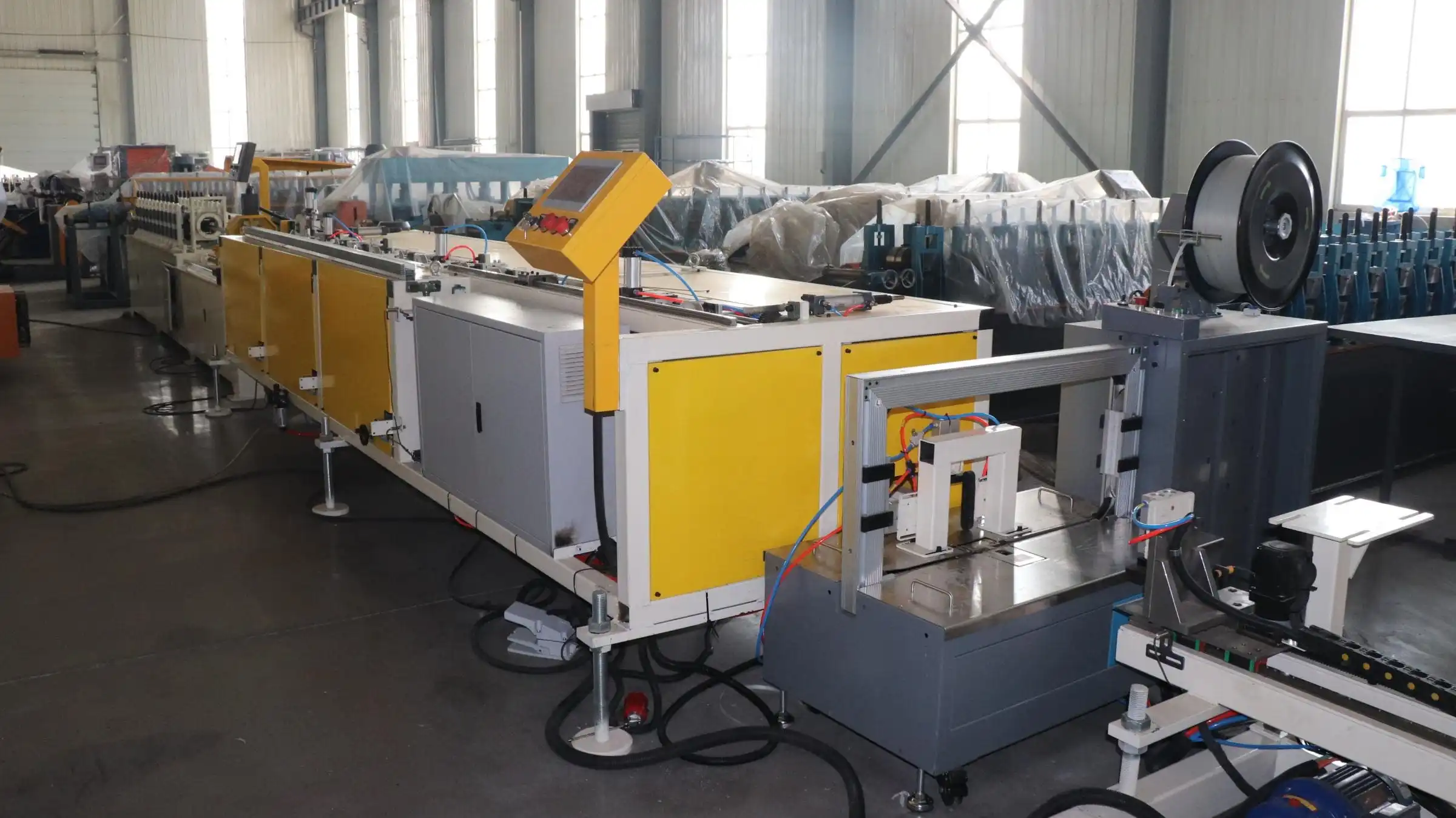
Lines equipped with integrated punching — such as ZTRFM's C/Z/CZ quick-change series — process galvanized steel at 15–22 m/min and deliver hole-complete sections directly to the stacker. The servo motor drive keeps the web tension constant during the punch stroke, preventing the flare or bow defects that plague slower, stop-and-punch hydraulic-only configurations.
Prefab building workers have found that installing purlins and girts is 20–30% faster when pre-punched pieces are used instead of field-drilled ones. There is a big enough difference in output for it to affect what contractors buy when they list their supply sources.
Selecting the Right Machine for Pre-Punched Furring Channel Production
When picking out a furring channel roll forming machine, it's important to make sure that the specs match the work setting. Before making a purchase, you should carefully look over a number of technical factors.
Punching Mechanism: Servo vs Hydraulic
Servo-driven punch units are the best choice for service centers that handle a lot of different orders because they can control the pitch and switch between hole shapes more quickly. Higher shear force from hydraulic units is helpful at the thicker end of the gage range (2.5–3.5 mm), but they need more upkeep and care for the seals and fluid condition when they are used in hot places.
Transmission Type and Frame Rigidity
Chain-drive transmissions are cheap and easy to fix when they break down in the field. Transmissions with gears are quieter and can hold tighter tolerances over longer production runs. The way the frame is put together is also important. Heavy H-steel frames that are welded together keep the punch station from shaking, which directly protects the accuracy of the hole placement. Heavy H-steel frames and GCr15 roll shafts are used to build ZTRFM furring channel roll forming machines. These machines are designed to work continuously without affecting punch alignment.
IoT and Remote Monitoring
Because ZTRFM and Siemens work together strategically, cloud IoT integration and AI-assisted remote repair on equipped lines are possible. For U.S. buyers who are in charge of multiple production shifts, remote diagnostics greatly reduce unnecessary downtime by pointing out patterns of tool wear before they lead to bad output.
Maintenance, Troubleshooting, and Best Practices
Punch gear wears out over time, and careful management of its lifecycle is what makes the difference between operations that are always up and ones that are always down.
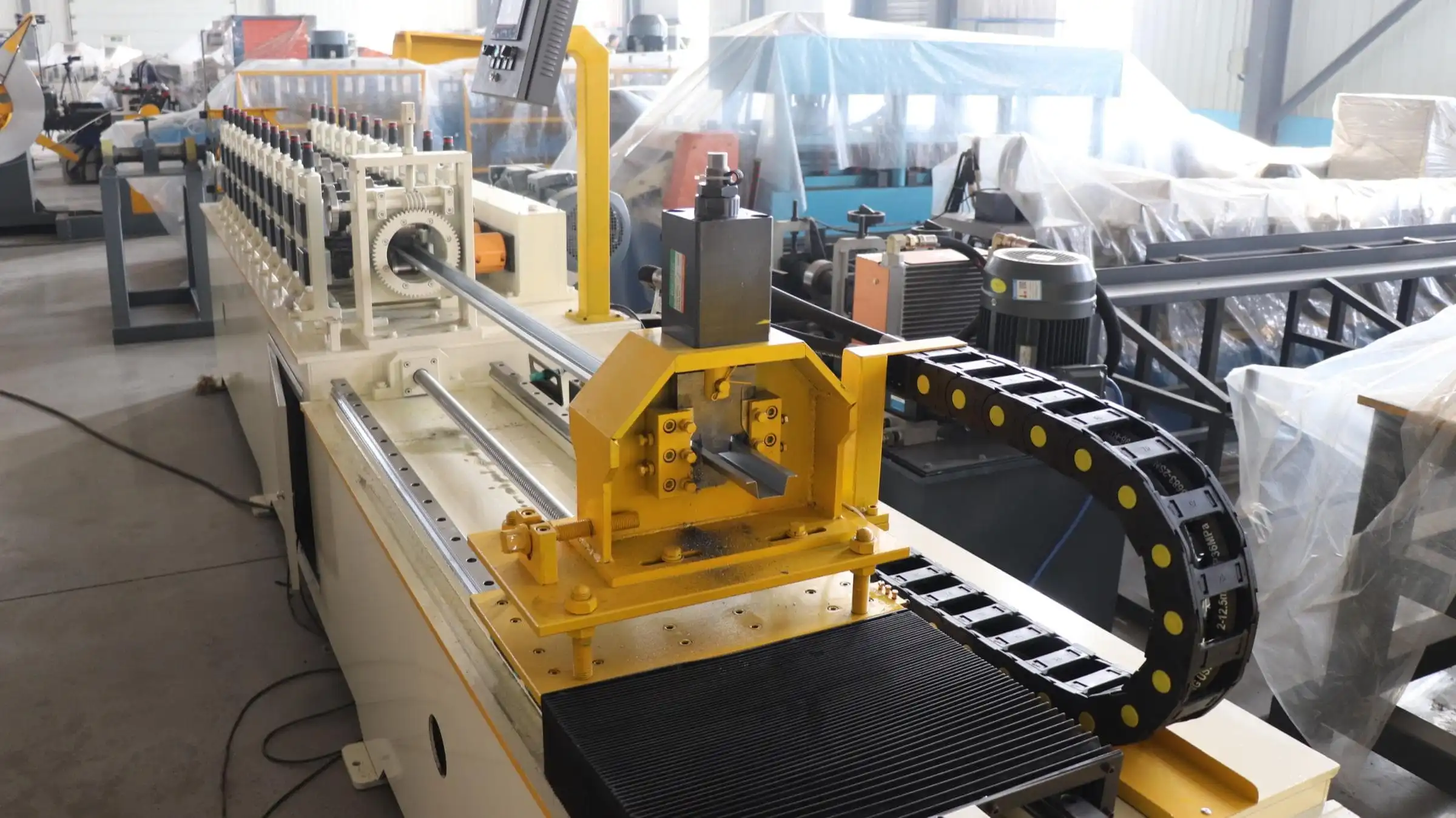
Depending on the thickness of the material and the amount of work that needs to be done each day, punch pins and dies on a standard inline station need to be inspected every three to six months. Wear can be seen when burrs form at the edges of holes, punch force numbers go up, and hole diameters slowly get bigger. If these indicators are found early, they can be sharpened or replaced during planned downtime, instead of having to be stopped in the middle of a run.
Most of the time, hole-position drift is caused by the punch head and die plate not being lined up correctly. A quick daily check of the guide-plate gaps and making sure the punch column is properly oiled will stop most alignment problems before they happen. When something goes wrong with the furring channel roll forming machine, the PLC fault log keeps a record with a timestamp that maintenance teams can use to quickly find the cause.
When buyers buy from ZTRFM, quick-change die cassettes are included as standard. This means that punch repair doesn't require special knowledge about tools. A trained worker can switch out a cassette and get back to work in the same shift.
Conclusion
In modern metal framing production, inline punching is not an extra that can be chosen; it is a structural advantage that changes the economics of fabrication. Furring channel roll forming machines and structural purlins that have already been punched arrive at job sites ready for installation. They protect the integrity of the finish and meet size standards that field-drilled sections frequently fail to meet. With the right cold roll forming line, which is made of rigid H-steel frames, GCr15 shafts, servo motor power, and customizable punch control, these technical skills can be turned into measured business results. For service centers and manufacturers that work in the U.S. building supply chain, this is equipment that pays for itself.
FAQ
1. Can the machine switch between different hole patterns without lengthy downtime?
Yes. With servo-punch lines, the PLC touch screen can be used to change the hole pitch and pattern in less than ten minutes. Quick-change cassette systems cut down on physical switching time for die-size changes to less than one shift. This is very important for service centers that have to deal with different order specs.
2. What steel grades and coatings does the machine handle?
Galvanized steel strip from 1.0 mm to 3.5 mm gauge is worked on by this line. For pre-galvanized coils, polished chrome-plated rollers keep the coating from picking up zinc and keep it in place. Hot-dip galvanizing after forming is also possible; the 60–80 micron zinc buildup can be handled by slightly wider punch tolerances.
3. How long do punch dies typically last?
When used normally and with the right amount of grease and gap maintenance, Cr12MoV punch pins and dies can make 500,000 to 1,000,000 strokes before they need to be sharpened. The actual service life depends on how hard the material is and how fast it is made.
4. What profile heights and sizes can the machine produce?
The machine can make C and Z purlins with heights that can be changed from 40 mm to 100 mm. The web width and flange sizes can also be changed, which means that the same line can be used for roofs, walls, and mezzanines without needing different sets of tools.
Start Your Inquiry with ZTRFM Today
ZTRFM has supplied furring channel roll forming machine solutions to fabricators in over 150 countries since 2014, backed by ISO 9001, CE, and CAS certifications. Our C/Z/CZ lines feature servo motor drives, GCr15 shafts, heavy H-steel frames, and Siemens IoT-enabled remote maintenance — built for U.S.-grade production demands. Whether you need a standard furring channel roll forming machine for sale or a fully customized OEM line, our engineering team is ready to assist. contact us at zhongtuorollforming@gmail.com to request a quote or machine demonstration.


References
1. American Iron and Steel Institute (AISI). North American Specification for the Design of Cold-Formed Steel Structural Members (AISI S100). AISI, 2016.
2. Halmos, George T. Roll Forming Handbook. CRC Press, 2006.
3. Metal Construction Association. Metal Framing Systems Manual. MCA, 2019.
4. Society of Manufacturing Engineers. Tool and Manufacturing Engineers Handbook: Forming. SME, 2018.
5. Bhattacharyya, Debes. Cold Roll Forming of Steel: Principles and Applications. Woodhead Publishing, 2011.
6. Steel Framing Industry Association. Cold-Formed Steel Framing Design Guide. SFIA, 2020.