- English
- French
- German
- Portuguese
- Spanish
- Russian
- Japanese
- Korean
- Arabic
- Irish
- Greek
- Turkish
- Italian
- Danish
- Romanian
- Indonesian
- Czech
- Afrikaans
- Swedish
- Polish
- Basque
- Catalan
- Esperanto
- Hindi
- Lao
- Albanian
- Amharic
- Armenian
- Azerbaijani
- Belarusian
- Bengali
- Bosnian
- Bulgarian
- Cebuano
- Chichewa
- Corsican
- Croatian
- Dutch
- Estonian
- Filipino
- Finnish
- Frisian
- Galician
- Georgian
- Gujarati
- Haitian
- Hausa
- Hawaiian
- Hebrew
- Hmong
- Hungarian
- Icelandic
- Igbo
- Javanese
- Kannada
- Kazakh
- Khmer
- Kurdish
- Kyrgyz
- Latin
- Latvian
- Lithuanian
- Luxembou..
- Macedonian
- Malagasy
- Malay
- Malayalam
- Maltese
- Maori
- Marathi
- Mongolian
- Burmese
- Nepali
- Norwegian
- Pashto
- Persian
- Punjabi
- Serbian
- Sesotho
- Sinhala
- Slovak
- Slovenian
- Somali
- Samoan
- Scots Gaelic
- Shona
- Sindhi
- Sundanese
- Swahili
- Tajik
- Tamil
- Telugu
- Thai
- Ukrainian
- Urdu
- Uzbek
- Vietnamese
- Welsh
- Xhosa
- Yiddish
- Yoruba
- Zulu
Why drywall contractors add a furring channel machine to their fleet
If you run a drywall contracting business, you already know how tight project timelines can get. A furring channel machine changes that equation entirely. Instead of sourcing pre-cut metal channels from distributors, contractors now roll-form their own omega, hat, and stud profiles on demand — cutting lead times, reducing material waste, and tightening dimensional tolerances across every job. Procurement managers who have added this equipment to their fleet consistently report faster project turnaround and measurable cost savings. This guide breaks down exactly why that investment makes sense in today's construction market.
Understanding Furring Channel Machines: What They Are and How They Work
The Core Mechanics Behind Roll Forming
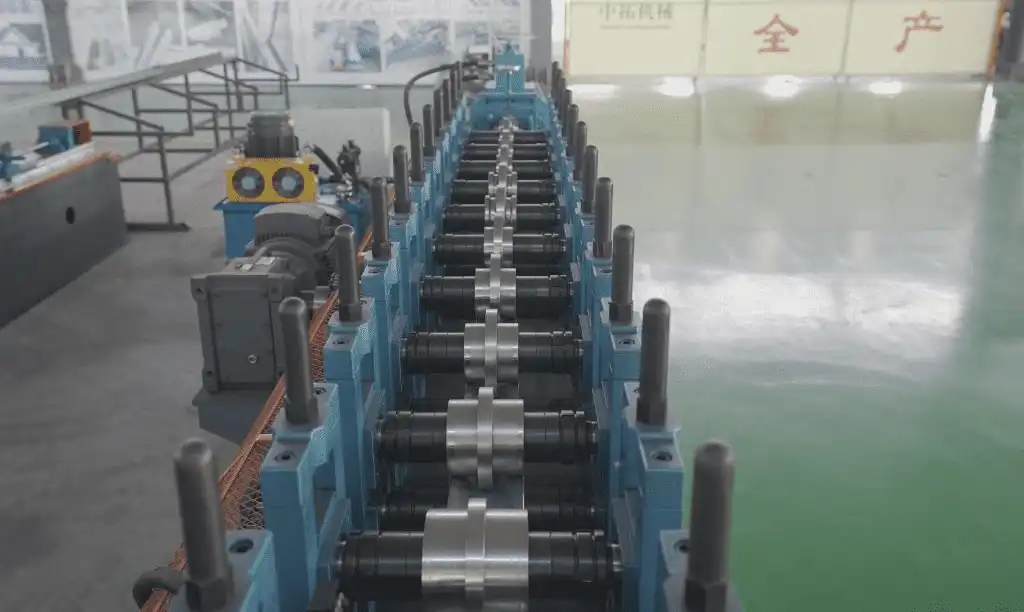
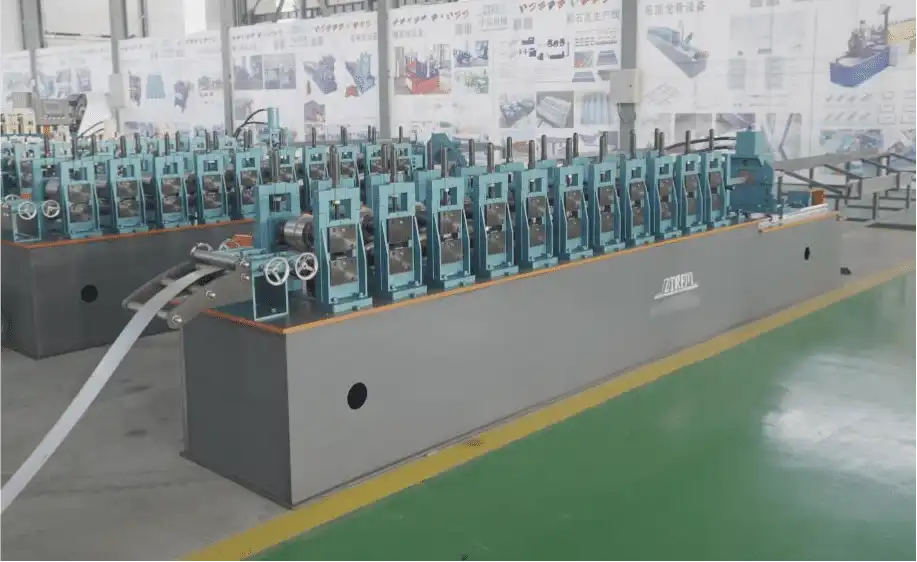
In a metal furring channel machine, a continuous steel coil is fed through a series of progressive roller stations. These stations bend the flat strip into a finished shape, such as a hat channel, omega channel, C stud, U track, or wall angle, without cutting or heating the material. When steel is cold-worked, the yield strength of the finished profile goes up. This is very important when the channels carry sound gypsum boards or support ceiling systems that are rated for earthquakes.
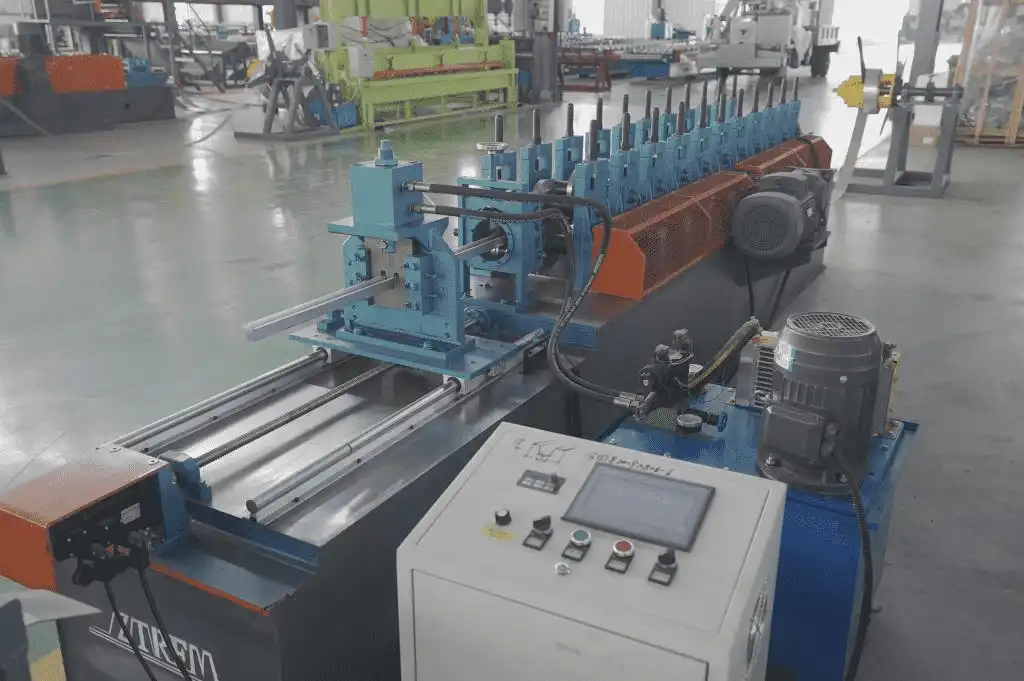
This ZTRFM furring channel roll forming line can work with materials that are 1.0 mm to 3.5 mm thick, Z purlin lengths that range from 120 mm to 350 mm, and steel that has a yield strength of 235 MPa to 345 MPa. The line speed is precisely controlled by a servo motor drive system. A separate cabinet PLC, which is made up of Panasonic PLC logic controllers and Schneider Electric parts, handles cut-to-length sequencing, punching cycles, and fault diagnostics through a single touchscreen interface.
Profiles This Equipment Produces
Because the machine's tools are flexible, one production line can make more than one shape geometry. Typical results for work with drywall and ceilings are:
- Hat / omega furring channels — used as cross-furring members to level out uneven concrete soffits and as an underframe when you put up fiber cement or metal exterior panels.
- C stud and U track sections — the most important parts of drywall framing systems and internal divider walls in businesses.
- Wall angle and edge trim profiles — the outside profiles that hold ceiling grids securely to brick or concrete walls.
These profiles are used in business construction, industrial fit-outs, prefab modular buildings, and more and more, solar farm mounting substructures. This is a fast-growing end market that needs a lot of uniform hole-punched furring channel machines.
Challenges with Traditional Methods and the Emergence of Roll-Formed Channels
When making things by hand or with a press brake, it's hard to keep the sub-millimeter tolerances that level drywall ceilings need. Dimensional drift across a batch makes it take hours for installers to shimmy, and fasteners don't line up properly at scale because flange widths aren't always the same. That difference directly leads to higher work costs on a 50,000-square-foot business ceiling.
Beyond accuracy, relying on the supply chain is a real operating risk. If contractors buy pre-formed channels from steel service centers, they might not have enough in stock, have to place a minimum order, or experience shipping delays that stop the project in the middle of its plan. Bringing roll forming in-house gets rid of that need for outside help.
The change is backed up by data. According to the Steel Framing Industry Association, the use of light-gauge steel framing in commercial buildings in North America steadily increased through the early 2020s. This was due to building codes and the fact that steel is more stable than wood in damp places. Contractors who make their own parts don't have to pay a service center's price, so they get the full margin on that material.
Evaluating Furring Channel Machines: Key Factors for Procurement Decisions
Automation Level and Throughput
When purchasing managers look at manual, semi-automatic, and fully automatic lines, they should base their choice on how much they can actually make. A servo-driven automatic line that goes 35 to 45 meters per minute and has hydraulic punching and automatic cut-to-length makes up for its high cost on projects that use more than 200,000 linear feet of framing per year. Below that point, a semi-automatic line that loads the coils by hand might have a better payback profile.
Here are the main things that expert buyers look for in a specification:
- Drive system: Servo motor drives let you control the speed over and over again, and they also wear out rollers less quickly than fixed-speed chain drives. It also lets you change the length of the programming quickly between runs.
- Control architecture: It is much easier to fix problems and keep up with a separate cabinet PLC that uses Panasonic logic controllers and Schneider Electric contactors and breakers than an integrated board design. Replacement parts can be found all over the world.
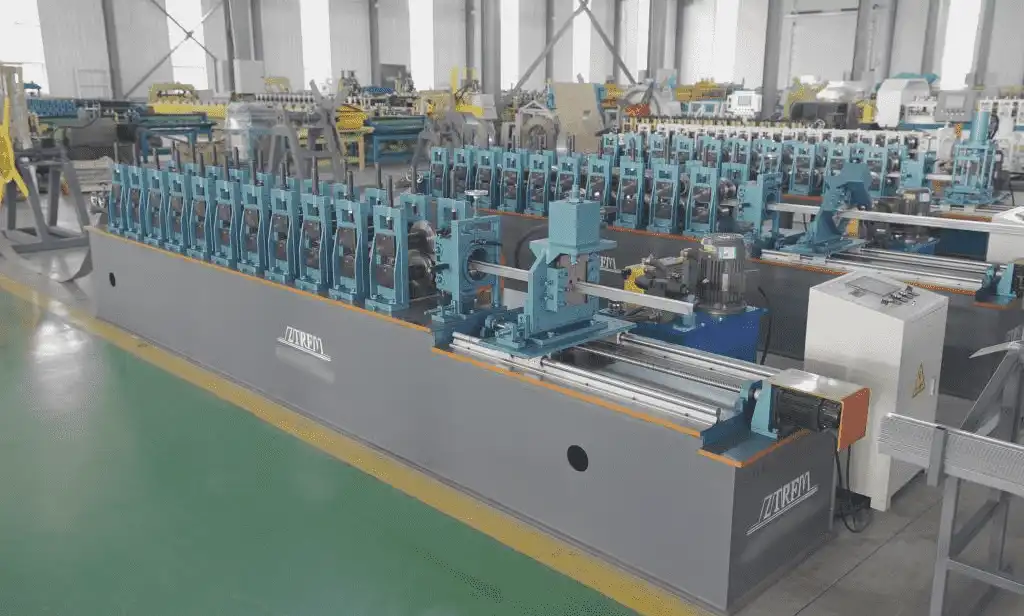
- Frame rigidity: Heavy H-steel furring channel machine frames keep the line from shaking at high speeds, which directly protects the accuracy of the dimensions during long production runs.
- Punching capability: Standard bolt-hole designs can be punched out with replaceable die sets in inline hydraulic punching, which means the line doesn't have to stop. This is important for builders who sell pre-punched partition studs.
These standards immediately lead to less waste, fewer production stops, and more on-time deliveries to general contractors further down the line.
Supplier Qualification and Certification
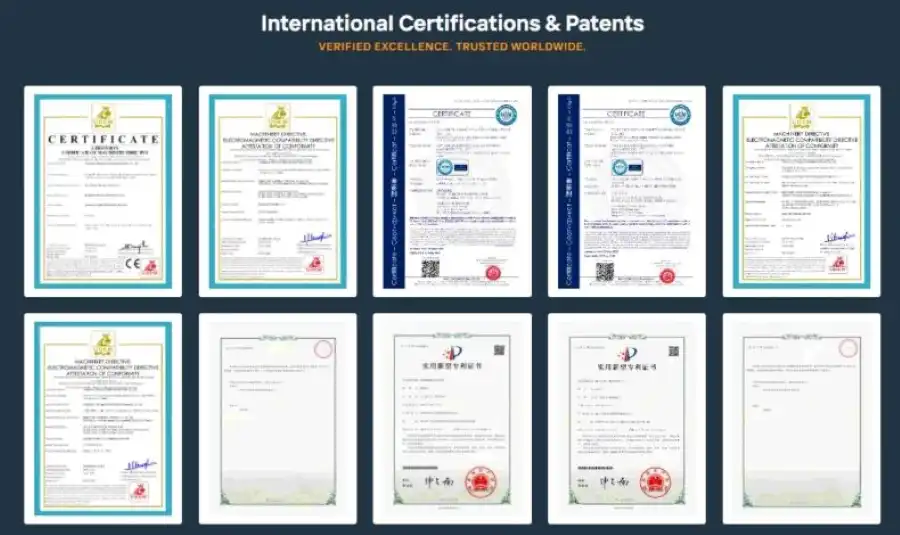
Buying from a manufacturer that is ISO 9001 and CE-certified gives procurement teams a written quality guarantee and the ability to track down parts. ZTRFM was established in 2014 in Botou, Cangzhou, which is known as the center for making roll forming machinery in China. It has ISO 9001, CE, and CAS certifications and works together with Yanshan University and the National Cold Roll Forming Institute on strategic technology projects. Their equipment is currently used in more than 150 countries. Some examples of setups are at Tata Group in India, DS Group in Korea, and HADDAD SET in Jordan.
Maintaining and Operating Furring Channel Machines for Optimal Performance
Routine Maintenance Practices That Protect Uptime
A roll forming line is a precise system that only works at full speed for ten years or breaks down in two years if it is not properly maintained. The methods that have the most effect are simple:
Roller lubrication is a must on lines that process galvanized coil quickly. If there isn't an integrated oiling system, zinc coating layers build up on the rollers, which changes the shape of the profile within hours of production. The ZTRFM lines have an automatic oiling system that is designed to solve this problem.
Accuracy and quality of cutting depend on the health of the hydraulic system, including how clean the fluid is, how often the filters need to be replaced, and how well the cooling fan works. In a well-designed line, the hydraulic station has a cooling fan system that keeps the temperature from drifting during long production shifts.
The Panasonic control system has PLC diagnostics that can find parameter deviations before they become mechanical failures. This way, problems can be fixed during planned stops instead of unplanned breakdowns. The short mean time to repair is made possible by the manufacturer's network of genuine spare parts.
Why Leading Contractors and Fabricators Trust Certified Roll Forming Equipment
The building business has made a clear shift toward machines that produce consistent, verifiable results. Building owners and general builders are making it clearer that framing systems must meet certain standards for size, which makes drywall subcontractors more responsible. Fabricators show that they are responsible by using their own certified production lines instead of getting supplies from outside sources.
In this direction, technological progress is speeding up. ZTRFM offers Siemens cloud IoT integration as part of a strategic cooperation agreement. This allows for remote AI-assisted diagnostics and predictive maintenance monitoring, which gives production managers real-time information about the health of machines without the need for technical experts to be on-site. This feature greatly lowers the chance of unplanned downtime for business projects that need to be finished on time.
Because the same machine can make different profiles for suspended ceiling systems, ventilated facade sub-framing, mezzanine joists, and prefab modular wall panels, contractors who buy high-specification roll forming equipment can take on a wider range of jobs.
Conclusion
When drywall builders add a furring channel machine roll forming line to their fleet of tools, they gain control over the supply of materials, the shape of the profiles, and the schedule for production all at the same time. Fully automatic servo-driven lines with PLC control, inline punching, and replaceable tools are now investments that are easy to make instead of projects that cost a lot of money. The most important factors for procurement managers to consider when choosing this category are the level of automation, the architecture of the control system, the quality of the frame build, and the certification of the supplier. All of these factors point to a producer with a strong technical background and a track record of installing products around the world.
FAQ
1. What material thicknesses can a roll forming line process?
The ZTRFM furring channel and purlin roll forming lines can work with steel that is between 1.0 mm and 3.5 mm thick. They can handle both light-gauge drywall framing and heavier structural purlin profiles with yield strengths of 235 MPa and 345 MPa.
2. How do I choose between a servo drive and a chain drive system?
Because they offer exact speed control, faster switch programming, and less long-term roller wear, servo motor drive systems are the best choice for contractors who work with a lot of different profile sizes or high daily numbers. Chain drive systems are cheaper to buy up front and work best in industrial settings with only one design.
3. What certifications should a furring channel machine supplier hold?
Focus on ISO 9001 for recording of the quality management system, CE for compliance with European machinery guidelines, and CAS certification if it applies. These credentials show that the company maintains quality processes that can be tracked through engineering, production, and inspection.
4. Can one machine produce both C stud and hat channel profiles?
Yes. With CZ's flexible quick-change cutting systems, workers can switch between profile shapes during the same shift without having to take the machines apart too much. This adaptability is very helpful for contractors who offer mixed framing packages for business projects.
5. What after-sales support should procurement teams expect?
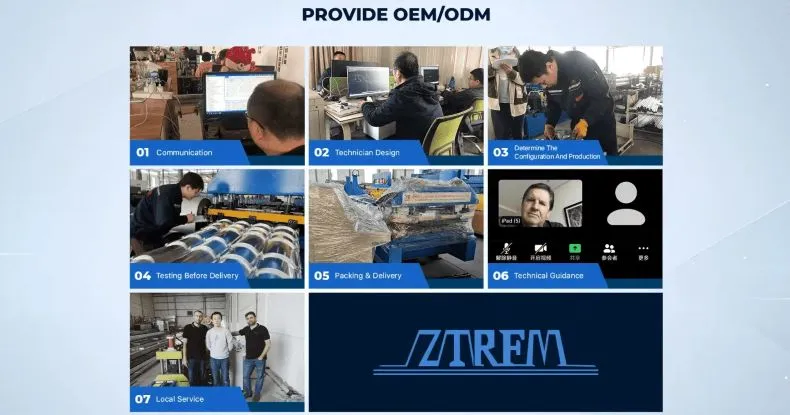
Reliable furring channel machine providers offer help with setting up the machine, training for operators, deals to stock spare parts, and access for remote diagnostics. With ZTRFM's Siemens cloud IoT integration, AI-assisted remote maintenance is possible, so regular tests don't have to be done by a service technician coming to the site.
Get Your Custom Furring Channel Machine Quote from ZTRFM
With ISO 9001, CE, and CAS certifications, ZTRFM is a reliable company that has been making and supplying furring channel machines to customers in more than 150 countries since 2014. Our servo-driven, PLC-controlled roll forming lines give you precise measurements, reliable production, and the ability to use OEM/ODM tools to make the exact profile you need. Get in touch with our engineering team right away to talk about your needs, ask for a sample, or get a competitive quote. You can email us at zhongtuorollforming@gmail.com.
References
1. Steel Framing Industry Association (SFIA) — Annual Light Gauge Steel Framing Market Report, 2023.
2. Metal Construction News — Roll Forming Technology Advances in Commercial Framing Applications, 2022.
3. American Iron and Steel Institute (AISI) — North American Steel Construction Manual, 2022 Edition.
4. Construction Executive Magazine — Equipment Fleet Strategies for Specialty Contractors, 2023.
5. International Journal of Advanced Manufacturing Technology — Cold Roll Forming Process Optimization for Thin-Gauge Structural Profiles, 2021.
6. Buildings Magazine — Steel Framing and Drywall Systems in Modern Commercial Construction, 2022.