- English
- French
- German
- Portuguese
- Spanish
- Russian
- Japanese
- Korean
- Arabic
- Irish
- Greek
- Turkish
- Italian
- Danish
- Romanian
- Indonesian
- Czech
- Afrikaans
- Swedish
- Polish
- Basque
- Catalan
- Esperanto
- Hindi
- Lao
- Albanian
- Amharic
- Armenian
- Azerbaijani
- Belarusian
- Bengali
- Bosnian
- Bulgarian
- Cebuano
- Chichewa
- Corsican
- Croatian
- Dutch
- Estonian
- Filipino
- Finnish
- Frisian
- Galician
- Georgian
- Gujarati
- Haitian
- Hausa
- Hawaiian
- Hebrew
- Hmong
- Hungarian
- Icelandic
- Igbo
- Javanese
- Kannada
- Kazakh
- Khmer
- Kurdish
- Kyrgyz
- Latin
- Latvian
- Lithuanian
- Luxembou..
- Macedonian
- Malagasy
- Malay
- Malayalam
- Maltese
- Maori
- Marathi
- Mongolian
- Burmese
- Nepali
- Norwegian
- Pashto
- Persian
- Punjabi
- Serbian
- Sesotho
- Sinhala
- Slovak
- Slovenian
- Somali
- Samoan
- Scots Gaelic
- Shona
- Sindhi
- Sundanese
- Swahili
- Tajik
- Tamil
- Telugu
- Thai
- Ukrainian
- Urdu
- Uzbek
- Vietnamese
- Welsh
- Xhosa
- Yiddish
- Yoruba
- Zulu
Commissioning a metal deck roll forming machine in seven steps
Installing a new floor deck or roof deck manufacturing line is more than switching on a light. A fully commissioned metal deck roll forming machine, configured to form in galvanized or Galvalume coils ranging from 0.8 mm to 1.2 mm with 235 MPa yield strength, will safeguard your tooling investment and keep your crew safe from day one while holding dimensional tolerances. From pre-delivery planning to full-production sign-off, this book talks through every phase so procurement managers, fabricators, and deck contractors may proceed with confidence.
Step 1 – Understanding What You're Working With Machine Variants and Core Components
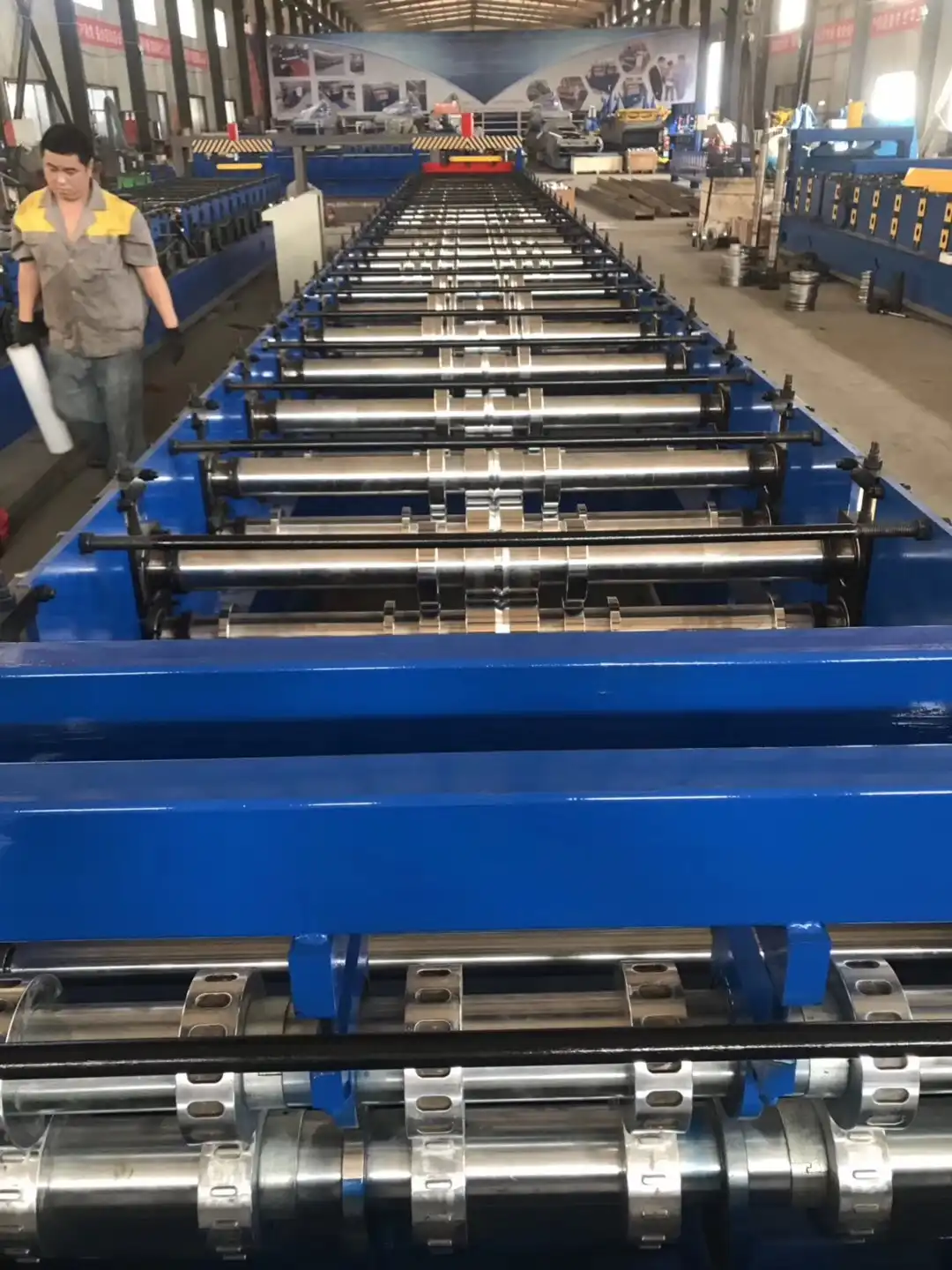
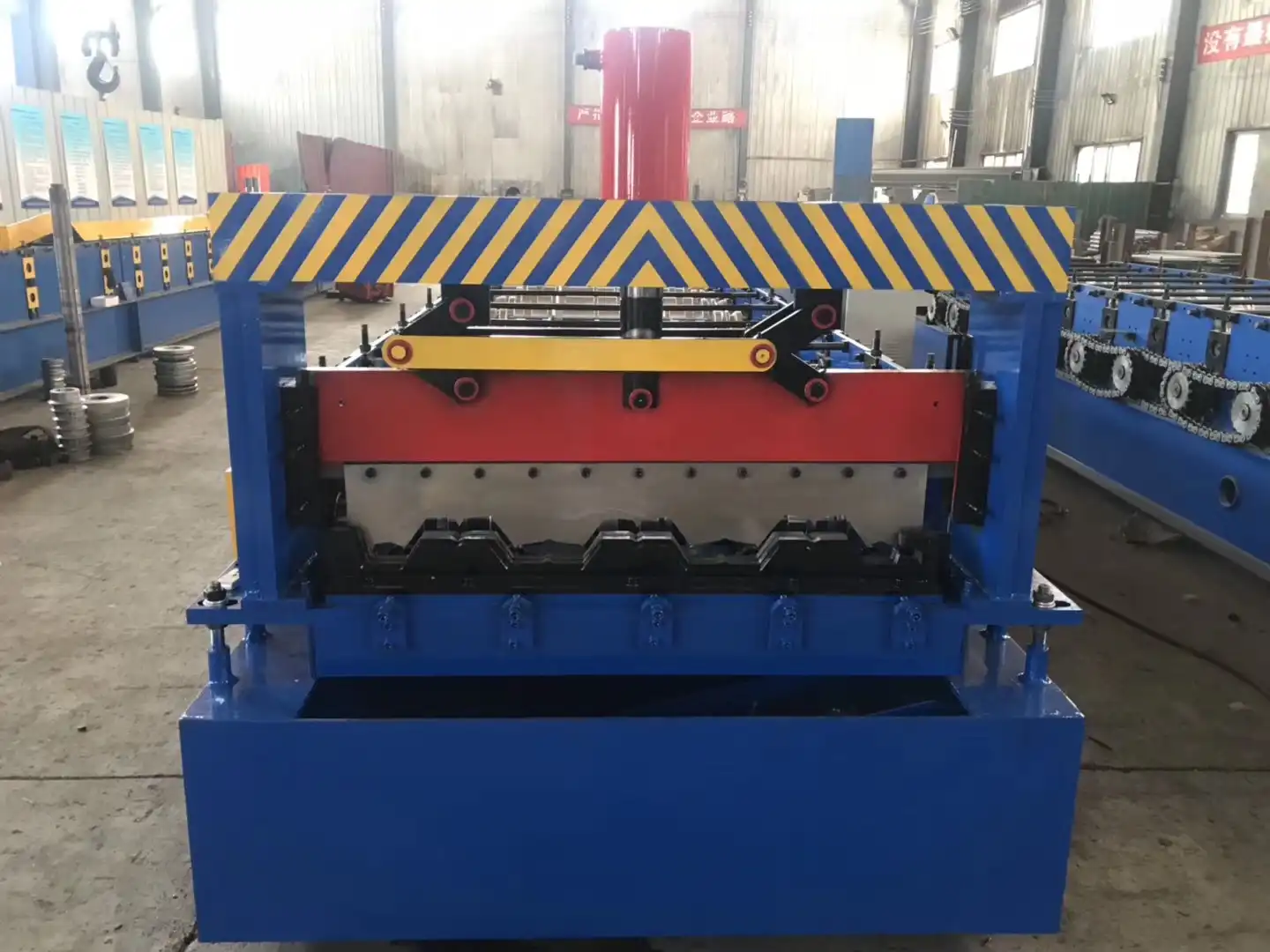
There are several varieties of composite deck formers, from semi-automatic instruments with one shape to fully-automated lines that emboss, pre-punch, and stack the boards automatically. The primary mechanical pieces are the same for each variation: a decoiler, the forming station train, a stamping unit, a hydraulic shear, and the departure line. The coil is formed more gradually at each station so the steel never needs to cope with unexpected concentrations of stress.
Typical Gauges and Rib Profiles
In the US, people commonly purchase B-Deck (0.6-inch), A/B composite rib (1.5-inch), and deep-rib or dovetail sections (3.0-inch) for floor decks. Machines that can process .8 to 1.2 mm wide coils can process the structural gauges that most industrial and high-rise projects need. The standard sheet lines can not produce heavier gauges because of the necessity to create stands with greater power and tougher tools.
Safety Before Commissioning Begins
Review the whole electrical schematic and confirm all E-stop circuits are connected. Confirm machine guards are installed. OSHA 1910.217 provides for point-of-operation guarding for metal-forming instruments. Do not begin a motion test with uncovered nip points.
Step 2 – Site and Machine Setup
Floor, Foundation, and Power Supply
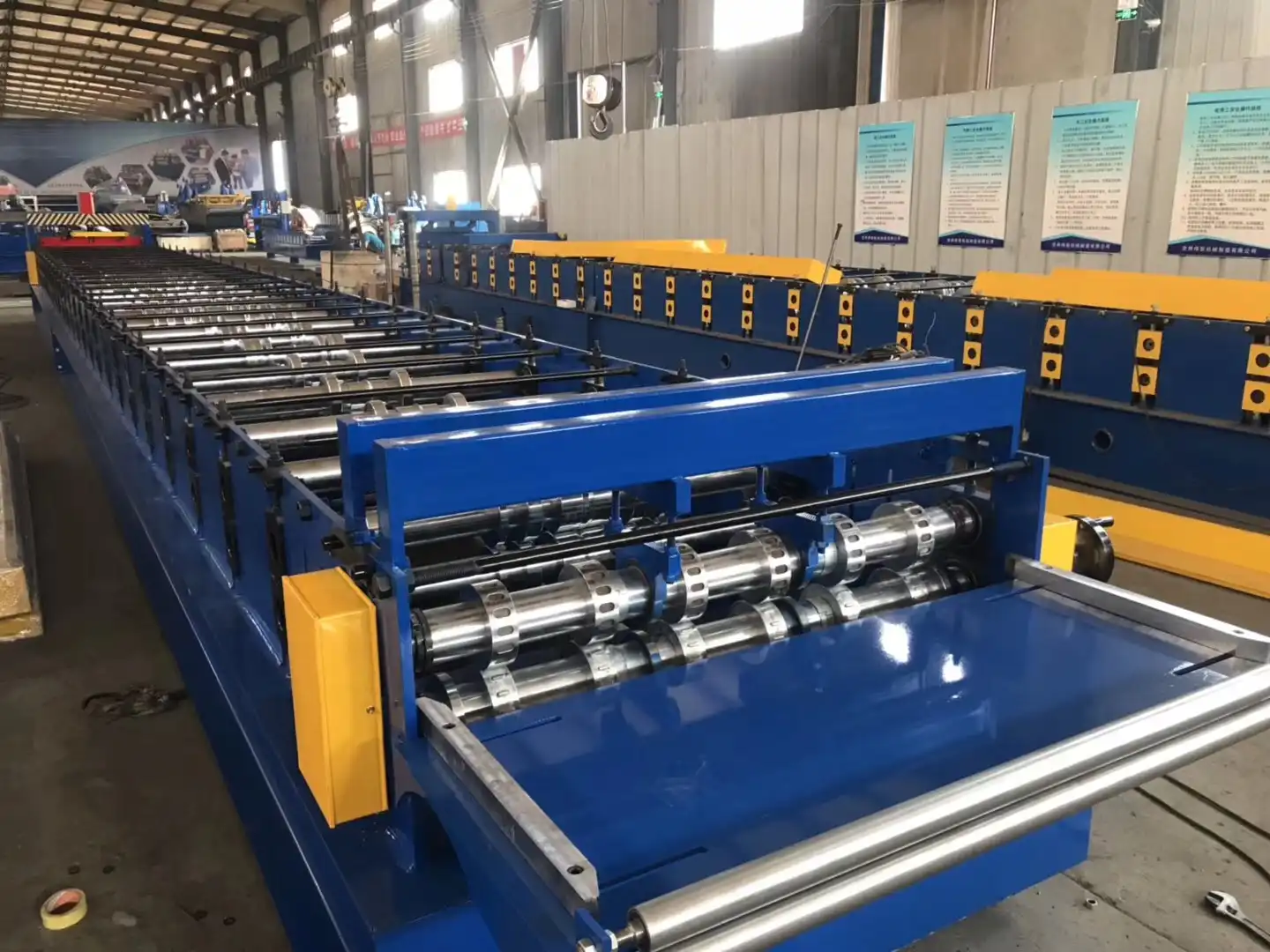
The machine should be located on a flat concrete floor capable of supporting the whole weight of all the tools. The power supply must be suitable for the metal deck roll forming machine. The primary motor requires 3 x 11 kW power, which is divided into three motors so that it can ensure that the torque is supplied uniformly, and the hydraulic unit needs 5.5 kW. Check incoming voltage, phase, and frequency before energizing any panel.
Assembly Sequence
The decoiler, the making mill, and the departure table should be in a straight line. Align each item with precise optical levels and dial markings. Secure each item to the anchor plates before connecting the couplings or drive shafts. The construction procedure was hurried at this stage, and rollers tend to wear out too fast most of the time.
Early Mechanical and Electrical Checks
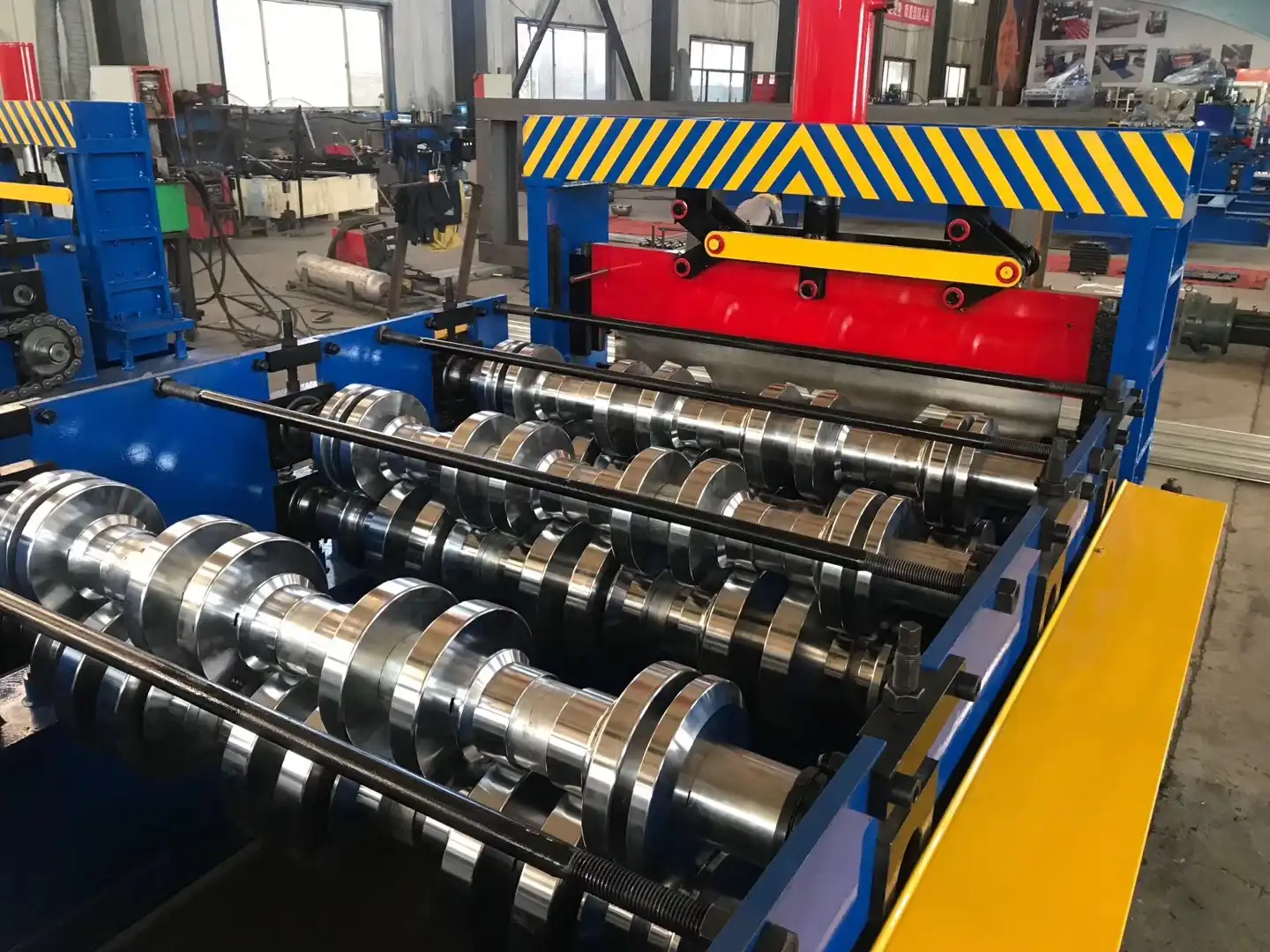
Spin the forming roller shafts (95 mm diameter, No. 45 steel coated with chrome) by hand to see if they will spin easily and smoothly before rolling any coil. Run the hydraulic shear a few times to make sure the CR12 mold steel cutters open and shut without sticking. Verify the PLC and converter signals reach all sensors on the line.
Step 3 – Calibration and Configuration
Roller Spacing and Profile Alignment
Set the roller gaps based on the drawing of the goal shape. AISI design tables say that the rib depth error for a 1.5-inch composite deck is usually ±0.03 inches. Before making any changes to a stand, use a profile gauge on the first sample that was made and compare it directly to the approved shop model.
Embossing Depth Settings
The 120 mm diameter embossing shaft is bigger than the standard forming shafts and makes the pattern of depressions that hold steel and concrete together mechanically. To meet SDI (Steel Deck Institute) composite action requirements, the minimum depth of the embossment is usually 0.035′′. Shear-bond failure in the finished slab is caused by shallow embossing.
PLC and Converter Integration
The PLC display lets you enter the line speed (10–20 m/min), cut length, and batch count. The converter changes the motor speed so that the sheet moves at the same speed through all of the making stations. Don't load the coil during the dry-cycle test to make sure the control system follows all commands in the right order and doesn't make any mistakes.
Step 4 – Trial Run and Troubleshooting
Monitoring the First Production Sheets
Put some zinc Z275 material on a short test coil and set the line speed to the slowest setting. Check the first three sheets to make sure they are correct in terms of edge wave, rib twist, and covering width. Over 60% of field fit-up problems on composite floor systems are caused by dimensions not being met during the forming stage, according to the SDI Manual of Construction (2017).
Common Forming Defects and Fixes
During initial trial runs, a number of defects show up often, and each one points to a different root cause. Here are some of the most common problems workers run into and how to fix them:
- Edge wave: Usually indicates uneven roller pressure across the strip width. Re-check stand alignment and reduce line speed by 2–3 m/min until the wave disappears.
- Rib twist: Commonly caused by asymmetric side-guide settings. Adjust the entry guide incrementally and re-run until the profile exits straight.
- Inaccurate cut length: Check encoder calibration and hydraulic shear timing in the PLC. A 1-pulse offset can shift cut length by several millimeters at speed.
-- Wrong cut length: In the PLC, check the encoder accuracy and the time for the hydraulic shear. When the speed is high, a 1-pulse offset can change the cut length by a few millimeters.
Preventive Maintenance from Day One
All bearing housings should be oiled at the times recommended by the manufacturer. Check rolling surfaces that have been chrome-treated once a week for pitting. If the burr height on the chopped edge is more than 0.5 mm, you should replace the cutter blades. Too many burrs create places where rust can start and make handling dangerous on-site.
Step 5 – Training and Knowledge Transfer
Operator Certification and Safe Work Procedures
Before they can work alone, every user has to get written training on where to find the E-stop, how to thread a coil, and how to disconnect the hydraulic system. SOPs should be written down and placed at the control panel in the language that the team speaks every day.
Maintenance Personnel Training
The maintenance staff needs to be shown how to read PLC fault codes, change rollers, and adjust hydraulic pressure (the normal range is 10–16 MPa on the shear circuit). A structured training record keeps the business safe during any review of a warranty claim.
Manufacturer Support Access
Make sure that the company that sells you the tools offers technical help over the internet. When Siemens-based IoT connectivity is available, engineers can look at fault logs and drive parameters from afar, which cuts the time it takes to diagnose problems from days to hours. Keep the metal deck roll forming machine's serial number and the supplier's contact information close to the control panel where you can see them.
Step 6 – Quality Assurance and Performance Verification
KPIs to Measure Before Sign-Off
There are three ways to tell if the line is ready for full production. With no drive problems, the production speed must stay between 10 and 20 m/min. For every sheet in a 50-sheet sample run, the rib depth and coverage width must be within the acceptable range of dimensions. During the proof run, the scrap rate should stay below 2% of all the linear meters that were made.
Compliance with US Industry Standards
For cold-rolled structural steel, profiles must meet ASTM A1008, and for galvanized finishes, they must meet ASTM A653. Profiles can be Z275 to Z600. SDI guidelines set the shape of a composite deck. Keep track of all the measurements you take and write them down. During reviews, structural engineers on high-rise projects often ask for this information.
Data Collection for Ongoing Improvement
It keeps track of cycle numbers, fault events, and output totals with a PLC. Every week, export this data and look it over in a simple spreadsheet. For instance, a slow rise in hydraulic pressure can often be a sign of cutter wear weeks before it actually fails.
Step 7 – Finalizing Commissioning and Moving to Full Production
Formal Sign-Off Process
It is important that both the commissioning engineer and the technical lead for the client sign the acceptance paper after all KPIs have been met. This document will be used as a starting point for warranty claims and future audit trails.
Supply Chain and Schedule Coordination
Line up the arrival of coil supplies with the machine's top speed. At an average line speed of 15 m/min, it takes about 90 to 110 minutes for a single 10-tonne decoiler load of 1.0 mm galvanized coil to run out. Plan coil changeovers to keep production from stopping during time-sensitive building bids.
Warranty and After-Sales Support
Make sure that the guarantee covers the forming wheels, cutters, and hydraulic unit for a certain amount of time. A maintenance deal that includes planned roller checks and spare-parts stock planning makes unplanned downtime much less likely over the life of the machine.
Conclusion
Setting up a composite deck making line is a step-by-step process where each step builds on the last. At every step, from setting up the job site and making sure everything is calibrated to trial runs, training, and the final sign-off, the line pays close attention to every detail to protect both the tools and the structural stability of every deck panel it makes. When it comes to product quality, uptime, and total cost of ownership, metal deck roll forming machines that are properly set up from the start always do better than those that skip steps.
FAQ
1. How long does commissioning typically take?
For a single-profile deck forming line, commissioning normally takes three to seven working days on site, assuming the foundation and power supply are ready before the machine arrives. Multi-profile or tandem lines with inline embossing and stacking units may require ten to fourteen days.
2. What is the most frequent commissioning challenge?
Roll alignment and embossing depth setting account for the majority of first-week issues. Both require patience and incremental adjustment rather than large corrective moves.
3. What is the difference between manual and automatic deck forming lines?
Manual lines require an operator to set cut length and feed parameters by hand for each batch. Automatic lines use PLC and converter controls to execute programmed recipes, hold tighter tolerances, and run at the upper end of the 10–20 m/min speed range with minimal operator intervention. For high-volume deck manufacturers supplying construction tenders, automatic control delivers measurably better consistency.
4. Can the machine process both galvanized and Galvalume coils?
Yes. The chrome-treated No. 45 steel forming rollers and CR12 mould steel cutters are compatible with both Z275–Z600 galvanized and Galvalume AZ150 coatings without modification.
Start Your Deck Production Line with ZTRFM
Since 2014, ZTRFM has helped clients in over 150 countries with their metal deck roll forming machine needs. Notable projects with Tata Group and DS Group are examples of this. ZTRFM is a qualified metal deck roll forming machine maker with ISO 9001, CE, and CAS credentials. They offer OEM/ODM tools, Siemens-driven control systems, and full support for commissioning. You can email our technical team at zhongtuorollforming@gmail.comto ask for a specification sheet or a consultation on commissioning.
References
1. Steel Deck Institute. SDI Manual of Construction with Steel Deck, 3rd Edition. Steel Deck Institute, 2017.
2. American Iron and Steel Institute. Cold-Formed Steel Design Manual. AISI, 2016.
3. ASTM International. ASTM A653/A653M: Standard Specification for Steel Sheet, Zinc-Coated (Galvanized) or Zinc-Iron Alloy-Coated (Galvannealed) by the Hot-Dip Process. ASTM, 2023.
4. ASTM International. ASTM A1008/A1008M: Standard Specification for Steel, Sheet, Cold-Rolled, Carbon, Structural, High-Strength Low-Alloy. ASTM, 2022.
5. Occupational Safety and Health Administration. OSHA 1910.217: Mechanical Power Presses — Machine Guarding Standards. U.S. Department of Labor, 2019.
6. Fisher, J.M., and West, M.A. Serviceability Design Considerations for Steel Buildings, 2nd Edition. American Institute of Steel Construction, 2003.