- English
- French
- German
- Portuguese
- Spanish
- Russian
- Japanese
- Korean
- Arabic
- Irish
- Greek
- Turkish
- Italian
- Danish
- Romanian
- Indonesian
- Czech
- Afrikaans
- Swedish
- Polish
- Basque
- Catalan
- Esperanto
- Hindi
- Lao
- Albanian
- Amharic
- Armenian
- Azerbaijani
- Belarusian
- Bengali
- Bosnian
- Bulgarian
- Cebuano
- Chichewa
- Corsican
- Croatian
- Dutch
- Estonian
- Filipino
- Finnish
- Frisian
- Galician
- Georgian
- Gujarati
- Haitian
- Hausa
- Hawaiian
- Hebrew
- Hmong
- Hungarian
- Icelandic
- Igbo
- Javanese
- Kannada
- Kazakh
- Khmer
- Kurdish
- Kyrgyz
- Latin
- Latvian
- Lithuanian
- Luxembou..
- Macedonian
- Malagasy
- Malay
- Malayalam
- Maltese
- Maori
- Marathi
- Mongolian
- Burmese
- Nepali
- Norwegian
- Pashto
- Persian
- Punjabi
- Serbian
- Sesotho
- Sinhala
- Slovak
- Slovenian
- Somali
- Samoan
- Scots Gaelic
- Shona
- Sindhi
- Sundanese
- Swahili
- Tajik
- Tamil
- Telugu
- Thai
- Ukrainian
- Urdu
- Uzbek
- Vietnamese
- Welsh
- Xhosa
- Yiddish
- Yoruba
- Zulu
How to audit a roof panel roll forming machine factory in China
Auditing a Chinese factory before purchasing a roof panel roll forming machine is one of the most critical steps any U.S. buyer can take. A structured audit helps you verify production capacity, confirm roller material grades, inspect PLC control systems, and validate certifications like ISO 9001 and CE. Without this process, buyers risk receiving equipment that underperforms on the job site. Whether you are sourcing a line for PBR, R-panel, or corrugated profiles, knowing what to look for inside a Chinese roll forming factory protects your investment from the start.
Understanding the Roof Panel Roll Forming Machine Industry in China
Many people agree that the Botou-Cangzhou corridor in China is the most concentrated place in the world to make cold roll forming equipment. In this area, factories make a wide range of goods, from simple hand lines to fully automated systems controlled by Siemens PLCs and flying cut technology.
What Makes These Machines Technically Distinct
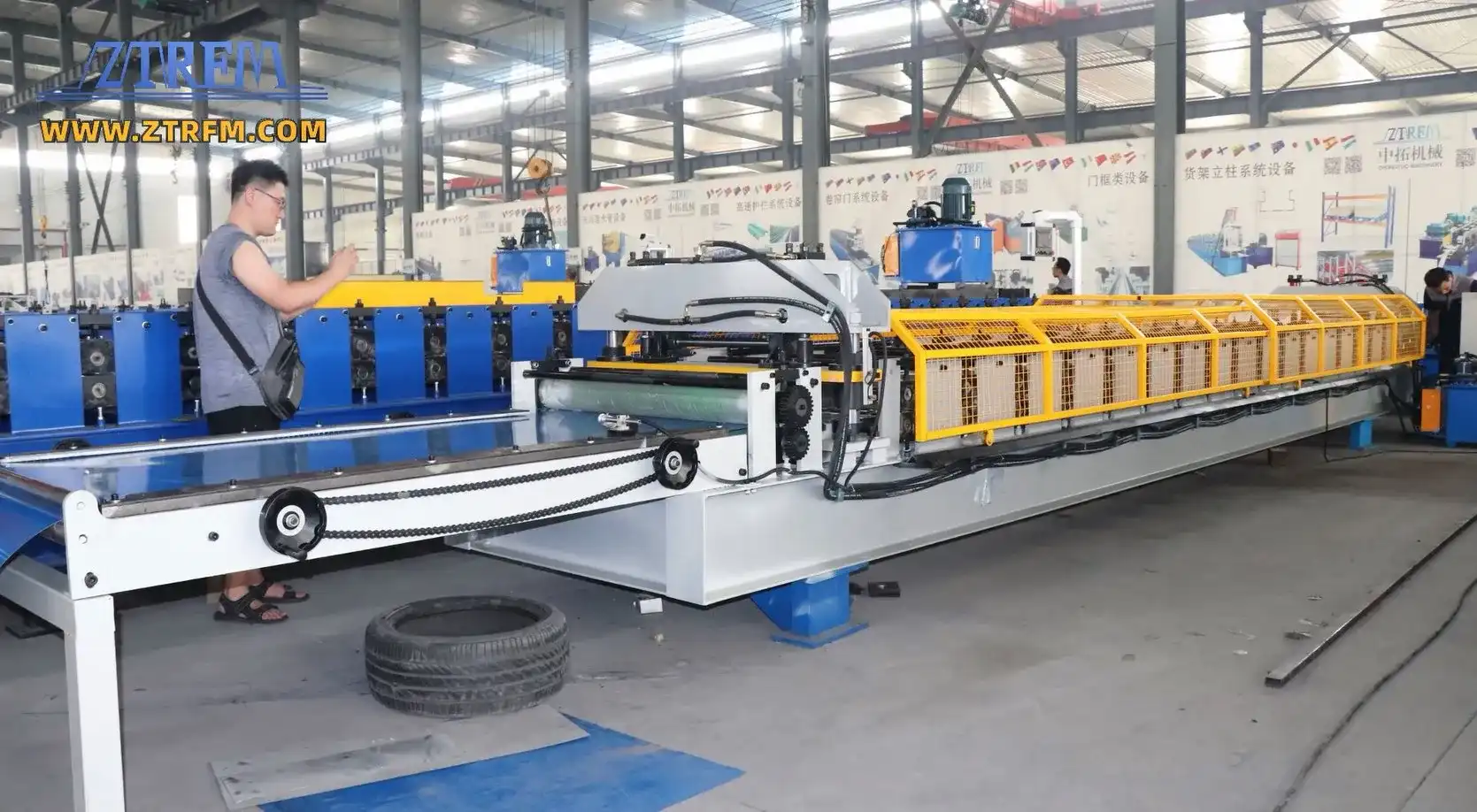
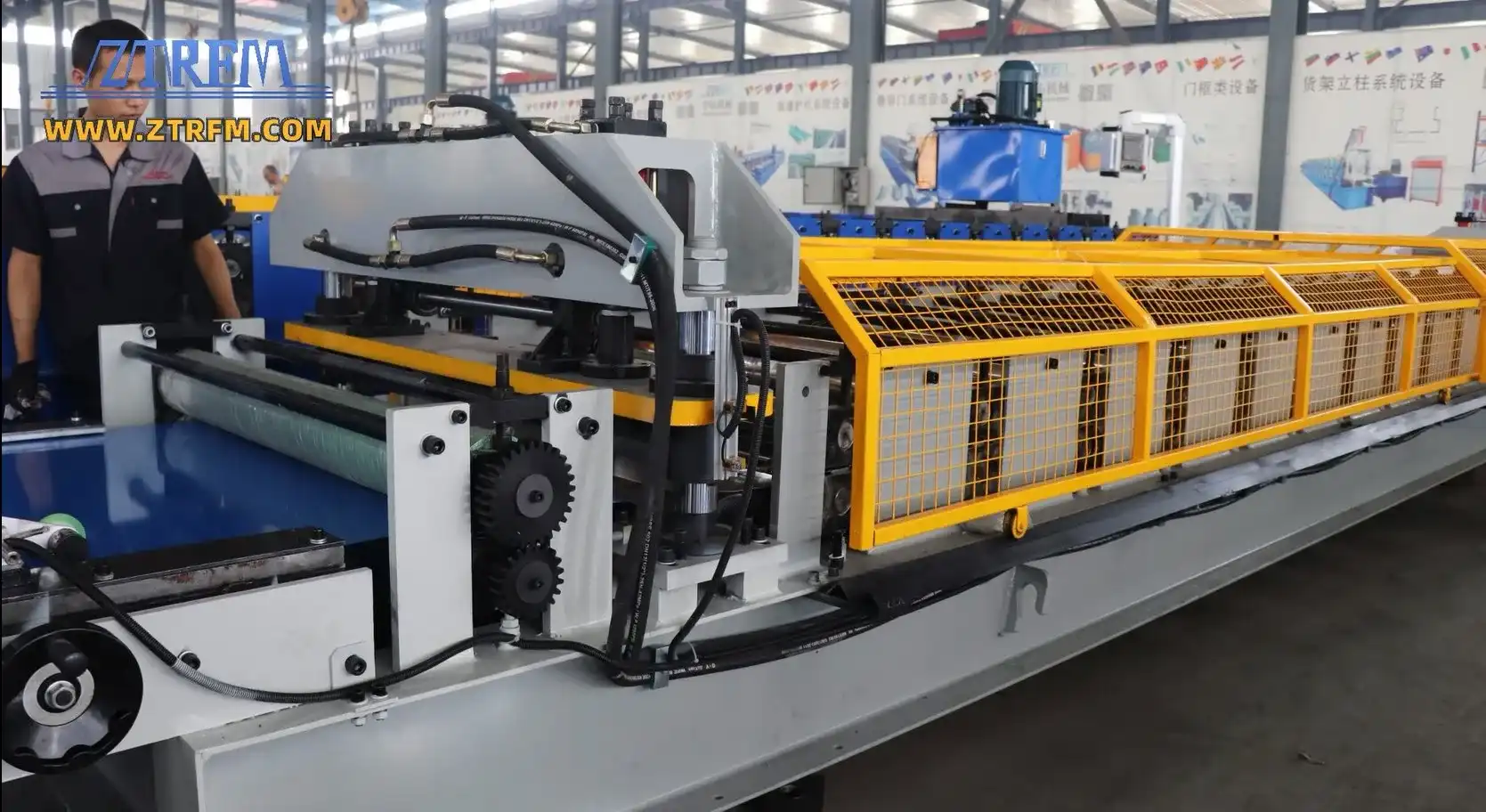
This is how a typical exposed-fastener roofing line is put together: decoiler, roll forming, hydraulic flying shear, and run-out table. The roll former has several making units that gradually bend PPGI, GI, Al-Zn, or aluminum coil into finished shapes like R-panel, PBR, IBR, or corrugated sheets. The profile accuracy and stress spread in the material are directly affected by the number of sites. For example, a 19-station design gives a balanced forming process for 24–26 gage material, which lowers the number of tiny cracks in the coating on the PPGI coil.
Some mechanical standards that tell the difference between good suppliers and bad ones are the roller shaft diameter (80mm solid shafts are the standard for this class), the roller material grade (45# forged steel, hard-chrome plated), and the frame rigidity (350mm H-beam welded structure with a 20mm center support plate). When these specs aren't there, long production runs can make it harder to keep panels flat and consistent in size.
Preparation Before Auditing a Roof Panel Roll Forming Machine Factory
Going into a factory unprepared wastes time and makes it harder to negotiate. The work you do to get ready before you leave affects every talk you have on the floor.
Define Your Procurement Benchmarks First
Before you set up a visit, write down the profile family you need (PBR, R-panel, AG panel, or others), the coil gauge range you want to run (usually 0.3–1.2 mm), the line speed you want, and any electrical compliance requirements, like UL or ETL for the U.S. market. People who are looking to buy things for roof sheet roll forming machine contractor trucks or prefab housing projects should also check to see if they need quick-change cassette tools for operations that use more than one profile.
Pre-Qualify the Supplier Before You Travel
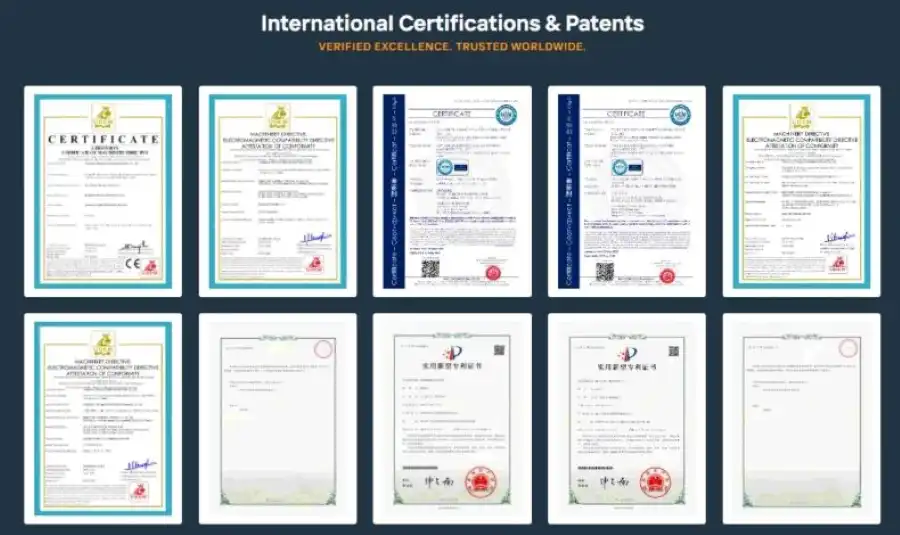
Before you go, make sure they have an ISO 9001 certificate with scope, a CE declaration of conformity, a client reference list, and a recent pre-shipment inspection report. Check the factory's license number against the National Enterprise Credit database in China. Real companies that make roofing sheet machines in Botou will have business licenses that can be checked, an address that can be found, and export records that can be followed. People who don't do this step often end up at trade companies that look like mills.
Core Steps to Conduct an Effective Factory Audit
An effective on-site audit looks at five areas that are all linked. You'll find blind spots after the machine gets to your shop floor if you skip any of them.
Here are the five areas every person who works in procurement should always look at:
- Factory infrastructure and workflow: Check that the layout of the factory floor fits the claimed output capacity. A reliable company that makes roll forming equipment has areas set aside for cutting, welding, assembly, and run testing. Watch out for equipment that isn't being used, welds that aren't finished on machine frames, or roller sets that are being brought in from outside vendors. These are all signs that something is wrong.
- Roller and shaft material verification: Ask to see the rollers' material certificates. If you harden and hard-chrome plate high-quality 45# cast steel wheels, the surface should be HRC 58–62. This type of machine should have a solid shaft width of 80 mm. Bring a Brinell hardness tester with you or have a third-party inspector test it on the spot.
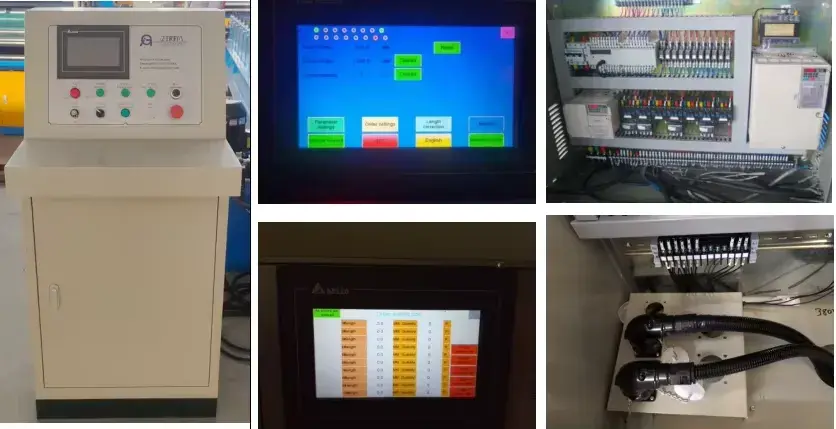
- PLC control system and drive inspection: A Siemens PLC-controlled line with gear and double-chain transmission has much better diagnostic tools and speed stability than general controllers. Check the electrical box for proper marking and the brand of the PLC. Also, ask to see the length encoder and batch counter in action.
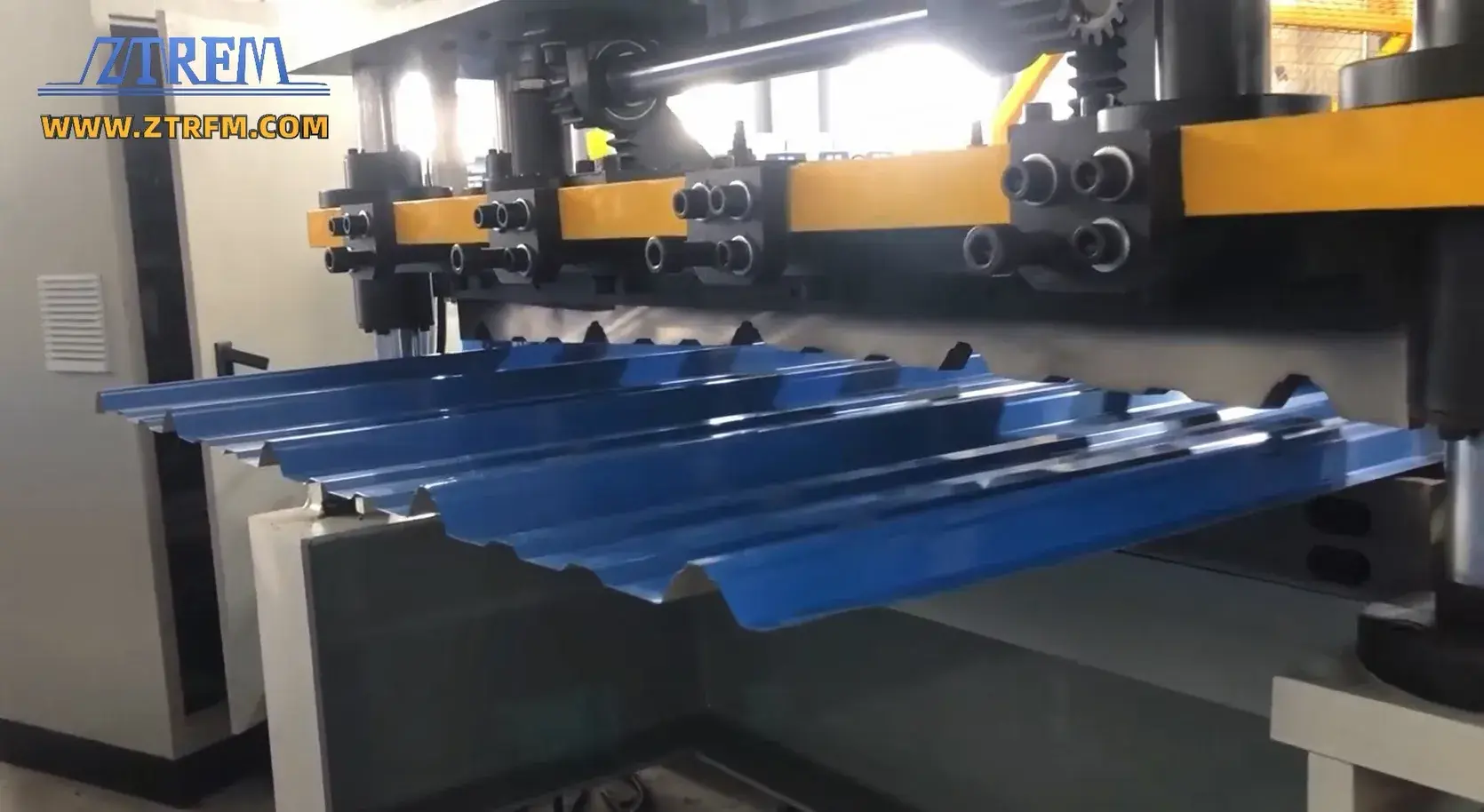
- Cutter quality and performance: Cr12MoV tool steel should be used to make the automatic flying shear cutter. When cut on the run-off table, the sides of the panels must be smooth and free of burrs. The cut zone must also still be straight. During your visit, ask to see at least 20 panels being made continuously and check out the quality of the cut end directly.
- Certifications and after-sales infrastructure: Make sure that the ISO 9001, CE, and CAS certificates are up-to-date and come from a recognized organization. Ask specifically about the ability to do diagnostics from a distance, the availability of spare roller sets, and the time it takes for technical support to respond. With cloud-based IoT remote maintenance, like Siemens cloud IoT integration, factories can cut down on machine downtime after installation by a huge amount.
These five checkpoints together give you a reliable picture of whether the factory can deliver consistent quality across repeat orders, not just for a single showcase machine.
Case Study: Auditing a Leading Roof Panel Roll Forming Machine Factory in China
In 2023, a group of roof sheet roll forming machine contractors from the United States called ZTRFM in Botou, Cangzhou, to find an in-house panel supplier. For their building in Texas, they wanted a PBR/R-panel line that could run 24–26 gauge PPGI coil at a steady rate of output.
What the Audit Revealed
The audit team confirmed that the main forming body had 19 roller stations, an 80 mm solid shaft, and rollers that were made of 45# forged steel and had hard chrome plating. During the load test, the 350mm H-beam frame with a 20mm welded center support plate did not bend. The Siemens PLC showed clear encoder readings and a length error of ±1mm across a run of 50 panels. The Cr12MoV cutter made cuts with no burrs and no obvious panel distortion at the shear zone. The audit found one place where the documentation could be better: the U.S. buyer's internal compliance system needed repair log templates to be made more consistent. This was taken care of by ZTRFM before shipment. The buyer placed the order after seeing a video of a pre-shipment trial run using their own coil sample to confirm performance.
Best Practices and Maintenance Tips Post-Audit for Maximizing ROI
Making sure you have the right machine is only half the job done. Over a 10–15 year operational horizon, the line's actual return on investment depends on how well it is maintained and watched.
Establish a Structured Maintenance Regimen
Every 500 hours of use, check the state of the roller surface and regrind or replace it as needed. Every week, check the chain tightness and grease the gears. Rollers in this type of machine are hard-chrome-plated and don't wear down easily, but rough coil coats (especially Al-Zn) make the surface wear down faster if they aren't cleaned regularly. Keep an extra roller cassette for your most-used run profile on hand. On ZTRFM-equipped lines, predictive maintenance through Siemens cloud IoT remote diagnostics lets you keep an eye on motor load, encoder shift, and hydraulic shear pressure in real time.
Conclusion
Auditing a Chinese roof panel roll forming machine is not just a procedure; it is the best way for a U.S. buyer to make sure they are buying the right equipment before they send the money. By creating clear procurement benchmarks, pre-qualifying suppliers based on documented evidence, and doing a structured five-area on-site inspection, buyers can avoid buying equipment that doesn't work well or from vendors they can't trust. These technical specs—19 roller stations, 80mm solid shafts, 45# forged steel rollers, Cr12MoV cutters, and Siemens PLC control—are good ways to tell the difference between reputable makers and less-than-reliable ones. The best providers for building a long-term connection are those that have verifiable certificates, real reference clients, and post-sale remote support infrastructure.
FAQ
1. What certifications should a credible roll forming machine supplier hold?
At the very least, ISO 9001 (quality management system), CE (meeting the requirements of the European Machinery Directive), and CAS certifications. For buyers in the United States, making sure that the electrical parts are UL- or ETL-compliant is another thing that they should do. This is especially important for the control cabinet and motor specifications.
2. How do I verify roller material grade without lab testing?
Get the material certificate from the supplier and do a spot test for Brinell hardness on-site. HRC 58–62 should be written on genuine 45# cast steel wheels that have been hard-chromed. You can also hire a third-party inspection company like SGS or Bureau Veritas to check the materials on your own.
3. What is a reasonable lead time for a standard roofing panel line from China?
Standard lines from well-known companies in the Botou area usually ship within 30 to 45 days FOB Tianjin or Qingdao. This could take up to 60 days for custom OEM tooling orders, depending on how complicated the profile is and how many trials need to be done before shipping.
4. Should I request a pre-shipment inspection video?
Yes. U.S. buyers should always ask for a video of a trial run using the coil material they want before the order ships. Before the container is loaded, this makes sure that the machine makes the goal shape at the right gauge, speed, and size tolerance.
Partner With ZTRFM for Your Next Roof Panel Roll Forming Machine Purchase
Since it began in 2014 in Botou, Cangzhou, ZTRFM has sold approved roll forming equipment to people in more than 150 countries. Tata Group and DS Group are just two of its satisfied customers. We know how to make roof panel roll forming machines for PBR, R-panel, IBR, corrugated, and special OEM shapes. Each line comes with paperwork for ISO 9001, CE, and CAS. You can email our engineering team at zhongtuorollforming@gmail.com to make an appointment for a factory audit or to get a machine specification sheet.
References
1. Halmos, George T. Roll Forming Handbook. CRC Press, 2006.
2. Steel Deck Institute. SDI Manual of Construction with Steel Deck. SDI, 2016.
3. American Iron and Steel Institute. Cold-Formed Steel Design Manual. AISI, 2020.
4. International Organization for Standardization. ISO 9001:2015 Quality Management Systems — Requirements. ISO, 2015.
5. Schuler GmbH. Metal Forming Handbook. Springer, 1998.
6. Sheet Metal Industries Journal. "Advances in Cold Roll Forming Technology for Roofing Applications." Vol. 74, 2019.