- English
- French
- German
- Portuguese
- Spanish
- Russian
- Japanese
- Korean
- Arabic
- Irish
- Greek
- Turkish
- Italian
- Danish
- Romanian
- Indonesian
- Czech
- Afrikaans
- Swedish
- Polish
- Basque
- Catalan
- Esperanto
- Hindi
- Lao
- Albanian
- Amharic
- Armenian
- Azerbaijani
- Belarusian
- Bengali
- Bosnian
- Bulgarian
- Cebuano
- Chichewa
- Corsican
- Croatian
- Dutch
- Estonian
- Filipino
- Finnish
- Frisian
- Galician
- Georgian
- Gujarati
- Haitian
- Hausa
- Hawaiian
- Hebrew
- Hmong
- Hungarian
- Icelandic
- Igbo
- Javanese
- Kannada
- Kazakh
- Khmer
- Kurdish
- Kyrgyz
- Latin
- Latvian
- Lithuanian
- Luxembou..
- Macedonian
- Malagasy
- Malay
- Malayalam
- Maltese
- Maori
- Marathi
- Mongolian
- Burmese
- Nepali
- Norwegian
- Pashto
- Persian
- Punjabi
- Serbian
- Sesotho
- Sinhala
- Slovak
- Slovenian
- Somali
- Samoan
- Scots Gaelic
- Shona
- Sindhi
- Sundanese
- Swahili
- Tajik
- Tamil
- Telugu
- Thai
- Ukrainian
- Urdu
- Uzbek
- Vietnamese
- Welsh
- Xhosa
- Yiddish
- Yoruba
- Zulu
Roll forming machine Factory Acceptance Test (FAT) checklist
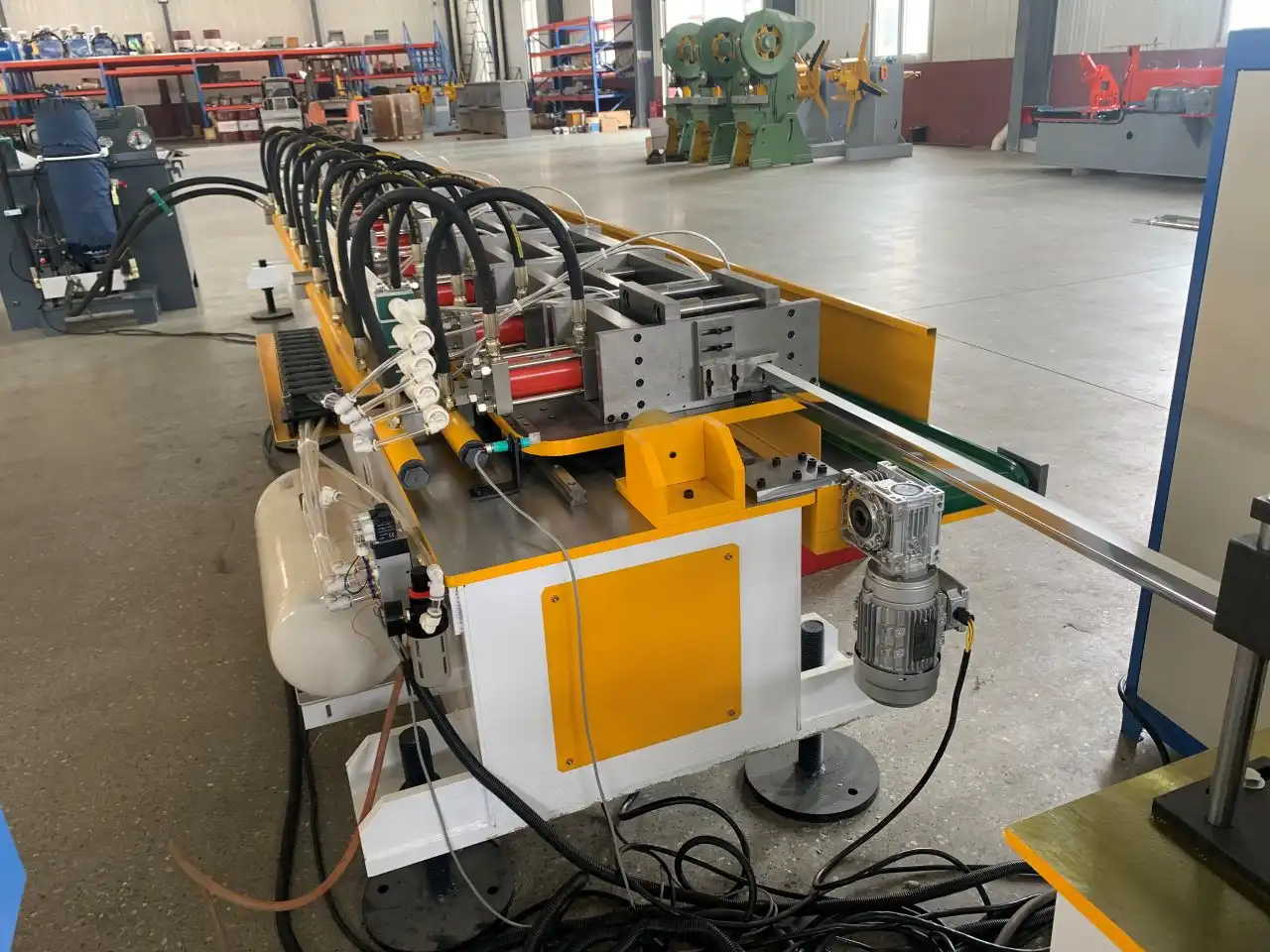
A Roll forming machine Factory Acceptance Test (FAT) checklist is a written list of tests and inspections that the buyer and manufacturer do at the factory before the machine is shipped. The checklist for a ceiling t grid roll forming machine checks the punching alignment, cut length, line speed, electrical function, and safety devices to make sure they meet the approved specifications. We at ZTRFM suggest that you run the test with your own coil, write down all the results, and fix any problems before the machine leaves our plant. This guide talks about the checks I use to keep a buyer's money safe.
Pre-FAT Checklist: Confirm the Design and Paperwork Why the FAT Exists and What to Prepare
A FAT lowers the risk of buying things and giving them orders because it replaces promises with proof. Four documents need to be ready before the test by purchasing managers, engineers, distributors, and OEM buyers. The technical specification that has been signed, the profile drawings, the electrical diagram showing voltage and frequency, and a FAT form with pass or fail limits are all shown here. Without these papers, there is nothing to compare a test result to, and arguments begin after the test results have been given. So the control cabinet is built correctly if you buy something for the United States, make sure the specs say that the power needs to be 60 Hz.
Verify Profile and Material Specifications
List the main tee and cross tee sizes, such as the face widths of 15 mm and 24 mm. These are about the same size as the 9/16-inch and 15/16-inch grids used in North America. Then check the strip. PPGI and GI are both used on our line. The T-bar top is 0.12–0.3 mm PPGI, and the T-bar bottom is 0.2–0.4 mm GI. Check the strip width, coil weight, and whether the finished grid needs to meet ASTM C635, which is a standard for making, testing, and certifying metal suspension systems for ceiling panels. Written limits stop arguments in the future.
Review Layout and Custom Functions
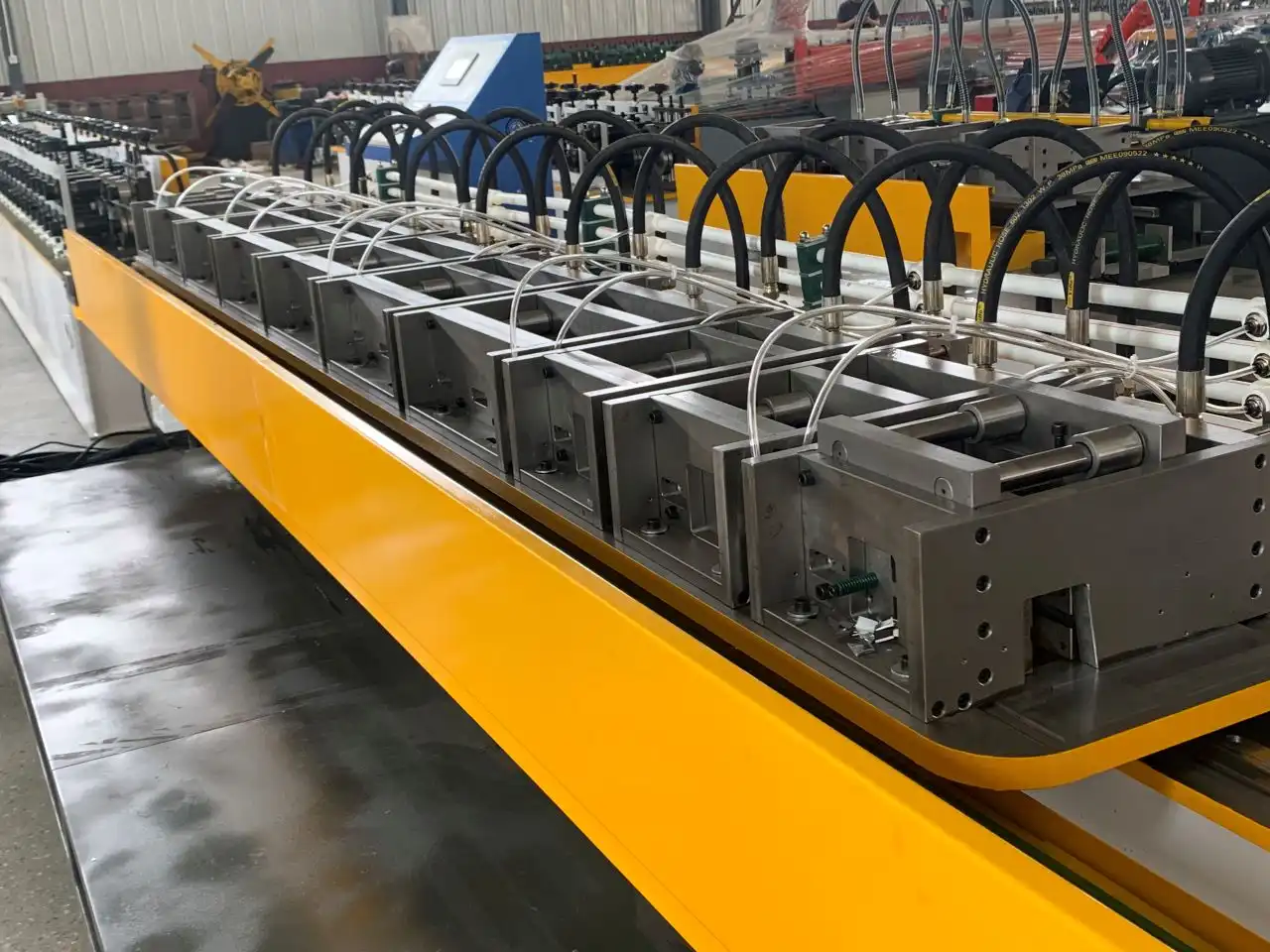
Compare the line layout to the drawing that was approved. The decoiler can hold up to 1.5 tons of weight, and the inside diameter of the coil is 450–550 mm. It takes 18 stations to form the main tee, and 16 stations to form the cross tee. With punching and cutting turned on, the speed ranges from 0 to 20 m/min. Next, make sure there are no OEM options that don't work, like custom hole patterns, inline embossing, servo feed, or dual-profile T-grid heads, and choose which ones the FAT will test. Share your drawings only with the named engineers if there is an NDA on them.
Mechanical and Electrical Inspection Checklist
Frame, Decoiler, and Feeding
First, look at the frame to see if the welds are good, if it's flat, and if there are any anchor points. Then put a loaded coil on the decoiler and run it. The specification says that it should have a 1.5-ton rating and an inner diameter range of 450–550 mm. It should also feed the strip directly into the leveling and guiding units. Because PPGI surfaces are easy to scratch, keep an eye out for strip drift, coil telescoping, and scratches on the coating. After a short run, check every lubrication point and touch the bearings to see if they are getting too hot.
Rollers, Stations, Punching, and Cutting
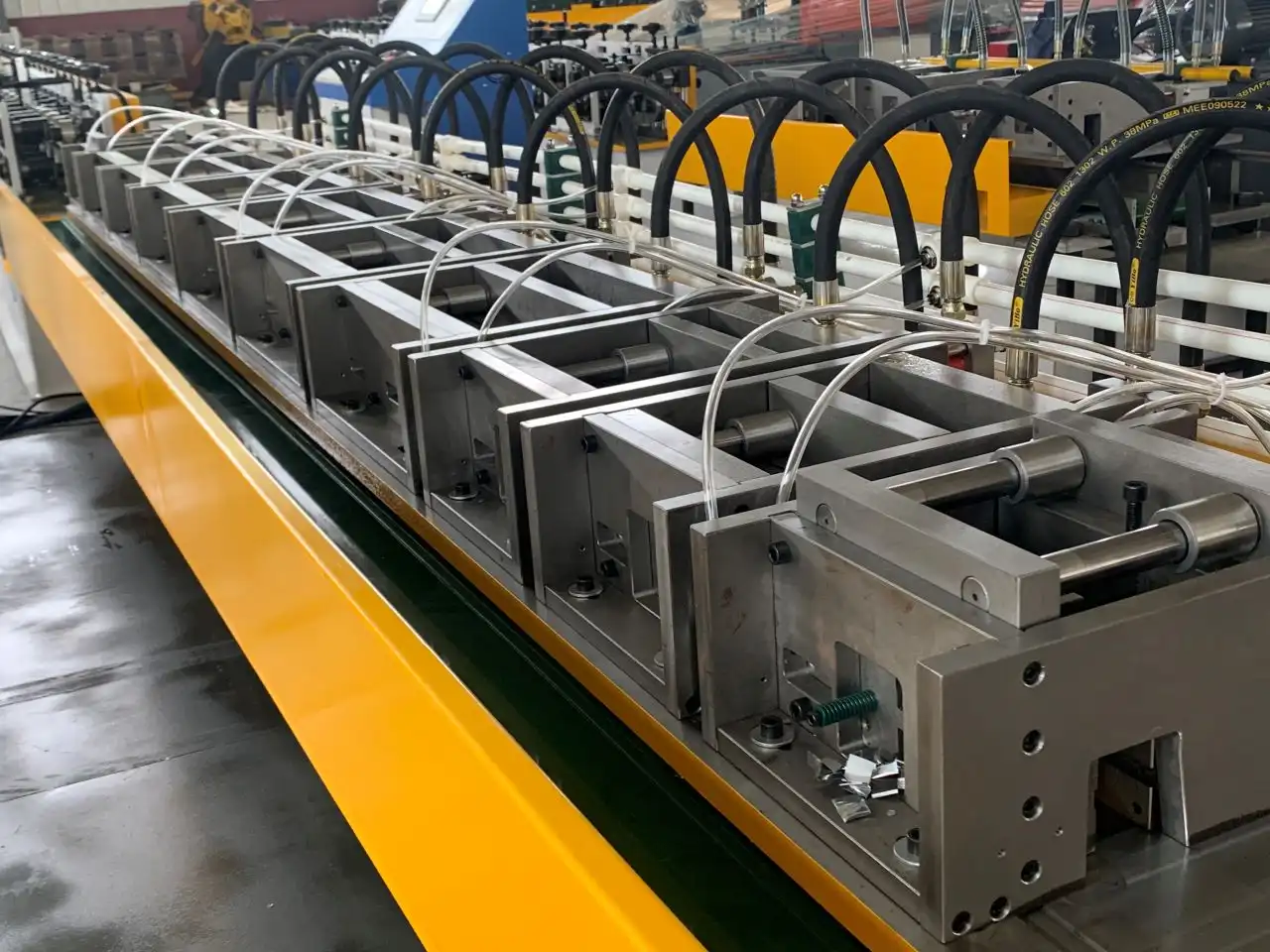
Check each of the 18 forming stations for the main tee and the 16 for the cross tee one at a time. Check the material certificates and the finish on the rollers' surface. They are made of GB-Cr12 steel and turn on 45# steel shafts that are 50 mm in diameter. After that, check the cutting unit and punching die for access, clearance, and burrs on the cut end. When punching and cutting are turned on, run the line at a speed between 0 and 20 m/min. This is because empty running hides alignment problems.
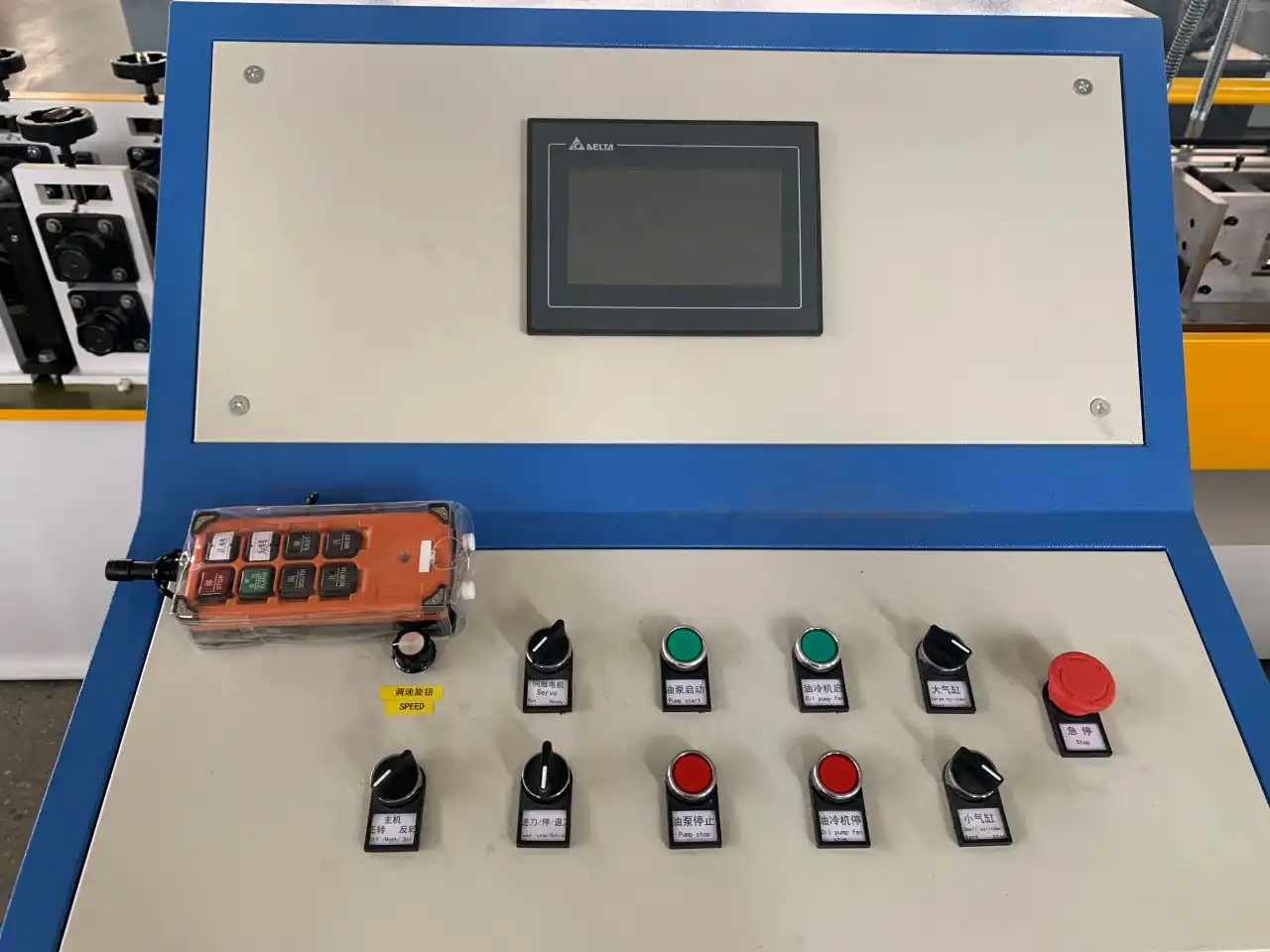
Electrical, Control, and Safety
The drives, motors, PLC, HMI, and encoder are the first parts of the electrical test. Without help from the factory engineer, operators should be able to enter lengths, change recipes, read alarms, and fix faults. Each emergency stop must be pressed, each guard interlock must be opened, and labeling and grounding must be checked. These checks can be based on NFPA 79 for industrial machinery and ISO 13849-1 for safety-related control parts. Under 29 CFR 1910.212, OSHA also sets rules for ceiling t grid roll forming machine guarding in the United States.
Production Trial and Acceptance Criteria
Run the Trial with Your Own Coil
The most useful part of a FAT is the production trial. Give them the PPGI or GI coil you want to use, because using a different steel can hide problems with the shape, the springback, or the coating. Decoiling, leveling, feeding, punching, roll forming, cutting, and collecting the product should all be done in order. Save pieces from the beginning, the middle, and the end of the coil. If the sizes change between the samples, the line needs to be fixed before it can be shipped. During the same run, write down speed, stops, and pieces that were turned down.
Measure Profile, Punching, and Straightness
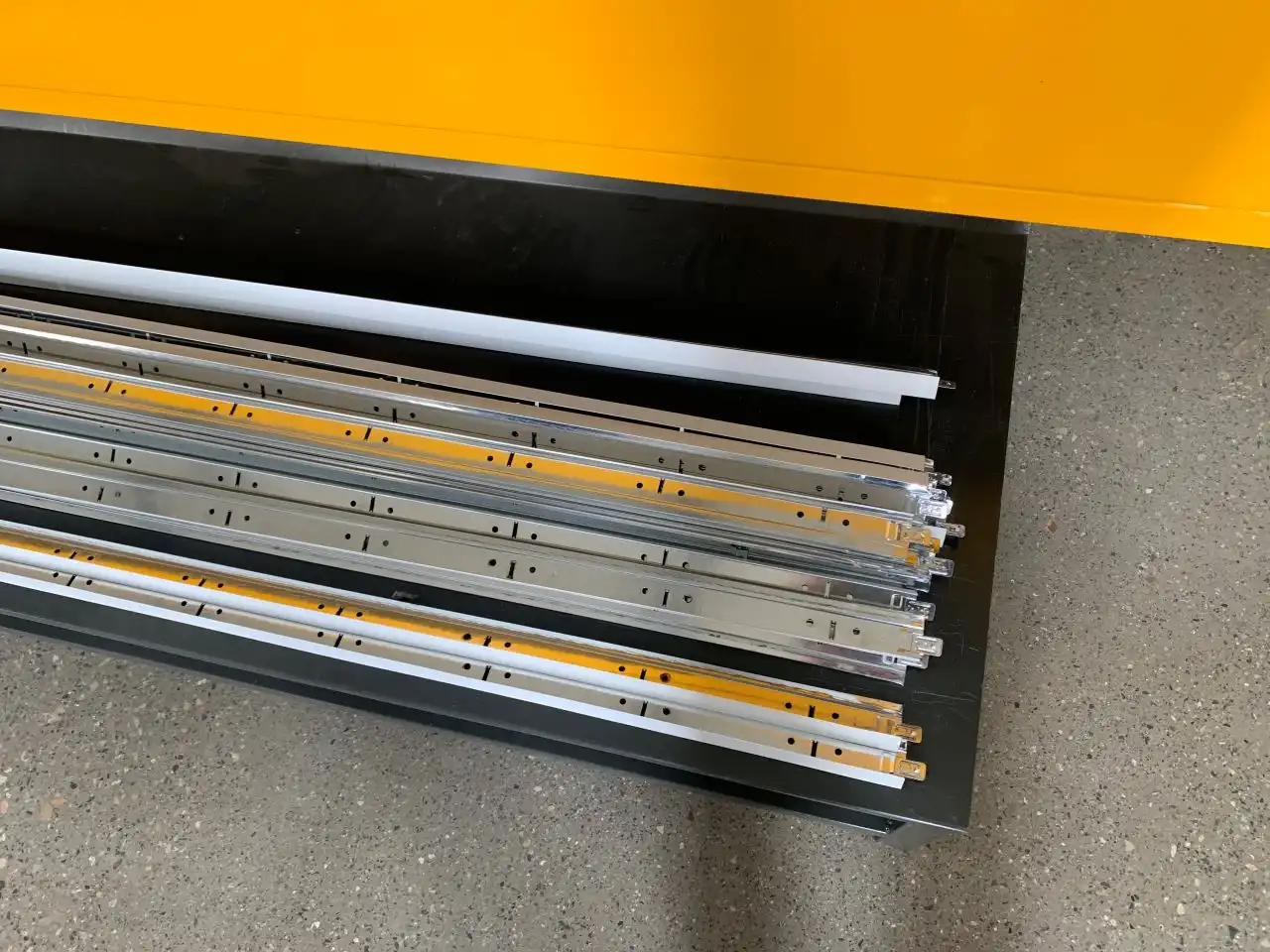
Make sure the calipers are level and use a flat table to measure each sample. Make a note of the web's height, width, flange width, position of holes and slots, cut length, and how straight it is. Check each value against the range given in the signed specification. A simple table with four columns would work well for me: item, required value, actual value, and pass or fail. Don't forget to check that the cross tees can fit into the main tees without any force. Even if the measurements are right, the profile can still fail in the ceiling. Lastly, look at the surface to see if there are any roller marks or cracks in the coating.
Reliability, Records, and Non-Conformities
Run the line for as long as it takes to see if there is any heat buildup, vibration, or intermittent alarms. Agree on the length of time ahead of time. After an emergency stop, add a controlled restart. For each defect, write down a picture, the reason for it, who is responsible, and the date it was fixed. Big problems, like the wrong sizes or a broken safety device, need to be fixed before the shipment or confirmed by doing another FAT. Small things can only go to site acceptance if both parties sign off on the decision.
Automation Level, Common Mistakes, and Final Sign-Off
Automatic or Semi-Automatic Line
Decoiling, servo feeding, punching, forming, cutting, and stacking are all done on an automatic line. It works well for plants that need to keep up a steady output with fewer workers. At first, a semi-automatic ceiling t grid roll forming machine is cheaper, but it needs more manual control. This makes it a good choice for smaller factories and distributors with a range of customers. Use the same checklist to test both, and then compare the total cost of energy, tools, labor, maintenance, installation, and the amount of money you expect to get back. When you need more people to run a cheaper machine, it can cost you more in the long run.
Common FAT Mistakes
Most arguments are caused by four mistakes. Buyers first test with steel that isn't the real thing. Second, they only look at speed and don't look at accuracy or reject rate. Third, they skip profile changeover time, which is important when production changes from 15 mm grids to 24 mm grids or from main tees to cross tees. Fourth, they accept documents that aren't complete or just skip the FAT. The same thing can be done to fix every mistake: written rules, your own work, recorded data, and a named person in charge of every open item.
Final Sign-Off and Shipment Release
Finish the FAT report, include the measurement table and samples that were kept, and make a list of unfinished tasks with due dates. Compare the final model, roller tooling, punching dies, cutting system, electrical parts, spare parts, labels, and packing list to what was agreed upon in the contract. Don't send the shipment until all of the safety, quality, speed, and mechanical checks are complete. Then, make plans for the foundation work, utilities, lifting, installation, and accepting the site. Pick a supplier that offers training, spare parts, and FAT records that can be tracked, like ZTRFM, a company that was founded in 2014 and is ISO 9001, CE, and CAS certified.
Conclusion
With a FAT, a purchase specification for a ceiling t grid roll forming machine can be turned into measured proof. A written plan for the profile, strip, layout, and power supply is the first step in the process. The decoiler, the 18-station main tee and 16-station cross tee tooling, as well as the punching and cutting units, are then inspected mechanically. Finally, electrical and safety tests are run. A test run with the buyer's own PPGI or GI coil, with samples taken at the beginning, middle, and end, shows if the dimensions, punching position, and straightness stay the same during continuous running. The decision to ship is backed up by written tolerances, a records table, and closed non-conformities. The process is the same for both automatic and semi-automatic lines, but the cost and amount of work are different. This leads to fewer disagreements, lower risk during commissioning, and equipment that fits the contract.
FAQ
1. What is a FAT for a ceiling t grid roll forming machine?
The machine is checked against the approved specification during a factory inspection and production test that is done before it is shipped.
2. What should be tested during the FAT?
Check the electrical and safety features, the size of the profile, the position of the punch, the length of the cut, the quality of the surface, and the speed of the line. Our line can go from 0 to 20 m/min and can cut and punch.
3. Can a semi-automatic machine have a FAT?
Yes. It's the same method, but the checks are the same as when you do it by hand.
4. Should the buyer provide the raw material?
Yes, whenever it's possible. In the ranges of 0.12–0.3 mm and 0.2–0.4 mm, use the PPGI or GI coil that is meant for production.
5. What documents should follow FAT approval?
The FAT report, measurement records, operation manual, electrical diagrams, spare parts list, and lubrication schedule should all be brought to you signed.
Request a Ceiling T Grid Roll Forming Machine FAT Checklist or Quotation
Send ZTRFM your profile drawings with the dimensions (15 mm or 24 mm), steel grade and thickness, speed goal, and 60 Hz power needs. Our engineers will then make a technical proposal and FAT plan. When it comes to making ceiling t grid roll forming machines, we offer OEM, ODM, and all-in-one service. To find out more, email zhongtuorollforming@gmail.com.
References
1. International Organization for Standardization, ISO 9001: Quality Management Systems – Requirements, 2015
2. National Fire Protection Association, NFPA 79: Electrical Standard for Industrial Machinery, 2024
3. International Organization for Standardization, ISO 13849-1: Safety of Machinery – Safety-Related Parts of Control Systems, 2023
4. International Organization for Standardization, ISO 12100: Safety of Machinery – General Principles for Design, 2010
5. Halmos, G. T., Roll Forming Handbook, CRC Press, 2005
6. Kalpakjian, S. and Schmid, S., Manufacturing Engineering and Technology, Pearson, 2014