- English
- French
- German
- Portuguese
- Spanish
- Russian
- Japanese
- Korean
- Arabic
- Irish
- Greek
- Turkish
- Italian
- Danish
- Romanian
- Indonesian
- Czech
- Afrikaans
- Swedish
- Polish
- Basque
- Catalan
- Esperanto
- Hindi
- Lao
- Albanian
- Amharic
- Armenian
- Azerbaijani
- Belarusian
- Bengali
- Bosnian
- Bulgarian
- Cebuano
- Chichewa
- Corsican
- Croatian
- Dutch
- Estonian
- Filipino
- Finnish
- Frisian
- Galician
- Georgian
- Gujarati
- Haitian
- Hausa
- Hawaiian
- Hebrew
- Hmong
- Hungarian
- Icelandic
- Igbo
- Javanese
- Kannada
- Kazakh
- Khmer
- Kurdish
- Kyrgyz
- Latin
- Latvian
- Lithuanian
- Luxembou..
- Macedonian
- Malagasy
- Malay
- Malayalam
- Maltese
- Maori
- Marathi
- Mongolian
- Burmese
- Nepali
- Norwegian
- Pashto
- Persian
- Punjabi
- Serbian
- Sesotho
- Sinhala
- Slovak
- Slovenian
- Somali
- Samoan
- Scots Gaelic
- Shona
- Sindhi
- Sundanese
- Swahili
- Tajik
- Tamil
- Telugu
- Thai
- Ukrainian
- Urdu
- Uzbek
- Vietnamese
- Welsh
- Xhosa
- Yiddish
- Yoruba
- Zulu
How to install and commission a roll forming machine without a technician on site?
You don't need a technician on site to set up and start up a trapezoidal sheet roll forming machine if you prepare the foundation, hire qualified mechanical and electrical staff, and stay in touch with the manufacturer. First, check the site. Then, level the frame and wire the controls. Finally, run the machine without any parts. Finally, thread the coil. Finally, measure the test sheets. There may still be a need for a visit if the custom profiles are complicated, there is a lot of work to be done, or the local code is very strict. This guide will show your team how to use ZTRFM for remote commissioning so that they can start making things go faster and save money on travel.
Prepare the Site and Learn the Machine Before It Arrives Check the Floor, Power, and Team
Before the crate even ships, it is set up remotely. I think you should compare the layout drawing to the floor space, the strength of the foundation, the height of the ceiling, the access for moving the coils, and the lighting. Our standard machine has a 5.5 kW main motor and a 7.5 kW hydraulic station. It runs on 380V, 50Hz, three-phase power. You can change the voltage. As soon as possible, let us know about your plant's power supply. Then, have a licensed electrician check that your grounding and breakers are the right size according to NFPA 79 and the rules set by your state inspector. A strong team needs one mechanic, one electrician, someone to run the lift, measuring tools, and a laptop for video calls.
Trace the Material Path and Key Components
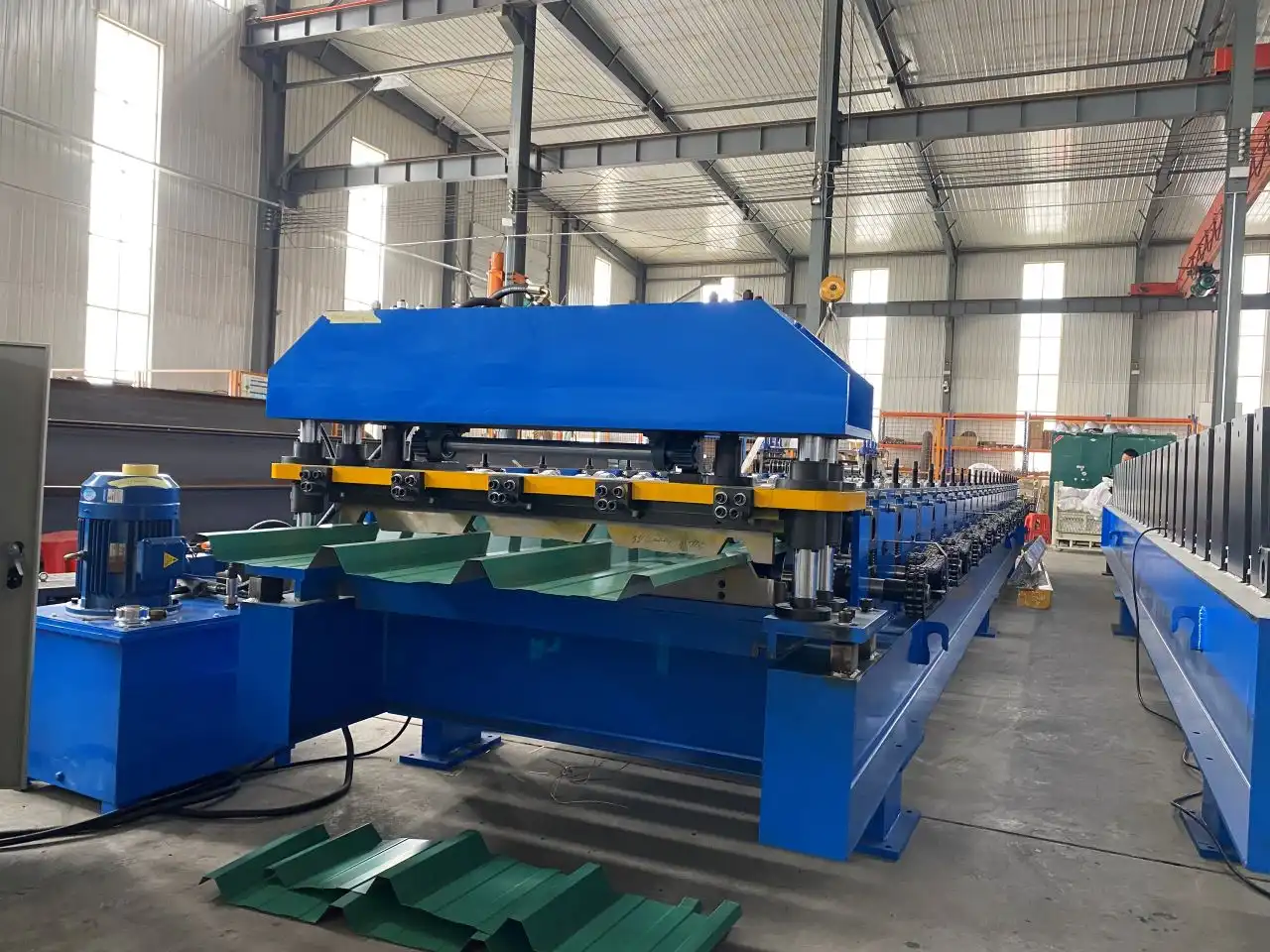
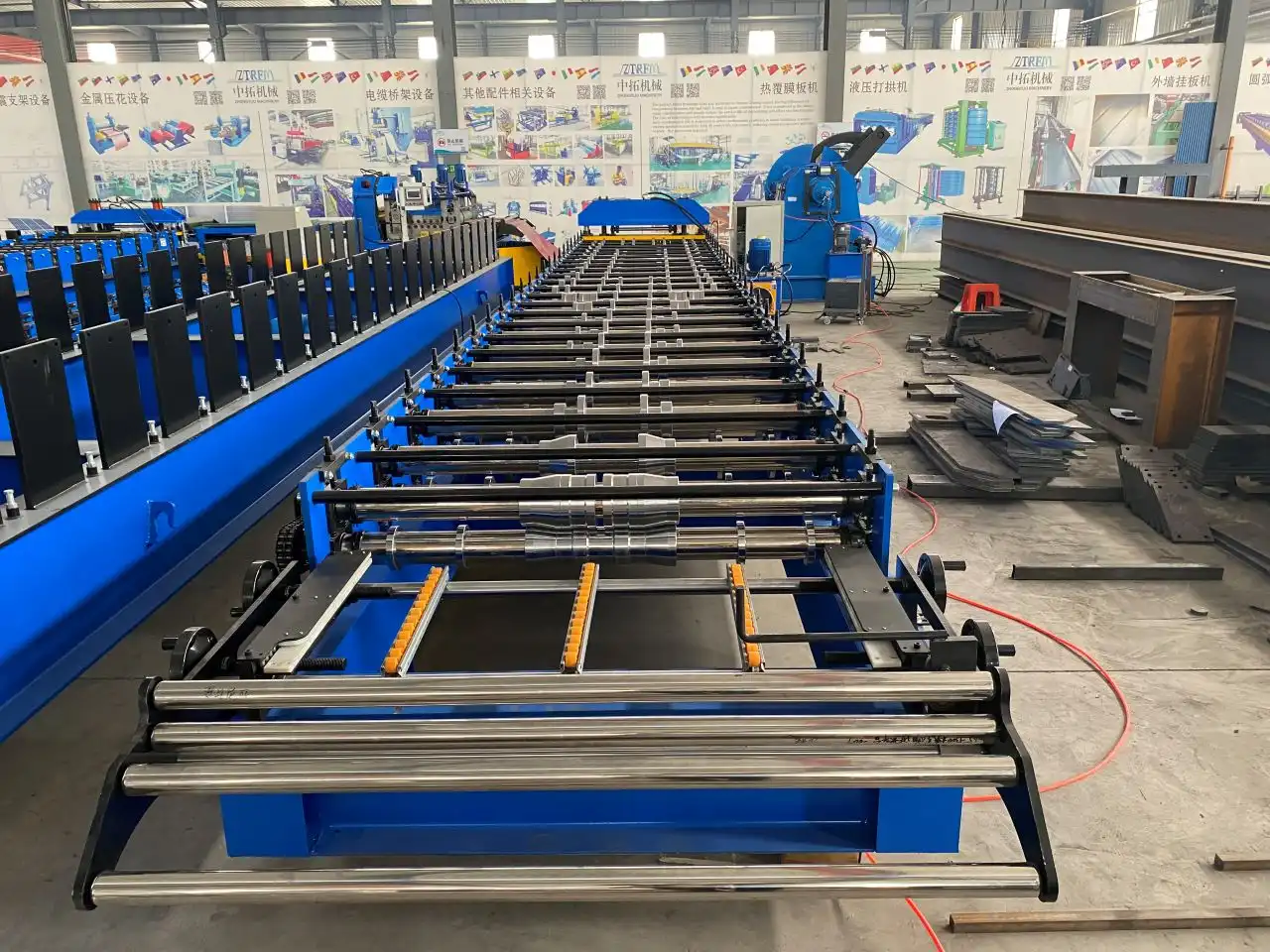
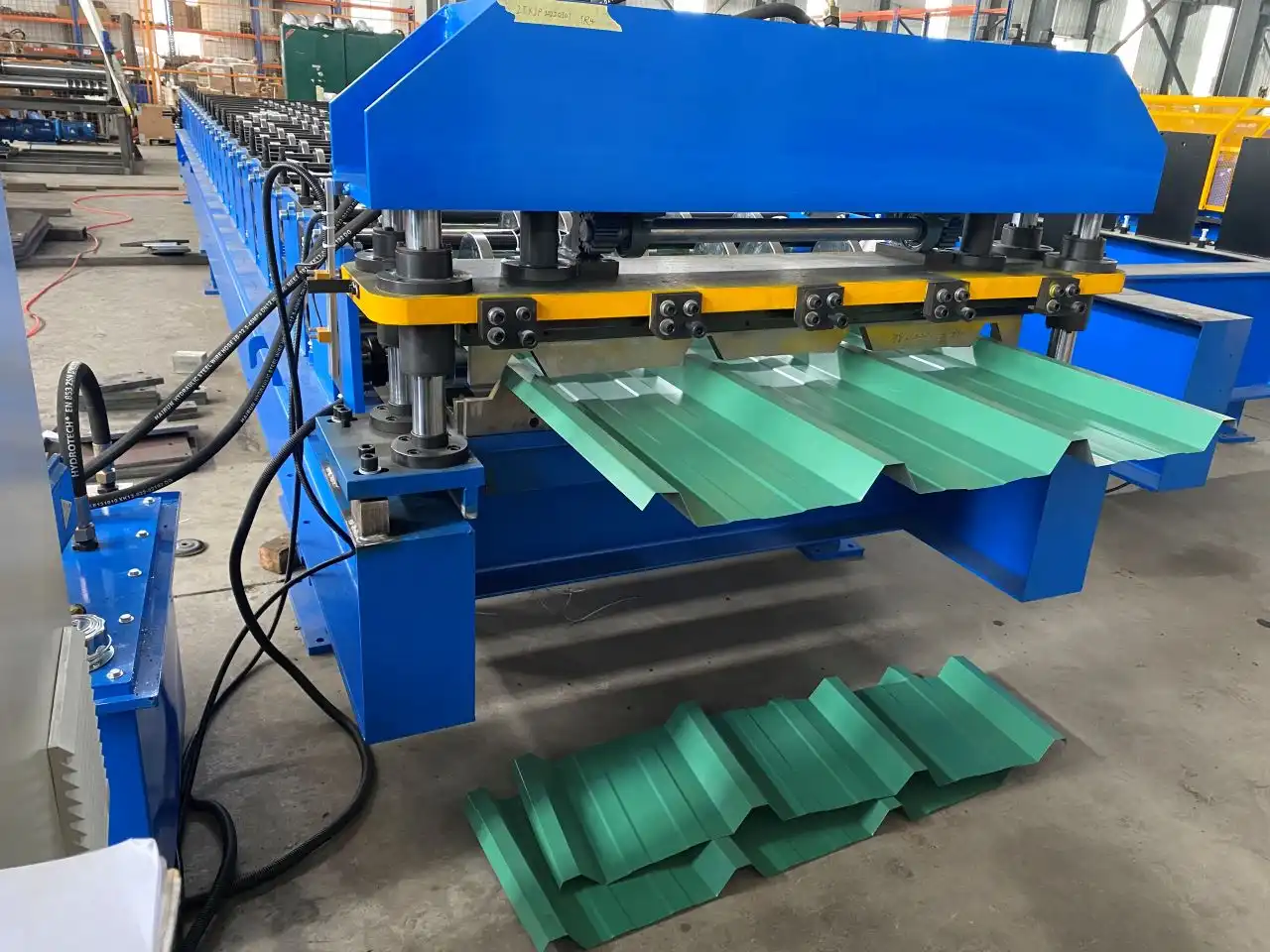
Before putting the decoiler, entry guide, forming stations, hydraulic cutter, and run-out table together, your team should draw a full path for it. Check that the decoiler's size, weight, inner diameter, strip width, and direction of feeding all match the coil. The rollers on our model are set up on 26 solid 80 mm shafts. This roller is made of 45# steel and has a hard chrome finish. The frame is made of 350H steel. If you know where each shaft, spacer, hose, sensor, and encoder is, it's easier to follow instructions sent from afar. Take pictures of each part when it gets there and compare them to the list of things that were packed. They can quickly find problems this way, even when no one else is in the room.
Match Your Coil and Profile to the Machine Specs
Most problems are stopped at startup by material fit. This machine can make aluminum, PPGI, and GI coils that are 0.3 mm to 1 mm thick and 1000 mm or 1250 mm wide. You can change these sizes to fit your needs. This is the range of thickness for 24 and 22 gauge steel and 0.032-inch aluminum sold in the US. You can slow the line down or speed it up to 60 meters per minute. It can also be cut to any length between 3 feet. The range of cuts it can make is ±1 mm. Send us a picture of yourself before you place your order. We talk you through it and let you record a test run with your own coil before it ships.
Install and Commission in a Controlled Sequence
Position, Level, and Anchor the Frame
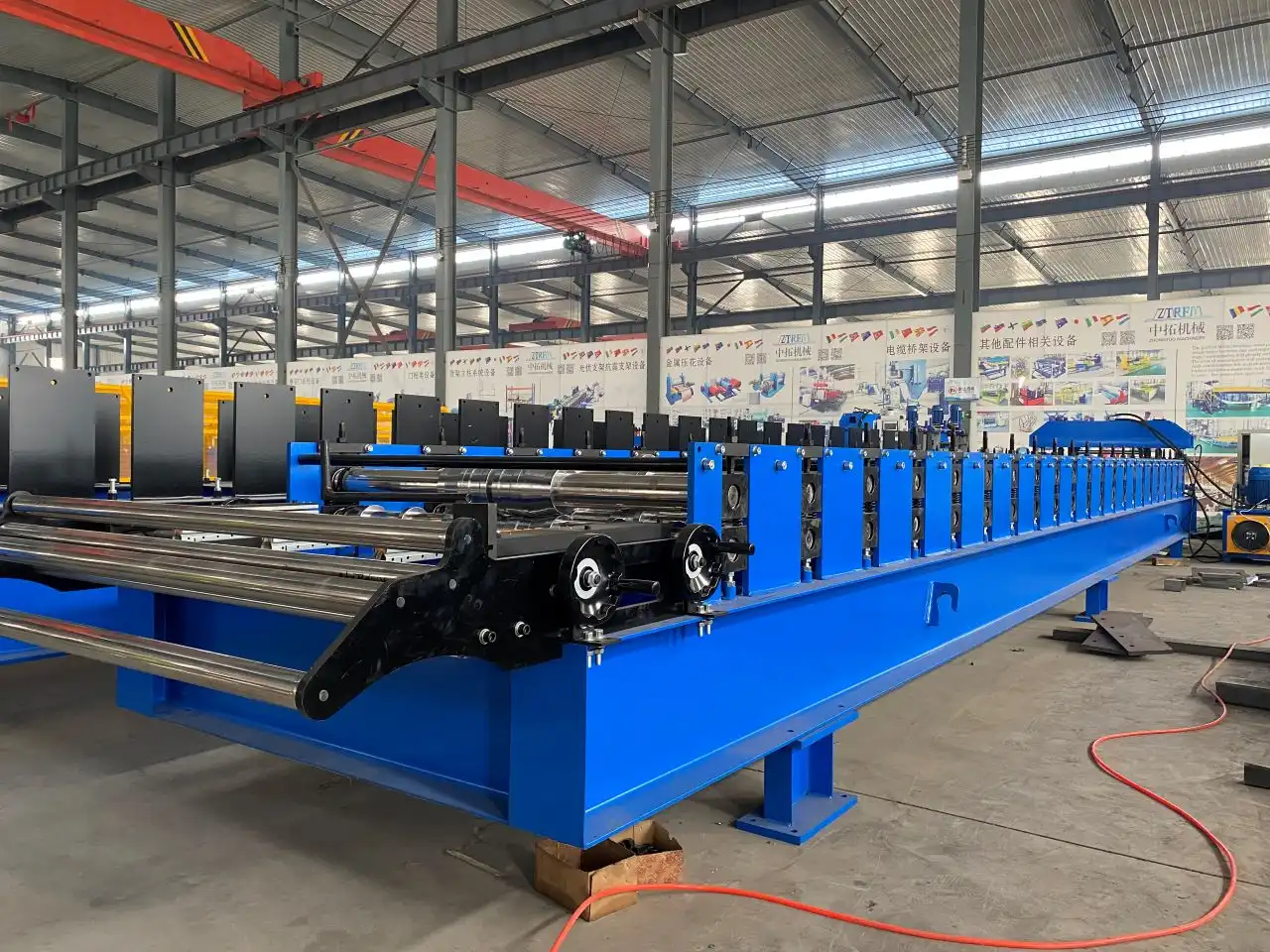
Start with the frame. Make sure the forming stands are level in both directions and tighten the anchor bolts before you connect anything else. Then, put the trapezoidal sheet roll forming machineon the base that has already been set up. A string line or laser should then be used to line up the decoiler, entry guide, cutter, and run-out table so that they are all in the middle. This isn't lined up right, which leads to tracking drift, edge waves, and uneven roller pressure later. Our 350 H steel frame is a stable base, but it will only stay stable if it is set up level and strong. When you tighten the screws, the frame may move a little, so check the alignment again afterward. We'd like to see a picture of each step.
Wire the Electrics and Run Dry Tests
If you are wiring the cabinet, make sure you follow NFPA 79 for industrial machinery. Make sure the circuit is safe and that the cables are the right size. Before you put anything in the machine, turn it on and test the alarms, emergency stops, guards, and interlocks. Make sure the oil level is right, the motor is turning, and the hydraulic pressure is right. After that, slowly run the line without the coil. Keep an ear out for odd sounds, vibrations, or leaks. You can use Siemens PLC to control our lines and Siemens cloud IoT to do diagnostics from afar. This lets our techs see alarms right away. You should never go around a safety device during these tests; call us first.
Load the Coil and Form the First Sheets
Always use rated tools and keep your hands away from any places where they could get pinched. You have to feed the strip through the entry guide, center it, and move it by hand to the first stations before you can use the motor. Just add the PLC file that the supplier said was okay, along with the sheet size, speed, and number of copies. Move the guide and rollers slowly while you check the marks on the surface, the shape of the edges, and that everything is in the middle. Find out how long, wide, tall, pitched, straight, and well-cut the first sheets are. Then, run a bigger batch at the speed you want to make sure you can do it again and again. Write down the grade of the material, its thickness, the settings, and photos in one log.
Troubleshoot, Validate, and Protect Your Crew
Fix Tracking and Profile Defects
Some simple things cause most early bugs to happen. Tracking drift is usually caused by a coil that isn't lined up right, an entry guide that is lost, uneven roller pressure, or a frame that isn't level. Wavy edges and ribs that aren't straight mean that there is too much pressure, the rollers aren't spaced correctly, the coil isn't uniform, or the tools are broken. You won't be able to figure out which setting fixed the problem if you don't write down what happens after each change. Send us a short video of the sheet being taken off the rollers along with the sizes you need. In this way, our techs can figure out what went wrong. Don't change the machine in any big ways until we've talked about them.
Correct Cutting Accuracy Problems
The hydraulic cutter has a range of ±1 mm, so mistakes in length should be checked in a planned way. Start with the encoder, the sensor's position, and the PLC's length compensation. Next, make sure there is enough space between the sheet and the blade. The Cr12MoV blade should be able to cut through the sheet without damaging it or warping it. After that, check the hydraulic pressure and see if the wheel under the coil is moving. It's likely that the blade is worn or that the clearance is off if there is a burr along the cut edge. Coated panels can also rust if they have burrs on them. Get a pen and paper and write down the alarm codes, the length setting, and the result. Then, send these to support so they can check them against the factory settings.
Accept the Line and Confirm Safety
Before it is accepted for real, the top speed must be proven to be more than 60 meters per minute. How much is actually made depends on how long the sheet is, how often the coil is changed, how many times the trapezoidal sheet roll forming machine is cut, and how skilled the person running it is. Try out a sample batch and see how well it meets the agreed-upon standards for size, surface quality, straightness, and cut accuracy. Then, compare it to the records and signatures. Make sure that every emergency stop, guard, and interlock works before you hand it over. Set up a lockout and tagout procedure (29 CFR 1910.147) and follow it. The safety rules that OSHA gives to stop amputation risks can be used right away on a rotating roller line. There are quality, safety, mechanical, electrical, and hydraulic checks that must all be passed before regular production can start.
Plan Support, Procurement, and Maintenance
Decide Between Remote and On-Site Support
You should pick one based on how hard the project is, who in the area can help, how tight the deadline is, and how much risk you are willing to take. Your maintenance team has to do more work for remote commissioning to work, but it costs less and starts faster. It works fine with a standard profile and standard configuration. But if you need help with custom profiles or controls you don't know how to use, give an engineer a call. Check with each supplier to see what kinds of things they offer, like foundation drawings, electrical schematics, manuals, installation videos, backups of parameters, operator training, spare parts, and so on. ZTRFM was set up in Botou, Cangzhou, in 2014. Our machines are used in more than 150 countries, and we have ISO 9001, CE, and CAS certifications.
Build a Procurement Checklist
For mistakes and extra costs to stay away, use a written checklist. Check the voltage, the safety standards, the target speed, the range of thicknesses, the coil sizes, the profile geometry, the range of lengths, the material, and the range of thicknesses. Get a quote that breaks down the costs of the main machine, the cutter, the decoiler, the hydraulics, the controls, the tools, the shipping, the imports, the packaging, the freight, the spare parts, and the tools. Compare suppliers based on more than just price. You should also look at the quality of their paperwork, how much experience they have with exporting, sample sheets, their ability to make changes, and how quickly they respond. We make the decoiler, the former, the stacker, and any spare parts, so our company is in charge of the whole line. Check each quote's delivery terms and any small print as well.
Maintain the Line After Startup
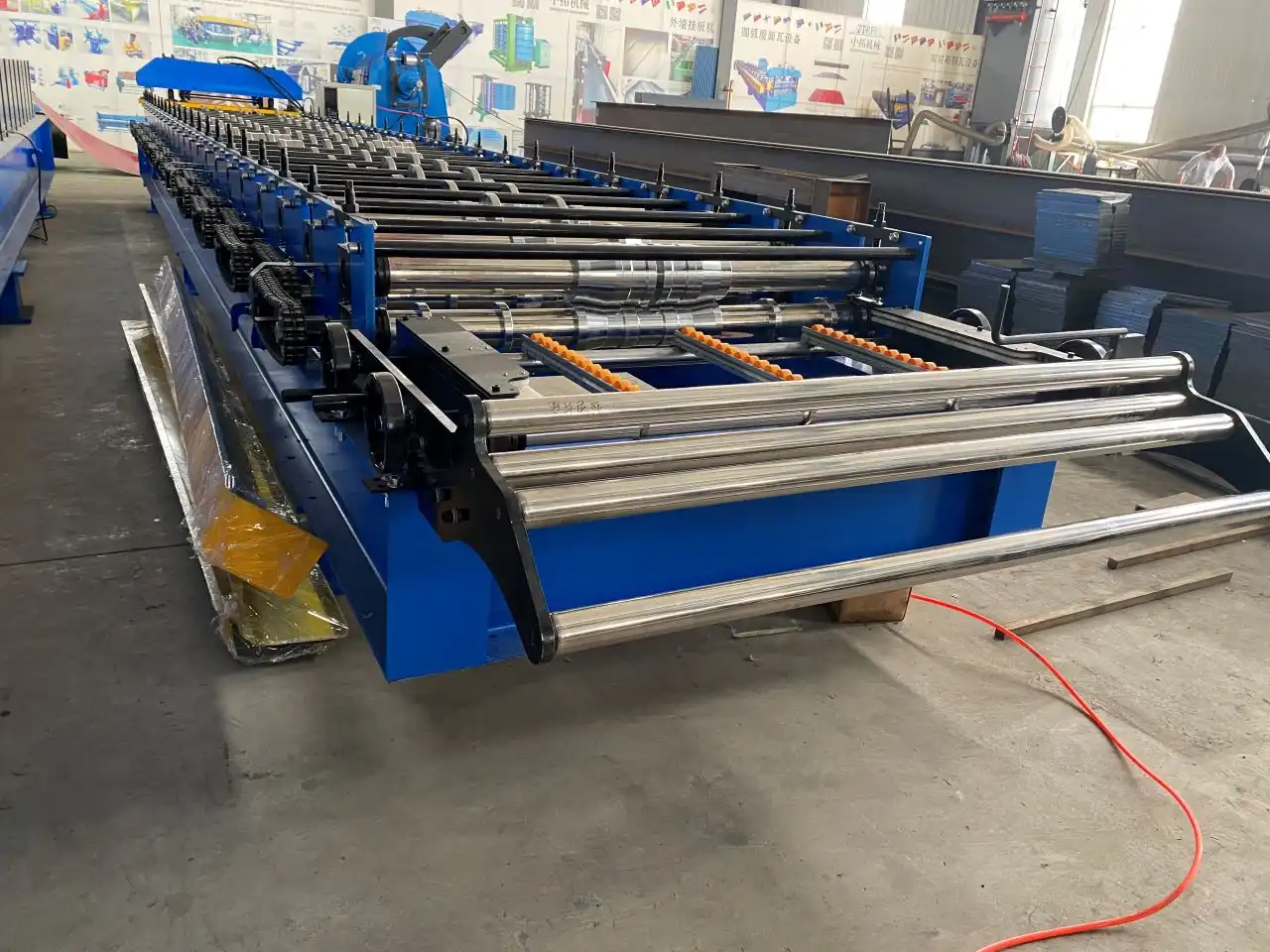
It's not enough to just do the work to truly own it. With its cast iron frame and gearbox transmission, it can keep making things with little upkeep. However, it is still important to check it regularly. Check the hydraulic oil, fasteners, chains, gears, rollers, sensors, and emergency stops every day or every week, as well as the temperature of the cabinet. Get rid of the metal pieces, oil, and dust before they reach the moving parts or the coated sheet that needs to be protected. At the times given in the manual, check the bearings, hoses, blades, and terminals. Once the changes to the PLC program are approved, they are saved again, and a service log is kept. Our engineers can then make diagnoses from afar with less guesswork.
Conclusion
As long as the right steps are taken first, a trapezoidal sheet roll forming machine can be set up from afar. Checks of the site, matched utilities, and a small qualified team set the stage. It is possible to start stable production after a set order of leveling, wiring, dry runs, coil threading, and measured test sheets. When you change one setting at a time, you can see what all the bad things are that can happen with tracking, profiling, and cutting. Not just the top speed should be checked to make sure it's safe; the quality of each batch and any safety devices should also be looked at. It costs less to get help over the phone than to come in person, but you might still need to come in person for help with complex custom profiles. Clear documentation, itemized quotes, and regular maintenance all help to protect value that lasts for a long time.
FAQ
1. How many people do I need to install the machine?
Form a small group with an electrician, a mechanic, and someone who can run a lift. It is smart to add someone who reads the manual and talks to our customer service staff.
2. How long does remote commissioning take?
When it happens depends on how ready the site is, how big the machine is, how hard the profile is, and how skilled the operator is. Give people jobs to do like planning, putting together, wiring, dry runs, tests, and acceptance. Before you ship, make a plan with your supplier.
3. What should I do if sheets come out defective?
Make sure the line is safe to stop before taking readings, alarm codes, and a short video. Ask them to help. To keep yourself safe, you should never change more than one setting at a time.
4. Can I order a custom profile?
Yes. You could send a profile drawing or a piece of the panel. We check the tools and can record a test run before we ship them.
Request a Trapezoidal Sheet Roll Forming Machine Quote from ZTRFM
Are you going to start from afar? Please send ZTRFM your profile drawing, coil type, thickness, target sheet length, and plant voltage. Our engineers will then help you choose a decoiler, forming configuration, and cutting system. Our trapezoidal sheet roll forming machine has ISO 9001, CE, and CAS certifications. We also provide parts, drawings, and videos on how to set it up. Email zhongtuorollforming@gmail.comto get a quote and set up your order.
References
1. Control of Hazardous Energy (Lockout/Tagout), 29 CFR 1910.147, OSHA, 1989
2. Safeguarding Equipment and Protecting Employees from Amputations (OSHA 3170), OSHA, 2002
3. NFPA 79: Electrical Standard for Industrial Machinery, NFPA, 2021
4. ISO 12100: Safety of Machinery – General Principles for Design – Risk Assessment and Risk Reduction, ISO, 2010
5. Roll Forming Handbook, George T. Halmos, CRC Press, 2005
6. ASTM A653/A653M: Standard Specification for Steel Sheet, Zinc-Coated (Galvanized) or Zinc-Iron Alloy-Coated (Galvannealed) by the Hot-Dip Process, ASTM International, 2022