- English
- French
- German
- Portuguese
- Spanish
- Russian
- Japanese
- Korean
- Arabic
- Irish
- Greek
- Turkish
- Italian
- Danish
- Romanian
- Indonesian
- Czech
- Afrikaans
- Swedish
- Polish
- Basque
- Catalan
- Esperanto
- Hindi
- Lao
- Albanian
- Amharic
- Armenian
- Azerbaijani
- Belarusian
- Bengali
- Bosnian
- Bulgarian
- Cebuano
- Chichewa
- Corsican
- Croatian
- Dutch
- Estonian
- Filipino
- Finnish
- Frisian
- Galician
- Georgian
- Gujarati
- Haitian
- Hausa
- Hawaiian
- Hebrew
- Hmong
- Hungarian
- Icelandic
- Igbo
- Javanese
- Kannada
- Kazakh
- Khmer
- Kurdish
- Kyrgyz
- Latin
- Latvian
- Lithuanian
- Luxembou..
- Macedonian
- Malagasy
- Malay
- Malayalam
- Maltese
- Maori
- Marathi
- Mongolian
- Burmese
- Nepali
- Norwegian
- Pashto
- Persian
- Punjabi
- Serbian
- Sesotho
- Sinhala
- Slovak
- Slovenian
- Somali
- Samoan
- Scots Gaelic
- Shona
- Sindhi
- Sundanese
- Swahili
- Tajik
- Tamil
- Telugu
- Thai
- Ukrainian
- Urdu
- Uzbek
- Vietnamese
- Welsh
- Xhosa
- Yiddish
- Yoruba
- Zulu
Why curtain wall teams run a hat channel roll forming machine on site
Curtain wall teams run a hat channel roll forming machine on site because waiting on prefabricated stock simply costs too much time and money on fast-moving commercial builds. When a suspended ceiling layout shifts mid-project or a drywall partition dimension changes, having a roll former on the floor means crews cut new furring channels within minutes rather than days. The continuous cold-forming process converts galvanized steel coil into precise hat-shaped profiles—flat crown, two vertical webs, two outward flanges—at speeds that keep pace with installation crews, eliminating the bottleneck between fabrication and fit-out.
Understanding the Hat Channel Roll Forming Machine in Curtain Wall Projects
What Makes These Machines Different From Standard Roll Formers
A furring channel roll forming line is designed to meet the exact size requirements of curtain wall and interior framing systems. These machines put profile shape ahead of output, while standard machines do the opposite. The 14-roller-station setup bends light-gauge GI or PPGI strip gradually, from 0.3 mm to 1.0 mm, without putting too much stress on the zinc coating or making the strip bow along its length. A 50 mm solid shaft smoothly transfers torque through the gearbox drive. 45# steel rollers that have been hard chrome plated protect areas that have already been painted and stop zinc buildup that would otherwise damage the flange face.
Semi-Automatic vs. Fully Automatic Configurations
The choice of technology is based on the need for mobility. A manual decoiler and a PLC-controlled forming body work together in semi-automatic lines. This keeps the cost of capital low for contractors who move equipment from one site to another. A hydraulic automatic decoiler is built into all of ZTRFM's turnkey packages and is used on fully automatic lines to keep the coils feeding at higher output speeds without stopping. The welded steel machine frame and drive transmission are the same for both setups, so the quality of the forming stays the same no matter what level of automation is used.
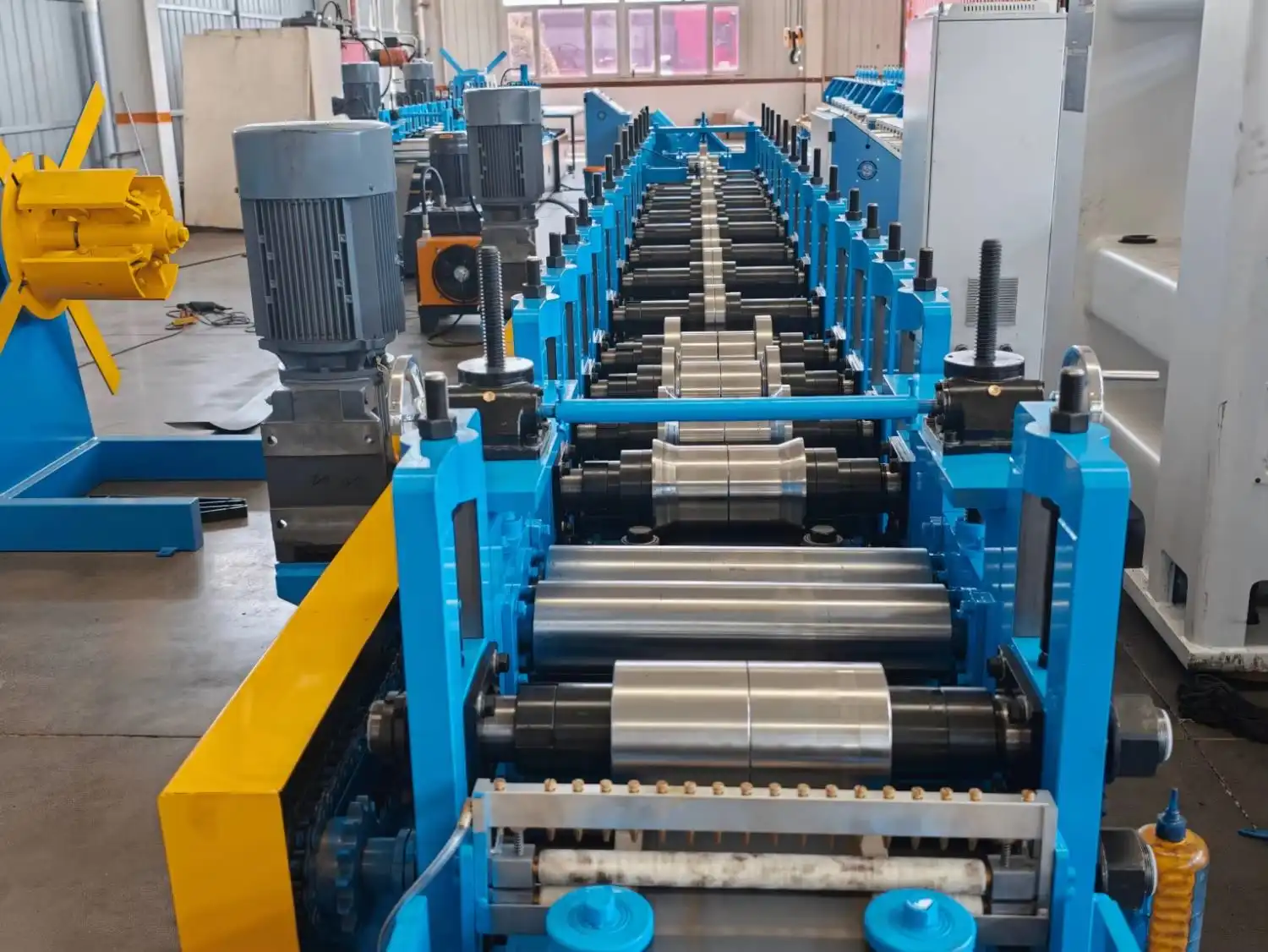
Why Curtain Wall Teams Prefer On-Site Furring Channel Fabrication
When you order pre-made hat channels from a warehouse, there are three hidden costs: freight, a minimum order quantity, and lead times that don't always work with your construction schedule. All three are eliminated at once by on-site roll forming. A making line on the job site makes profiles that are cut to the exact length that is needed. This cuts down on wasteful off-cuts and gets rid of the need for most buying teams to plan for over-ordering.
For commercial fit-out contractors, this choice is the best because of these operational benefits:
- Schedule responsiveness: When architects send a change order, the line on-site retools and makes new profiles in the same shift. It usually takes 5–10 working days for off-site suppliers to process a change order, re-price goods, and ship them.
- Dimensional accuracy: Over a 6-meter run, the 14-station progressive forming sequence keeps cross-sectional tolerances within ±0.5 mm, which is very important for acoustic isolation mounts and standard gypsum clips used in suspended ceiling grids.
- Coating preservation: Rollers with chrome plating and synchronized rolling speeds reduce friction against the PPGI strip, protecting the galvanized layer's rust resistance rating—a requirement for business projects following the LEED track.
- Material yield: Cut-to-length production controlled by a PLC encoder gets rid of the fixed-length waste that comes with buying stock that has already been cut. Compared to normal procurement, yield improvements are often stated to be 8–12%.
Because of these benefits, project gaps are smaller, and there are fewer requests for information (RFIs) about material replacements. Curtain wall builders who use on-site forming always say that floor-by-floor spinning is faster on office and shop buildings with more than one floor.
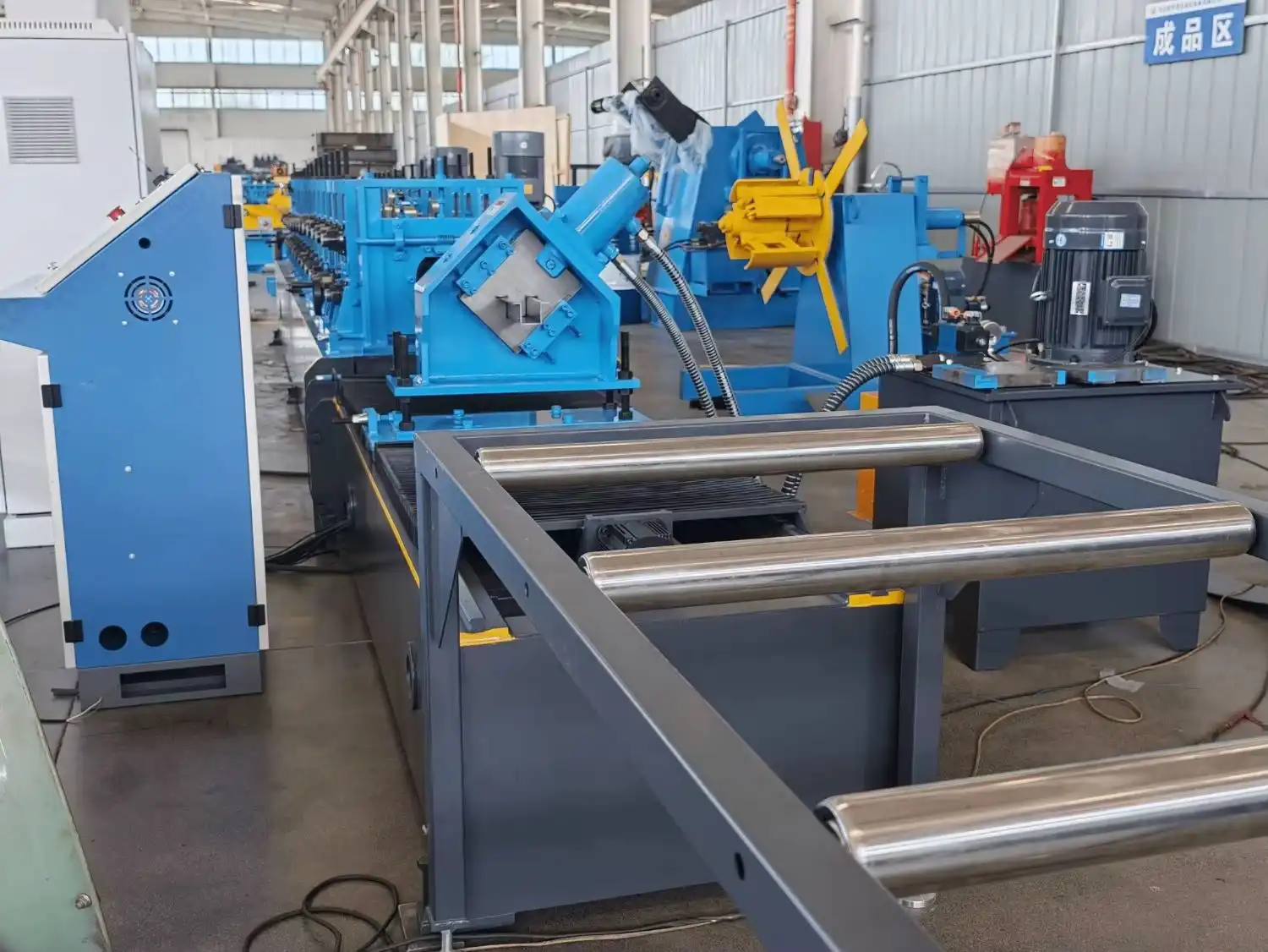
Technical and Maintenance Insights for Optimizing Forming Lines
Key Design Parameters for Curtain Wall Profiles
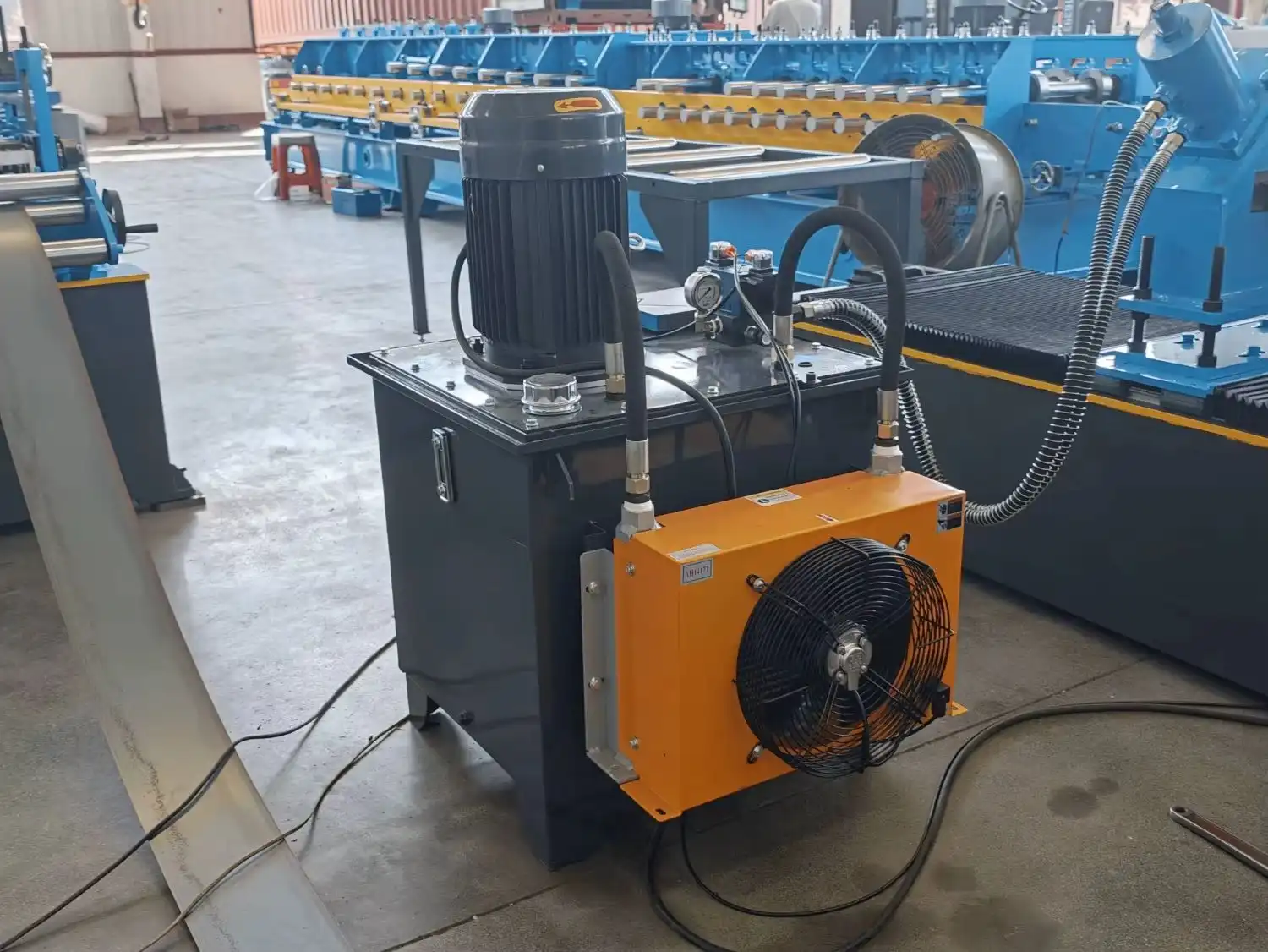
The top hat roll forming machine body is made of a welded steel frame that keeps the profile straight over long production runs by reducing vibrations during high-speed operation. This is important because curtain wall projects often use different gauges in different areas, such as heavier gauge for structural connection points and lighter gauge for non-load-bearing linings. The gearbox transmission provides stable power across the whole material thickness range of 0.3–1.0 mm GI.
Maintenance Practices That Protect Your Investment
A disciplined repair practice is needed to get consistent output quality. The chrome-plated 45# steel rollers don't wear down easily, but concrete dust and humidity on the job site speed up the wear and tear if they aren't taken care of.
Prioritize these checks during weekly inspections:
- Verify roller alignment at every station using a straightedge to check the alignment of the rollers; even 0.2 mm of horizontal drift makes the cut ends flare out.
- Lubricate the gearbox and shaft bearings per the manufacturer's instructions for how often to lubricate the gears and bearings. If you don't do this, the motor will draw more current and the bearings will last less long.
- Inspect the hydraulic decoiler's oil level and hose links once a month; places with hot climates make hydraulic fluid break down faster.
- Keep a set of Cr12MoV cutting dies on hand—these usually last between 500,000 and 1 million clean cuts before they need to be sharpened, but having a spare set on hand keeps your top hat roll forming machine from having to go down for no reason.
At the beginning of each week, there is a 30-minute continuous test run that checks the motor load and oil temperature. This checks for developing faults before they stop production. One simple habit can significantly increase the useful life of a machine.
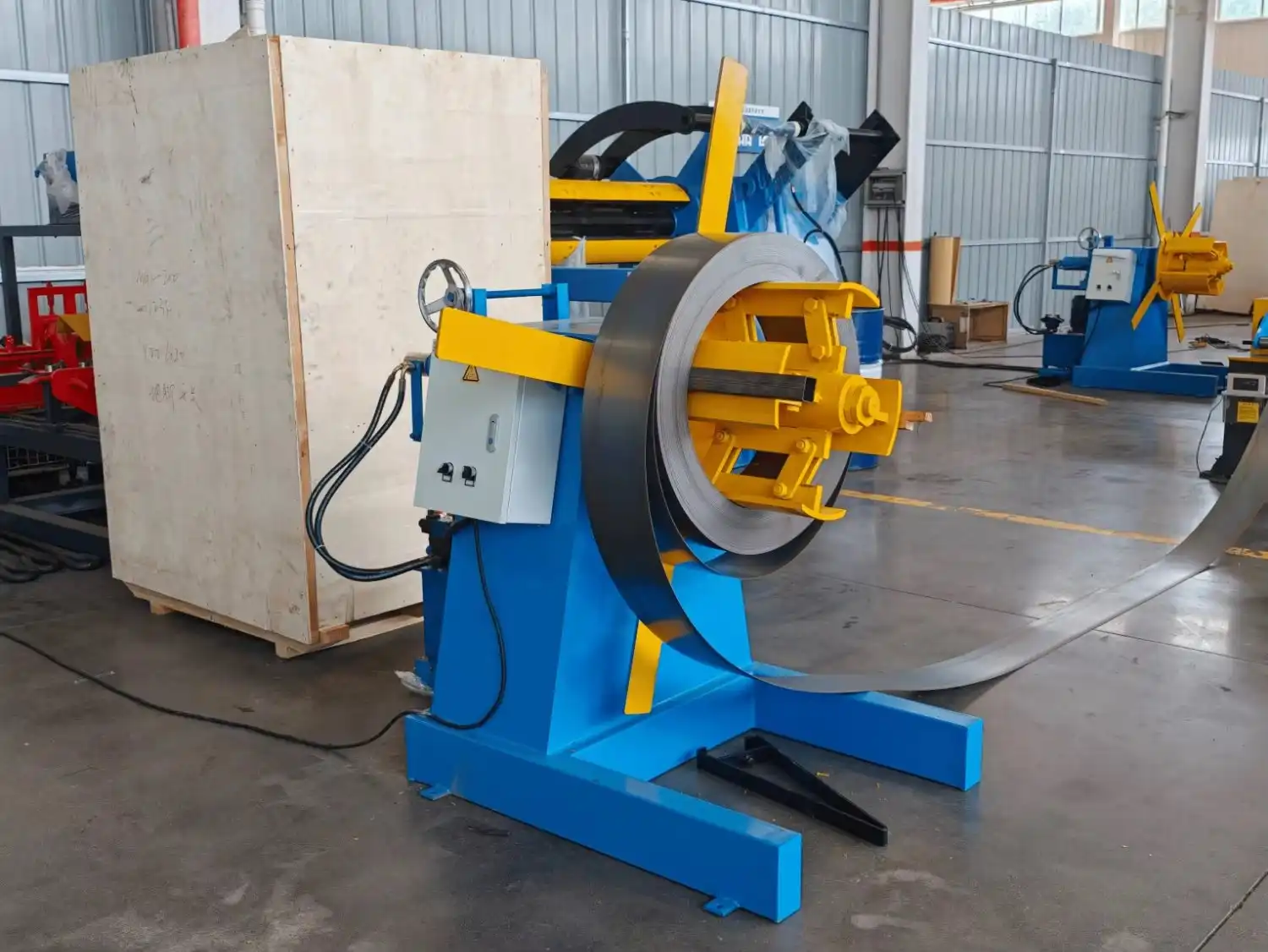
How to Choose the Right Roll Forming Line for Your Curtain Wall Business
Performance Metrics That Actually Matter
Speed rates don't tell you everything you need to know about a machine. Most stop-to-cut systems can go 15–25 m/min and are good for medium-sized jobs. Servo flying-shear systems can cut continuous profiles at speeds of 40–60 m/min without stopping the forming sequence for the cut cycle. This makes them the best choice for companies that make a lot of ceiling grids and produce millions of linear meters every year.
The shaft diameter and roller material directly show how long something will last. A 50 mm solid shaft can handle the radial loads that are created when 1.0 mm high-tensile GI is formed without bowing. When the same tooling is used for three shifts, it is very important that rollers that have been heat-treated to HRC 58–62 keep their ground profile geometry for a lot longer than rollers that have not been treated.
Evaluating Supplier Reliability Before Committing
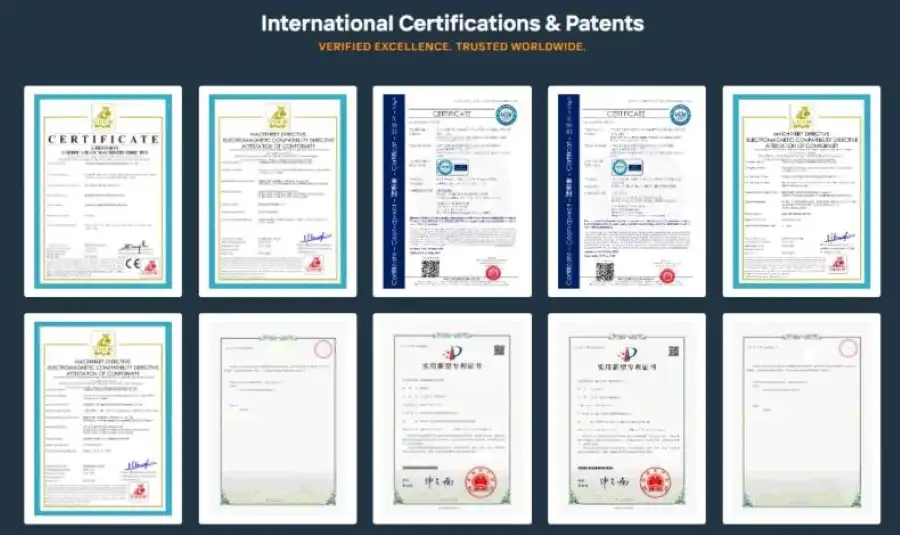
Before signing a purchase order, procurement teams should check three things: the person's certification credentials, proof of an installed base, and the level of post-sale support. ZTRFM has machines in over 150 countries, with clients like Tata Group in India, DS Group in Korea, and HADDAD SET in Jordan. The company is certified by ISO 9001, CE, and CAS. Because the company works together strategically with Siemens, cloud IoT and AI remote maintenance tracking are possible. This cuts down on on-site diagnostic visits and increases uptime on production plans with multiple shifts.
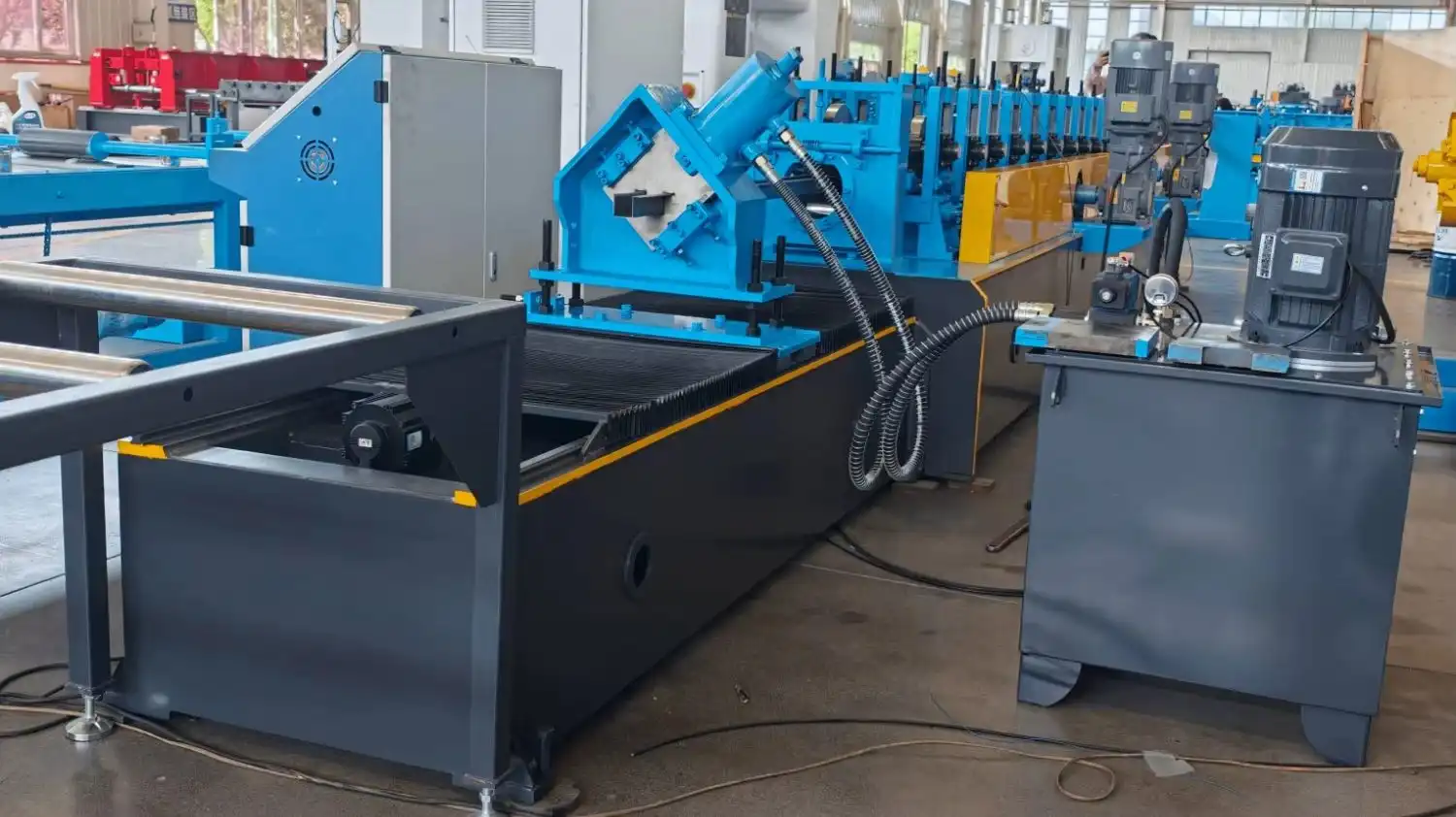
Integrating Furring Channel Lines Into Your Procurement and Supply Chain
Just-in-Time Production Reduces Inventory Risk
Inventory risk is lower with just-in-time production. Just-in-time ideas are supported by on-site roll forming, which makes exactly what the day's installation schedule calls for. This gets rid of the costs of storing pre-cut channel bundles and the risk of spoilage from rust or mechanical damage that comes with storing them for a long time on building sites that are still working.
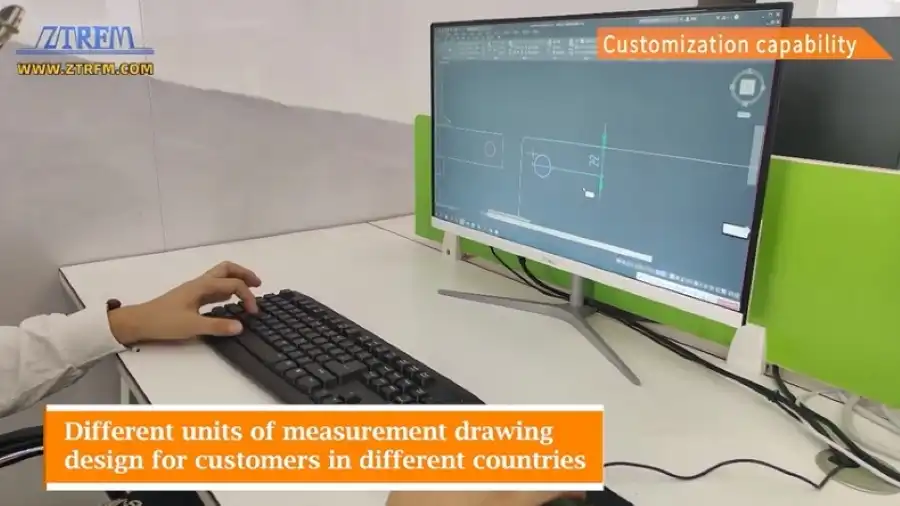
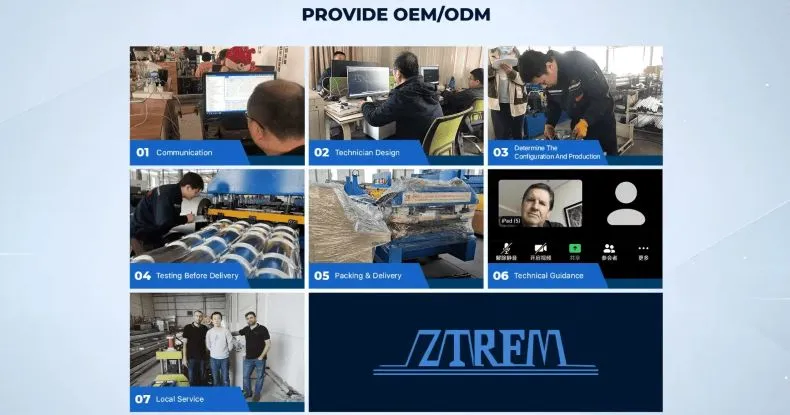
When looking at vendors, the option to customize for OEMs is a real differentiator. ZTRFM has features like profile-to-order tools, inline embossing and punching for service penetrations, and one-line multi-size switching that are important to building material dealers with private-label programs and prefab home builders who need dimple patterns that aren't standard. Getting the decoiler, forming body, stacker, and extra parts from a single source makes operations easier and lowers the risk of problems that could happen when parts are bought individually.
For procurement teams in the U.S., CE certification and a long history of installations around the world provide the compliance and reference proof that project owners and general contractors usually need before approving equipment for a big commercial build.
Conclusion
Curtain wall and internal frame teams have a real advantage when they have a hat channel roll forming machine on site. This is because they can accurately cut pieces to length, work around their schedules, and get more material over the course of the whole project. ZTRFM's line has a 14-roller-station layout, a 50 mm solid shaft, and hard chrome-plated rollers that give commercial ceiling and drywall applications the consistent sizes they need. With a hydraulic automatic decoiler and a gearbox-driven forming body, the line can work with GI thicknesses from 0.3 mm to 1 mm without having to change any tools.
FAQ
1. Can one machine produce multiple hat channel sizes?
With variable-width gaps, you can make small changes to the sizes of parts that are in the same casting set. To keep the flange straight and the web shape, profiles with very different leg heights—for example, 20 mm vs. 80 mm—need their own set of tools. The one-line multi-size changeover system from ZTRFM cuts retooling time by a large amount for facilities that make multiple profiles at the same time.
2. How does the machine handle pre-painted PPGI coil?
With synchronized rolling speeds and chrome-plated roller surfaces, there is less surface friction, which tribologically protects the coating. This means that the color-coated or galvanized layer leaves the making stations without being scored or picking up zinc, which would make it less resistant to rust in service.
3. What is a realistic delivery and installation timeline?
Standard setups usually arrive 30 to 45 days after the order is confirmed. Support for commissioning is provided by ZTRFM, and the welded frame design makes installation easy for a mechanical crew with a lot of experience.
4. What determines whether a stop-cut or flying-shear system is appropriate?
The decision is based on the production volume and the length variation. You can use stop-to-cut for jobs with modest volume and a range of lengths. When output goes over a few hundred thousand meters per year, flying-shear systems make economic sense because the time saved on each cut cycle adds up to big throughput gains.
Partner With ZTRFM for Your Next Hat Channel Roll Forming Machine Project
ZTRFM has designed and manufactured cold roll forming machines since 2014, supplying hat channel roll forming machine solutions to contractors and manufacturers across 150+ countries. Our lines carry ISO 9001, CE, and CAS certification, and Siemens IoT integration keeps your production running. Contact our engineering team at zhongtuorollforming@gmail.com to request a specification sheet and quotation tailored to your project volume and profile requirements.
References
1. Cold-Formed Steel Engineers Institute (CFSEI) Technical Note — Cold-Formed Steel Framing Design Guide, 2021.
2. ASTM International — ASTM C645: Standard Specification for Nonstructural Steel Framing Members, 2023.
3. Metal Construction News — Trends in Light-Gauge Steel Framing for Commercial Interior Systems, 2022.
4. Journal of Constructional Steel Research — Progressive Cold Roll Forming of High-Strength Galvanized Strip: Process Parameters and Dimensional Accuracy, Elsevier, 2020.
5. Construction Specifier Magazine — Curtain Wall Integration and Interior Framing Coordination on High-Rise Projects, 2023.
6. Steel Framing Industry Association (SFIA) — Annual Market Report: Light-Gauge Steel Framing Consumption in Commercial Construction, 2023.