- English
- French
- German
- Portuguese
- Spanish
- Russian
- Japanese
- Korean
- Arabic
- Irish
- Greek
- Turkish
- Italian
- Danish
- Romanian
- Indonesian
- Czech
- Afrikaans
- Swedish
- Polish
- Basque
- Catalan
- Esperanto
- Hindi
- Lao
- Albanian
- Amharic
- Armenian
- Azerbaijani
- Belarusian
- Bengali
- Bosnian
- Bulgarian
- Cebuano
- Chichewa
- Corsican
- Croatian
- Dutch
- Estonian
- Filipino
- Finnish
- Frisian
- Galician
- Georgian
- Gujarati
- Haitian
- Hausa
- Hawaiian
- Hebrew
- Hmong
- Hungarian
- Icelandic
- Igbo
- Javanese
- Kannada
- Kazakh
- Khmer
- Kurdish
- Kyrgyz
- Latin
- Latvian
- Lithuanian
- Luxembou..
- Macedonian
- Malagasy
- Malay
- Malayalam
- Maltese
- Maori
- Marathi
- Mongolian
- Burmese
- Nepali
- Norwegian
- Pashto
- Persian
- Punjabi
- Serbian
- Sesotho
- Sinhala
- Slovak
- Slovenian
- Somali
- Samoan
- Scots Gaelic
- Shona
- Sindhi
- Sundanese
- Swahili
- Tajik
- Tamil
- Telugu
- Thai
- Ukrainian
- Urdu
- Uzbek
- Vietnamese
- Welsh
- Xhosa
- Yiddish
- Yoruba
- Zulu
Roof panel production for high-speed rail station
With a standing seam roll forming machine, you can make long standing seam panels in a factory or right next to the building site. The best way to make roof panels for a high-speed rail station is this way. A line that is run by a PLC moves steel or aluminum coil through a set of roller dies. After that, each panel is cut to its exact length. In other words, station roofs have panels that are the right size for each roof zone, hidden fasteners, and fewer end laps. Engineers, buyers, and project managers need to make sure that the profile, material, and production method all match before they ask for quotes. That's the reason I made this guide.
Planning Roof Panel Production for a Rail Station Start With Roof Design and Site Conditions
Before I compare the tools, I look at the roof. Geometry, slope, curvature, drainage direction, and panel length determine the best profile and machine configuration. Most station roofs cover large platforms and halls, so the panels are long and cover more than one roof zone. The weather is also important. The specification talks about things like earthquakes, wind, snow, corrosion, fire safety, and the movement of heat. In the U.S., engineers use ASTM E1592 to test metal roof systems and find out how well they hold up in normal air pressure. Designers use ASCE/SEI 7 to find out how much wind a building can handle. Every machine you buy should be based on a roof design you've approved, not just a name.
Choose the Right Metal for the Panels
The choice of material affects how the coil is handled, the tools that are used, and how long it lasts. There are different kinds of steel that our machines can work with, like PPGI, PPGL, and NCGI. A lot of the time, steel is 0.4 mm to 0.8 mm thick, and aluminum can be up to 1 mm thick. When steel is coated with zinc in the U.S., it has to meet ASTM A653. Pre-painted finishes give architects more color choices and protect the steel from the weather. Talk to an engineer first to make sure it will work before you order if the design needs copper or a metal that isn't on this list. First, compare the coil to the drawing of the approved panel. The base, clips, insulation, and fasteners all need to work together as a single unit, so this is important.
Decide Between Factory and On-Site Production
This plan is based on where the writing will be done. Things work more automatically and more precisely on a factory line, and a lot of work can be done over and over again. A portable line is set up near the work area to cut the wood to the exact length that the roof needs. It is easier to get small models to the project because a standard 20GP container can hold a lot of them. It's often hard to get to rail stations because of the platforms and tracks that are there. It's also hard to move and lift very long panels. Moving and end laps, which are common places where leaks start, cause less damage when the shape is formed on-site. Think about the size, length, access for the crane, and work that needs to be done before making a choice.
How a Standing Seam Roll Forming Machine Makes Station Panels
What the Machine Does
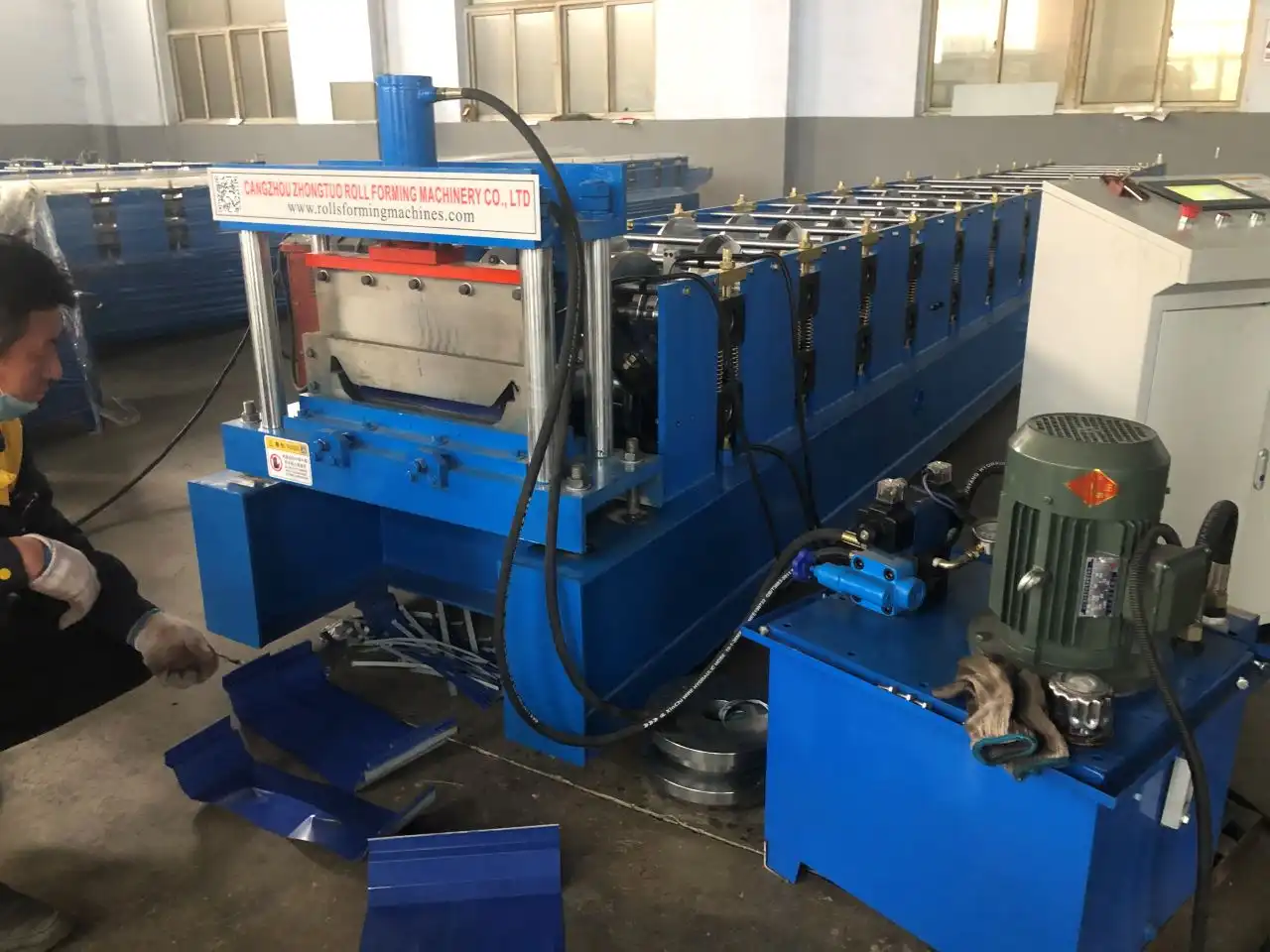
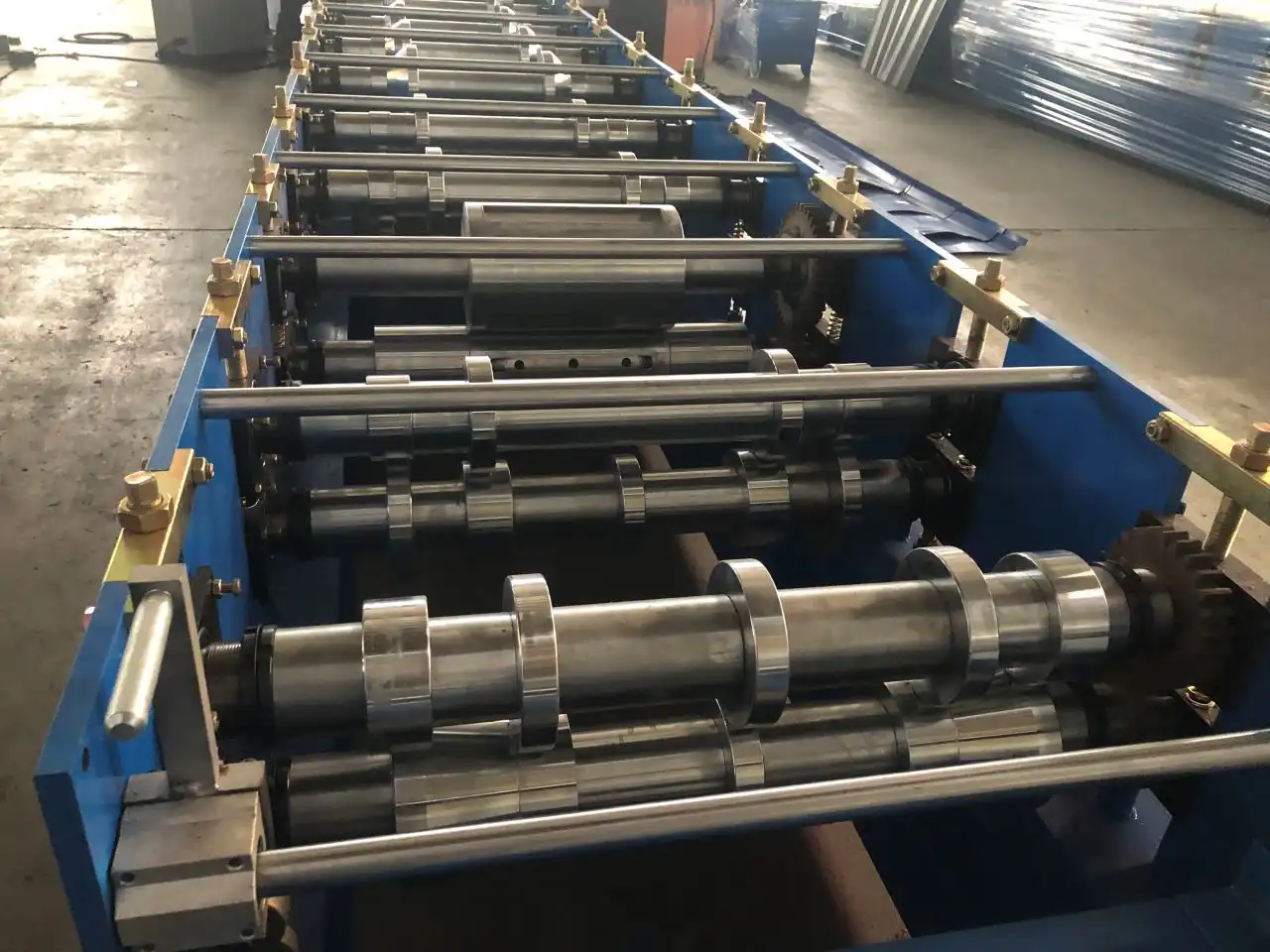
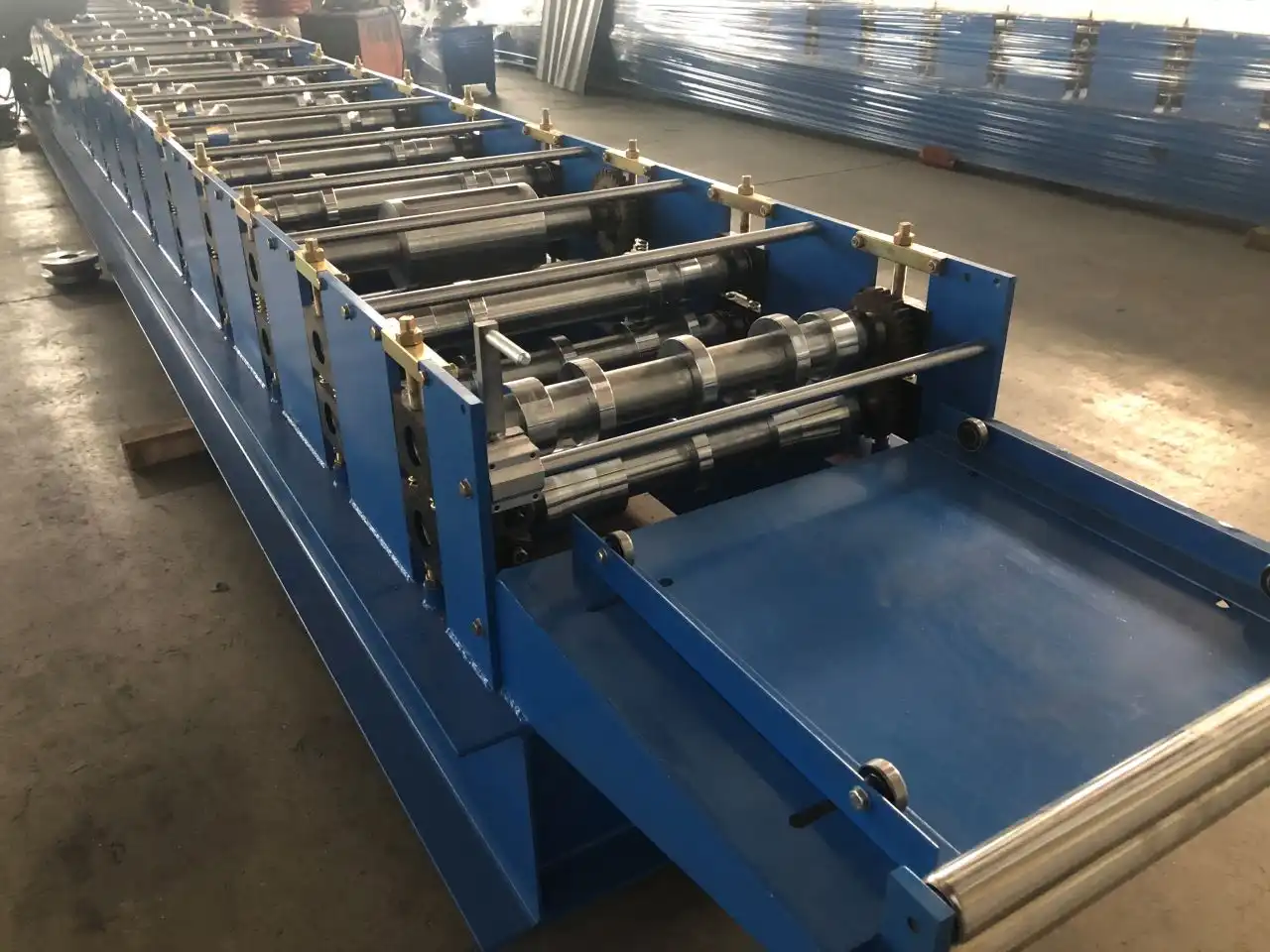
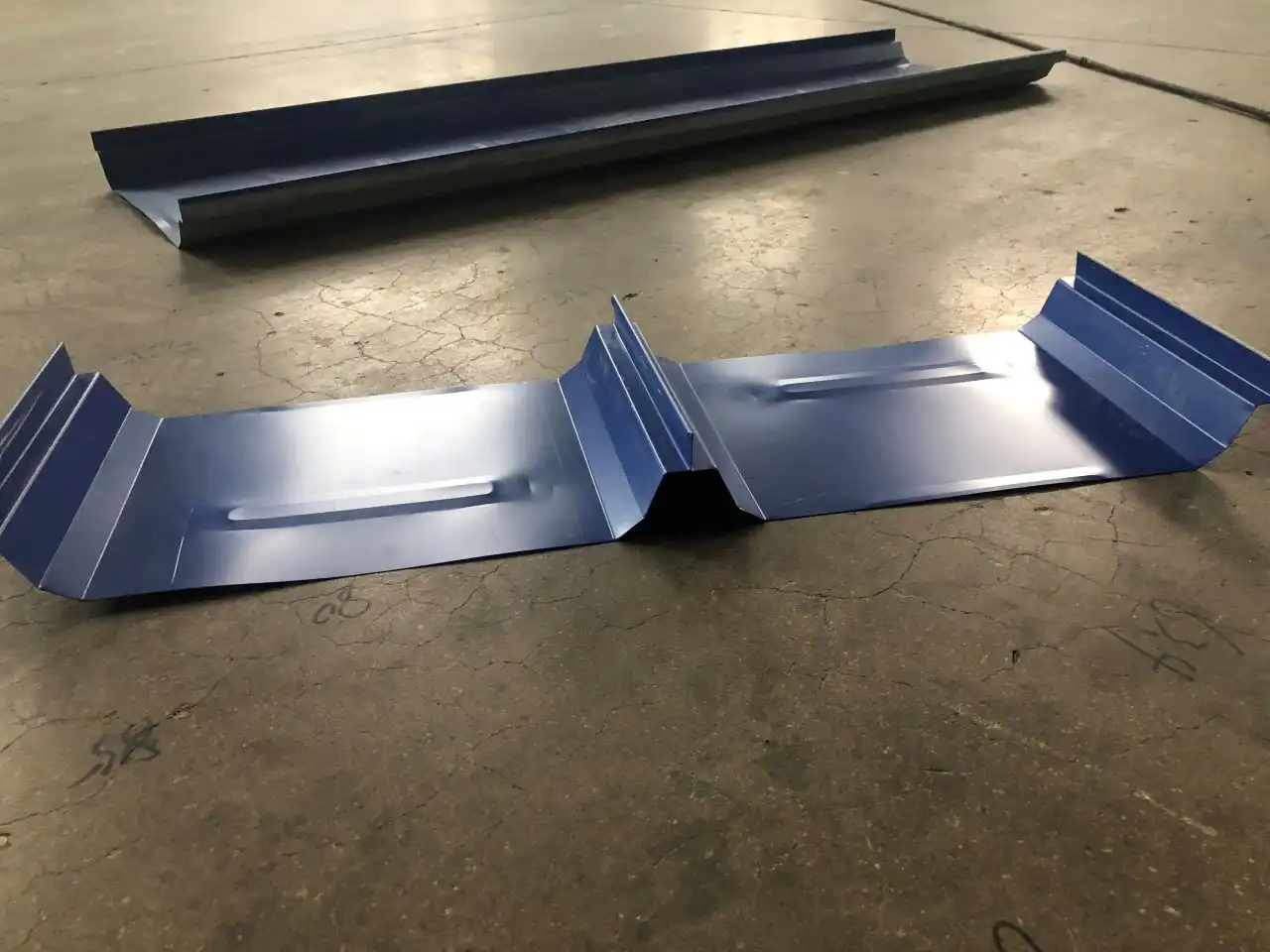
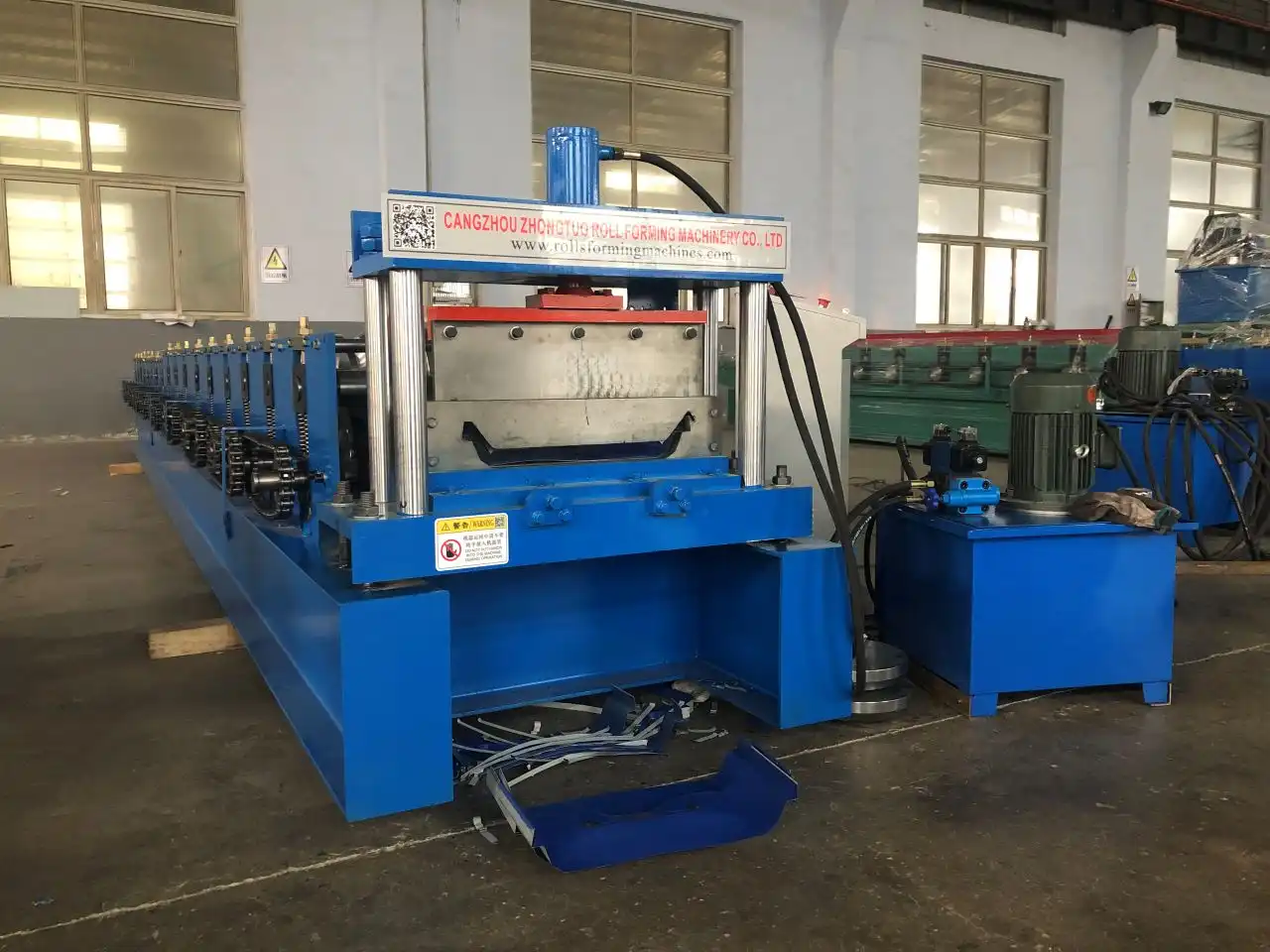
A flat metal coil is fed through a set of roller dies by a standing seam roll forming machine. This makes panels for the roof and walls that fit together perfectly and have raised seams. Most lines have a PLC control cabinet, forming stations, a hydraulic cutter, a decoiler, and a unit for leveling and feeding. Profiles like Lysaght, U-panels, Kalzip, and Snap Lock can be used with it. The widths range from 300 mm to 500 mm. With hidden-fastener seams, leaks are less likely to happen on low-pitched roofs. Standing seam machines need more precise control over the width of the panel, the shape of the seam, and the height of the ribs than corrugated or trapezoidal machines. This means that the tools have to match the profile drawing that was approved.
The Production Process Step by Step
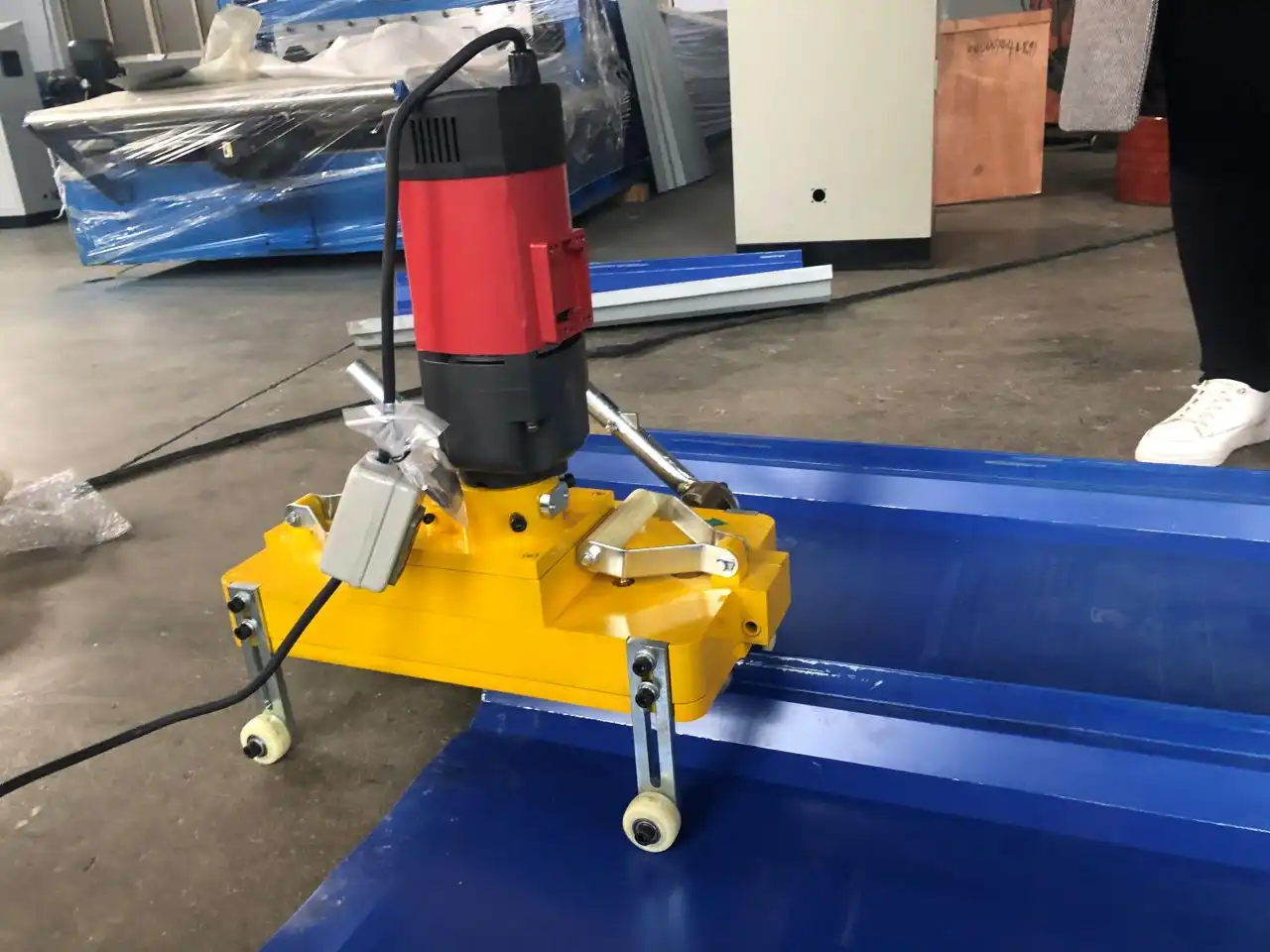
Production starts when the decoiler lets go of the strip, and someone loads the coil. The leveler makes it flat, and the feeder brings it to the rolling stations. The metal is slowly bent by roller stations so that it doesn't get twisted, stressed, or broken on the coating. It is cut to the size that was set by a PLC with an encoder that checks each length. The panels are then supported, labeled, and stacked in the order they will be put up. Most of the time, snap-lock panels are put together by hand. For mechanically seamed systems, you'll need a seaming tool. You can find the coil batch for each roof zone by writing down when it was made.
Specifications to Put in Your Request
A clear specification cuts down on the back-and-forth that takes weeks. Name the profile drawing, the thickness, the material, the width of the coil, the speed you want to reach, the width of the panel that will be used, and the height of the seam. Speeds vary depending on the model and how it is set up to cut. Most of the time, they are between 10 and 40 feet per minute. Type in the number of decoilers, the power that is installed, the voltage and frequency, the size of the machine, and the workshop space that is available. Also, people from other countries who want to buy something should check the manuals, the language requirements, and the customer service after the sale. Don't assume that the line can be changed if your design needs a width that isn't in the standard range. Instead, ask for a custom tooling review.
Speed, Accuracy, and Quality Control
Measure Real Output, Not Top Speed
A standing seam roll forming machine's rated speed tells you how fast it can go without stopping. If you change the coils, cutting cycles, operator steps, panel length, or complexity of the profile, it will also change the real output. This is because short panels need more cuts per hour than long panels, even when the line speed is the same. When I make a production plan, I look at the actual schedule for panels and compare that number to the installation order by roof zone. This tells me how many panels will be put up during each shift. If each supplier only gives you a general top speed, ask them to tell you the speed for your profile, thickness, and cutting setup.
What to Inspect on Every Panel
When quality control checks a panel, they should look at its width, seam height, rib spacing, straightness, accuracy of length, edge condition, and surface look. Look for damage to the coating, open seams, scratches, dents, roller marks, and a bad fit. Two sample panels can be joined together in the field to make a simple test. Make sure the seams are smooth, and the panels lie flat. Before you paint the coils, make sure you look at them in good light so you can see the roller marks. Over time, drift can happen, so you should measure more than one panel at the start, middle, and end of a run.
Run a Factory Acceptance Test
Claim tests turn claims into proof with the help of this test. You can use it with your own coil and approved profile. It can feed material, shape it continuously, cut it to length, sew seams together, run for longer, and has safety features. Take pictures and measure things to keep track of what happens. Some of ZTRFM's goods have ISO 9001, CE, and CAS certifications. But certificates are not the same as tests that you take on your own. After the first test, do a second one at the site or plant. Before you start full production, teach the operators what they need to do and get final approval.
Buying, Installing, and Maintaining the Line
Compare Total Delivered Cost
A low base price can hide the fact that there aren't many items. You should check the quote to see if it includes the cutter, controls, spare parts, forming rollers, decoiler, leveling unit, training, warranty, and spare parts. You need to add up the costs of packaging, shipping within the country, shipping by sea, insurance, duties, clearing customs, and setting up the goods on-site to get the delivered cost. In writing, make sure you understand the Incoterms, the payment schedule, the delivery time, and how long the quote is good for. Choose who will be in charge of laying the foundations, hooking up the electricity, unloading, and getting the building ready to use. Purchasing managers often look at delivered cost and lead time when they have to make a choice. But engineers care about how accurate the profiles are, and distributors care about customer service.
Vet the Manufacturer
Big roofing projects should be used as references, and the factory should be able to show that it can do roller machining, assembly, electrical integration, and inspection. Cangzhou Zhongtuo (ZTRFM), a company that was founded in 2014, plans and builds cold roll forming machines. Our company is a national high-tech hub where raw materials, machines, and parts can all be found in one place. We ship our goods to more than 150 countries and also do OEM and ODM work. Before you place your order, make sure you have technical drawings, test procedures, sample panels, manuals, wiring diagrams, and a written plan for setting up the system and running it for the first time.
Install, Operate, and Maintain
What works well on the site changes. Make sure the base is level, there is enough room to work, a safe place to store the coils and lifting tools, enough power, grounding, and protection from water and dust. It is important to teach workers how to load the coil, turn it on, make changes, cut it, do emergency stops, and perform lockout/tagout. The alignment is checked, the hydraulics are looked at, and the sensors and encoders are tested as part of regular maintenance. The rollers are also cleaned and oiled. Make sure the following are checked in this order: alignment, tooling, material, feeding, and sets if problems like uneven width, open seams, scratches, bowing, or wrong lengths show up.
Conclusion
Before making roof panels for a high-speed rail station, people think about the roof's shape, the weather loads, and the material. This is because they choose the profile and set up the machine. A standing seam roll forming machine takes a coil and cuts it into precise panels with clasps that are hidden. How long, how big, and how easy it is to get to the panels should match between the factory and the site for production. A line works as it should because it has real output, a panel inspection, and a factory acceptance test with project materials. How consistent the panels are throughout the project will depend on how much it costs to deliver, how experienced the supplier is, how the equipment is set up, and how often it is serviced.
FAQ
1. Can I produce panels on the rail station site?
Yes. A lot of the small models are easy to move around and can fit in a standard 20GP container. A power source, a level pad, a place to store the coils, and a way to lift them are all things you need. They need to be very long and hard to get to so that panels can be made on-site.
2. What materials and thicknesses can the machine process?
We can work with steels that are 0.4 mm to 0.8 mm thick and aluminum that is up to 1 mm thick. Talk to an engineer first if you want to order any other metal.
3. What should I include in a quotation request?
Send the profile drawing, panel width, material, thickness, quantity, maximum panel length, seam type, production location, target speed, and destination.
Contact ZTRFM for Your Station Roof Panel Line
Tell ZTRFM what kind of material you want, how thick it is, how long the panel is, and where you want it to go. Then, one of our engineers will tell you which configuration will work best for you. We are happy to work on both OEM and ODM projects. Please let us help you find a manufacturer of a standing seam roll forming machine for use in a factory or a portable line for use on-site. Send your quote to zhongtuorollforming@gmail.comto begin.
References
1. NRCA, The NRCA Roofing Manual: Metal Panel and SPF Roof Systems, 2019
2. ASTM International, ASTM E1592 Standard Test Method for Structural Performance of Sheet Metal Roof and Siding Systems by Uniform Static Air Pressure Difference, 2017
3. ASTM International, ASTM A653/A653M Standard Specification for Steel Sheet, Zinc-Coated (Galvanized) or Zinc-Iron Alloy-Coated (Galvannealed) by the Hot-Dip Process, 2022
4. American Society of Civil Engineers, ASCE/SEI 7-22 Minimum Design Loads and Associated Criteria for Buildings and Other Structures, 2022
5. George T. Halmos (Ed.), Roll Forming Handbook, CRC Press, 2005
6. International Organization for Standardization, ISO 9001 Quality Management Systems, 2015