- English
- French
- German
- Portuguese
- Spanish
- Russian
- Japanese
- Korean
- Arabic
- Irish
- Greek
- Turkish
- Italian
- Danish
- Romanian
- Indonesian
- Czech
- Afrikaans
- Swedish
- Polish
- Basque
- Catalan
- Esperanto
- Hindi
- Lao
- Albanian
- Amharic
- Armenian
- Azerbaijani
- Belarusian
- Bengali
- Bosnian
- Bulgarian
- Cebuano
- Chichewa
- Corsican
- Croatian
- Dutch
- Estonian
- Filipino
- Finnish
- Frisian
- Galician
- Georgian
- Gujarati
- Haitian
- Hausa
- Hawaiian
- Hebrew
- Hmong
- Hungarian
- Icelandic
- Igbo
- Javanese
- Kannada
- Kazakh
- Khmer
- Kurdish
- Kyrgyz
- Latin
- Latvian
- Lithuanian
- Luxembou..
- Macedonian
- Malagasy
- Malay
- Malayalam
- Maltese
- Maori
- Marathi
- Mongolian
- Burmese
- Nepali
- Norwegian
- Pashto
- Persian
- Punjabi
- Serbian
- Sesotho
- Sinhala
- Slovak
- Slovenian
- Somali
- Samoan
- Scots Gaelic
- Shona
- Sindhi
- Sundanese
- Swahili
- Tajik
- Tamil
- Telugu
- Thai
- Ukrainian
- Urdu
- Uzbek
- Vietnamese
- Welsh
- Xhosa
- Yiddish
- Yoruba
- Zulu
7 questions to ask before buying a floor deck roll forming machine
Buying a floor deck roll forming machine is a significant capital decision. Whether you produce composite slabs for high-rise towers, mezzanine decks for warehouses, or permanent formwork for parking structures, the wrong equipment choice costs more than money — it costs production cycles. Before you commit, these seven questions cut through the noise and help you evaluate every critical factor: profile compatibility, gauge capacity, control systems, total ownership cost, and after-sales reliability. Working through each question gives you a clear framework, so you invest with confidence rather than guesswork.
What Are Your Production Needs and Specifications?
Before you compare any tools, make a detailed plan of what you need to make. The shapes of the roller tools are based on the profiles you need, like a 0.6" form deck, a 1.5" A/B rib, a 3.0" composite floor deck, or a dovetail profile. Material specification is just as important. In the United States, most structural decks are made of galvanized (Z275–Z600) or Galvalume coils that are 0.8–1.2 mm thick and have a minimum bending strength of 235 MPa. If you want to regularly use larger gauges of up to 1.2 mm, normal sheet-line machines don't have the torque headroom that deck-forming stands do.
Your output is based on a sensible line speed goal. A forming speed of 10–20 m/min works well for mid- to large-sized deck builders. When there are a lot of orders, faster speeds work best for simple rib geometries, and slower speeds work best for complex embossed profiles. Make sure that any machine you look at can keep going at your goal speed, not just reach its top speed.
How Does the Machine Work and What Are Its Key Features?
Roll forming slowly bends a metal strip through a series of paired roller stations, each station incrementally shaping the profile until the final cross-section is achieved. Press-braking only makes one bend at a time. Continuous roll forming delivers consistent profiles at high production speeds with almost no operator fatigue. For composite deck profiles, straight embossing stations add friction indentations that make steel and poured concrete mechanically join—a structural requirement, not an extra feature.
Core Technical Parameters to Verify
When reviewing deck roll forming machine datasheets, prioritize these parameters:
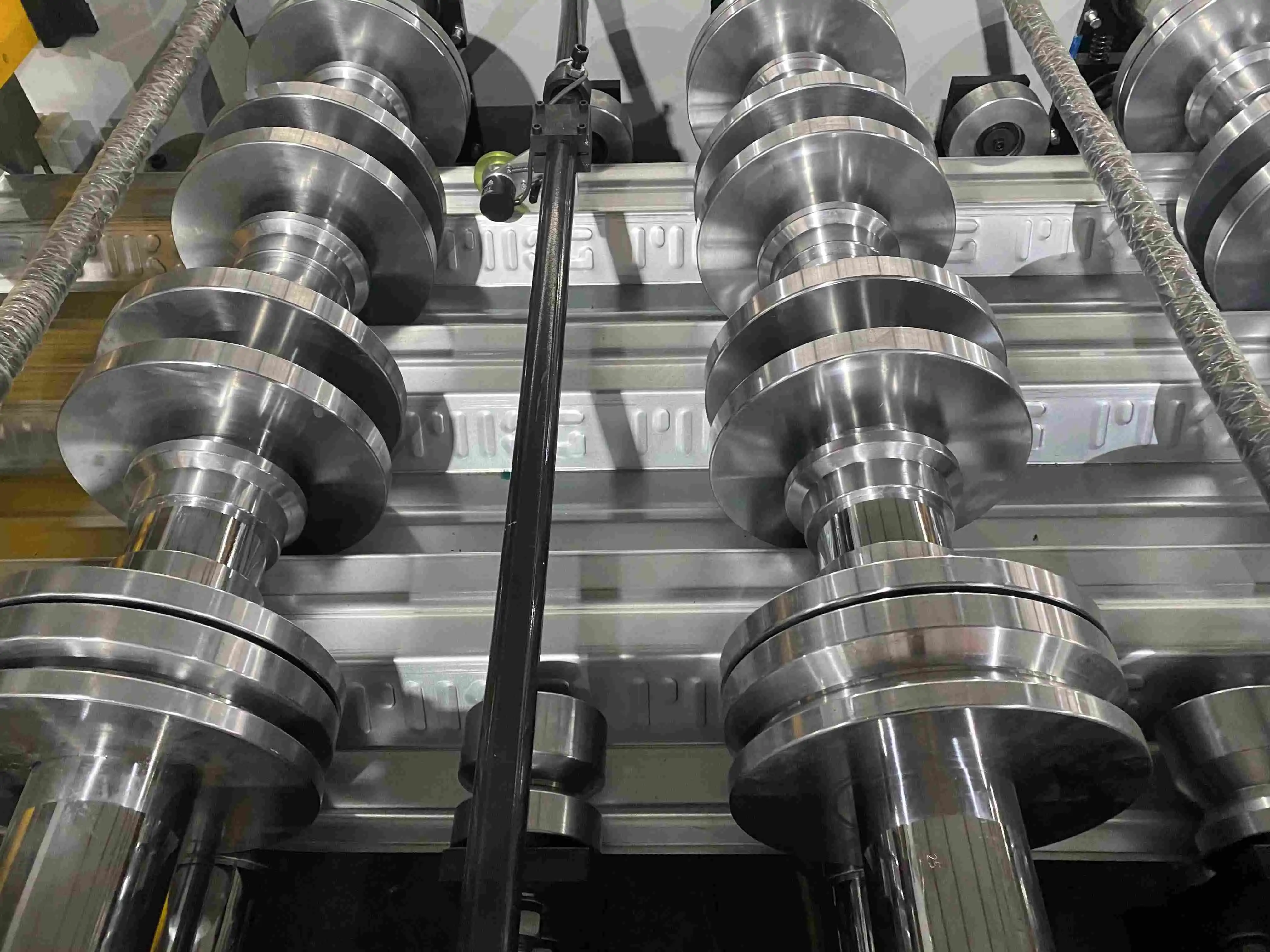
- Forming roller shaft diameter: 95 mm shafts can handle the bending loads of structural deck shapes; the embossing station uses a larger 120 mm shaft to handle the higher contact forces without deflection.
- Roller material and treatment: No. 45 steel rollers with a chrome coating don't wear down easily when exposed to galvanized coatings, so they last a lot longer between services than untreated tooling.
- Cutter specification: CR12 mold steel that has been quench-treated keeps its sharp shear edges even after many high-tonnage cutting cycles; blunt cutters bend the cut ends and make scrap.
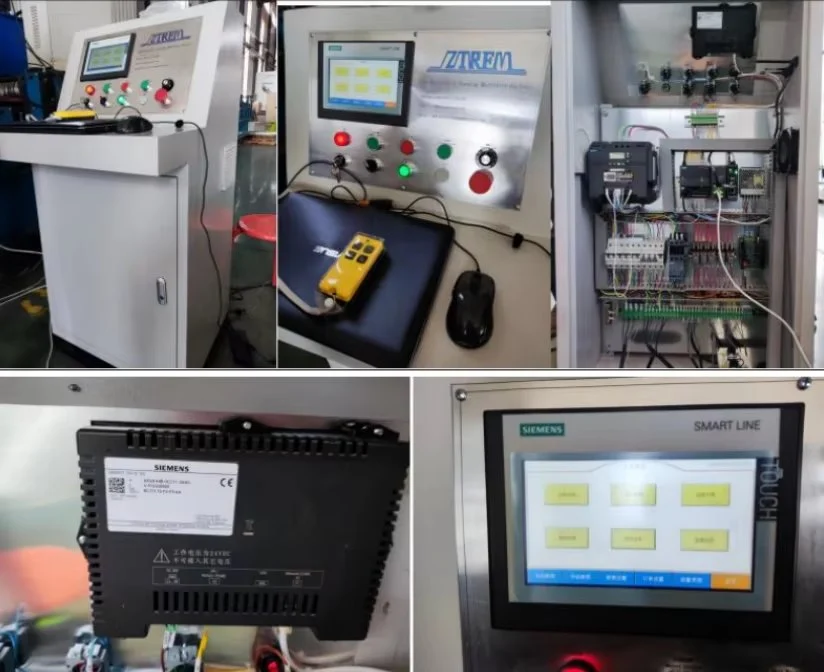
- Control system: A PLC-and-converter control platform lets length counting, batch sequencing, and fault diagnosis be done automatically. Systems made by Siemens add cloud IoT and AI-assisted remote maintenance.
- Power configuration: The main motor has three drives (3 × 11 kW), which spread the power evenly across the making stations instead of putting all the load on one drivetrain. The hydraulic unit has its own 5.5 kW motor that keeps the cutting power constant, no matter how fast the form is moving.
Together, these factors show whether a machine produces structural-grade shapes or just decorative ones.
Which Machine Type Best Suits Your Business?
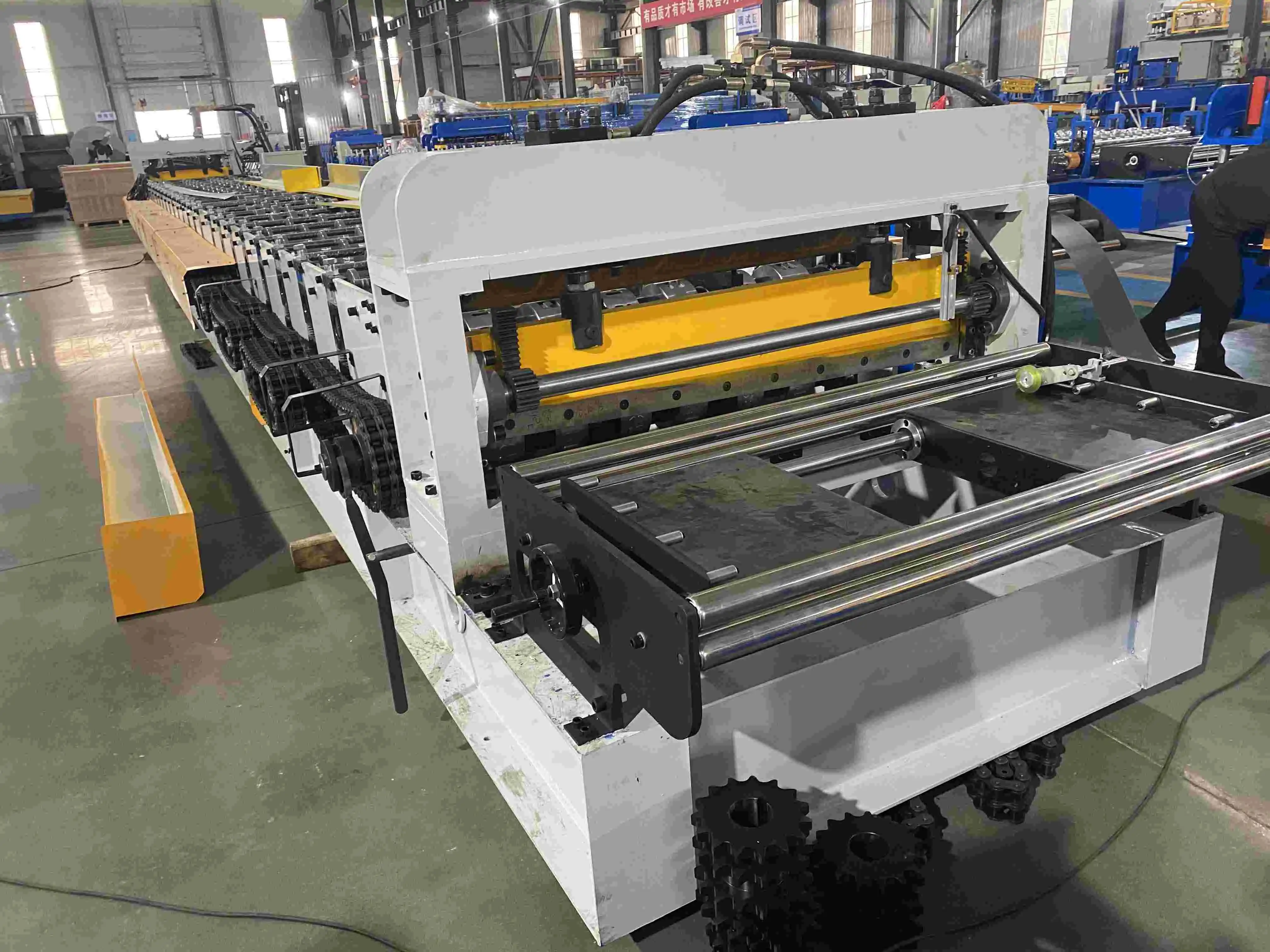
The choice is based on scale and character complexity. Manual uncoiler lines work best for fabricators who don't make a lot of decks or who are just adding deck production to an existing steel-building business. When labor costs and output goals are high, fully automatic lines with motorized decoilers, servo-driven stackers, and inline punching units are the best choice for deck makers who make a lot of decks.
A small line with a coil width of 1,000 mm and a useful forming width of 720 mm can easily handle normal U.S. deck widths. Large orders don't have to wait for coil changes when they use high-tonnage decoilers rated at 10–30 T. If the number of bids you get changes with the seasons, which is common in the construction industry, choose a machine with quick-change tooling so you can switch between B-deck, N-deck, and composite floor deck profiles without having to wait for long periods of time.
What Is Your Budget and What Are the Price Considerations?
There is only one line item for capital cost. A full total cost of ownership analysis looks at how long tools last, how much energy they use, how long it takes to get spare parts, and how much it costs to have unplanned downtime. If you buy a cheaper deck roll forming machinewith standard-grade rollers, you may have to pay more to change the tools within 18 months of heavy-gauge running.
Evaluating Value Beyond the Invoice
Here are the cost factors worth scrutinizing before signing a purchase order:
- Energy consumption: The three 11-kW main motors and the 5.5-kW hydraulic unit provide a clear and verifiable power draw, which is important for figuring out the cost of production per meter for big jobs.
- Spare parts availability: CR12 cutters and chrome-coated 45# steel rollers are standard in the industry and should be able to be bought from the OEM or qualified vendors without having to wait for long lead times.
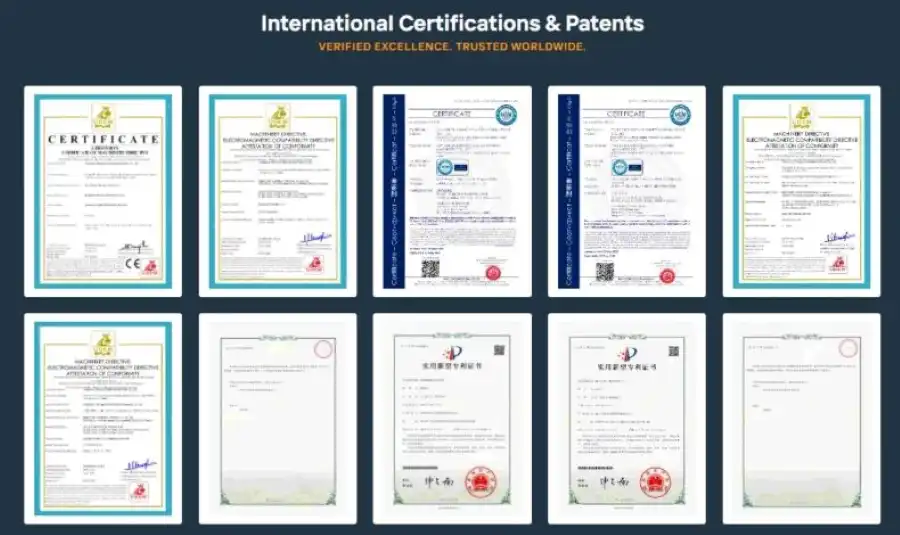
- Warranty terms and service agreements: A minimum two-year protection on parts from a maker that is ISO 9001-certified is a good starting point. Factories that are certified by CE and CAS offer an extra level of quality guarantee that is important for both U.S. and foreign project compliance.
- OEM/ODM tooling cost: Creating custom rib geometry for different market standards raises the initial cost of the equipment, but NDA agreements protect the profile's intellectual property, which is worth it for deck makers who offer their own structural systems.
Instead of just looking at the purchase price, think about all of these things at once.
How Easy Is It to Operate and Maintain?
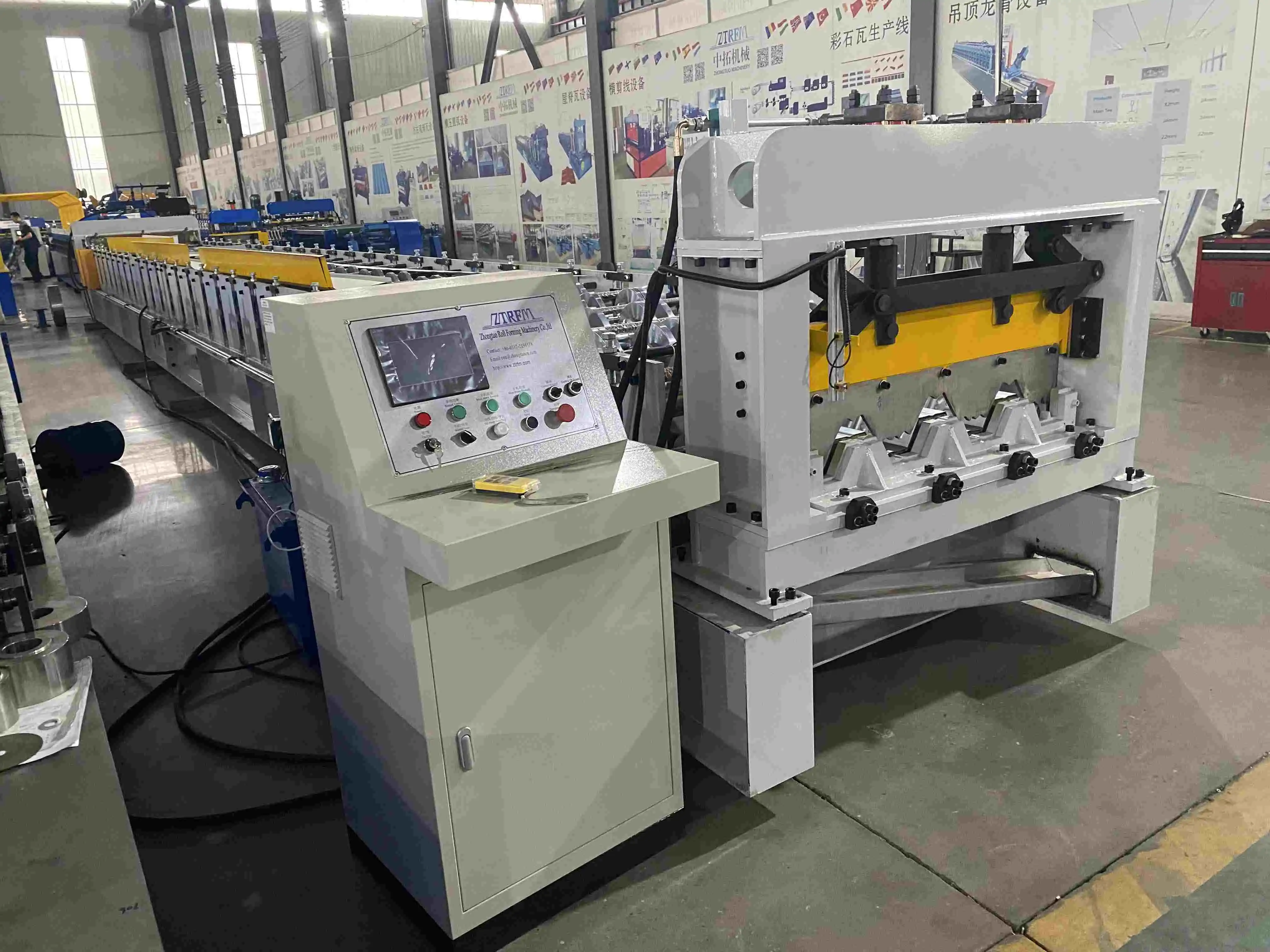
A PLC-and-converter control system with an easy-to-use HMI cuts down on the time needed to train operators by a large amount. When the control interface clearly shows real-time speed, length counts, and trouble codes, experienced roll-forming workers can get a new line up and running in days instead of weeks. Setting the hydraulic pressure (usually 18–20 MPa for cutting) should be possible from the control panel, without having to touch the valves by hand.
Every 500 to 800 hours of use, chrome-coated rollers that run zinc coils at 0.8 to 1.2 mm usually need to be inspected. On structural-gauge steel, CR12 cooled cuts need to have their edges checked at the same times. The reactive maintenance cycle that cuts into production margins can be avoided if the provider gives a written maintenance plan and a program for genuine extra parts.
How Does the Machine Align With Your Efficiency and Compliance Goals?
The three-drive motor setup does more than just add torque; it also spreads out the electrical load more evenly, which lowers the peak demand charges on your building's power account. The floor-to-ship cycle is shortened by combining inline stamping and pre-punching, which gets rid of the need for extra handling steps. For buyers in the U.S., structural engineering submittals must include profiles manufactured to ASTM A1008 dimensional tolerances. This compliance gap is closed during production by specifying a machine that can handle ±1.0 mm length tolerance.
Scalability is just as important. A machine platform that is designed to hold more making stations or profile switching tools lets your order book grow instead of being limited by it.
What Support and After-Sales Services Are Available?
Infrastructure for after-sales services turns a useful investment into a costly debt. Buyers should make sure that the service network can reach all areas of the world and that online tests are available. Engineers can fix drive faults, adjust parameters, and push firmware changes to cloud IoT-enabled machines without sending a worker. This is helpful for U.S. buyers who work with a seller based overseas and have to deal with multiple time zones. Global service delivery on a large scale is not just an idea; reference client case studies from companies like Tata Group (India) and DS Group (Korea) show that it is possible.
Conclusion
If you buy structural deck-forming equipment before you answer these seven questions, you could end up with profile mismatches, output shortfalls, secret ownership costs, and service gaps. When you find the right floor deck roll forming machine for your gauge range, profile geometry, power infrastructure, and compliance needs, it quickly becomes a production asset that pays for itself on projects like warehouses, parking garages, and high-rise buildings. Take the time to ask each supplier tough questions, and make sure you can check their answers before making a decision.
FAQ
1. How long does delivery and commissioning typically take?
Standard configurations usually ship 45 to 60 days after the order is confirmed. On-site commissioning times depend on how complicated the line is, but single-machine setups can usually be up and running in three to five working days with a trained worker there.
2. Can the machine be customized for U.S. deck profile standards?
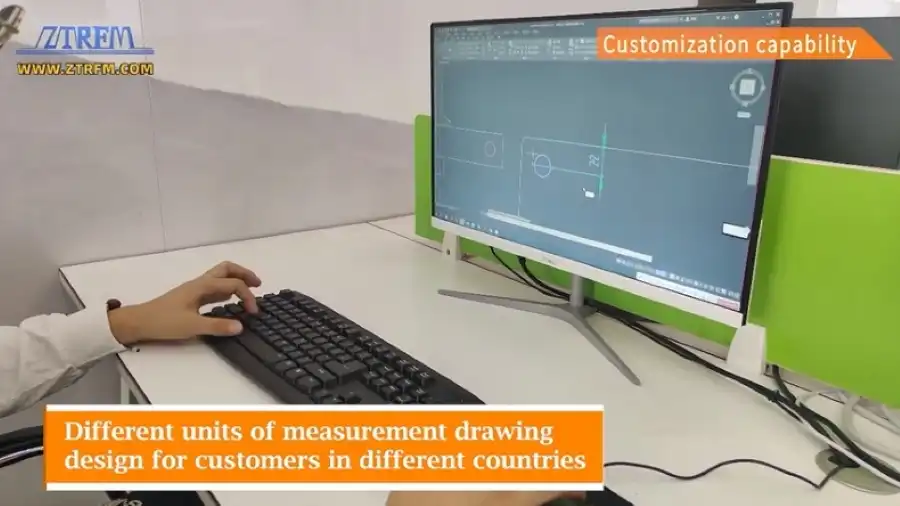
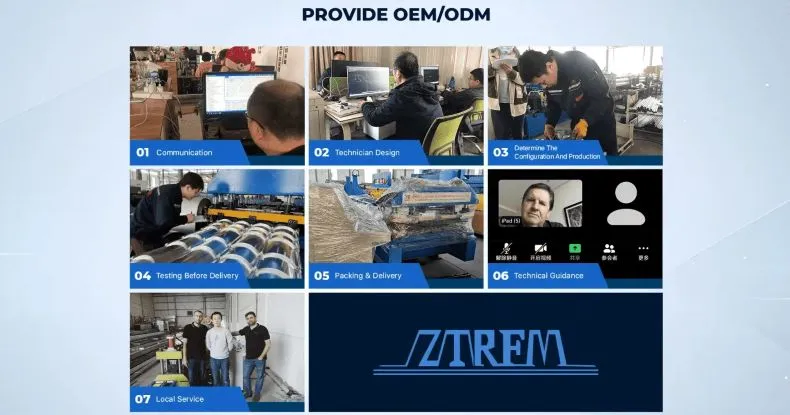
Yes, OEM/ODM tools can be made with specific rib shapes, such as 1.5" A/B rib and 3.0" composite deck, and the embossing patterns needed for composite action. There is an NDA covering the profile IP.
3. What voltage configurations are supported?
380V/3-phase/50Hz is the standard configuration. At the specification stage, you can ask for different voltage configurations, such as 460V/60Hz for U.S. facilities.
4. What is the typical warranty period?
Most authorized makers back up their structural parts with a guarantee that lasts at least two years and promise to keep supplying spare parts after that time.
Get Your Custom Quote from ZTRFM — Floor Deck Roll Forming Machine Manufacturer
Since 2014, ZTRFM has sold floor deck roll forming machines to customers in more than 150 countries. They have ISO 9001, CE, and CAS certifications, and they work with Siemens on technology. Our engineering team is ready to help you find the right line setup based on your profile standards, gauge needs, and compliance needs. contact us directly for a technical consultation and quotation at zhongtuorollforming@gmail.com to explore our full range.
References
1. American Iron and Steel Institute (AISI). Steel Deck Design Manual. AISI, 2022.
2. Steel Deck Institute (SDI). SDI Manual of Construction with Steel Deck. SDI, 2021.
3. ASTM International. ASTM A1008/A1008M: Standard Specification for Steel, Sheet, Cold-Rolled, Carbon, Structural, High-Strength Low-Alloy. ASTM, 2023.
4. American Society of Civil Engineers (ASCE). ASCE 7-22: Minimum Design Loads and Associated Criteria for Buildings and Other Structures. ASCE, 2022.
5. International Organization for Standardization. ISO 9001:2015 Quality Management Systems — Requirements. ISO, 2015.
6. Bhatt, P., & MacGinley, T.J. Structural Steelwork: Design to Limit State Theory (4th ed.). CRC Press, 2014.