- English
- French
- German
- Portuguese
- Spanish
- Russian
- Japanese
- Korean
- Arabic
- Irish
- Greek
- Turkish
- Italian
- Danish
- Romanian
- Indonesian
- Czech
- Afrikaans
- Swedish
- Polish
- Basque
- Catalan
- Esperanto
- Hindi
- Lao
- Albanian
- Amharic
- Armenian
- Azerbaijani
- Belarusian
- Bengali
- Bosnian
- Bulgarian
- Cebuano
- Chichewa
- Corsican
- Croatian
- Dutch
- Estonian
- Filipino
- Finnish
- Frisian
- Galician
- Georgian
- Gujarati
- Haitian
- Hausa
- Hawaiian
- Hebrew
- Hmong
- Hungarian
- Icelandic
- Igbo
- Javanese
- Kannada
- Kazakh
- Khmer
- Kurdish
- Kyrgyz
- Latin
- Latvian
- Lithuanian
- Luxembou..
- Macedonian
- Malagasy
- Malay
- Malayalam
- Maltese
- Maori
- Marathi
- Mongolian
- Burmese
- Nepali
- Norwegian
- Pashto
- Persian
- Punjabi
- Serbian
- Sesotho
- Sinhala
- Slovak
- Slovenian
- Somali
- Samoan
- Scots Gaelic
- Shona
- Sindhi
- Sundanese
- Swahili
- Tajik
- Tamil
- Telugu
- Thai
- Ukrainian
- Urdu
- Uzbek
- Vietnamese
- Welsh
- Xhosa
- Yiddish
- Yoruba
- Zulu
How a metal roof deck roll forming machine supports long spans
A metal roof deck roll forming machine shapes flat galvanized or Galvalume coils into deep-ribbed structural profiles capable of spanning long distances between supports. By cold-forming steel at precise rib heights — from 0.6" form deck up to 3.0" composite profiles — the machine builds load-bearing geometry directly into the panel. This eliminates the need for dense secondary framing in high-rise towers, warehouses, and parking structures. The right equipment, running at 10–20 m/min with consistent embossing depth and tight length tolerances, determines whether a finished deck can reliably carry combined dead, live, and concrete pour loads across spans exceeding 10 feet.
Understanding the Role of Deck Profile Machines in Long-Span Construction
Rib level, sheet gauge, and steel grade all need to work together for long-span roof and floor systems to work. The same stream load acts in very different ways on a shallow B-deck shape with 1.5" rib height and a 3.0" deep composite deck. The machine that locks in those geometrical variables at production speed is called the forming machine.
How Profile Geometry Dictates Span Capacity
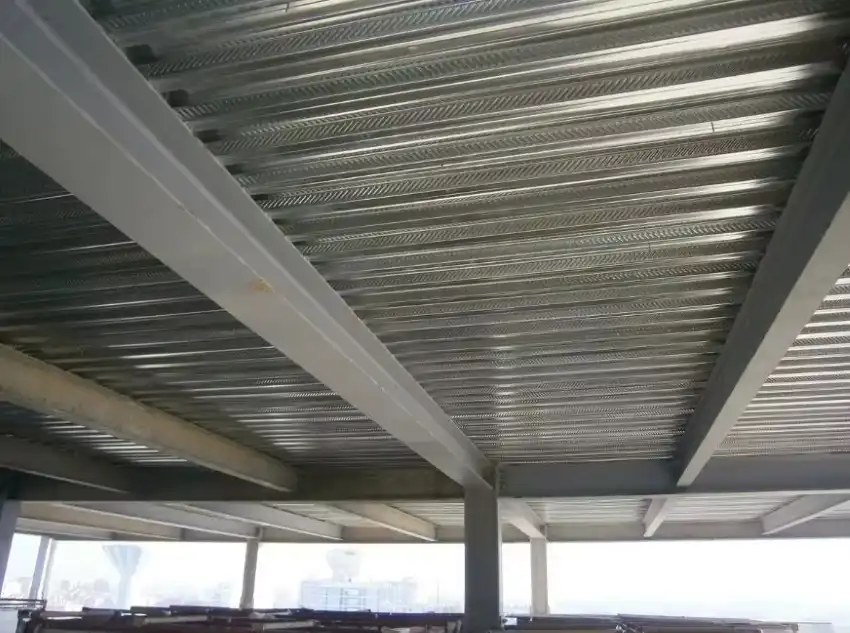
For each span situation, structural engineers set the minimum section stiffness values. When the ribs are deeper, the cross-section's moment of inertia goes up. This means that the panel can handle more bending stress over a longer length that isn't braced. It's the pattern that's stamped into the flute walls that makes them mechanically interlock with poured concrete. This is what turns a simple form deck into a fully composite structural element. Composite action and, by extension, the span table are no longer reliable without repeatable embossing depth.
Material Specifications That Matter at the Machine Level
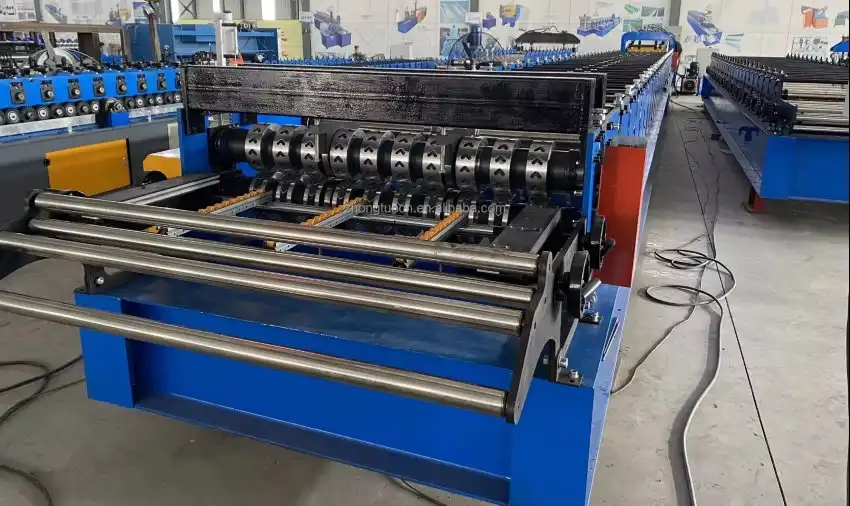
When working with galvanized or Galvalume coil that is 0.8–1.2 mm thick and has a yield strength of 235 MPa, the shape of the forming roll and the torque applied to it must be just right. At ZTRFM, the normal forming roller shafts are made of No.45 chromed steel and have a width of 95 mm. The embossing shaft, on the other hand, steps up to 120 mm to handle the extra contact force without deflection. CR12 mold steel with a quench treatment on the cutters makes sure that the shears are clean and free of burrs across the whole gauge range, without changing the shape of the ribs at the cut end.
The Roll Forming Process and Its Impact on Span Performance
Cold roll forming is a process of constant bending. As the coil stock moves through a series of roller stations, each one adds a small amount of bend until the finished profile comes out, with fully formed flat flanges, vertical webs, and flutes with raised edges. The line doesn't have to stop for length measurements or hydraulic cutting because they are done automatically.
How Each Process Stage Influences Structural Output
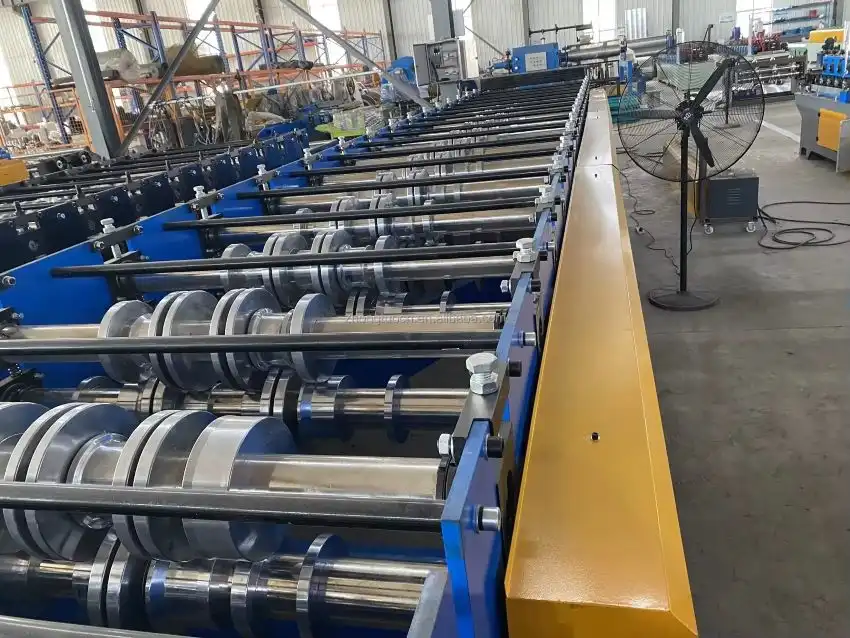
For deep-rib profiles, the progressive station sequence is very important. When you try to make too big an angle change per station, surface stress cracking and profile twist happen. Both of these damage the useful section qualities that the engineer was counting on. A well-planned multi-station layout spreads stress out slowly, so the finished panel keeps the steel's yield properties.
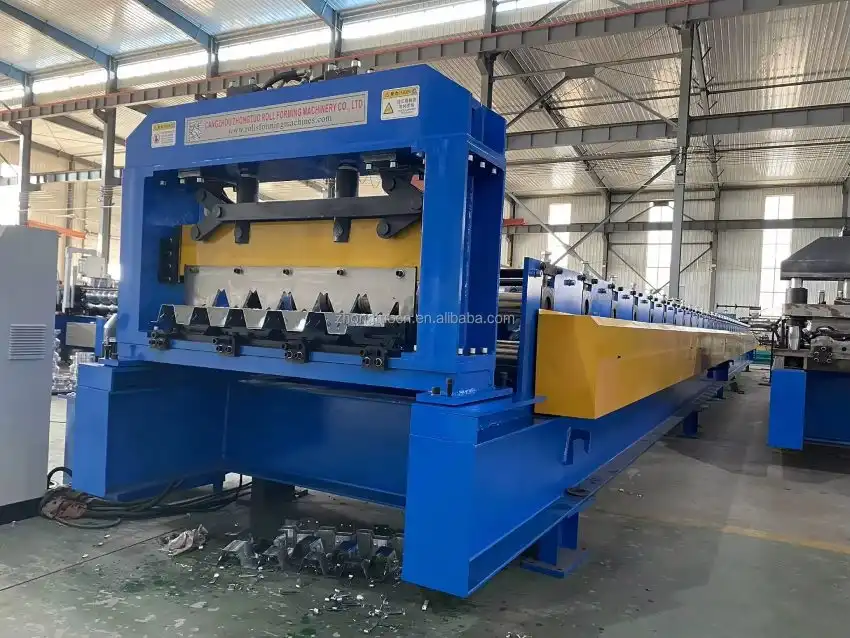
The PLC and converter control system on ZTRFM's line keeps the speed of the metal roof deck roll forming machine within a narrow range, between 10 and 20 m/min. Three 11 kW main motors spread the drive power evenly across the forming stations instead of putting all the load on one gearbox. This is a design choice that makes the final shape less uneven in terms of torsional rigidity. The 5.5 kW hydraulic unit gives the cutting station the shear pressure it needs to make clean cuts in 1.2 mm galvanized stock.
As an example in real life, composite floor decks made on this type of equipment can support unshored spans of 8–12 feet during the concrete pour, carrying wet concrete loads of about 12.5 psf without mid-span deflection failures. This level of performance directly lowers the number of shoring towers that a contractor has to set up on site.
Comparing Machine Configurations for Long-Span Deck Production
When looking at deck-forming tools, people in charge of procurement often have to decide between cutting systems that are powered by electricity or hydraulics, as well as between fixed-profile and tooling-changeable setups.
The 0.8–1.2 mm gage range works well with hydraulic cutting because the shear blade falls with controlled force instead of an impact blow. This keeps the panel ends from warping when cutting thick stock. Electric servo cutting has slightly faster cycle times, but the blade needs to fit the profile more precisely. In the US market, where B-deck, W-deck, and composite dovetail profiles all show up on the same project schedule, buyers are asking for dedicated machines per profile instead of cassette-change systems. This is because changeover downtime on a 30-station or more line reduces the flexibility's throughput benefit.
Here are the main performance factors that set ZTRFM's deck-making line apart from lighter sheet lines:
- Forming a roller shaft diameter of 95 mm is rigid enough to keep profile tolerances at the high end of the gage range, where shaft deflection is the main cause of rib-height changes.
- An embossing shaft with a 120 mm diameter can handle the high contact force needed to stamp even depressions into 1.2 mm steel stock without the rollers moving or the depth being uneven across the width of the panel.
- CR12 quench-treated cutters make blades last a lot longer when cutting zinc-coated steel, which cuts down on upkeep and unplanned downtime.
- 3 × 11 kW distributed drive gets rid of the power concentration that leads to chain stretch and gear wear on single-motor setups, which is a frequent cause of failure in high-volume production settings.
These design choices solve the most common problem in making long-span decks: profile drift over a long production run, which happens when panels' varying sizes push them outside the structural tolerance band.
Procurement Guide: Selecting Deck-Forming Equipment for Long-Span Applications
To pick the right making line, you need to make sure that the metal roof deck roll forming machine's capabilities match the deck shapes that your market needs. For buyers in the US, that means compatibility with ASTM A653 galvanized coils, profile geometry that meets SDI (Steel Deck Institute) standard tables, and enough paperwork for code-compliance submissions.
The most important things to look at when judging sellers in an organized RFQ process are:
- Profile certification and sample panels — Ask for cuts of sample panels in the gauge you want. Before deciding how much to spend on tools, compare the SDI or project-specific drawing to the rib height, cover width, and stamping depth.
- After-sales support and spare parts availability — A machine used in production needs to be able to get new cuts, roller sets, and control parts quickly. Check lead times and where to find stock.
- Decoiler and stacker capacity — For long-span deck production to run smoothly, the coil payoff should be between 10 and 20 T. Make sure the decoiler works with the thickest gauge coil you want to use.
- Control system transparency — Siemens PLC and converter platforms let technicians in-house figure out problems and change settings without having to sign a proprietary service contract.
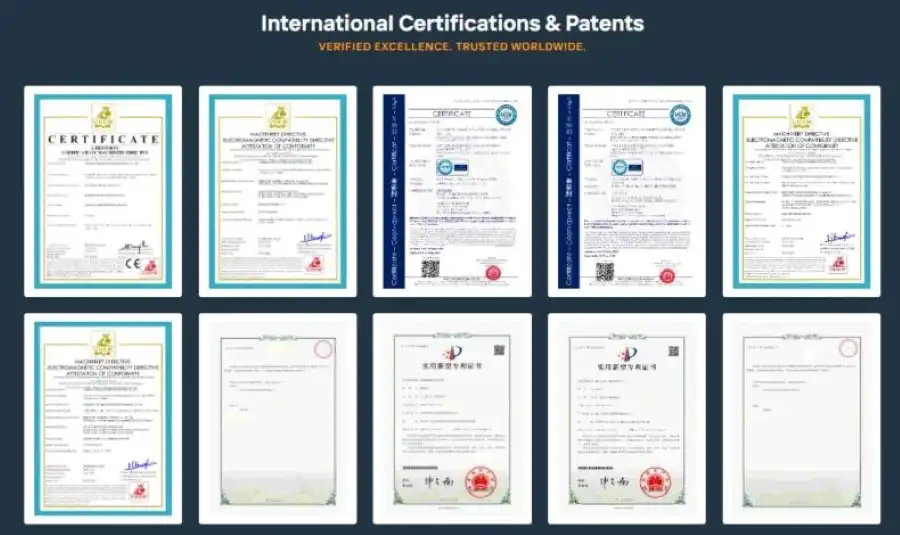
ZTRFM was formed in 2014 in Botou, Cangzhou, which is known as China's roll-forming production hub. It is certified by ISO 9001, CE, and CAS. The company works with Siemens under a strategic cooperation agreement that includes cloud IoT monitoring and AI-assisted remote maintenance. This cuts down on unplanned downtime for customers with tight production schedules by a significant amount. Reference setups with Tata Group, DS Group, and HADDAD SET show how well the system works in tough industrial markets.
Future Trends in Deck Roll Forming Technology Supporting Longer Spans
The next cycle of development in deck-forming equipment will focus on three areas that are coming together. With IoT-enabled condition monitoring, roller wear, drive torque, and cut-force data can now be tracked continuously. This lets predictive maintenance alerts be sent out before physical drift affects the quality of the product. AI-assisted quality cameras inline find changes in the stamping depth in real time and mark panels that aren't within limits before they get to the stacker. Higher-strength galvanized coils (from 235 MPa to 345 MPa and beyond) let thinner gauge stock meet the same span table requirements. This lowers the weight of the coil per square foot of deck. These trends force companies that make forming machines to make their machines more rigid and better able to control torque so that they can work with higher-strength steel, which has a smaller forming window.
Conclusion
You can only trust the metal roof deck roll forming machine that made the long-span support flooring. In the field, you can't change the profile depth, embossing consistency, or gauge accuracy. These are all set on the forming line. Engineers rely on equipment with the right shaft diameters, spread drive systems, and hardened tooling to make panels that work with the span tables they need. When buyers match the machine specs to the profile shape and amount they want to make, they avoid the costs of profile rejects, re-runs, and structure re-submissions later on. Buying approved forming tools with a lot of documentation pays off in project trust and uptime.
FAQ
1. Can one machine produce both B-deck and composite deck profiles?
For high-volume production, the standard is to have separate machines for each type of profile. To change a 30+ station line from a B-deck to a 3.0" composite profile, the whole roller cassette has to be replaced, which takes a lot of time and costs a lot of money in tools. Most buyers run separate designated lines for mixed-profile operations instead of taking the changeover cost.
2. What yield strength coil does ZTRFM's machine handle?
The usual setup works with galvanized or Galvalume coil that is 0.8 to 1.2 mm thick and has a yield strength of 235 MPa. Higher-strength coil types can be worked with by changing the order of the rollers; talk to the engineering team for specific flower design suggestions.
3. How is embossing depth controlled and verified?
The gap adjustment on the 120 mm embossing shaft stand lets you set the depth of the embossing. A depth gauge is used for production proof, and it is compared to the profile drawing specifications. As part of the quality process, incoming coil inspection is done to make sure that the coil thickness and surface coating weight stay the same.
4. What foundation does this machine require?
Because of the weight of the machine and the dynamic forces at full production speed, it is best to have a strengthened concrete base that is leveled to within 1 mm per meter. This will keep the frame from warping and the profile from being off for a long time.
Request a Deck Forming Line Quote from ZTRFM
When it comes to metal roof deck roll forming machines, ZTRFM has models that are built to meet US structural deck standards — from B-deck through 3.0" composite profiles. With ISO 9001, CE, and CAS certifications, Siemens-integrated control, and a decade of verified installations across 150+ countries, we match machine specifications to your target profile and production volume. Contact our engineering team directly at zhongtuorollforming@gmail.com to request a sample panel, technical datasheet, or OEM tooling quotation.
References
1. Steel Deck Institute (SDI). SDI Manual of Construction with Steel Deck. Steel Deck Institute, 2020.
2. American Iron and Steel Institute (AISI). Cold-Formed Steel Design Manual. AISI, 2016.
3. ASTM International. ASTM A653/A653M: Standard Specification for Steel Sheet, Zinc-Coated (Galvanized) by the Hot-Dip Process. ASTM International, 2023.
4. Hancock, G.J., Murray, T.M., and Ellifritt, D.S. Cold-Formed Steel Structures to the AISI Specification. Marcel Dekker, 2001.
5. Yu, Wei-Wen, and LaBoube, Roger A. Cold-Formed Steel Design, 4th ed. John Wiley & Sons, 2010.
6. Luttrell, Larry D. Diaphragm Design Manual, 4th ed. Steel Deck Institute, 2015.