- English
- French
- German
- Portuguese
- Spanish
- Russian
- Japanese
- Korean
- Arabic
- Irish
- Greek
- Turkish
- Italian
- Danish
- Romanian
- Indonesian
- Czech
- Afrikaans
- Swedish
- Polish
- Basque
- Catalan
- Esperanto
- Hindi
- Lao
- Albanian
- Amharic
- Armenian
- Azerbaijani
- Belarusian
- Bengali
- Bosnian
- Bulgarian
- Cebuano
- Chichewa
- Corsican
- Croatian
- Dutch
- Estonian
- Filipino
- Finnish
- Frisian
- Galician
- Georgian
- Gujarati
- Haitian
- Hausa
- Hawaiian
- Hebrew
- Hmong
- Hungarian
- Icelandic
- Igbo
- Javanese
- Kannada
- Kazakh
- Khmer
- Kurdish
- Kyrgyz
- Latin
- Latvian
- Lithuanian
- Luxembou..
- Macedonian
- Malagasy
- Malay
- Malayalam
- Maltese
- Maori
- Marathi
- Mongolian
- Burmese
- Nepali
- Norwegian
- Pashto
- Persian
- Punjabi
- Serbian
- Sesotho
- Sinhala
- Slovak
- Slovenian
- Somali
- Samoan
- Scots Gaelic
- Shona
- Sindhi
- Sundanese
- Swahili
- Tajik
- Tamil
- Telugu
- Thai
- Ukrainian
- Urdu
- Uzbek
- Vietnamese
- Welsh
- Xhosa
- Yiddish
- Yoruba
- Zulu
Composite floor deck or metal form deck: which slab profile?
When a structural engineer or procurement manager asks "composite floor deck or metal form deck — which one do I actually need?", the answer hinges on how the steel and concrete are meant to work together. A composite floor deck is a profiled steel sheet with embossments that mechanically bond with poured concrete, creating a unified structural slab. A metal form deck, by contrast, acts as a sacrificial or permanent mold — it supports wet concrete during placement but contributes little to long-term load transfer. Choosing the wrong profile adds cost, delays schedules, and can compromise code compliance.
Understanding Composite Floor Deck and Metal Form Deck
It's amazing how many engineering tasks steel deck systems can do, and mixing up the two main types is an expensive mistake when buying them.
What Is a Composite Floor Deck?
Cold-rolled galvanized steel with pressed designs along the ribs and flanges is used to make a composite floor deck, which usually has a 1.5-inch B-deck or 3.0-inch deep-rib profile. These depressions allow mechanical shear to combine with hardened concrete, which lets the steel and block work together as a single unit when live loads are applied. The Steel Deck Institute (SDI) says that composite floor decks can cut the width of the slab needed by up to 25% compared to non-composite systems. This directly lowers the amount of material needed and the size of the base needed for tall buildings.
What Is a Metal Form Deck?
A metal form deck, usually with a shallow-rib shape of 0.6″ or 9/16″, acts as a stay-in-place forming pan. It gets rid of the need for temporary supports, speeds up the floor cycle time, and stays in the finished slab. The concrete floor, on the other hand, doesn't have the embossment shape needed for composite action, so it supports all the structural loads on its own. Form deck is often used for roof assemblies under insulation and waterproofing, fixed formwork in parking structures, and mezzanine slabs where it's not possible to weld shear studs.
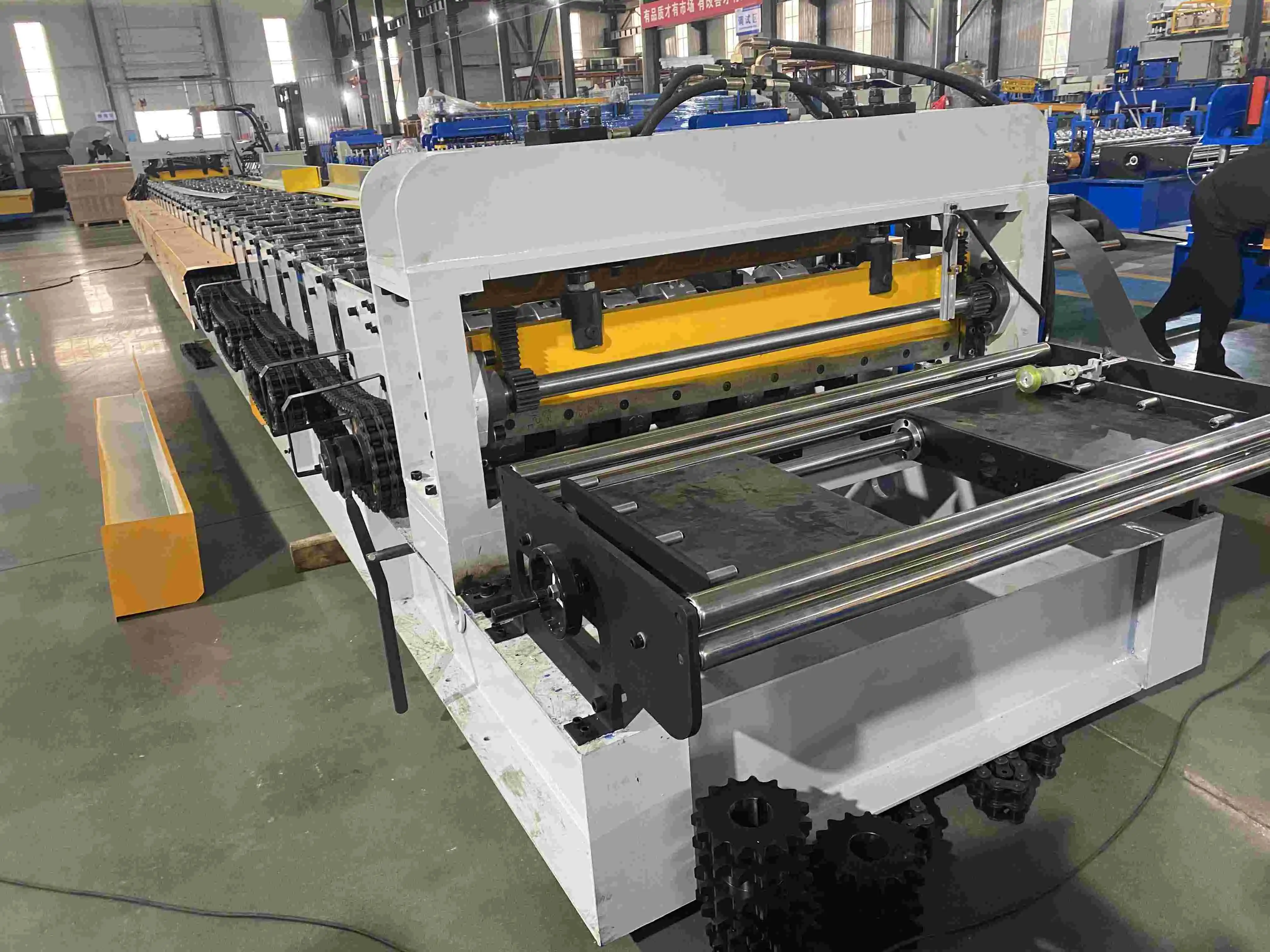
Key Differences Between Composite Floor Deck and Metal Form Deck Profiles
Span capacity, fire rating, shoring requirements, and lifetime cost are just a few of the performance variables that are affected by profile shape. The main differences that buyers usually look at are shown in the table below.
Here is a list of the factors that most directly affect both purchasing and engineering decisions, placed next to each other:
- Rib depth and structural role: The rib height on composite floor decks ranges from 1.5 inches to 3 inches, which gives the sections a lot of flexibility. During the building phase, the steel itself carries loads, and during the service phase, it is part of the composite block. Form deck bars (0.6″–1.0″) only make the formwork stiff; the concrete block can handle all service loads on its own.
- Embossment requirement: For composite profiles, the roll-forming line needs to have precise embossing rollers built in. To make sure the bond, these indentations must meet SDI or AISC tolerances. Form deck profiles don't have any embossments at all, which makes the tools easier to use but takes away the ability to make composites.
- Material gauge range: composite floor deck profiles are usually made from 0.8 mm to 1.5 mm (22 to 16 gauge) galvanized coil with zinc covering weights of G40 to G90 and yield strengths of 345 to 550 MPa (Grade 50–80). Form deck usually has lighter gauges (22g to 20g) because it doesn't have to hold as much weight.
- Lifecycle cost: In a multi-story steel-frame building, a composite slab method usually lowers the total cost of installation. According to the AISC Steel Construction Manual, getting rid of temporary shoring on each floor level saves between 10 and 15 percent of the work that needs to be done during the framing phase.
These differences directly affect machine specs, which is a very important thing to keep in mind when choosing between a heavier form-deck line and a composite floor deck machine.
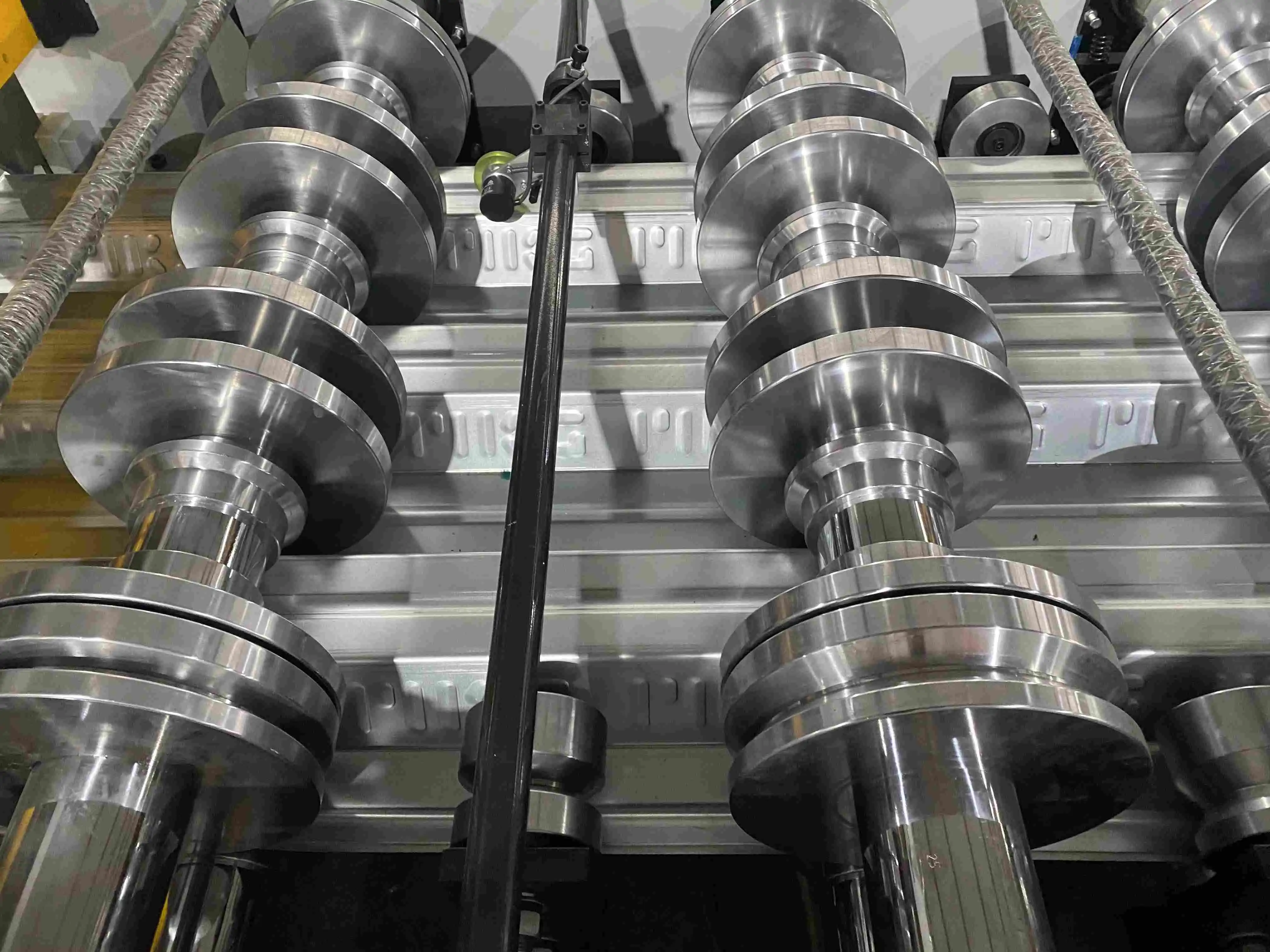
Evaluating Which Slab Profile Fits Your Project Needs
To choose the right profile, you need to take a close look at four factors that affect it: the structure's span, the loads it has to handle, its fire resistance rating, and the rules in your area.
Span and Load Criteria
This type of composite floor deck has 3.0″ ribs and can span up to 15 feet between supports under most SDI load tables without the need for temporary shoring. This makes it the usual choice for hospital floors, industrial mezzanines, and large office towers. Form deck is a good choice for shorter lengths (less than 8 feet) with light live loads, like roof sections. It also has a lower material cost.
Regulatory and Certification Alignment
SDI C-2017 (Standard for Composite Steel Floor Deck–Slabs) and AISC 360 are the rules that composite floor deck must follow in the United States. UL listings for fire-resistant structures are tied to certain deck shapes and concrete cover depths. The UL grade is null and void if the tested assembly geometry is changed, so profile geometry is not something that can be negotiated away during purchase.
Advantages of Composite Floor Deck Over Metal Form Deck and Other Alternatives
It is well known that composite floor deck systems are better at structural performance, but it is helpful to explain this in a way that a procurement manager can easily understand in terms of project ROI.
Here are the main benefits of composite decking that make it stand out on tough construction sites:
- Load integration and span efficiency: The composite slab works like a T-beam, and the steel deck is the tensile reinforcement. This combined action lets engineers cut down on beam sizes and increase bay spans, which has a multiplier effect that lowers the amount of structural steel used in a whole building.
- Fire resistance: Deep-rib composite profiles can achieve two- or three-hour fire ratings with the right concrete cover and UL-listed assembly. This is because they don't need extra fireproofing to be sprayed on the bottom, which saves time and money.
- Construction speed: Since the composite floor deck can be used as fixed formwork and as part of the structural slab, it cuts out two separate work phases: installing and removing the propping. There may be one to two extra days per level on a 30-story building because of this.
- Sustainability credentials: Galvanized steel deck is mostly made of recycled materials and can help you earn LEED material points. Because composite slabs have less concrete volume, they also have less carbon per square foot of floor area.

How to Choose the Right Slab Profile: A Decision Support Framework
To make a structured procurement choice, you must first match the needs of the project with the skills of the machine or product. As a guide, use the following criteria:
Think about the structure's span and the cost of shoring. A 1.5- or 3.0-inch composite floor deck profile is almost always the most cost-effective choice for projects with spans over 10 feet, or that want to get rid of shoring. Next, think about the fire-resistance standards. UL-listed composite parts offer reliable compliance that can be checked. Then, check to see if the gauges are compatible. The roll-forming equipment needs to be able to handle 16g to 22g material and be able to emboss inline.
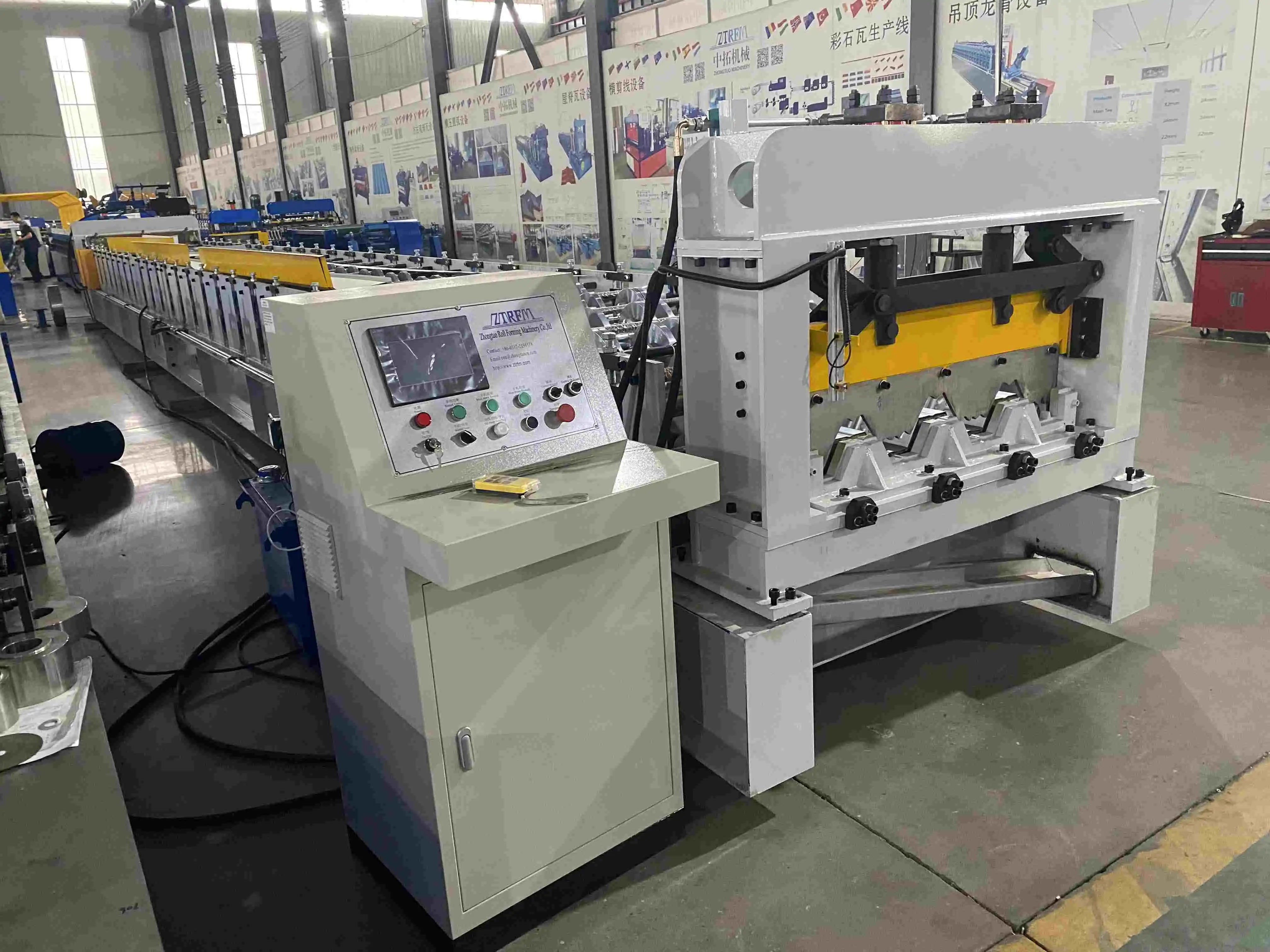
When makers and builders are looking for or considering a composite floor deck machine, the profile specification is not the only thing that counts. The equipment specification is also very important. A production line should have a coil width that can be changed, tooling that can be changed quickly by cassette, profile sizes that can be set, and a forming speed that works best for thick-gauge steel. For a reliable production environment, the machine must have a small footprint, 380V–3Ph–60Hz main power, multiple forming stations for smooth progressive shaping, a high-speed pre-flying shear cutting system, advanced computerized controls, and built-in safety covers with emergency stop buttons. The material thickness must be between 16g and 22g.
Conclusion
In the end, the choice between a metal form deck and a composite floor deck comes down to cost and structure. In high-rise and industrial construction, composite systems offer better span performance, fire resistance, and long-term cost savings. Form deck is still the best tool for lighter slab jobs and roofing assemblies. For both makers and contractors, the roll-forming equipment that makes these profiles is very important. The quality of the profiles, the speed of production, and compliance with SDI and AISC standards are all directly affected by the machine's capabilities.
FAQ
1. What is the main structural difference between composite and form deck?
Composite floor deck has ribs that are 1.5 to 3 inches deep and are used to physically connect with concrete to make a composite structural slab. Form deck gives you a permanent mold with shallow ribs (0.6″), but the concrete is the only thing that makes it strong. In multi-story buildings, the composite system has a bigger span capacity and a lower total fixed cost.
2. How does gauge selection affect machine choice?
For heavier gauges (16g to 18g), you need strong hydraulic cutting dies, hardened Cr12MoV or D2 rollers, and forming stands with a lot of force. Standard tools can be used with lighter form-deck gauges. By matching the gauge's capabilities to the machine's needs, you can keep measurement errors within ±2 mm and keep rollers from wearing out too quickly.
3. Can one machine produce both composite and form deck profiles?
One roll-forming line can switch between profile families in less than a shift with a cassette-change system. This is helpful for companies that make roofs and floor decks and work on more than one production floor.
4. What certifications should I verify before purchasing?
It is important to get ISO 9001 approval for quality management, CE marking for machinery safety, and SDI or a similar profile-geometry compliance document. UL fire-assembly lists and AISC structural qualification are based on these ratings.
Partner with ZTRFM for Your Composite Floor Deck Machine
ZTRFM is a reliable company that makes composite floor deck machines. They have ISO 9001, CE, and CAS certifications, and since 2014, they have sent precision roll-forming equipment to customers in more than 150 countries. Our Siemens-powered lines can work with 16g to 22g galvanized steel and have pre-flying cut and straight embossing systems that were made to work with 380V, 3Ph, and 60Hz power. Email zhongtuorollforming@gmail.com for a custom quote or technical advice to see all of our composite floor deck options.

References
1. Steel Deck Institute. SDI C-2017: Standard for Composite Steel Floor Deck–Slabs. Steel Deck Institute, 2017.
2. American Institute of Steel Construction. Steel Construction Manual, 16th Edition. AISC, 2023.
3. Underwriters Laboratories. UL Fire Resistance Directory. UL, 2023.
4. American Iron and Steel Institute. AISI S100: North American Specification for the Design of Cold-Formed Steel Structural Members. AISI, 2016.
5. European Committee for Standardization. Eurocode 4: Design of Composite Steel and Concrete Structures – Part 1-1. CEN, 2004.
6. Luttrell, Larry D. Steel Deck Institute Diaphragm Design Manual, 4th Edition. Steel Deck Institute, 2015.