- English
- French
- German
- Portuguese
- Spanish
- Russian
- Japanese
- Korean
- Arabic
- Irish
- Greek
- Turkish
- Italian
- Danish
- Romanian
- Indonesian
- Czech
- Afrikaans
- Swedish
- Polish
- Basque
- Catalan
- Esperanto
- Hindi
- Lao
- Albanian
- Amharic
- Armenian
- Azerbaijani
- Belarusian
- Bengali
- Bosnian
- Bulgarian
- Cebuano
- Chichewa
- Corsican
- Croatian
- Dutch
- Estonian
- Filipino
- Finnish
- Frisian
- Galician
- Georgian
- Gujarati
- Haitian
- Hausa
- Hawaiian
- Hebrew
- Hmong
- Hungarian
- Icelandic
- Igbo
- Javanese
- Kannada
- Kazakh
- Khmer
- Kurdish
- Kyrgyz
- Latin
- Latvian
- Lithuanian
- Luxembou..
- Macedonian
- Malagasy
- Malay
- Malayalam
- Maltese
- Maori
- Marathi
- Mongolian
- Burmese
- Nepali
- Norwegian
- Pashto
- Persian
- Punjabi
- Serbian
- Sesotho
- Sinhala
- Slovak
- Slovenian
- Somali
- Samoan
- Scots Gaelic
- Shona
- Sindhi
- Sundanese
- Swahili
- Tajik
- Tamil
- Telugu
- Thai
- Ukrainian
- Urdu
- Uzbek
- Vietnamese
- Welsh
- Xhosa
- Yiddish
- Yoruba
- Zulu
Adding auto punching to a ceiling t bar machine line
Adding auto-punching to a ceiling t bar machine line is one of the most impactful upgrades a ceiling grid manufacturer can make. When a servo-driven or hydraulic punch unit integrates directly into the roll forming sequence, it stamps precise service holes, connector slots, and dimple patterns at full line speed — without stopping the strip. The result is a measurable jump in throughput, tighter dimensional repeatability, and dramatically lower labor overhead. For U.S. procurement teams sourcing suspended-ceiling framing equipment, understanding how this integration works is essential before signing a purchase order.
What Auto Punching Actually Does Inside a T Grid Line
The Mechanics Behind Inline Punching
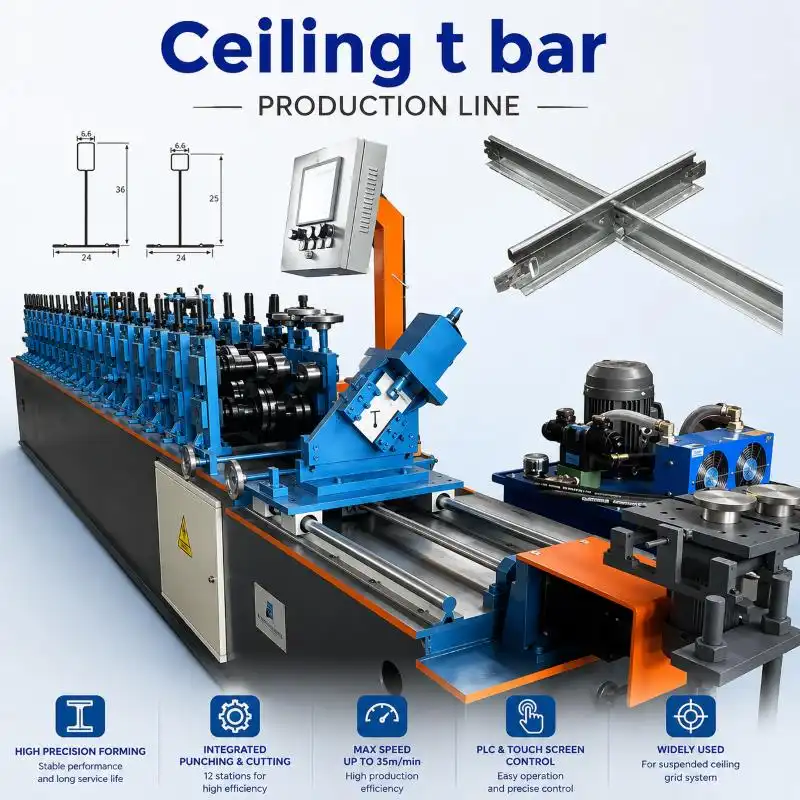
The steel strip goes through a standard roll forming process where it is shaped into a T shape by a series of roller stations. A set of hardened tool steel dies is fired at the moving strip by an inline punch module, which is usually placed between certain making stations or just before the flying cut-off. The PLC syncs the punch stroke with the speed of the strip, so the distance between holes stays the same no matter how fast the line is going. This synchronization works on ZTRFM lines with Siemens-based control architecture. It keeps the slot pitch tolerance within ±0.5 mm over a main tee length of 3,600 mm.
Key Hardware Components
The punch station has a number of parts that work together and should be carefully looked over by buying teams:
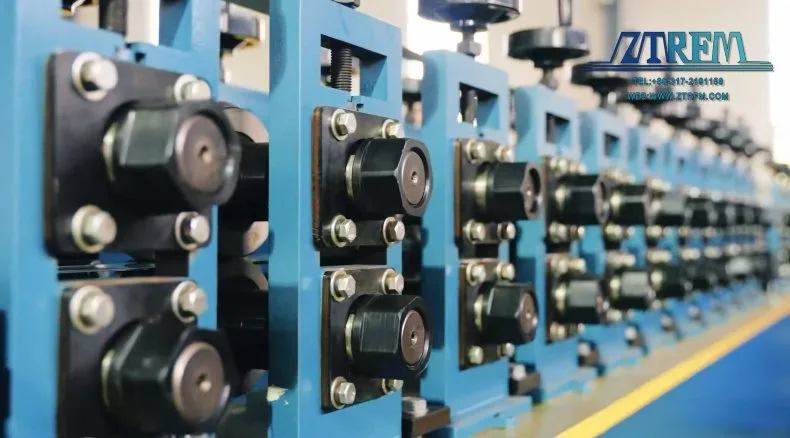
- Punch and die sets are made from GB-Cr12 tool steel that has been vacuum-heated to an HRC 58–62. This is the same type of steel that is used for the roll tooling on ZTRFM's main tee line (18 stations) and cross tee line (16 stations).
- A hydraulic or servo actuator moves the punch head. Servo drives let you set the stroke depth and speed, so you can make unique dimple patterns or knockout holes that are too big without having to retool the whole station.
- PLC encoder feedback loop reads the position of the strip in real time and sets off the punch at the exact time that was programmed. This keeps the slot spacing consistent, which is usually every 150 mm (6 inches) according to ASTM C635 grid layout rules.
- Die lubrication system that makes punches last longer; ZTRFM suggests sharpening punch tips every 100,000 strokes and uses a PLC stroke counter to let workers know when it's time.
These parts work together as a single unit that is in sync. When one part isn't calibrated properly, it causes holes to be out of alignment. That's why buyers should ask for an 8-hour continuous run test before accepting delivery of the ceiling t grid machine.
Why Manufacturers Add This Capability to Their Lines
It's easy to see why inline punching is good for business. For manual off-line punching, you need a different machine, a second handling step, and a person who is only responsible for that task. Dimensional variation gets worse every time a profile changes from one place to another. That difference is taken care of at the source by inline processing.
When procurement managers ask for auto-punching from the start, these are the main practical benefits they see:
- Line speed is maintained at 0–20 m/min even during the punching and cutting cycles because the punch fires on the fly instead of stopping the strip. This is a huge benefit for making a lot of PPGI main tees with 0.12–0.3 mm pre-painted strip.
- Consistent hole geometry across every bar in a production run, which is very important when workers are clicking cross tees into main tee slots on a 10,000-square-foot office ceiling. One misaligned slot means a pallet that can't be used.
- Reduced labor dependency by getting rid of a second cutting operator, which cut down on labor needs, lowered production costs per meter, and got rid of a frequent source of repetitive strain injuries on the shop floor.
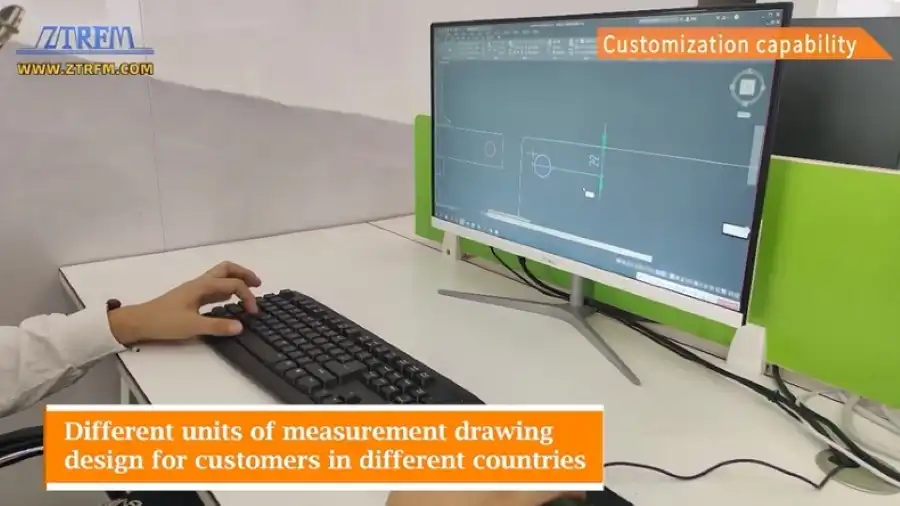
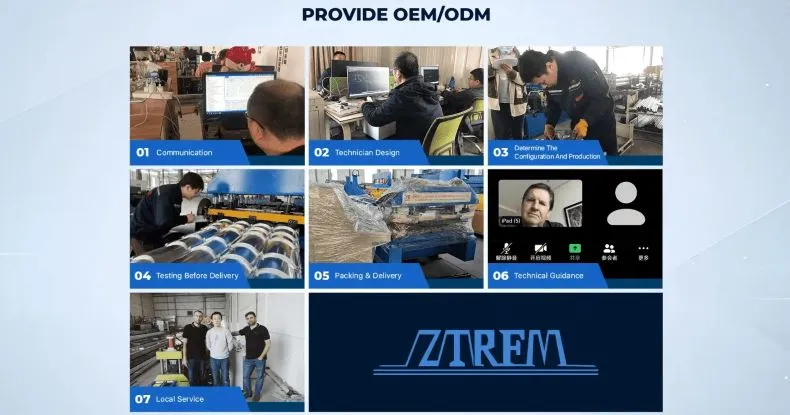
- OEM customization capability for private-label distributors who need unique hole patterns or branded dimple sequences. ZTRFM's servo-driven punch supports this feature by changing software parameters instead of retooling the machine physically.
The problems that come up with standard manufacturing are directly fixed by these benefits. When a company does different steps for forming and punching, timing problems between the two stations lead to work-in-process inventory that takes up room on the floor and costs money. With inline punching, that two-step process is merged into a single flow.
Matching the Punch Configuration to Your Profile Specs
Raw Material Considerations
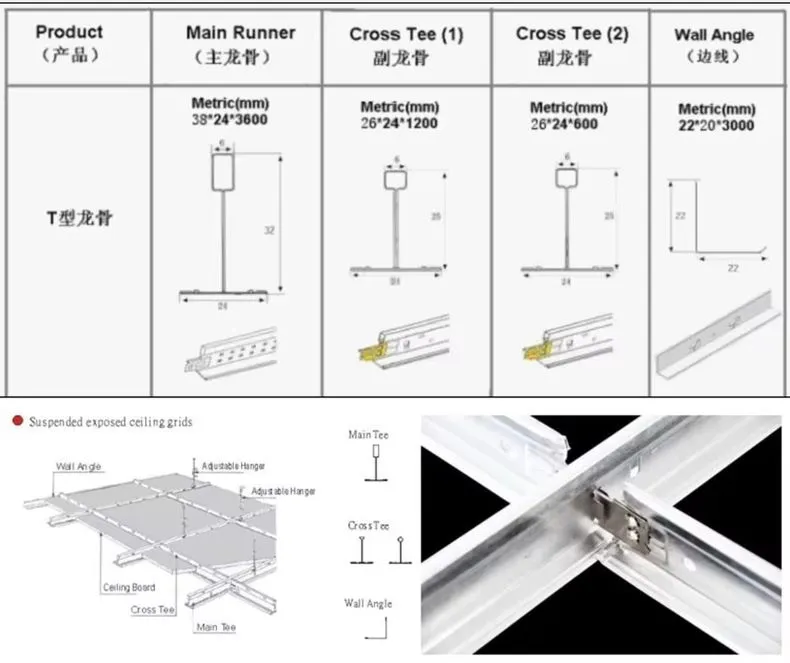
The suspended-ceiling T-grid line at ZTRFM works with PPGI strip at 0.12–0.3 mm for the visible top lip and GI strip at 0.2–0.4 mm for the stable bottom web. The shape of the punch die needs to take this range of thicknesses into account. A die clearance set for a 0.3 mm strip will leave burrs on 0.12 mm material, which hurts both the coating's ability to resist rust and the test performance for salt spray that is usually needed for business ceilings.
Decoiler and Feed System Compatibility
The decoiler on ZTRFM's line can handle up to 1.5 tons of coils with an inside diameter of 450–550 mm. It is powered by a 45# steel rolling shaft with a 50 mm diameter. Make sure that the decoiler's feed tension stays stable during punch-stroke impact when you add a punch module to an existing line. When a high-frequency hydraulic punch fires, it causes a short-lived tension spike in the strip. If the decoiler brake can't fix it, the strip wanders, which throws off the registration of the holes.
Procurement Checklist: What to Verify Before Buying
It takes more than just comparing price-per-line quotes to find a ceiling t grid machine with built-in auto-cutting. The buyer's cash is safe with the following steps of verification:
- Request a material test to be done on your specific coil stock. Ask the provider to run 0.12 mm PPGI through the punch station, and then use vernier calipers to check the sizes of the punched examples.
- Confirm PLC stroke counter functionality. The maintenance alert system should keep track of punch cycles and sound an alarm before die wear leads to burrs forming, not after a lot of bad products have been sent to the customer.
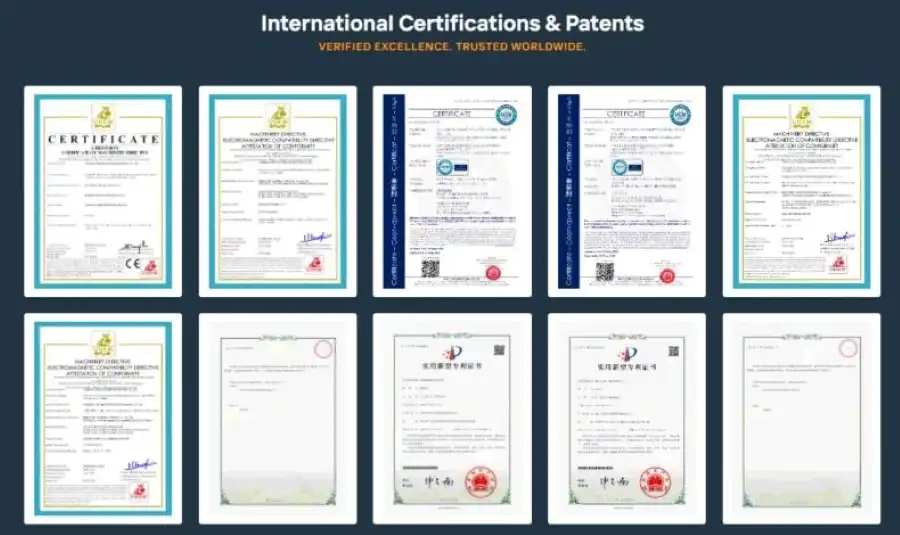
- Verify ISO 9001 and CE certification covers the whole punch module and not just the roll-making part. Across the whole line, ZTRFM has ISO 9001, CE, and CAS approvals.
- Ask about remote diagnostics. Engineers can check hydraulic pressure curves and servo torque data from afar with ZTRFM's Siemens cloud IoT integration. This greatly reduces the time it takes to fix problems, which is a clear uptime benefit for U.S. buyers who work in different time zones from their supplier.
- Clarify tooling ownership terms for OEM and ODM sales. If the whole plan is unique to your brand, the custom punch patterns should come with drawings that are covered by an NDA.
Conclusion
Adding auto-punching to a ceiling t bar machine roll forming line is no longer a nice-to-have extra; it is quickly becoming the standard in competitive business ceiling manufacturing. With inline alignment, GB-Cr12 tooling, and PLC-controlled stroke management, output is faster, tolerances are tighter, and the cost per unit is lower. When U.S. procurement teams look at ceiling framing equipment, they shouldn't ask if they should specify auto-punching. Instead, they should ask which configuration fits their material range, output goals, and OEM needs. Getting those answers from a company that has field sites that can be checked in more than 150 countries cuts the review process by a large amount.
FAQ
1. What material thickness range does the punch station support?
PPGI is cut at 0.12–0.3 mm for the top lip, and GI is cut at 0.2–0.4 mm for the bottom web on ZTRFM's T grid line. To work with this range, the PLC's die clearance settings can be changed without having to retool the punch station.
2. Can auto punching be retrofitted onto an older roll forming line?
It is possible to retrofit a line that already exists as long as it has a suitable PLC and there is enough space between the roller stations. That being said, the encoder feedback loop needs to be readjusted to work with the current drive system. Before giving a quote, ZTRFM's tech team checks to see if the fix will work.
3. How often do punch dies require maintenance?
ZTRFM says that punch tips should be sharpened every 100,000 strokes. Before that point, the onboard PLC stroke counter sends an alert, which lets operators plan maintenance ahead of time instead of after the fact.
4. Does inline punching affect overall line speed?
The line stays between 0 and 20 m/min on ZTRFM's flying-punch configuration during both the punching and cutting cycles. The punch shoots at the rolling strip without stopping the feed, which keeps the speed up.
5. What certifications should a supplier hold for this equipment?
Buyers should make sure that the whole line, including the punch module, has ISO 9001, CE, and CAS approval. These credentials prove that the quality control methods and product safety rules are being followed.
Upgrade Your Production Line with ZTRFM's Auto Punching Technology
Because it is certified by ISO 9001, CE, and CAS and works with the Siemens cloud IoT, ZTRFM has been making ceiling ceiling t bar machine solutions for companies in over 150 countries since 2014. Whether you need a standard inline punch configuration or a fully custom OEM ceiling T-bar machine supplier solution with tools that are protected by an NDA, our team can build it for you. You can email us at zhongtuorollforming@gmail.com to ask for a sample run, technical advice, or a reasonable quote.
References
1. American Society for Testing and Materials (ASTM). ASTM C635: Standard Specification for the Manufacture, Performance, and Testing of Metal Suspension Systems for Acoustical Tile and Lay-In Panel Ceilings. ASTM International, 2022.
2. Steel Framing Industry Association (SFIA). Technical Guide for Cold-Formed Steel Framing Products. SFIA, 2021.
3. Manufacturers' Monthly. Automation Trends in Roll Forming: Inline Punching and Servo Integration. Manufacturers' Monthly, 2023.
4. Construction Specifier. Suspended Ceiling Systems: Material Standards and Installation Tolerances. The Construction Specifier, 2022.
5. Metalforming Magazine. Die Maintenance Best Practices for High-Cycle Punching Operations. Metalforming Magazine, 2023.
6. International Organization for Standardization. ISO 9001:2015 Quality Management Systems — Requirements. ISO, 2015.