- English
- French
- German
- Portuguese
- Spanish
- Russian
- Japanese
- Korean
- Arabic
- Irish
- Greek
- Turkish
- Italian
- Danish
- Romanian
- Indonesian
- Czech
- Afrikaans
- Swedish
- Polish
- Basque
- Catalan
- Esperanto
- Hindi
- Lao
- Albanian
- Amharic
- Armenian
- Azerbaijani
- Belarusian
- Bengali
- Bosnian
- Bulgarian
- Cebuano
- Chichewa
- Corsican
- Croatian
- Dutch
- Estonian
- Filipino
- Finnish
- Frisian
- Galician
- Georgian
- Gujarati
- Haitian
- Hausa
- Hawaiian
- Hebrew
- Hmong
- Hungarian
- Icelandic
- Igbo
- Javanese
- Kannada
- Kazakh
- Khmer
- Kurdish
- Kyrgyz
- Latin
- Latvian
- Lithuanian
- Luxembou..
- Macedonian
- Malagasy
- Malay
- Malayalam
- Maltese
- Maori
- Marathi
- Mongolian
- Burmese
- Nepali
- Norwegian
- Pashto
- Persian
- Punjabi
- Serbian
- Sesotho
- Sinhala
- Slovak
- Slovenian
- Somali
- Samoan
- Scots Gaelic
- Shona
- Sindhi
- Sundanese
- Swahili
- Tajik
- Tamil
- Telugu
- Thai
- Ukrainian
- Urdu
- Uzbek
- Vietnamese
- Welsh
- Xhosa
- Yiddish
- Yoruba
- Zulu
Why cheap roofing sheet machines produce costly rejects
Buying a cheap roofing sheet machine feels like a smart move at first. The invoice looks good, the delivery date is short, and the spec sheet seems acceptable. But within weeks of production, problems start showing up — bent profiles, scratched PPGI coatings, panels cut 3 mm too short, and rollers wearing out ahead of schedule. What looked like savings quickly becomes a drain. This article breaks down exactly why low-cost roll forming equipment generates high reject rates, and what to look for when making a smarter procurement decision.
Understanding the Problem with Cheap Roofing Sheet Machines Dimensional Inaccuracies Are the First Sign
The finished panel moves out of tolerance when the forming stations are not lined up correctly or when the shafts bend when they are loaded. If a corrugated or triangular shape is even 1.5 mm off-pitch, it won't lap right on a roof, which can lead to leaks and extra work during installation. The Metal Construction Association says that about 30% of roofing installation callbacks in business jobs are due to not meeting the required dimensions.
Coating Damage Signals Roller Quality Problems
Most PPGI and Al-Zn coils have a paint layer that is only 20–25 microns thick. When bending, if the forming rollers are not hard chrome-plated or are made to loose standards, the coating can be scratched by tiny surface roughness. Whole batches have to be thrown away because scratched panels rust faster and fail warranty inspections.
The Hidden Cost Calculation Most Buyers Miss
The amount of raw material waste from panels that are turned down grows faster than most procurement teams think. That's $1,375 in steel alone if a line rejects 5% of a 25-tonne coil order at $1,100/tonne, and that's before you add in labor, reshipping, and client penalties. Over the course of a year, those numbers can be several times greater than the change in the price of the original machine.
Root Causes Behind Costly Rejects from Low-Cost Machines
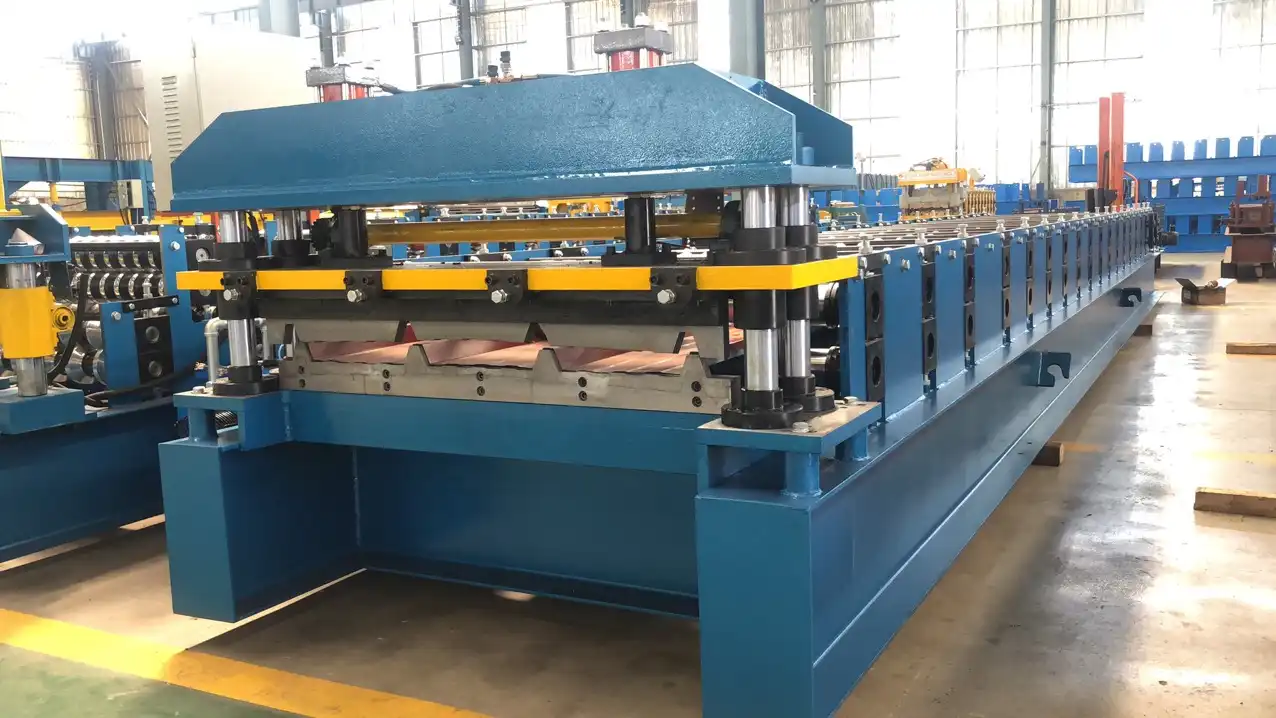
The gaps in the mechanical and electrical parts of cheap equipment are not random. They follow a pattern that can be predicted and is linked to specific decisions made to cut costs.
Substandard Rollers and Shafts
Most low-cost lines use cast iron or low-grade mild steel rollers that haven't been properly heated. That's not the case with 45# steel rollers that have been hard chrome plated; they keep their surface hardness above HRC 58 and their dimensions the same after being formed hundreds of millions of times. When loads are put on shafts that are too small—often 60 mm instead of 80 mm solid—they bend, which causes profile camber that can't be fully fixed with adjustments.
Weak Electrical and Control Systems
A generic PLC name and basic relay logic are often used together in cheap tools. There are mistakes in measuring lengths that add up, the flying shear fires late, and panels are 2–4 mm short after each cut. That is meters of steel that will not be used for a building roof with 500 panels. On the other hand, roofing sheet machines built with Siemens PLC controls always keep the cutting length error at ±1 mm.
Inadequate Machine Frame Rigidity
When it runs at high speeds, a making machine frame made of normal channel steel instead of 400 H-beam steel shakes. That vibration goes straight to the roller stations, making the profile gaps bigger and the panels' rib heights less consistent. It's not a luxury to have structural rigidity; it's a requirement for production.
The rollers, controls, and frame are the three parts that can break. Together, they make the total cost of ownership much higher than what the difference in price ever justified.
Principles for Selecting a Reliable Roofing Sheet Machine
It's not enough to just know what to avoid. Here are the main requirements that directly affect the quality of the work.
Roller Station Count and Material Grade
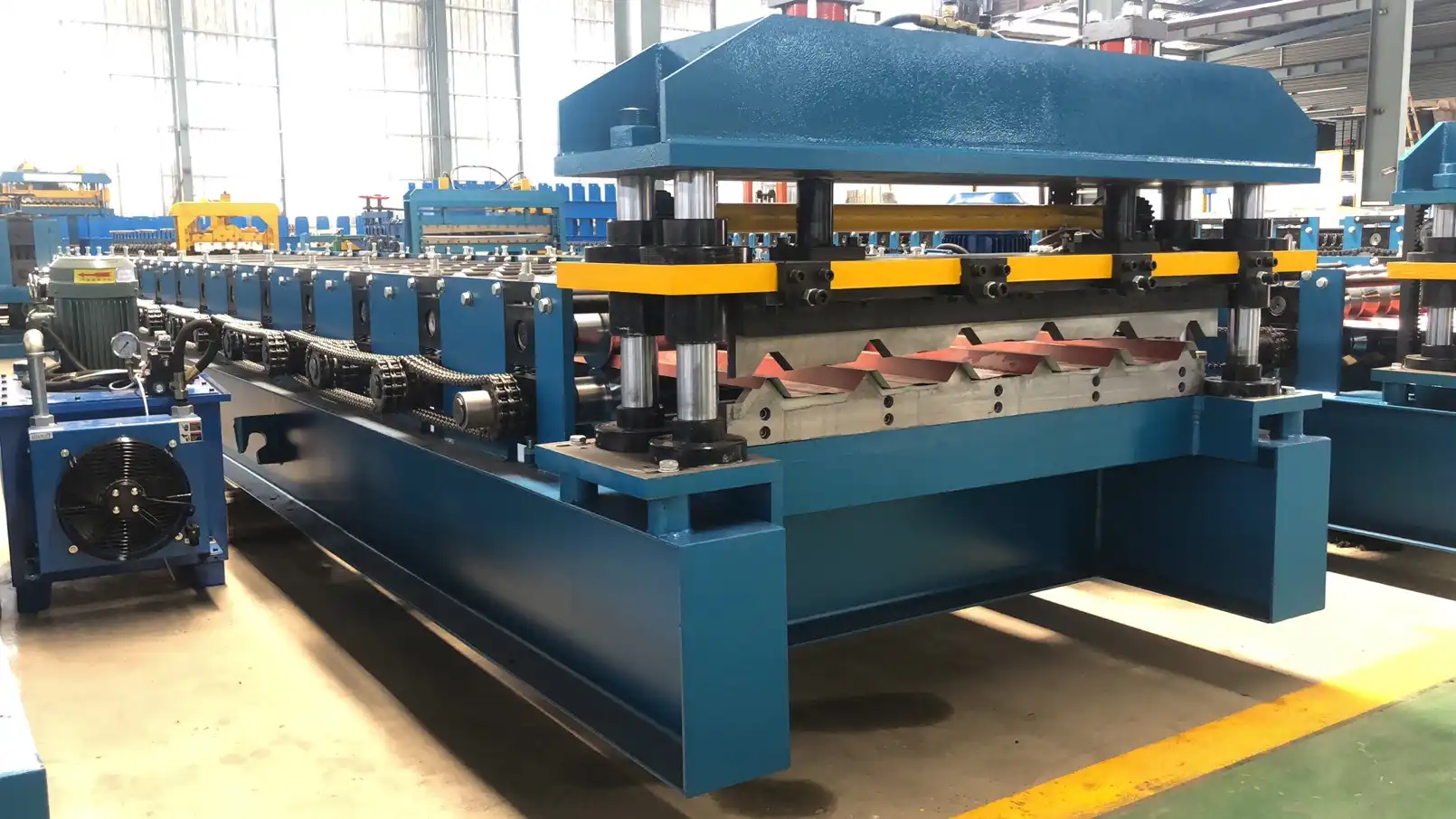
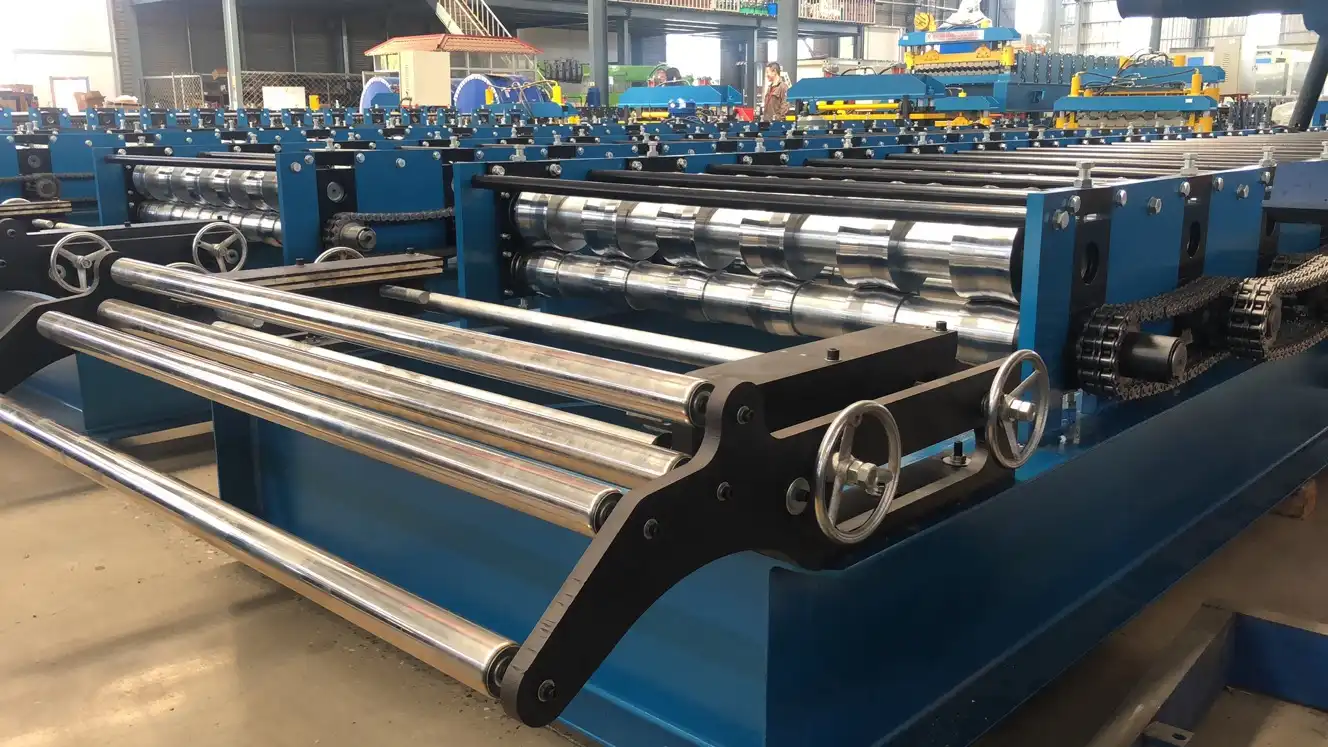
For profiles like PBR, R-panel, IBR, or corrugated, a well-designed line needs at least 18–22 roller stations to gradually shape the material without putting too much stress on the coating or base metal. Hard chrome-plated 45# steel rollers should be placed on 80 mm solid shafts at each station. These shafts should be moved by a chain transmission. The standard that tells production-grade equipment from light-duty options is progressive forming across 22 stations.
Decoiler Capacity and Coil Handling
When changing coils, a hydraulic decoiler speeds up the process and makes it safer to handle big coil weights. A hand decoiler is often included for free by good providers. This gives workers options for making lighter coils or doing extra production runs. When getting quotes from different roofing sheet machine makers, this bundled value is one of the first things you should check.
Control System and Cutting Accuracy
The cutting unit is the most important part of getting the length right. When paired with a measured PLC, a hydraulic moving shear keeps the panel length within ±1 mm. This means that the line never stops to cut. Before taking delivery, ask any vendor for a video of a pre-shipment trial run using your own coil specifications. That one requirement alone gets rid of a lot of suppliers who don't have enough resources.
Case Studies: Cost Savings from Investing in Quality Machines
Real production data from buyer upgrades consistently tells the same story.
Roofing Contractor Moving to In-House Production
A roofing contractor in the Southeast United States sourcing R-panel and PBR profiles externally switched to in-house production using a 22-station line with Siemens PLC control. Within the first three months, their panel reject rate dropped from 8.2% to under 1.5%, and their per-panel cost fell by 19% once material sourcing was consolidated. The return on roofing sheet machine investment came in at 14 months.
Steel Service Centre Adding Profile Production
A steel service centre in Texas added a cold roll forming line to convert their existing PPGI coil stock into finished roofing panels. Because they specified 80 mm solid shafts and hard chrome rollers upfront, their first roller set lasted 26 months under double-shift production without resurfacing — well past the 8–12 month lifespan they had experienced with a previous lower-cost machine.
OEM Panel Brand Protecting Warranty Position
An OEM panel brand supplying prefab housing builders needed zero visible coating scratches on their PPGI panels. By switching to a machine with polished chrome-plated rollers and synchronized station speeds, their warranty claims related to surface defects dropped to near zero within two production cycles. Client retention improved, and they were able to expand their order volume with confidence.
Summary and Key Takeaways for Procurement Managers
There is a clear pattern: the initial price difference between a budget-forming line and a properly defined one is almost always made up for by lower reject rates, longer roller life, and fewer production stops.
Total Cost of Ownership Beats Purchase Price
When procurement teams only look at the FOB statement, they don't see the whole picture. The costs of scrap materials, labor, and roller replacement cycles all add up in a quiet way. A machine that costs $8,000 to $12,000 more and has rollers that last two years without needing to be changed will often save you more money over five years than a cheap one that needs two roller rebuilds and constant length recalibration.
Certifications and Factory Background Matter
It's not just a matter of filling out paperwork to get ISO 9001, CE, or CAS licenses. They show that the process of making the product has been checked against clear quality standards. Botou, Cangzhou, which is known as China's roll-forming hub, is an established machinery manufacturing area. This means that factories there have access to specialized supply lines and skilled toolmakers that cheaper shops don't.
Specifications to Confirm Before Signing Any Purchase Order
Before you buy something, make sure you ask the seller about the roller material and hardness grade, the shaft diameter, the frame steel standard, the PLC brand, the type of flying shear, and whether a pre-shipment video test is included. These features can't be changed; they are the mechanical basis for every panel your roofing sheet machine line will ever make.
FAQ
Q1: What roller material should I specify to avoid coating scratches on PPGI?
Specify 45# steel rollers with hard chrome plating on the surface. The chrome layer reduces surface roughness, preventing micro-abrasion against the PPGI paint coating during forming. Polished roller surfaces and correct station clearance settings further protect the coating.
Q2: How many roller stations do I need for PBR and R-panel profiles?
For standard exposed-fastener profiles like PBR and R-panel in the 0.3–0.8 mm thickness range, 18 to 22 roller stations provide adequate progressive forming. Fewer stations increase per-station bending stress, which raises the risk of cracking on high-tensile coatings.
Q3: Can one machine handle multiple profiles?
A standard fixed-roller machine produces one profile. For multi-profile operations, a cassette-type tooling system allows roller sets to be swapped on a single frame, giving production flexibility without purchasing separate lines.
Q4: What is the correct maintenance interval for the cutting blade?
A Cr12MoV cutting blade on a hydraulic flying shear typically needs inspection every 1–2 million cuts, depending on material gauge and hardness. Regular lubrication of the slide mechanism and checking the blade gap prevents burrs on panel edges.
Q5: What should I request before shipment to verify machine quality?
Request a pre-shipment trial-run video using your own coil specification, with panel samples showing length tolerance measurements. This confirms forming accuracy, cutting performance, and coating condition before the machine leaves the factory.
Get a Precise Quote from ZTRFM — Roofing Sheet Machine Manufacturer
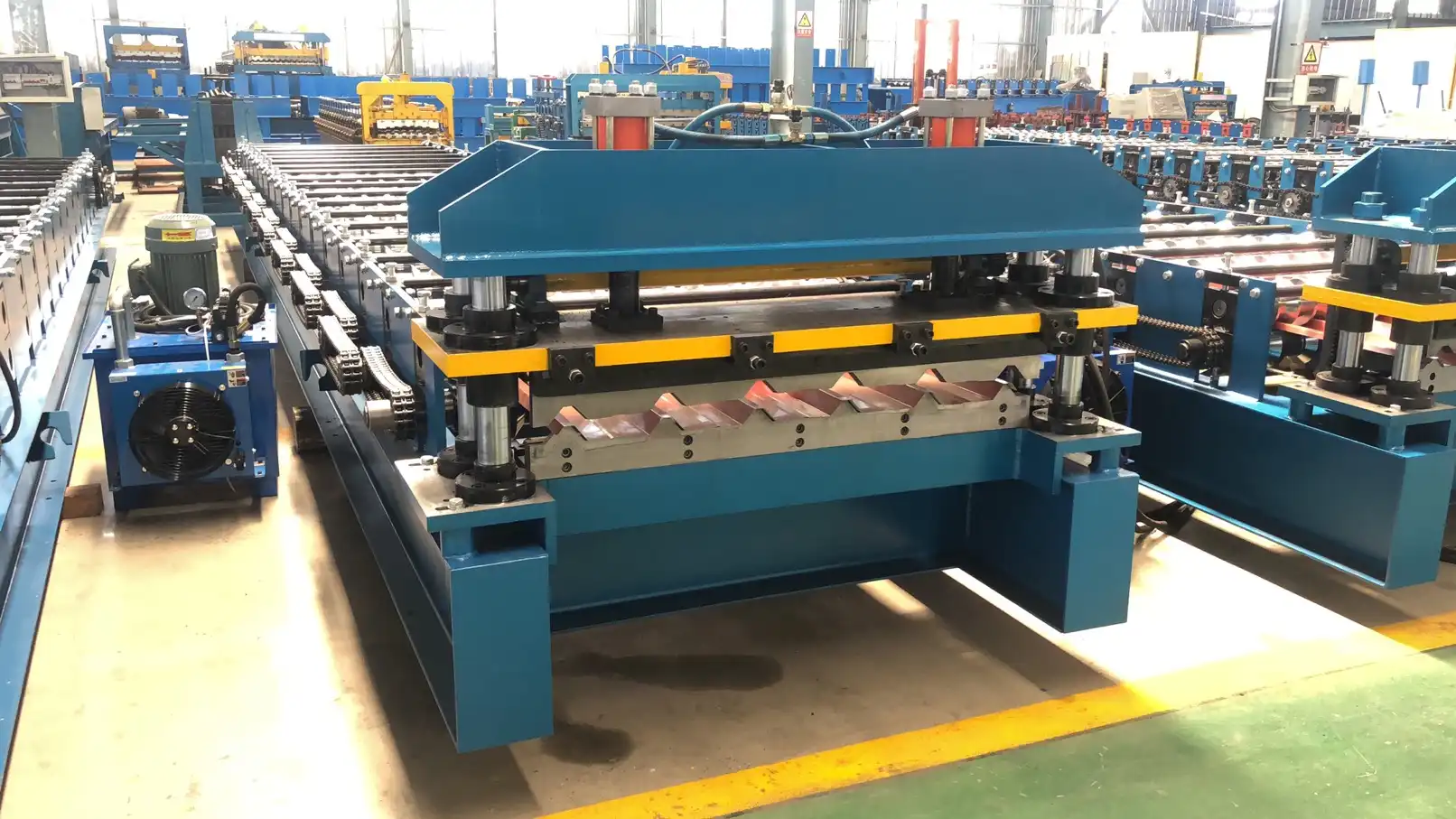
Since 2014, ZTRFM has been developing and making cold roll forming lines. Their tools are now used in more than 150 countries. Our basic 22-station line is made on a 400 H-steel frame and has 80 mm solid shafts, 45# hard chrome-plated rollers, a chain transmission drive, and Siemens PLC control. It can handle PPGI, GI, and aluminum coils that are 0.3 to 0.8 mm thick. It comes with a hydraulic decoiler as standard and a hand decoiler for free. To get a quote from a real roofing sheet machine provider, email us at zhongtuorollforming@gmail.com.
References
1. Metal Construction Association. MCA Technical Bulletin: Roofing Installation Defects and Field Performance Data. 2021.
2. Iron & Steel Technology (AIST). Cold Roll Forming Fundamentals and Industrial Applications. 2019.
3. Sheet Metal Industries Journal. Roller Wear and Surface Finish in Cold Forming Operations. 2020.
4. International Journal of Advanced Manufacturing Technology. Dimensional Accuracy in Continuous Roll Forming of Thin Steel Strip. 2022.
5. Construction Specifier Magazine. Exposed-Fastener Metal Roofing: Material and Installation Performance Review. 2021.
6. Journal of Manufacturing Processes. Effect of Roller Hardness and Surface Coating on Sheet Metal Forming Quality. 2023.