- English
- French
- German
- Portuguese
- Spanish
- Russian
- Japanese
- Korean
- Arabic
- Irish
- Greek
- Turkish
- Italian
- Danish
- Romanian
- Indonesian
- Czech
- Afrikaans
- Swedish
- Polish
- Basque
- Catalan
- Esperanto
- Hindi
- Lao
- Albanian
- Amharic
- Armenian
- Azerbaijani
- Belarusian
- Bengali
- Bosnian
- Bulgarian
- Cebuano
- Chichewa
- Corsican
- Croatian
- Dutch
- Estonian
- Filipino
- Finnish
- Frisian
- Galician
- Georgian
- Gujarati
- Haitian
- Hausa
- Hawaiian
- Hebrew
- Hmong
- Hungarian
- Icelandic
- Igbo
- Javanese
- Kannada
- Kazakh
- Khmer
- Kurdish
- Kyrgyz
- Latin
- Latvian
- Lithuanian
- Luxembou..
- Macedonian
- Malagasy
- Malay
- Malayalam
- Maltese
- Maori
- Marathi
- Mongolian
- Burmese
- Nepali
- Norwegian
- Pashto
- Persian
- Punjabi
- Serbian
- Sesotho
- Sinhala
- Slovak
- Slovenian
- Somali
- Samoan
- Scots Gaelic
- Shona
- Sindhi
- Sundanese
- Swahili
- Tajik
- Tamil
- Telugu
- Thai
- Ukrainian
- Urdu
- Uzbek
- Vietnamese
- Welsh
- Xhosa
- Yiddish
- Yoruba
- Zulu
Using a shelf panel roll forming machine to Build Strong and Durable Workshop Shelves
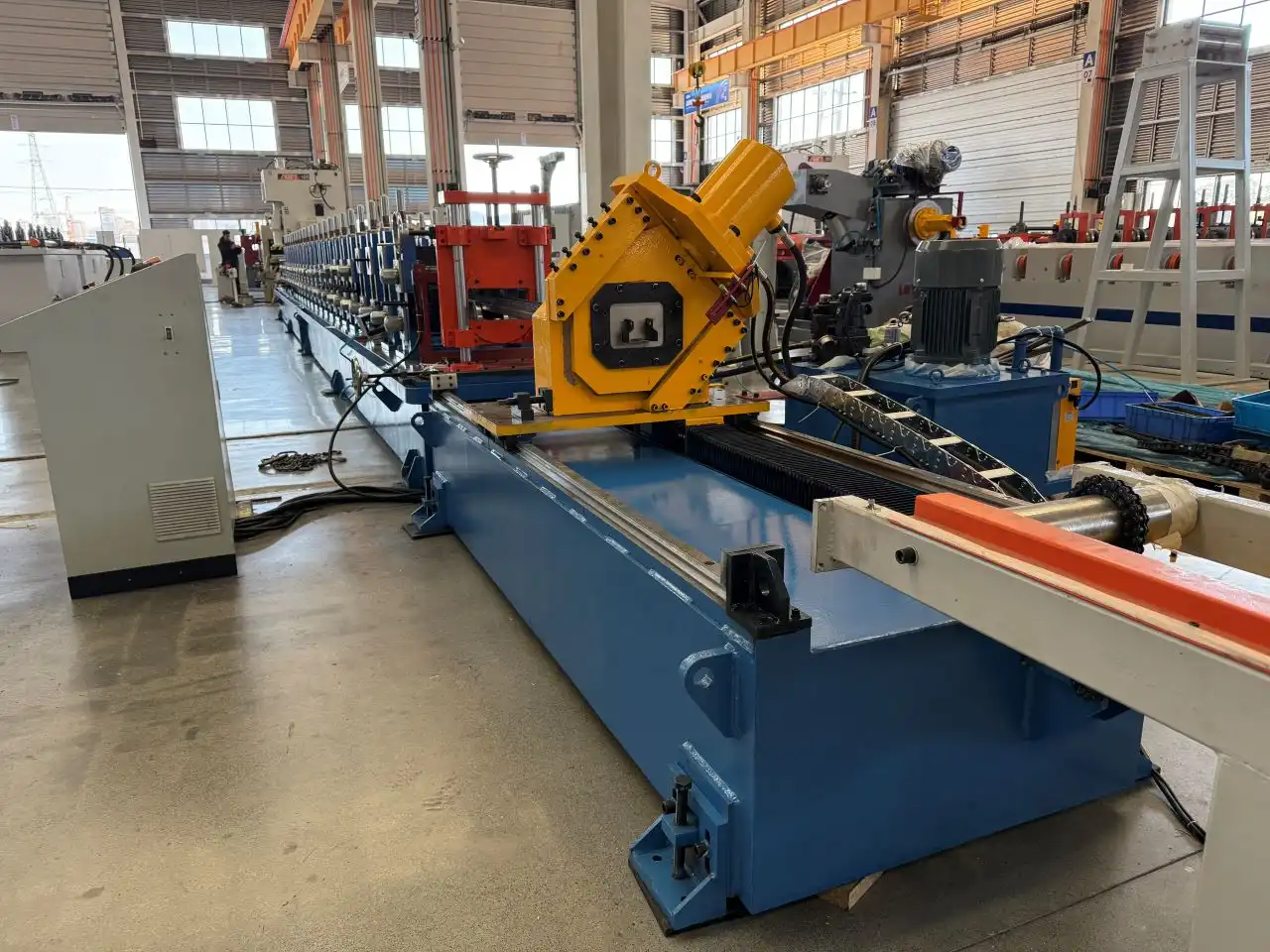
If you want workshop shelves that hold up under real load—day after day—the way you manufacture the panels matters as much as the steel itself. A shelf panel roll forming machine converts cold-rolled coil into precisely formed decking panels, back panels, bracing channels, and brackets in one continuous pass. The process removes manual error, keeps every profile geometrically consistent, and lets a single production line supply a full shelving system. This article walks you through how the technology works, what to look for when buying, and how to get the most from your investment.
Understanding Shelf Panel Roll Forming Machines and Their Benefits How Raw Coil Becomes a Structural Panel
A steel tube that has been cold-rolled goes through a decoiler and then a set of roller stations to get to a finished shape that is ready to be fixed or put together. The strip is bent a little more at each station until it has the right cross-section. This could be ribbed decking, a trimmed back panel, or a brace channel. At output rates of 10 to 25 meters per minute, accuracy in the measurements is not lost because the process never stops.
Core Components That Drive Consistency
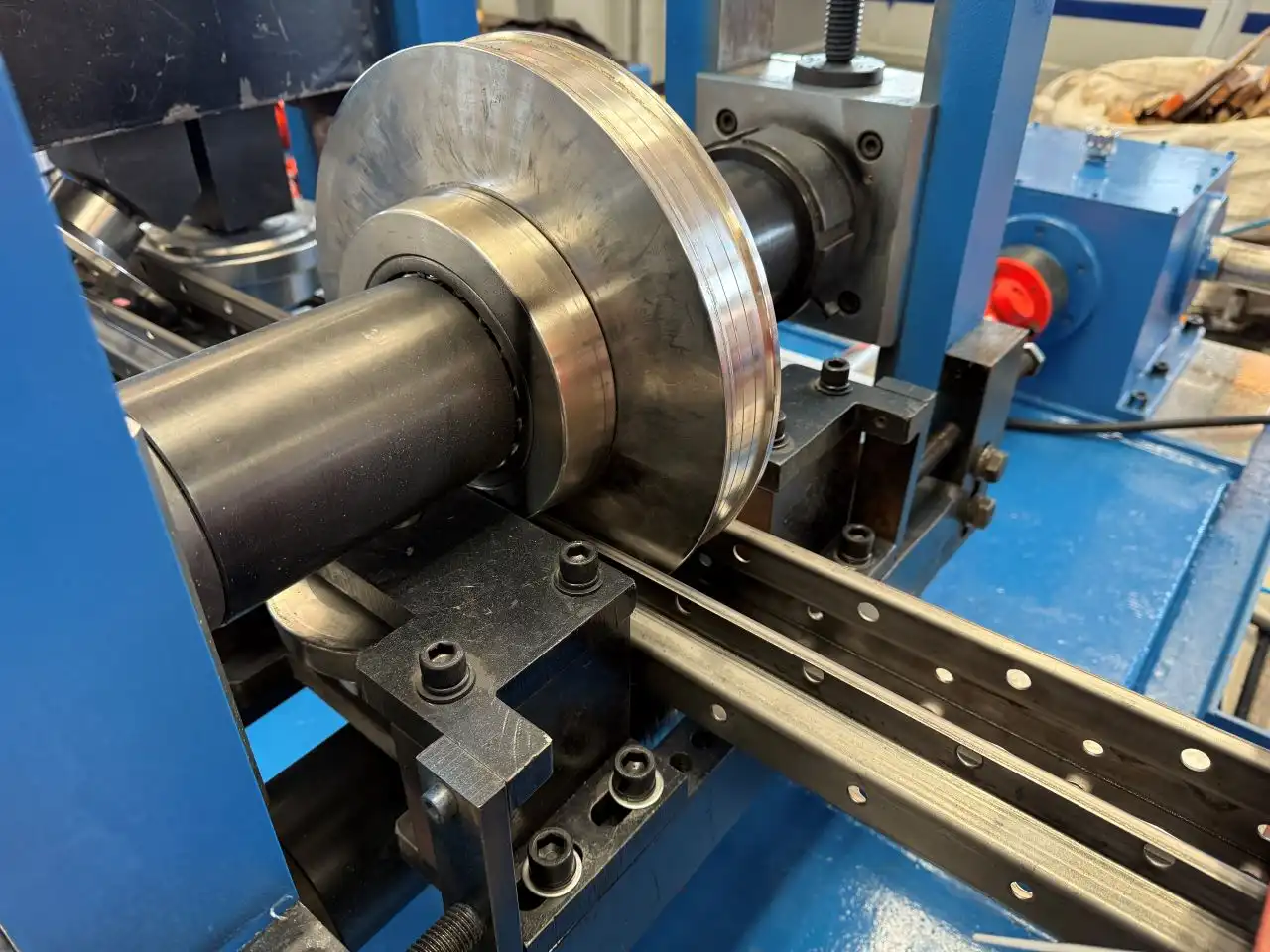
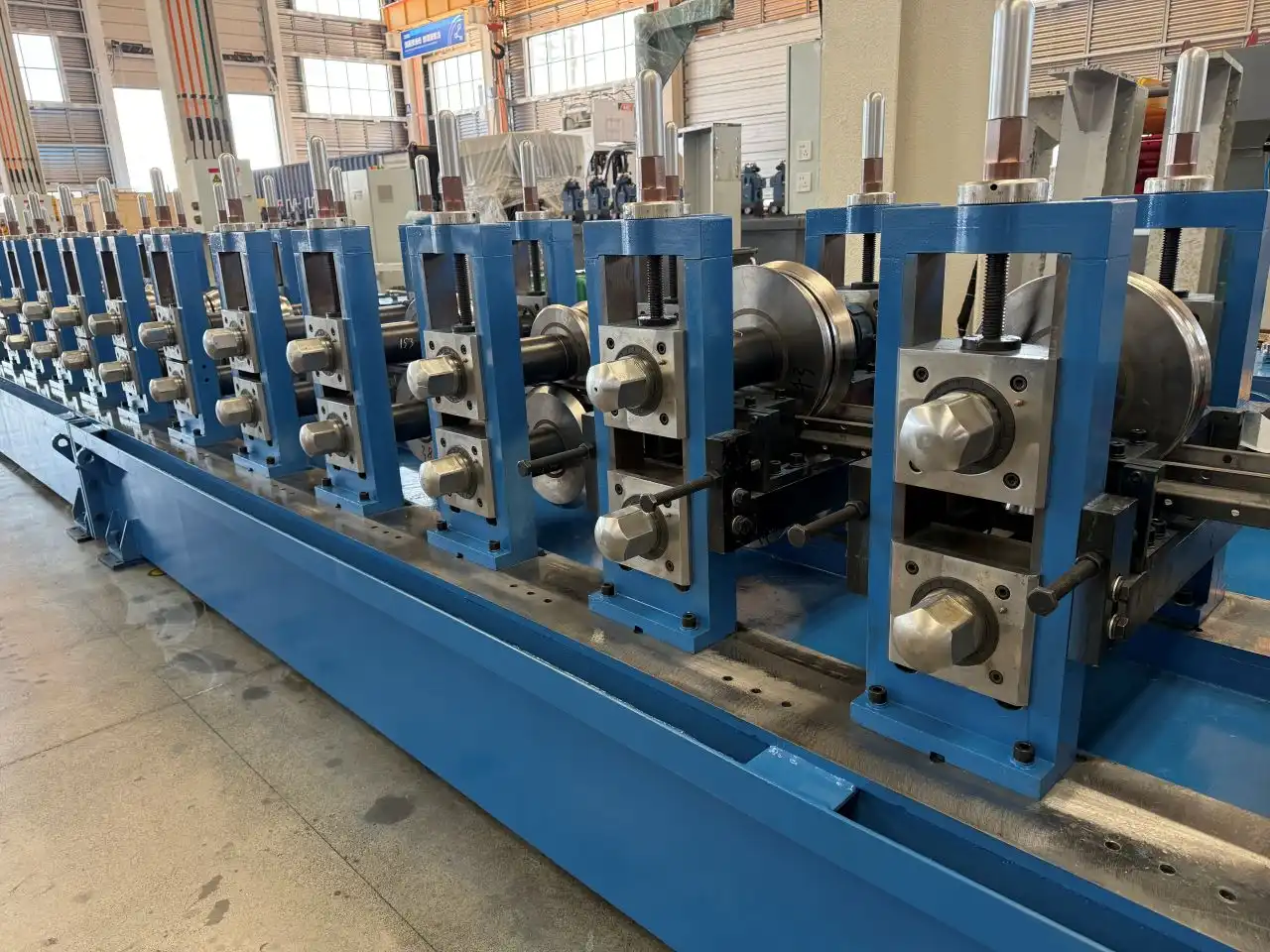
The tools used on a finished shelf panel have a direct impact on how well it works. Rollers made from vacuum-heated Cr12MoV die steel that has an HRC of 55–58 don't wear out even after long shifts of running high-tensile strip. Metal rods that are 50 mm thick hold the rollers in place, and the twisting load is spread out over 36 stations. This way, the strip never has a single point of stress that could damage the surface or make it warp.
Why Automated Roll Forming Beats Brake Press Bending
With brake presses, you have to do something different for each bend, so mistakes in placement add up with each stroke. The shape is locked in at every point on a continuous roll, making it at the same time. This makes sure that errors in the cross-section are within ±0.5 mm and errors in the hole pitch are within ±1 mm over a 3-meter length. For a storage shelf to fit normal clips and supports, it needs to be that sharp.
Because of three things: the type of material used, the accuracy of the tools, and the speed of the process, a production line built around the shelf panel roll forming machine is not the same as a general-purpose press.
Choosing the Right Rack Panel Roll Forming Machine for Your Workshop Shelves
Manual vs. Fully Automatic Operation
Beginning machines have simple length-stop settings and changeovers that are done by hand. When a line is fully automatic, it has a PLC touch screen that controls batch sizes, panel lengths, punching patterns, and coil tracking for the machine itself. For rack makers or sheet metal service centers that work with a lot of different SKUs, PLC-controlled size adjustment cuts down on downtime between profile changes by a huge amount.
Key Technical Specifications to Evaluate
Before you get a price, make sure that these things match up with your plan for the work:
- Forming thickness range: The ZTRFM line handles 0.7–1 mm cold-rolled coil, covering standard racking panel gauges without over-specifying the drive train.
- Panel width range: A 300–640 mm working width covers most pallet-rack decking and gondola shelving profiles without a roller swap.
- Decoiler capacity: A 5-ton hydraulic decoiler with φ450–550 mm inner diameter and up to φ1,300 mm outer coil diameter reduces coil change frequency on high-volume shifts.
- Main motor power: The 25 kW drive delivers consistent forming speed even when processing higher-yield steel near the 1 mm upper limit.
- Voltage flexibility: Standard configuration is 380 V/50 Hz three-phase; custom voltage is available for North American 480 V/60 Hz facilities.
If your tech team wants to compare sources, these numbers can start them off.
ROI and Lifecycle Considerations
A rack decking panel line with two shifts per day will save you a lot of money on labor costs per panel because one operator can shape, punch, and cut the panels all at the same time. This is not possible with press bending. A lot of Cr12MoV blades can cut between 500,000 and 1,000,000 times before they need to be sharpened. It spreads the cost of the tools out over a huge number of screens. When buying, teams think about how much scrap is cut because of tight tolerances; they often think that the payback time for a quality line is longer than it really is.
Optimizing Workshop Shelf Panel Production
Daily Maintenance That Prevents Downtime
For the shelf panel roll forming machine, use a straightedge to make sure the rollers are lined up before the first coil, check the space between the cutting blades, and add hydraulic fluid until the level is marked. Do this short list every day to keep the quality of the panels consistent. Small misalignments, worn blades, and low oil pressure can cause dimensions to shift during a production run. These steps only take fifteen minutes, but they catch them early.
Adjusting Settings for Panel Strength
There is a direct link between the rib depth and hem width and the weight that a finished shelf panel can hold. Point loads are less likely to bend the panel in the middle when deeper ribs are used. This is because deeper ribs raise the second moment of area. People can switch between flat, single-rib, and multi-rib profiles without making new tools when they use PLC-controlled cassette changeovers. On the same line, this means that the same coil stock can be used for both light-duty display shelves and heavy-duty pallet rack decks.
Quality Checkpoints During Production
There are three checkpoints during a shift that make sure output stays within the following ranges:
- Profile geometry check at the start of each new coil using calipers and a template—web height, flange width, and lip depth must all fall within ±0.5 mm.
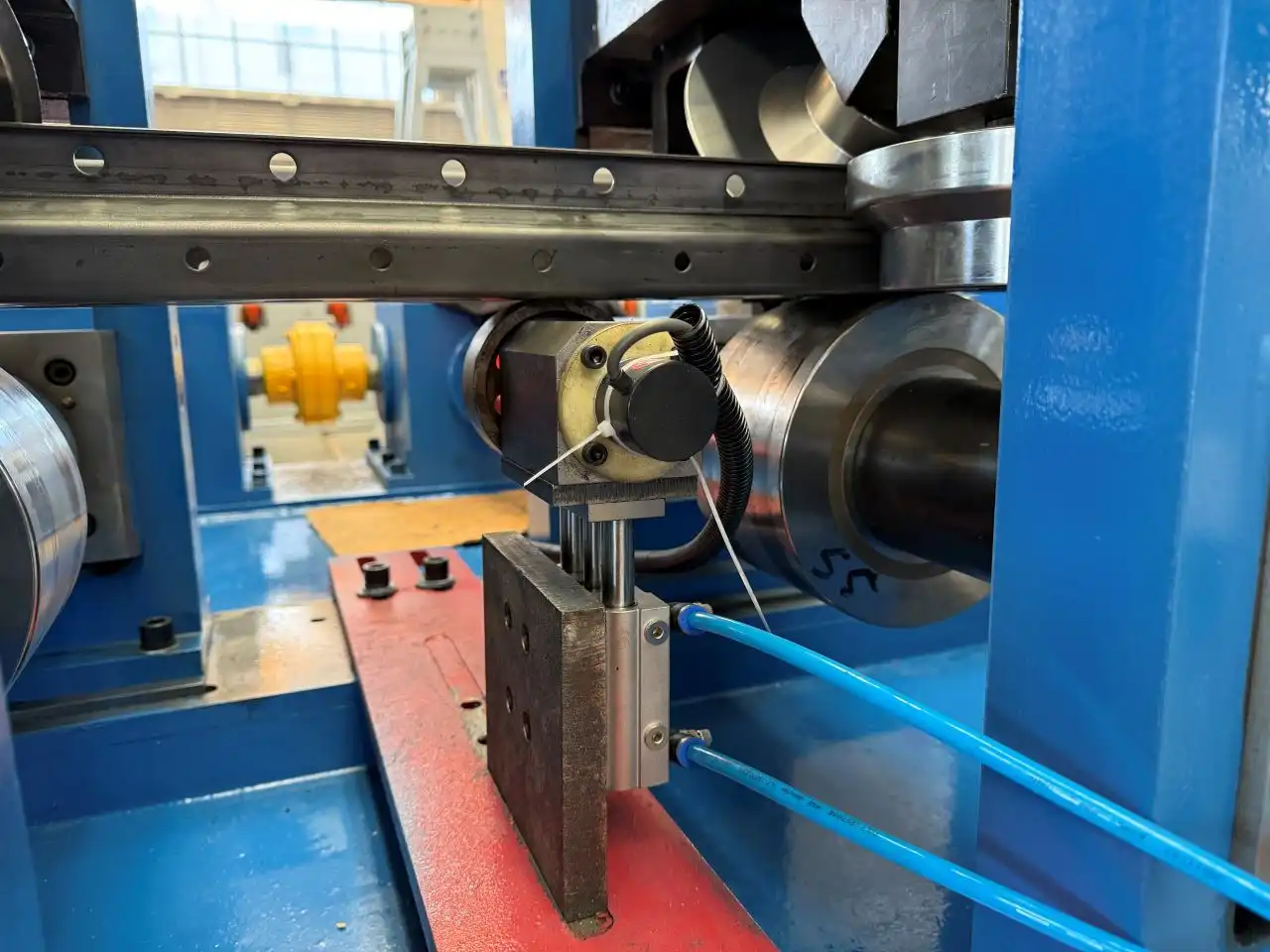
- Hole-pitch verification on the first punched panel, confirming cumulative pitch error stays within ±1 mm over 3 meters.
- Flatness assessment by laying a finished panel on a reference surface; any bow exceeding 2 mm per meter signals a roller alignment issue that needs immediate attention.
If you notice a slip early, you can keep a whole production batch from passing inspection when it comes time to put it together.
Procurement Guidance: How to Source a Shelf Panel Roll Forming Machine Supplier?
What to Look for in a Manufacturer
Based on their licenses, you can tell if someone outside the company checks their quality system. The ISO 9001 mark means that the production process is logged and checked. The CE mark means that the electrical and mechanical design meets European safety standards. Finally, the SGS and CAS marks indicate that a third party has reviewed and confirmed the design. In 2014, ZTRFM was founded in Botou, Cangzhou, which is known as China's best place to make roll-forming machines. The business has more than 30 foreign certificates, including ISO 9001, CE, SGS, UL, and CAS. It has also sent equipment to more than 150 countries, including to Tata Group in India and DS Group in Korea.
Evaluating Customization Depth
Customers who buy OEM shelves often need custom rib patterns, pre-punched hole layouts that work with their own shelving systems, and edge hemming to make the panels safer for operators. Standard shelf panel lines can be used for many things. If you want to buy something, make sure the seller can give you profile drawings under an NDA, sample panels before you buy all of their tools, and cassette-type roller stations that let you add more profiles in the future without having to buy a new machine.
Export Packaging and Delivery
When investments are sent from other countries to buyers in the United States, they need to be properly packaged for export. A good company that sells shelf panel roll forming machines should have a steel frame for the main machine, waterproofing for the electrical cabinet, oil for all the precision rollers to keep them from rusting, and an extra wooden case with tools and spare parts. The whole line fits into a standard 40HQ container, and the machine should come with plans for setting it up, directions on how to use it, and wiring diagrams.
Future Trends in Shelf Panel Roll Forming Technology
Industry 4.0 Connectivity
With cloud-based IoT monitoring, maintenance workers can check the temperature, motor load, and speed of the forming from afar. Siemens' cloud IoT platform is used by ZTRFM for this. Diagnostics that use AI can find odd patterns of wear before they cause something to break. This cuts down on unplanned downtime that would stop work for an entire shift otherwise.
Sustainable Material Handling
Paint lines that are already painted and steel coils cut down on finishing steps further down the line. This means that paint lines release less VOC. Chromed and mirror-polished rollers keep the pre-painted strip from getting scratches on the surface. This means that when the panel reaches the end of the line, it's already packed and ready to go.
Smart Production Line Integration
The decoiler, former, punching unit, and stacker can all talk to each other on one-stop production lines thanks to a single PLC. This is the direction the industry is moving in. Order information is entered at the front of the line, which changes the length of the panel, the layout of the punches, and the number of stacks. This makes it less likely that two SKUs will get mixed up on a busy production floor and lessens the number of times an operator has to touch that machine.
Conclusion
The first step in making strong workshop shelves is to make panels that are all the same size and shape. For this task, a shelf panel roll forming machine can reach a level of consistency that no press brake can match, not even a rack panel roll forming machine that was made just for that job. In a quality forming line, there are 36-station rollers, Cr12MoV tools, PLC automation, and IoT cloud monitoring. Each choice in the design directly affects the strength of the shelves, the accuracy of the measurements, and the long-term economy of production. If you are buying new equipment for a line or getting rid of old ones, the technical and business factors we talked about here will help you make the right choice.
FAQ
Q1: Can one machine produce different panel widths?
Yes. If the system has an automatically changeable spacer system or a telescopic shaft, the user can change the active panel width through the PLC screen instead of switching rollers. This is especially useful for service centers that have different rack types and bay levels.
Q2: What steel grades can the machine process?
The basic setup can work with cold-rolled coil that is between 0.7 mm and 1 mm thick. With better roller hardness and a different station order, it is possible to reach tensile strengths of up to G550 MPa. It's fine to use galvanized and pre-painted coils together as long as the rollers are chrome-plated and mirror-polished.
Q3: How long do the cutting blades last?
Cr12MoV blades can cut between 500,000 and 1,000,000 times before they need to be cleaned. They stay in good shape because they are properly heated and kept in good shape by regularly lubricating and checking the alignment. The blade will last longer if it is used often and cuts hard things for a long time.
Q4: What site preparation does the machine need?
You need a flat, 150 mm-deep reinforced concrete floor to keep the machine in place and keep vibrations from messing up the shape. It comes with a 380 V/50 Hz three-phase power source. If sites in North America ask for it, they can get 480 V/60 Hz. Every
Get Your Custom Quote from ZTRFM — Shelf Panel Roll Forming Machine Manufacturer
Since 2014, ZTRFM has built and shipped the shelf panel roll forming machine to businesses in over 150 countries. Our lines are certified by ISO 9001, CE, and CAS. Before dispatch, each unit undergoes an 8-hour full-load test. You do not have to use a standard ribbed panel line. Our engineering team can help you with any OEM configuration you need. Send us an email at zhongtuorollforming@gmail.com right now to get a price that fits your needs.
References
1. The Fabricator — "Roll Forming vs. Press Braking: Choosing the Right Process," 2022.
2. Sheet Metal Industry — "Cold Roll Forming Technology and Tooling Materials," 2021.
3. Modern Materials Handling — "Pallet Rack Decking Standards and Load Ratings," 2023.
4. Manufacturing Engineering (SME) — "PLC Integration in Continuous Forming Lines," 2020.
5. Steel Construction Institute — "Design of Cold-Formed Steel Sections," 2019.
6. Industrial Machinery Digest — "Quality Control Protocols for Roll-Formed Structural Profiles," 2022.