- English
- French
- German
- Portuguese
- Spanish
- Russian
- Japanese
- Korean
- Arabic
- Irish
- Greek
- Turkish
- Italian
- Danish
- Romanian
- Indonesian
- Czech
- Afrikaans
- Swedish
- Polish
- Basque
- Catalan
- Esperanto
- Hindi
- Lao
- Albanian
- Amharic
- Armenian
- Azerbaijani
- Belarusian
- Bengali
- Bosnian
- Bulgarian
- Cebuano
- Chichewa
- Corsican
- Croatian
- Dutch
- Estonian
- Filipino
- Finnish
- Frisian
- Galician
- Georgian
- Gujarati
- Haitian
- Hausa
- Hawaiian
- Hebrew
- Hmong
- Hungarian
- Icelandic
- Igbo
- Javanese
- Kannada
- Kazakh
- Khmer
- Kurdish
- Kyrgyz
- Latin
- Latvian
- Lithuanian
- Luxembou..
- Macedonian
- Malagasy
- Malay
- Malayalam
- Maltese
- Maori
- Marathi
- Mongolian
- Burmese
- Nepali
- Norwegian
- Pashto
- Persian
- Punjabi
- Serbian
- Sesotho
- Sinhala
- Slovak
- Slovenian
- Somali
- Samoan
- Scots Gaelic
- Shona
- Sindhi
- Sundanese
- Swahili
- Tajik
- Tamil
- Telugu
- Thai
- Ukrainian
- Urdu
- Uzbek
- Vietnamese
- Welsh
- Xhosa
- Yiddish
- Yoruba
- Zulu
Why Does Roofing Panel Come Out Wavy? 5 Fixes That Work
Wavy roofing panels are one of the most frustrating problems in metal sheet production. They affect structural performance, ruin aesthetic appeal, and often signal deeper issues in the forming process. From incorrect roller gap settings on a trapezoidal roof sheet machine to poor coil material selection, the causes are specific and fixable. In this article, I'll walk through the five most effective fixes based on real production experience, so you can eliminate waviness and deliver consistent, flat roofing panels every time.
Understanding Why Roofing Panels Become Wavy
It's important to know what's causing the wave before you try to fix it. Panel waviness isn't random; it has at least one source that can be found.
Material-Related Causes
When steel bars with uneven yield strength or internal stress are rolled, they tend to deform. This is especially true for lower-grade G250 material. As the metal comes out of the making stations, the stress that was still there releases unevenly, which can lead to edge waves or center bends. Surface tension imbalance is especially bad for PPGI coils that have already been painted.
Machine Precision Issues
Wavy output is often caused by rollers that are worn or not spaced properly. The sheet can be too bent or too flat in some places if the roller gap isn't set to match the exact thickness of the material. Rollers that are CNC-machined and have a 70mm shaft width hold profile accuracy much better than rollers that aren't as well made.
Environmental and Installation Factors
Panels move after being installed because of thermal expansion in hot places. Over time, surface waves show up if panels are fixed too tightly without taking thermal movement into account. Zinc-coated sheets can also be damaged by high humidity, especially if they are not stored properly before being put up.
5 Effective Fixes to Prevent Wavy Roofing Panels
You don't have to deal with waviness all the time. These five fixes take care of the problem from choosing the raw materials to putting them together on the job site.
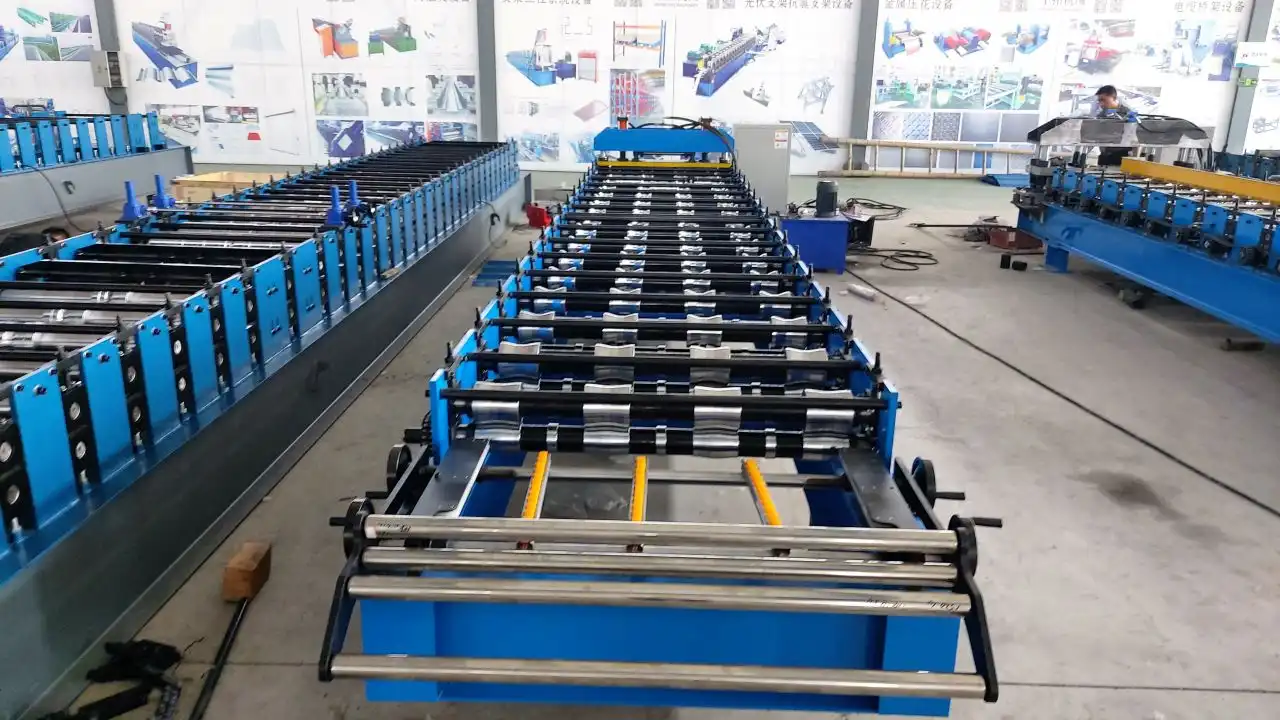
Fix 1 — Choose the Right Raw Material
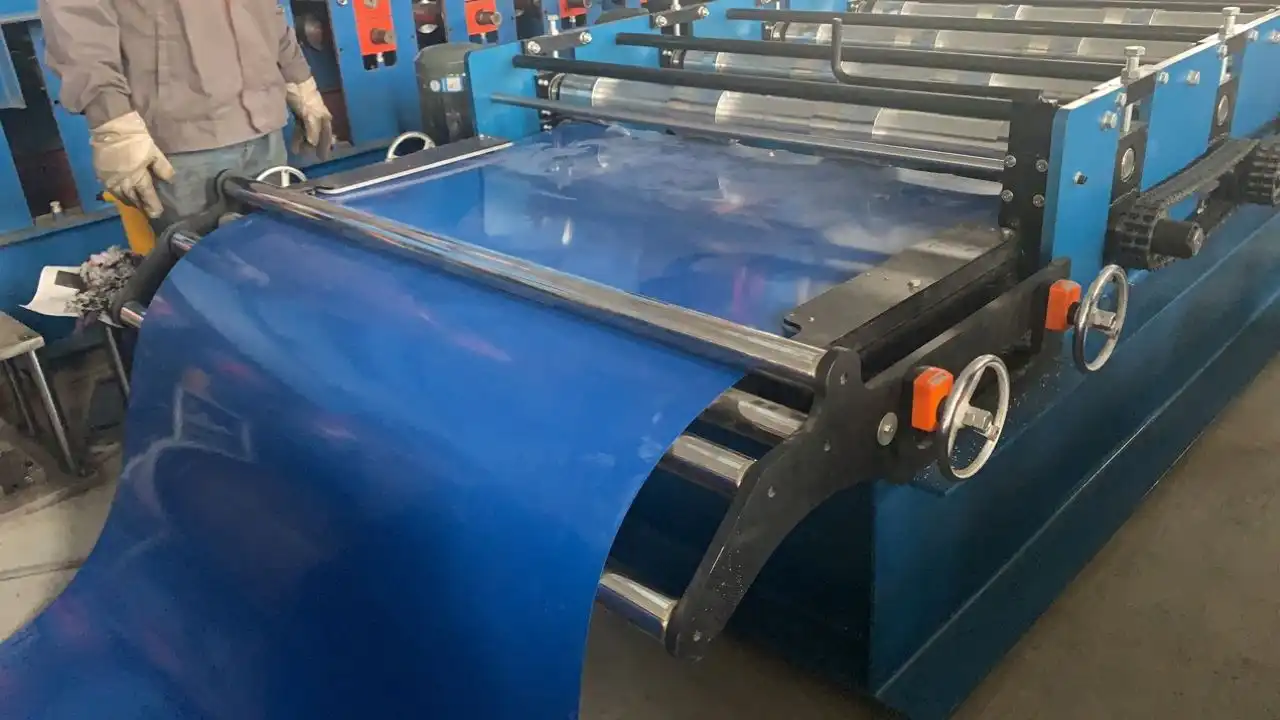
Always make sure that the size of the coil you need fits the size of the machine that can form it. Standard trapezoidal shapes work well with G300–G350 steel that is between 0.3 and 0.8 mm thick. Using coils that have a known yield strength and a hardness that stays the same across their width greatly lowers spring-back and edge distortion. Before you start making the coil, ask your supplier for mill test certificates.
Fix 2 — Calibrate the Roller Gap Correctly
This is the easiest way to fix panels that are wavy. Each forming station needs to be set to a gap that matches the width of the coil, not the stated spec. Differences of even 0.05 mm between sites add up to waviness that can be seen. For a good roll trapezoidal roof sheet machine with 11 or more forming stations, the gap must be precisely calibrated at every stage.
Fix 3 — Upgrade to a High-Precision Forming Machine
Simple chain-drive machines that are operated by hand can do a good job for small amounts of work, but they have trouble staying consistent when they're working quickly. Forming errors are greatly reduced when you upgrade to a machine like a Delta or Siemens system that has servo-controlled feeding, CNC-machined rollers, and a PLC touch screen interface. With the right tools, you can make things at speeds of 15 to 25 meters per minute and with a length error of just ±1 millimeter.
Fix 4 — Control Forming Speed and Temperature
When you run too fast through the making stations without controlling the tension properly, the sheet is stressed along its length. Most waviness issues I've seen in field tests are caused by speed that doesn't match the material's ability to bend. Slow down to the best rate for the machine, and if you're working in very hot or cold conditions, let the coils warm up before feeding them.
Fix 5 — Follow Correct Installation Practices
A panel that was exactly shaped can still wave after it has been put in place. Follow the screw spacing instructions from the maker and don't tighten them too much. Leave gaps at the ends of the panels for heat expansion. If you put panels on purlins that are too far apart—usually more than 1.5m for standard trapezoidal sheets—they will bend when they are loaded and look wavy from the ground up.
These five fixes take care of the whole process of making and installing the software. Using them together makes a noticeable difference in how flat the panels are and how happy the customers are.
How to Choose the Right Trapezoidal Roof Sheet Machine for Quality Panels
The machine itself is the first step to getting consistent panel quality. When it comes to tolerances and durability, not all roll forming equipment is made the same.
Key Specifications to Check
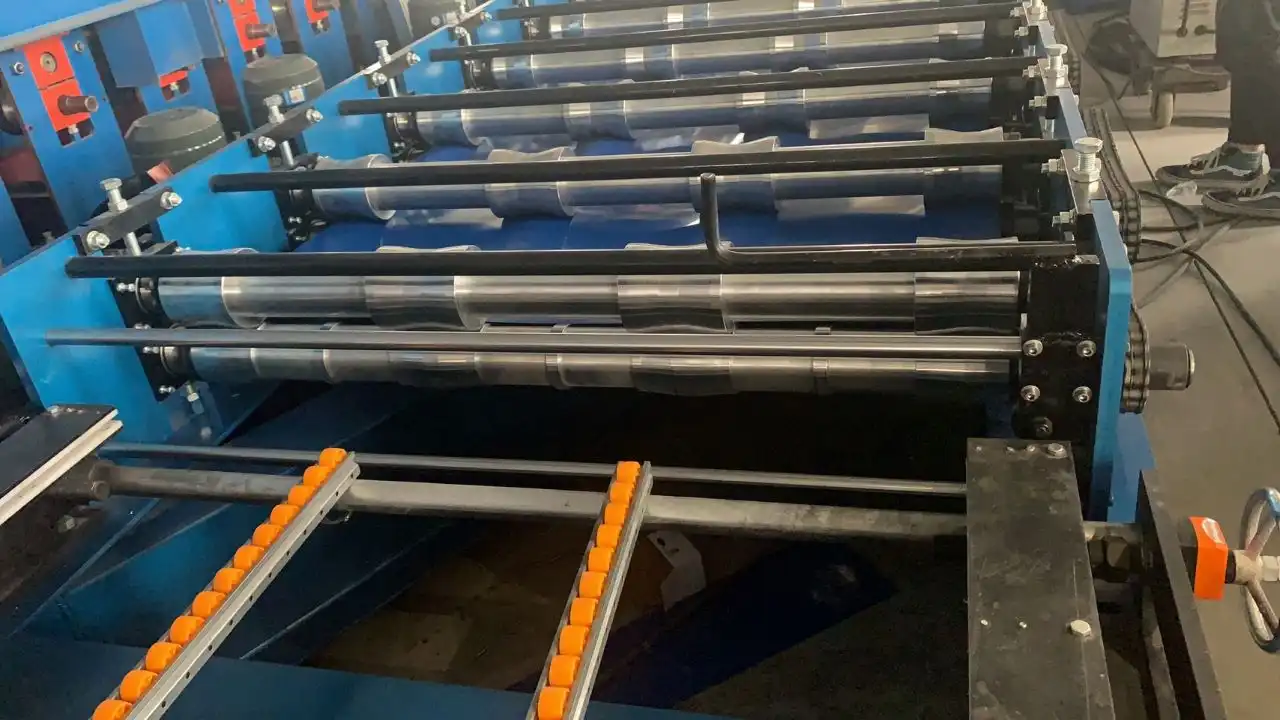
Look for machines with 55# steel shafts that are at least 70 mm in diameter, chrome-plated rollers that have been CNC machined, and a frame made of 36# H-section steel. These structural features have a direct effect on how stable the form is. If the frame panel is 14 mm thick and the base is welded, there is no vibration, which is a common cause of wave flaws.
Manual vs. Automatic Machines
Small businesses that don't need to make a lot of things can use manual machines. Medium-sized to large makers that make things for warehouses, business buildings, or EPC projects should use automatic machines with PLC controls, servo motors, and hydraulic cutting systems. The cutting system is also important. A hydraulic stop-to-cut system can go 15–20m/min, while a fly-saw non-stop system can go 40–60m/min.
What to Look for in a Supplier
Besides the trapezoidal roof sheet machine specs, check with the supplier to see if they can make custom profiles, if they have spare parts available after the sale, and if they offer factory commissioning support. A source of trapezoidal roof sheet machines that offers real spare parts and quick technical help will keep your production running smoothly long after you've bought the machine.
Maintaining Your Roll Forming Machine to Avoid Roofing Defects
A machine that is well taken care of makes panels that are flat and uniform. Waviness is often the first sign that something is wrong with equipment that has been ignored for a long time.
Lubrication and Cleaning Schedule
Roller bearings and chain drives need to be oiled regularly—every week for high-volume operations and once a month for lower output. When debris builds up between forming stations, it scratches the surface of PPGI coils and makes the forming pressure uneven. The machine that is clean is the machine that works well.
Blade and Roller Inspection
Depending on how much is being made, the Cr12MoV cutter blade should be checked every one to two years. When the blade is dull, it leaves burrs on the cut edges and causes vibrations in the forming bed, which show up as wavy panels. Rollers that are chrome-plated and have a hardness of HRC55–60 don't wear down very easily, but they should still be checked often for surface pitting or scoring.
Genuine Parts and After-Sales Support
Always get replacement parts, like blades, bearings, and roller sets, from the company that made the machine in the first place. Tolerances of third-party substitutes are often a little different, which can throw off the whole forming sequence. If your supplier has a good after-sales system, you won't have to wait weeks for a key part during busy production times.
Case Studies: How Proper Machine Use Eliminates Wavy Panels
Small Fabricator Resolves Edge Wave Problem
In the Midwest, a metal fabrication shop was making IBR roofing sheets that always had waves along the edges. It was found that the issue was caused by a broken roller set and a coil feed force that was set too high. The waviness was fixed in the first production run by replacing the roller set and adjusting the tension on the entry guide. The level of the output got better right away without any big changes.
Large Manufacturer Cuts Defect Rate with Equipment Upgrade
A medium-sized company that makes roofing sheets and sells them to EPC builders got rid of an old chain-drive machine and replaced it with a new one that is powered by servo motors and has a Delta PLC control system. During a 12-hour shift, the new machine kept a length tolerance of ±1mm, while the old machine kept a tolerance of ±3–4mm. The number of defect returns went down a lot, and the client said that orders were filled faster because there was less time spent on rework.
Conclusion
There are problems that can be fixed, like using the wrong material, rollers that aren't calibrated correctly, mistakes in the forming speed, or mistakes made during the installation. Taking care of each one in a planned way makes flat, physically sound walls that meet the needs of the project. How consistently you make things depends on how well your making tools work. The best way to fix panel waviness that will last is to buy a well-made roll-forming trapezoidal roof sheet machine and follow the upkeep instructions carefully. If you start with the five fixes above, you'll be able to tell the difference in your next production run.
FAQ
1. What is the most common cause of wavy roofing panels during production?
The most common reason is that the roller gap is not calibrated correctly. When the gap between the making rollers doesn't match the thickness of the coil, the pressure on the sheet isn't spread out evenly across its width. This puts stress on the sheet inside, which shows up as waves when it comes out of the machine.
2. How often should a trapezoidal roof sheet machine be serviced?
A basic inspection and lubrication schedule should run once a week for high-volume operations that run for eight hours or more every day. Every six months, the machine's mechanics should be checked thoroughly, including the condition of the rollers, the space between the blades, and the chain tension. Every one to two years, cutter blades need to be sharpened or replaced.
3. Can upgrading to an automatic machine eliminate panel waviness?
Yes, quite a bit. Automatic machines with servo motor control and PLC systems make sure that the speed and pressure of the forming are the same on every sheet. This gets rid of the chance of human error that causes waviness in setups that are either fully automatic or partially automatic. For companies that make things for business or industrial projects, the higher level of accuracy makes the machine investment worth it.
4. Does coil material grade affect panel flatness?
Of course. The results of forming are more predictable when the steel is of a higher grade and has a consistent yield strength. When rolls are formed, coils that have different levels of internal stress or uneven width hardness are more likely to spring back and bend along the edges.
Get Flat Panels Every Time — Talk to ZTRFM
Since 2014, ZTRFM has been developing and making cold roll forming machines. With ISO9001, CE, and CAS certifications, they sell their machines in over 150 countries. If you want to buy a standard trapezoidal roof sheet machine or a custom shape solution, our engineering team can help you find the right tools for your needs. You can email us at zhongtuorollforming@gmail.com to get a consultation or machine quote right away.
References
1. Metal Construction Association. Metal Roofing Systems Design Manual. 2019.
2. American Iron and Steel Institute (AISI). Cold-Formed Steel Design Manual. 2021.
3. Sheet Metal and Air Conditioning Contractors' National Association (SMACNA). Architectural Sheet Metal Manual. 7th ed., 2012.
4. National Roofing Contractors Association (NRCA). The NRCA Roofing Manual: Metal Panel and SPF Roof Systems. 2022.
5. Steel Framing Industry Association (SFIA). Technical Guide for Cold-Formed Steel Framing Products. 2020.
6. Building Research Establishment (BRE). Thermal and Structural Performance of Metal Roof Panels. BRE Press, 2018.