- English
- French
- German
- Portuguese
- Spanish
- Russian
- Japanese
- Korean
- Arabic
- Irish
- Greek
- Turkish
- Italian
- Danish
- Romanian
- Indonesian
- Czech
- Afrikaans
- Swedish
- Polish
- Basque
- Catalan
- Esperanto
- Hindi
- Lao
- Albanian
- Amharic
- Armenian
- Azerbaijani
- Belarusian
- Bengali
- Bosnian
- Bulgarian
- Cebuano
- Chichewa
- Corsican
- Croatian
- Dutch
- Estonian
- Filipino
- Finnish
- Frisian
- Galician
- Georgian
- Gujarati
- Haitian
- Hausa
- Hawaiian
- Hebrew
- Hmong
- Hungarian
- Icelandic
- Igbo
- Javanese
- Kannada
- Kazakh
- Khmer
- Kurdish
- Kyrgyz
- Latin
- Latvian
- Lithuanian
- Luxembou..
- Macedonian
- Malagasy
- Malay
- Malayalam
- Maltese
- Maori
- Marathi
- Mongolian
- Burmese
- Nepali
- Norwegian
- Pashto
- Persian
- Punjabi
- Serbian
- Sesotho
- Sinhala
- Slovak
- Slovenian
- Somali
- Samoan
- Scots Gaelic
- Shona
- Sindhi
- Sundanese
- Swahili
- Tajik
- Tamil
- Telugu
- Thai
- Ukrainian
- Urdu
- Uzbek
- Vietnamese
- Welsh
- Xhosa
- Yiddish
- Yoruba
- Zulu
Shelf Panel Roll Forming Machine: High-Speed Flexibility & Strength
If you're sourcing equipment to produce shelf decking panels, back panels, bracing channels, or brackets at scale, a shelf panel roll forming machine is the piece of equipment worth your full attention. Unlike a press brake or stamping line, a dedicated roll forming line runs metal coil continuously through a series of shaped rollers, delivering consistent profiles at high speed with minimal operator input. For racking manufacturers, supermarket fixture makers, and sheet-metal service centers, that combination of speed and dimensional accuracy directly affects output quality and production cost.
Understanding Shelf Panel Roll Forming Machines What the Machine Actually Does
If you start with a flat strip of metal, a shelf panel roll forming machine will move it through a set of roller stations. The strip is bent a little more at each stop until it reaches the end of the line and is fully bent. This could be a flat floor, a panel with ribs, an edge with hems, or a supporting channel. The process doesn't stop between steps; it goes on all the time.
Core Components
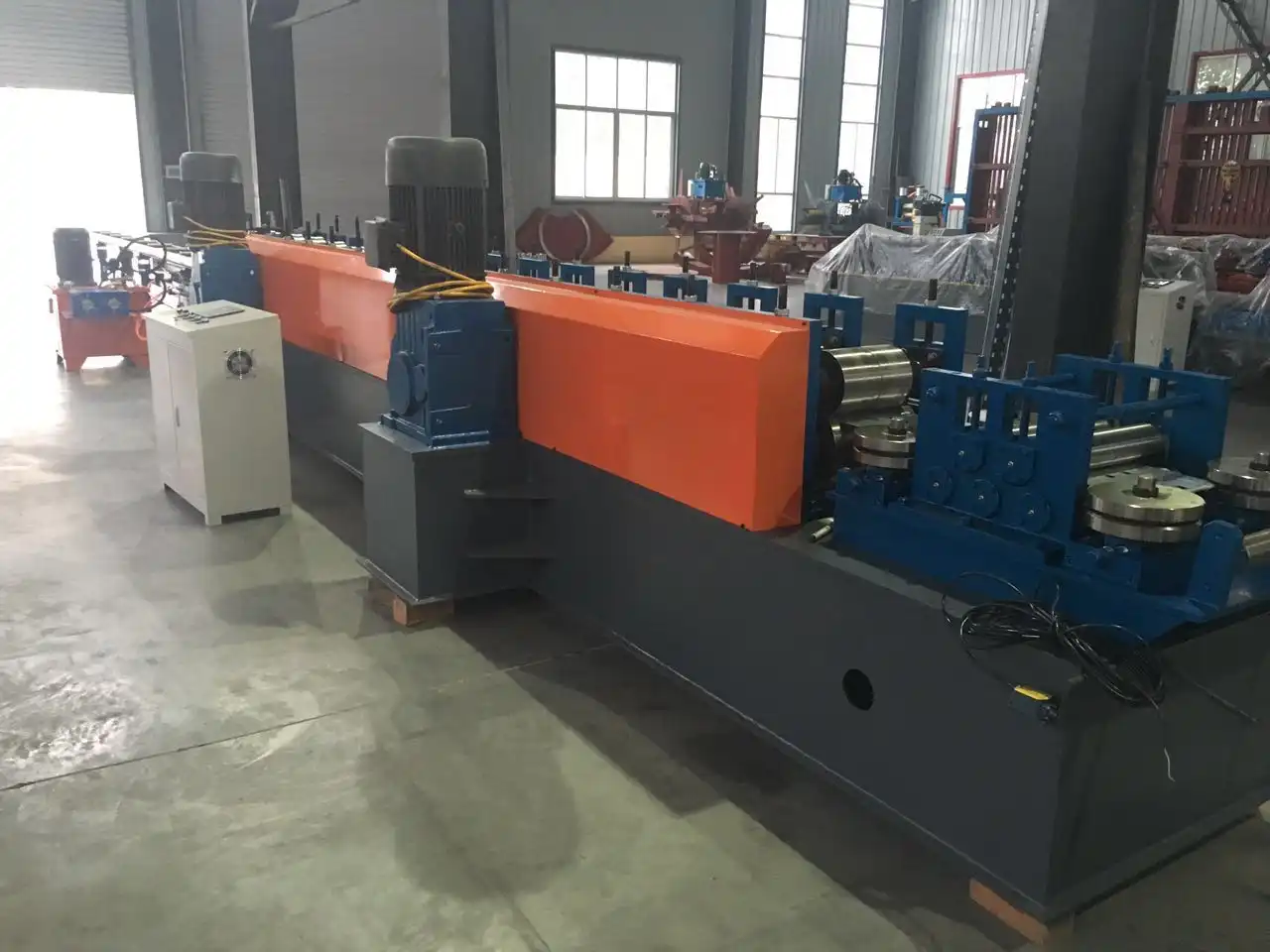
On the line, there is a decoiler, a leveling unit, a servo-driven punch press, a forming mill, a flying shear or stop-and-cut unit, and a run-out table or stacker. There is a PLC touchscreen that connects all of these stations. From this screen, the user can change the number of batches, the length of the panel, and the design of punches.
Why It Outperforms Press Braking for Panel Production
Press braking only works on one bend at a time, and a skilled person needs to set it up each time. By contrast, a shelf panel roll forming machine moves at 10–25 meters per minute after setup, with its profile's shape staying consistent for thousands of pieces. These panels have to be produced in large batches repeatedly because companies that make racks need tens of thousands of them.
Key Benefits and Applications for B2B Procurement
Production Capacity and Dimensional Accuracy
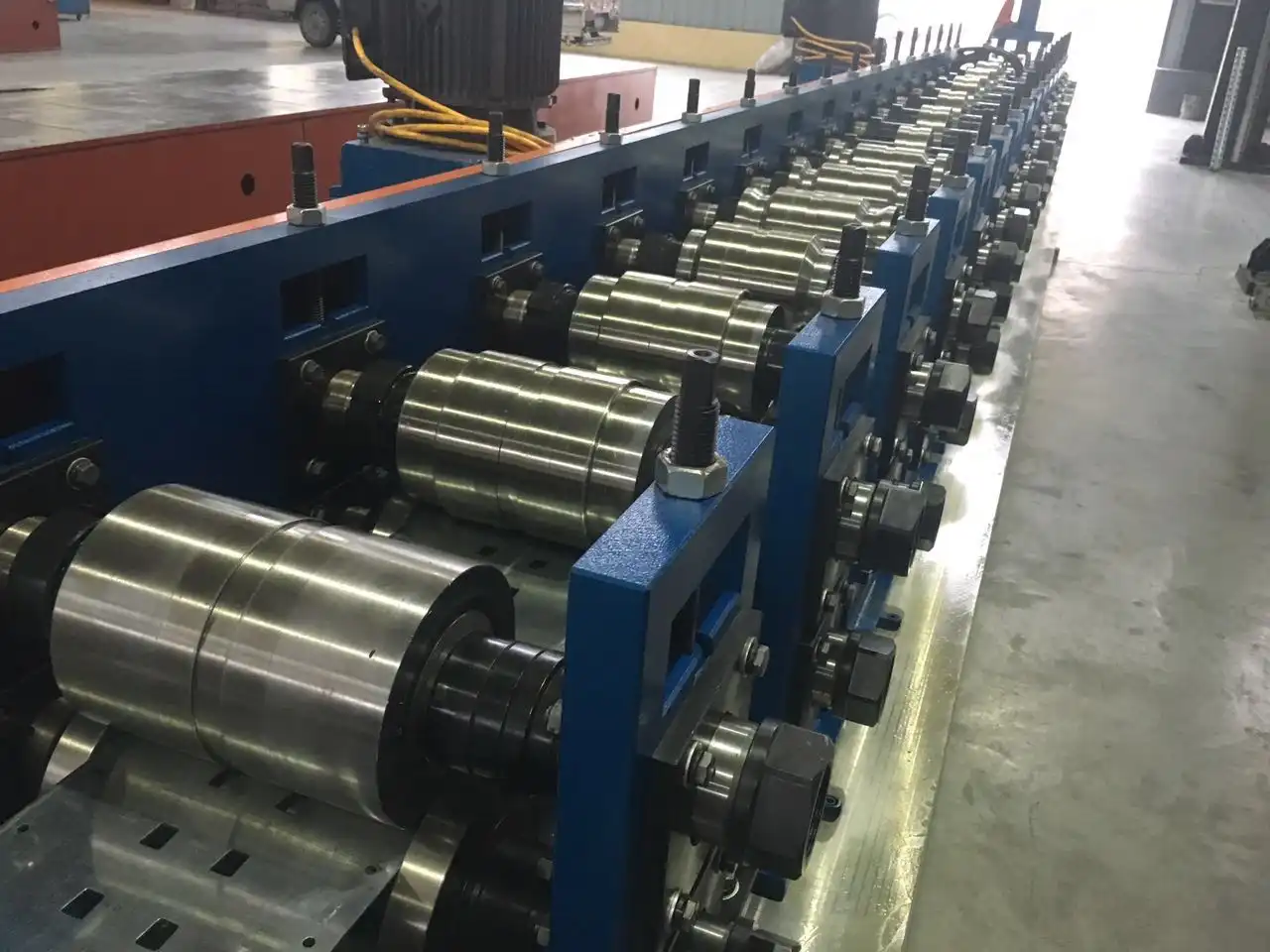
The ZTRFM automatic shelf panel line can make panels quickly enough for both shopping carts and warehouse racks that hold a lot of items. The machine has 36 clean roller stations with hardened Cr12MoV rollers to HRC 55–58. Cross-section tolerances can be kept within ±0.5 mm, which is important when shelf clips need to stick into upright holes on the job site.
These are the main technology features of this line that make it stand out for B2B traders: There are 36 roller stations with 50 mm solid shafts. Since solid shafts don't bend when they're loaded, the profile geometry stays stable even when 1 mm cold-rolled steel is being formed at full speed.
- 36 roller stations with Φ50 mm solid shafts — solid shafts resist deflection under load, keeping the profile geometry stable even when forming 1 mm cold-rolled steel at full speed.
- Cr12MoV cutter, no scratches, no deformation — the same die steel used for the rollers is applied to the cutting blades, so panel ends exit clean and square without secondary trimming.
- 25 kW main motor, 380 V / 50 Hz (configurable) — the drive system is sized for continuous three-shift operation without thermal cycling that would shorten component life.
Two common problems in high-volume racking plants are measurement drift that builds up over a shift and surface marks on pre-painted coil that can't be seen. These benefits directly fix both of these problems.
Applications Across Racking and Retail
This line makes wall and back panels for shelf bays, diagonal bracing channels that join uprights, bottom base plates, and shaped brackets. Shelf panels are also made on this line. No damage is done to the finish on gondola shelf panels made of pre-painted steel in a supermarket fixture program by the same machine. The rollers are mirror-polished, and the coil path is designed so that metals don't touch.
Real-World Performance Reference
A lot of places around the world use ZTRFM tools right now. Tata Group in India, DS Group in South Korea, and HADDAD SET in Jordan are all name-brand reference accounts. All of these businesses had strict rules about how they could check out new machines before they agreed to buy a lot of them.
How to Choose the Right Shelf Panel Roll Forming Machine?
Match the Machine to Your Panel Range
As long as the material is between 0.7 mm and 1 mm thick and the coil width is between 300 mm and 640 mm, the ZTRFM shelf panel roll forming machine line can handle most gondola and rack panel projects. Make sure that the forming mill allows you to change the width quickly without having to swap out all the rollers if you sell both narrow brackets and full-width decking panels.
Evaluate Automation Level Against Your Volume
When the daily output is more than a few thousand linear meters, it makes sense to have a PLC line that is fully automatic and can set in batches, control length, and stack itself automatically. Find out about cassette-type roller stations if you want to make runs that are faster and have more changes. You can change settings faster with these—in less than an hour instead of a full shift.
Check Supplier Certification and After-Sales Coverage
It's very important to know that the company you buy tools from across borders is reliable. ZTRFM has ISO 9001, CE, SGS, UL, and CAS awards. Cloud IoT and AI-assisted remote maintenance are also done by the company with Siemens. This lets a technician figure out what's wrong with a PLC or drive before a spare part is sent. People in the US will only have to wait hours instead of days with this online help feature.
Maintenance Tips and Troubleshooting to Ensure Longevity
Routine Lubrication and Inspection Schedule
When roller bearings and shaft housings are used all the time, grease needs to be added to them once a week. When a chain drive is put in, the tension needs to be checked every 250 hours. A simple book that records these times can show wear before it gets bad enough to stop the train without warning.
Common Faults and How to Fix Them
Camber in the profile is the most common trouble with forming. Many times, it's because the roller pressure isn't even on one side of the strip or the coil is still curved from the decoiler. If you change the leveling unit entry section and double-check the side-guide position, you can fix most problems in 30 minutes. As a long run goes on, the punching position often moves because of a loose motor encoder connection rather than wear on the machine itself.
Safety Protocols and Operator Training
All ZTRFM lines come with an operation manual, electrical diagrams, and plans for putting the parts together. They also offer video-based training and on-site hiring help if asked. There is a fence around the entryway, and the run-out table has safety circuits for an emergency stop that meet CE standards for machine safety. This means the machine is safe enough for U.S. factory floors, like those set by OSHA.
Price, Financing, and Procurement Options
What Affects the Price
The prices of shelf panel roll forming machines depend on how many roller stations they have, how automated they are, how well they work with cutting, and whether they have special tools for making forms that don't come off the shelf. Starter lines that need to be set up by hand are more expensive than fully automatic lines with a built-in stacker and motor punching.
Flexible Payment and Export Logistics
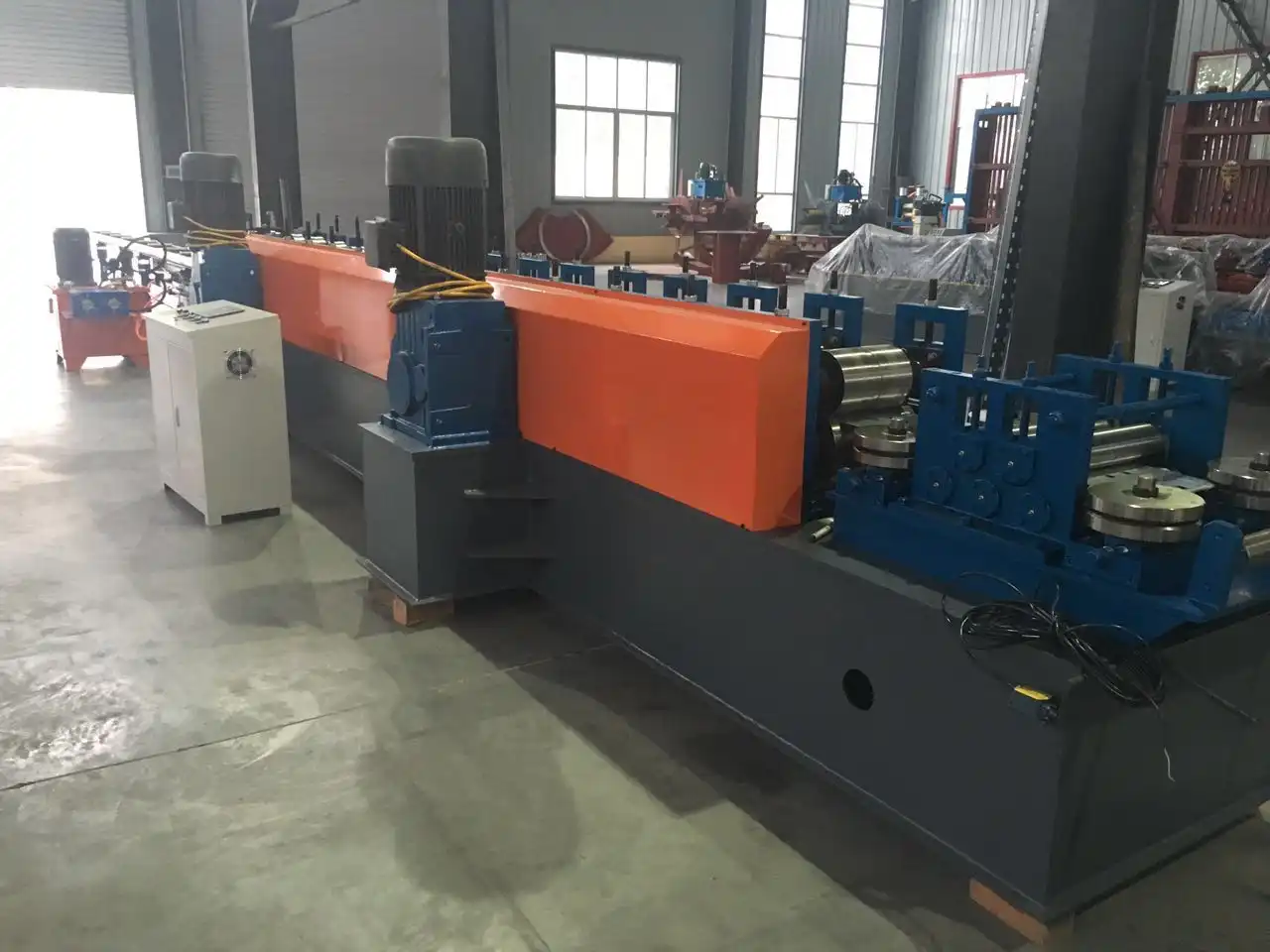
ZTRFM takes T/T payments and can talk about payment plans that are based on how much work is done. The main frame is bolted to a steel support structure. The electrical cabinet is sealed to keep out water. The rollers are covered in oil that prevents rust. Extra parts are stored in wooden cases with numbers on them. Each machine is sent in a wooden crate that meets export standards. Everything fits into a 40HQ container, and the business tests it thoroughly before putting it in boxes to send.
Total Cost of Ownership
The 25 kW main motor, the 5-ton hydraulic decoiler, and the solid-shaft forming mill are all made to last 15 years with normal use. You can sharpen Cr12MoV blades a million times before you have to get new ones. You can get new tools right from the plant in Botou, Cangzhou, which is where China makes roll-forming machines.
Conclusion
A good shelf panel roll forming machine production line is more than just a piece of capital equipment; it's an investment that will pay off in the long run. There are 36 precise forming stations on the ZTRFM automatic shelf panel line. It is automated with PLCs and supports the Internet of Things (IoT) from Siemens. Firms that make racks, firms that make store fixtures, and sheet metal service centers can all use it. It is used in more than 150 countries and has been approved by more than 30 international groups. As you think about your options, the next step is to talk to the tech team.
FAQ
Q1: Can one machine produce multiple panel widths without changing rollers?
Yes. The ZTRFM line has a spacer system that can be changed electrically and is controlled by a tablet on the PLC. By typing in the width that is wanted, the user can set the machine to that width without having to change the rollers by hand. It takes less time to switch because of this.
Q2: What material types does the machine handle?
Cold-rolled steel coil that is 0.7 mm to 1 mm thick can be used with the norm. Two types of coil can be used: pre-painted and galvanized. The wheels are cleaned to protect the surface.
Q3: How precise is the punching on the finished panels?
It's possible for the hole-pitch error to be less than or equal to 1 mm along a 3-meter panel. It makes sure that the shelf clips and beam links stay in the right place while the assembly is being done.
Q4: What power supply does the machine require?
It has three stages: 380 V and 50 Hz. The voltage and frequency can be changed to work with the local grid.
Ready to Source Your Shelf Panel Roll Forming Machine? Contact ZTRFM
Around 2014, ZTRFM began making roll forming tools in Botou, Cangzhou. It's ready to be sent abroad; the shelf panel roll forming machine we sell has all the right paperwork. Our engineering team can match the specs to your product drawings, whether you need a standard production line or a special OEM setup with certain rib patterns and punching layouts. Right now, send your panel drawings and production needs to zhongtuorollforming@gmail.com to get a straight technical review and price.
References
1. Sheet Metal Forming Processes and Die Design — Vukota Boljanovic, Industrial Press, 2004.
2. Roll Forming Handbook — George T. Halmos, CRC Press / Taylor & Francis, 2006.
3. Metal Forming and the Finite-Element Method — Shiro Kobayashi, Oxford University Press, 1989.
4. Cold-Formed Steel Design — Wei-Wen Yu, Wiley, 2010.
5. Steel Storage Racking — Design, Safety and Strength — Rack Manufacturers Institute (RMI), MH16.1, 2021.
6. International Journal of Advanced Manufacturing Technology — Springer, 2023 (Vol. 124, Issue 3–4, articles on cold roll forming process optimization).