- English
- French
- German
- Portuguese
- Spanish
- Russian
- Japanese
- Korean
- Arabic
- Irish
- Greek
- Turkish
- Italian
- Danish
- Romanian
- Indonesian
- Czech
- Afrikaans
- Swedish
- Polish
- Basque
- Catalan
- Esperanto
- Hindi
- Lao
- Albanian
- Amharic
- Armenian
- Azerbaijani
- Belarusian
- Bengali
- Bosnian
- Bulgarian
- Cebuano
- Chichewa
- Corsican
- Croatian
- Dutch
- Estonian
- Filipino
- Finnish
- Frisian
- Galician
- Georgian
- Gujarati
- Haitian
- Hausa
- Hawaiian
- Hebrew
- Hmong
- Hungarian
- Icelandic
- Igbo
- Javanese
- Kannada
- Kazakh
- Khmer
- Kurdish
- Kyrgyz
- Latin
- Latvian
- Lithuanian
- Luxembou..
- Macedonian
- Malagasy
- Malay
- Malayalam
- Maltese
- Maori
- Marathi
- Mongolian
- Burmese
- Nepali
- Norwegian
- Pashto
- Persian
- Punjabi
- Serbian
- Sesotho
- Sinhala
- Slovak
- Slovenian
- Somali
- Samoan
- Scots Gaelic
- Shona
- Sindhi
- Sundanese
- Swahili
- Tajik
- Tamil
- Telugu
- Thai
- Ukrainian
- Urdu
- Uzbek
- Vietnamese
- Welsh
- Xhosa
- Yiddish
- Yoruba
- Zulu
How often should you recalibrate a t bar roll forming machine?
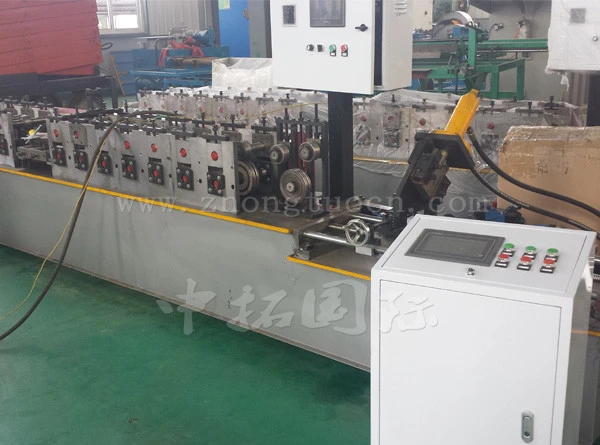
If you run a ceiling grid manufacturing operation, you already know that precision is everything. A minor dimensional drift in your T-bar profiles can cascade into costly rework, rejected batches, and stalled project timelines. So how often should you recalibrate a t bar roll forming machineThe short answer: most manufacturers recalibrate every 200–500 operating hours, or at minimum once per month under continuous production. However, the right interval depends on your material specs, line speed, and operational environment. This guide breaks it all down so you can build a schedule that actually works.
Why Recalibration Matters More Than Most Operators Realize
Recalibration isn't just a box that you have to check off. It involves adjusting roller gaps, feed angles, and forming station tolerances to get a machine back to the way it was when it was first built. When a ceiling T-grid roll forming line works with thousands of meters of 0.12–0.3 mm PPGI strip every day, the roller stations get worn down, even to the level of microscopic wear. The end result is T-bar shapes that bend, twist, or deviate from their flanges.
The Real Cost of Skipping Recalibration
The Cold-Formed Steel Engineers Institute (CFSEI) says that up to 23% of quality rejects in light-gauge frame production are due to non-conformance with dimensions. When your suspended ceiling profiles don't meet ASTM C635 tolerances, which is the U.S. standard for metal suspension systems, builders and dealers will quickly push back. When you recalibrate, you protect your profit margin, your client relationships, and your scrap rate all at the same time.
Factors That Determine How Frequently You Need to Recalibrate
Not every work floor is the same. There are a lot of factors that can speed up or slow down calibration drift. Knowing these factors will help you make a better maintenance schedule instead of a general one.
Material Type and Thickness Variation
When 0.2–0.4 mm GI strip is used for T-bar bottom rails, roller wear patterns are different from when 0.12–0.3 mm PPGI is used for the top material. The GB-Cr12 roller surfaces gradually get harder when they are worked on with harder zinc-coated GI. Before going back to full-speed production, there should be a gap check after every material change, especially when going from top tee to cross tee configurations across 18 and 16 forming stations, respectively.
Line Speed and Production Volume
Continuous mechanical stress is put on a ceiling t grid roll forming machine ceiling grid line that moves at 20 m/min and punches and cuts straight. At that output rate, the wear stress on the roller journals, shaft shoulders, and guide parts gets worse over shifts. When standard T-bar profiles are being used at full capacity in high-volume market settings, they should be recalibrated every 200 hours of operation, which is about every two weeks when three shifts are in use.
Environmental and Operator Variables
Changes in the temperature of the air in a production hall affect how the 45# steel shafts with a 50 mm diameter expand and contract. In humid seaside settings, faster surface oxidation on the roller sides can change the shape of the contact in a small way. The amount of experience of the operator is also important. If the coil loading on a 1.5-ton decoiler with an inner diameter range of 450–550 mm isn't uniform, it can cause entry-strip misalignment that gets worse at every forming station downstream.
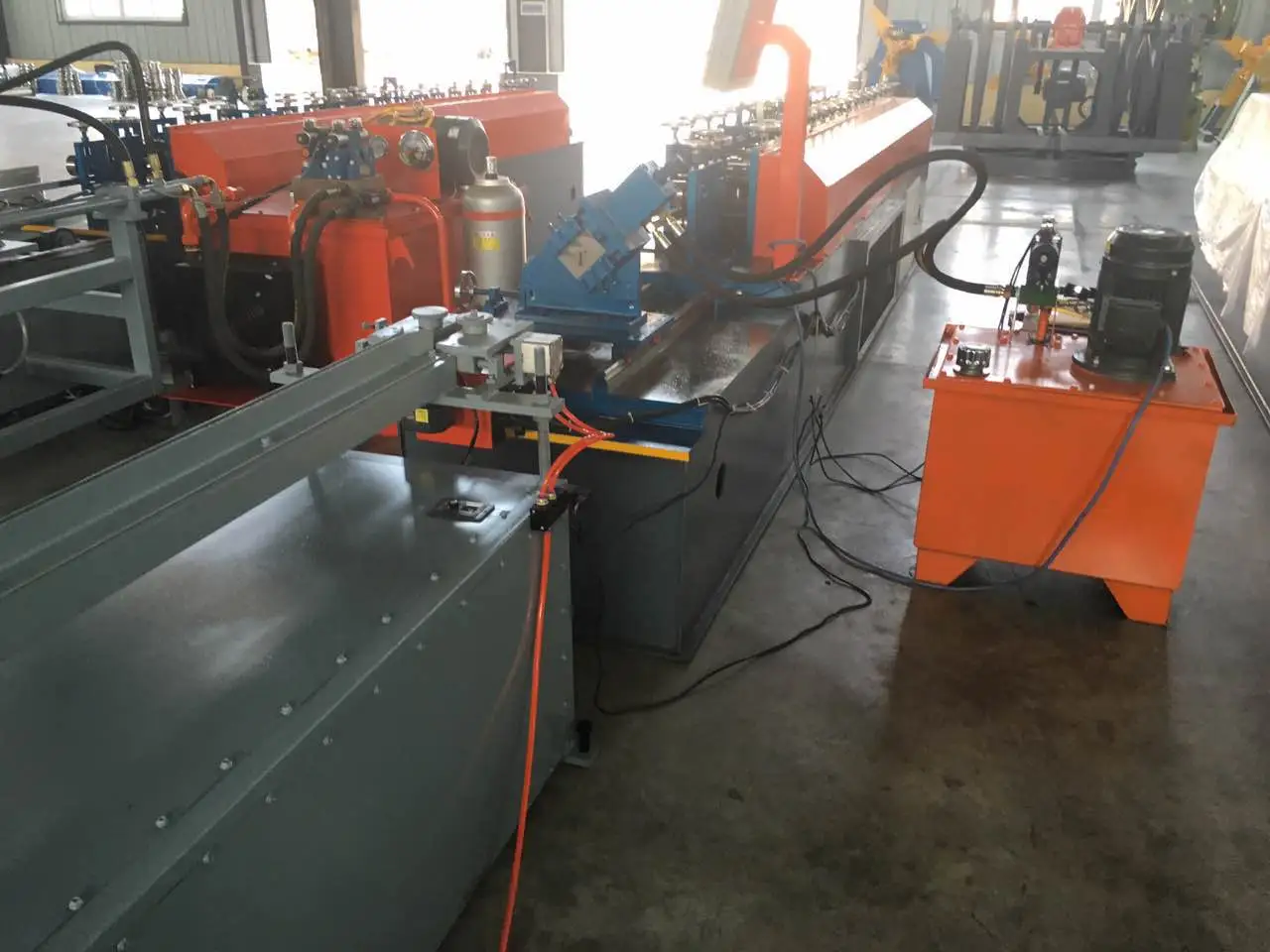
Recommended Recalibration Intervals: A Practical Reference
Instead of guessing, base your plan on standards that have been proven to work in the business. Manufacturers of ceiling grid and drywall framing have used this useful framework to great effect:
- Every shift start (daily check): Make sure the entry guide is lined up correctly, that the coil's inner diameter fits onto the decoiler shaft, and compare the profile of a finished T-bar cross-section to the drawing. It only takes 15 minutes and stops drift before it ruins a full coil run.
- Every 200–300 operating hours (bi-weekly for high-volume lines): Do a full roller gap check at all active forming stations every 200–300 hours of operation (every two weeks for high-volume lines). Look for roundness in the shaft diameters and see if the GB-Cr12 roller surfaces have any micro-chipping or coating transfer from the PPGI strip.
- Monthly (medium-volume lines): Once a month (for medium-volume lines), use an accurate profile gage or laser measurement tool to confirm the dimensions. Check the width of the lip, the height of the web, and the bow per meter against the acceptable range of errors. Compare your results to your KPIs.
- Annually or after major retooling: Do a full mechanical teardown check once a year or after a big retooling. For your cut-to-length system, replace any worn guide plates, tighten up all the station screws again, and check the accuracy of the PLC encoder. If your line has a high-speed servo drive, now is also a good time to check your servo feed accuracy.
These time frames are in line with maintenance guidelines put out by the Fabricators & Manufacturers Association (FMA) and are in line with what large-scale producers have been known to do. Mid-sized U.S. ceiling grid makers usually do full recalibrations once a month and spot-check the dimensions every day in between.
How to Perform an Effective Recalibration
An organized method stops people from making the usual mistake of correcting one station too much, which throws off the alignment further down the line.
Step-by-Step Recalibration Process
Before you turn on the line, you should do a cold-ceiling t grid roll forming machine inspection first. Check all the fasteners that connect the rollers to the shafts, look for wear grooves in the entry guides, and if you can, run a small piece of strip through by hand. Once the mechanical stability has been checked, power the line and make a short run at a slower speed, about 5 m/min. There are three places to measure the output profile: the entry, the mid-line, and the exit. To keep track of flange deviation and bow, use a digital vernier or a laser profile scanner. Make small changes to the forming station gap settings, run again, and measure again. Check at full production speed before letting the line go back to normal.
Tools That Make Recalibration More Accurate
In precision ceiling grid lines, laser measurement systems have mostly taken the place of hand-gauging because they can record the full profile geometry in a single pass. Measurement tools that are built into software can automatically record numbers and flag drift patterns, which helps with planning for forecast maintenance. If your line has cloud IoT tracking, like in smart production lines made possible by partnerships with Siemens, techs can use remote diagnostic data to find problems before they need to be fully recalibrated.
Maintenance Habits That Extend Calibration Accuracy
When used with a habit of regular upkeep, recalibration works best. Lubrication is the most overlooked factor. Roller shafts that aren't oiled enough create uneven contact pressure that looks like roller wear and leads operators to make gap changes that aren't needed.
Here are the main maintenance tasks that directly protect the accuracy of calibration:
- All roller bearings and guide shafts should be oiled according to the manufacturer's instructions, which is usually every 40 to 60 hours of continuous production.
- Check for worn punching dies and replace them before they break. When you use a dull punch, the cutting force spike that is sent back through the forming section is higher. This can affect the alignment of the station over time.
- After each coil change, clean the roller surfaces of any PPGI layer that is still there. Buildup of paint transfer changes the effective roller diameter and throws off measurements of the gaps.
- Check the punching and cutting unit's hydraulic pressure. If the pressure drops, it means that the seals are wearing out, which affects the quality of the cut edge and the accuracy of the sheet length.
As a result of these actions, corrective recalibrations happen less often, and full teardown inspections happen more often. According to data released by the Association for Manufacturing Technology (AMT), organized preventive maintenance plans help manufacturers get up to 30% more use out of their tools.
When you work with a certified OEM provider, you can be sure that your maintenance team will have access to real replacement parts, calibrated extra rollers, and technical paperwork that you can't always get from generic aftermarket sources.
Conclusion
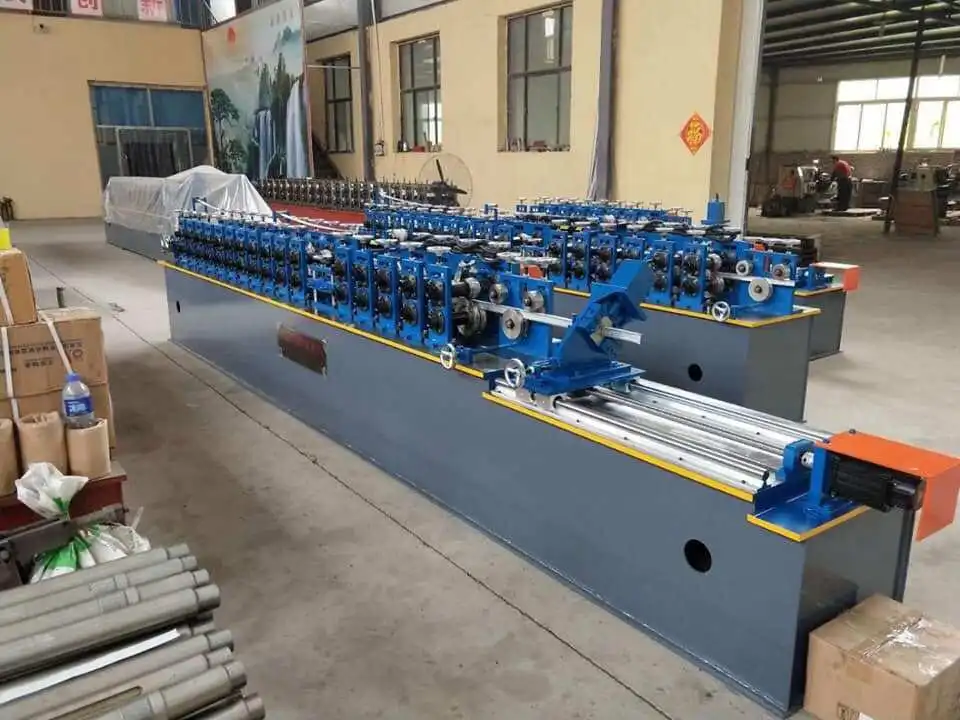
There is no set number for how often you should recalibrate. It depends on your materials, line speed, production volume, and the environment. A daily spot check of the dimensions, a roller gap audit every two weeks for high-volume lines, and a full monthly recalibration for most U.S. ceiling grid makers are all good places to start. If you stick to that schedule and also regularly lubricate, inspect, and validate your encoders, your t bar roll forming machine T-bar profiles will keep the consistent sizes that contractors and distributors expect.
FAQ
1. How do I know when my ceiling grid roll forming line urgently needs recalibration?
Keep an eye out for repeated measurement rejects, more bow in finished T-bar profiles, strange noise at certain forming stations, or a clear increase in strip breaking. Any of these signs means that the machine needs instant attention because calibration drift has already happened.
2. Can I perform recalibration in-house, or do I need a specialist?
An in-house technician who has been trained can easily do daily spot checks and regular roller gap audits. The manufacturer's technical support is usually helpful for full teardown checks and servo feed tuning, especially when working with multi-profile cassette setups or inline embossing configurations.
3. Does recalibration affect my machine warranty?
It depends on the terms of your service. Most reputable OEM suppliers include instructions on how to recalibrate in their warranty paperwork. Using non-OEM parts or making unauthorized changes to the machine's mechanics during recalibration can void the warranty. Before making any changes that aren't normal, you should always check your supplier's repair manual.
4. How long does a full recalibration take?
On an 18-station main tee line, a full recalibration that includes all forming stations, entry guide alignment, and output validation can take anywhere from two to four hours, based on the technician's experience and the complexity of the tools.
Get Precision-Built T Bar Roll Forming Machines from ZTRFM
Manufacturers in more than 150 countries trust ZTRFM to make high-performance ceiling grid roll-making lines. ISO 9001, CE, and CAS certifications, servo-feed high-speed lines, and Siemens cloud IoT integration for real-time uptime tracking are some of the things that our t bar roll forming machine provider can do. We offer full support, from commissioning to recalibration guidance, whether you need a standard line or a fully customized OEM solution. To get a price right away, email us at zhongtuorollforming@gmail.com.
References
1. Cold-Formed Steel Engineers Institute (CFSEI). Design Guide for Cold-Formed Steel Framing. 2021.
2. Fabricators & Manufacturers Association International (FMA). Precision Roll Forming: Process Control and Maintenance Standards. 2020.
3. Association for Manufacturing Technology (AMT). Tooling Life and Preventive Maintenance in Metal Forming Operations. 2022.
4. American Iron and Steel Institute (AISI). North American Standard for Cold-Formed Steel Structural Members. 2016.
5. ASTM International. ASTM C635: Standard Specification for the Manufacture, Performance, and Testing of Metal Suspension Systems for Acoustical Tile and Lay-In Panel Ceilings. 2018.
6. Society of Manufacturing Engineers (SME). Roll Forming Handbook. 2005.