- English
- French
- German
- Portuguese
- Spanish
- Russian
- Japanese
- Korean
- Arabic
- Irish
- Greek
- Turkish
- Italian
- Danish
- Romanian
- Indonesian
- Czech
- Afrikaans
- Swedish
- Polish
- Basque
- Catalan
- Esperanto
- Hindi
- Lao
- Albanian
- Amharic
- Armenian
- Azerbaijani
- Belarusian
- Bengali
- Bosnian
- Bulgarian
- Cebuano
- Chichewa
- Corsican
- Croatian
- Dutch
- Estonian
- Filipino
- Finnish
- Frisian
- Galician
- Georgian
- Gujarati
- Haitian
- Hausa
- Hawaiian
- Hebrew
- Hmong
- Hungarian
- Icelandic
- Igbo
- Javanese
- Kannada
- Kazakh
- Khmer
- Kurdish
- Kyrgyz
- Latin
- Latvian
- Lithuanian
- Luxembou..
- Macedonian
- Malagasy
- Malay
- Malayalam
- Maltese
- Maori
- Marathi
- Mongolian
- Burmese
- Nepali
- Norwegian
- Pashto
- Persian
- Punjabi
- Serbian
- Sesotho
- Sinhala
- Slovak
- Slovenian
- Somali
- Samoan
- Scots Gaelic
- Shona
- Sindhi
- Sundanese
- Swahili
- Tajik
- Tamil
- Telugu
- Thai
- Ukrainian
- Urdu
- Uzbek
- Vietnamese
- Welsh
- Xhosa
- Yiddish
- Yoruba
- Zulu
How a metal roof forming machine turns coil into panels
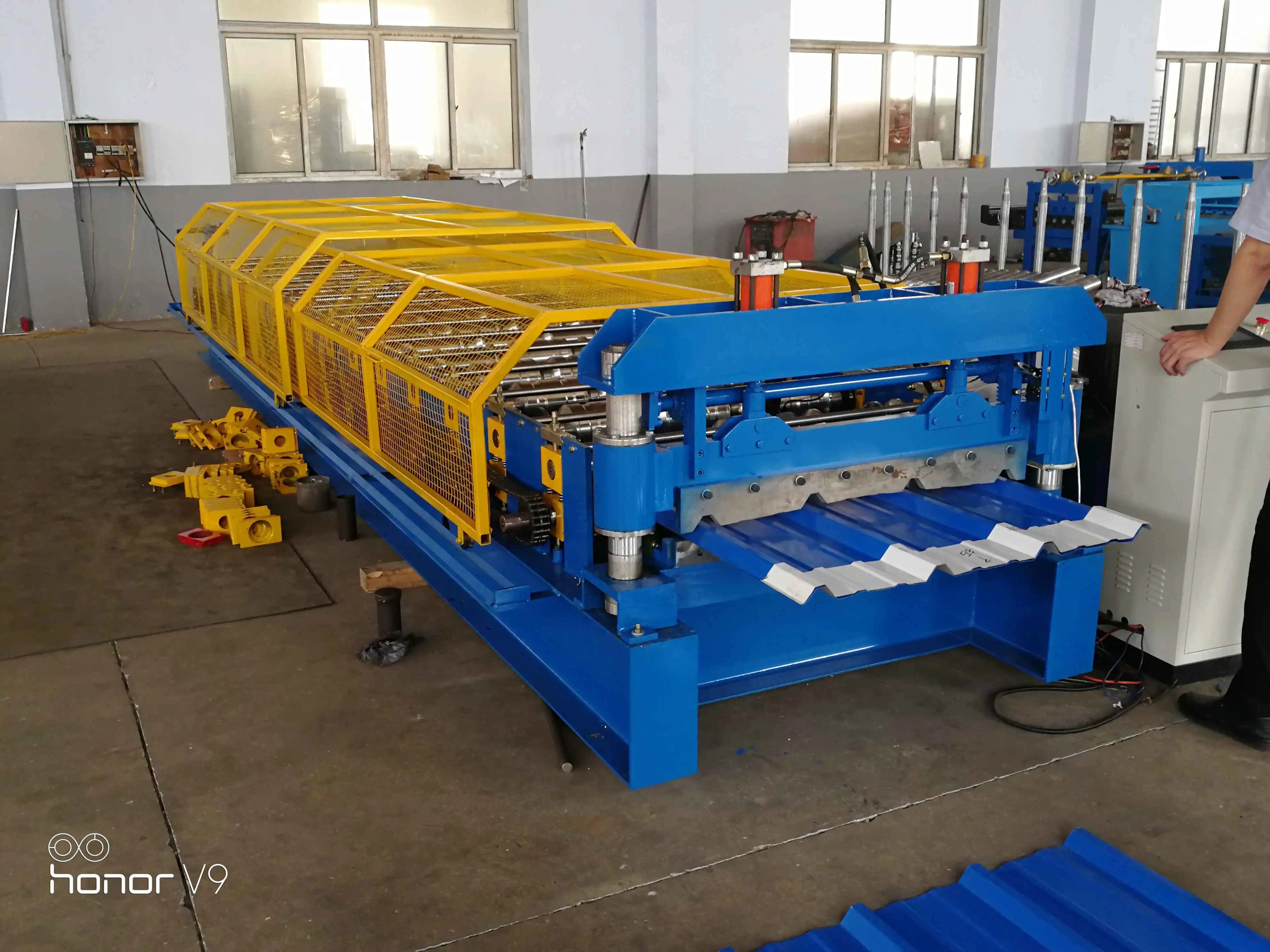
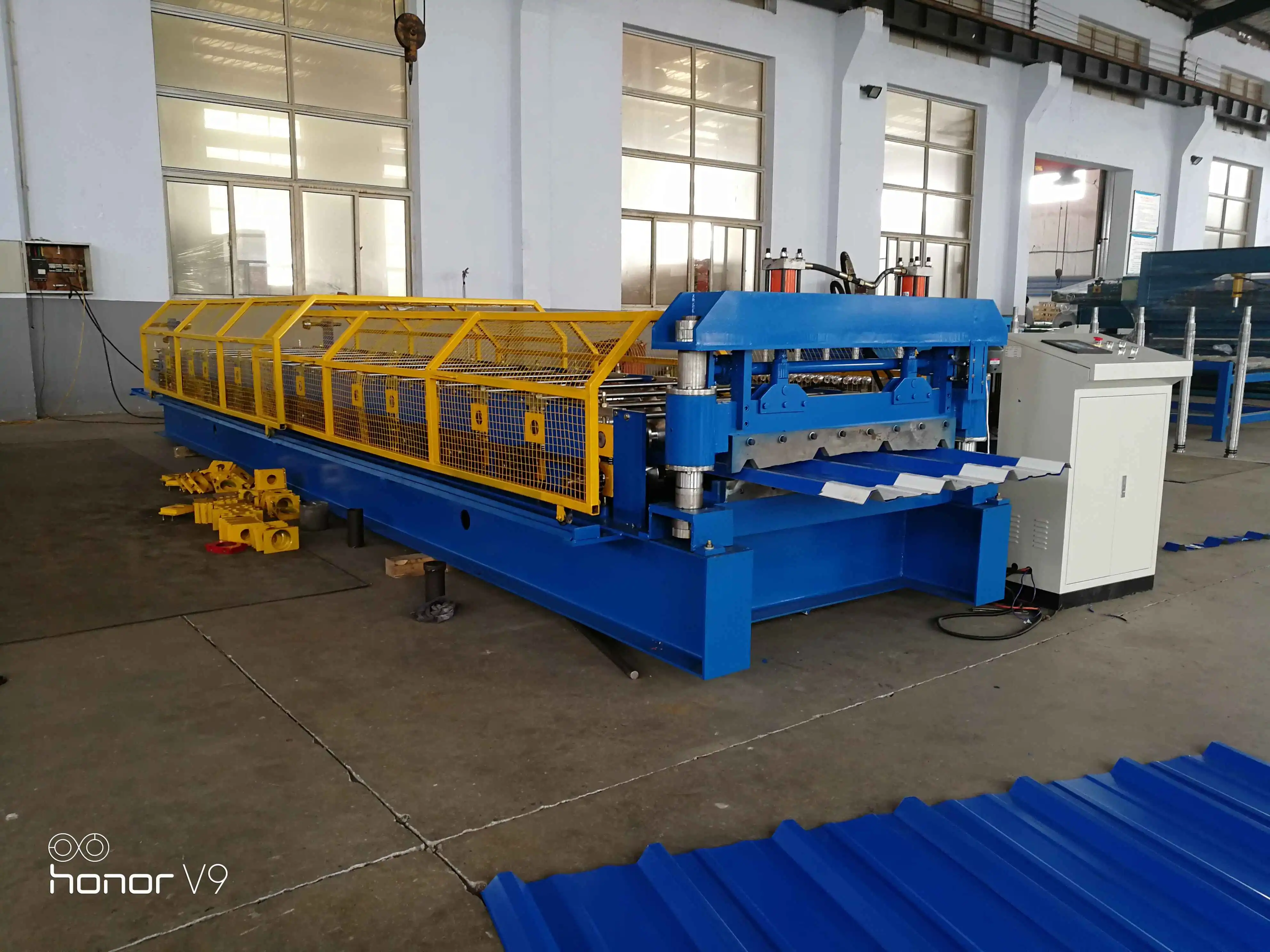
A metal roof forming machine is the backbone of modern panel production. It takes a raw metal coil — PPGI, galvanized steel, aluminum, or Al-Zn — and progressively shapes it into precise roofing profiles through a sequence of roll stations, then cuts each panel to an exact programmed length. The result is a finished roof panel ready for installation, produced continuously with minimal manual handling. For procurement teams and roofing contractors, understanding this process is the clearest path to selecting equipment that genuinely fits their output goals and quality standards.
Understanding the Metal Roof Forming Process
From coil to finished panel, everything happens in a strict, logical order. This sequence is what makes the difference between a reliable and an expensive production line.
Step 1 — Coil Loading on the Decoiler
The process begins at the decoiler, which unwinds a metal roofing coil that weighs between 5 and 15 tons (electric type) or up to 5 tons (manual type). The inner diameter of the coil is usually between 508 and 610 mm, and the outer diameter can be between 1,500 and 1,800 mm, based on the type of decoiler. Having the right tension at this stage stops edge waviness further down the line.
Step 2 — Progressive Roll Forming
The strip goes through 13 to 22 forming points in the roll former. The exact number depends on how complicated the shape is. At each station, rollers made from 40Cr or 45# forged steel that have been hardened and hard-chrome-plated are used to bend the strip in small steps. PPGI, GI, Al-Zn, and aluminum sheets with gauges from 0.25 mm to 1.2 mm are all compatible materials. Profiles like curved, trapezoidal, IBR, PBR, R-panel, AG panel, Trimdek, and delta rib are often made. For the U.S. market, panels come in 24 and 22 Tru-Gauge™ steel and .032″ aluminum. They can be made to order in lengths ranging from 3′ to 20′ 10″, and flashings can be made to lengths of up to 20′ 11″.
Step 3 — Hydraulic Flying Shear Cutting
The hydraulic flying shear cuts each panel to the set length without stopping the line after it has been formed. The accuracy of the cut is ±1 mm. Blades are usually made of Cr12 that has been heated to make sure they have a steady cutting life even during high-volume runs.
Step 4 — Run-Out Table and Quality Check
When a panel is finished, it comes out onto a run-out or stacked table. Before bundling, workers check the panel's width, rib height, and coating integrity at this point. Length and amount measurements are automatically done by a PLC, which lowers the chance of counting mistakes made by hand.
Advantages of Automated Roll Forming Over Conventional Methods
In the past, making panels required press brakes, cutting by hand, and a lot of work for each panel. That method added differences in dimensions and made processing much slower. That equation changes in ways that can be measured when roll-forming lines are automated.
Here are the core performance advantages that modern automated lines deliver:
- Forming speed of 8–35 m/min, based on the difficulty of the profile, while press-brake speeds rarely go above 3–5 m/min per panel cycle.
- ±1 mm length tolerance is maintained instantly by PLC-controlled servo cutting, which gets rid of the need for measurement mistakes.
- One to two operators can run a full line, while the same amount of work would require four to six workers on a manual fabrication setup.
- With continuous production using the flying shear, the line never stops to cut, which increases the amount of work that can be done in a shift.
These improvements directly lead to lower costs per panel and faster delivery times on the job site. When a roofing company buys a solid forming line to make panels in-house, they usually get their money back within two to three production seasons, based on how much panels cost in their area.
Types and Specifications of Metal Roof Forming Machines
Matching the metal roofing machine specs to your real output profile is the first step in choosing the right line. There is a wide range of equipment, from simple manual decoiler lines to fully automated smart production systems.
Manual and Semi-Automatic Lines
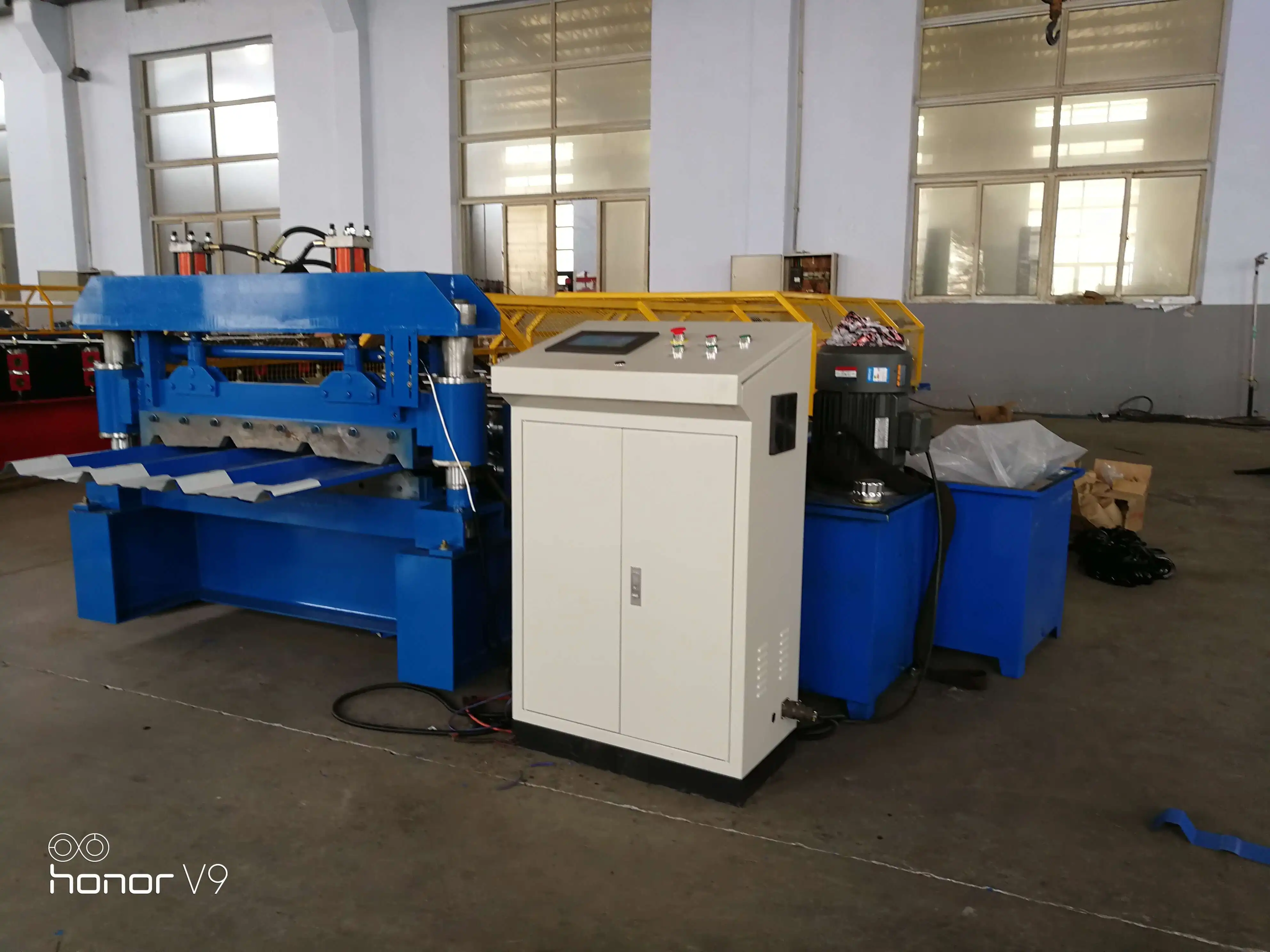
Manual decoiler lines work well for businesses that don't make a lot of coils or for contractors who make panels on-site. They put a 5-ton manual decoiler, roll forming, PLC control box, hydraulic cutting device, and run-out table into a small space, which is usually about 7,000 mm x 1,500 mm x 1,910 mm. Forming speed is 8–12 m/min, and the main motor has power between 3 and 7.5 kW.
Fully Automatic Lines
Fully automatic lines have 15-ton hydraulic decoilers, servo-following cutting, PLC connections with touchscreens, and automatic stackers. Rolling speed can reach 25–35 m/min, shaft diameters can reach φ75–100 mm, and the control system can save several profile programs so that they can be switched out quickly. These lines work well for steel service centers or factories that need to run more than one profile in a single shift.
Quick-Change Cassette Tooling
Quick-change cassette tooling cuts the time it takes to switch between profiles from hours to minutes in places that make a lot of different profiles. For roofing contractors in the U.S. market who need to switch between PBR, R-panel, and corrugated profiles in the same production day, this feature is very helpful.
It's easy to keep up with maintenance: check the roller surfaces and shaft bearings every 500 hours of use, check the hydraulic fluid levels once a week, and always have a spare set of rollers on hand for profiles that are going at a high rate. A well-kept line from a good manufacturer usually lasts 8–10 years before it needs major repairs.
How to Choose the Right Forming Line: A Buyer's Guide
At this level, choices about procurement have real financial weight, so it's important to look at more than just price when hiring someone.
Start by confirming what you need for production: Do you need a PBR profile, an R-panel profile, a curved profile, or a unique drawing? In terms of gage range, do you want the normal 0.3–0.8 mm range or the longer 0.3–1.2 mm range? How much do you want to get done each shift? When you have clear answers, you can compare sellers based on those standards instead of what they say on their marketing materials.
Some important things to look for in a supplier are the grade and hardness of the roller material (40Cr or 45# forged steel with hard chrome plating is the standard in the industry), the reliability of the PLC brand (Siemens, Panasonic, and Delta are commonly used in North American operations), the design type (flying shear vs. stop-cut), and whether the supplier can provide a video of a trial run using your own coil material before the order is shipped. Electrical compliance with UL/ETL and safety documentation for the job site are musts for U.S. buyers. In commercial metal roofing machines for sale, it is common for structural panels to span up to 6 feet between purlins. Before ordering tooling, make sure that the profile design can handle that load.
Check the supplier's shipping terms, availability of spare parts, and whether commissioning help or remote tests are part of the usual deal.
Future Trends in Coil-to-Panel Technology
IoT connectivity and AI-assisted monitoring are being added to production lines faster and faster in the roll forming industry. Manufacturers can now use cloud-based remote diagnosis to keep an eye on roller wear, motor load, and shear cycle counts from anywhere with an internet link. This lets them do preventative maintenance before problems happen. Fixed-speed motors are being replaced by servo drives, which use 15% to 20% less power at the same forming speeds. When profile needs change, it's easier to upgrade individual stations than to replace the whole line thanks to modular machine architecture. When procurement teams prioritize scalable, IoT-ready equipment now, they set up their businesses to have lower long-term costs and be able to adapt more quickly to new profile needs.
Conclusion
A metal roof forming machine is faster and more accurate than any other method for turning a raw metal coil into exact pieces that are ready to be installed. The steps in the process—decoiler, progressive roll stations, hydraulic flying shear, and run-out table—appear simple, but they are hard to carry out correctly. The quality of the equipment, the material of the rollers, the dependability of the PLC, and the help provided after the sale all affect how fast a line pays for itself and how much maintenance it needs. When buyers compare suppliers based on clear technical standards and checked references, they make better decisions about capital and build more competitive production facilities.
FAQ
1. How often should a forming line be serviced?
Every 500 hours of use, check the wheel surfaces and bearings. During busy production, check the amount of hydraulic fluid and the calibration of the PLC sensors once a week. Every 12 months or after about 2 million linear meters of output, a full mechanical inspection should be done. This should include checking the condition of the blades and making sure the shaft is aligned correctly.
2. What metals and gauges can these machines handle?
A lot of the production lines work with PPGI, GI, Al-Zn, and aluminum coil. The standard gauge range is between 0.3 mm and 0.8 mm, and extended-range tools cover 0.3 mm to 1.2 mm. For use in the United States, 24 and 22 Tru-Gauge™ steel and Aluminum 032 inches are what is usually put in. Before running a new coil design, you should always make sure that the finish is compatible, especially if you are using PVDF or HDP paint systems.
3. What is the typical lead time from order to delivery?
After an order is confirmed, standard profile lines built to stock configurations usually ship 30 to 45 days later. It usually takes 45 to 60 days for custom or OEM profile tooling, which is when the supplier machines rollers to your exact CAD drawing or sample panel. Five to seven working days can be added to the schedule for commissioning and trial-run video acceptance.
4. Can one line produce multiple profiles?
Yes, if you use quick-change tape tools. It takes less than an hour for a multi-profile shop to switch between PBR, R-panel, corrugated, and special profiles. This means that a single line can be used for a wide range of products without breaking the bank.
Request Your Custom Forming Line Quote from ZTRFM
Since 2014, ZTRFM has sold metal roof forming machines to customers in more than 150 countries. They are certified to ISO 9001, CE, and CAS. Our lines use Siemens PLC control with cloud IoT remote monitoring, 40Cr cast rollers, and flying shear cutting. They come with a one-year guarantee on both the mechanical and electrical parts. Whether you need a standard PBR line or OEM tools made exactly from your drawing, our engineering team always conducts a pre-shipment trial-run video acceptance. To get a full quote from a reliable metal roof forming machine maker, email us at zhongtuorollforming@gmail.com.
References
1. Sheet Metal Industries — Cold Roll Forming Technology Review, 2022.
2. Metal Construction News — Exposed-Fastener Roofing Panel Systems: Design and Performance, 2023.
3. Journal of Materials Processing Technology — Progressive Deformation in Cold Roll Forming of High-Strength Steel Strip, 2021.
4. Rollforming Magazine — Automation and IoT Integration in Modern Roll Forming Lines, 2023.
5. Steel Construction Institute — Design of Light Gauge Steel Structural Components, 2020.
6. International Journal of Advanced Manufacturing Technology — Dimensional Accuracy and Springback Control in Cold Roll Forming Processes, 2022.