- English
- French
- German
- Portuguese
- Spanish
- Russian
- Japanese
- Korean
- Arabic
- Irish
- Greek
- Turkish
- Italian
- Danish
- Romanian
- Indonesian
- Czech
- Afrikaans
- Swedish
- Polish
- Basque
- Catalan
- Esperanto
- Hindi
- Lao
- Albanian
- Amharic
- Armenian
- Azerbaijani
- Belarusian
- Bengali
- Bosnian
- Bulgarian
- Cebuano
- Chichewa
- Corsican
- Croatian
- Dutch
- Estonian
- Filipino
- Finnish
- Frisian
- Galician
- Georgian
- Gujarati
- Haitian
- Hausa
- Hawaiian
- Hebrew
- Hmong
- Hungarian
- Icelandic
- Igbo
- Javanese
- Kannada
- Kazakh
- Khmer
- Kurdish
- Kyrgyz
- Latin
- Latvian
- Lithuanian
- Luxembou..
- Macedonian
- Malagasy
- Malay
- Malayalam
- Maltese
- Maori
- Marathi
- Mongolian
- Burmese
- Nepali
- Norwegian
- Pashto
- Persian
- Punjabi
- Serbian
- Sesotho
- Sinhala
- Slovak
- Slovenian
- Somali
- Samoan
- Scots Gaelic
- Shona
- Sindhi
- Sundanese
- Swahili
- Tajik
- Tamil
- Telugu
- Thai
- Ukrainian
- Urdu
- Uzbek
- Vietnamese
- Welsh
- Xhosa
- Yiddish
- Yoruba
- Zulu
What Is a Box Beam Roll Forming Machine, and Why Is It Used?
A box beam roll forming machine is a fully automatic production line designed to manufacture closed hollow rectangular steel beams used in warehouse pallet racking, mezzanine structures, and heavy-duty shelving systems. The machine continuously feeds metal coil through progressive roller stations, forming two C-profiles that are then mechanically locked or welded into a rigid box section. By integrating forming, punching, conveying, and locking into one line, it replaces slow press-brake methods and delivers consistent load-bearing beams at speeds of 15–20 meters per minute.
Understanding Box Beam Roll Forming Machines What the Machine Actually Does
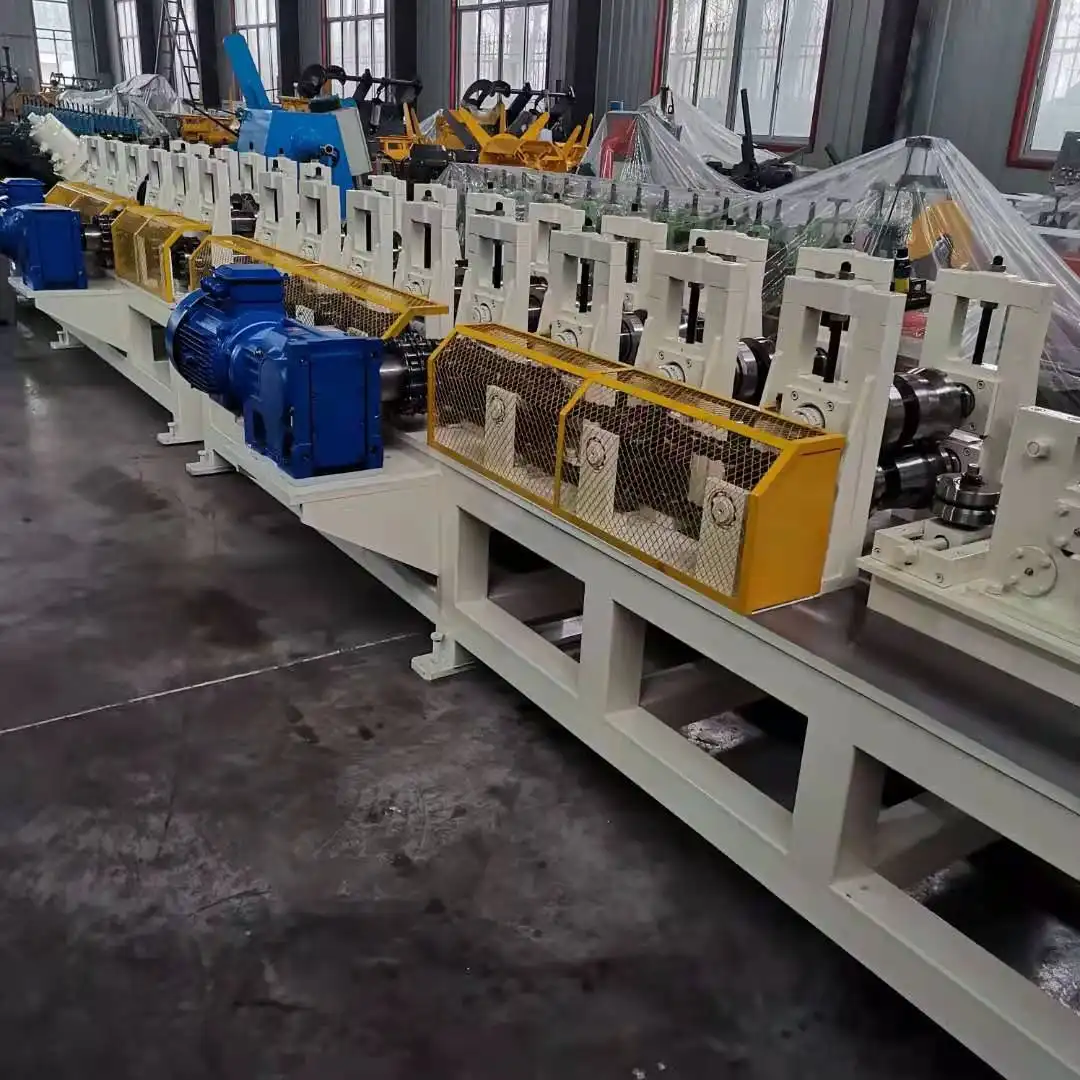
It goes through 20 progressive roller stations on a box beam roll forming machine that starts with flat galvanized or aluminum coil stock that is 2.0 to 3.0 mm thick. At each station, the strip is bent a little at a time until two matched C-profiles appear. The profiles are then sent automatically to an interlocking station, where they are physically crimped together to make a solid, hollow, rectangular beam. For normal output, welding is not needed.
How It Differs from Press Braking
If you only need to make a few bends, press brakes are a good choice. A roll forming line works nonstop, making final beams at a speed of 15–20 m/min without stopping to change pieces. That change in speed directly affects the amount over an eight-hour shift. Continuous making is the only way for companies that make racks to make tens of thousands of beams every month.
Key Components That Make It Work
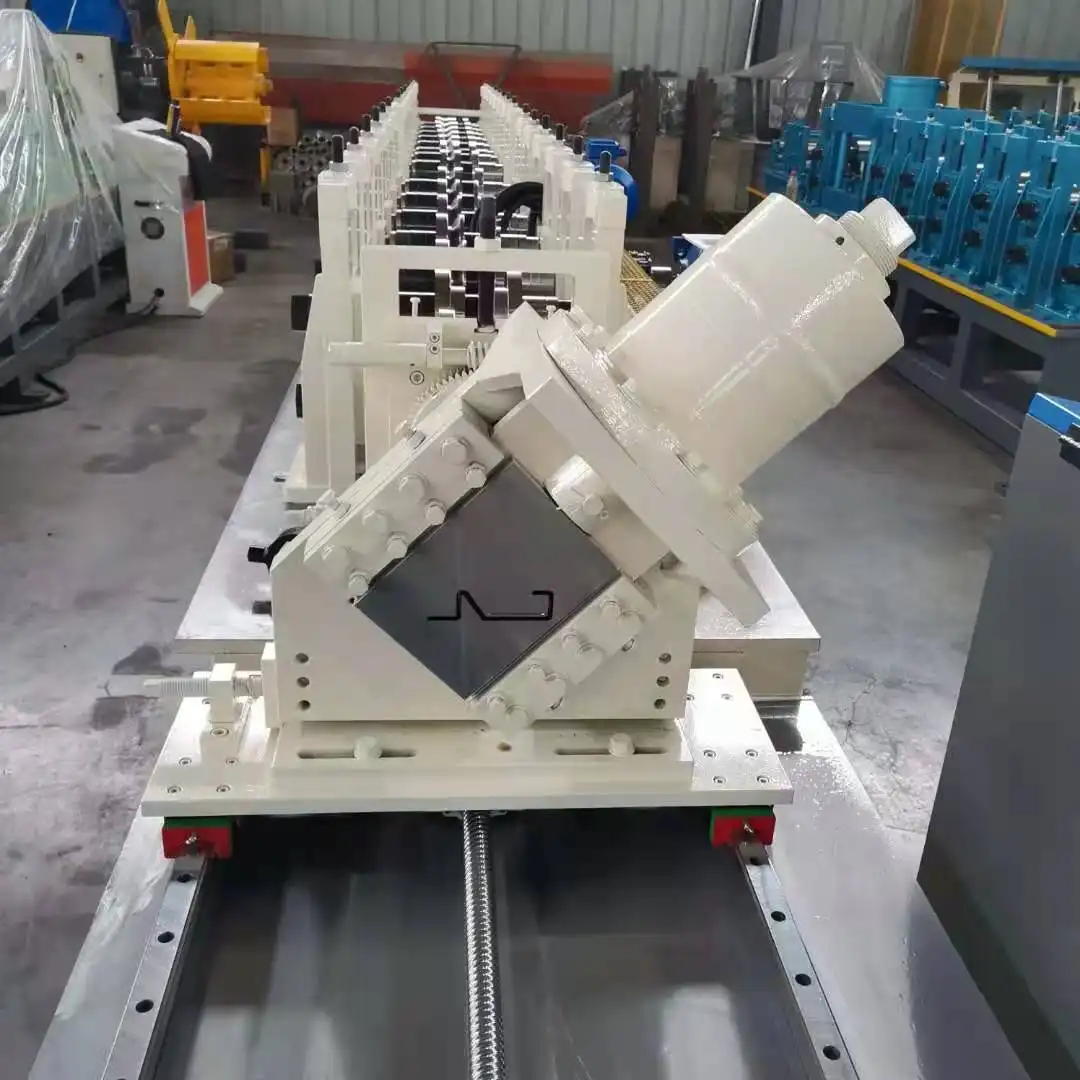
The machine's GCr12MoV hardened wheels and 80 mm solid shaft keep the dimensions accurate over long production runs. Moving the forming molds along the shaft lets operators change beam heights without having to retool by hand. This is done automatically by the Delta PLC control system. The Cr12MoV hydraulic cutter makes clean cuts with no burrs, and an automatic system moves profiles from one station to the next without anyone having to do it.
Advantages and Applications of Box Beam Roll Forming Machines
Why Manufacturers Switch from Traditional Methods
A box beam roll forming machine is better than press brakes or hand welding in three ways: it can make more things, it requires less work, and the shapes it makes are more consistent. The PLC handles size changes, profile transfer, and closing automatically, so only one person needs to be present to run the whole process, from feeding the coil to collecting the final beam. At scale, that drop in work immediately lowers the cost per beam.
Here are the main benefits this equipment brings to production:
- Forming speed of 15–20 m/min with a 7.5 kW main motor keeps energy consumption low relative to output, making per-unit production costs predictable for high-volume orders.
- PLC-controlled automatic size adjustment allows the line to shift between different beam height specifications within the designed range by repositioning molds along the shaft, cutting changeover time significantly compared to full die swaps.
- Inline hydraulic punching places connector holes with ±0.5 mm positional accuracy, ensuring beam-end connectors align precisely with upright columns during warehouse racking assembly.
Because of these benefits, companies that make racks, supermarket fixtures, and steel profiles don't have to deal with production delays that happen when demand grows faster than their current equipment can handle.
Where These Beams Are Used
Box beams made on this kind of line are used in a wide range of tough situations. They are used as horizontal load-bearing members in pallet rack systems in warehouse logistics. The closed hollow profile keeps the racks from twisting under heavy loads, which is especially important in buildings that are in seismic zones. In modular buildings, the same profiles are used for workbench frames and mezzanine joists. Shorter spans are used as shelf support bars in supermarket fixtures because the clean, rectangular shape fits flush against display gondolas.
Comparing Box Beam Roll Forming Machines with Other Technologies
Roll Forming vs. Press Brake
For every bend on every piece, a press brake needs someone to be at the machine. For a normal box beam that needs to be bent four times and closed, that's five different setups for each beam. The five steps are all done in one pass by a roll forming line. When weekly output goals are higher than a few hundred beams, press-brake production turns into a problem with organizing as well as manufacturing.
Automated Lines vs. Manual Equipment
Manual forming equipment is cheaper up front, but it doesn't work well when you need to scale up production. As volume increases, so do labor costs, and as operators get tired, there is more variation in dimensions. A box beam roll forming machine like the automated line ZTRFM sells takes a bigger initial investment but produces reliable output that meets ISO 2768-m tolerances (±0.5 mm to ±1 mm depending on span), which are needed for assembly by both OEM and wholesale buyers.
Interlocking vs. Welded Box Beam Production
Box beams that are seam-welded are needed for some jobs, while mechanically linked shapes can be used for others. Both versions can be made on ZTRFM's production line. Between two C-profiles, the interlocking station crimps their flanges together, making a mechanical bond strong enough for standard pallet-rack loads without the need for welding consumables or cleaning after the weld. For structural applications that need more torsional resistance, you can add optional inline welding integration.
Procurement Guide for Box Beam Roll Forming Machines
What to Evaluate Before Buying
Three things determine which rack beam production line is best for you: the beam size range you need, the output volume you want, and the connector punch pattern your upright columns need. The ZTRFM machine can work with materials that are 2.0 mm to 3.0 mm thick and can accept different numbers of forming stations. The company provides OEM buyers with NDA-protected equipment design and custom punch patterns that are matched to unique upright profiles.
Certifications and Compliance
For U.S. buyers, electrical compliance is important from the start. With more than 30 other foreign quality standards, ZTRFM's machines also have ISO 9001, CE, UL, SGS, and CAS marks. The standard configuration of 380V/50Hz/3-phase can be changed to meet the voltage needs of the area. Video acceptance testing is done before the machines are shipped, which is what most North American procurement teams expect.
After-Sales Support and Delivery
ZTRFM packs machines to export standards: the main frame is made of steel, electrical cabinets are protected from moisture, rollers are coated with anti-rust oil, and spare parts are shipped in wooden cases. The whole machine is wrapped in a protective film that can be used for shipping containers. Siemens cloud IoT integration and AI-assisted remote maintenance make it possible for ZTRFM's engineering team to find problems with lines without having to go to the site. This cuts down on downtime for customers in all time zones.
Maintenance and Safety Guidelines for Box Beam Roll Forming Machines
Routine Maintenance That Prevents Costly Stops
On a well-run box beam roll forming machine line, the Cr12MoV cutting blades usually need to be sharpened every 100,000 cuts. By checking the hydraulic oil and blade clearance gaps once a month, you can stop them from wearing out too quickly. The GCr12MoV rollers work better when they are oiled on a regular basis at each forming station. Dry rollers cause faster surface wear and measurement drift, which shows up as beam camber at long spans.
Operator Safety Protocols
The 500H heavy-duty steel frame keeps the machine stable when it's being formed with a lot of force, but the roller stations and hydraulic punching zones must have mechanical guarding. When working with coil ends, operators should wear gloves that won't cut and safety glasses. There are emergency stop controls at both the feed and exit ends of the line, so anyone on the team can stop production right away if there is a jam or something isn't lined up right.
Long-Term Performance Monitoring
Real-time logs of forming pressure, motor load, and cut count are kept by ZTRFM's Siemens IoT integration. Production managers can keep an eye on trends in roller wear before they affect the straightness of the beams, plan preventative maintenance for planned downtime, and avoid the unplanned stoppages that make it hard for racking manufacturers to meet tight delivery deadlines.
Conclusion
A box beam roll forming machine solves a certain problem in manufacturing: it makes a lot of physically stable hollow rectangular beams faster and with less work than any other method of gradual bending. Continuous cold forming, straight cutting, automatic profile transfer, and mechanical locking work together to make finished pallet-rack beams, mezzanine joists, and shelf support bars at speeds of 15–20 m/min. These parts are precisely measured so they can be put together later. This type of equipment gives a clear return on investment at scale for companies that make racks, store fixtures, and steel profiles and are thinking about expanding their capacity.
FAQ
Q1: What materials can the machine process?
Galvanized steel (GI) and aluminum coils with a width of 2.0 to 3.0 mm can be processed by this machine. With 20 forming stations and an 80 mm solid shaft, the machine can handle springback without cracking when working with high-tensile steel in the 450–550 MPa range.
Q2: Can the machine punch custom connector holes?
Yes. Before the forming area, there is an internal hydraulic punching station that makes connection holes with a precise accuracy of ±0.5 mm while being controlled by a PLC. Under OEM/ODM agreements, tooling designs are kept secret, and custom punch patterns can be made to fit specific upright column profiles.
Q3: How long does size changeover take?
The size adjustment system controlled by the Delta PLC moves the forming molds along the shaft automatically. Changing the beam height specifications within the designed range takes a lot less time than switching dies by hand, which lets production schedules be flexible without having to wait for long periods of downtime.
Q4: What is the standard lead time and delivery arrangement?
ZTRFM ships in normal export packaging that can be moved by international containers. Correct lead times rely on the specifics of the order and the level of customization. If asked, video feedback testing is done before shipping, which is normal for buyers in North America.
Get Your Custom Quote from ZTRFM — Box Beam Roll Forming Machine Supplier
Since 2014, ZTRFM has sold rack beam production tools to companies like Tata Group and DS Group, as well as more than 150 other countries. We have a box beam roll forming machine for sale that has full OEM/ODM tools, electrical systems that are UL/CE-certified, and Siemens IoT remote support. Get in touch with our engineering team right away to get a written quote, review of the specifications, or sample output video. zhongtuorollforming@gmail.comis one way to get in touch with us.
References
1. Sheet Metal Industries — Roll Forming Technology and Applications in Structural Steel Production, 2021.
2. Journal of Manufacturing Processes — Cold Roll Forming of High-Strength Steel Sections: Process Parameters and Dimensional Accuracy, 2020.
3. Modern Steel Construction — Design Standards for Pallet Rack Horizontal Load-Bearing Members, 2022.
4. Steel Construction Institute (SCI) — Guide to Roll Formed Steel Sections in Industrial Storage Systems, 2019.
5. Manufacturing Engineering Magazine — Automation in Cold Roll Forming Lines: Speed, Precision, and Labor Efficiency, 2023.
6. International Journal of Advanced Manufacturing Technology — Springback Compensation in Progressive Roll Forming of Box Sections, 2021.