- English
- French
- German
- Portuguese
- Spanish
- Russian
- Japanese
- Korean
- Arabic
- Irish
- Greek
- Turkish
- Italian
- Danish
- Romanian
- Indonesian
- Czech
- Afrikaans
- Swedish
- Polish
- Basque
- Catalan
- Esperanto
- Hindi
- Lao
- Albanian
- Amharic
- Armenian
- Azerbaijani
- Belarusian
- Bengali
- Bosnian
- Bulgarian
- Cebuano
- Chichewa
- Corsican
- Croatian
- Dutch
- Estonian
- Filipino
- Finnish
- Frisian
- Galician
- Georgian
- Gujarati
- Haitian
- Hausa
- Hawaiian
- Hebrew
- Hmong
- Hungarian
- Icelandic
- Igbo
- Javanese
- Kannada
- Kazakh
- Khmer
- Kurdish
- Kyrgyz
- Latin
- Latvian
- Lithuanian
- Luxembou..
- Macedonian
- Malagasy
- Malay
- Malayalam
- Maltese
- Maori
- Marathi
- Mongolian
- Burmese
- Nepali
- Norwegian
- Pashto
- Persian
- Punjabi
- Serbian
- Sesotho
- Sinhala
- Slovak
- Slovenian
- Somali
- Samoan
- Scots Gaelic
- Shona
- Sindhi
- Sundanese
- Swahili
- Tajik
- Tamil
- Telugu
- Thai
- Ukrainian
- Urdu
- Uzbek
- Vietnamese
- Welsh
- Xhosa
- Yiddish
- Yoruba
- Zulu
New or refurbished: picking a steel roof making machine that lasts
When buyers start comparing options for a steel roof making machine, the new-versus-refurbished question surfaces almost immediately. The honest answer depends on three things: your production volume, your budget ceiling, and how much downtime risk you can absorb. A new machine delivers full warranty coverage, current control technology, and known wear history. A refurbished unit can cut upfront cost, but the long-term math shifts quickly once you factor in retooling, parts sourcing, and calibration drift. This guide walks through both paths clearly so you can qualify the right equipment before your first purchase order.
Understanding Steel Roof Making Machines: Key Features and Processes
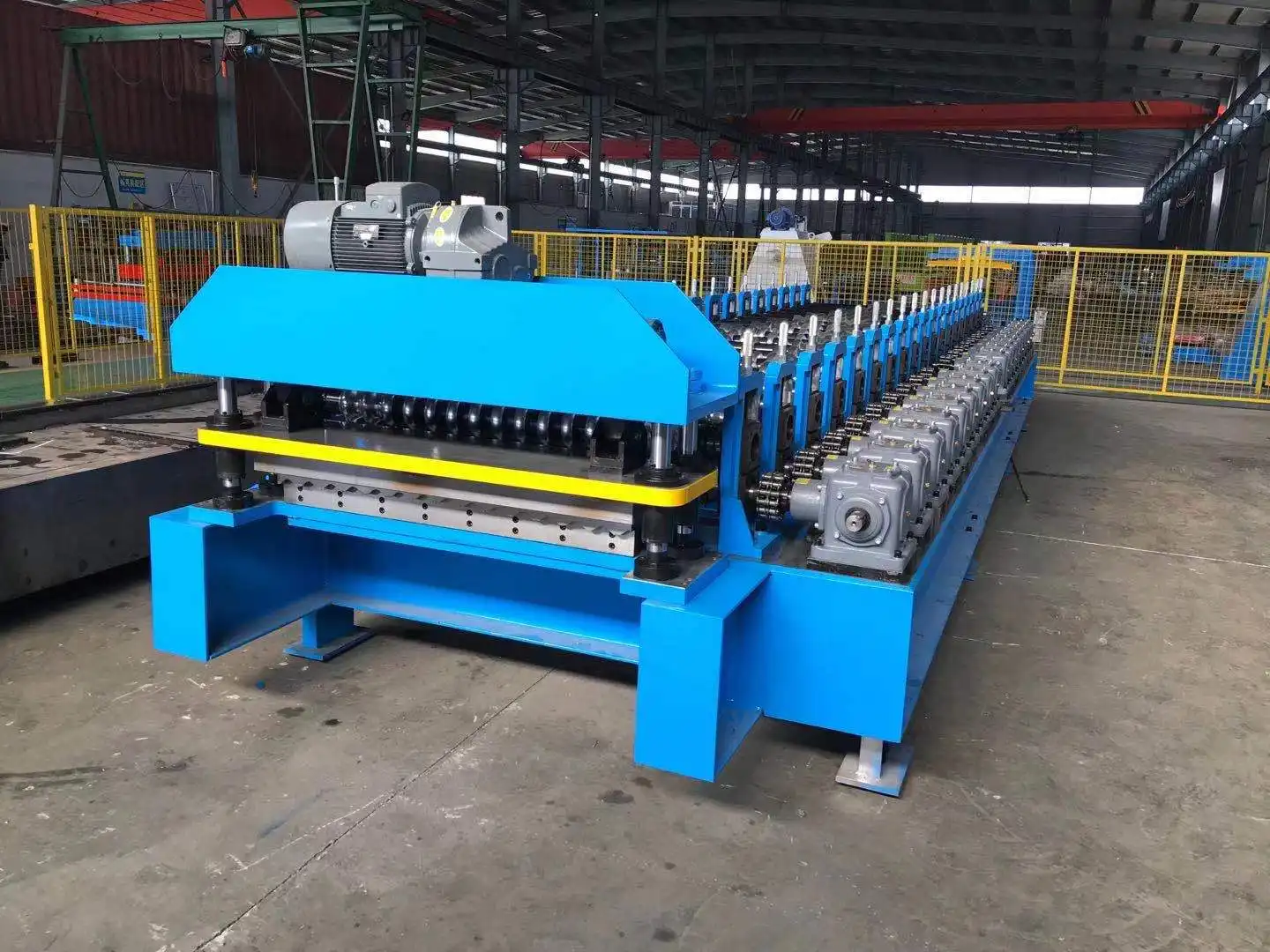
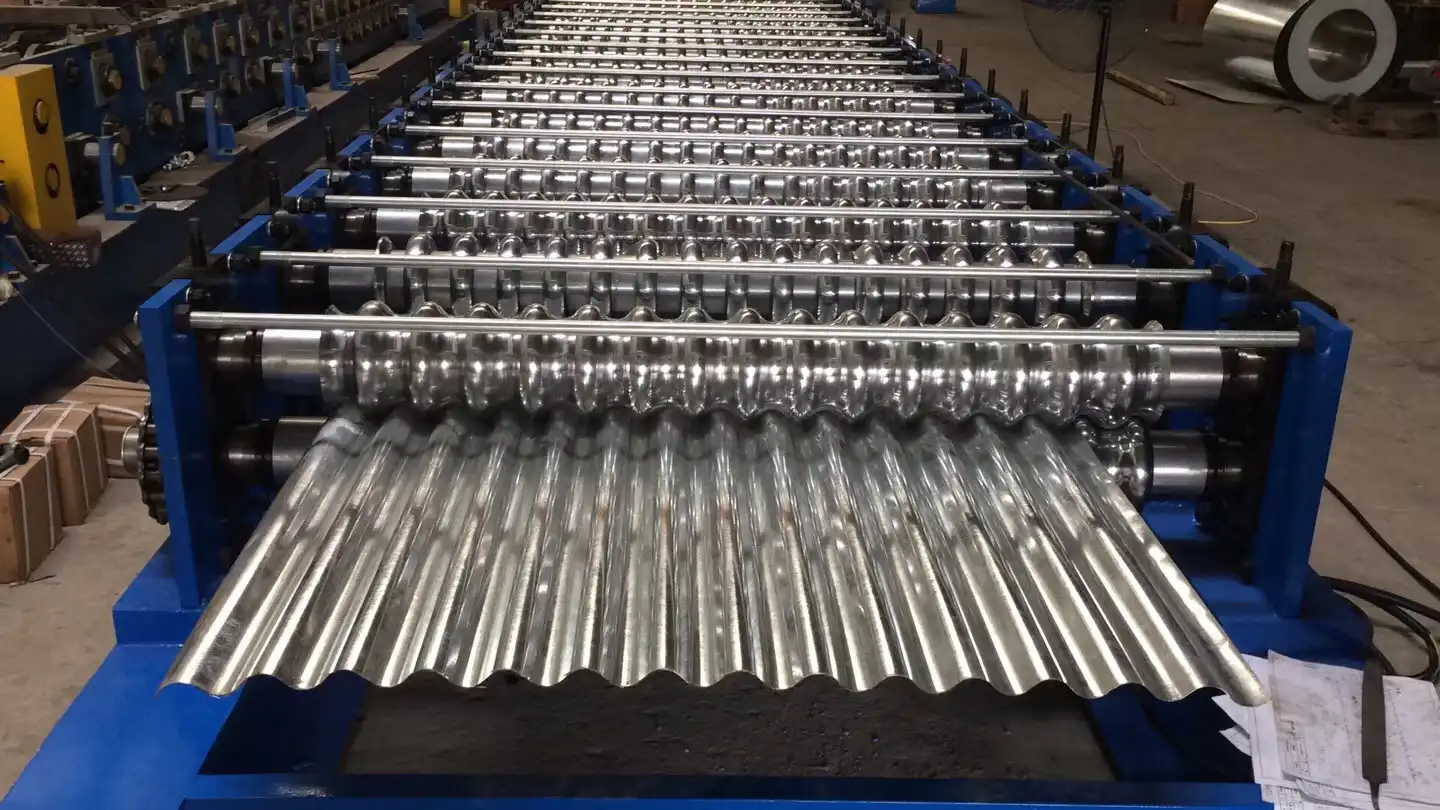
A roll forming line has a series of progressive bending stations that take a coil of galvanized or pre-painted steel and turn it into a finished roofing panel. At each station, a small amount of shape is added until the target profile is achieved. Since the process doesn't stop, line speed and consistent dimensions are much more important than they are in press-based methods.
Core Mechanical Architecture
The forming section is the most important part of any line that makes roofing sheets. The rigidity under horizontal load is controlled by the width of the shafts. The ZTRFM entry-level machine has 70 mm shafts that are held up by an H-beam frame made of 16 mm wall-plate steel. Rollers are made from 45# steel that has been heated and hard-chrome plated to make the surface hard enough to withstand wear from PPGI coatings. It only takes 18 making stations to make the R101 (1,250 mm cover width) and R72 (914 mm cover width) shapes without putting too much stress on the thin-gauge material.
Control and Cutting Technology
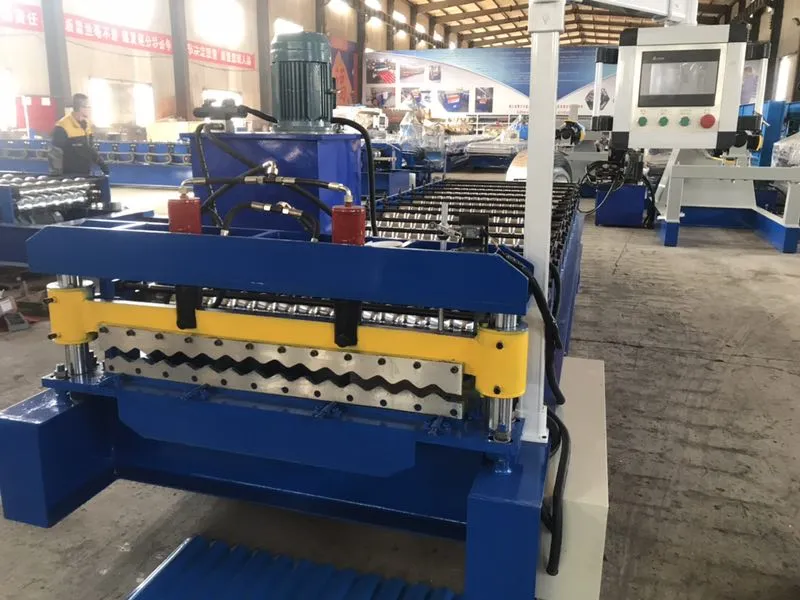
A customizable logic device and a touchscreen display are used together in modern lines. The ZTRFM unit has a 5.7-inch touchscreen connected to a Delta PLC. This lets non-specialists program batch lengths, keep track of piece counts, and log faults. Cutting is done by a hydraulic shear that works with the forming drive. The range for size errors is kept to ±2 mm, which meets most industrial roofing standards in the US and around the world.

Criteria for Choosing Between New and Refurbished Machines
Buying something isn't usually just about the price on the package. An organized framework keeps you from getting too few features or too many features that your production volume doesn't need.
Before choosing one path over the other, experienced procurement teams use these main criteria to decide:
- Wear history and roller condition: Roller mileage is rarely recorded on refurbished machines. Chrome-plated rollers on a high-volume line can become less accurate in their measurements after a long time of use, which can lead to panel camber and width drift. Geometry is checked before new tools are sent out.
- Control system vintage: PLCs that are older may not get firmware changes or extra logic cards anymore. Your maintenance team will be more comfortable with a new machine that has a modern Delta PLC and can do diagnostics from afar.
- Warranty and after-sales coverage: Most new machines from reputable brands come with a 12-month warranty on parts and online setup help. Most of the time, refurbished units come with little or no OEM guarantee, so the buyer is responsible for any repairs.
- Energy baseline: A new 5.5 kW main motor and a 4 kW hydraulic unit draw a steady amount of power. A used machine with an old motor may draw a lot more power when it's working, which raises the cost of operation without being noticeable.
When you are starting to make sheets for the first time or expanding an existing line, these criteria are the most important. It only makes sense to buy a used machine to save money if you have the engineering staff on hand to check the roller geometry, frame alignment, and availability of legacy spare parts.
Comparing the Market: Steel Roof Making Machines in 2026
Light-duty manual lines and servo-driven smart factories are both on the global market for steel roof machines. For people in the US who buy things online, the real difference between old machines made in the US and new lines directly imported from well-known Chinese makers is how they work.
New Machines from Established Manufacturers
A lot of the world's cold roll making capacity is based in Botou and Cangzhou, both in China's Hebei province. Supply-chain depth helps machines from this area because they can get tooling steel, bearings, PLC parts, and hydraulic units all locally. This cuts down on lead times and keeps unit costs low. ZTRFM was established in 2014 in Botou, Cangzhou. It has ISO 9001, CE, and CAS certifications and has sent production lines to more than 150 countries, such as India's Tata Group and Korea's DS Group.
Refurbished Machines: Where the Numbers Get Complicated
At 40–60% of the price of a new machine, a used roofing panel machine may look like a good deal. The secret costs add up when rollers need to be reground, painted, or certified again. It is hard to be sure that a refurbished unit still has ±2 mm cutting tolerance without OEM documentation. If a new company enters the market and starts making R101 or R72 profiles at 15 m/min, starting with measured new tools gets rid of a big source of production variation right away.

Optimizing Your Purchase: Procurement and Supplier Insights
Effective sourcing goes beyond comparing specification sheets. Supplier responsiveness, customization depth, and post-sale logistics directly affect how quickly your line reaches stable production output.
Before you sign a buy order for a steel roof machine-making machine, make sure the seller knows these things: Can they do the whole line—the decoiler, the former, the run-out table, and the stacker—under one contract? Do they keep the tooling plans in-house, or do they hire someone else to make the profiles? How long does it take to get new rollers?
ZTRFM addresses all three questions with a one-stop supply model. The standard package includes a 5-ton decoiler that can be operated by hand or by motor, an 18-station forming section, a hydraulic shear, and an optional stacker. Within days of receiving a customer's drawing or actual sample, profile-to-order OEM tooling is manufactured, and the Siemens cloud IoT relationship allows for remote tests that cut down on unplanned downtime without the need for a technician to be on-site.
Power source compatibility is an important factor for buyers in the US. The normal ZTRFM configuration comes at 380 V/50 Hz/3-phase. At the contract stage, you can get custom voltage builds for 460 V/60 Hz North American supply.
Maintenance and Long-Term Care: Maximizing Machine Lifespan
A roll forming line that is well taken care of can keep making things for ten years or more. If you don't do the regular maintenance, that window gets much smaller.
Daily and Weekly Checks
At the end of each shift, grease the drive chains and shaft bearings. Every week, check the alignment of the entry guide. An out-of-alignment coil feed is the main cause of edge wave and panel tilt. Every Monday morning before startup, check the level of the hydraulic fluid and look for small leaks around the shear cylinder.
Monthly and Annual Servicing
As part of the monthly checkups, the roller surface should be checked for flaking or chrome delamination. On a line with standard PPGI coils, Cr12 hydraulic shear blades can usually handle 500,000 cuts before they need to be regrinded. You can plan ahead for blade service by keeping track of the number of cuts in the PLC batch log. Check the levelness of the frame once a year with a precise tool. Thermal cycling and floor movement can cause small misalignments that add up over time to profile tolerance drift.
Operators trained on the Delta PLC interface can handle most first-level diagnostics internally. When electrical problems show up on the 5.7-inch tablet, the fault code log lets online support workers figure out what's wrong without having to come in person. This is especially helpful for US buyers who work in different time zones from their source.
Conclusion
The choice between new and refurbished comes down to proven dependability and immediate cost savings. If a buyer is setting up a new profile or making sheets for the first time, they should get a new steel roof making machine with confirmed roller geometry, a current PLC, and OEM insurance coverage. This takes away the factors that usually go wrong during early production runs. The ZTRFM general-purpose line, which has 18 stations, 15 m/min, is compatible with both R101 and R72, and is managed by a Delta PLC, is a practical starting point that can be scaled up without having to replace equipment too soon.
FAQ
1. What material thicknesses does this roofing panel machine handle?
From 0.3 mm to 0.8 mm thick, the machine works with galvanized and pre-painted steel coils. Standard 26-gauge and 29-gauge sheets are included in this range, which covers most commercial and residential roofing needs in the US.
2. Can the machine produce both R101 and R72 profiles on the same chassis?
Yes. R101 has a cover width of 1,250 mm, and R72 has a cover width of 914 mm. Both profiles can be used on the same 18-station frame. To switch between profiles, you need to change the tools. Talk to ZTRFM about the changeover time and tooling cost for your specific production mix.
3. What power supply does the machine require?
380 V, 50 Hz, three-phase power is used in the standard setup. You can get custom builds for the 460 V/60 Hz source in North America. The whole connected load is 9.5 kW, which is made up of a 5.5 kW main motor and a 4 kW hydraulic unit.
4. How accurate is the hydraulic cut-to-length system?
A cutting range of ±2 mm is possible with the hydraulic shear. This is enough for normal industrial roofing panel lengths and meets most US building code requirements.
5. Is remote technical support available after delivery?
ZTRFM's inclusion of Siemens' cloud IoT allows for remote diagnosis. Support workers can access fault codes recorded by the Delta PLC without having to go to the site, which cuts down on downtime for buyers in North America.
Partner With ZTRFM for Your Next Steel Roof Making Machine
ZTRFM is a trusted steel roof making machine manufacturer with over a decade of engineering experience and active installations in 150+ countries. Whether you need a standard R101/R72 line or a fully customized OEM profile, our team turns drawings into production-ready tooling within days. Send your profile drawing and target gauge directly to zhongtuorollforming@gmail.com to receive a fast, detailed quotation.
References
1. Sheet Metal Industry Journal — "Roll Forming Technology Trends in Building Envelope Production," 2023.
2. Manufacturing Engineering Magazine — "Evaluating New vs. Refurbished Capital Equipment in Metal Fabrication," 2022.
3. Metal Construction News — "Steel Roofing Panel Production: Equipment Selection Guide," 2023.
4. International Journal of Advanced Manufacturing Technology — "Dimensional Accuracy in Cold Roll Forming of Thin-Gauge Steel," 2021.
5. Machinery & Equipment MRO — "Hydraulic Shear Blade Maintenance Intervals in High-Cycle Production Lines," 2022.
6. Building Products Digest — "Profile Development and OEM Tooling in the North American Metal Roofing Market," 2024.