- English
- French
- German
- Portuguese
- Spanish
- Russian
- Japanese
- Korean
- Arabic
- Irish
- Greek
- Turkish
- Italian
- Danish
- Romanian
- Indonesian
- Czech
- Afrikaans
- Swedish
- Polish
- Basque
- Catalan
- Esperanto
- Hindi
- Lao
- Albanian
- Amharic
- Armenian
- Azerbaijani
- Belarusian
- Bengali
- Bosnian
- Bulgarian
- Cebuano
- Chichewa
- Corsican
- Croatian
- Dutch
- Estonian
- Filipino
- Finnish
- Frisian
- Galician
- Georgian
- Gujarati
- Haitian
- Hausa
- Hawaiian
- Hebrew
- Hmong
- Hungarian
- Icelandic
- Igbo
- Javanese
- Kannada
- Kazakh
- Khmer
- Kurdish
- Kyrgyz
- Latin
- Latvian
- Lithuanian
- Luxembou..
- Macedonian
- Malagasy
- Malay
- Malayalam
- Maltese
- Maori
- Marathi
- Mongolian
- Burmese
- Nepali
- Norwegian
- Pashto
- Persian
- Punjabi
- Serbian
- Sesotho
- Sinhala
- Slovak
- Slovenian
- Somali
- Samoan
- Scots Gaelic
- Shona
- Sindhi
- Sundanese
- Swahili
- Tajik
- Tamil
- Telugu
- Thai
- Ukrainian
- Urdu
- Uzbek
- Vietnamese
- Welsh
- Xhosa
- Yiddish
- Yoruba
- Zulu
Horizontal vs Vertical Roll Formers: Space vs Accuracy
Horizontal and vertical roll formers trade floor space against ease of access, and the right choice for a cable tray machine depends on your plant layout and tolerances. A vertical layout can shorten the floor length. A horizontal in-line layout gives easier coil loading, station access, and maintenance. Accuracy does not belong to either orientation alone. It comes from roll design, shaft rigidity, feeding control, and punching synchronization. Below, I compare both layouts, share the specifications of our own line, and show how to test a machine before you buy.
How a Cable Tray Machine Works and Why Orientation Matters The Production Sequence from Coil to Stacked Tray
On a line that makes cable trays, coils are moved in a certain way. We have a decoiler that can be operated by hand or by hydraulics and can hold 3–5 tons. The strip is also leveled and fed by a unit. An automatic punched press cuts the strip before it goes into the roll section. Once the steel is in the right shape for the tray, a hydraulic or flying shear cuts it to length. A run-out table or auto stacker then picks up the ready-made pieces. Each step changes the next one. If the punch moves away from the feed length, the hole shape won't line up with the cut. People who want to buy should look at the whole process, not just the making part.
What Sets Horizontal and Vertical Layouts Apart
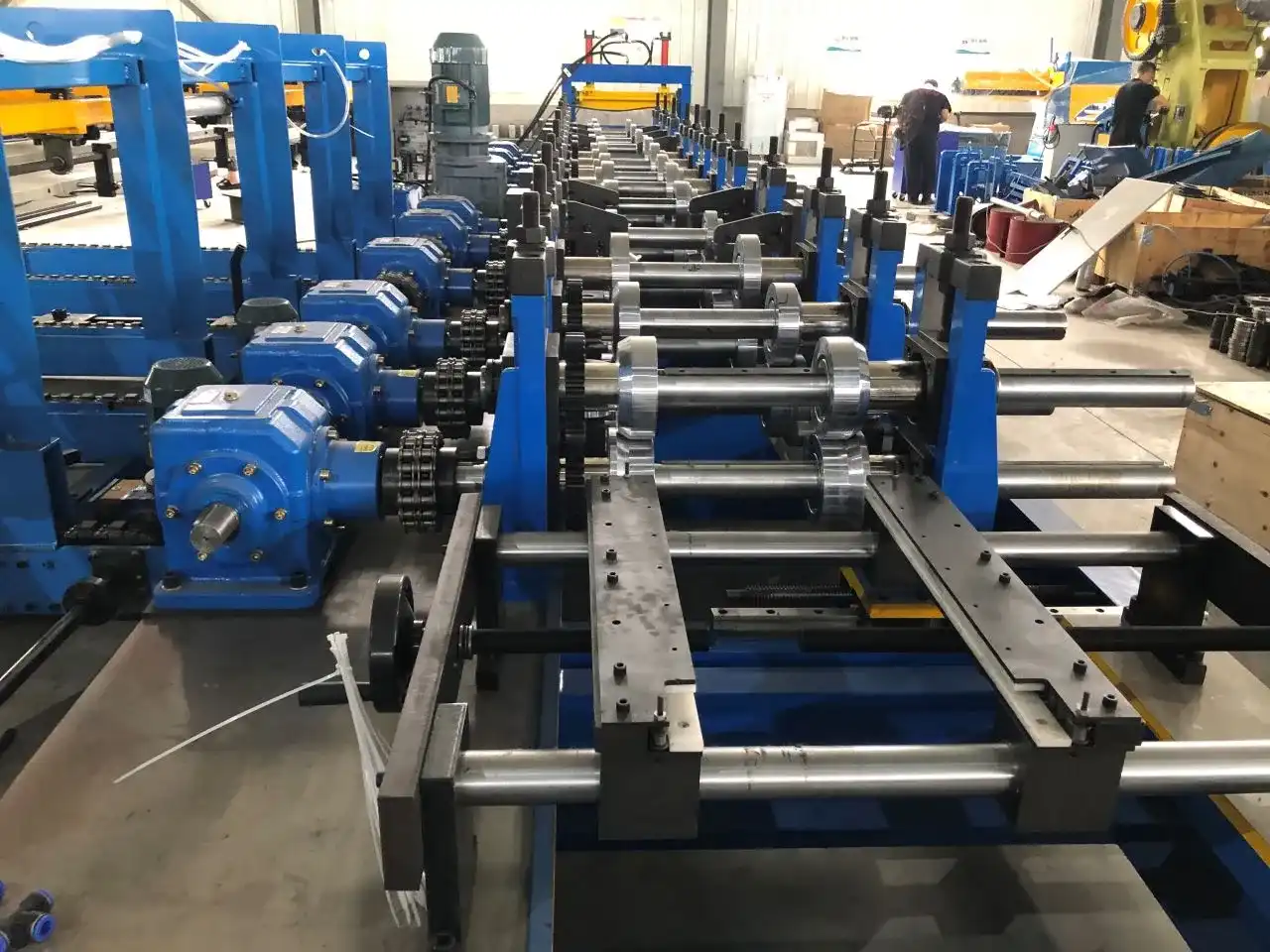
With a horizontal roll former, you can use the well-known straight plan. It's still simple to load coils, get to the station, and fix things. The layout works for both medium- and heavy-gauge steel, but the floor length needs to be longer for heavy-gauge steel. It takes up less space on the floor and can fit a narrow bay with a vertical setup. A straight line, a planned way to load, and a clear road for maintenance are all things that it needs. But the direction of the strip doesn't decide how accurate it is by itself. It only changes how it bends and moves through the stands. A well-designed horizontal line can work better than a badly aligned vertical line, and it can also work the other way around. It's not labels that need to be compared, but whole designs.
What Drives Accuracy in Either Layout
Four things have a bigger impact on the finished tray than its orientation: the roll-pass design, how rigid the shaft is, how the guides are lined up, and how the feeding is controlled. Our rollers are made of heat-treated GCr15 bearing steel that is very hard. It is 85 mm wide at its widest point. The shocks are kept low by a strong frame made of welded steel. Wheels on the filling machine can be used to change the thickness of the material being fed. With a touch screen, the Delta or Siemens PLC can set the length and pattern of the marks. Make sure that all of these things are written down by each provider before you compare prices.
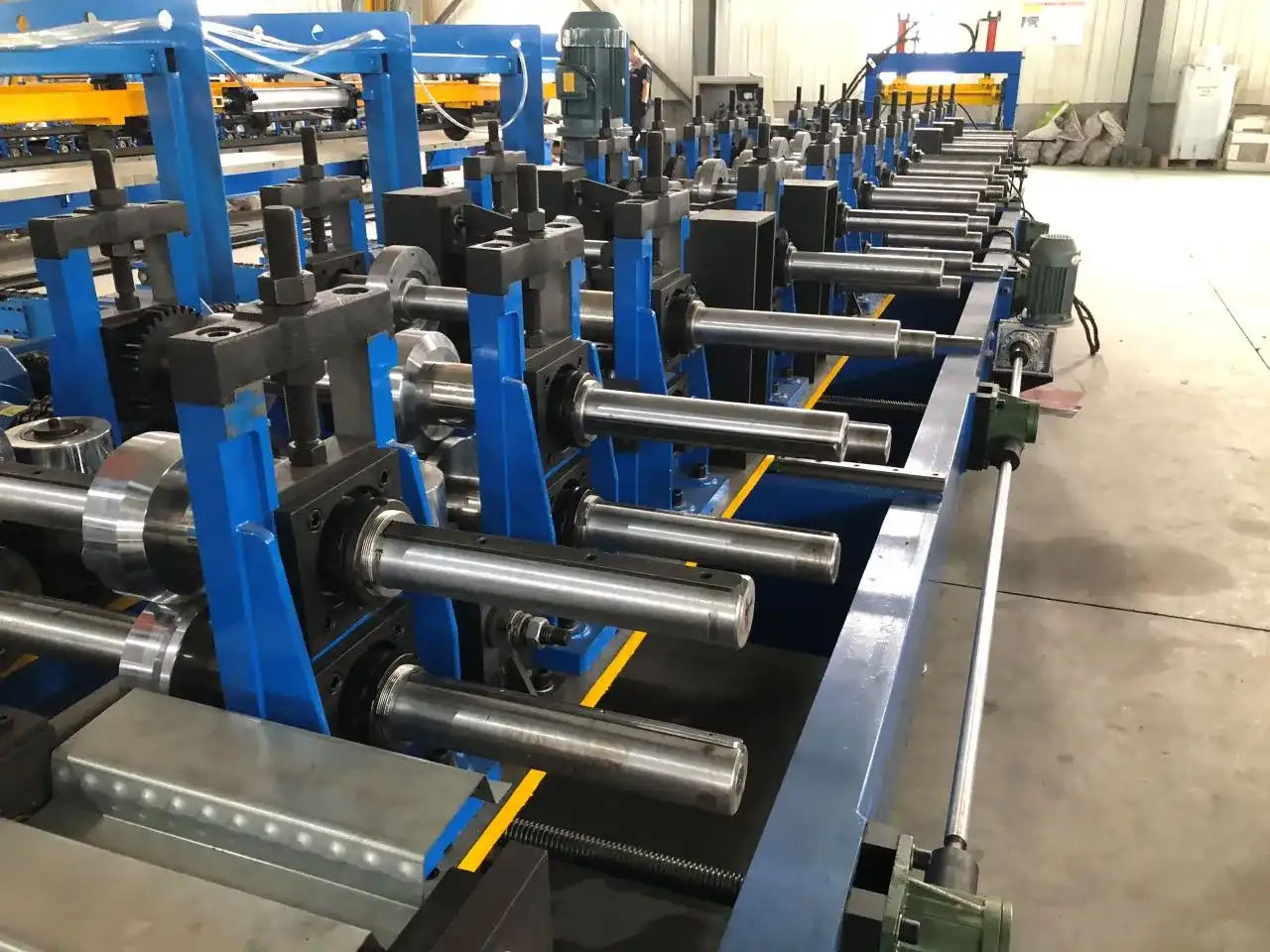
Horizontal vs Vertical Roll Formers: Space and Accuracy Compared
Floor Space and Total Installation Area
It may seem like a vertical line would take up less room, but the installation can get bigger if it needs special tools to move, access platforms, or a unique way to release it. A horizontal line takes longer to make, but it's easier to get to heavy profiles and keeps them stable. Horizontal vs vertical cold roll forming should also be considered when comparing the layout and space requirements. Measure the whole area, not just the frame. Include places to work, places to store coils, safety zones, ways to handle discharge, and ways to pick up finished trays. Make sure that a crane or forklift can get in and out, that there is electricity, compressed air, and room for maintenance. Make a scaled floor plan of the area where your tray line will go before you place your order. This is for your own safety. After delivery, this step stops work that costs a lot to redo.
Accuracy Checks That Matter More Than Orientation
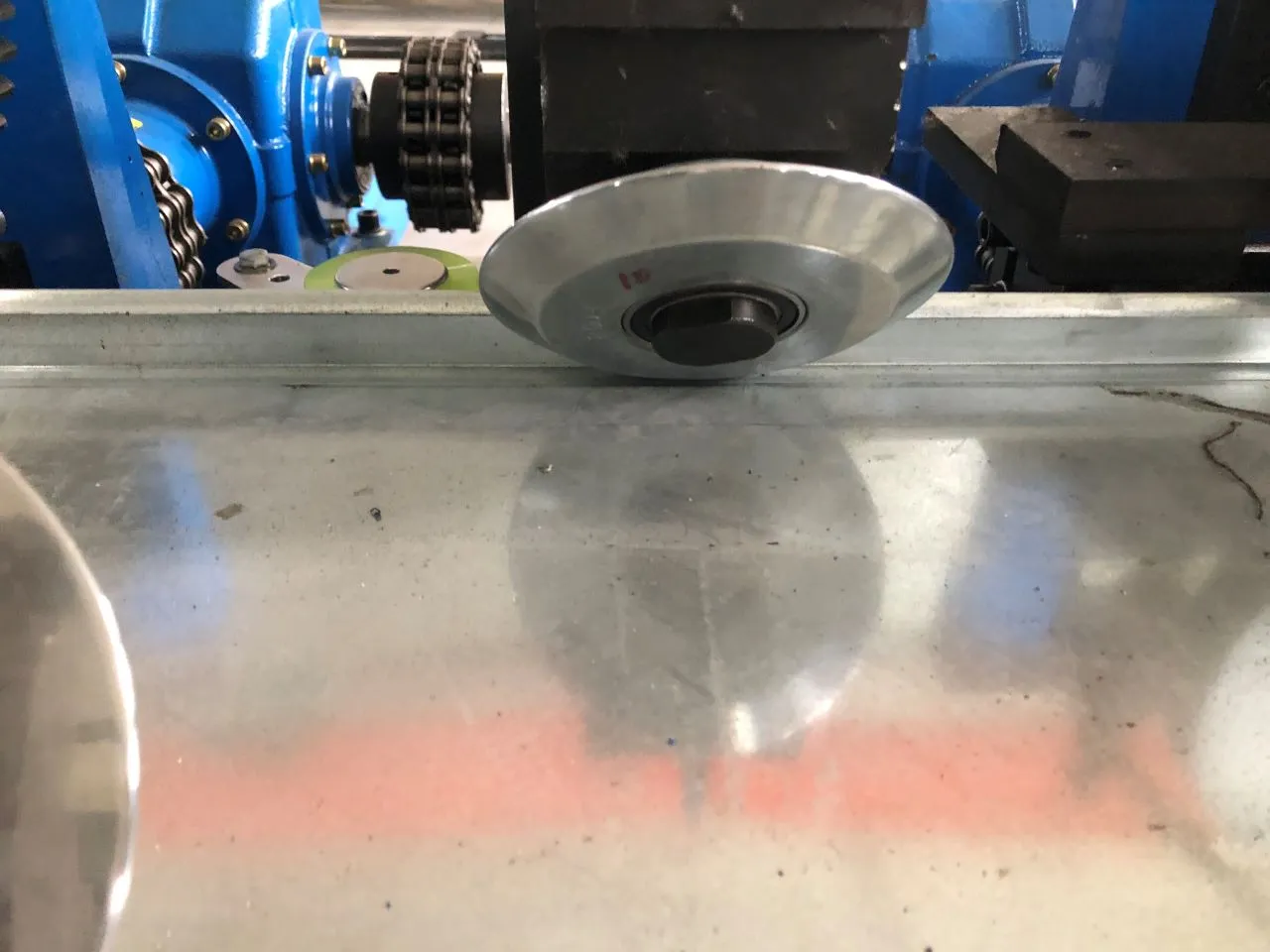
Results that can be measured show that something is correct. Ask for a sample to be made from the material you want to use, and then measure the shape and make sure that several pieces are straight and the same size. Along with heavy-duty galvanized steel, thick metal, and deep trays that aren't made of mild steel, you can try a line. When people buy finished trays by the meter, they also care about how well the slots are punched and how consistent the galvanized finish is. Trays on our line are made with servo or hydraulic punching and hydraulic cutting that work together to make them smooth, straight, and scratch-free. Before the factory test, everyone agreed on a written list of tolerances. This makes it fair for both sides to judge the sample.
Matching Layout to Tray Type and Material
There are different ways for a machine to handle trays. To make perforated boxes work right, you need to carefully manage the cutting force, the shape of the holes, and the servo filling. There are times when the side bars and cross pieces for ladder trays need to be made individually. Heavy-duty trays need stiff truss frames, stronger shafts, and an eye on the roll space. To get the right grade, stainless steel needs to be tested and kept from getting scratched. To keep galvanized steel safe, on the other hand, it needs a careful coating. Al is easier to bend, so the feeding and roll sets need to be very precise. Heavy surfaces often make it easier to get to things from the side. A vertical design may work if the plant is narrow, the ceiling is high enough, and lifting is easy, which is an important consideration in Horizontal vs. vertical cold roll forming. This is as long as the supplier can show that the equipment is aligned and discharged properly.
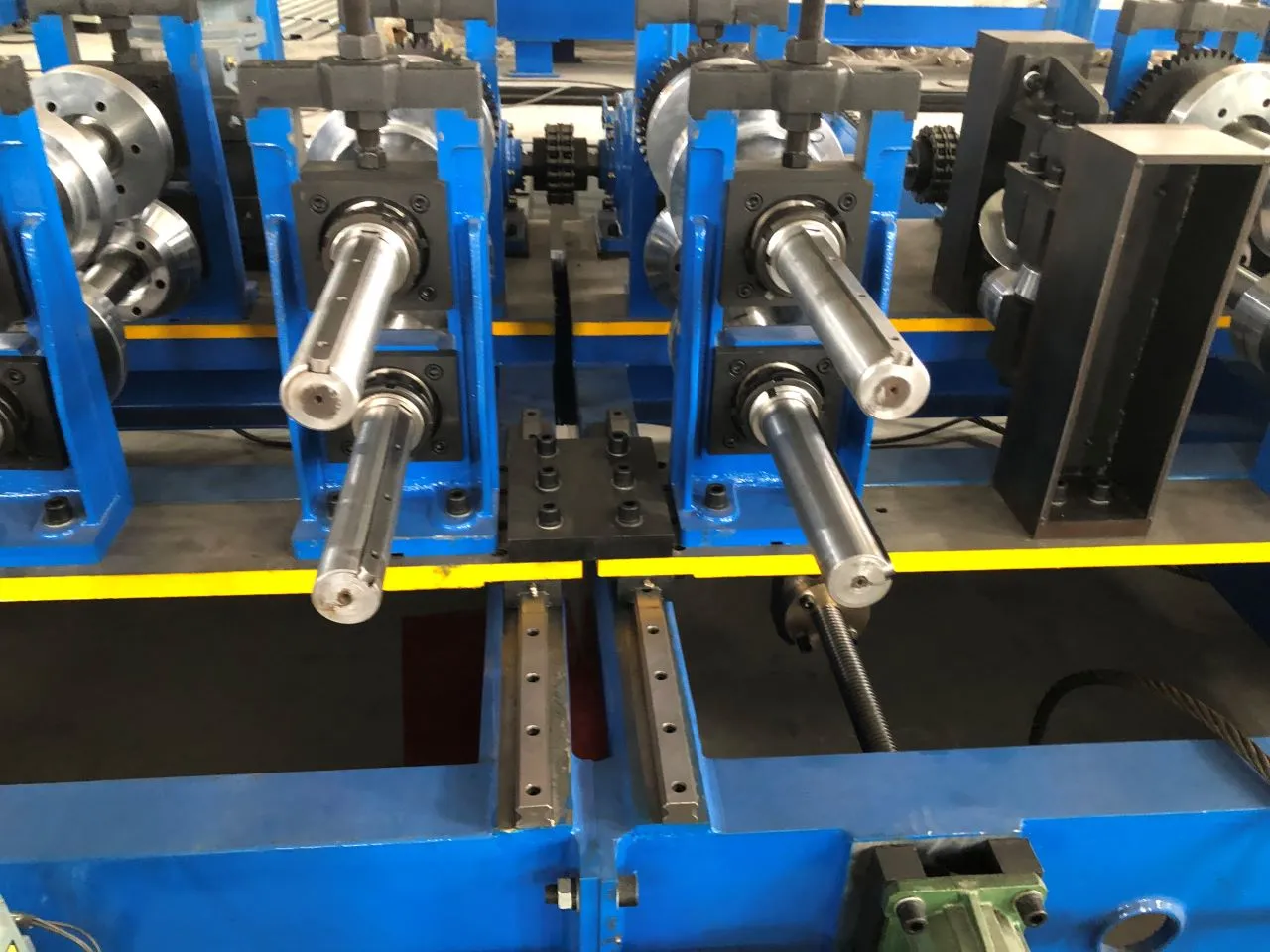
How to Choose a Cable Tray Machine and Avoid Common Mistakes
Define Output, Not Only Line Speed
To begin, make a list of the types of trays that are needed, along with their lengths, sizes, materials, thicknesses, hole patterns, and hole patterns. After that, you can use demand, shifts, changeovers, coil replacement, and accepted scrap to find the real output. The real output is rarely the same as the highest line speed when punching, cutting, setting, and coil changes are taken into account. Setting up is also important when comparing Horizontal vs vertical cold roll forming. For small amounts of work, manual and semi-automatic tools are better and cheaper, but automatic lines are more consistent and make better use of workers. You can make more schedules with separate punching, but it takes more work to get started with combined punching, which lines up holes with cut length. Not the one that says it has the most, but the one that works best for your order mix.
Specifications of the ZTRFM Cable Tray Machine
Here's what our cable tray machine can do. You can use this as proof against any quote. On the line, there are 14 cutting stations and a 5.5 kW hydraulic power unit. Blades made of Cr12 that have been quench-treated to HRC56–58 are used for hydraulic cutting. You don't have to change the cutter to make the blades fit different tray sizes. The company makes ladder-style, U-channel, and C-channel trays. Automatic cleaning and quick-change punching plates make it easy to use. One option is a duplex roll making system that can make trays of different sizes. Another is an automatic pattern change system for cutting. Finally, there is an automatic system for stacking and packing. These features are meant to keep output steady on different types of trays.
Supplier Support and Procurement Checks
Ask for a quote that breaks down the cost of the machine, its parts, training, shipping, packaging, warranty, and any tools or dies that need to be replaced. When you place an order from another country, make sure you know the Incoterms, the payment terms, the delivery schedule, how to inspect the goods, and the factory voltage. You can find Cangzhou Zhongtuo online since 2014. They make cold roll forming machines that are approved by ISO 9001, CE, and CAS. Around the world, people buy our goods. It's easy to get raw materials, tools, and other parts from us because we do both OEM and ODM work. People from the US who want to buy the project should also find out what standards it meets. NEMA VE 1 talks about metal cable tray devices, and Article 392 of the NEC talks about how to set up cable trays. Before you buy from a supplier, you should visit the plant, test samples, and get recommendations.
Conclusion
The main difference between horizontal and vertical roll formers is how easy they are to access and how much floor space they need. This type of plan works well for heavy-gauge work and makes it easy to load and unload. A vertical set-up takes up less floor space, but loading, aligning, and emptying it needs to be carefully planned. Because accuracy depends on how the rolls are made, how rigid the shafts are, how the guides are aligned, how the feeding is controlled, and when the punches are set off, buyer-supplied samples are better proof than any orientation label. The best cable tray machine is also based on the type of tray, the material, the output that is needed, and the setup, which can be done by hand or by a machine. The buyer should measure the whole installation area, write down tolerances, and check the quote scope and project standards to make it less likely that the machine and plant won't work together.
FAQ
1. Is a vertical roll former more accurate than a horizontal one?
Not at all. Neither orientation promises to be right. The results depend on the rigidity, the tools and guides used, the servo control, and the quality of the installation. You should try your own work to see if a straight line across the page can match a straight line up and down.
2. Can one cable tray machine make several tray sizes?
When the organization and tools make it possible for the changes to be made. The blades on our line can be changed to fit different tray sizes so you don't have to buy new cutters. You can also add a duplex roll forming system that can work with more than one tray size if you want to. Once you send us your list of sizes, we'll let you know what the cable tray machine can do.
3. What should I send to get a quotation?
Send pictures of the trays, the coil sizes, the amount of output that is needed, the hole patterns, the cut lengths, the factory voltage, the space that is available, and the country where the goods are going. Another way to be sure of the quality of the profile, the accuracy of the holes, and the useful volume is to ask for a sample production before you buy.
Request a Cable Tray Machine Recommendation from ZTRFM
ZTRFM can look at your list of materials, floor plan, and tray plans and tell you how to set up your things in the best way. We are ISO 9001, CE, and CAS approved and make cable tray machines. We offer a one-stop source for OEM and ODM tools. E-mail zhongtuorollforming@gmail.com about your idea to find out more. Ask to see some of the work before you agree.
References
1. National Electrical Manufacturers Association, NEMA VE 1 Metal Cable Tray Systems, 2017
2. National Fire Protection Association, NFPA 70 National Electrical Code, 2023
3. International Electrotechnical Commission, IEC 61537 Cable Management – Cable Tray Systems and Cable Ladder Systems, 2023
4. CRC Press, Roll Forming Handbook (George T. Halmos, editor), 2006
5. Wiley, Fundamentals of Modern Manufacturing (Mikell P. Groover), 2019
6. ASTM International, ASTM A653/A653M Standard Specification for Steel Sheet, Zinc-Coated (Galvanized) or Zinc-Iron Alloy-Coated (Galvannealed) by the Hot-Dip Process, 2022