- English
- French
- German
- Portuguese
- Spanish
- Russian
- Japanese
- Korean
- Arabic
- Irish
- Greek
- Turkish
- Italian
- Danish
- Romanian
- Indonesian
- Czech
- Afrikaans
- Swedish
- Polish
- Basque
- Catalan
- Esperanto
- Hindi
- Lao
- Albanian
- Amharic
- Armenian
- Azerbaijani
- Belarusian
- Bengali
- Bosnian
- Bulgarian
- Cebuano
- Chichewa
- Corsican
- Croatian
- Dutch
- Estonian
- Filipino
- Finnish
- Frisian
- Galician
- Georgian
- Gujarati
- Haitian
- Hausa
- Hawaiian
- Hebrew
- Hmong
- Hungarian
- Icelandic
- Igbo
- Javanese
- Kannada
- Kazakh
- Khmer
- Kurdish
- Kyrgyz
- Latin
- Latvian
- Lithuanian
- Luxembou..
- Macedonian
- Malagasy
- Malay
- Malayalam
- Maltese
- Maori
- Marathi
- Mongolian
- Burmese
- Nepali
- Norwegian
- Pashto
- Persian
- Punjabi
- Serbian
- Sesotho
- Sinhala
- Slovak
- Slovenian
- Somali
- Samoan
- Scots Gaelic
- Shona
- Sindhi
- Sundanese
- Swahili
- Tajik
- Tamil
- Telugu
- Thai
- Ukrainian
- Urdu
- Uzbek
- Vietnamese
- Welsh
- Xhosa
- Yiddish
- Yoruba
- Zulu
Roll forming vs. Stamping: Cost and speed comparison
Stamping vs. roll forming comes down to the length of the part and the amount of production. It is usually cheaper and faster to use a rack roll forming machine to make long parts with a constant section, like shelf beams and uprights. Coil feeds, shapes, punches, and cuts all at the same time. It works best for small batches where a die costs less than a full line and for short, complicated parts like brackets and connectors. This guide was written so that people who make racks and shelves can compare the two before they buy equipment.
How the Two Processes Work How a Rack Roll Forming Machine Shapes Uprights and Beams
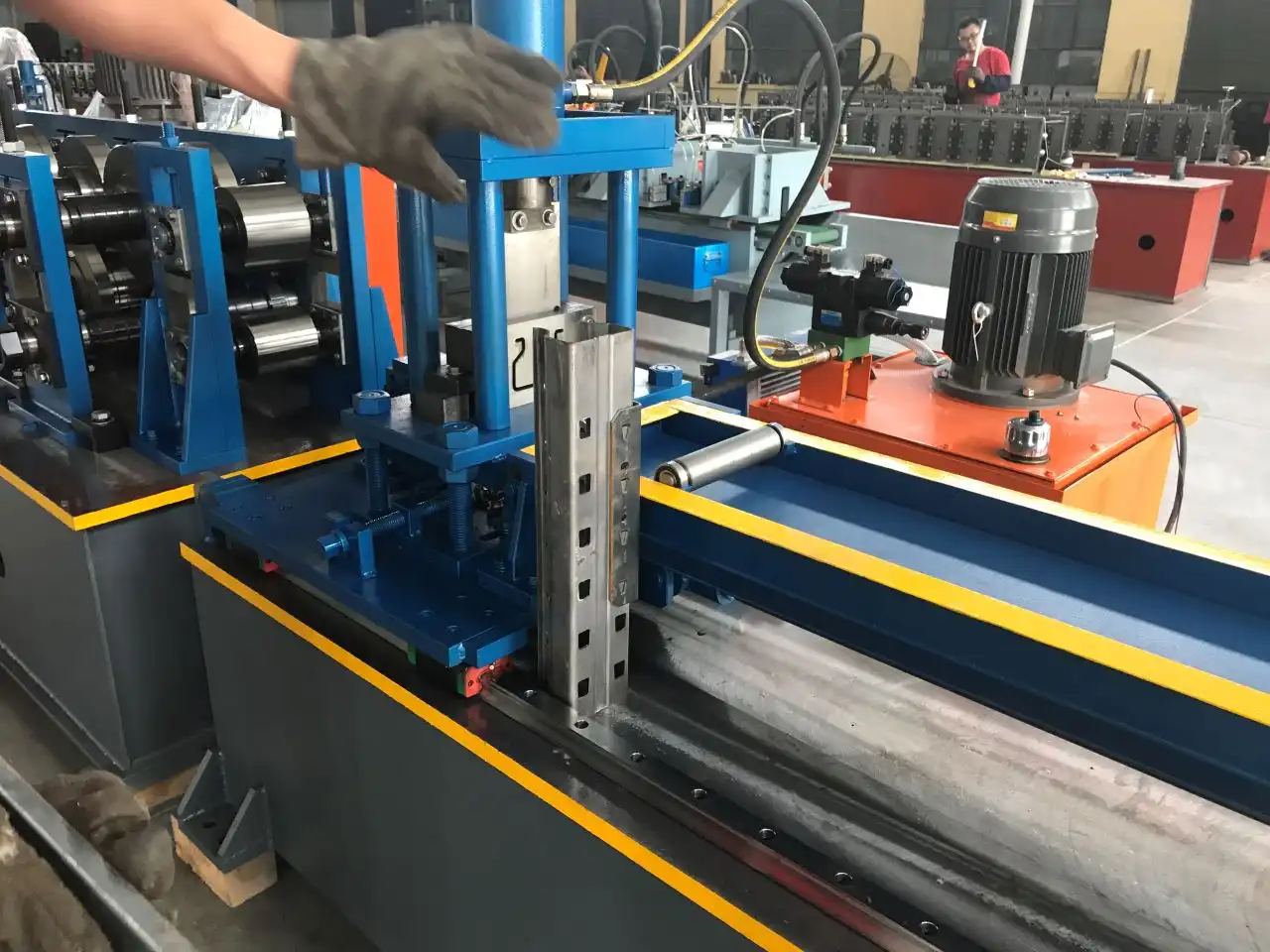
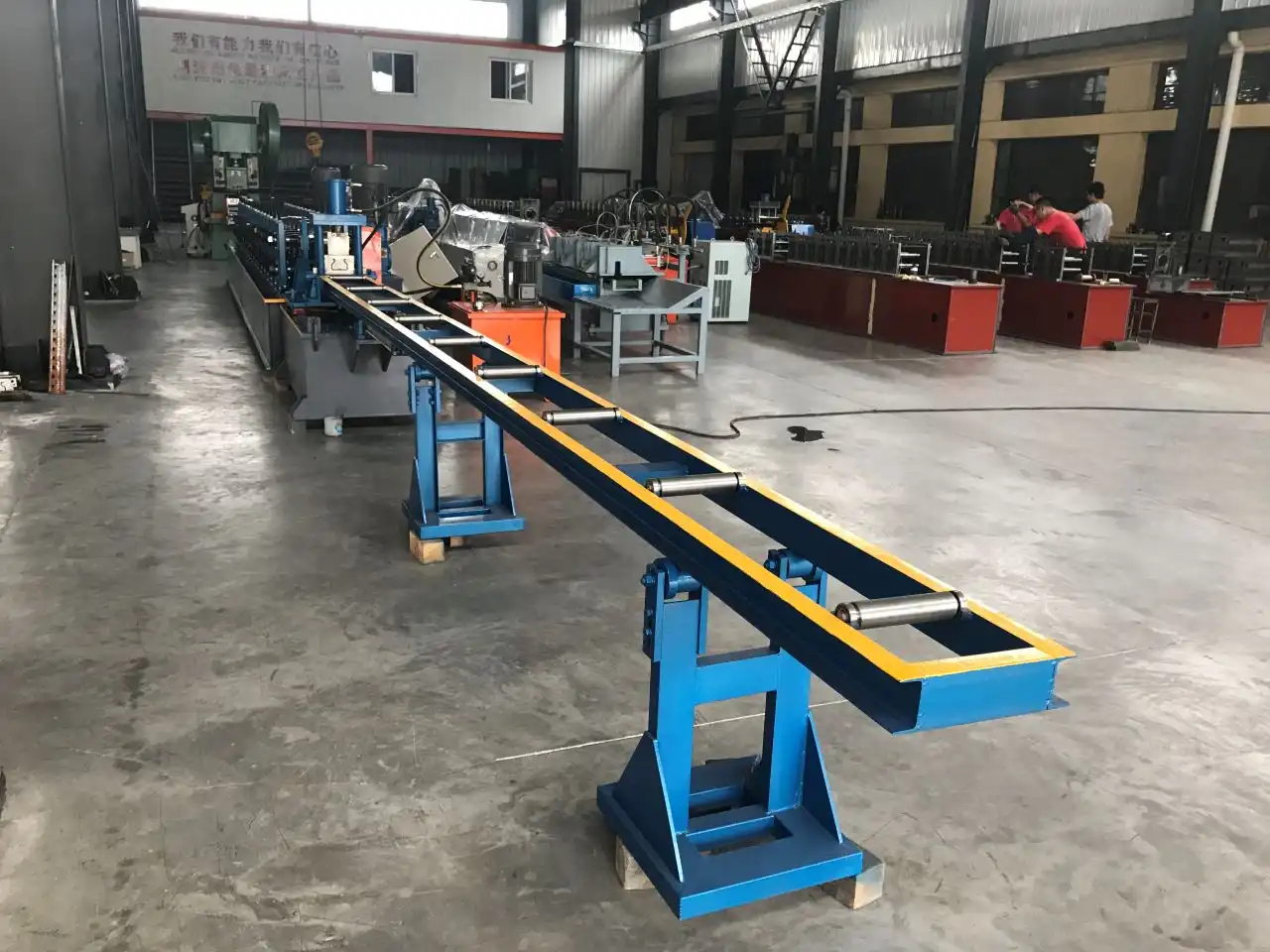
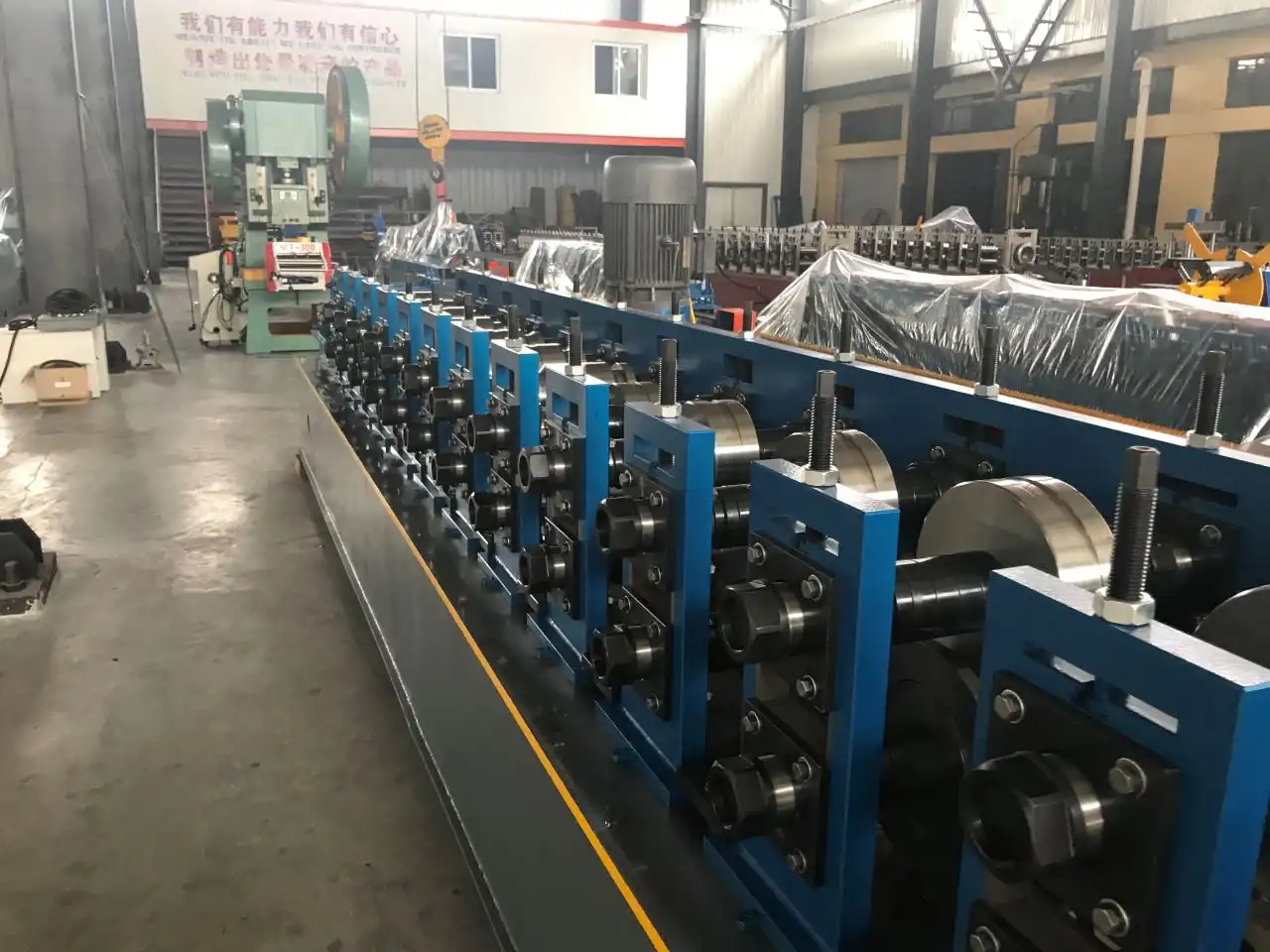
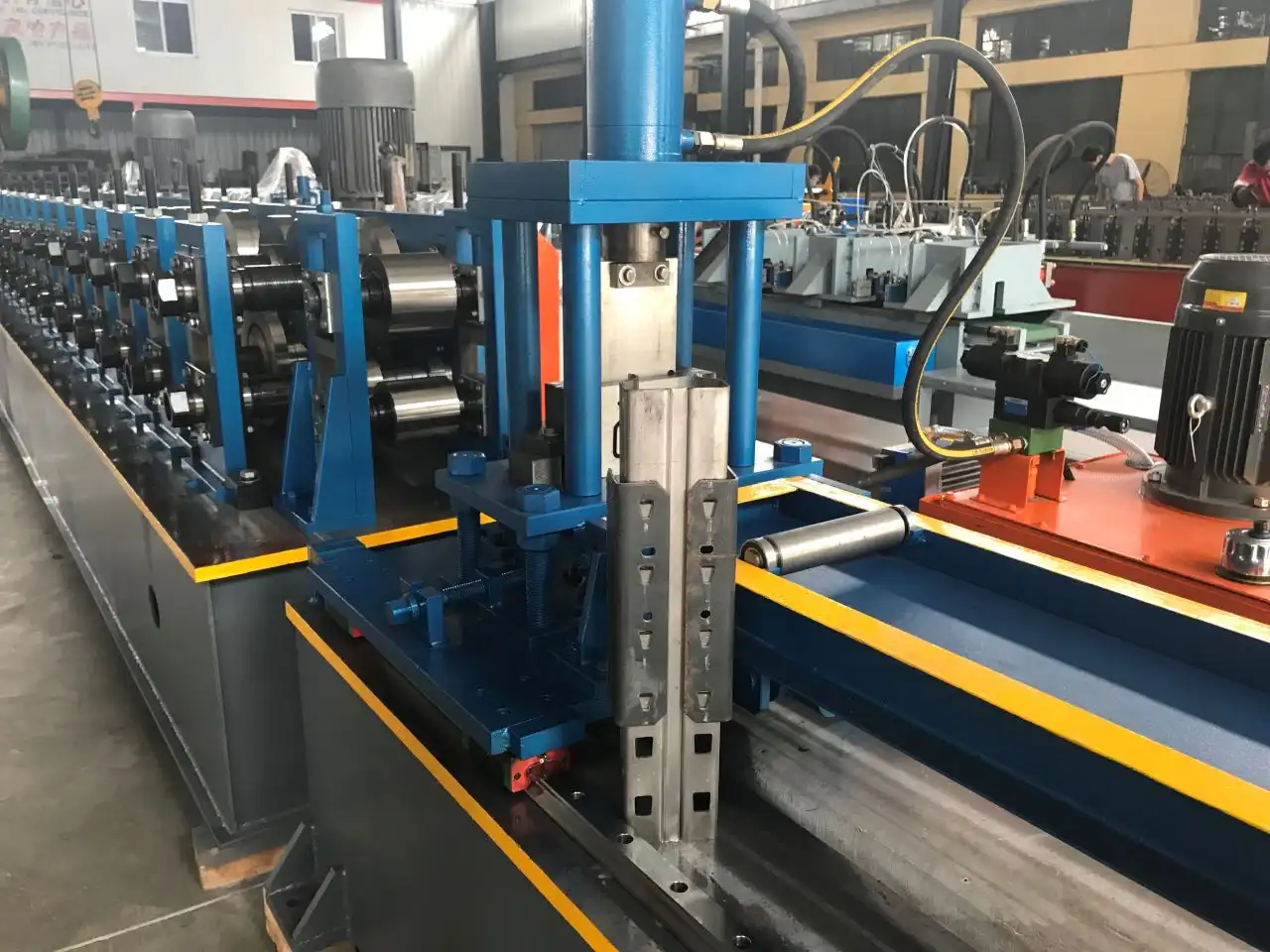
A rack roll forming machine bends a flat coil one step at a time through two roller stations until the last section is formed. Our ZTRFM line has a decoiler, a leveler, 16 forming stations, an automatic hydraulic cutter, and an optional punch. It moves coil through all of these. Strong 80 mm solid shafts made of Cr12 or GCr12 steel hold the rollers. The PLC controls the length, batch size, and speed. From 1.5 to 2.0 mm, the line makes PPGI, GI, and aluminum coil.
How Stamping Forms Rack Components
A press and a matched die are used to stamp a part in one stroke to blank, punch, bend, or emboss it. Moving a strip through several stations is what progressive dies do. This works for brackets, base plates, and connectors. It's tougher to stamp long rack profiles. It's possible that more than one die or a press brake will be needed. Each extra operation takes longer to handle between steps.
Where Each Process Fits Best
Most uprights, beams, and shelf panels have a cross-section that stays the same over a long length. This is the best case for roll forming. It's best to stamp parts that are short, three-dimensional, or change shape along their length. With a roll forming line for the long pieces and a press for the small parts, many rack plants can do both. That way, each machine can keep doing what it does best.
Cost Comparison: Roll Forming vs. Stamping
Tooling, Equipment, and Initial Investment
For each part, stamping needs a press, a feeder, and a die set. The cost of the dies goes up as the parts get bigger and more complicated. For each profile, a roll forming line needs roller tools, as well as a decoiler, punch, and cutter. The number of forming stations determines the size of the roller tools. Our entry line has sixteen. A short and clear list of equipment for a compact line also helps a new racking business figure out how much money it needs to start up.
Per-Unit Cost at Different Production Volumes
The cost of tools is spread out over all the parts you make. Because there is no other work for a dedicated line to do between orders, short runs are better for stamping or press braking. As the amount of work goes up, a rack roll forming machine's cost is spread out over thousands of meters of profile. One person runs the line, and there isn't much handling between steps. To find your break-even point, divide your total investment by the number of pieces you make each month and the amount of money you save on each one.
Material Utilization and Scrap Reduction
Since the coil is already cut to the right width for the profile, there is no need for a blank layout. Cut-to-length ends and coil ends make up most of the scrap. Blanks are cut from the strip during stamping, and even a well-nested layout leaves some scrap between the parts. Steel makes up a big part of the cost, so use your actual drawing to compare yield instead of a rough guess.
Speed Comparison: Which Process Produces Rack Components Faster?
Cycle Speed and Continuous Production
The speed of our line is 0 to 15 m/min. At top speed, that's 15 meters of profile per minute, or five 3-meter beams per minute before you have to punch and cut them. A press can quickly make a short piece, but it takes several steps to make a long rack member. Instead of strokes or meters per minute, compare the number of finished pieces per shift.
Setup Time, Changeovers, and Product Flexibility
When you do a press changeover, you swap the die. When you change over roller sets or stations for a new size, you are doing a roll forming changeover. It takes time for both. Stamping is better for working with a lot of different small parts, while roll forming is better for making stable designs. We can design size-changeover features and build profile-to-order tooling in weeks if your range has more than one width.
Integrated Punching, Cutting, and Stacking
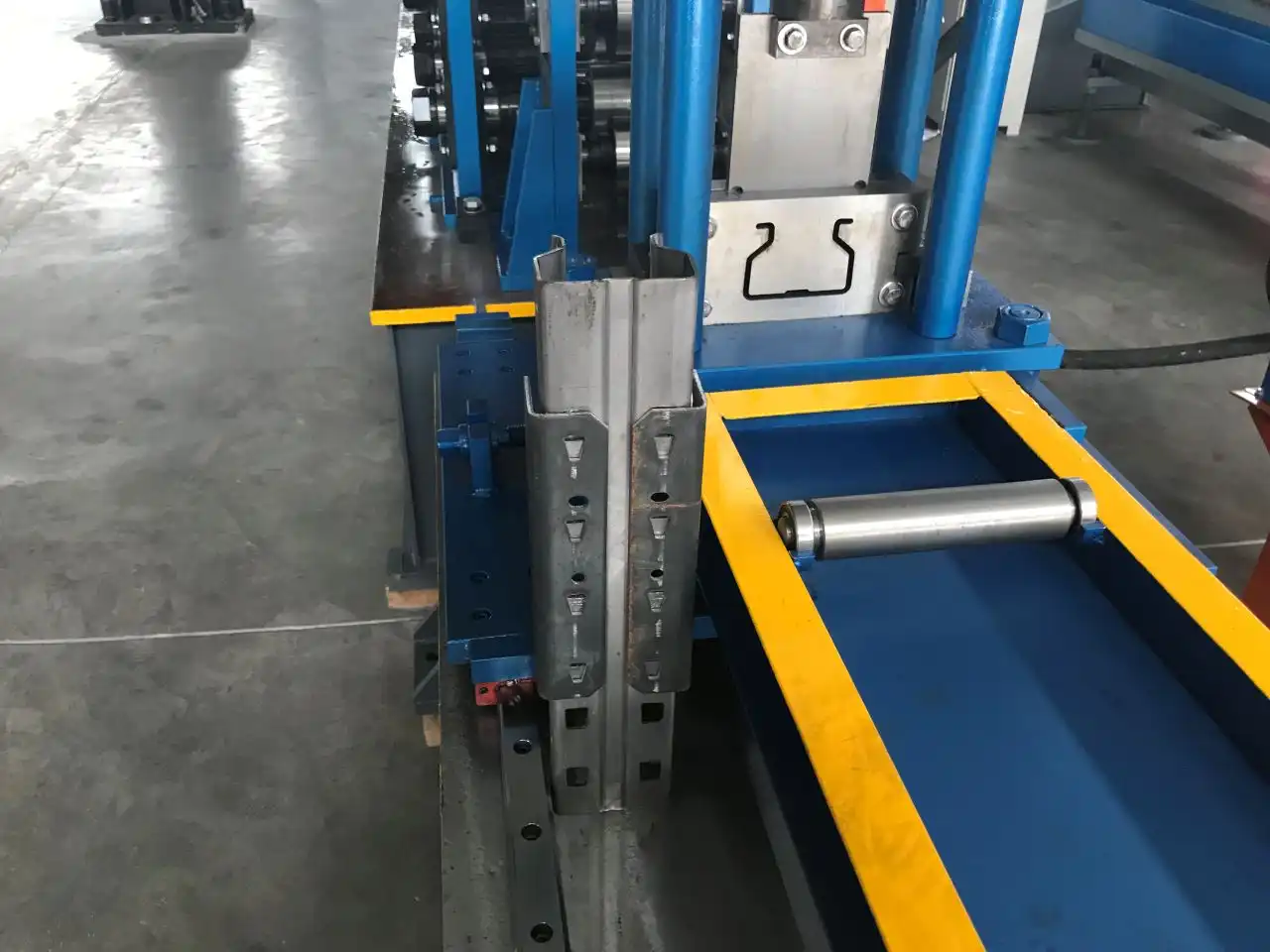
When something is formed on a roll, it is also cut and hole punched along the same line. Our machine can punch and cut automatically with hydraulics under PLC control. We can also provide a decoiler, a stacker, and spare parts all in one package. Stamping often does blank cutting, forming, and punching as separate steps, which means that parts have to wait and move from one rack roll forming machine to another.
Which Process Is Better for Different Rack Manufacturing Scenarios?
High-Volume Warehouse and Shelving Production
A lot of warehouse shelves, supermarket racks, and archive storage use the same profile and hole pattern over and over again. That's the best place for roll forming. One person can feed, shape, and cut all the pieces, and since they all come out of the same roller set, the profile sizes are always the same for a large order.
Heavy-Duty and Custom Rack Profiles
For custom sections, roller tools must be made from your drawing or a profile sample. Our entry line has a 350H heavy-duty steel frame that can handle 1.5 to 2 mm material. For thicker gauges, you need a heavier machine. We have lines for all levels, from light-duty to heavy-duty. Before we look at your drawings, we sign an NDA, and we can add private-label branding.
Low-Volume and Frequently Changing Designs
It is usually better to stamp or press brake when making prototypes, small batches, or designs that change every few weeks. It is cheaper to set up a die or brake than a roller tool, and the line doesn't have to be idle for long periods of time. A lot of buyers start there and then add a roll forming line when a profile starts getting steady orders over and over again.
How to Evaluate a Rack Roll Forming Machine Supplier
Technical Criteria to Check
Write down the machine's structure, shaft diameter, roller material, cutter material, and drive type. The frames are made of 350H steel and have ¦80 mm shafts. The rollers and cutters are made of Cr12 or GCr12 steel, and the transmission can be a gear or a chain. Ask for a sample run, and then check the length, width, twist, and pitch of the holes. ANSI MH16.1 is often used for US rack designs, so your engineer should check the finished profile.
OEM and ODM Support
ZTRFM was founded in 2014 in Botou, Cangzhou, which is a major hub for roll-forming machines in China. There are ISO 9001, CE, and CAS marks on our products, and they are used in more than 150 countries. Your rack system only needs to be bought from one company because we make upright, beam, and panel machines all in one place. We can also provide you with everything you need in one place, from a single machine to a full line.
Shipping, Installation, and After-Sales Service
When machines are exported, they come in a steel frame support, a waterproof electrical cabinet wrap, anti-rust oil on the rollers, and spare parts in their own wooden cases. A 20GP or 40HQ container can hold the load. Support includes online help 24 hours a day, seven days a week, remote diagnosis, installation help, training for operators, and spare parts delivery. So that we can match the electricity, let us know early on what kind of power supply you have in your area, like 220V 60Hz three-phase.
Conclusion
Rack roll forming machines and stamps are used for different things. Roll forming works well for long rack uprights, beams, and shelf panels with a constant cross-section because the coil goes through forming, punching, and cutting all at once. This reduces the amount of handling, waste, and cost per piece at medium and high volumes. With a die or press brake, you can avoid the cost of a dedicated line for short, complicated parts and small batches. To rate speed, look at how many pieces are finished per shift. To rate quality, look at the hole pitch, the straightness, and the length. A buyer should compare both options to the real drawing in order to find out which one breaks even based on volume, design stability, and level of automation.
FAQ
1. Is roll forming cheaper than stamping for rack uprights?
Most of the time, yes, for medium to high volumes of long profiles. It's easy to shape, punch, and cut with just one line. For small amounts, it may be cheaper to use a die or press brake.
2. Is a rack roll forming machine faster than a stamping machine?
It usually brings more finished pieces per shift for long uprights and beams. Our line moves at a speed of 0 to 15 m/min. For short pieces, a press works faster.
3. Can one machine produce both uprights and beams?
Not until the tools are changed. Because uprights and beams are made of different parts, they usually need their own roller set or machine.
4. What should I include when requesting a quotation?
Send your drawing along with the type and thickness of steel, the pattern of the holes, the length of the cut, the annual output, the level of automation, and the voltage in your area.
5. Is a used machine a good investment?
It might be if you check the condition of the shaft, the rollers, the electrical parts, and the availability of spare parts. Ask to have your profile checked out.
Request a Rack Roll Forming Machine Recommendation or Quotation from ZTRFM
Send ZTRFM your rack drawing, the thickness of the steel, the pattern of the holes, the length of the cut, and the output you want, and our engineers will suggest a line that works. We are a rack roll forming machine supplier that was founded in 2014 in Botou, Cangzhou. We offer OEM and ODM tools, NDA protection, and full lines of upright, beam, and panel. To find out more, email zhongtuorollforming@gmail.com.
References
1. Roll Forming Handbook, CRC Press, 2005
2. Manufacturing Engineering and Technology, Pearson, 2014
3. Fundamentals of Modern Manufacturing, Wiley, 2020
4. ANSI MH16.1: Specification for the Design, Testing and Utilization of Industrial Steel Storage Racks, Rack Manufacturers Institute, 2012
5. AISI S100: North American Specification for the Design of Cold-Formed Steel Structural Members, American Iron and Steel Institute, 2016
6. Cold-Formed Steel Design, Wiley, 2010