- English
- French
- German
- Portuguese
- Spanish
- Russian
- Japanese
- Korean
- Arabic
- Irish
- Greek
- Turkish
- Italian
- Danish
- Romanian
- Indonesian
- Czech
- Afrikaans
- Swedish
- Polish
- Basque
- Catalan
- Esperanto
- Hindi
- Lao
- Albanian
- Amharic
- Armenian
- Azerbaijani
- Belarusian
- Bengali
- Bosnian
- Bulgarian
- Cebuano
- Chichewa
- Corsican
- Croatian
- Dutch
- Estonian
- Filipino
- Finnish
- Frisian
- Galician
- Georgian
- Gujarati
- Haitian
- Hausa
- Hawaiian
- Hebrew
- Hmong
- Hungarian
- Icelandic
- Igbo
- Javanese
- Kannada
- Kazakh
- Khmer
- Kurdish
- Kyrgyz
- Latin
- Latvian
- Lithuanian
- Luxembou..
- Macedonian
- Malagasy
- Malay
- Malayalam
- Maltese
- Maori
- Marathi
- Mongolian
- Burmese
- Nepali
- Norwegian
- Pashto
- Persian
- Punjabi
- Serbian
- Sesotho
- Sinhala
- Slovak
- Slovenian
- Somali
- Samoan
- Scots Gaelic
- Shona
- Sindhi
- Sundanese
- Swahili
- Tajik
- Tamil
- Telugu
- Thai
- Ukrainian
- Urdu
- Uzbek
- Vietnamese
- Welsh
- Xhosa
- Yiddish
- Yoruba
- Zulu
Roll Forming Machine Too Loud? CE Noise Limits Explained
A roll forming machine is too loud when operators must shout, when impact bangs echo through the plant, or when worker exposure exceeds the legal limit. CE marking does not set a 1 dB(A) cap for a ceiling t grid roll forming machine. It shows conformity with EU safety rules, and those rules require the maker to declare noise emissions. In the United States, OSHA exposure rules govern your workers inside the plant. Below, I explain how both systems work, what makes a T grid line loud, and which noise data you should request before you buy.
What CE Noise Rules Mean for a Ceiling T Grid Roll Forming Machine CE Marking Does Not Mean One Noise Limit
A lot of people who buy something think that if it has a CE label, it is quiet. It doesn't. The Machinery Directive 2006/42/EC says that the person who makes the machine has to make it less likely to make noise and include information about flying noise in the instructions. The instructions must state that sound pressure levels above 70 dB(A) must be turned down when the user is present. It should also show how loud the sound is when the pressure level goes above 80 dB(A). That's why CE doesn't give you a cap that works for everyone, but rather claimed data. The Regulation (EU) 2023/1230 takes the place of the Directive and starts to apply in January 2027. If someone wants to buy, they should read the noise statement as well as the mark. There is no set dB(A) limit for a ceiling t grid roll forming machine that has the CE mark.
Emission Versus Exposure
This is about two thoughts. ISO 3744 tells you how to figure out a machine's sound power, which is its total sound energy. Based on ISO 11201, that method is used to find the sound pressure level at the operator position. But being exposed is not the same thing. How long a worker stands next to the line, how fast it moves, how much room there is, and what kind of strip material is being used. Under EU Directive 2003/10/EC, the noise level must be between 80 and 85 dB(A), and 87 dB(A) is the maximum level of exposure. Safety hearing aids are also thought about. When the machine is in a small room with thick walls, it can still give off a lot of noise.
What US Buyers Should Check
If this line is run in the US, it doesn't have to follow any CE rules. Instead, OSHA rules will keep your workers safe. An OSHA rule (29 CFR 1910.95) says that 90 decibels of noise is the most that can be heard in eight hours. When exposure is more than 85 dBA, you need a method to protect your hearing. The NIOSH eight-hour limit is 85 dBA and a 3 dB exchange rate. This is higher than OSHA's 5 dB limit. First, I think you should ask for the CE noise list. Finally, check the readings against those from your own shop floor. Layout, ceiling height, and wall surfaces can change the outcome.
Why a T Grid Line Gets Loud and How to Fix It
Common Noise Sources
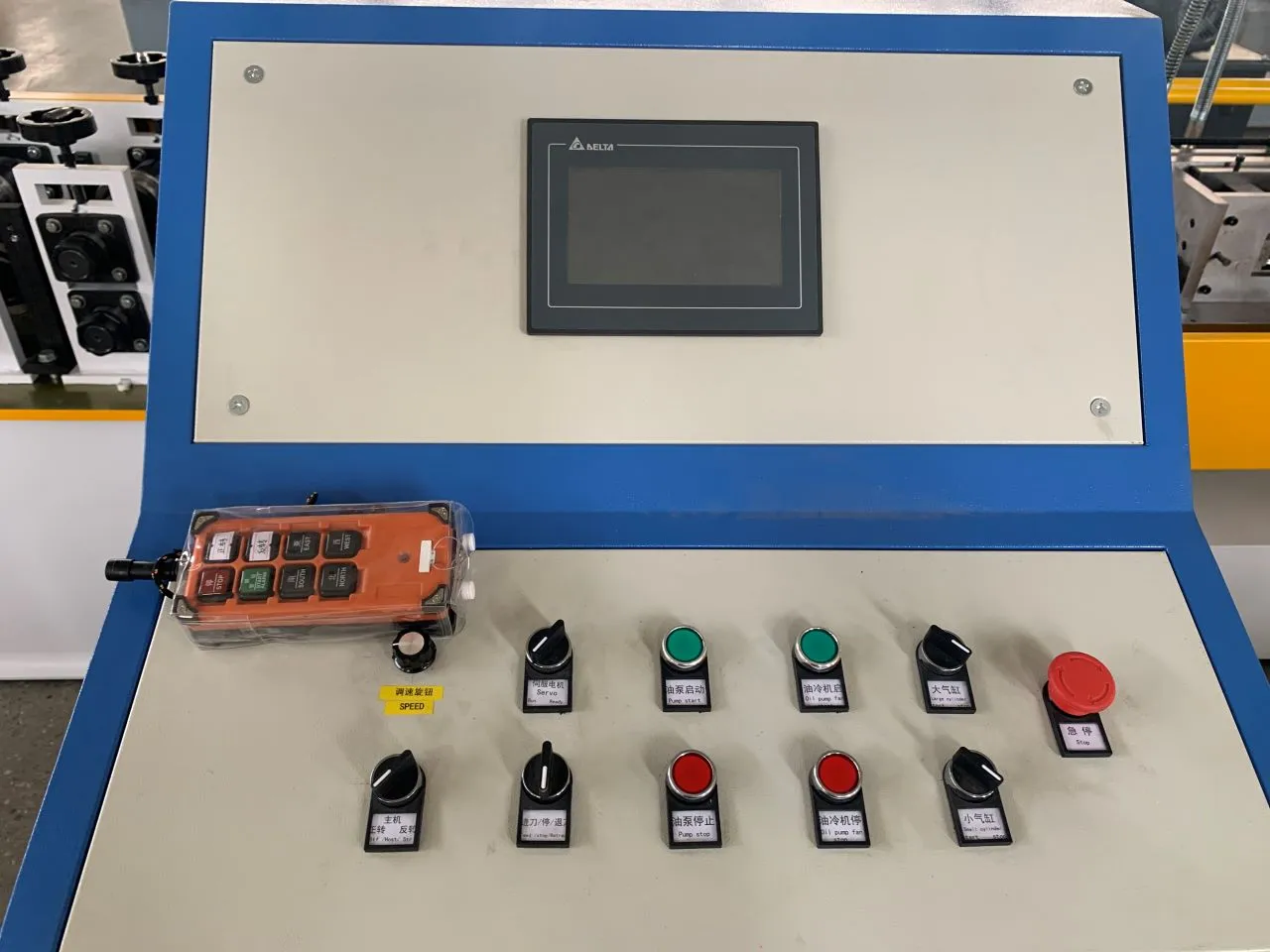
Most of the time, noise doesn't come from one place. In a ceiling t grid roll forming machine, the diesel engine, the cutting unit, the cutter, the drive train, and the hydraulics all make noise. Buzzing sounds happen when rolls aren't lined up properly, bearings are old, or strip tension isn't even. It's hard to take hits from worn-out punches and the wrong punch-to-die style. It's possible for gearboxes, chains, and couplings to whine or rattle. It's about the building too. There is a weak floor that moves vibrations around, and the operator can hear the sound again because the walls are bare and hard. A line that guides thin strips, like 0.12–0.3 mm PPGI, can also shake if it isn't stable. It is helpful to have stable strip guiding.
How to Measure Before You Order
I believe you should use a sound level meter that has been calibrated and a written test plan. Keep track of the material's height, speed, form, thickness, dB(A), and whether it is being punched or cut. Measure the machine from where the person is sitting to the control panel and all the way around it. After that, write down whether the noise stays the same or changes. A steady noise could be caused by bearings, drives, or balance. The noise that comes and goes could be from punching, cutting, crash-throughs, or tools that aren't tight. The line should be checked in this order: decoiler, feeder, forming section, punching, cutting, stacker, and hydraulics. It is important to compare readings that were taken in the same way. Otherwise, the numbers will not help you.
Ways to Reduce Noise
The beginning level is the best place to start. Not moving as much is possible when the frame is stiff, the support bolts are strong, and the shafts, rolls, and joints are lined up. When tools are sharp and there is enough space between the punch and the die, contact noise is kept to a minimum. Pads that stop vibration, local barriers, and a separate hydraulic unit are some other things that can help. Taking care of what you've gained keeps it. A squeal usually means the bearings aren't well oiled, a rattle means the covers aren't tight, and a sharp knock means the tools are worn out, or the spacing is off. It's important to clean up the metal trash and line up the strips every day. I never tell people to take down guards to cut down on noise because they are needed for safety, cooling, and getting in in an emergency.
Choosing a Quieter Ceiling T Grid Roll Forming Machine
Automatic and Semi-Automatic Lines
It takes more work to feed, cut, or stack on semi-automatic lines, and they tend to run more slowly. They can handle small plants and order changes that happen often. Auto-decoiling, filling, forming, punching, cutting, and packing are all done by lines that are run by a PLC. Automation keeps people from having to work in noisy places. But when punching and cutting happen faster, short noise peaks can get louder. This is why I look at all of these things at the same time: output, noise level for operators, product quality, work needs, and repair. You shouldn't buy a quiet line that can't handle the volume or profile needs of your daily work.
Our Line Specifications
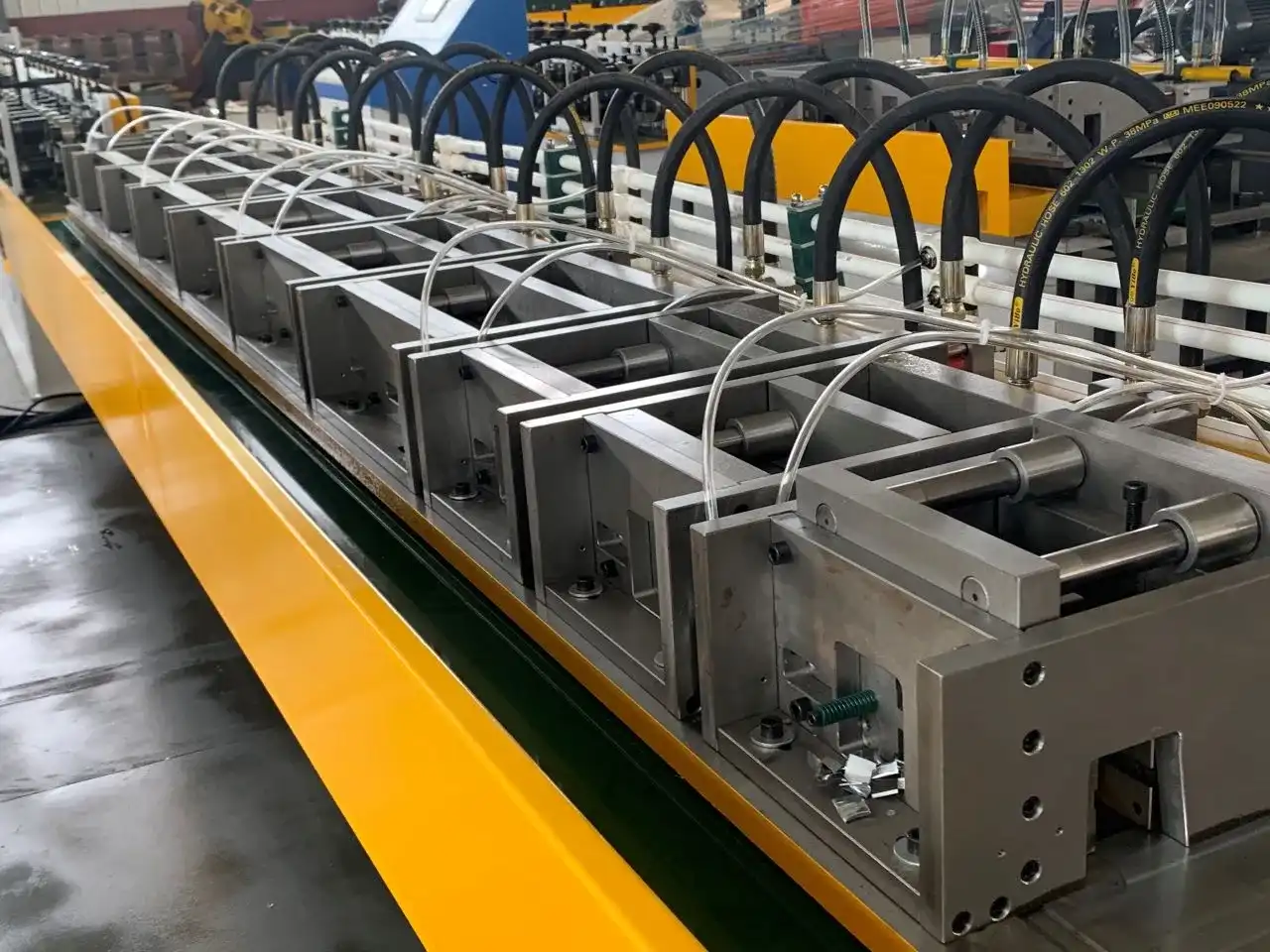
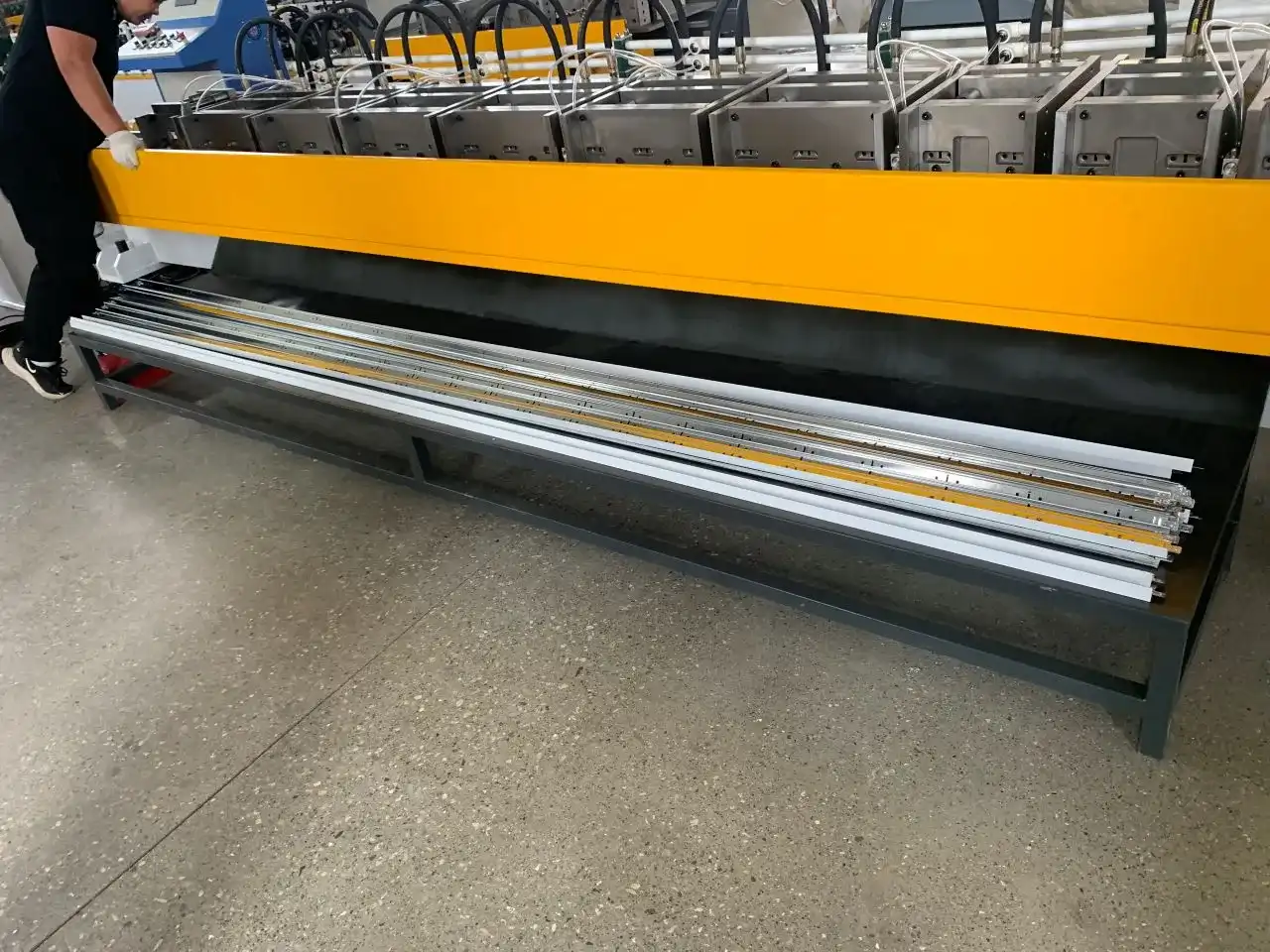
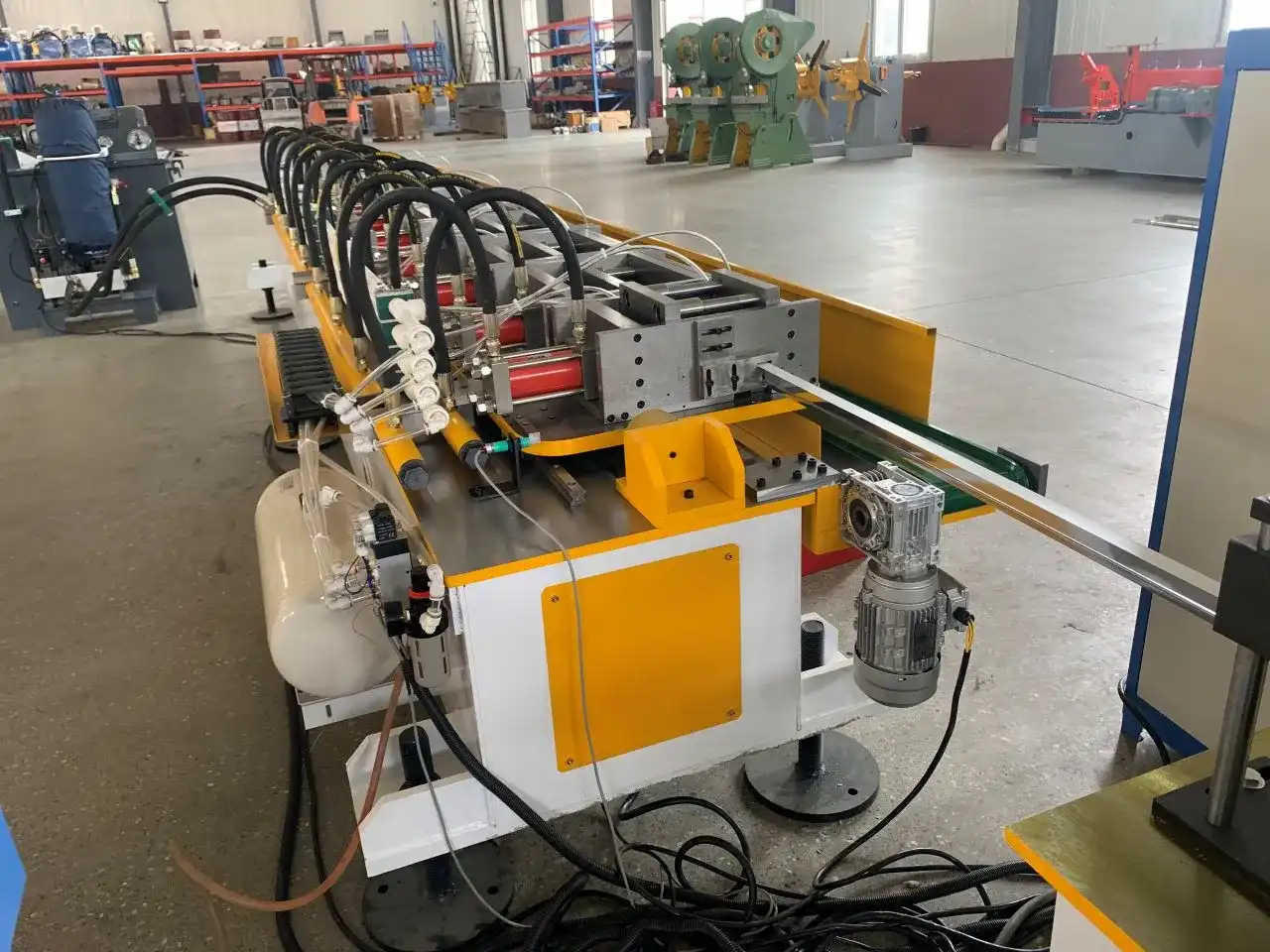
Our ceiling t grid roll forming machine works with PPGI that is 0.12–0.3 mm thick and GI that is 0.2–0.4 mm thick to make the top and bottom of the T bars. The decoiler can handle 1.5 tons of steel and works with coils that are 450 to 550 mm in inside diameter. The rolling shafts are made of 55 mm wide 45# steel, and the rollers are made of GB-Cr12. This course has 18 tees for forming shots and 16 tees for cross-forming shots. It can punch and cut at 0–20 m/min. Before you place your order, we can agree on how to do the noise test. This is because the punch and knife tend to hit more often at faster speeds.
Questions to Ask Any Supplier
Question 3: Does the CE paperwork cover the whole line, or just the machine that shapes the metal? You should ask for the Noise Statement, the Declaration of Conformity, the standard for measurement, and the test conditions. Find out how fast your steel moves, how long your tools last, how much they cost, how they are installed, how they are trained, if they offer online help, and how long it takes to deliver. Make sure that the PLC interface, labels, and electrical specifications, like the voltage and frequency in your area, can meet your needs if you have a private-label or OEM program. To more than 150 countries, ZTRFM ships machines. The company has been around since 2014 and has ISO 9001, CE, and CAS certifications. From decoilers to spare parts, we provide OEM, ODM, and full service.
Conclusion
In order to get the CE mark, a machine must follow certain EU rules about noise levels and report them. However, the CE mark does not specify a noise level limit for a ceiling t grid roll forming machine. Emission, which is measured by sound power or operator-position pressure, is not the same as exposure, which changes based on time, distance, speed, and the conditions of the room. There are noise limits of 90 dBA and 85 dB that US factories must follow. An alarm to protect your ears, even though NIOSH says 85 dBA is better. Most of the time, loud lines are caused by tools that are worn out, foundations that aren't level, drive wear, or rooms that are too shiny. With a clear test plan and a reading that is accurate, you can find the cause. Users can change where they are and what the highest level is when automation is used, so buyers should check noise along with output and profile accuracy.
FAQ
1. Does CE marking set a noise limit for roll forming machines?
Yes. EU rules say that a product must be CE certified, and the instructions must include a list of the noise it makes. These rules, such as EU Directive 2003/10/EC or OSHA in the US, say how much noise workers can be around. A ceiling-to-ceiling grid roll forming machine must have its emissions declared under these guidelines.
2. What noise data should I request from a supplier?
As the operator, you should ask for the A-weighted sound pressure level, the sound power level (if it's in the instructions), and the full test settings. To find out what the noise level is in the US, compare it to OSHA's 90 dBA limit and 85 dBA action level.
3. Can I reduce noise on a machine I already own?
Yes, most of the time. Before you do anything else, check the alignment, the bearings, the greasing, the punch space, the foundation bolts, and any covers that aren't tight. Then you might want to use pads or blocks nearby to lower the vibration. Make sure there are guards everywhere.
Request a Quote for a Quieter Ceiling T Grid Roll Forming Machine
Send your profile drawings to ZTRFM along with details about the steel grade, thickness, voltage, noise, and output you want to reach. Our company makes and sells ceiling t grid roll forming machines. We offer OEM and ODM tools, and all of our machines are certified by ISO 9001, CE, and CAS. We also sell everything you need in one place, from decoilers to extra parts. We will give you a quote for your line after you email zhongtuorollforming@gmail.com.
References
1. Machinery Directive 2006/42/EC, European Parliament and Council of the European Union, 2006
2. Directive 2003/10/EC on Exposure of Workers to Risks from Noise, European Parliament and Council of the European Union, 2003
3. Regulation (EU) 2023/1230 on Machinery, European Parliament and Council of the European Union, 2023
4. Occupational Noise Exposure; Hearing Conservation Amendment, Occupational Safety and Health Administration, 1983
5. Criteria for a Recommended Standard: Occupational Noise Exposure, Revised Criteria, National Institute for Occupational Safety and Health, 1998
6. ISO 3744: Acoustics — Determination of Sound Power Levels and Sound Energy Levels of Noise Sources Using Sound Pressure, International Organization for Standardization, 2010