- English
- French
- German
- Portuguese
- Spanish
- Russian
- Japanese
- Korean
- Arabic
- Irish
- Greek
- Turkish
- Italian
- Danish
- Romanian
- Indonesian
- Czech
- Afrikaans
- Swedish
- Polish
- Basque
- Catalan
- Esperanto
- Hindi
- Lao
- Albanian
- Amharic
- Armenian
- Azerbaijani
- Belarusian
- Bengali
- Bosnian
- Bulgarian
- Cebuano
- Chichewa
- Corsican
- Croatian
- Dutch
- Estonian
- Filipino
- Finnish
- Frisian
- Galician
- Georgian
- Gujarati
- Haitian
- Hausa
- Hawaiian
- Hebrew
- Hmong
- Hungarian
- Icelandic
- Igbo
- Javanese
- Kannada
- Kazakh
- Khmer
- Kurdish
- Kyrgyz
- Latin
- Latvian
- Lithuanian
- Luxembou..
- Macedonian
- Malagasy
- Malay
- Malayalam
- Maltese
- Maori
- Marathi
- Mongolian
- Burmese
- Nepali
- Norwegian
- Pashto
- Persian
- Punjabi
- Serbian
- Sesotho
- Sinhala
- Slovak
- Slovenian
- Somali
- Samoan
- Scots Gaelic
- Shona
- Sindhi
- Sundanese
- Swahili
- Tajik
- Tamil
- Telugu
- Thai
- Ukrainian
- Urdu
- Uzbek
- Vietnamese
- Welsh
- Xhosa
- Yiddish
- Yoruba
- Zulu
Rooftop Distributed Solar Strut Roll Forming Guide
A solar strut channel roll forming machine converts galvanized steel coil into punched, cut C-channel and U-channel profiles that carry PV modules, rails, and cable accessories on residential, commercial, and industrial roofs. Producing these profiles in-house gives manufacturers tighter control over dimensions, delivery dates, hole patterns, and cost per meter. In this guide, we at ZTRFM explain how the line works, which specifications matter, how to compare automation levels and suppliers, and how to plan installation. We write for solar mounting manufacturers, EPC contractors, steel service centers, and equipment traders.
How a Solar Strut Channel Roll Forming Machine Builds Rooftop PV Profiles What the Machine Produces and Why Rooftop Projects Need It
It is used on flat roofs, commercial roofs, residential roofs, and warehouse roofs to hold rails, brackets, clamps, and conduit supports. A solar strut channel roll forming machine moves a steel strip from one roller station to the next to bend it. This slows down the change in shape of the part. Halmos' Roll Forming Handbook talks about this cold forming method. Long, flat pieces work best. It is also being looked at how U.S. rooftop racks are put together. ASCE 7 sets the minimum wind and snow loads, and UL 2703 tests the fastening devices. Your engineers will be able to do that review faster if the profile geometry stays the same. Every three months, SEIA and Wood Mackenzie look at installations in the U.S. and compare the residential and commercial segments. This helps you make sure that supply and demand are met.
How the Line Works From Coil to Finished Strut
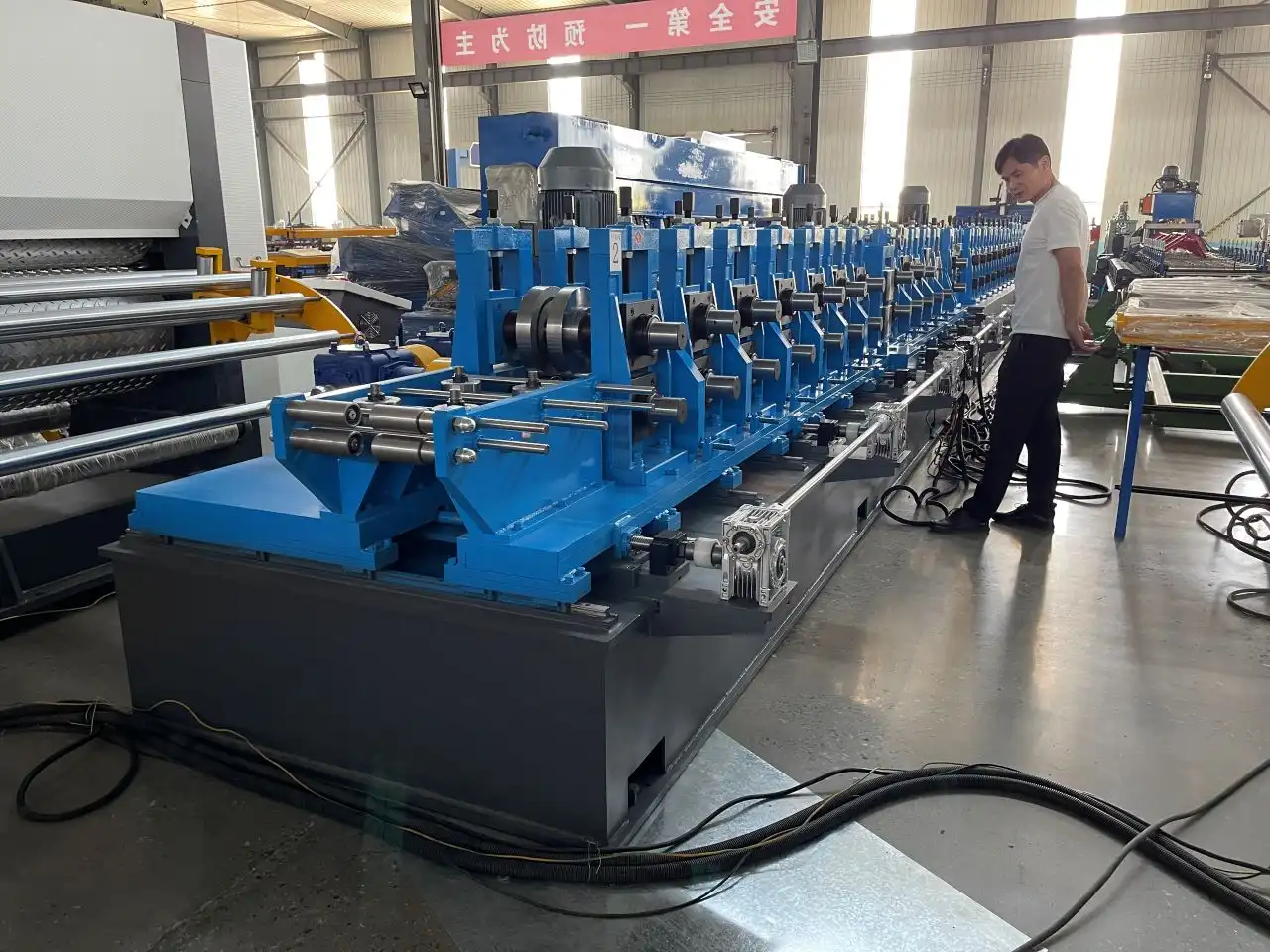
Our line has steps for decoiling, leveling, punching, roll forming, cutting, and stacking. The leveler takes away the coil set so that the strip goes into the punch flat. The decoiler holds the coil in place. When you punch, you make slot holes and shape the walls and lips. Then, a hydraulic shear cuts each piece to the right length. Another machine picks up the profiles and puts them on a stack so they can be checked out and packed. By rolling a long strip through a set of rollers, Kalpakjian and Schmid say that roll forming is done. That's where this layout got its start. A PLC with a computer can turn on and off alarms, set the length, and count. The position and length of the holes are set by how well the feeding, punching, and cutting work together. These are the first two things that builders look at when they look at a roof.
ZTRFM Machine Specifications at a Glance
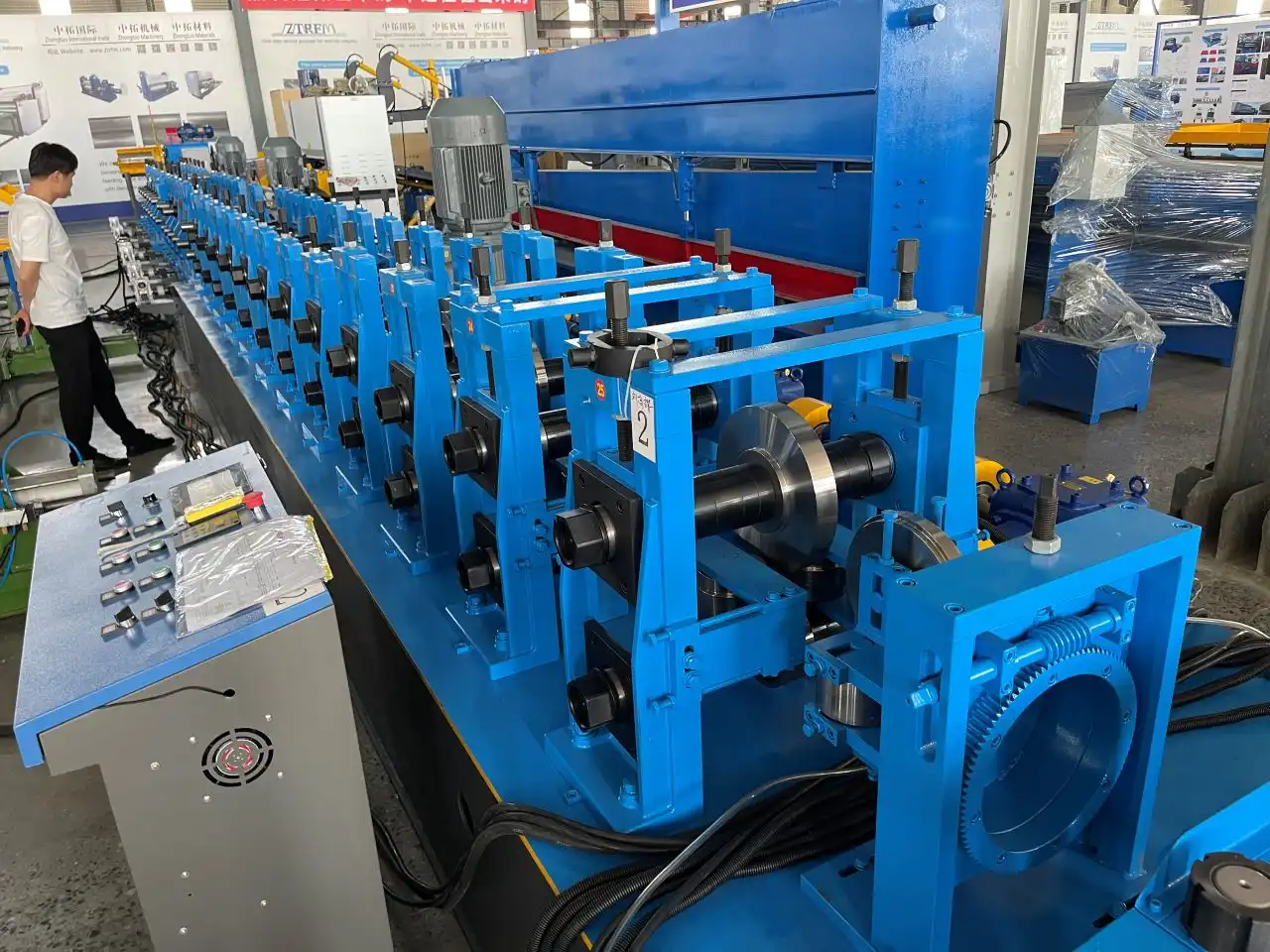
The standard size of our solar strut channel roll forming machine is 90 to 230 mm wide and 1.5 to 2.5 mm thick. It's coming together at 8 meters per minute. The hydraulic station adds 11 kW to the main motor's 22 kW. GCr15 steel rollers that have been chromed and set on 45# forged steel shafts that are 80 mm long work together. The machine's body is made of 25 mm 45# steel, and two chains carry the power. Mold steel Cr12 that has been cooled to 58–62 HRC is used to make cutting blades. It might be off by about 1.5 mm. You can get other voltages if you ask for them. The usual voltage is 380V, three-phase, 50 Hz. Users in the U.S. should make sure they have the right plants on hand because many sites run at 60 Hz.
Planning Profile Dimensions, Capacity, and Automation
Profile Dimensions and Material Selection
A good profile picture is the first thing that you need to make a good quote. It should list the channel's length and width, the wall's thickness, the lip's size, the slots' shape, the distance between the holes, and the cuts' length. Our range of 1.5–2.5 mm lets you pick the right size for any load. Galvanized steel can be used for most roof work. The hot-dip method coats zinc-coated sheet with ASTM A653. Check your mill license to see what kind of coating it has. Inside the C channels are lips that make the part stiffer and keep the connectors in place. On the other hand, U-channels are more open and can hold lighter loads. Make sure you know the yield strength and coil width before you start designing the roller. The number of stations and the springback are changed by these two things.
Realistic Capacity and Automation Level
The line speed doesn't tell you what will happen on its own. Continuous forming could go as fast as 480 meters per hour at 8 meters per minute, but this is just an idea. In real life, that number is lower because of the number of punches, changes in coils, time spent setting up, and repairs. Anywhere you go, ask how many finished pieces they can make in an hour in the shape and material you pick. Setting up a semi-automatic system costs less at first, but you have to make more changes and do more work by hand. A fully automatic line that does everything from decoiling to stacking is best for steady, high-volume orders because it cuts down on the amount of work that needs to be done on each piece. Offline punching is still an option for small groups. It's not enough to just compare the price of the solar strut channel roll forming machine; you should also compare how much it costs to finish each model, taking into account both work and downtime.
One Machine, Multiple Profiles and Punching Options
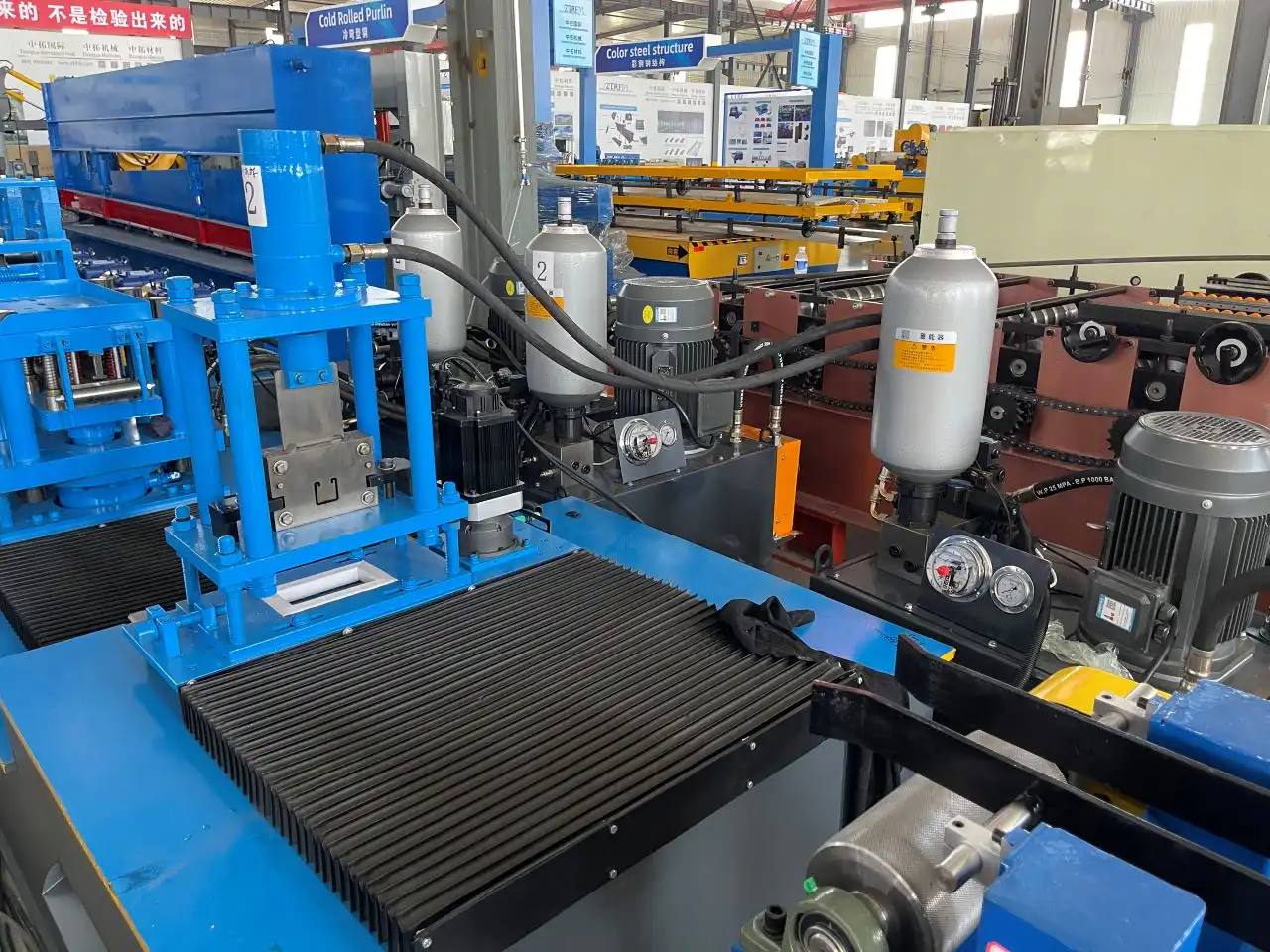
A ZTRFM machine can make sizes like 41x41, 41x21, and 41x62 with just a quick roll change or servo shift. That way, you don't need to get a second line for each size. You can also hit. For large-scale production, online hydraulic punching works best. Press punching, on the other hand, works best for complex hole patterns. Offline punching, on the other hand, keeps costs low and works best for small or custom batches. Our experts use AutoCAD, SolidWorks, and COPRA to create non-standard shapes and test the forming process before the rollers are made. If the slots or rails on your rooftop projects need to be a certain size or shape, send us the plan early so we can make sure we have the right setup.
Buying, Maintaining, and Launching Your Production Line
Price, Quotation, and Supplier Evaluation
The price depends on how many stations there are, the type of punching and cutting system used, the level of automation, the electrical parts, and the service offered. Different quotes should cover all the things you need, such as a decoiler, leveler, cutting unit, forming mill, cutter, stacker, extra parts, training, installation, shipping, and testing. Part of the total cost is also the freight, energy, tools, work, and downtime. Check out a solar strut channel roll forming machine supplier's track record to see how much experience they have with PV profiles, in-house engineering, and testing that has been recorded. In 2014, a business called ZTRFM was set up in Botou, Cangzhou. Over 150 countries have bought from this company. It is certified by ISO 9001, CE, and CAS. Before you sign, make sure you know who owns the tools and how the pictures will be kept private. Ask for a test run with your own work.
Common Problems and Maintenance
Common production flaws include profile bending, changes in width, holes that aren't lined up right, uneven cut length, coating scratches, and burrs. That's because the machine isn't level, the tools are worn out, the rollers aren't lined up right, the feeder timing is off, or the cutting space is too small. Every day, clean and oil the double chain drive and check the chain force and hydraulic oil level. Every once in a week or more often if necessary, you should check the rollers, punch dies, sensors, bolts, and PLC backups. The chrome-treated GCr15 rollers help protect galvanized coatings from scratches, but this only works as long as the rollers are checked often. Writing down repair tasks is important because they help you see how things wear down and plan for extra parts before they're needed.
From Outsourcing to In-House Production and Startup Steps
When fabrication is outsourced or done by drill-and-cut, holes aren't always in the same place, more work needs to be done, and wait times are longer. When you have your own line, you can make your own lengths, do short runs, and restock quickly. When it comes to private-label goods, distributors can help, and EPC companies can work on roofs in more than one place. A startup is made up of five steps. First, write down what the customer wants, needs, and expects. The second step is to send in drawings. Check the material, hole pattern, cut length, power, and floor space to make sure they are correct. Third, say "yes" to the tools and test production. Fourth, finish an acceptance test at the plant. Fifth, set up the line, hire people to run it, and build up slowly. Technical support is available remotely, and spare parts are available from ZTRFM's engineers. They also help with training and installation.
Conclusion
A solar strut channel roll forming machine makes it easy for rooftop PV providers to cut and punch galvanized coil into strut shapes. The article showed that making good decisions starts with a profile drawing that has been approved and a clear list of the materials that will be used. It's not enough to just measure line speed; you should also measure how many finished things you have. Also, the amount of work and sales should determine how much automation you need. It moves at 8 m/min and can handle material that is 1.5 to 2.5 mm thick. The roll can be changed or servo adjustment can be used to make struts of different sizes. It's less risky to buy something if you get full quotes, check with the seller, do a test run, and do regular upkeep. When it comes to unique rooftop jobs, having production done in-house also makes size, wait times, and freedom more consistent.
FAQ
1. Can one machine produce different strut sizes?
Yes. Our solar strut channel roll forming machine can make sizes like 41x41, 41x21, and 41x62 with just a quick roll change or motor adjustment. Please send us the exact profile drawings so that our engineers can check that the layout is correct.
2. What material thickness and width does the machine accept?
The machine can fill gaps between 90 and 230 mm wide and can handle materials that are 1.5 to 2.5 mm thick. You can change the settings to make them work for your identity.
3. What information do I need for a quotation?
The cut-length range, output target, voltage, and destination must all be given, along with the type of material, thickness, coating, hole or slot pattern, and voltage. With these details, our team can decide on the line's layout, how to punch it, and where the pieces will join.
Request Your Solar Strut Channel Roll Forming Machine Proposal from ZTRFM
Are you looking at various solar strut channel roll forming machine manufacturers for roof-mounted PV racks? Send ZTRFM an email at zhongtuorollforming@gmail.com with your profile drawing, material, hole design, voltage goal, and output goal. Our engineers will look over your project and work out a good way to set it up. Our factory is certified by ISO 9001, CE, and CAS, and we sell both machines and parts.
References
1. Roll Forming Handbook, CRC Press, 2005
2. UL 2703: Standard for Mounting Systems, Mounting Devices, Clamping/Retention Devices, and Ground Lugs for Use with Flat-Plate Photovoltaic Modules and Panels, UL, 2015
3. ASTM A653/A653M: Standard Specification for Steel Sheet, Zinc-Coated (Galvanized) or Zinc-Iron Alloy-Coated (Galvannealed) by the Hot-Dip Process, ASTM International, 2020
4. ASCE/SEI 7-22: Minimum Design Loads and Associated Criteria for Buildings and Other Structures, American Society of Civil Engineers, 2022
5. Manufacturing Engineering and Technology, Pearson, 2014
6. U.S. Solar Market Insight, SEIA and Wood Mackenzie, 2024