- English
- French
- German
- Portuguese
- Spanish
- Russian
- Japanese
- Korean
- Arabic
- Irish
- Greek
- Turkish
- Italian
- Danish
- Romanian
- Indonesian
- Czech
- Afrikaans
- Swedish
- Polish
- Basque
- Catalan
- Esperanto
- Hindi
- Lao
- Albanian
- Amharic
- Armenian
- Azerbaijani
- Belarusian
- Bengali
- Bosnian
- Bulgarian
- Cebuano
- Chichewa
- Corsican
- Croatian
- Dutch
- Estonian
- Filipino
- Finnish
- Frisian
- Galician
- Georgian
- Gujarati
- Haitian
- Hausa
- Hawaiian
- Hebrew
- Hmong
- Hungarian
- Icelandic
- Igbo
- Javanese
- Kannada
- Kazakh
- Khmer
- Kurdish
- Kyrgyz
- Latin
- Latvian
- Lithuanian
- Luxembou..
- Macedonian
- Malagasy
- Malay
- Malayalam
- Maltese
- Maori
- Marathi
- Mongolian
- Burmese
- Nepali
- Norwegian
- Pashto
- Persian
- Punjabi
- Serbian
- Sesotho
- Sinhala
- Slovak
- Slovenian
- Somali
- Samoan
- Scots Gaelic
- Shona
- Sindhi
- Sundanese
- Swahili
- Tajik
- Tamil
- Telugu
- Thai
- Ukrainian
- Urdu
- Uzbek
- Vietnamese
- Welsh
- Xhosa
- Yiddish
- Yoruba
- Zulu
How to prevent paint scratching on pre-painted steel/galvanized sheet?
Paint scratching on pre-painted steel and galvanized sheet is one of the most common quality issues manufacturers face during panel production. The root causes range from improper roller surface finishes to poor material handling and inadequate machine setup. When running a roof & wall panel roll forming machine, any friction point between the coil and the forming tooling can leave visible scratches that compromise both coating performance and customer acceptance. Addressing this problem requires understanding your equipment, your process, and your materials together.
Understanding Paint Scratching on Pre-Painted Steel and Galvanized Sheets
It helps to know exactly where the scratches are coming from before you try to fix the problem. The surface gets damaged most often at certain, predictable points in the production line.
Mechanical Friction at Contact Points
As the sheet moves through the forming line, rollers, guide rails, and cutting dies touch the coated surface over and over again. The PPGI or zinc covering will be worn down, rough, or full of metal chips if the roller surfaces are in good shape. Even small bumps on a roller station's surface add up over hundreds of meters of production.
Improper Material Handling Before and After Forming
There is a chance of scratches when coils are loaded, sheets are moved, and final panels are stacked. Some common causes are dragging sheets across surfaces, stacking panels without protective interleaving, or dropping panels while moving them. The Metal Construction Association says that a big reason why panels are rejected in factories is that the surface gets damaged while they are being handled.
Environmental Contaminants in the Production Area
Abrasive particles are things like dust, metal bits, and water that get stuck between the sheet and the roller surface. Contamination is a constant cause of coating damage that is easy to miss in production areas that don't have good cleaning or filtering systems.
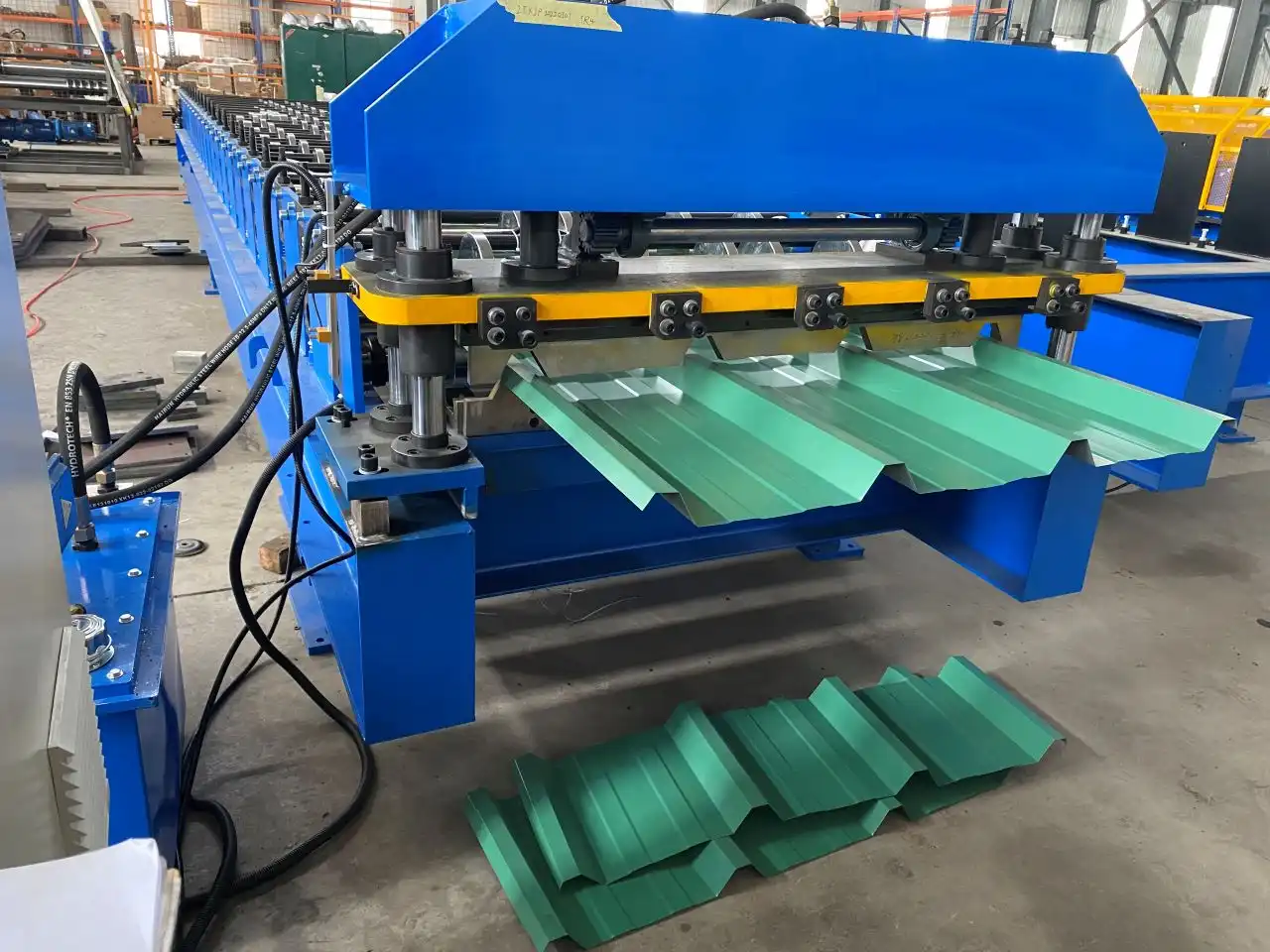
Key Components of Roll Forming Machines That Affect Paint Integrity
How well the coating holds up during the forming process depends on how your panel-forming equipment is made and how good its condition is. This is the most important place to choose the right roof & wall panel roll forming machine and set it up.
Roller Material and Surface Finish
Rollers made from 45# steel that have been hard chrome plated have a smooth, hard surface that makes it easier for pre-painted coats to move over them. Chrome-plated rollers are standard on high-quality panel roll forming equipment because they don't rust, keep the dimensions of the panels accurate over long production runs, and keep metal particles from sticking to them. For high-value coated materials like PVDF-finished aluminum, polymer-coated or nylon roller inserts are another choice.
Sheet Guiding Mechanisms and Feeding Precision
If the feeding isn't done right, the sheet edge will rub against the guide rails, leaving scratches on the side. It is easy for the sheet to move through each forming station because it has precise entry guides with low-friction contact surfaces and adjustable width settings. With servo-driven feeding systems, the tension stays the same, and there is no micro-slipping that can damage sensitive coatings.
Automation Level and PLC Control
As technology rises, fewer people touch a sheet by hand as it moves from the coil to the final panel. Automatic length measurement, customizable cutting, and synced forming speeds on PLC-controlled forming lines keep the pressure the same at all stations. This level of consistency stops the uneven contact pressure that causes scratches in certain areas. In real life, lines that are handled by hand have much lower scratch rejection rates than automatic lines that run at 15–60 meters per minute with synchronized drives.
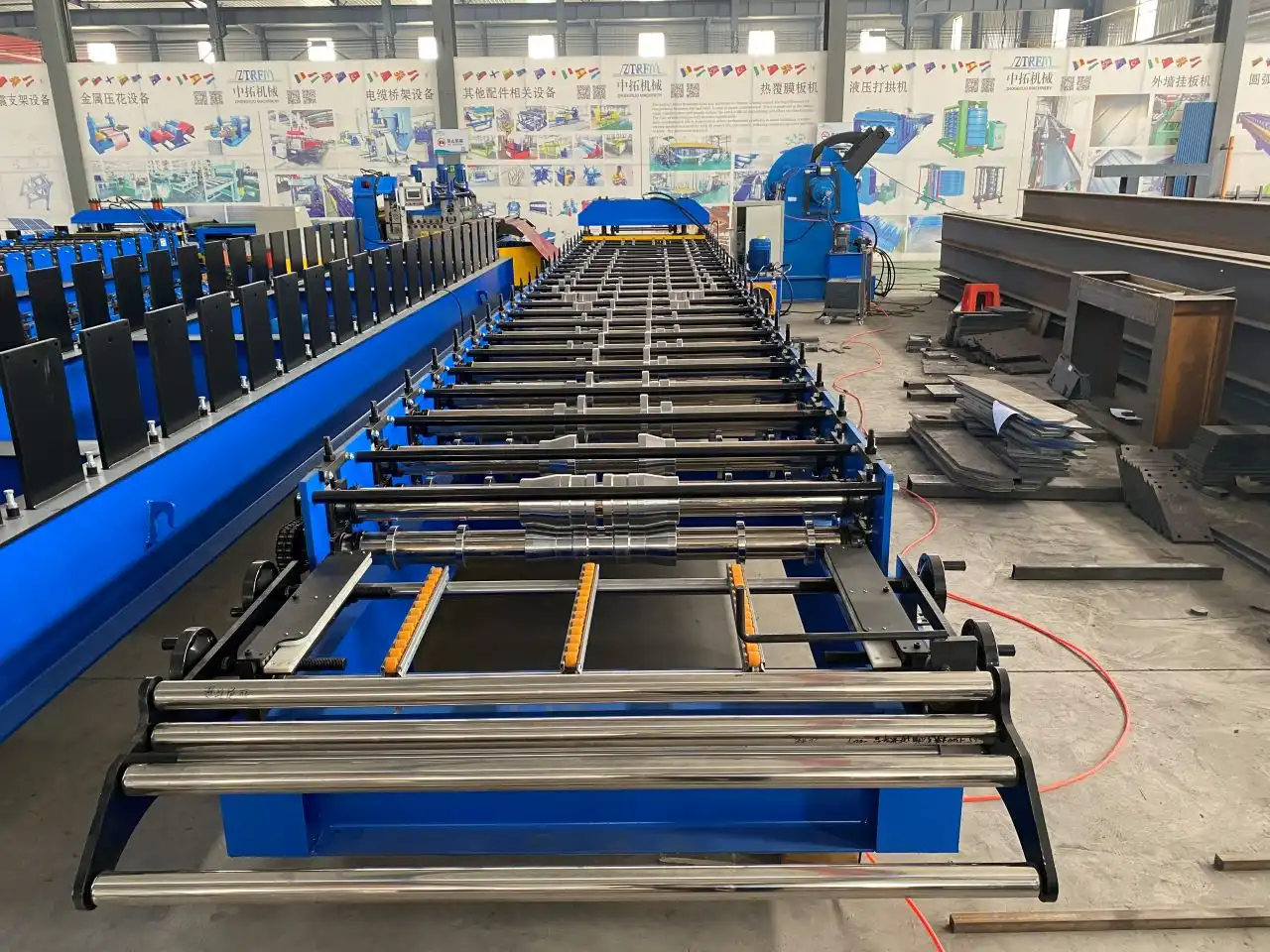
Proven Methods to Prevent Paint Scratching During Roll Forming
To keep paint from scratching, you need to take steps in how you set up your equipment, maintain it, and move materials. The following steps can be taken together to protect treated surfaces during the whole production process.
Here are the main ways that professional panel manufacturing facilities keep people from getting hurt:
- Apply protective PE film before forming: Many pre-painted steel suppliers deliver coil with a peel-off protective film already applied. Keeping this film intact through the forming process and only removing it after panel installation provides a reliable physical barrier against all roller contact damage. For materials supplied without film, a film applicator unit can be added at the entry of the forming line.
- Use chrome-plated or polymer-coated rollers: Roller surface quality is the single most direct factor in coating protection. Chrome-plated rollers with Ra surface roughness values below 0.8 μm are recommended for pre-painted steel. Replacing worn rollers before surface roughness increases beyond tolerance prevents coating damage from accumulating undetected.
- Adjust roller gap precisely for material thickness: Running a 0.5 mm sheet through a roller gap set for 0.8 mm creates excessive contact pressure and scuffs the coating. Gap settings should be verified with feeler gauges at initial setup and rechecked whenever the material gauge changes.
- Clean rollers and guides on a scheduled basis: Metal debris, dust, and dried lubricant residue accumulate on roller surfaces and guide rails. A daily wipe-down with clean cloths and a weekly inspection for embedded particles prevents contamination-related scratching.
These steps take care of the most common sources of scratches. When all four are used regularly, failure rates go down a lot, and the quality of the output from the production line is kept safe.
Protective Film Application as a Production Standard
As you can see, the most reliable way for top roofing and wall covering makers to do things is to run a pre-painted coil with a protective film through the whole forming process. It doesn't cost much more and gets rid of a lot of surface flaws at once.
Lubrication Management for Roller Stations
When the sheet surface and the forming tools are properly oiled, there is less friction. But too much lubrication can make the coated surface dirty and attract dust. For pre-painted steel forming, it is better to use thin-film dry lubricants on the roller surface instead of oil-based lubricants that are applied directly to the sheet.
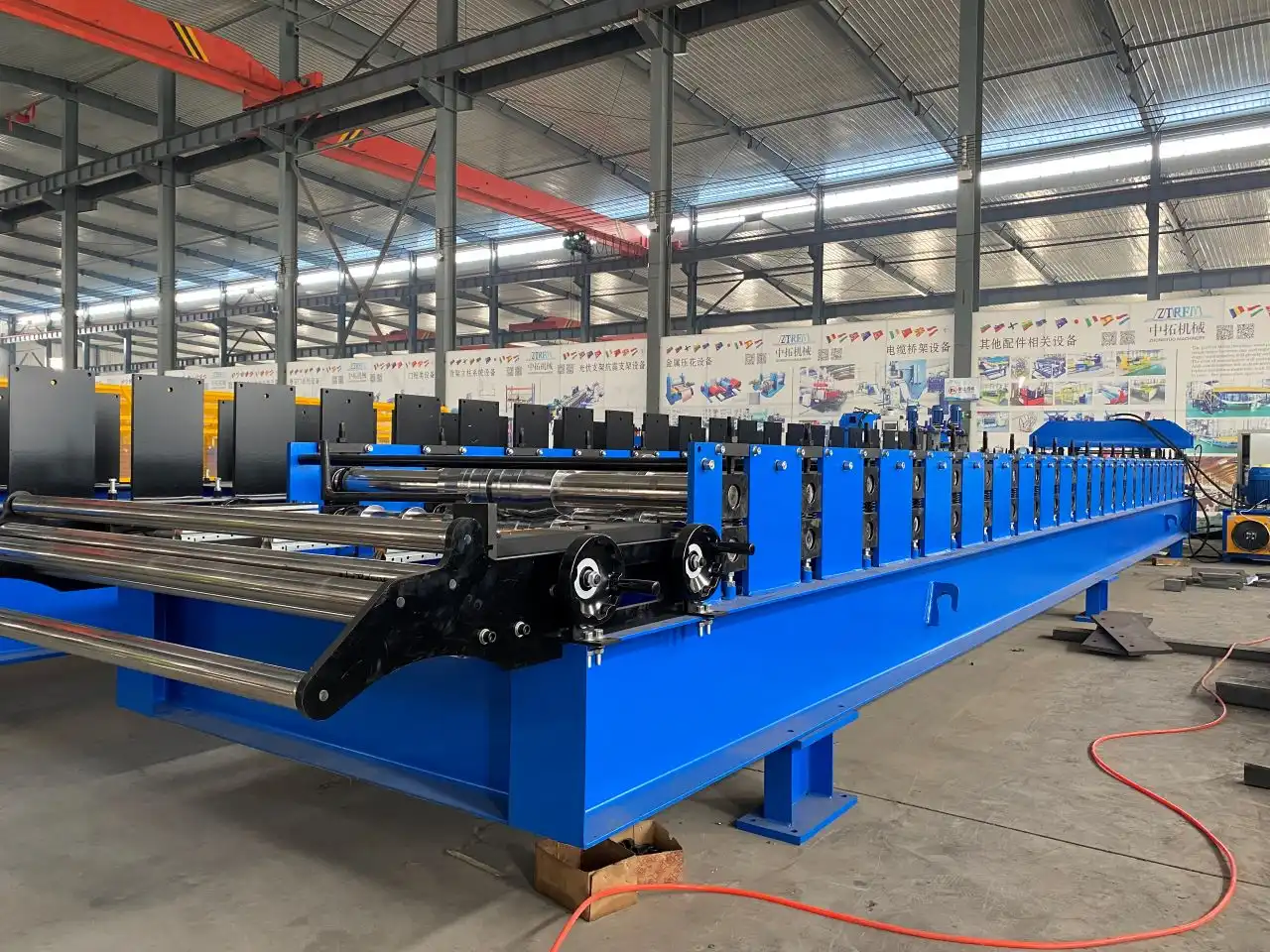
Comparing Equipment Options for Scratch-Sensitive Panel Production
Not all roof & wall panel roll forming machines can work well with materials that have already been painted. When choosing panel roll forming tools for uses that can't be scratched, the design of the machine is just as important as the quality of the rollers.
Manual vs. Automatic Feeding Systems
Handling sheets by hand for loading and transferring means more people come into contact with the coated surface, making handling scratches more probable. Automatic uncoilers with motorized payout and tension control virtually remove manual interaction at the coil entrance stage. If you are doing a lot of pre-painted panels, then an automatic filler is a good investment. It pays for itself fast in decreased rejection rates.
Hydraulic vs. Mechanical Cutting Units
When you cut anything, you produce a sharp contact load that may bend the end of the panel and harm the layer near the cut edge. Compared to mechanical punch-type cutters, hydraulic cutting tools exert a regulated, gradual pressure throughout the whole cycle of the cut. This reduces shock load. Pre-painted and galvanized panels are better cut with hydraulics since the edge is smoother and there is less cracking of the coating at the cut zone.
Profile Complexity and Forming Station Count
You need additional shaping stations and more deep-rib designs such as R-Panel, PBR-Panel, and standing seam wall cladding panels to gently form the metal. A pass design that is slowly formed, generally with 18 to 30 stations depending on shape, distributes the bending force across many smaller stages. This makes each stage kinder to the coating. If the machines don't have enough stations, they attempt to form too hard on each pass, which puts more stress on the coating and causes surface blemishes.
Maintenance Tips for Long-Term Paint Scratch Prevention
Maintenance is where scratch protection either works or doesn't work over time. A well-set-up machine that doesn't get any maintenance will start to scratch within a few weeks of being turned on for the first time.
Daily and Weekly Inspection Routines
Daily, the roller surface should be examined for particles trapped in it, the guide rails should be made sure to be clean, and the status of the film applicator should be checked. Check roller chrome surface quality, lubricant levels, and cutting blade sharpness once a week. Check the blade clearance after 500 hours of usage and re-grind the shear edges every 100,000 cuts. This will prevent burrs from forming and damaging the ends of the panels.
Operator Training and Standard Operating Procedures
While operators realize why they need to be cautious while handling pre-painted steel, they will make smarter decisions at every level of production. Standard Operating Procedures (SOPs) should include how roller gaps are established depending on material thickness, use of films, how frequently to clean, and stacking panels with protective interleaving. Written SOPs maintain consistency from shift to shift and avoid the practice drift that generates more and more scratch rejection over time.
Predictive Maintenance with IoT Monitoring
Modern roll forming lines may be equipped with vibration sensors and torque monitoring to detect early indicators of bearing wear or driving abnormalities before they impact the quality of the finished product. Maintenance personnel may use the real-time monitoring data to schedule breaks to change rollers or correct alignment difficulties, rather than fixing problems as they occur.
Conclusion
Scratching the paint on steel and galvanized sheet that has already been painted is a production problem that can be avoided. When panel manufacturers set up their machines correctly—with good chrome-plated roof & wall panel roll forming machines, accurate feeding, hydraulic cutting, and the right number of forming stations—and keep them in good shape and handle the materials carefully, they can reliably control the quality of the surface. Protecting the coating during every step of the forming process is important for all types of panels you make, including R-Panel, PBR-Panel, standing seam wall cladding, and custom profiles. Failure to do so will affect your rejection rate, production costs, and customer satisfaction.
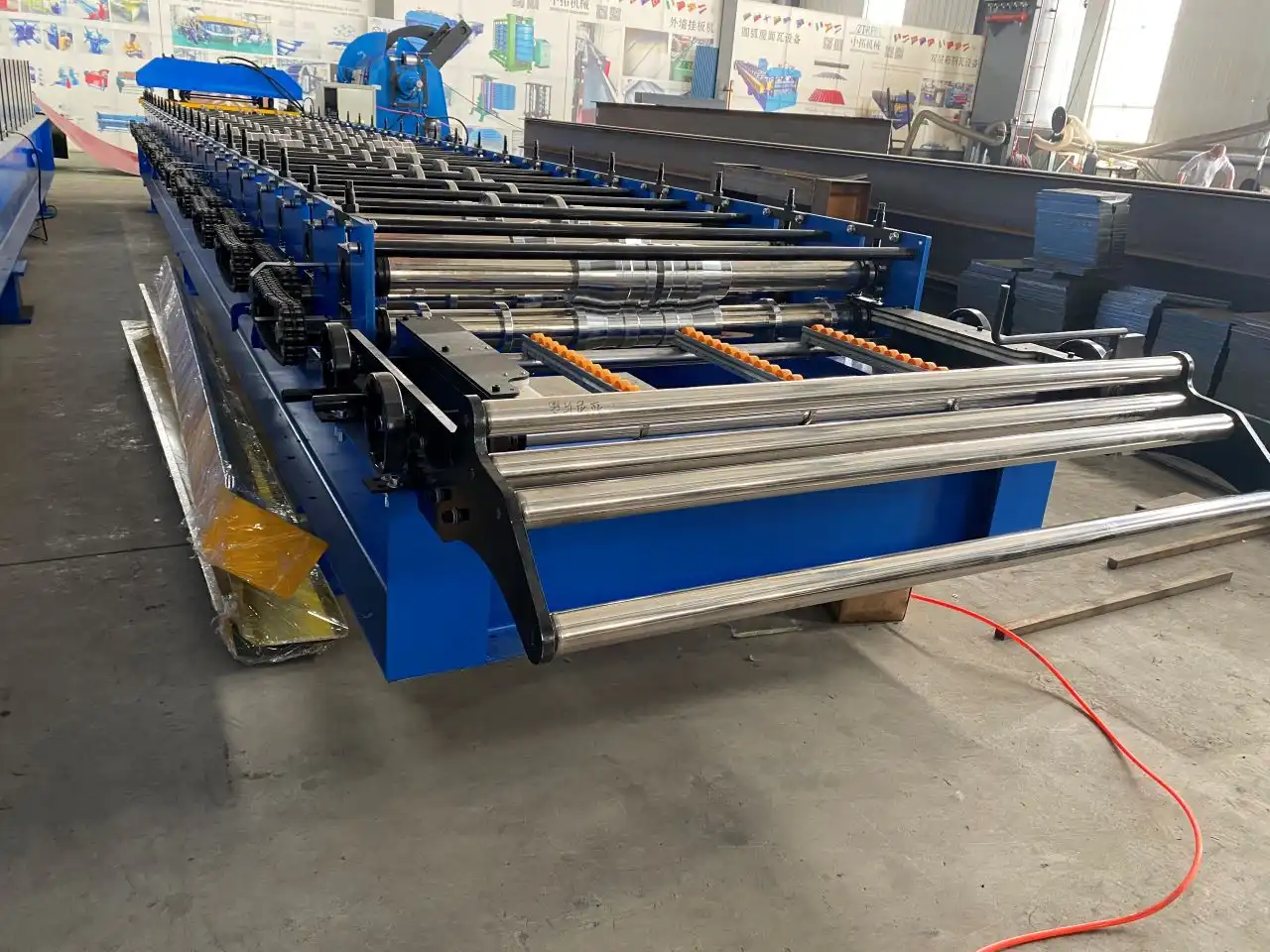
FAQ
1. Can chrome-plated rollers prevent all paint scratching on PPGI coil?
Chrome-plated rollers significantly reduce friction-related scratching, but they work best when combined with protective film application and proper roller gap settings. Roller surface quality alone cannot compensate for misaligned guides, excessive contact pressure, or contaminated forming stations.
2. What roller gap setting is correct for 0.4 mm pre-painted steel?
The roller gap should be set to match the actual material thickness, verified with a calibrated feeler gauge. Running a 0.4 mm sheet through a gap set wider or narrower than the actual gauge creates uneven contact pressure that causes scuffing or coating stress.
3. How often should forming rollers be inspected for surface wear?
Visual inspection of roller chrome surfaces should be part of the daily production startup routine. Detailed surface roughness checks using a profilometer are recommended every three months on high-volume lines. Replace rollers when surface Ra values exceed 0.8 μm on pre-painted steel applications.
4. Does forming speed affect paint scratching risk?
Yes. Running at speeds higher than the machine's synchronized design range can cause micro-slipping between the sheet and the rollers, which generates scuff marks. Always operate within the speed range specified for the material gauge and profile being formed.
5. Is protective PE film necessary if rollers are in good condition?
Protective film is recommended as a standard practice regardless of roller condition, particularly for high-gloss or PVDF-coated materials. It provides a physical barrier that no roller finish alone can replicate and eliminates an entire category of surface defect risk.
Ready to Protect Your Panel Quality? Contact ZTRFM Today
Since 2014, ZTRFM has sold roll forming tools to companies in more than 150 countries. Our panel roof & wall panel roll forming machines are made with hard chrome-plated rollers, forming lines that are controlled by a PLC, and profile shapes that keep pre-painted and galvanized coatings safe during the whole forming process. As an ISO9001 and CE-certified roof wall panel roll-forming machine maker, we can help you with OEM, ODM, and full production line needs. Send your panel profile drawing or production needs to zhongtuorollforming@gmail.com to get a personalized list of tools to buy.
References
1. Metal Construction Association. Metal Roofing Installation and Maintenance Guidelines. 2022.
2. American Iron and Steel Institute (AISI). Steel Products Manual: Flat-Rolled Carbon Steel. 2020.
3. Sheet Metal and Air Conditioning Contractors' National Association (SMACNA). Architectural Sheet Metal Manual. 7th ed., 2012.
4. The Fabricator. Surface Protection Strategies for Prepainted Steel in Roll Forming Operations. 2023.
5. International Coil Coating Association (ICCA). Coil Coated Products: Performance and Application Standards. 2021.
6. Paint Research Association. Coating Adhesion and Mechanical Damage in Metal Forming Processes. 2019.