- English
- French
- German
- Portuguese
- Spanish
- Russian
- Japanese
- Korean
- Arabic
- Irish
- Greek
- Turkish
- Italian
- Danish
- Romanian
- Indonesian
- Czech
- Afrikaans
- Swedish
- Polish
- Basque
- Catalan
- Esperanto
- Hindi
- Lao
- Albanian
- Amharic
- Armenian
- Azerbaijani
- Belarusian
- Bengali
- Bosnian
- Bulgarian
- Cebuano
- Chichewa
- Corsican
- Croatian
- Dutch
- Estonian
- Filipino
- Finnish
- Frisian
- Galician
- Georgian
- Gujarati
- Haitian
- Hausa
- Hawaiian
- Hebrew
- Hmong
- Hungarian
- Icelandic
- Igbo
- Javanese
- Kannada
- Kazakh
- Khmer
- Kurdish
- Kyrgyz
- Latin
- Latvian
- Lithuanian
- Luxembou..
- Macedonian
- Malagasy
- Malay
- Malayalam
- Maltese
- Maori
- Marathi
- Mongolian
- Burmese
- Nepali
- Norwegian
- Pashto
- Persian
- Punjabi
- Serbian
- Sesotho
- Sinhala
- Slovak
- Slovenian
- Somali
- Samoan
- Scots Gaelic
- Shona
- Sindhi
- Sundanese
- Swahili
- Tajik
- Tamil
- Telugu
- Thai
- Ukrainian
- Urdu
- Uzbek
- Vietnamese
- Welsh
- Xhosa
- Yiddish
- Yoruba
- Zulu
How to produce cable trays?
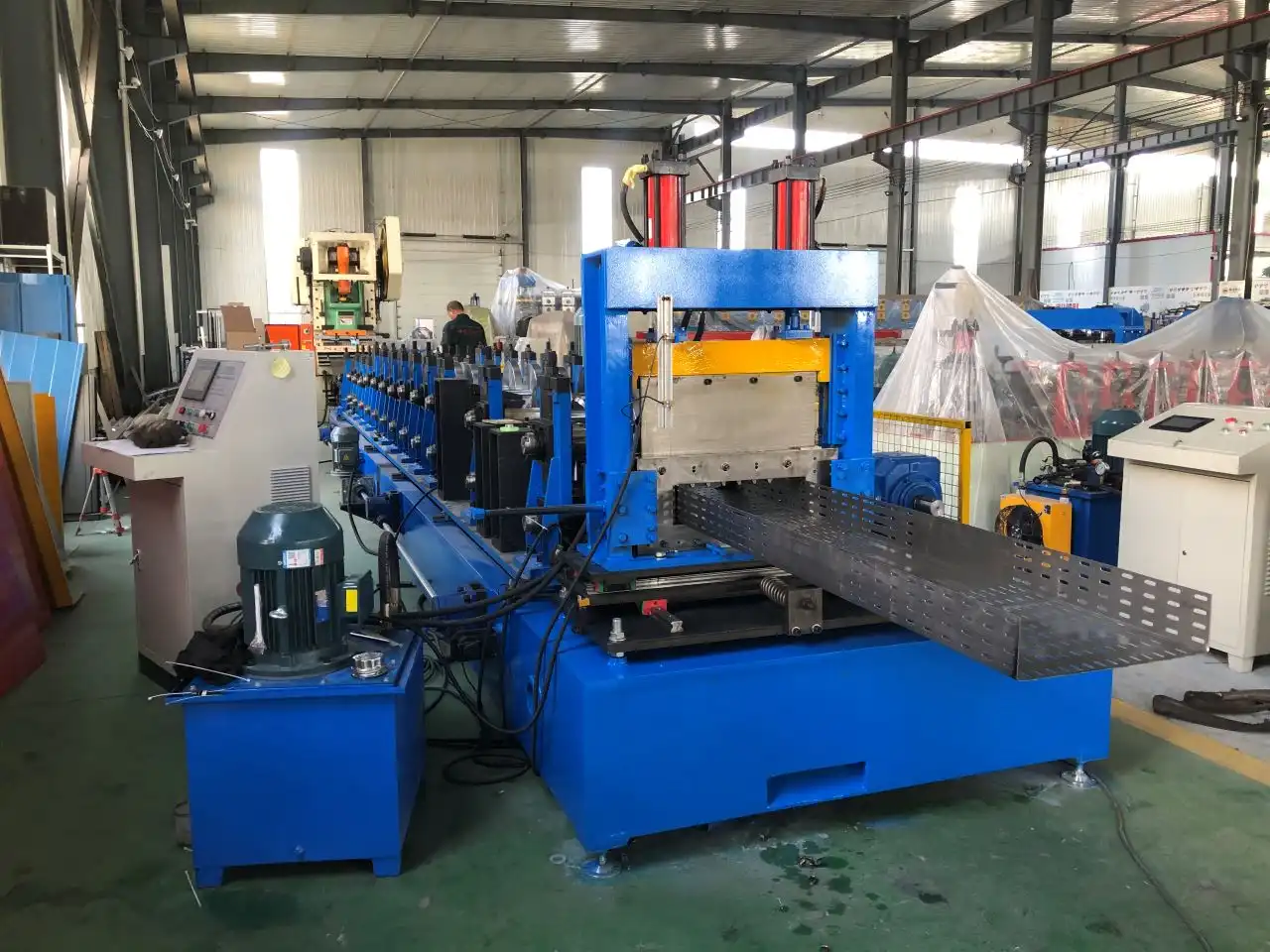
To produce cable trays, you feed galvanized steel coil through a cable tray machine that decoils, levels, punches, roll forms, cuts, and stacks the strip in one continuous line. The decoiler releases the coil, the leveler flattens it, and the punching unit cuts slots or holes. Next, 14 forming stations shape the base, side walls, and hemmed edges, and a hydraulic cutter trims each tray to length. This guide walks through each step, the specifications that matter, and the checks I recommend before you choose a production line for your plant.
How a Cable Tray Machine Turns Coil Into Finished Trays What Is a Cable Tray Machine?
A cable tray machine is a line of cold rolls that bend metal coils into finished cable tray shapes. It does decoiling, leveling, punching, forming, cutting, and handling all at the same time. People who want to buy can pick from a single forming machine, an automatic line, or a forming mill that comes with its own cutting press. Most coils are made of galvanized steel, but our engineers can check other materials before giving you a quote. Ladders have side rails and cross rungs, while trays have a continuous base. This means that the layouts for tools and punches are different. We can make U channel, C channel, perforated, and ladder-type trays with our ZTRFM machine.
How Does Cable Tray Roll Forming Work?
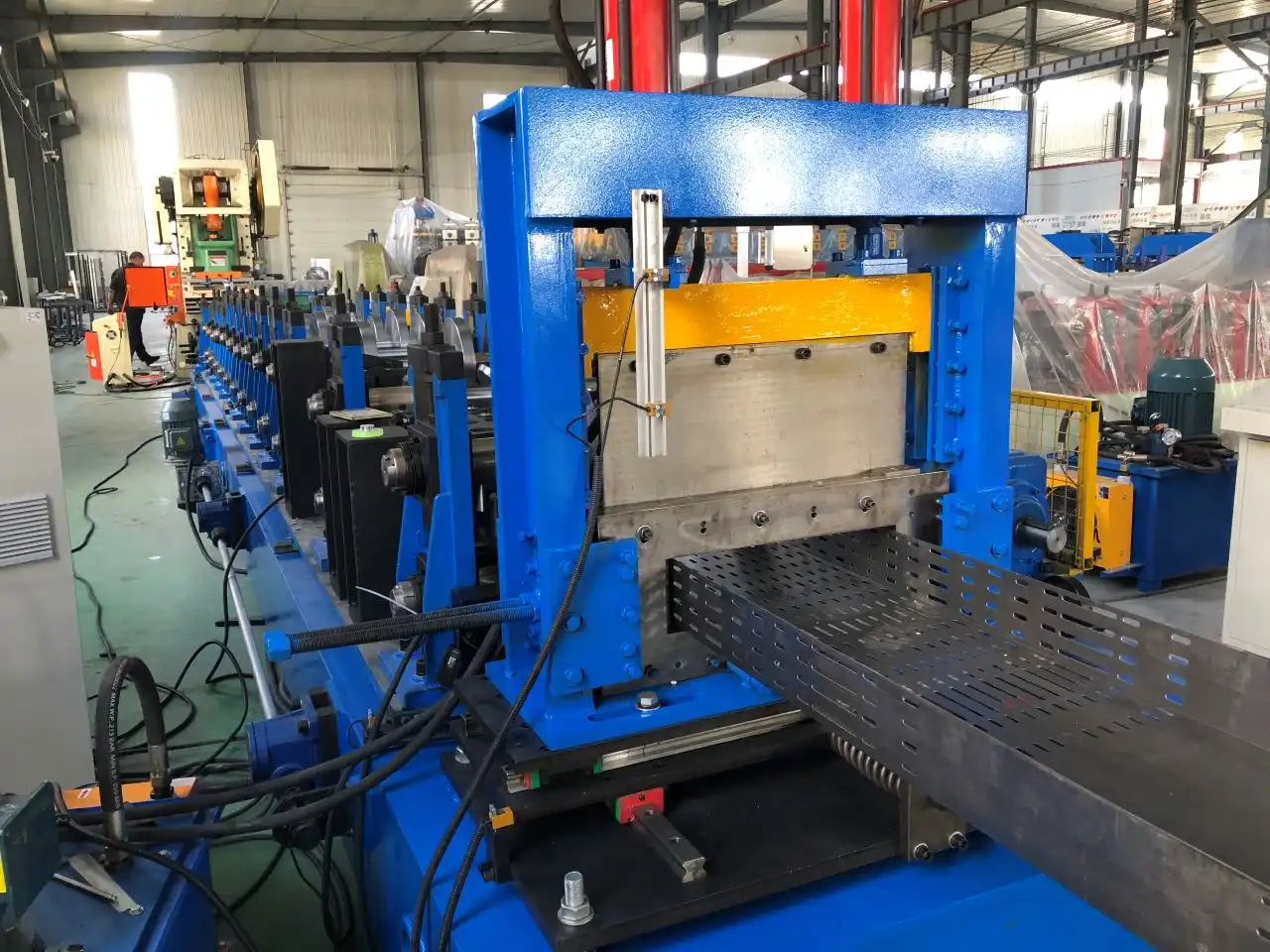
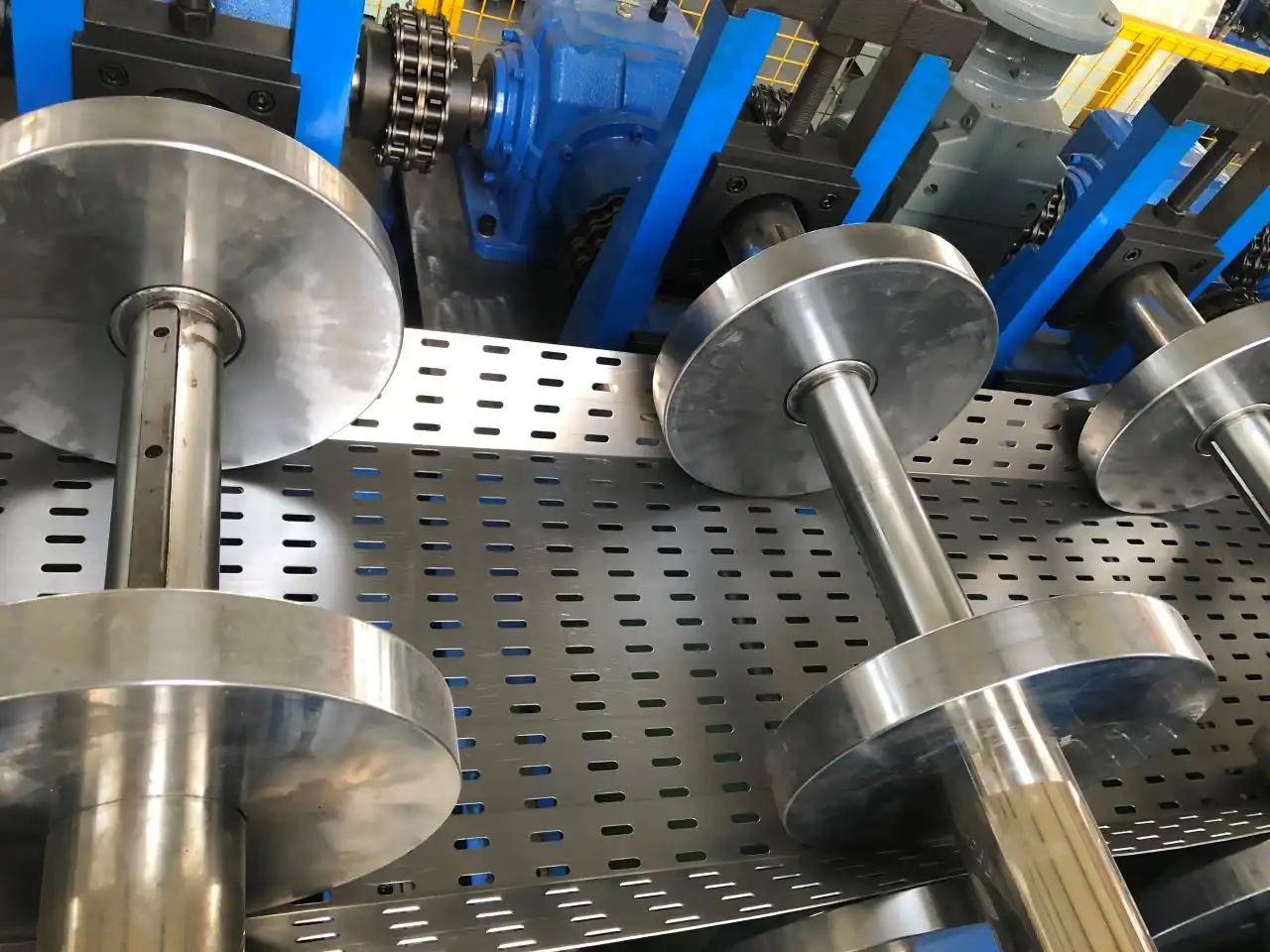
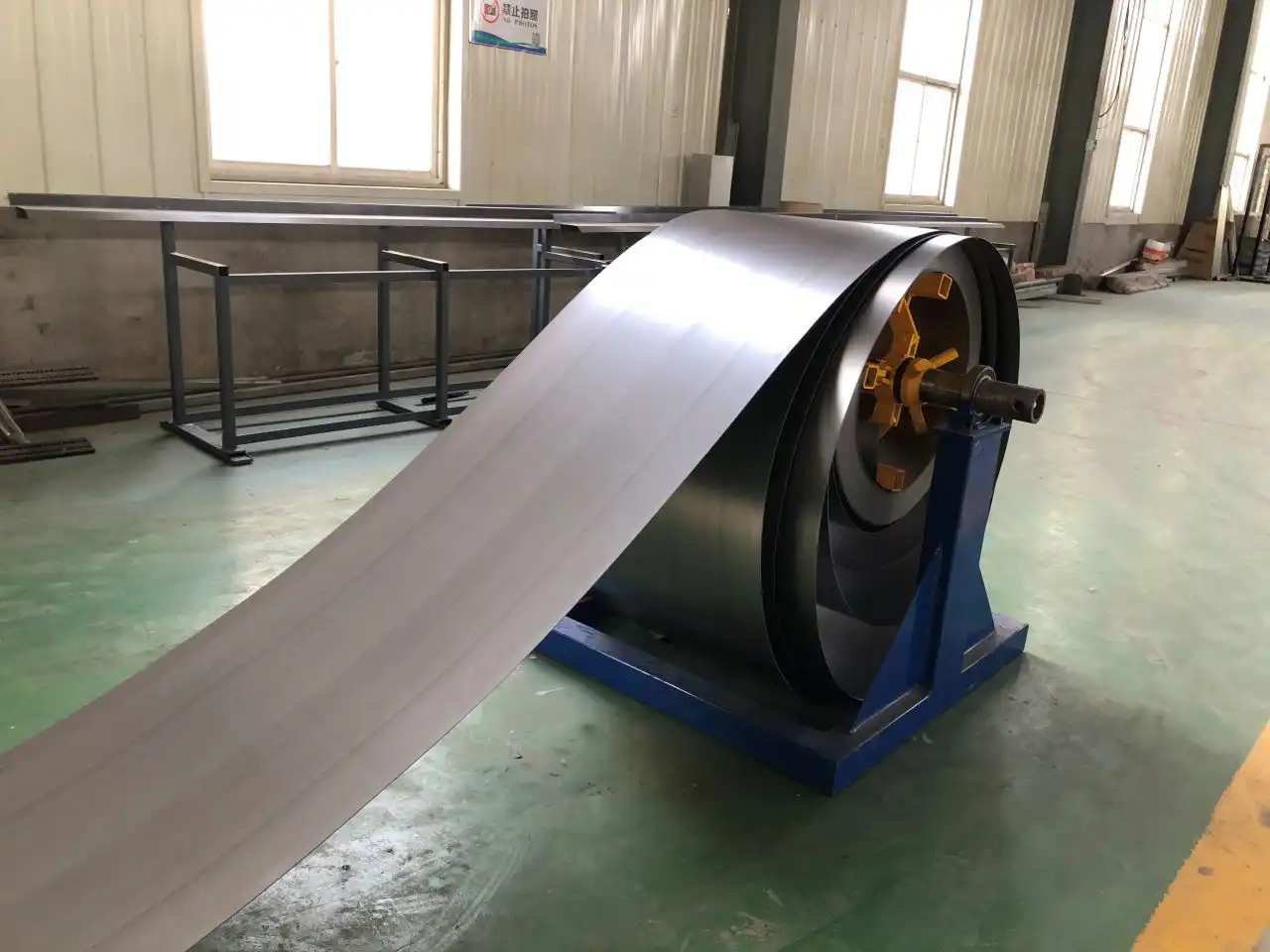
The strip is bent more slowly when it is formed by rolling, which is better for the zinc layer than a single sharp turn. The decoiler, which can be hydraulic or manual and holds 3–5 tons of coil, feeds it into the unit for leveling and feeding. Then, slots and holes are pre-punched by a motor or hydraulic punching tool. The forming section has two rollers that work together to make a small bend at each station. This is done until the base, side walls, and hemmed edges are the right shape. Each tray is cut with a hydraulic cutter, and the finished pieces are picked up by a run-out table or an automatic stacker.
What Does the Cable Tray Manufacturing Process Look Like?
Material inspection, coil loading, decoiling, leveling, punching, roll forming, cutting, quality inspection, stacking, and packing are the steps that are always done in this order. You can choose a surface treatment line that is either pre-galvanized or hot-dip galvanized. The load, the chance of corrosion, and the project's requirements all affect the choice of material. In the US, buyers usually look at NEMA VE 1 for metal cable tray machine classifications and NEC Article 392 for installation rules. ASTM A653 is the standard for zinc-coated steel sheet. I suggest that you check the thickness, hole placement, size, condition of the edges, cut length, and coating on the first piece and then every so often after that.
Cable Tray Machine Components and Technical Specifications
Main Components of a Cable Tray Machine
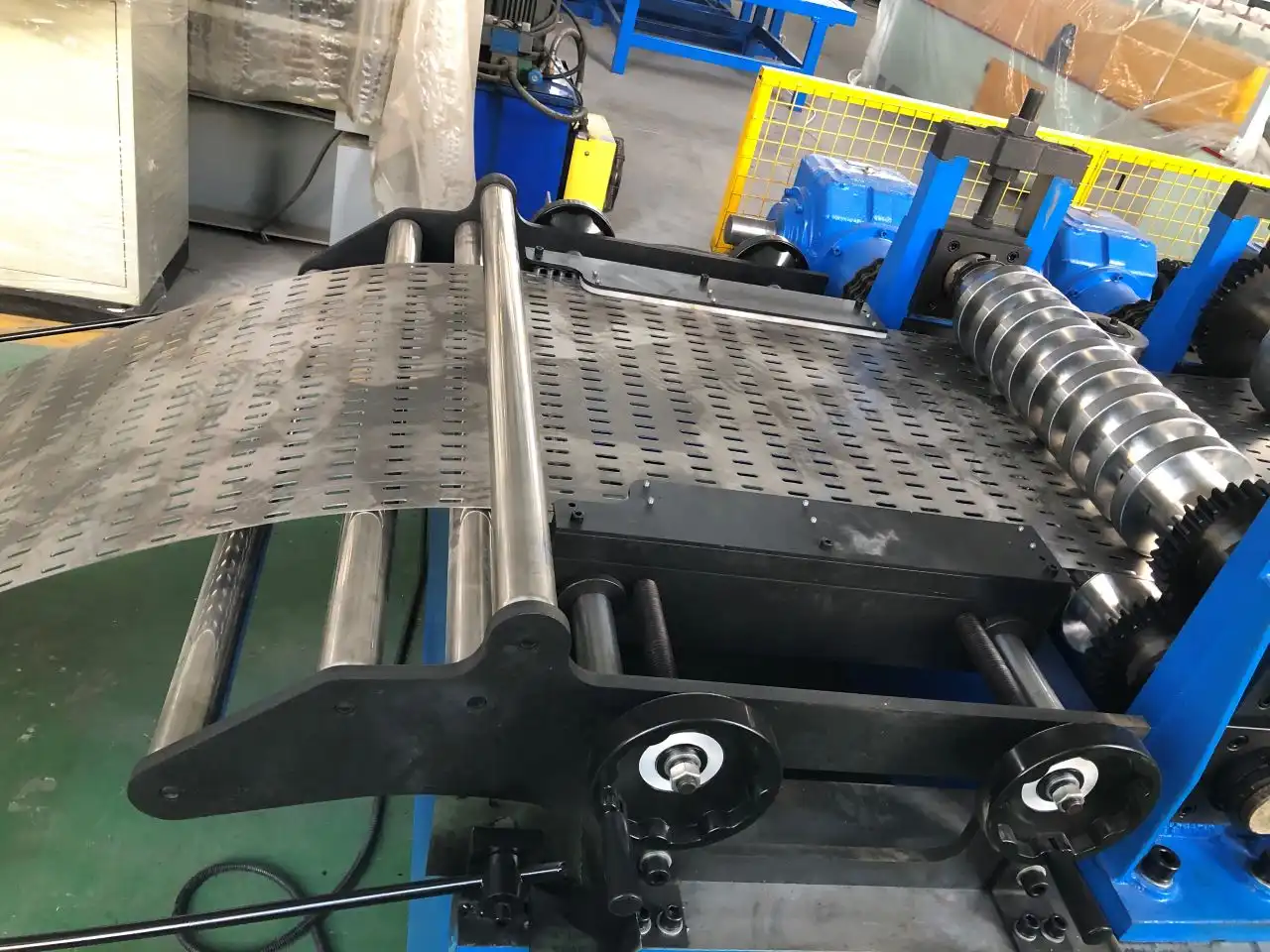
The decoiler, the leveling and filling unit, the punched press, the roll forming mill, the cutting system, and the electrical controls are the six parts that make up a cable tray machine. You don't have to use an automatic stacker. Our feeding machine has handwheels that can be used with different thicknesses of material. For the rollers, GCr15 bearing steel that has been hardened and heat-treated is used. A frame made of welded steel keeps the vibrations low. Maintenance is made easier by an automatic lubrication system, and you can change the slot patterns with quick-change punching models. These parts work together to control how steadily the line moves during long shifts and how quickly you can switch products.
Key Specifications to Check Before You Buy
It's important that the numbers on a price match up with the ones on your product models. Our cable tray machine for rolling out cable trays has 14 stations for rolling, a roller shaft diameter of 85 mm, hydraulic cutting, and 5.5 kW of hydraulic power. You can change the Cr12 blades to fit different tray sizes without having to buy new cutters because they have been quench-treated to HRC56–58. Ask about the range of tray width and height, the thickness of the material, the width of the coil, the speed of the forming, the punching designs, and the limits. Check the length of the line, the floor space needed, the foundation requirements, and the crane access. A line with a decoiler, former, and stacker needs to have room planned for them.
Control System and Safety Checks
Repetition is driven by control hardware. Delta or Siemens PLCs run our machines, and a tablet lets us set the length, punch patterns, and keep track of production. Our strategic partnership with Siemens adds AI and cloud IoT remote maintenance to help keep things running, and recipe storage lets workers remember how to set things up for each job. When you get a quote for the U.S. market, make sure that the voltage, frequency, and electrical code standards are met so that the control box fits your plant. Check the guarding, interlocks, safety stops, and overload protection as well. Our goods are approved by ISO 9001, CE, and CAS, so ask for the paperwork for each one.
How to Select a Cable Tray Production Line and Compare Costs
Match the Machine to Your Tray Profiles
Start with your goods. Make a list of the tray's lengths, widths, heights, material thicknesses, hole patterns, and edge designs. Then, use working hours, monthly demand, pieces per shift, meters per minute, and working hours to figure out output instead of just rated speed. Continuous production is possible with inline punching, but a separate press gives you more options for your tools. Automatic lines work best for steady orders of a lot of items, while semi-automatic sets may be cheaper for small batches. Accurate perforation is needed for data center projects, and load class and corrosion exposure are important for power plant projects. If you need more than one size, ask about our twin roll forming service.
Compare Price and Total Cost of Ownership
The price you pay only covers part of the cost. How much something costs depends on how automated it is, what kinds of products it makes, how thick the material is, roller tools, forming stations, punching force, cutting technology, and options like stacking or packing. Include the cost of shipping, insurance, import taxes, setting up, training, electricity, repairs, and replacement parts. Before you buy a used cable tray machine, make sure you look at the rollers, wheels, PLCs, hydraulics, and tools. Send the same drawings, material data, hole patterns, goal output, and location to all suppliers so that you can compare quotes fairly. Then, ask each seller for a different price on tooling, options, services, and guarantee.
Choose a Configuration by Buyer Type
Tooling changes and simple maintenance are often what small manufacturers and custom fabricators want. Regional distributors usually need automatic lines that work at a medium speed and can switch over quickly. Big manufacturers should look at features like inline punching, servo feeding, automatic cutting, and stacking, as well as high coil capacity. We have models with standard speeds, models with high speeds, and fully automatic flexible lines. Our profile-to-order OEM/ODM tools can make custom slot patterns and rail heights that fit project modules. Since wholesale bids generally compare prices per meter, it's important that the galvanizing finish and slot holes are punched the same way every time. Buyers of projects can ask for an NDA on tools.
How to Avoid Production Problems and Choose the Right Partner
Common Cable Tray Production Problems
The primary causes of the majority of faults may be broken down into two categories. Incorrect hole placement, uneven perforation, tray twisting, burrs, scratches, and uneven side walls are often the result of errors in the calibration, coil slippage, old dies, roller misalignment, material that is not uniform, or insufficient cutting area. These issues may also be caused by a lack of room. Employing servo feeding, making frequent adjustments, accepting the initial piece, checking the tools on a regular basis, ensuring that the rollers are aligned, and replacing the blades when they need to be changed are all effective ways to prevent these issues. Both our stiff Cr12 blades and our hard-chrome-plated rollers provide protection against two of the most prevalent wear targets. Additionally, quick-change molds and recipe storage make it feasible to execute changeovers that are shorter in duration. As a result, the likelihood of error in the configuration of mixed orders is reduced.
Why Work With an Experienced Cable Tray Machine Manufacturer?
The designs you provide may be transformed into a line design that is functional by a professional maker. Botou, which is well recognized as the roll-forming equipment heartland of China, is the location where Cangzhou Zhongtuo was founded in 2014. The business is involved in the design and construction of cold roll forming equipment, as well as the sale of raw materials, machinery, and tools. In addition to working with Yanshan University and the National Cold Roll Forming Institute, our firm collaborates with Siemens. At the national level, it is a high-tech firm. Some of the firms that have used our cable tray machines in more than 150 countries include the Tata Group, the DS Group, and HADDAD SET, to name just a few. It is recommended that you request a trial run video, a live acceptance test, and sample production prior to the shipment being sent out.
Final Checklist Before You Buy
The following is a list of things that you need to accomplish before you start signing. Determine the desired output, the amount of automation, the commodities, the sizes, the materials, the thicknesses, the hole shapes, and the customer types. Determine if you want to use separate hitting or direct punching. In addition to ensuring that the measurements are accurate, you should go over how to shape, cut, and punch. Consider the features, the total cost of ownership, the guarantee, the training for operators, the installation assistance, and the spare parts. Also, take into consideration the warranty. You should make a request to the manufacturer to conduct an acceptance test using the material that you want to utilize as a sample. As a result of the fact that we offer the decoiler, the forming machine, the stacker, and other components all in one location, you will only need to speak with one staff member regarding the whole line. You should choose a service that can demonstrate how much they are capable of producing now and who has specialists who are ready to assist you with any future customizations.
Conclusion
Cable tray machines are constructed from a coil, and the final product is a profile that is stacked and inspected. In the process, each individual step is controlled by a cable tray machine. The procedure consists of the following steps: decoiling, leveling, punching, roll forming, cutting, and stacking to complete the operation. The level of accuracy achieved by the process is determined by the rollers, punching units, and settings. 14 forming stations, an 85 mm roller shaft, hydraulic cutting, and PLC control are some of the specifications that purchasers may utilize to compare machines. Other specifications include hydraulic cutting. You shouldn't only consider the price when making your decision; instead, you should take into account the tray sizes, production targets, and the total cost of ownership. NEMA VE 1 and NEC Article 392 are the standards that are established in the United States. Because the majority of defects are brought on by improper calibration, worn tools, or misalignment, it is important to conduct routine inspections and work with a supplier that is capable of engineering work. Purchasers are able to make an informed choice about what to purchase after the approval of samples and acceptance testing.
FAQ
1. Can one cable tray machine produce several sizes?
Of course, within reason. Our blades can be changed to fit different cable tray sizes without having to replace the cutters, and the feeding device has handwheels that can be used with different amounts of material. Ask about our duplex roll forming choice if you need more than one size of tray on the same line. Send us your size range so that our engineers can make sure the setup is correct.
2. How are perforated cable trays made?
Slots and holes are punched into the strip by a servo or hydraulic punching tool before it goes into the roll forming area. The PLC touchscreen controls the punching patterns and lengths, and quick-change punching molds let you switch between patterns. This makes sure that the holes are in the same place on each tray.
3. What materials can the machine process?
For cable boxes, galvanized steel is most often used as a coil. Our alternative surface treatment line includes both hot-dip galvanized and pre-galvanized work. Tell our engineers what grade and thickness of material you have so they can make sure it will work before they give you a quote.
Request a Cable Tray Machine Proposal from ZTRFM
Looking for a company that can supply you with a cable tray machine, make your own tools, and do all of your work in one place? At zhongtuorollforming@gmail.com, send ZTRFM your drawings, material data, hole patterns, and the output you want to achieve. Our engineers will help you choose a cable tray machine that has 14 forming stations, Delta or Siemens PLC control, and the right setup for your project.
References
1. NEMA VE 1, Metal Cable Tray Systems, 2017
2. NFPA 70, National Electrical Code, 2023
3. NEMA VE 2, Cable Tray Installation Guidelines, 2013
4. Roll Forming Handbook, CRC Press, 2005
5. IEC 61537, Cable Management – Cable Tray Systems and Cable Ladder Systems, 2006
6. ASTM A653/A653M, Standard Specification for Steel Sheet, Zinc-Coated (Galvanized) or Zinc-Iron Alloy-Coated (Galvannealed) by the Hot-Dip Process, 2022