- English
- French
- German
- Portuguese
- Spanish
- Russian
- Japanese
- Korean
- Arabic
- Irish
- Greek
- Turkish
- Italian
- Danish
- Romanian
- Indonesian
- Czech
- Afrikaans
- Swedish
- Polish
- Basque
- Catalan
- Esperanto
- Hindi
- Lao
- Albanian
- Amharic
- Armenian
- Azerbaijani
- Belarusian
- Bengali
- Bosnian
- Bulgarian
- Cebuano
- Chichewa
- Corsican
- Croatian
- Dutch
- Estonian
- Filipino
- Finnish
- Frisian
- Galician
- Georgian
- Gujarati
- Haitian
- Hausa
- Hawaiian
- Hebrew
- Hmong
- Hungarian
- Icelandic
- Igbo
- Javanese
- Kannada
- Kazakh
- Khmer
- Kurdish
- Kyrgyz
- Latin
- Latvian
- Lithuanian
- Luxembou..
- Macedonian
- Malagasy
- Malay
- Malayalam
- Maltese
- Maori
- Marathi
- Mongolian
- Burmese
- Nepali
- Norwegian
- Pashto
- Persian
- Punjabi
- Serbian
- Sesotho
- Sinhala
- Slovak
- Slovenian
- Somali
- Samoan
- Scots Gaelic
- Shona
- Sindhi
- Sundanese
- Swahili
- Tajik
- Tamil
- Telugu
- Thai
- Ukrainian
- Urdu
- Uzbek
- Vietnamese
- Welsh
- Xhosa
- Yiddish
- Yoruba
- Zulu
Highway Safety Infrastructure: Guardrail Production
A highway guardrail roll forming machine answers the central question of guardrail production: how to turn steel coil into accurate, repeatable W-beam and three-beam barriers at the pace road projects demand. The machine decoils, levels, punches, forms, and cuts steel in one continuous line, so every beam keeps the same profile, hole spacing, and length. That consistency matters because guardrails protect drivers in run-off-road crashes, which account for roughly half of U.S. traffic deaths, according to the Federal Highway Administration. In this guide, I explain how the equipment works and how to choose it.
How Guardrail Production Works on a Roll Forming Line What a Highway Guardrail Roll Forming Machine Does
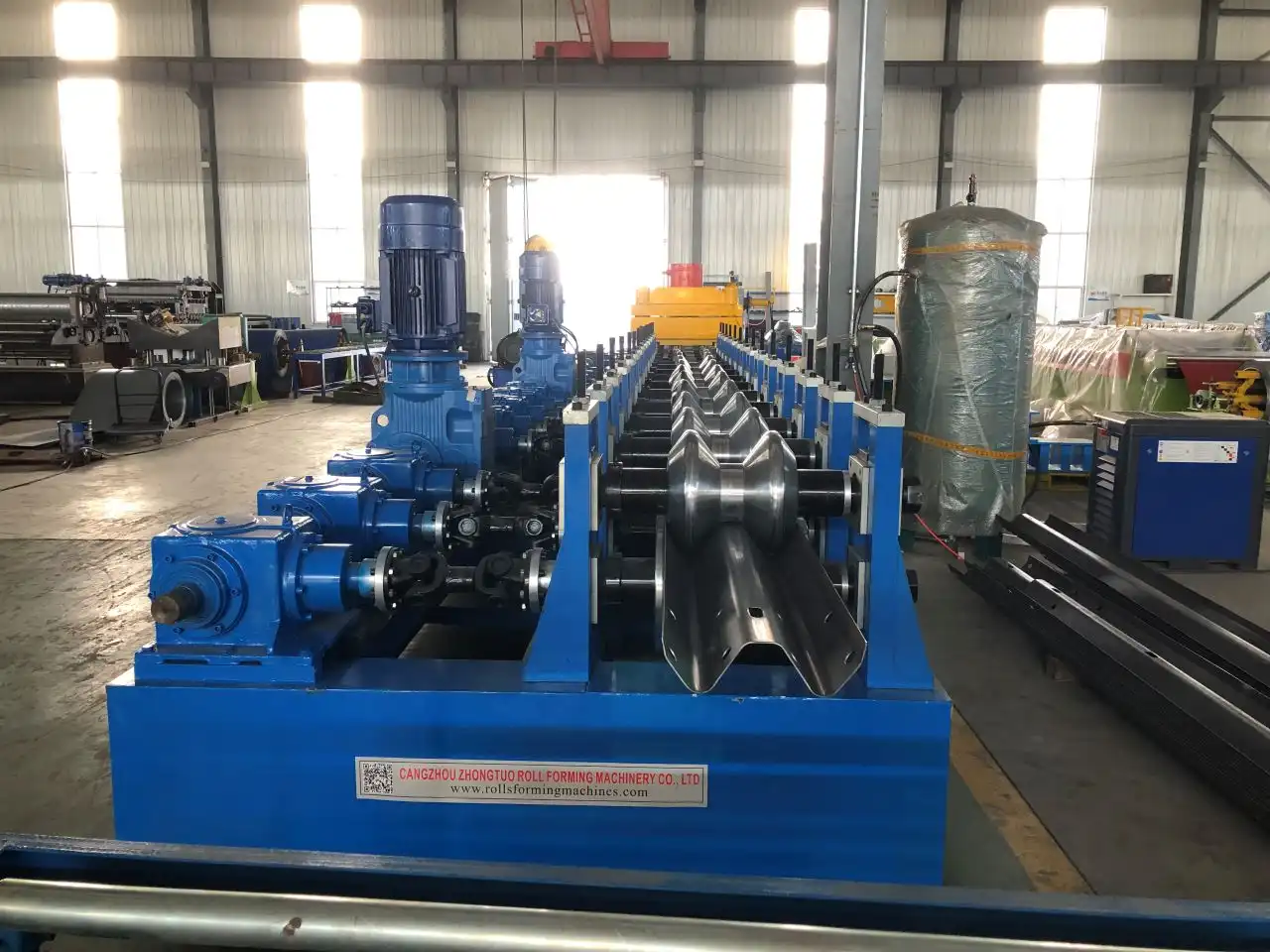
A highway guardrail roll forming machine is a machine that automatically shapes steel coils into finished barrier beams. It can make W-beam fences, three-beam walls, two-wave and three-wave profiles, and different shapes based on the tools that are used. Decoiling, leveling, servo feeding, inline punching, roll forming, hydraulic cutting, moving, and stacking are all things that can be part of a full line. If you want consistent sizes, good use of materials, and a steady flow of work, roll forming is better than batch forming. This is great for big infrastructure orders. Most W-beam goods in the U.S. are made to AASHTO M 180, which is why I always tell buyers to be sure of what they want before they pick out tools.
From Coil to Cut Beam, Step by Step
The process starts when a coil is put on the decoiler. The strip is carefully lined up and tightened as it goes through a leveler and into the forming area. Progressive roller stations shape the steel slowly, which keeps the surface from getting damaged and keeps the stress inside the steel from getting too high. With the help of an encoder and servo, holes can be punched before or after the shape is made. Then, a hydraulic cutter cuts each beam to the right length. A conveyor or rack then moves the beams to the outside. The consistency of the length and the distance between holes relies on how well the feeding, punching, and cutting work together. A normal two-wave line can be ±1.5 mm off in length and has a Siemens, Mitsubishi, or Delta PLC.
Materials and Quality Checks
A lot of the time, coated steel is used since zinc doesn't rust. However, the rules rely on the job and the road authority. Strips that are 2.5 mm to 4.5 mm thick and hot-dip galvanized can be found on the ZTRFM line. Check the mill certificates, steel grade, thickness, width, yield and tensile strength, coating thickness, and coating thickness before you start making something. After making it, check the coating's state, length, width, twist, where the holes are, and the cut length. Each machine also has its own zinc protection. Station speeds that are the same and rollers that are cleaned and hard-chrome-plated stop the friction pulling that hurts the zinc layer. There needs to be more making power, the frame needs to be stiffer, and the shafts need to be bigger. This will make the steel stronger for Highway Safety & Transportation Infrastructure.
Choosing the Right Guardrail Production Line
Key Components and Technical Specifications
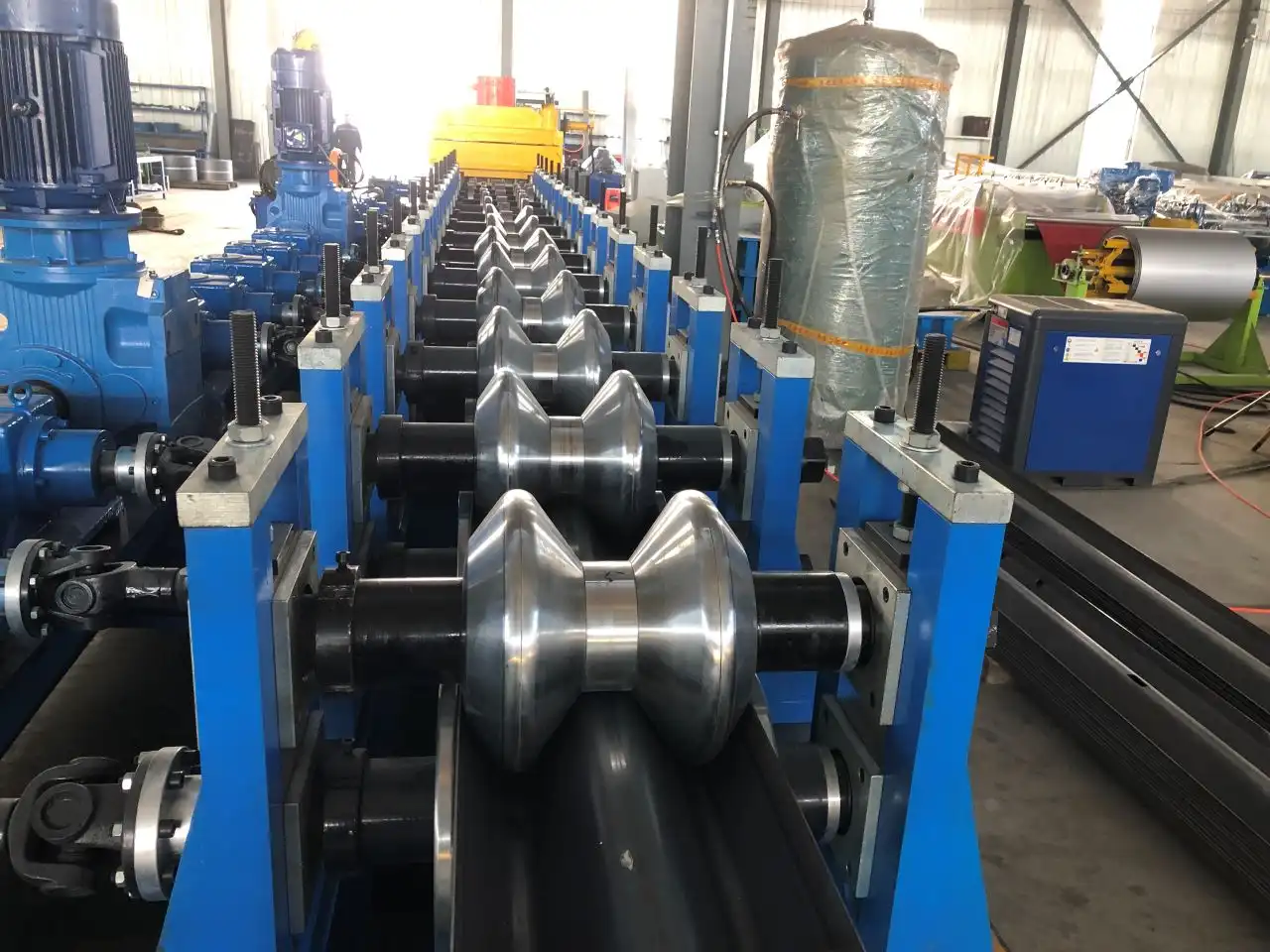
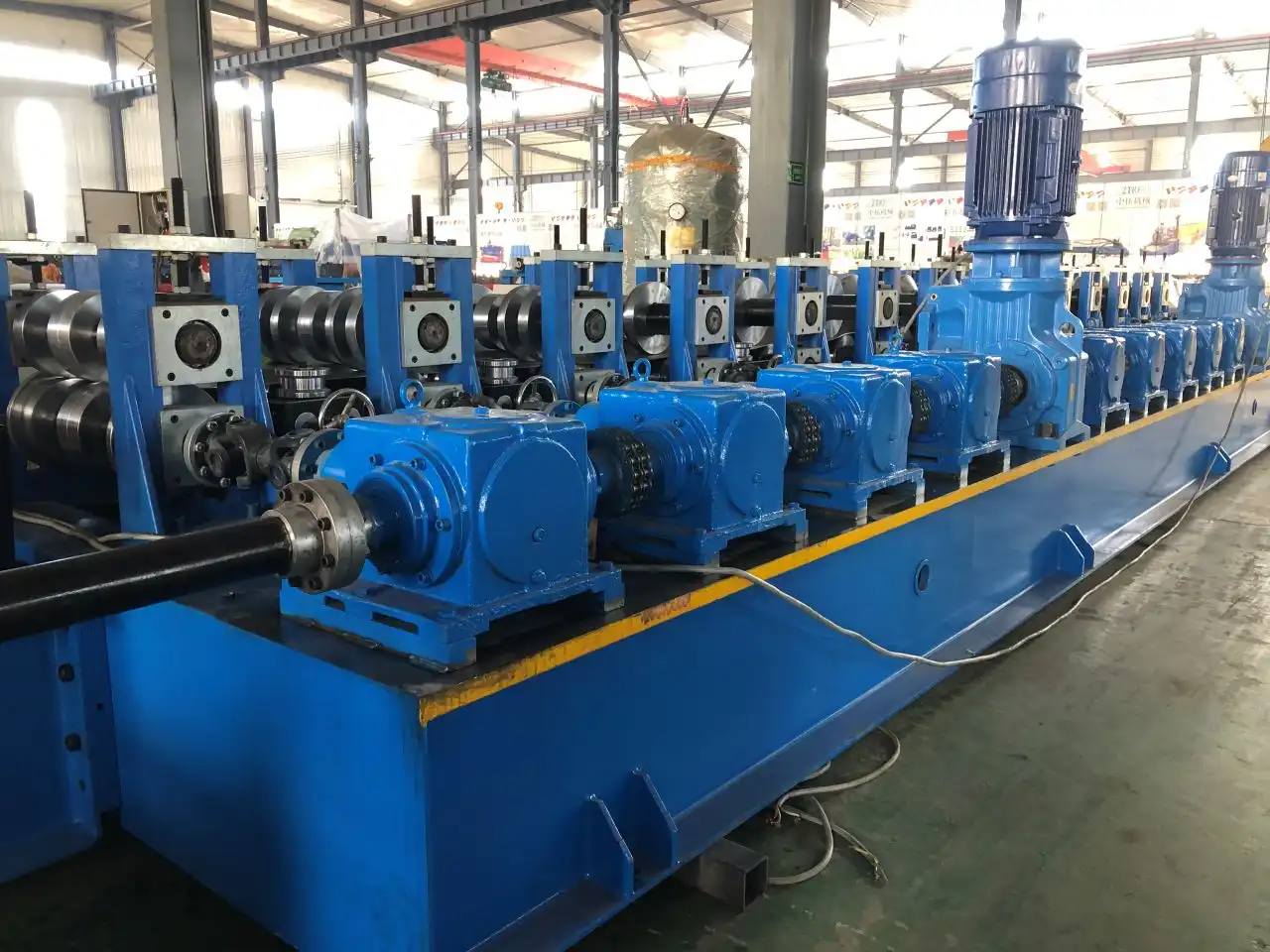
A full line includes a punching system, servo feeder, decoiler, forming machine, hydraulic cutter, PLC cabinet, run-out table, and stacker. It is a good idea to compare a number of features. Steel rollers made of HRC 58–62 Cr12MoV or GCr15 don't wear out quickly. There are sixteen to twenty forming stations that slowly shape thick steel. Drives with gears or a Cardan shaft are better at moving big things than chains. Three-wave lines move at 15–20 meters per minute, and an H-beam base made of cast iron or heavy welding takes the vibrations away. I tell people who are buying to keep the rated forming speed and the actual output separate, because punching, cutting, speeding up, and packing all slow down the real number.
Two-Wave and Three-Wave Profiles
Most highway and expressway projects, even long ones where speed and volume are important, use two-wave W-beam guardrails. Three-beam barriers are wider and stiffer than two-wave barriers. This helps heavy cars stay in place at higher levels like Test Level 4. They're in the middle of the road and on mountain roads with bridges that change lanes. The steel they use is up to 4.5 mm thick, which makes the tools and equipment heavier. One machine can make both profiles if it has a double-row station design or if the cassettes are changed, which changes the whole roller assembly. I still tell companies that make a lot of things to get specialized machines because they cut down on the time it takes to switch between tasks.
Automatic or Semi-Automatic Lines
For semi-automatic lines, more work has to be done by hand to stack, move, and add coils. They can be used by smaller factories, those with flexible orders, or those with new budgets, but they need more workers and the output changes more. Decoiling, servo filling, punching, cutting, moving, and packing are all part of fully robotic lines. There is less need for people to touch the product, and the effects are more even. Most of the time, big businesses and export plants that get lots of orders choose them. You shouldn't just look at the price of the machine; you should also consider the total cost of ownership, the number of products it can make, the cost of labor, the amount of floor space it needs, and the mix of products it can make.
Buying, Installing, and Maintaining Your Line
Price, Delivery, and Procurement Planning
The pricing varies based on the profile type, the automation level, the steel thickness, the forming ability, the punching and cutting systems, the stacking equipment, the amount of customisation, and the services given for Highway Safety & Transportation Infrastructure. To be able to conduct a fair comparison, the base equipment must be separated from the extras, and the price must include tools, replacement parts, export packing, installation, training, and any other charges that arise. Submit designs, verify that they fulfill the requirements, study the proposal, agree to the layout, have the product built, test it at the factory, ship it, install it and switch it on. Before you sign, check the delivery schedule, payment conditions, warranty and electrical paperwork, the provision of replacement parts, and growth opportunities. From what I've observed, a documented strategy eliminates most last-minute surprises.
Installation, Commissioning, and Maintenance
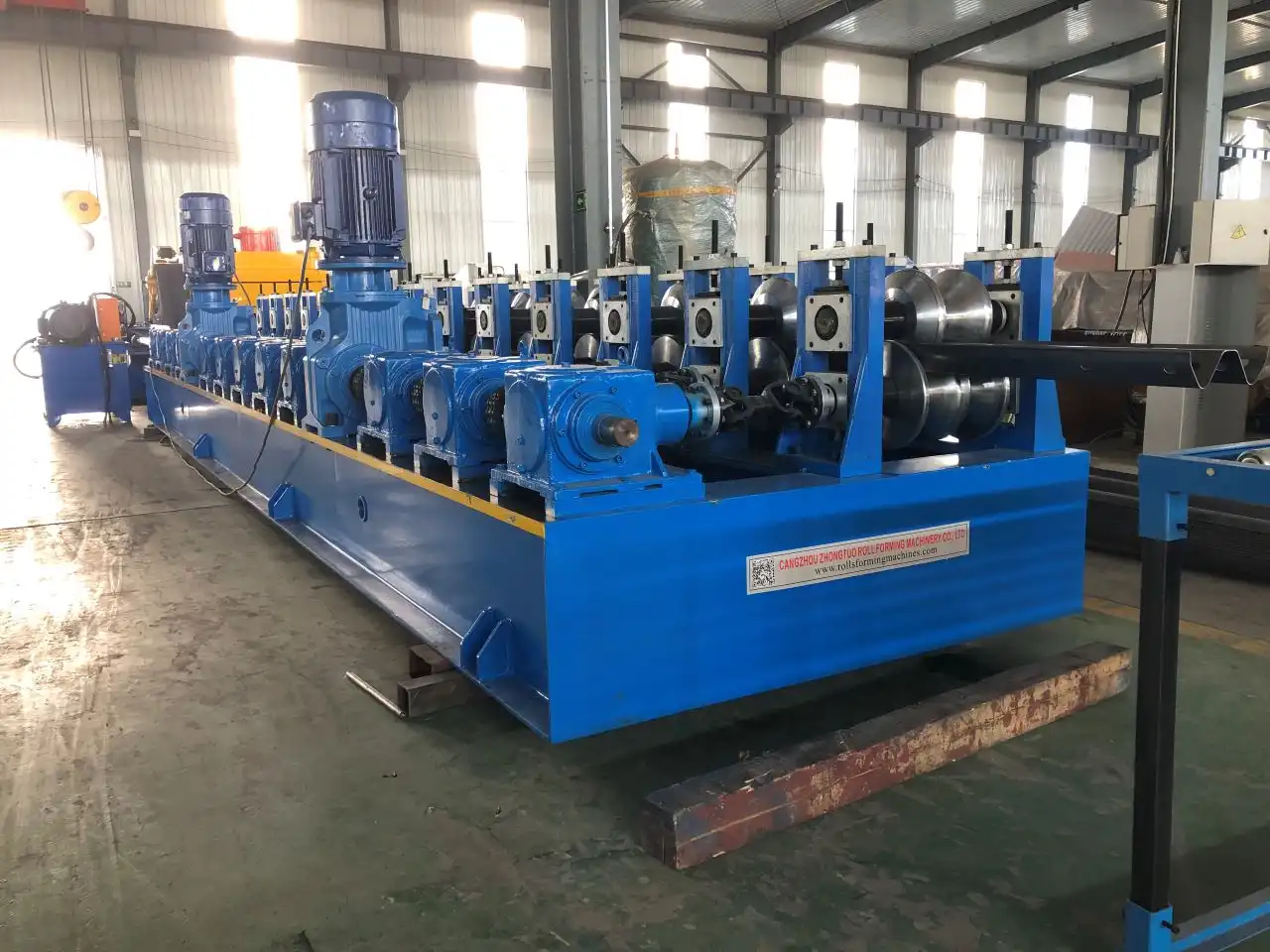
This is a guardrail line, roughly 20 to 25 meters long. Heavy-gauge punching and cutting rattles the line. You need a foundation of reinforced concrete, with leveling bolts, to maintain the base level. Also, enough floor space, the correct power, grounding, hydraulics, and expertise to properly handle coils during installation are required. Technicians only run sample material after checking that the machine is level, the rollers are aligned, the shafts are in line, the PLC settings are accurate, the encoder is calibrated, the hydraulics are working, and the safety measures are enabled. Routine maintenance includes oiling the rollers, inspecting the hydraulics, cleaning the die, and testing the sensors. Most Cr12MoV dies need to be reground every 50,000-80,000 linear meters. Tools of 4.0 mm steel wear quicker than tools of 2.5 mm steel.
Choosing a Manufacturer and Final Checklist
A good maker has the right equipment, an engineering team, and previous projects that demonstrate that they know how to employ W-beam and three-beam profiles. Ask whether the wiring may be adjusted, the plans, the sizes of the forms, kinds of materials used, and patterns of the holes. Export assistance is also crucial, and that means the correct packing, the right documentation, and modifications to the voltage. Before purchasing, ensure you know the weight, standard, steel grade, thickness, breadth, coil weight, hole design, speed, finishing length, and tolerances. Request a plant acceptance test to be performed on your approved materials or samples. You do this to make sure everything's proper. You should also get the wiring schematics, training for the staff, the capacity to address issues remotely, the instructions to follow, and any excess parts in the price.
Conclusion
When you put up guardrails, you want to be sure the equipment is the correct machine for the job. A highway guardrail roll forming machine will unwind, level, punch, shape, and cut coil into W-beam or three-beam designs. The stations have to function together, the wheels have to be toughened, and the base has to be steady for it to be precise. Materials are inspected for things like the kind of steel, the thickness of the steel, and the zinc finish to safeguard the final quality. A two-wave line is appropriate for work on a highway with a lot of traffic, while a three-wave line is suitable for more restricted areas requiring larger equipment. More important than speed or price is how much automation there is, how much it really earns, and how much it costs to own the entire system. Just make sure you receive clear quotations, get the setup done well, and undertake monthly maintenance to keep the sizes the same and the downtime as short as possible.
FAQ
1. Can one machine produce both two-wave and three-wave guardrails?
Yes. They can both be played on either a cassette change system or a station design with two rows. Companies that make a lot of things usually choose specialized machines to get more done.
2. How does the machine handle spring-back in high-tensile steel?
Material memory can cause bows and bends, but adjustable side rolls and Turk's head adjusting units at the exit can fix them.
3. How is the zinc coating protected during forming?
When station speeds are synchronized and rollers are polished and hard-chrome-plated, friction dragging doesn't happen. Friction dragging is what hurts zinc the most.
4. What does a quotation require?
Please send drawings, material data, hole patterns, target capacity, automation needs, and requirements for the country where the goods will be sent.
Request a Highway Guardrail Roll Forming Machine Proposal from ZTRFM
Are you going to put up a guardrail? ZTRFM is where you can buy a highway guardrail roll forming machine. Before suggesting a line, our team can look at your profile drawings, steel data, hole pattern, and what you want to achieve. You can email us at zhongtuorollforming@gmail.comto see our machines. We'll send you a clear technical plan with delivery, testing, training, and tools when we get back to you.
References
1. AASHTO, Manual for Assessing Safety Hardware, 2016
2. AASHTO, Roadside Design Guide, 2011
3. AASHTO, M 180 Standard Specification for Corrugated Sheet Steel Beams for Highway Guardrail, 2022
4. NCHRP, Report 350: Recommended Procedures for the Safety Performance Evaluation of Highway Features, 1993
5. European Committee for Standardization, EN 1317-2 Road Restraint Systems, 2010
6. George T. Halmos, Roll Forming Handbook, 2005