- English
- French
- German
- Portuguese
- Spanish
- Russian
- Japanese
- Korean
- Arabic
- Irish
- Greek
- Turkish
- Italian
- Danish
- Romanian
- Indonesian
- Czech
- Afrikaans
- Swedish
- Polish
- Basque
- Catalan
- Esperanto
- Hindi
- Lao
- Albanian
- Amharic
- Armenian
- Azerbaijani
- Belarusian
- Bengali
- Bosnian
- Bulgarian
- Cebuano
- Chichewa
- Corsican
- Croatian
- Dutch
- Estonian
- Filipino
- Finnish
- Frisian
- Galician
- Georgian
- Gujarati
- Haitian
- Hausa
- Hawaiian
- Hebrew
- Hmong
- Hungarian
- Icelandic
- Igbo
- Javanese
- Kannada
- Kazakh
- Khmer
- Kurdish
- Kyrgyz
- Latin
- Latvian
- Lithuanian
- Luxembou..
- Macedonian
- Malagasy
- Malay
- Malayalam
- Maltese
- Maori
- Marathi
- Mongolian
- Burmese
- Nepali
- Norwegian
- Pashto
- Persian
- Punjabi
- Serbian
- Sesotho
- Sinhala
- Slovak
- Slovenian
- Somali
- Samoan
- Scots Gaelic
- Shona
- Sindhi
- Sundanese
- Swahili
- Tajik
- Tamil
- Telugu
- Thai
- Ukrainian
- Urdu
- Uzbek
- Vietnamese
- Welsh
- Xhosa
- Yiddish
- Yoruba
- Zulu
How a Roll Forming Machine Can Produce Shelves and Racks
A rack roll forming machine takes a flat steel coil and continuously bends it through a series of roller stations until a finished shelving profile exits the other end — ready to cut, stack, and ship. Unlike stamping or press braking, this process runs without interruption, producing upright columns, load beams, and shelf panels at speeds up to 15 m/min with repeatable dimensional accuracy. For anyone building or scaling a racking supply business, understanding exactly how this process works — and what to look for in a machine — is the starting point for a smart investment.
Understanding Rack Roll Forming Machines and Their Working Principles The Core Forming Process
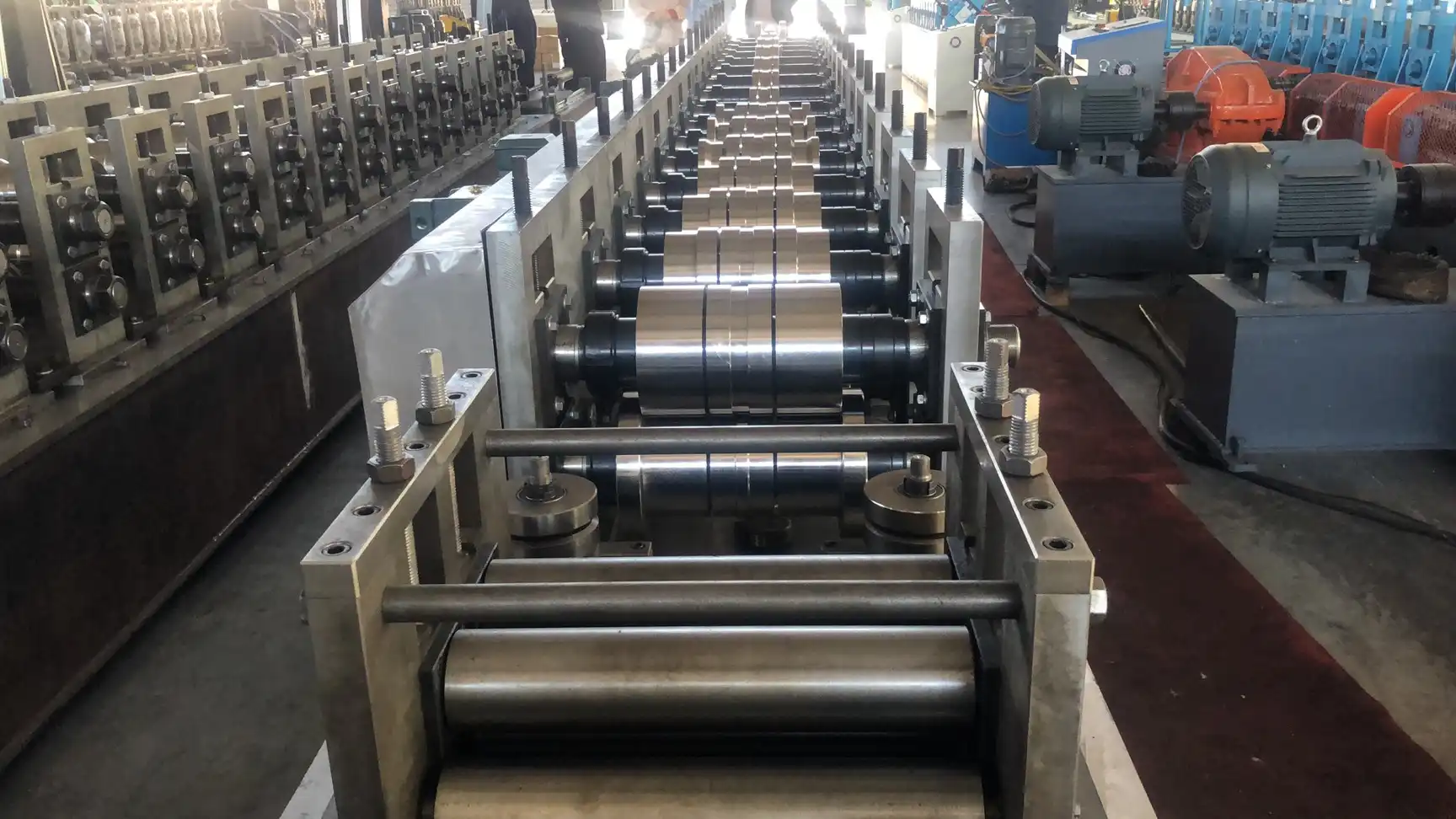
After being decoiled, the steel coil goes through a leveling unit to get rid of the coil set. Finally, it goes through a set of roller stations. At each point, a little more of the strip is bent until the goal cross-section is fully made. It could be a shelf beam, a counter-sunk column, or a C channel. Then, either a hydraulic or automatic cutter cuts each piece to the predetermined length. There is no pause like there is with presses because the process doesn't stop.
Key Technical Specifications to Know
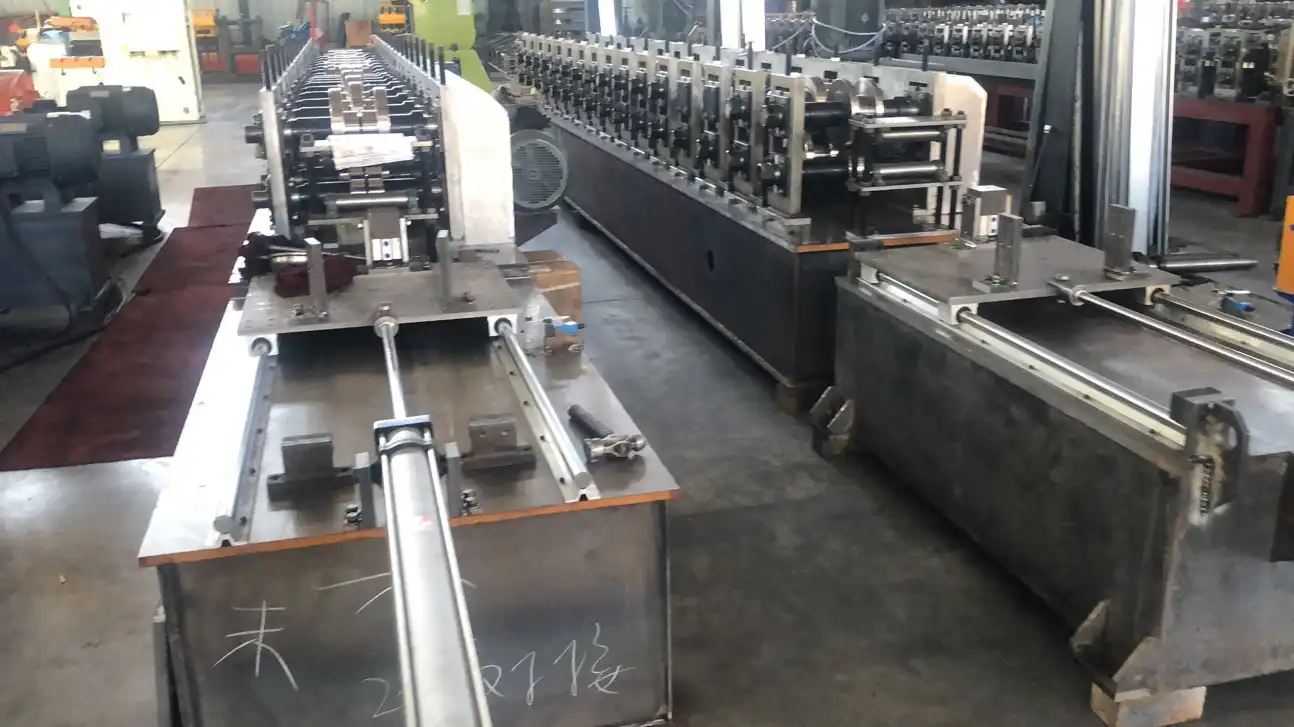
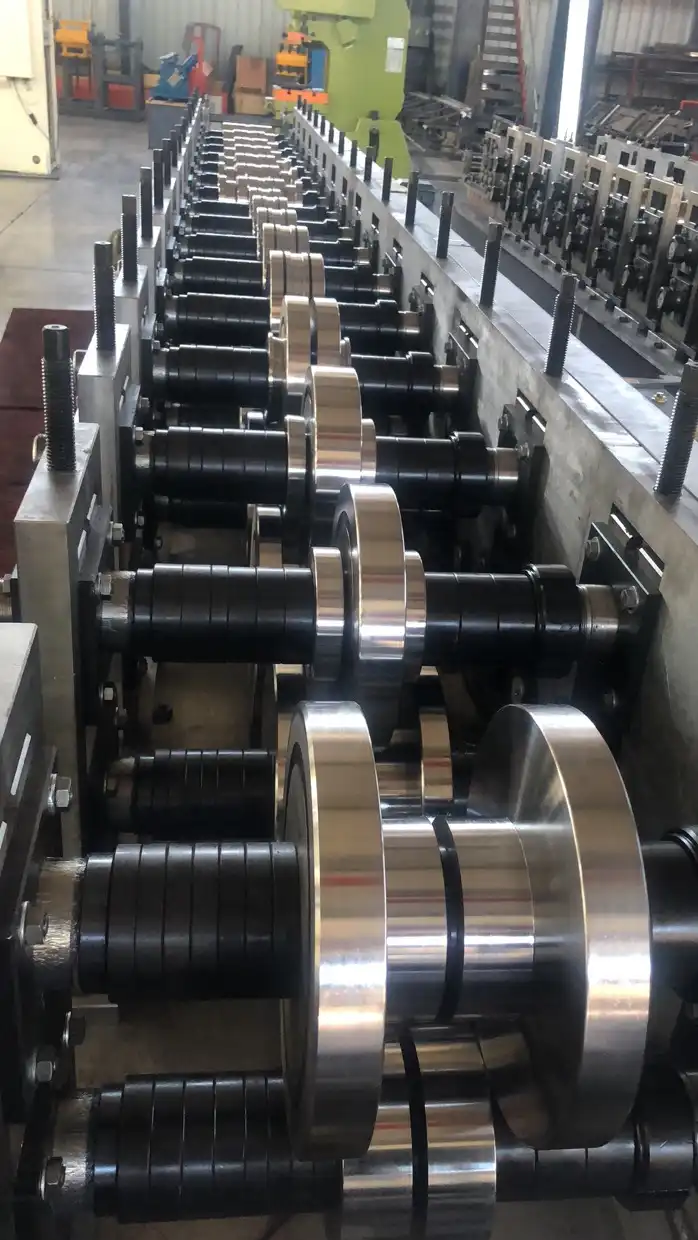
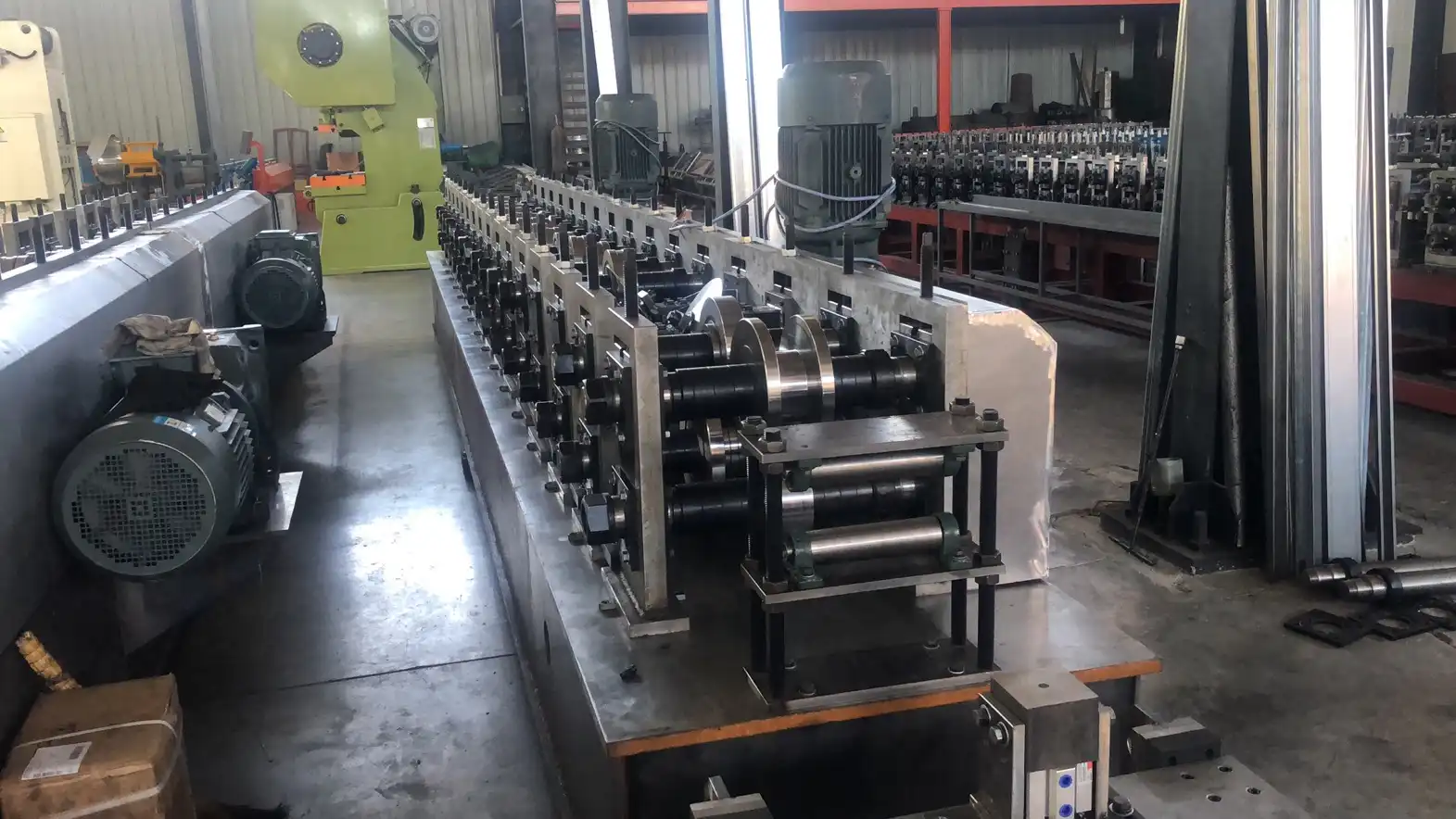
This line at ZTRFM makes storage racks. It has 16 roller stations with solid 80 mm shafts made of 45# tempered steel. Rolling pins are made of Cr12/GCr12 steel, which makes them last a long time. The line can go at speeds of 0 to 15 m/min and can work with PPGI, GI, and 1.5 to 2 mm thick aluminum coil. The cutting blades are made of Cr12MoV, a type of tool steel chosen for its strength and ability to keep its clean split edge. The machine frame is made of 350H heavy-duty steel.
Material Choices and Their Impact
On a rack roll forming machine, most of the time, galvanized steel (GI) is used for warehouse shelving because the zinc coating keeps the steel from rusting in damp places. For shop shelves where the look of the surface is important, pre-painted zinc (PPGI) is a good choice. For light-duty record keeping where weight savings are important, aluminum sheet can be used. Choosing the right input material when you're shopping has a direct impact on the rack's load rate, service life, and ability to stick to a covering.
Benefits and Applications of Rack Roll Forming Machines in Shelving and Rack Production
It is easiest to see how roll forming can help when there is a lot of material to shape. It doesn't matter how many pieces are made—once the tools are set and the line is running, they all come out the same.
The best things about this kind of tech for B2B companies are these:
- One-operator production: ZTRFM's fully automatic line integrates feeding, forming, punching, and cutting. A single operator sets the PLC parameters — length, batch count, cutting quantity, and speed — and monitors the run. This reduces labor costs significantly compared to press-brake operations requiring one worker per station.
- Repeatable profile accuracy: Cr12/GCr12 rollers maintain dimensional tolerance across long production runs. Rack uprights and beams must align precisely for safe assembly; roll forming delivers that consistency where manual bending cannot.
- Broad application range: The same machine platform produces warehouse pallet rack uprights, retail display shelf beams, archive storage panels, mezzanine support sections, workshop and garage racking components, and light-duty display storage frames.
There are a lot of different ways that this machine can be used. It can make warehouse pallet rack uprights, retail display shelf beams, archive storage panels, mezzanine support sections, workshop and garage racking parts, and light-duty display storage frames.
Comparing Rack Roll Forming Machines with Alternative Forming Technologies
Roll Forming vs. Hydraulic Press Forming
It takes a long time for the press to rest between rounds when it is being used to shape something. Each stroke makes one piece. It's always made by rolling things out. When thousands of the same beams are shipped every week for high-volume shelving profiles, there is a big change in the rate of production. When you press form something, the material is put under more stress in certain places, which can change how the painted surface of a coil looks.
Automatic vs. Manual Machines
Hand-fed roll-making machines need people to feed material, change guides, and handle cut pieces at every step. Automatic lines with motor feeds, PLC controls, and powered stackers cut down on both the work that needs to be done by hand and the mistakes that people make. It takes longer to set up an automatic line, but it pays for itself in lower running costs in the first year for people who want to start a local racking supply business.
Single-Profile vs. Quick-Change Tooling Systems
A rack roll forming machine with fixed tooling makes one profile quickly and well, and it works well for businesses that get lots of orders all the time. With quick-change or multi-size tools, the same machine can change the uprights or beams' width or depth in just one shift. Profile-to-order OEM tooling with changeover design is available from ZTRFM. This is helpful for machinery sellers who are grouping lines to sell in the region or for custom/OEM buyers who offer different types of shelving systems.
Maintenance, Safety, and Troubleshooting for Longevity and Performance
Routine Maintenance Practices
When you oil roller shafts and drive chains every day, they last longer. As long as the Cr12MoV cutting blade's edge is checked once a week, dulling is caught before it hurts the cut. Check the orientation of the shaft once a month to stop the profile from slowly moving off center. Instead of waiting for worn parts to break, it's better to replace them regularly. This cuts down on unnecessary downtime.
Operator Safety Protocols
The making line needs to have clear emergency stop buttons that can be reached from both ends of the machine. Feed guides should have pinch-point guards. Users need to learn how to use the PLC interface before they can run output on their own. Help with setting up the equipment and lessons on how to use it are part of ZTRFM's after-sales service. This helps the buyer set up the system safely at their own place of business.
Common Troubleshooting Scenarios
Most of the time, old rollers or a loose shaft bearing are to blame for profile measurement drift. These problems can be fixed during a planned inspection window. While measuring length, the encoder needs to be checked for accuracy since the cut length isn't always the same. Most of the time, a scratched PPGI surface means that a roller surface needs to be polished or a guide strip needs to be replaced. You don't have to wait for someone to come out and fix these problems because ZTRFM offers online technical help and remote analysis.
Procurement Considerations: How to Choose the Right Rack Roll Forming Machine for Your Business?
Evaluating Price vs. Production Performance
An entry-level rack roll forming machine can be used by new businesses and small makers. For well-known businesses that work different shifts, heavy-duty models with wider shafts, more forming stations, and servo-driven feeders work well. By making sure that the machine's specs match up with your production needs, you can avoid both under-investment (which can cause jams) and over-specification (which can leave capital sitting idle).
Supplier Reliability and Certification
If you get ISO 9001 certification, it means you have a written quality management system that makes sure your manufacturing is always the same. The CE mark means that the machine meets European safety standards. This is important for all buyers, not just Americans who are moving the machine to a market with rules. ZTRFM was founded in 2014 in Botou, Cangzhou, which is known for being a hub for making cold roll forming tools. These tools have been sent to more than 150 countries, such as Tata Group in India, DS Group in Korea, and HADDAD SET in Jordan. The company is certified by ISO 9001, CE, and CAS.
Customization, Delivery, and After-Sales Terms
It is important for OEM buyers to make sure that the supplier can make matched tools within a certain lead time when they send sample profiles or drawings. For instance, ZTRFM can make tools for making profiles in just a few weeks. Find out whether extra parts are kept nearby or sent from the factory. Also, check to see if the PLC interface works with English or the language you speak. This ZTRFM machine can handle more than one language. The export packing for the line should keep it dry and safe while it's in transit. Shipments from ZTRFM are made in export-standard wooden crates that can fit 20GP or 40HQ containers and have anti-rust oil on the small parts.
Conclusion
A rack roll forming machine line that makes storage racks can quickly and easily turn a coil of raw steel into finished shelving profiles. This is faster than cutting the steel by hand. The size can be changed based on the number of shifts. It can be used for many things, such as store display beams and uprights for pallet racks. To pick the right machine, you need to make sure that the type of material, range of thickness, level of automation, and speed at which the parts are formed all meet your output needs.
FAQ
Q1: What materials can a storage rack roll forming machine process?
ZTRFM's line processes PPGI, GI (galvanized steel), and aluminum coil at 1.5–2.0 mm thickness. GI is the most common choice for warehouse racking; PPGI suits retail shelving where surface finish matters; aluminum works for lightweight archive storage applications.
Q2: How many operators does the line require?
One trained operator can run the full automatic production line. The PLC system manages length, batch count, and cutting sequence automatically, reducing labor input compared to manual or semi-automatic alternatives.
Q3: Can the machine be customized for our specific rack profile?
Yes. ZTRFM offers profile-to-order OEM/ODM tooling based on customer drawings or physical sample profiles. Feeding width, punching patterns, and forming station count can all be configured to match your target cross-section.
Q4: What after-sales support is available?
ZTRFM provides 24/7 online technical support, remote diagnosis, installation guidance, operation training, and spare parts supply. Support is available in multiple languages through the PLC interface and customer service team.
Get Your Custom Rack Roll Forming Machine Quote from ZTRFM
Rack roll forming tools are produced by ZTRFM. Their machines are used in more than 150 countries, and they've been in business for more than ten years. They are certified by ISO 9001, CE, and CAS. No matter if you need a normal entry rack roll forming machine line or a fully set-up OEM shelving profile option, our engineering team can find a machine that will meet your exact production needs. Don't wait to get a quote or see how our products work. Get in touch with us right away.zhongtuorollforming@gmail.com is the email address.
References
1. Halmos, George T. Roll Forming Handbook. CRC Press, 2006.
2. American Iron and Steel Institute. Cold-Formed Steel Design Manual. AISI, 2016.
3. Schuler GmbH. Metal Forming Handbook. Springer, 1998.
4. FEM (European Federation of Materials Handling). Recommendations for the Design of Static Steel Pallet Racking and Shelving. FEM 10.2.02, 2001.
5. Rack Manufacturers Institute. Specification for the Design, Testing and Utilization of Industrial Steel Storage Racks. RMI/ANSI MH16.1, 2021.
6. Lange, Kurt. Handbook of Metal Forming. Society of Manufacturing Engineers, 1985.