- English
- French
- German
- Portuguese
- Spanish
- Russian
- Japanese
- Korean
- Arabic
- Irish
- Greek
- Turkish
- Italian
- Danish
- Romanian
- Indonesian
- Czech
- Afrikaans
- Swedish
- Polish
- Basque
- Catalan
- Esperanto
- Hindi
- Lao
- Albanian
- Amharic
- Armenian
- Azerbaijani
- Belarusian
- Bengali
- Bosnian
- Bulgarian
- Cebuano
- Chichewa
- Corsican
- Croatian
- Dutch
- Estonian
- Filipino
- Finnish
- Frisian
- Galician
- Georgian
- Gujarati
- Haitian
- Hausa
- Hawaiian
- Hebrew
- Hmong
- Hungarian
- Icelandic
- Igbo
- Javanese
- Kannada
- Kazakh
- Khmer
- Kurdish
- Kyrgyz
- Latin
- Latvian
- Lithuanian
- Luxembou..
- Macedonian
- Malagasy
- Malay
- Malayalam
- Maltese
- Maori
- Marathi
- Mongolian
- Burmese
- Nepali
- Norwegian
- Pashto
- Persian
- Punjabi
- Serbian
- Sesotho
- Sinhala
- Slovak
- Slovenian
- Somali
- Samoan
- Scots Gaelic
- Shona
- Sindhi
- Sundanese
- Swahili
- Tajik
- Tamil
- Telugu
- Thai
- Ukrainian
- Urdu
- Uzbek
- Vietnamese
- Welsh
- Xhosa
- Yiddish
- Yoruba
- Zulu
Automatic vs Manual Spacer CZ Changeover: Payback Math
Automatic spacer changeover on a CZ purlin roll former can pay for itself when your shop switches frequently between C and Z profiles. In the example below, saving 35 minutes on each of 80 monthly changeovers at USD 118 per hour, plus net scrap savings, recovers a USD 45,000 premium in about 7.9 months. At 20 changeovers per month, the same premium takes about 32.7 months to recover from time savings alone. Manual spacers can make sense for shops that run the same profiles for long stretches. The following comparison explains how to estimate payback and what to check before ordering.
How a CZ Purlin Roll Former Works Before and After Changeover What the Line Contains
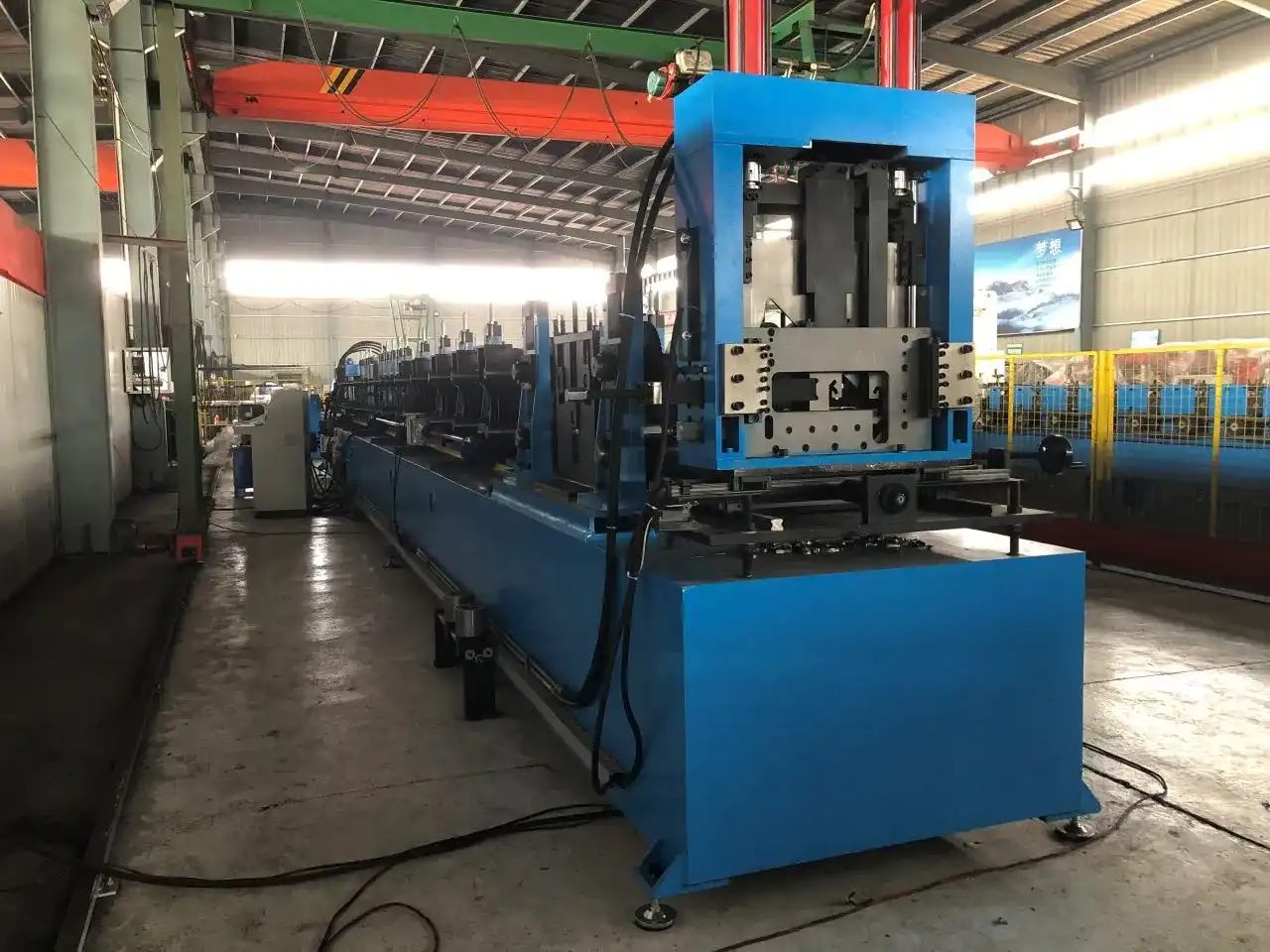
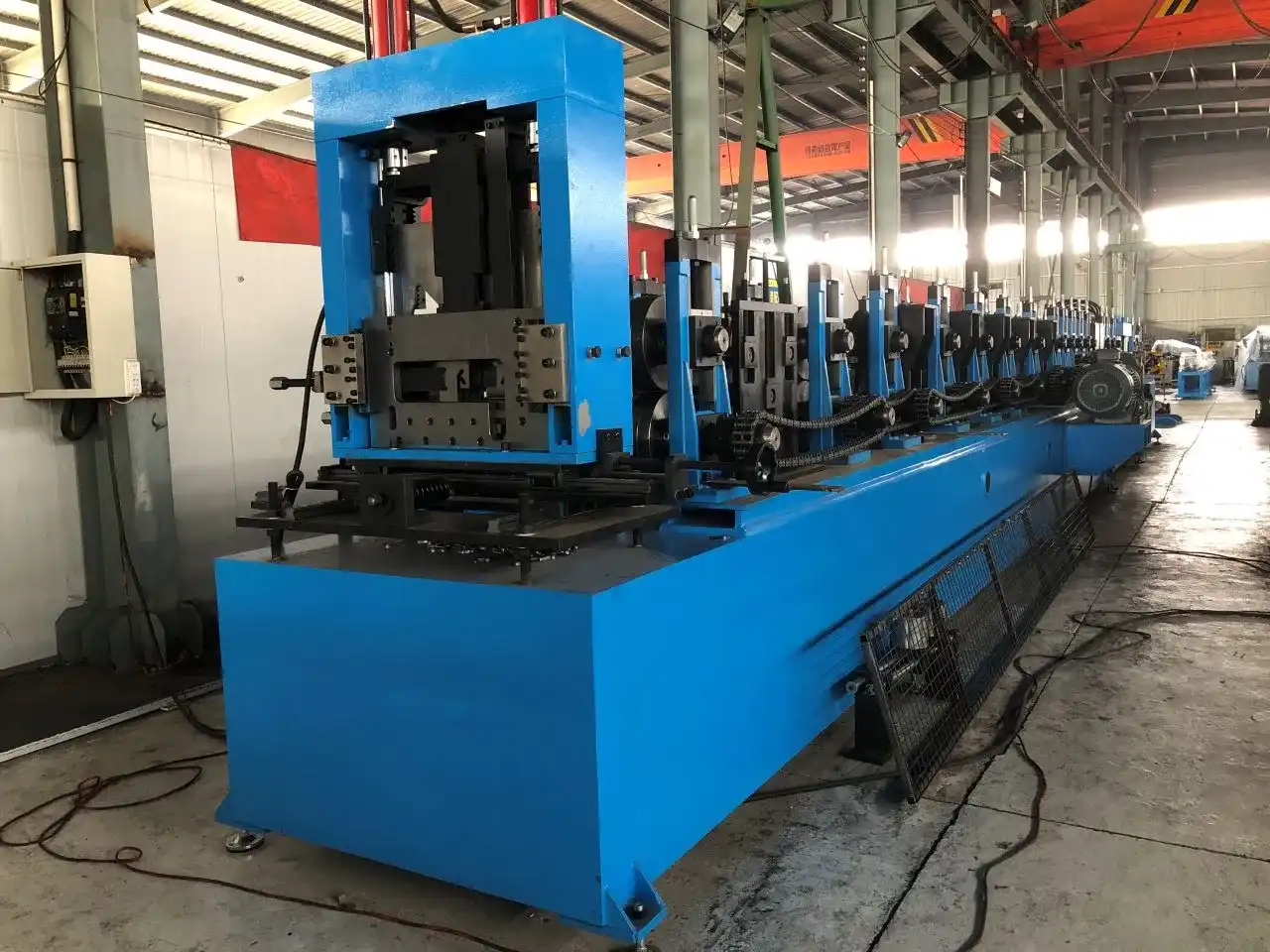
Coil is moved through a series of stations by a machine that makes purlins using the C Z method. A decoiler, a levelling and guiding unit, a servo feeder, a punching system, forming stands, a cutter, and a run-out table are all under the control of a programmable logic controller (PLC) as the coil travels through the process. Galvanised steel is handled by the ZTRFM line, which also produces profiles with customisable sizes and heights ranging from 40 to 100 millimetres. For the forming shafts, GCr15 material is used, and a servo motor is responsible for providing the primary power. The pace of the line is between 15 and 22 meters per minute. Punching and cutting are maintained in alignment with the feed thanks to computer control. The bolt holes on each part must be positioned in the same manner; thus, the alignment of the bolt holes is important.
What Manual Spacer Changeover Involves
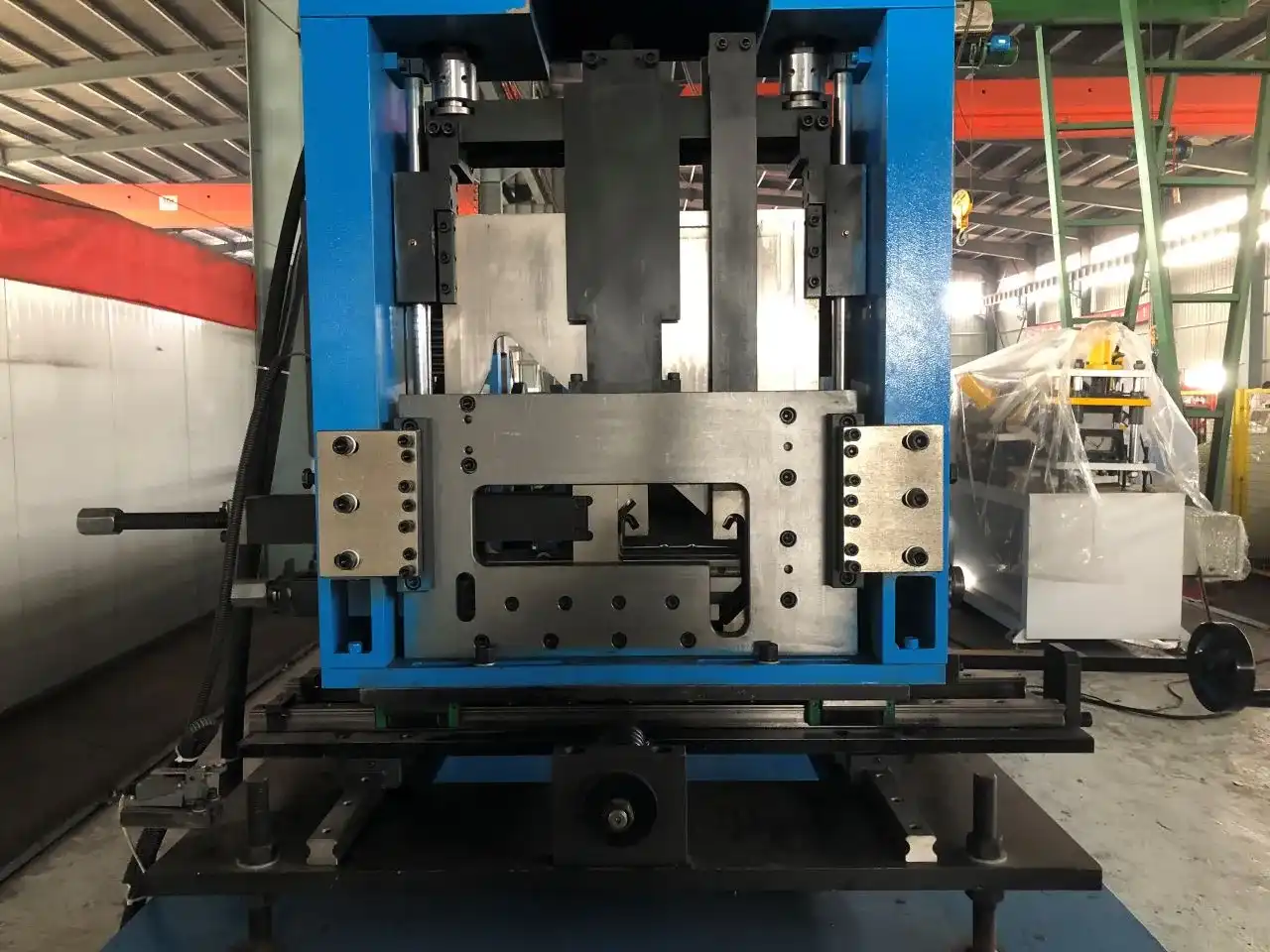
By using manual spacers, the team is able to suspend the line and separate the power supply. After that, operators will either remove or relocate spacers and equipment, reset the guides, alter the punching settings, and run trial material for inspection. The minutes add up, despite the fact that each process is straightforward. Time is dependent on the expertise of the crew as well as the arrangement of the tools, and a missing spacer or incorrect guide setting might result in junk or inappropriately positioned holes. I recommend that prospective purchasers time a complete cycle on their own floor. Instead of relying on a catalogue number, you should measure from the final excellent piece of one profile to the first acceptable piece of the following profile.
How Automatic Changeover Changes the Routine
During automatic changeover, each profile is saved as a recipe for the PLC. Once the operator has chosen the profile shown on the screen, servo-driven placement will move the stations in the direction of the settings that have been saved. You will have fewer adjustments to make with your hands and a more consistent setup between shifts. Because the amount of automation varies depending on the design of the machine, it is important to enquire with the provider about which motions are automated and which still need the assistance of a human. It is still important to calibrate. In order to determine whether or not purlins are able to be installed on site, it is necessary to do a first-piece inspection of the web width, flange size, lip angle, and hole location before beginning regular production. This is because dimensional correctness is the determining factor.
Manual vs. Automatic CZ Changeover: Technical and Operational Comparison
Where Manual Spacers Still Make Sense
A manual spacer system on a CZ purlin roll former costs less upfront and is simpler to maintain because it has fewer sensors, drives, and controls. They work well for businesses that produce large quantities of a single profile and swap profiles just a few times each month. It may be possible to achieve success with a manual setup if your operators have years of expertise working with the same tools. Manual adjustment takes up more production time when the shop runs frequent small orders across several profiles. In idle time and labour, each additional changeover adds to the total, and the consequences are then strongly dependent on who is working the shift.
Where Automatic Changeover Earns Its Cost
Work with a high degree of diversity, various shifts, and frequent C/Z changeover are all favoured by automatic systems. A configuration that is based on recipes enhances repeatability and decreases dependence on operator talent, which is beneficial in situations when there is a shortage of labour or a high turnover rate. There is an increase in the purchase price, as well as an increase in the number of controls, sensors, and technical support costs to maintain. In light of this, service access is deserving of the same amount of care as the equipment itself. Additionally, ZTRFM collaborates with Siemens on cloud Internet of Things and artificial intelligence remote maintenance. With that being said, a plant that only changes its profiles twice a month could never be able to recoup the premium.
What to Measure Beyond Price
The whole cycle, including adjustment, trial production, inspection, and restart, is an example to compare. The next step is to include punching performance, safety interlocks, versatility of the profile, usable production speed, punching performance, first-piece inspection routine, availability of replacement parts, and servicing capabilities. There is a prerequisite for speed. Although the speed of our line is between 15 and 22 meters per minute, the actual speed that you achieve is contingent on the steel grade, thickness, profile, and hole design. Enquire about production statistics based on the materials and drawings that you have created. Additionally, as a buyer from the United States, you should verify that the electrical setup corresponds to the voltage of your facility and that the guarding satisfies your safety criteria.
Payback Math: Calculating the ROI of Automatic CZ Changeover
The Formula
Monthly benefit = (hours saved per changeover × changeovers per month × hourly value of labor and machine time) + monthly scrap savings − added monthly maintenance. To calculate payback in months, divide the upfront automation premium by the monthly benefit. Use the crew cost tied up during setup and the contribution margin the line could earn during the recovered production time. Include scrap savings from fewer trial pieces and setup errors. Deduct any extra costs for maintaining sensors, drives, and software. Use figures from your own shop.
A Worked Example
Suppose automation saves 35 minutes on each of 80 monthly changeovers, or about 46.67 hours per month. At a combined labor and machine-time value of USD 118 per hour, the monthly time savings are USD 5,506.67. If scrap savings after added maintenance contribute another USD 196.85, the total monthly benefit is USD 5,703.52. Dividing the USD 45,000 premium by that amount gives a payback period of about 7.9 months. Replace these assumptions with your own production figures.
Stress-Testing the Result
Estimate payback for a CZ purlin roll former at several changeover frequencies. At 80 changeovers per month, the example gives a payback of about 7.9 months. At 20 per month, time savings fall to USD 1,376.67 per month, giving a payback of about 32.7 months on time savings alone. Test low, medium, and high volumes and try a shorter time saving than the supplier estimates. If payback is too long under those assumptions, a manual spacer system may suit your orders better.
Choosing, Installing, and Deciding on the Right Configuration
Choosing the Right Configuration
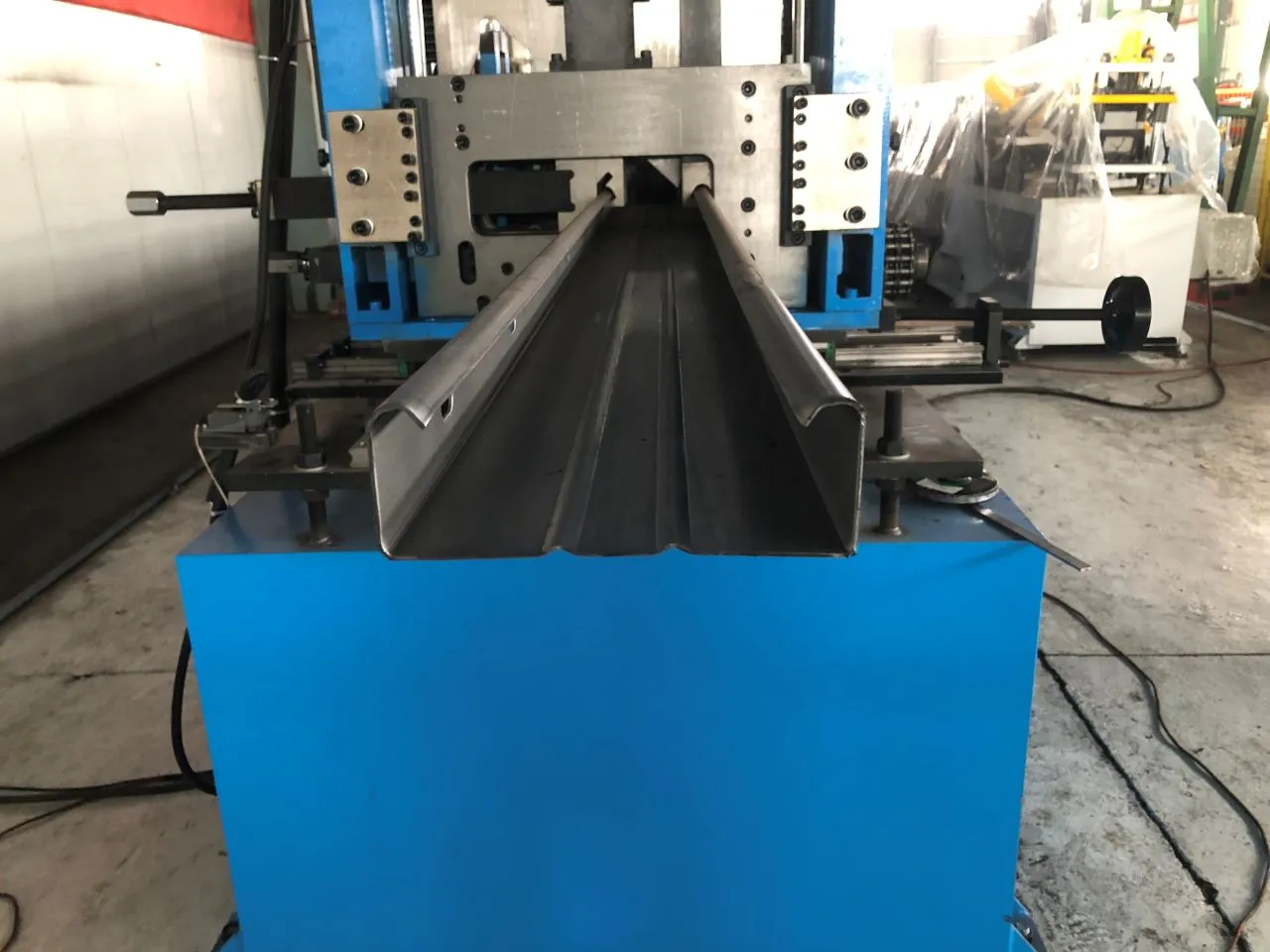
You should begin by determining your product mix, material range, volume, and planning for expansion. A manual spacer setup suits experienced crews that change profiles infrequently. A type that is automated is suitable for high-mix work, many shifts, and plants that are sensitive to labour. After that, check the steel grade and thickness, the dimensions of the coils, the profile sizes, the punching patterns, the design of the forming station, the precision of the cutting, the PLC architecture, and the electrical requirements. The galvanised steel and customisable sizes that our regular machine can accommodate range from 40 to 100 millimetres in height. If you want more sections or high-tensile material, please submit drawings to us first. We will then determine whether or not it is feasible to provide you with a quote.
Installation and Maintenance
Before the equipment is sent, the plant should be prepared. Verify the capacity of the floor, the access for unloading, the requirements for the crane, the power supply, the grounding, the compressed air, and the safety clearances. When the line is being commissioned, it should be levelled and aligned, recipes should be loaded, and sample material should be run at a regulated pace. Examine the width of the web, the dimensions of the flange, the lip angle, the location of the hole, the cut length, the straightness, the twist, and the surface after manufacturing has been approved. Once a week, examine the rolls, guides, bearings, and fasteners, as well as clean the line and check the alarms. This is part of the maintenance process. On a predetermined timetable, check the precision of the servo, the hydraulics, the PLC backups, the sensors, and the tooling wear.
Purchasing Mistakes and a Scorecard
A comparison that focuses just on the machine's price or its maximum speed is the most typical error. The cost of ownership should be calculated over a period of five years, taking into account the costs of tooling, installation, training, shipping, spare parts, software support, and maintenance. The next step is to evaluate each provider based on the following criteria: conformance, changeover flexibility, overall cost, profile quality, support, capacity, installation, and safety. Payback maths, a factory acceptance test, profile samples, and a documented after-sales strategy are all examples of things that may be attached to the score. Not only does the machine with the highest level of automation not always win, but the machine with the lowest price tag also does not always win. Your orders will determine the outcome.
Conclusion
What determines whether you should go with manual or automated spacers on a CZ purlin roll former is the frequency with which you transition between C and Z profiles using the roll former. The fact that manual methods are less expensive and easier to maintain makes them suitable for production that is steady and low-mix. Recipe-based systems that are automatic enhance repeatability and minimise the amount of labour required for setup, but they also add costs and servicing requirements. To calculate payback, divide the upfront automation premium by the monthly benefit. At 80 changeovers, the example showed about 7.9 months, while at 20 changeovers, the time savings alone accounted for approximately 32.7 months. It is possible to arrive at the most reliable option by conducting tests on low, medium, and high volume levels, comparing the cost of ownership over a period of five years, and checking speed and profile data on your own material.
FAQ
1. Is automatic changeover always better?
The answer is no; businesses with low traffic and consistent profiles could make more money with a manual method that is easier. Payback is contingent on the frequency with which you switch profiles.
2. How do I calculate payback?
Divide the upfront automation premium by the monthly benefit to get the payback period in months. Include the value of labor and machine time saved, plus scrap savings, and deduct added maintenance.
3. How long does a changeover take?
Tooling, profile range, operator expertise, and inspection processes are all factors that determine the outcome. At the time of the factory acceptance test, you should request that the provider show it.
4. Which material can the machine run?
This is the typical machine that we use for galvanised steel. We ask that you verify any other grade or thickness with us before placing your purchase.
Request a CZ Purlin Roll Former Payback Analysis from ZTRFM
Are you ready to do the calculations for your own orders? ZTRFM is a CZ purlin roll former manufacturer that was established in 2014 and is certified to ISO 9001, CE, and CAS. They ship their products to more than 150 countries around the world. For further information, please contact zhongtuorollforming@gmail.com with your C and Z designs, as well as the steel grade, thickness, monthly production, and plant voltage. Utilising the payback calculations that you provided, we will evaluate the manual and automated solutions.
References
1. North American Specification for the Design of Cold-Formed Steel Structural Members (AISI S100), 2016
2. Cold-Formed Steel Design (Yu, LaBoube, Chen), 2020
3. Roll Forming Handbook (Halmos), 2005
4. A Revolution in Manufacturing: The SMED System (Shingo), 1985
5. Metal Building Systems Manual (Metal Building Manufacturers Association), 2018
6. Fundamentals of Modern Manufacturing (Groover), 2020