- English
- French
- German
- Portuguese
- Spanish
- Russian
- Japanese
- Korean
- Arabic
- Irish
- Greek
- Turkish
- Italian
- Danish
- Romanian
- Indonesian
- Czech
- Afrikaans
- Swedish
- Polish
- Basque
- Catalan
- Esperanto
- Hindi
- Lao
- Albanian
- Amharic
- Armenian
- Azerbaijani
- Belarusian
- Bengali
- Bosnian
- Bulgarian
- Cebuano
- Chichewa
- Corsican
- Croatian
- Dutch
- Estonian
- Filipino
- Finnish
- Frisian
- Galician
- Georgian
- Gujarati
- Haitian
- Hausa
- Hawaiian
- Hebrew
- Hmong
- Hungarian
- Icelandic
- Igbo
- Javanese
- Kannada
- Kazakh
- Khmer
- Kurdish
- Kyrgyz
- Latin
- Latvian
- Lithuanian
- Luxembou..
- Macedonian
- Malagasy
- Malay
- Malayalam
- Maltese
- Maori
- Marathi
- Mongolian
- Burmese
- Nepali
- Norwegian
- Pashto
- Persian
- Punjabi
- Serbian
- Sesotho
- Sinhala
- Slovak
- Slovenian
- Somali
- Samoan
- Scots Gaelic
- Shona
- Sindhi
- Sundanese
- Swahili
- Tajik
- Tamil
- Telugu
- Thai
- Ukrainian
- Urdu
- Uzbek
- Vietnamese
- Welsh
- Xhosa
- Yiddish
- Yoruba
- Zulu
How to mass produce solar mounting structures?
To mass-produce solar mounting structures, I recommend a solar strut channel roll forming machine that turns steel coil into finished rails on one continuous line. The line decoils, levels, punches slot holes, forms the channel, cuts it to length, and stacks the parts. Each piece then matches the last one in shape and hole position. Start with your profile drawing, coil grade, and daily output target. Then match the forming stations, punching method, and cutting system to those numbers. Below, I explain each step and show how the ZTRFM line fits US solar projects.
Why Mass Production Matters for Solar Mounting Structures Rising Demand and Tight Delivery Dates
US solar keeps growing. The U.S. Energy Information Administration reported that solar and battery storage made up most of the new electric-generating capacity planned for 2025. SEIA and Wood Mackenzie also put out market data on this trend on a daily basis. There are a lot of rails, struts, and frames that are needed for every job. When EPC contractors don't meet their due dates, the whole site can get held up. It's okay for a manufacturer or in-house fabrication shop to take that risk as long as it can stay on track with the project schedule.
Where Costs and Waste Come From
The fact that they cut and punch by hand adds a lot to the hidden costs. When you deal, every extra step takes longer, and every mistake you make when counting is waste. A lot of people can tell right away if holes aren't lined up straight in the field. Damage to the surface is also important. ASTM A653 usually calls for coil that has already been galvanized, and a zinc layer that is scratched doesn't protect against rust as well. The strip stays on the sheet because roll forming cold bends it. But the smooth rollers and sharp tools are still what decide the finish in the end. Mounting systems are often checked by UL 2703 in the US. It is easier to keep records when parts can be used more than once.
What a Continuous Line Changes
A continuous line can cut, punch, and bend with just one flow, instead of using several separate machines. After the person adds a coil and types in the length and number of coils, the line starts to move. When steel is cold formed, it gets a little harder where it bends. This is known as roll forming writing. Because the same rollers shape each meter, cross-section changes are small compared to when the metal is bent by hand. Only a few people touch each part, and they're ready to be stacked as soon as they leave the line.
How a Solar Strut Channel Roll Forming Machine Works
Profiles and Applications
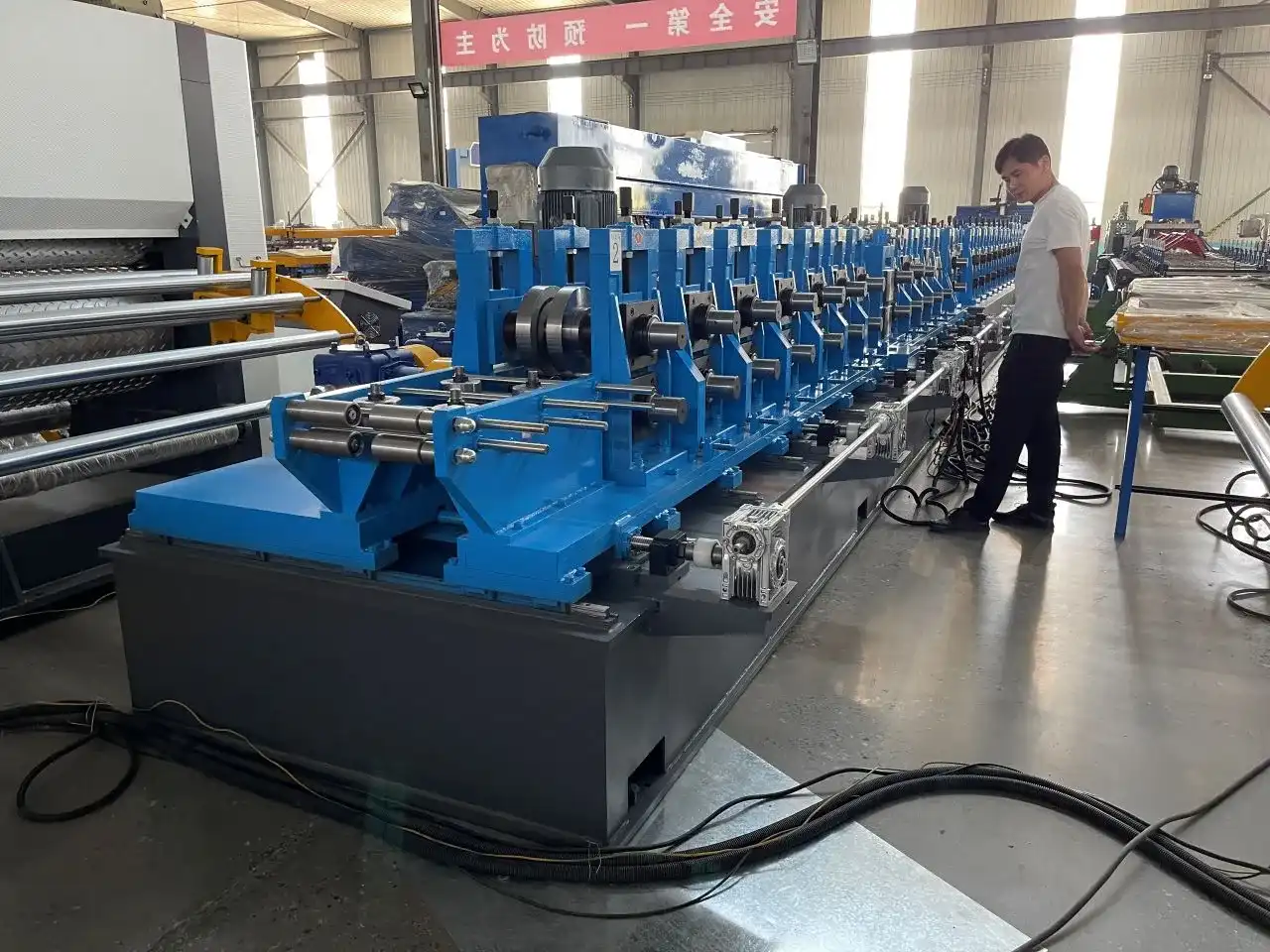
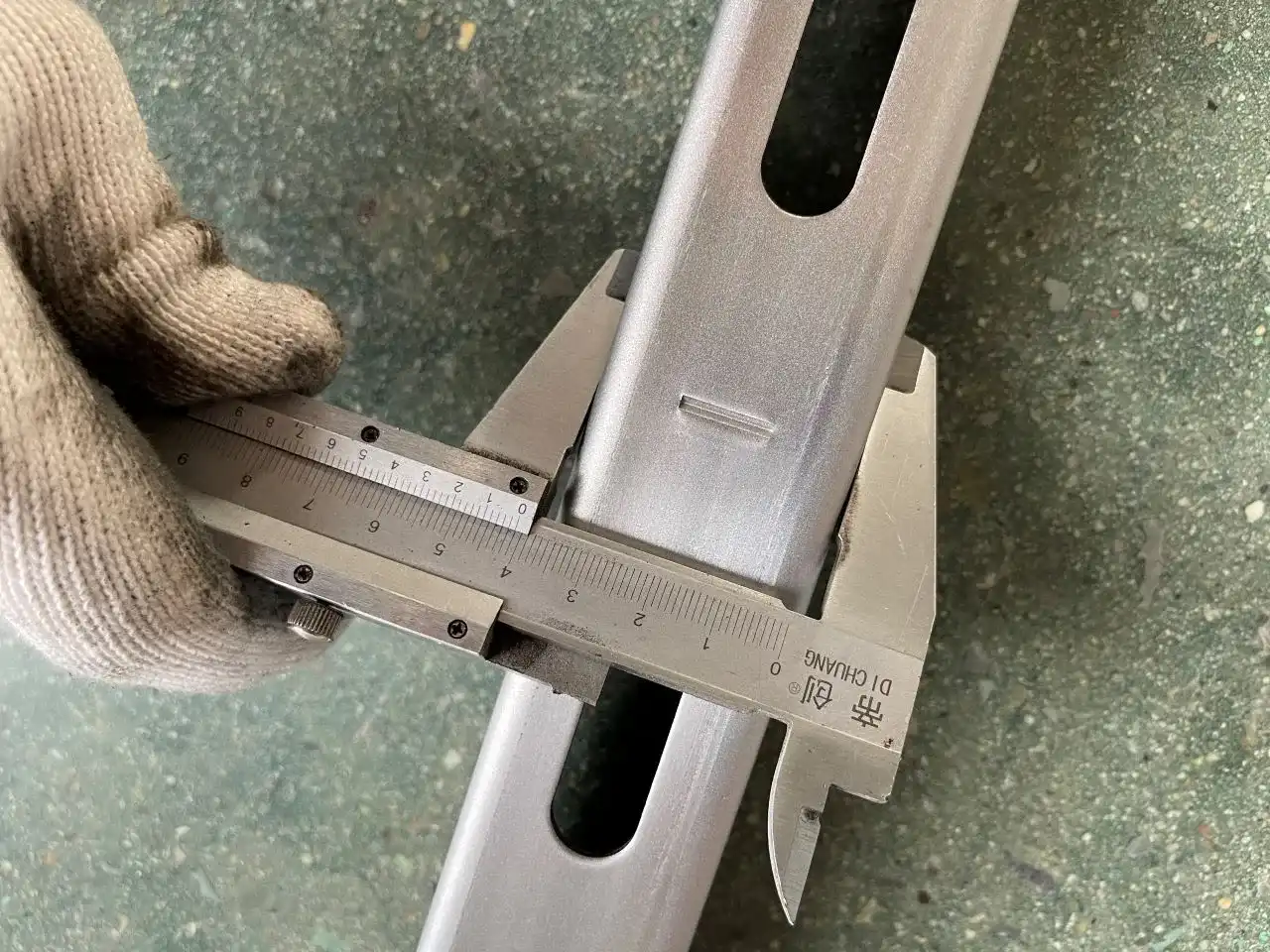
The solar strut channel roll forming machine is designed to make C-channel and U-channel braces for solar racks. It is often used to hold and attach PV panels, wire trays, and wiring supports. Industrial users use the same strut to hold machines, make storage racks, and put together modules. The same machine can make struts that are 41x41, 41x21, and 41x62 in size. This is possible if you change the roll quickly or adjust the servo. That way, a steel service center or rack-making business doesn't have to buy a second line to handle different kinds of jobs.
From Coil to Finished Channel
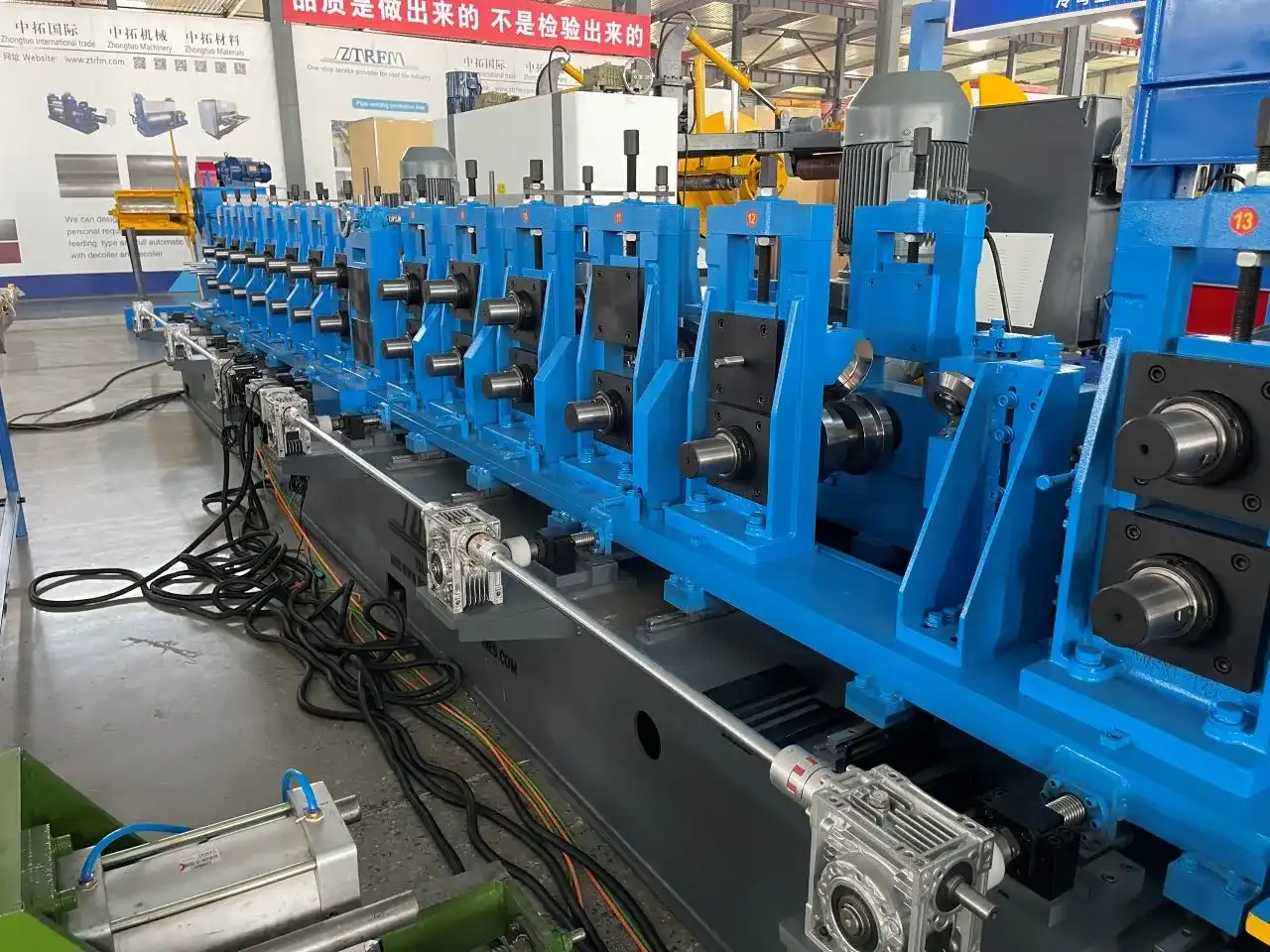
The ZTRFM line has six steps: making the coils flat, punching, roll forming, cutting, and stacking. The leveler takes away the coil set so that the strip goes into the punch flat. The decoiler holds the coil in place. The strip is punched, and then 24 rollers slowly bend it into the shape of a channel. When the steel and tools are bent slowly, they are under less stress. And then hydraulic shearing cuts each length. The finished pieces are then picked up by the stacker. A PLC with an HMI is in charge of length, counting, and alarms.
Punching Options for Slot Holes
If you pay attention to the slot holes, you can change how well the rails line up on the job site. ZTRFM has three ways to get there. Online hydraulic punching lets you add the punch to the line, which is great for making a lot of things at once. A punching press that works on its own can make holes with complicated patterns. It costs less and can be used for small or custom batches when you punch offline. The way should fit your order mix, in my opinion. It may be better to punch online with standard rails that have a lot of work, but it may be better to press with designs that change often.
ZTRFM Machine Specifications and Selection
Core Technical Data
These are the main things that the solar strut channel roll forming machine can do:
- Material range: Steel that is 90 to 230 mm wide and 1.5 to 2.5 mm thick can be fed through the line. In that range are both heavy ground-mount sections and light rooftop beams. You need to send your profile drawing along with your coil grade and strip width so that the roll tooling design can work.
- Power and speed: It moves at 8 m/min and has a main motor that puts out 22 kW. 11 kW of hydraulic power is used to make the cut. A double-chain drive gives power to the 24 rollers. There is a difference between the stated speed and the output because it takes time to punch, change coils, and stack.
- Frame and tooling: The machine body is made of 25 mm 45# steel, and the shafts are 80 mm 45# forged steel. Rolling dies are made from GCr15 steel that has been coated with chrome. So this helps keep the galvanized strip safe. It is made of cold Cr12 mold steel that is between 58 and 62 HRC.
- Control and power supply: You can pick a PLC from Siemens or Mitsubishi that has an HMI that lets you set the length, count, and alarms. It might be off by about 1.5 mm. Since voltage can be changed, please check your plant's voltage right away. It usually comes in at 380 V, three phases, and 50 Hz.
These numbers can help you compare quotes and check to see if the line fits your steel and output plan.
Automatic or Semi-Automatic: Match the Line to the Buyer
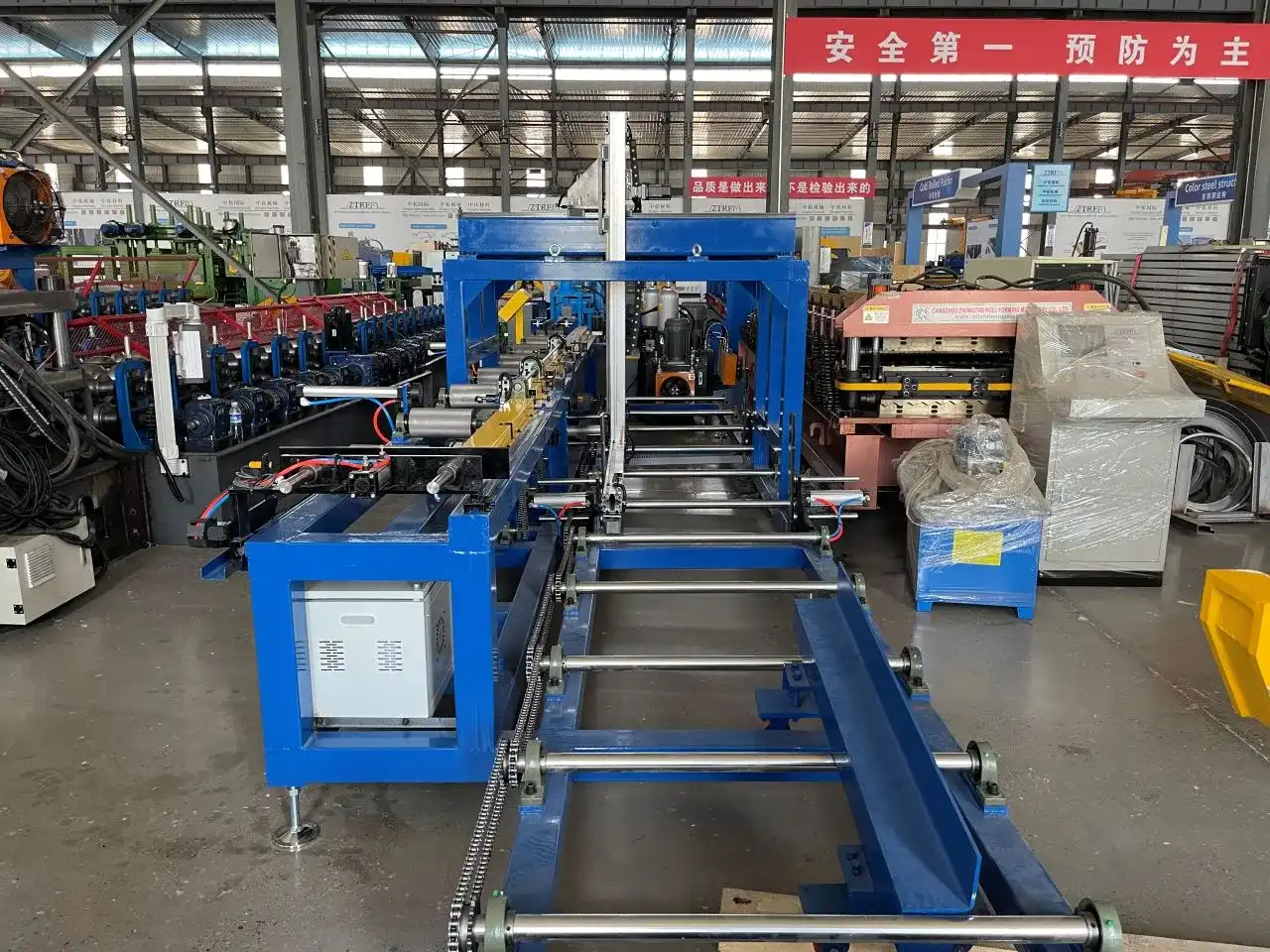
For a fully automatic machine to work well, it needs to do standard, high-volume work and have long-term supply contracts. Semi-automatic setups that punch offline and stack by hand work for new manufacturers and custom-order shops that don't make many things. For companies that make racks, online cutting and steady output work best most of the time. Steel service shops like it when shapes can be changed quickly. Customers who buy OEM and contract goods both want tools that can be used more than once. The choice should be based on the annual demand, the variety of profiles, and the number of workers who are available. You can add software later because it's made up of separate parts.
Avoiding Common Production Problems
Most flaws can be traced back to a few large causes. The profile can be bent if the leveling or roll alignment isn't right. Drills that are too dull make burrs, and when the die clearance is off, holes move. Tools that are dirty can scratch the metal layer. I think you should test the machine with your own coil, check the rollers often, and clean the punch often. When shops use their punches a lot, they may need to sharpen them every three to six months. Also, keep an eye on the real output. As you set up, swap out coils, and stack, the speed drops below the 8 m/min number. Start-up waste is cut down by installing things on-site, training operators, and providing support from afar.
Cost and Supplier Checks
Find out how much the machine costs and how much it costs per final meter. Count things like work, waste, energy, repairs, and spare parts. A clear quote spells out the parts, tools, spare parts, the cost of installation, training, delivery, the warranty, and anything else that might come up. Anyone who sells you a coil can make a sample for you. There is ZTRFM to back up this method. It was founded in 2014 and has ISO 9001, CE, and CAS certifications. We offer extra parts and professional help for life, and our engineers use AutoCAD, SolidWorks, and COPRA to make profiles.
Conclusion
If you want to make a lot of solar mounting systems, you need to make sure that the final shape can fit a single line. Because there is a lot of demand in the US, delivery times are short. Cutting and punching by hand adds time, waste, and mistakes to the process. A solar strut channel roll forming machine has functions like decoiling, leveling, punching, forming, shearing, and stacking. These all work together to make sure that the parts are all the same. The ZTRFM line can shape steel that is 1.5 to 2.5 mm thick at 8 m/min. It has a 22 kW main motor, 24 rollers, and hydraulic cutting. It can punch online, press, or not at all. When set up automatically or partially automatically, different amounts work best. A lot of mistakes happen because of problems with alignment, dull hits, or damage to the coating. If someone wants to buy one, they should compare the prices of different finished meters and try out different models with their own coils first.
FAQ
1. Can one machine produce different strut sizes?
Yes. Some of the sizes that the line can make are 41x41, 41x21, and 41x62. This means that one investment can cover more than one profile.
2. What material does the line handle?
Steel that is 90 to 230 mm wide and 1.5 to 2.5 mm thick can be fed into it. Please let us know the grade and finish of your coil so that we can make sure the design of the tool is correct.
3. How fast does the line run?
It forms at a speed of 8 m/min. The real output can change when the coils are punched, changed, or stacked, so I use effective output instead of quoted speed when planning capacity.
4. Which punching method should I choose?
For making a lot of things, you can use online hydraulic punching. A punching press can be used for hole patterns that are hard to understand. Offline punching can be used for short special runs.
5. What do you need for a quotation?
Please share your profile drawing along with the material and thickness, the number of slots, the lengths of the cuts, the voltage, the output you want, and the profile drawing.
Start Mass Producing Solar Mounting Structures with ZTRFM
We need you to send ZTRFM your profile drawing, coil grade, slot pattern, and output goal. They have been in business since 2014 and have ISO 9001, CE, and CAS certifications for the solar strut channel roll forming machines they make. All over the world, more than 150 countries buy their machines. Our engineers will suggest a good line that has OEM or ODM tools and a source that can be used for everything. You can email zhongtuorollforming@gmail.comto learn more.
References
1. U.S. Energy Information Administration, Today in Energy: Solar and Battery Storage to Make Up Most of New U.S. Electric-Generating Capacity in 2025 (2025)
2. SEIA and Wood Mackenzie, U.S. Solar Market Insight (2025)
3. UL, UL 2703: Standard for Mounting Systems, Mounting Devices, Clamping/Retention Devices, and Ground Lugs for Use with Flat-Plate Photovoltaic Modules and Panels (2015)
4. ASTM International, ASTM A653/A653M: Standard Specification for Steel Sheet, Zinc-Coated (Galvanized) or Zinc-Iron Alloy-Coated (Galvannealed) by the Hot-Dip Process (2020)
5. George T. Halmos, Roll Forming Handbook, CRC Press (2005)
6. International Organization for Standardization, ISO 9001: Quality Management Systems — Requirements (2015)