- English
- French
- German
- Portuguese
- Spanish
- Russian
- Japanese
- Korean
- Arabic
- Irish
- Greek
- Turkish
- Italian
- Danish
- Romanian
- Indonesian
- Czech
- Afrikaans
- Swedish
- Polish
- Basque
- Catalan
- Esperanto
- Hindi
- Lao
- Albanian
- Amharic
- Armenian
- Azerbaijani
- Belarusian
- Bengali
- Bosnian
- Bulgarian
- Cebuano
- Chichewa
- Corsican
- Croatian
- Dutch
- Estonian
- Filipino
- Finnish
- Frisian
- Galician
- Georgian
- Gujarati
- Haitian
- Hausa
- Hawaiian
- Hebrew
- Hmong
- Hungarian
- Icelandic
- Igbo
- Javanese
- Kannada
- Kazakh
- Khmer
- Kurdish
- Kyrgyz
- Latin
- Latvian
- Lithuanian
- Luxembou..
- Macedonian
- Malagasy
- Malay
- Malayalam
- Maltese
- Maori
- Marathi
- Mongolian
- Burmese
- Nepali
- Norwegian
- Pashto
- Persian
- Punjabi
- Serbian
- Sesotho
- Sinhala
- Slovak
- Slovenian
- Somali
- Samoan
- Scots Gaelic
- Shona
- Sindhi
- Sundanese
- Swahili
- Tajik
- Tamil
- Telugu
- Thai
- Ukrainian
- Urdu
- Uzbek
- Vietnamese
- Welsh
- Xhosa
- Yiddish
- Yoruba
- Zulu
5 reasons to invest in an aluminium roofing sheet making machine
Investing in an aluminium roofing sheet making machine is one of the smartest capital decisions a roofing manufacturer, steel service centre, or prefab builder can make today. Rather than depending on third-party panel suppliers with unpredictable lead times, owning production equipment puts control directly in your hands. Whether you run a high-volume warehouse project, an agricultural barn build-out, or a government mass-housing program, the right cold roll forming line converts raw PPGI, GI, Al-Zn, or aluminium coil into finished roofing profiles continuously, accurately, and profitably. Below are five compelling reasons why the investment makes sense right now.
Reason 1: Enhanced Production Efficiency and Capacity From Raw Coil to Finished Panel in One Continuous Pass
Modern cold roll forming lines combine all the steps—unwinding, progressive roll forming, hydraulic flying shear cutting, and run-out stacking—into a single, smooth process. That continuous design gets rid of the handling slowdowns that come up with human setups for multiple stations. A well-set-up line moving at 15–40 m/min can increase daily output by 30–50% compared to traditional stop-and-cut systems. This means that orders can be filled faster and projects can be finished on time.
In this case, a moving shear device is very helpful. While the panel is being cut, the shear moves along with it, so the roll former never stops moving. There is an increase in production flow without an increase in the number of workers. This is exactly the kind of capacity leverage that B2B procurement managers look for when they have to explain capital expenditures to their leadership teams.
Reason 2: Superior Product Quality and Consistency
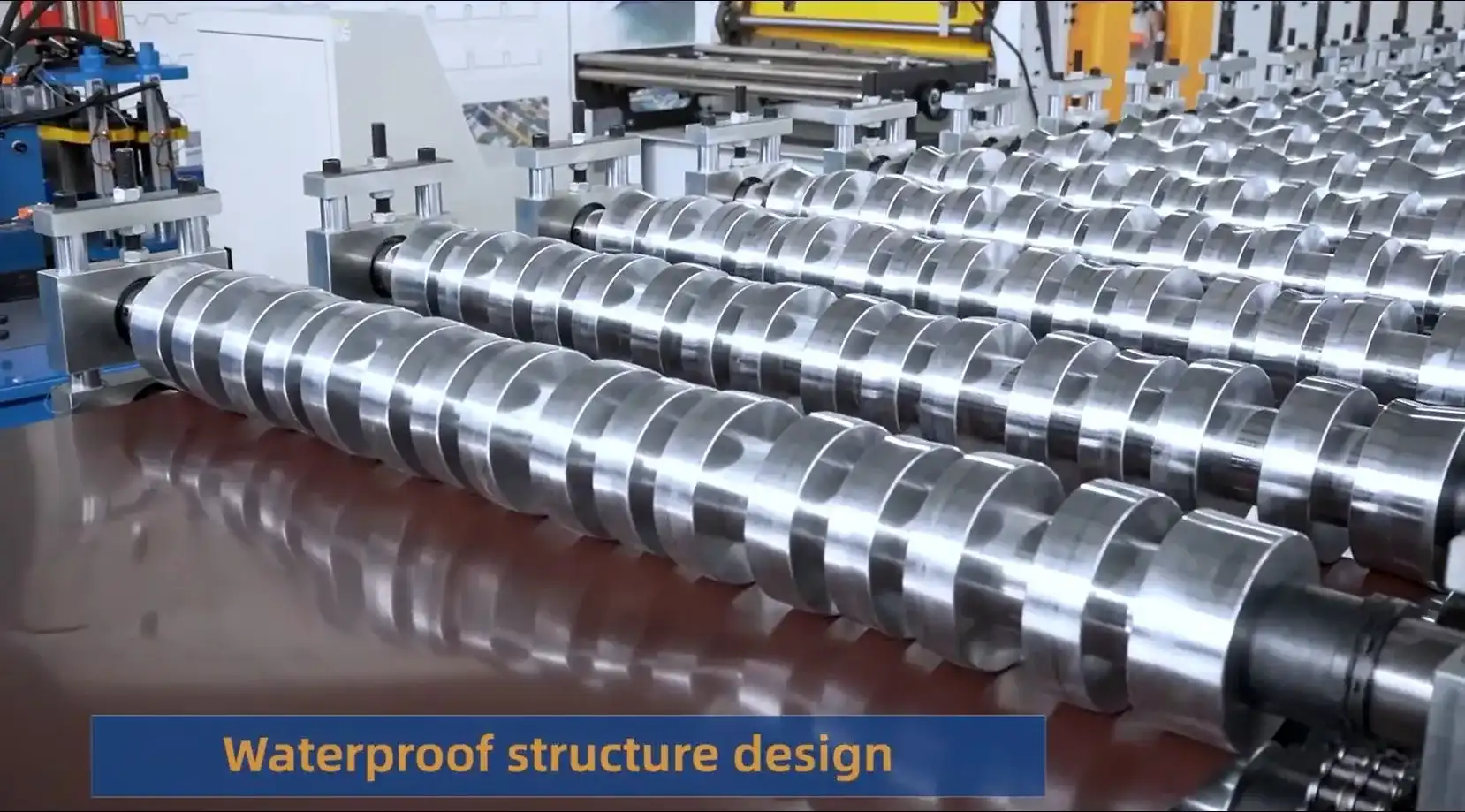
Hard-Chrome Rollers and PLC Precision Keep Tolerances Tight
When it comes to roofs, profile dimensions must be exact. The effective cover width must stay within ±1 mm, and the rib height must stay within ±0.5 mm so that the panels meet properly on site. To get that level of repeatability, rollers must be made from 40Cr or 45# forged steel that has been hardened and hard-chrome plated to protect paint-coated PPGI surfaces from scratching and wear.
As long as you use 24-gauge (0.6 mm) stock or heavier 22 Tru-Gauge™ stock, the Siemens PLC control makes sure that the linear speed of all the forming stations is the same. This way, the roller clearance always matches the material gage .032 inch aluminium sheet. Panels can be cut to any length from 3 feet to 20 feet 10 inches, and flashings can be as long as 20 feet 11 inches without having to be joined in the middle. When you keep the standard at that level, your customers will trust you, and they'll buy from you again.
Reason 3: Cost-Effectiveness and Energy Efficiency
Lower Operating Cost Over the Full Machine Lifecycle
The price of a roll forming line up front is real, but it's only one part of a much bigger picture. Before you decide to make something yourself, here are the main cost factors that will change the total cost of ownership equation in your favor:
- Elimination of panel mark-ups: When you buy coil stock and make your own panels, you get rid of the dealer profit that is built into every sheet you buy. For contractors who are working on a lot of projects at once, that savings adds up quickly over tons.
- Reduced scrap through PLC-controlled cutting: The precise hydraulic flying shear cuts panels to exact lengths ordered, reducing the waste that comes from the offcuts that are normally made by hand shearing.
- Energy-efficient drive systems: Variable-frequency drives on servo-controlled lines use power based on the real forming load instead of always drawing full power.
- Structural panel performance: The aluminium roofing sheet making machine makes structural panels that can span up to 6 feet between purlins. This means that fewer secondary steel members are needed on site, which lowers the cost of the materials for the whole project.
Because of these benefits, roofing contractors and sheet manufacturers don't have to worry about margin erosion when they outsource their panel supply. When the line is well taken care of and has hardened Cr12MoV cutter blades, it usually works for one to two years without needing new blades. This keeps unplanned downtime to a minimum and throughput predictable.
Reason 4: Flexibility and Adaptability for Diverse Business Needs
Quick-Change Cassette Tooling Serves Multiple Profile Markets
The U.S. market needs a lot of different profiles. PBR panels, R-panels, AG panels, curved profiles, and snap-lock profiles can all be used in a variety of building types and code settings. If you only have one profile machine, you can't reach as many people from the start.
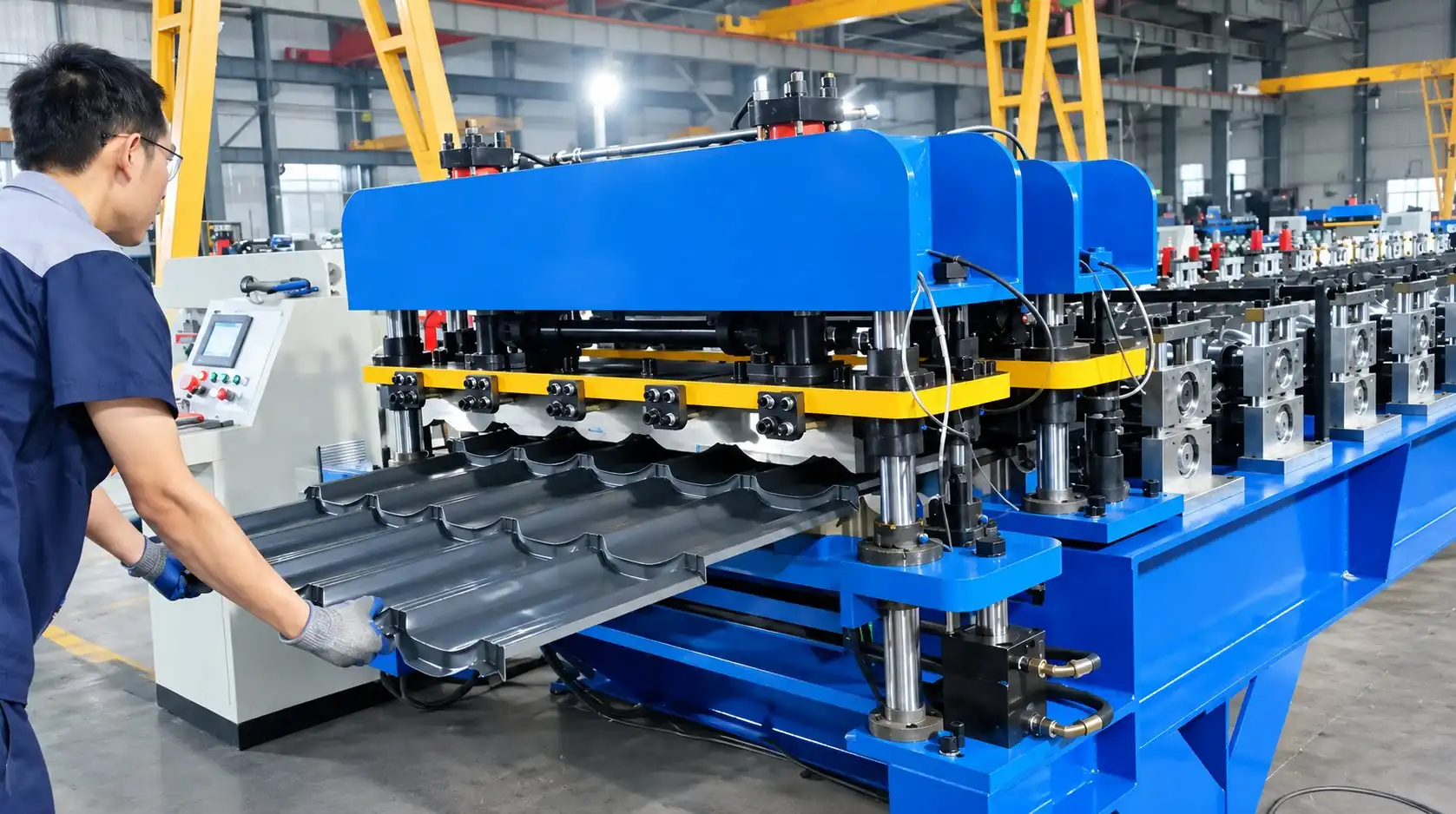
That problem can be fixed with quick-change cassette tools. With a cassette-type roll forming line, the whole roller base can be switched between profile families in a lot less time than with a standard full-roller shift. For example, one machine can be used for industrial workshops, agricultural barns, residential roofing, and wall cladding. It can cover both roof and vertical or horizontal wall panel runs, so you don't have to buy separate lines for each.
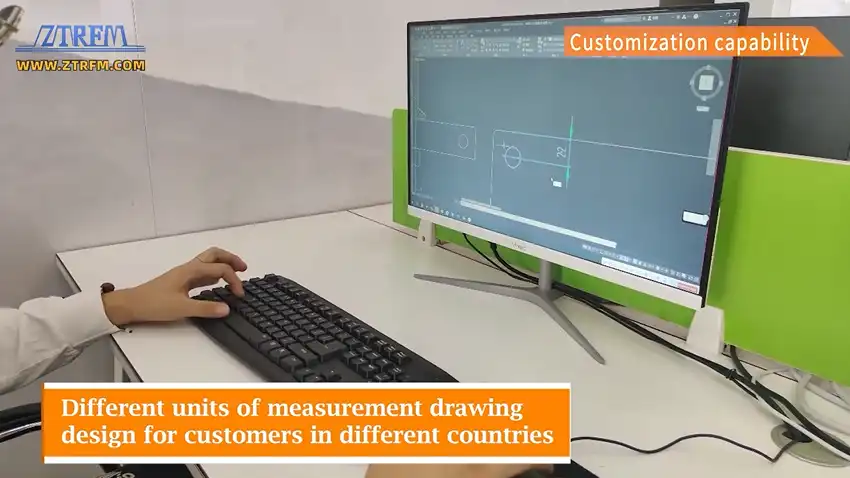
Profile-to-order tooling that is made from CAD models or real sample panels gives OEM buyers more options. You can get a gauge range increase from 0.3 mm to 1.2 mm, custom panel width specs, testing to make sure the paint and coatings work well together, and private-label aluminium roofing sheet making machine branding. That OEM depth means that equipment traders or installers who resell lines in their region can meet the unique needs of their clients instead of making them choose a standard catalog product.
Reason 5: Simplified Procurement and Strong Market Support
Verified Factory Credentials Reduce Sourcing Risk
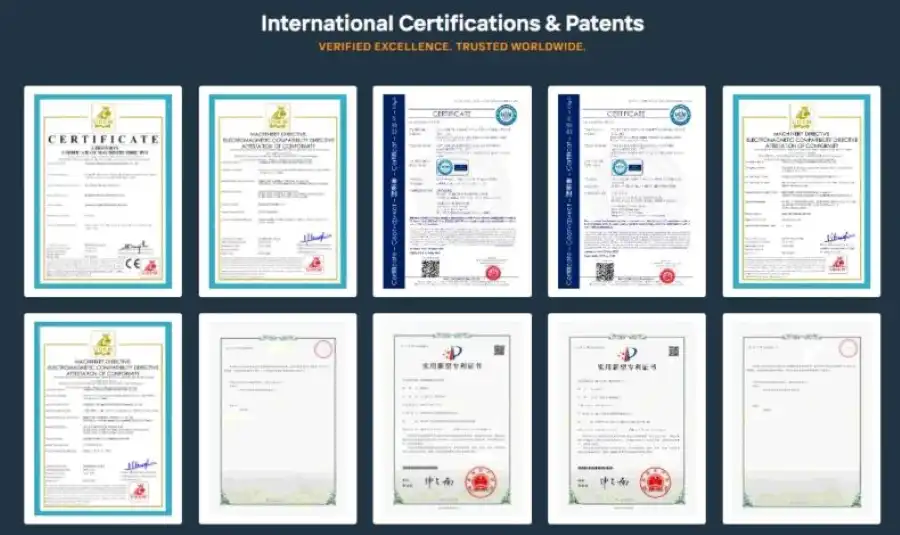
Buyers trust suppliers whose records can be checked, not just their price sheets. The basic framework for quality assurance is made up of ISO 9001, CE, and CAS certifications. Buyers get ongoing uptime protection that lasts long after the delivery date thanks to strategic technical cooperation with Siemens on cloud IoT and AI-assisted remote diagnostics.
Customers in North America expect video acceptance tests before the machine ships. This can be easily met by having the plant do sample production with the customer's own coil before the machine ships. Reference applications at Tata Group (India), DS Group (Korea), and HADDAD SET (Jordan) in more than 150 countries confirm that the technology works in real life under different weather conditions, voltage levels, and profile types, such as the 380V/50Hz and 220V/60Hz versions that are popular in regional markets.
One-stop sourcing includes a decoiler, roll former, flying shear, run-out table, spare roller sets, and spare parts. This makes logistics easier, cuts down on the number of vendors to manage, and gives you a single point of contact when you need help.
Conclusion
Having a cold roll forming line for aluminium and steel roofing panels gives you measurable benefits in terms of output, profile quality, operating costs, market flexibility, and control over the supply chain. From 24 and 22 Tru-Gauge™ panels to .032″ aluminium stock, and from 3 ft job-site cuts to 20 ft 10 in special lengths, the right aluminium roofing sheet making machine can handle all of the different specifications your clients ask for. The five reasons given here are always included in reviews of procurement projects because they deal with real practical problems instead of hypothetical benefits.
FAQ
1. What profiles can an aluminium roofing sheet making machine produce?
A well-set-up cold roll forming line can work with profiles that are corrugated, trapezoidal, IBR, PBR, R-panel, AG panel, Trimdek, delta rib, PV4/PV5, TR4/TR5, R101/R72, and snap-lock. The available profiles rely on the tools that are installed, and cassette-type machines can hold more than one profile on a single frame.
2. Can one machine process both steel and aluminium coil?
Yes. Within a gauge range of 0.3 mm to 1.2 mm, most lines can handle PPGI, GI, Al-Zn (Galvalume), and aluminium coil. Because different materials have different spring-back properties, roller clearance and making station gaps need to be changed for each one.
3. What electrical standard applies to machines shipped to the United States?
Electrical parts that are UL/ETL-compliant should be chosen by buyers in North America. Machines can be set up to work with a certain power and frequency. Before the line leaves the plant, pre-shipment video acceptance tests make sure that the electricity works.
4. How long does a cutter blade typically last?
Depending on how much they are used and how hard the material is, blades made from Cr12MoV tool steel usually need to be sharpened or replaced every one to two years. Cutting edges don't get burred when they are regularly oiled and checked for blade gaps.
5. Is remote technical support available after installation?
Yes. The Siemens cloud IoT interface allows for remote diagnostics and AI-assisted maintenance tracking, which lets workers find problems and fix them before they come to the site.
Ready to Bring Panel Production In-House? Contact ZTRFM
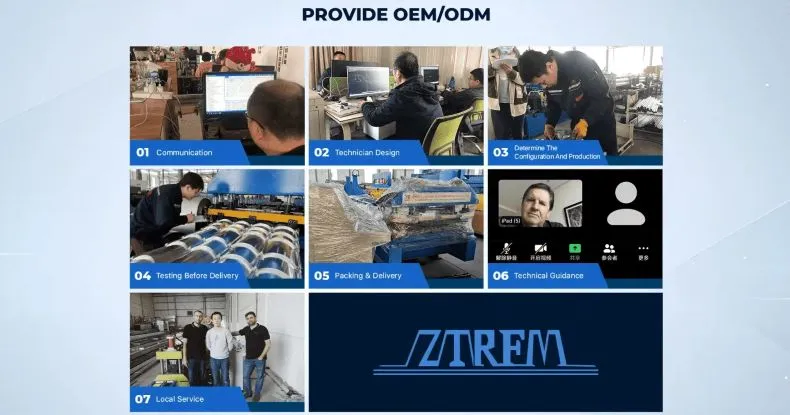
Since 2014, ZTRFM has been designing cold roll forming solutions in Botou, Cangzhou. They sell different types of aluminium roofing sheet-making machines to contractors, manufacturers, and integrators in more than 150 countries. Our lines are certified by ISO 9001, CE, and CAS, and they are controlled by Siemens PLCs with cloud IoT remote diagnostics to make sure they are always up and running. To get a line quote from a reputable aluminium roofing sheet making machine maker, send your panel drawing, coil specs, or output goal to zhongtuorollforming@gmail.com.
References
1. Metal Construction Association. Metal Roofing Systems Design Manual. 2021.
2. Sheet Metal and Air Conditioning Contractors' National Association (SMACNA). Architectural Sheet Metal Manual, 8th ed. 2018.
3. American Iron and Steel Institute (AISI). Cold-Formed Steel Design Manual. 2022.
4. International Organization for Standardization. ISO 9001:2015 Quality Management Systems — Requirements. 2015.
5. Bhattacharyya, D. Roll Forming Handbook. CRC Press, 2005.
6. Metal Roofing Alliance. Industry Market Research Report: U.S. Metal Roofing Demand Trends. 2023.