- English
- French
- German
- Portuguese
- Spanish
- Russian
- Japanese
- Korean
- Arabic
- Irish
- Greek
- Turkish
- Italian
- Danish
- Romanian
- Indonesian
- Czech
- Afrikaans
- Swedish
- Polish
- Basque
- Catalan
- Esperanto
- Hindi
- Lao
- Albanian
- Amharic
- Armenian
- Azerbaijani
- Belarusian
- Bengali
- Bosnian
- Bulgarian
- Cebuano
- Chichewa
- Corsican
- Croatian
- Dutch
- Estonian
- Filipino
- Finnish
- Frisian
- Galician
- Georgian
- Gujarati
- Haitian
- Hausa
- Hawaiian
- Hebrew
- Hmong
- Hungarian
- Icelandic
- Igbo
- Javanese
- Kannada
- Kazakh
- Khmer
- Kurdish
- Kyrgyz
- Latin
- Latvian
- Lithuanian
- Luxembou..
- Macedonian
- Malagasy
- Malay
- Malayalam
- Maltese
- Maori
- Marathi
- Mongolian
- Burmese
- Nepali
- Norwegian
- Pashto
- Persian
- Punjabi
- Serbian
- Sesotho
- Sinhala
- Slovak
- Slovenian
- Somali
- Samoan
- Scots Gaelic
- Shona
- Sindhi
- Sundanese
- Swahili
- Tajik
- Tamil
- Telugu
- Thai
- Ukrainian
- Urdu
- Uzbek
- Vietnamese
- Welsh
- Xhosa
- Yiddish
- Yoruba
- Zulu
Single vs Double Deck Roof Sheet Machine: Who Should Buy
Buy a single-deck roof sheet machine if you sell one profile in steady volume. Buy a tr4 and tr5 double layer roll forming machine if you sell two profiles, such as TR4 for walls and TR5 for roofs, and your shop has limited floor space or budget. The two decks share one frame but run one at a time, so the machine saves space rather than doubling output. If you must make both profiles at the same moment all day, two separate lines fit better. I explain each case below so you can match the machine to your orders.
How Single-Deck and Double-Deck Roof Sheet Machines Differ
What a Single-Deck Machine Does
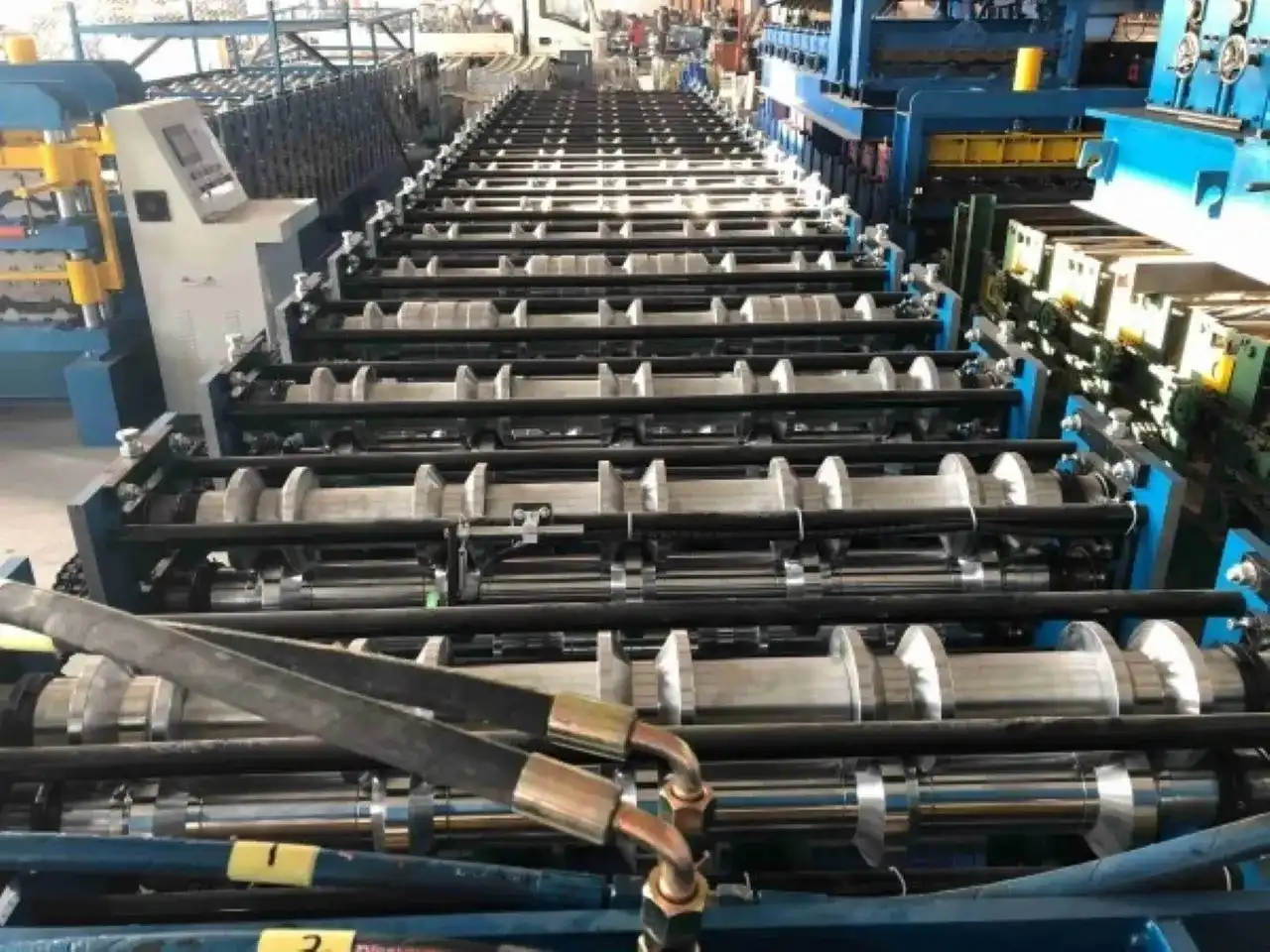
A single-deck roof sheet machine forms one profile. The coil goes onto the decoiler, passes through guiding and leveling, runs through the roller stations, and reaches the cutter. The Roll Forming Handbook by Halmos explains that roll forming bends metal gradually through successive roller stations, which keeps the shape consistent over long runs. This layout suits steady, high-volume work on one panel. Operators learn it quickly, and maintenance covers only one roller set. The limit appears when a customer asks for a second profile. You then need another machine, more floor space, and more installation work.
What a Double Layer Machine Adds
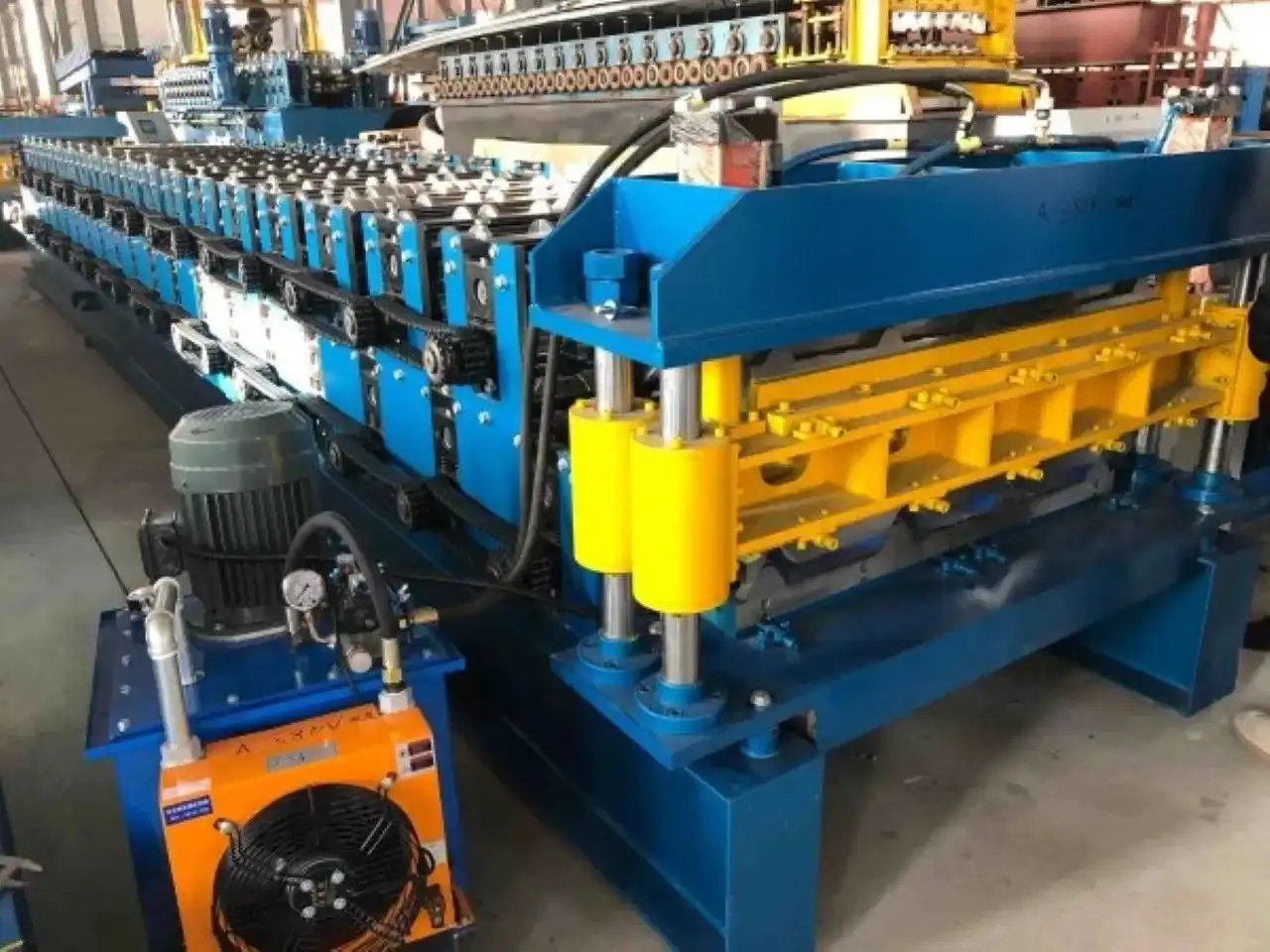
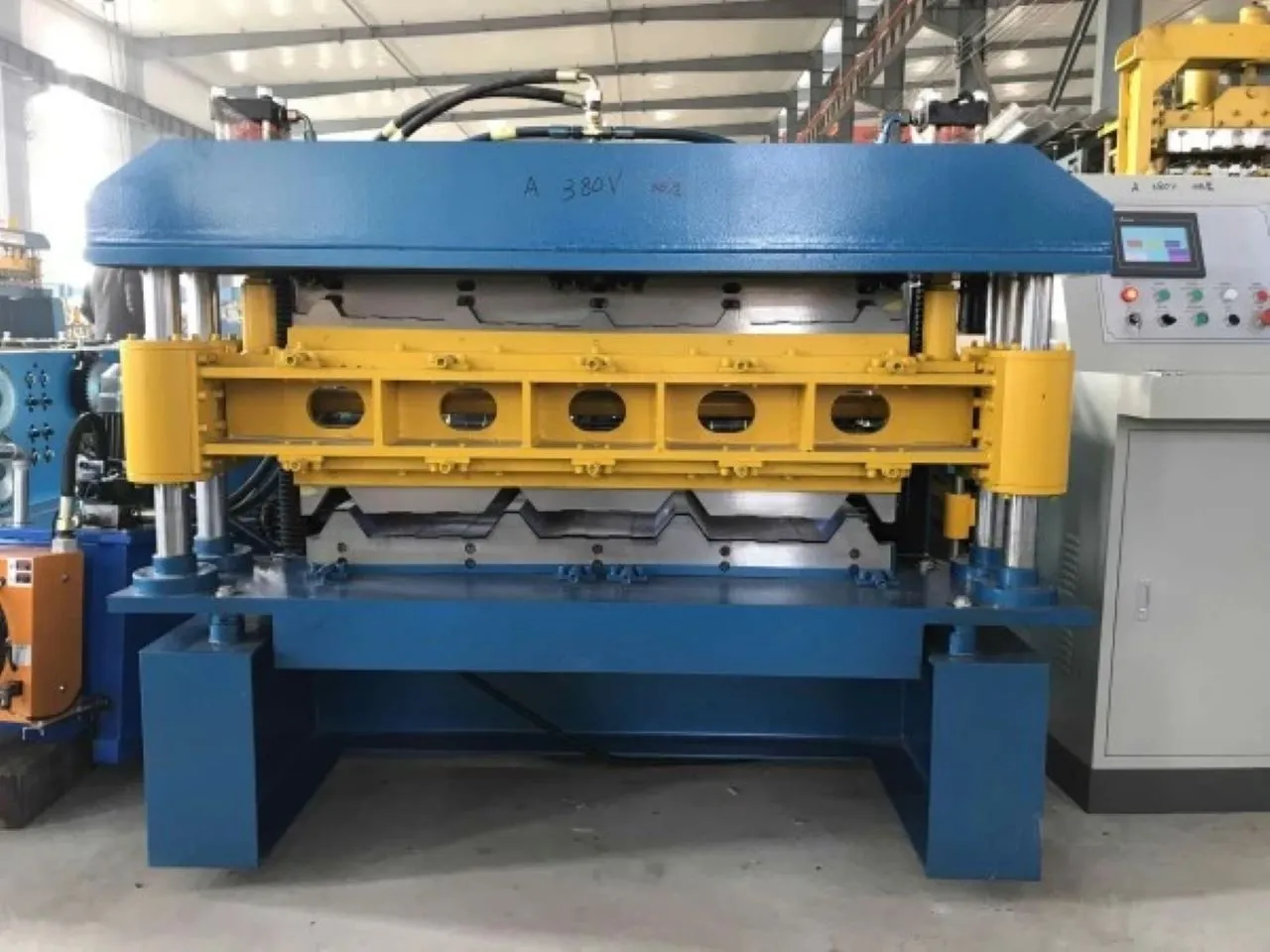
A double layer machine stacks two forming decks on one frame. Each deck carries its own roller set, so the machine makes two different profiles, such as TR4 and TR5. The decks work one at a time. That point matters. The design saves space, crane capacity, and budget compared with two single lines, but it does not double output. At ZTRFM, multi-layer composite forming is an in-house specialty. We build a reinforced shared frame with an independent hydraulic station for each deck. Other pairings, such as C8 with C20 or AG with PBR, can be built to order.
What the ZTRFM Specification Includes
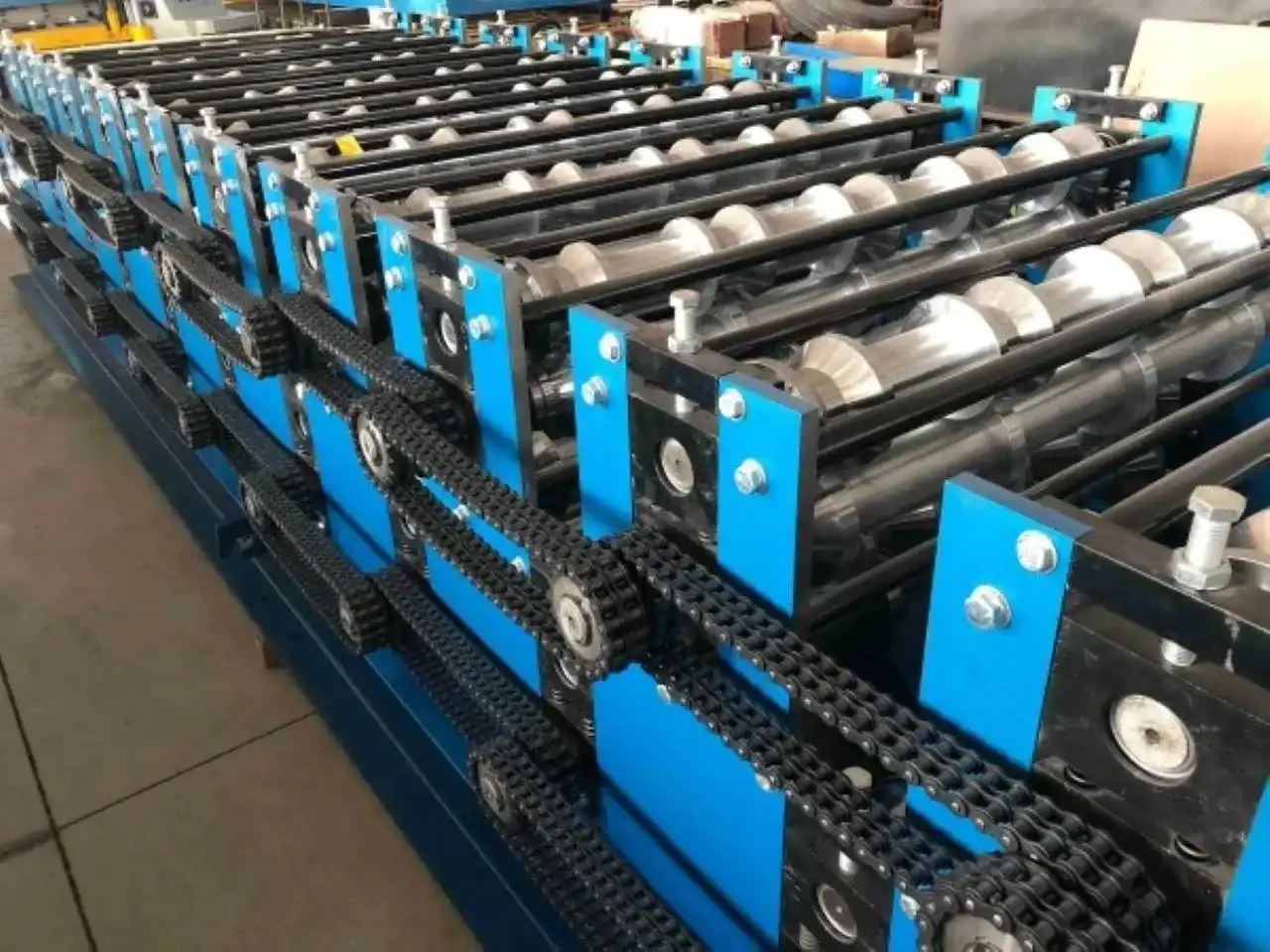
Here are the base specifications for our tr4 and tr5 double layer roll forming machines. The machine is designed to process PPGI, GI, aluminum (AI), and Galvalume (GL) coils with thicknesses ranging from 0.3 to 0.8 mm and coil widths of 1000 mm or 1250 mm, depending on the profile drawings. The forming system features a 16+18 roller station configuration, which can be adjusted according to specific production requirements. It uses 80 mm solid shafts and 45# steel rollers with hard chrome-plated surfaces for improved wear resistance. The main frame is constructed from 350 H-section steel to provide structural stability, while a chain transmission system drives the rollers. Buyers can choose an optional hydraulic automatic decoiler, and a manual decoiler is provided free of charge. These specifications offer a practical basis for comparing equipment quotations and evaluating different machine configurations.
Who Should Buy Which Machine
Buyers Who Fit a Single-Deck Line
Choose a single-deck line if one profile makes up most of your sales. A roofing shop that supplies only TR5 to the same distributors gains little from a second deck. A single deck also suits a small team that wants easy training and a lower purchase price. Still, think about the next two years. If a customer may ask for wall panels in a second profile, a single machine can leave you buying another line later. That purchase adds cost, floor space, and wiring work. If your order book shows one profile only, the simple route makes sense.
Buyers Who Fit a Double Layer Line
Three groups gain the most from a tr4 and tr5 double layer roll forming machine. The first is the start-up sheet producer with limited workshop space or budget. The second is the roofing contractor whose market centers on two main profiles, such as a wall panel and a roof panel. The third is the rental or lease fleet, since one unit can serve clients who need different profiles. Typical uses include combined wall and roof production, two regional roof profiles from one line, and seasonal switching between profiles. For US customers, pairings such as AG and PBR are possible to order.
Buyers Who Need Two Separate Machines
A tr4 and tr5 double layer roll forming machine has one important operational limitation: its two forming decks typically operate one at a time rather than simultaneously. If your production schedule requires both profiles to be manufactured during the same period, one deck must remain idle while the other is running. For manufacturers with consistently high demand for both profiles, sufficient floor space, and adequate staffing, investing in two separate production lines may be more practical. Before making a decision, calculate the monthly production volume required for each profile and compare those figures with the machine's available capacity across your operating shifts. If the double layer machine can meet the combined production requirements within the available working hours, it may offer a more space-efficient and cost-effective solution than installing two independent lines.
How to Compare Before You Order
Match Profile Drawings and Coil Data
Start with the drawings. TR4 and TR5 dimensions vary between markets, so send profile drawings that show effective width, rib height, pitch, and overlap. Then list your coil: material (PPGI, GI, AI, or GL), thickness within 0.3 to 0.8 mm, and width of 1000 mm or 1250 mm. For galvanized and aluminum-zinc coated steel, check the coating standards you buy to, such as ASTM A653 and ASTM A792. If one profile uses thinner steel than the other, tell us. We can discuss separate gauge ranges for each deck. Clear drawings let us set the roller layout correctly and avoid rework.
Check Output, Changeover, and Total Cost
Next, calculate real output. Panel length, cutting frequency, coil handling, and operator speed all affect daily footage, not forming speed alone. Ask each supplier for a changeover time in writing, because you will switch decks often. Then compare total cost, not only machine price. Add shipping, installation, spare parts, training, and warranty to every quote. Our double-layer design aims at the idea of two machines for about the price of 1.3. You can test that against two single-line quotes and see the difference in your own numbers.
Confirm Support, Voltage, and Delivery Terms
Finally, confirm support and shipping terms. Ask for the voltage and frequency your shop needs, since US plants run on 60 Hz power. Settle the Incoterm, lead time, payment milestones, and factory acceptance steps before you sign. If you need custom profiles, request an NDA that covers both tooling sets. ZTRFM was founded in 2014 in Botou, Cangzhou, a major roll forming hub in China. Our products hold ISO 9001, CE, and CAS certification, and we cooperate with Siemens on cloud IoT and AI remote maintenance. Our machines run in over 150 countries.
Conclusion
Single-deck and double-deck roof sheet machines serve different buyers. A single-deck line fits a business with steady demand for one profile, a small team, and a tight purchase budget. A tr4 and tr5 double layer roll forming machine fits start-up producers, contractors with two main profiles, and rental fleets that need two profiles from one frame, with the decks running one at a time. Two separate lines make sense when both profiles must run at the same moment. The decision rests on profile drawings, coil data, real output, changeover time, total cost, and support terms. The ZTRFM specification covers 0.3 to 0.8 mm coil, 80 mm solid shafts, chrome-plated 45# steel rollers, and a 350 H steel frame.
FAQ
1. Can the machine make TR4 and TR5 panels at the same time?
No. The decks run one at a time, and each deck has its own independent hydraulic station. This design saves space and budget, but it does not double output.
2. Which coil materials and sizes can it form?
It forms PPGI, GI, AI, and GL coil from 0.3 to 0.8 mm thick. Coil width is 1000 mm or 1250 mm, depending on your profile drawing.
3. Can you pair profiles other than TR4 and TR5?
Yes. We build pairings to order, such as C8 with C20 or AG with PBR. We can sign an NDA that covers the tooling for both profiles.
Request a TR4 and TR5 Double Layer Roll Forming Machine Quote from ZTRFM
If you want to compare a single deck, a double deck, or two lines, send your profile drawings and coil details to ZTRFM at zhongtuorollforming@gmail.com. As a tr4 and tr5 double layer roll forming machine manufacturer founded in 2014, with ISO 9001, CE, and CAS certification, and customers in over 150 countries, we offer OEM and ODM tooling and one-stop supply.