- English
- French
- German
- Portuguese
- Spanish
- Russian
- Japanese
- Korean
- Arabic
- Irish
- Greek
- Turkish
- Italian
- Danish
- Romanian
- Indonesian
- Czech
- Afrikaans
- Swedish
- Polish
- Basque
- Catalan
- Esperanto
- Hindi
- Lao
- Albanian
- Amharic
- Armenian
- Azerbaijani
- Belarusian
- Bengali
- Bosnian
- Bulgarian
- Cebuano
- Chichewa
- Corsican
- Croatian
- Dutch
- Estonian
- Filipino
- Finnish
- Frisian
- Galician
- Georgian
- Gujarati
- Haitian
- Hausa
- Hawaiian
- Hebrew
- Hmong
- Hungarian
- Icelandic
- Igbo
- Javanese
- Kannada
- Kazakh
- Khmer
- Kurdish
- Kyrgyz
- Latin
- Latvian
- Lithuanian
- Luxembou..
- Macedonian
- Malagasy
- Malay
- Malayalam
- Maltese
- Maori
- Marathi
- Mongolian
- Burmese
- Nepali
- Norwegian
- Pashto
- Persian
- Punjabi
- Serbian
- Sesotho
- Sinhala
- Slovak
- Slovenian
- Somali
- Samoan
- Scots Gaelic
- Shona
- Sindhi
- Sundanese
- Swahili
- Tajik
- Tamil
- Telugu
- Thai
- Ukrainian
- Urdu
- Uzbek
- Vietnamese
- Welsh
- Xhosa
- Yiddish
- Yoruba
- Zulu
PLC vs. Relay Control: Which System Is Better for Roll Forming Machines?
For most buyers, a PLC controlled roll forming machine is the better choice. A programmable logic controller lets you store profiles, set cut lengths on a screen, read fault alarms, and add punching or stacking later without rewiring. Relay control still works for a simple, single-profile line with low output and a tight budget. I wrote this guide to help you compare both systems by flexibility, diagnostics, maintenance, and total cost, so you can pick the simplest setup that fits your plan. I also share the specifications of our 18-stand machine.
Why the Control System Matters in a Roll Forming Machine What the Controller Coordinates
Following the steps of decoiling, feeding, forming, length measurement, cutting, and discharge, a roll forming line takes the coil through the process. Every step is timed by the control system. A defect is detected, the main motor is started, the encoder is read, the hydraulic cutter is triggered at the predetermined length, and the line is stopped when the fault occurs. Sheets are delivered with a constant length and clean cuts when these processes are carried out in a coordinated manner. In the event that they wander, you will have scrap, jams, and operators having to manually solve issues.
How Control Affects Quality and Downtime
The controller is responsible for shaping four outcomes that are seen on a daily basis: correct length, line speed, operator workload, and downtime. Roofing and wall sheets are kept within tolerance by a consistent cut cycle, which ensures that panels are able to fit on site. It is also important to discover faults quickly. When compared to a line that requires an hour of terminal monitoring, a line that identifies the failing sensor automatically resumes sooner. Nevertheless, control is only one of several factors. Additional factors that determine ultimate accuracy include tooling, shaft stiffness, coil quality, and calibration.
What to Compare Before Requesting a Quote
The price alone paints a very limited image. Write down your profile drawings, the material and thickness of the coil, the production you want to achieve, and the shifts you want to work each day before you ask for quotations. Include your knowledge of maintenance, your need for replacement parts, and any plans you have to add punching or stacking. Ask each manufacturer how the electrical cabinet complies with NFPA 79, which is the electrical standard for industrial equipment, as well as the standards that your local inspector has established. If you are a business that operates in the United States. The providers are able to quote the same scope when they have clear information, which allows you to compare proposals objectively.
How PLC and Relay Control Work, and How They Differ
What Is a PLC Controlled Roll Forming Machine?
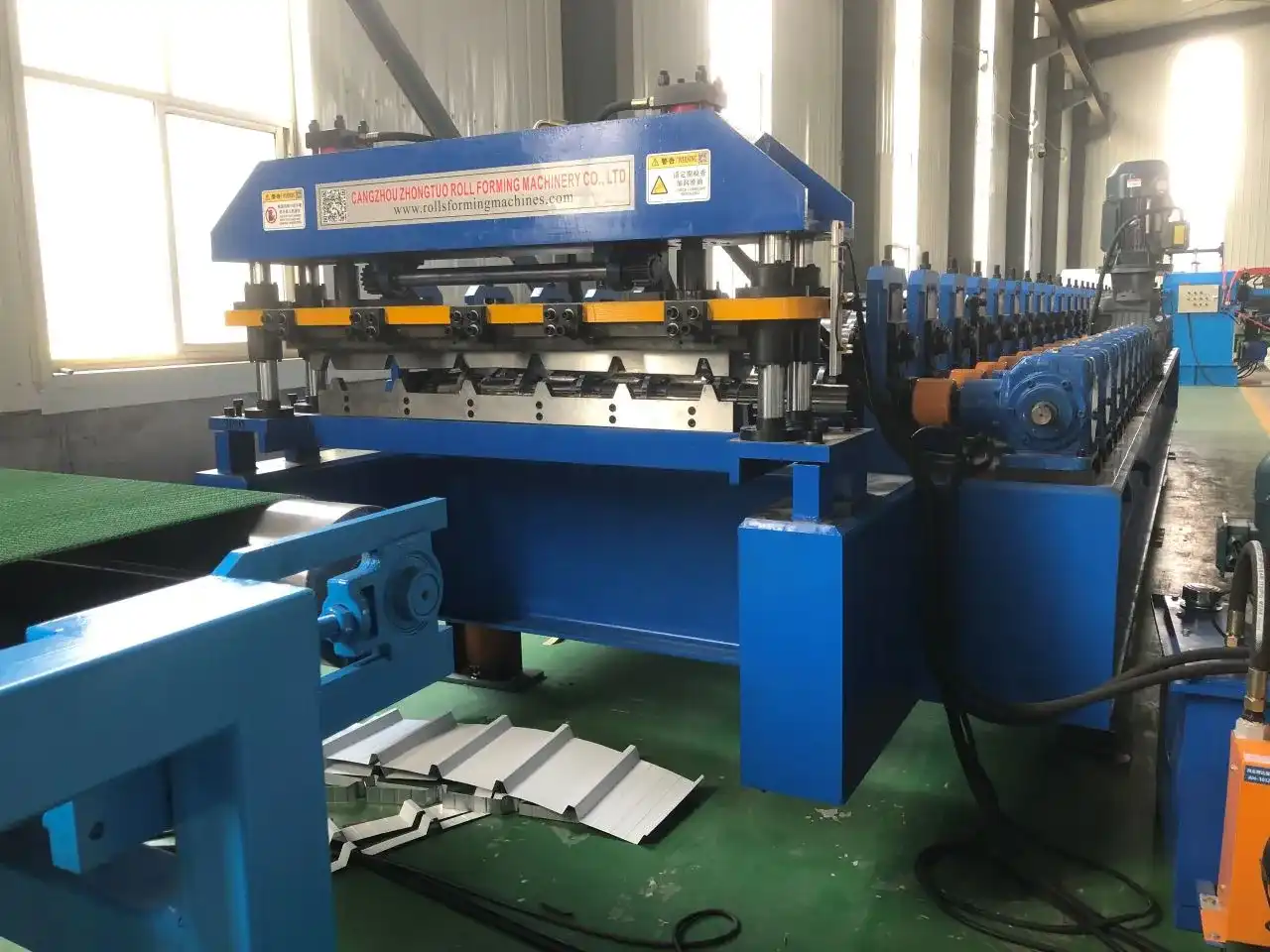
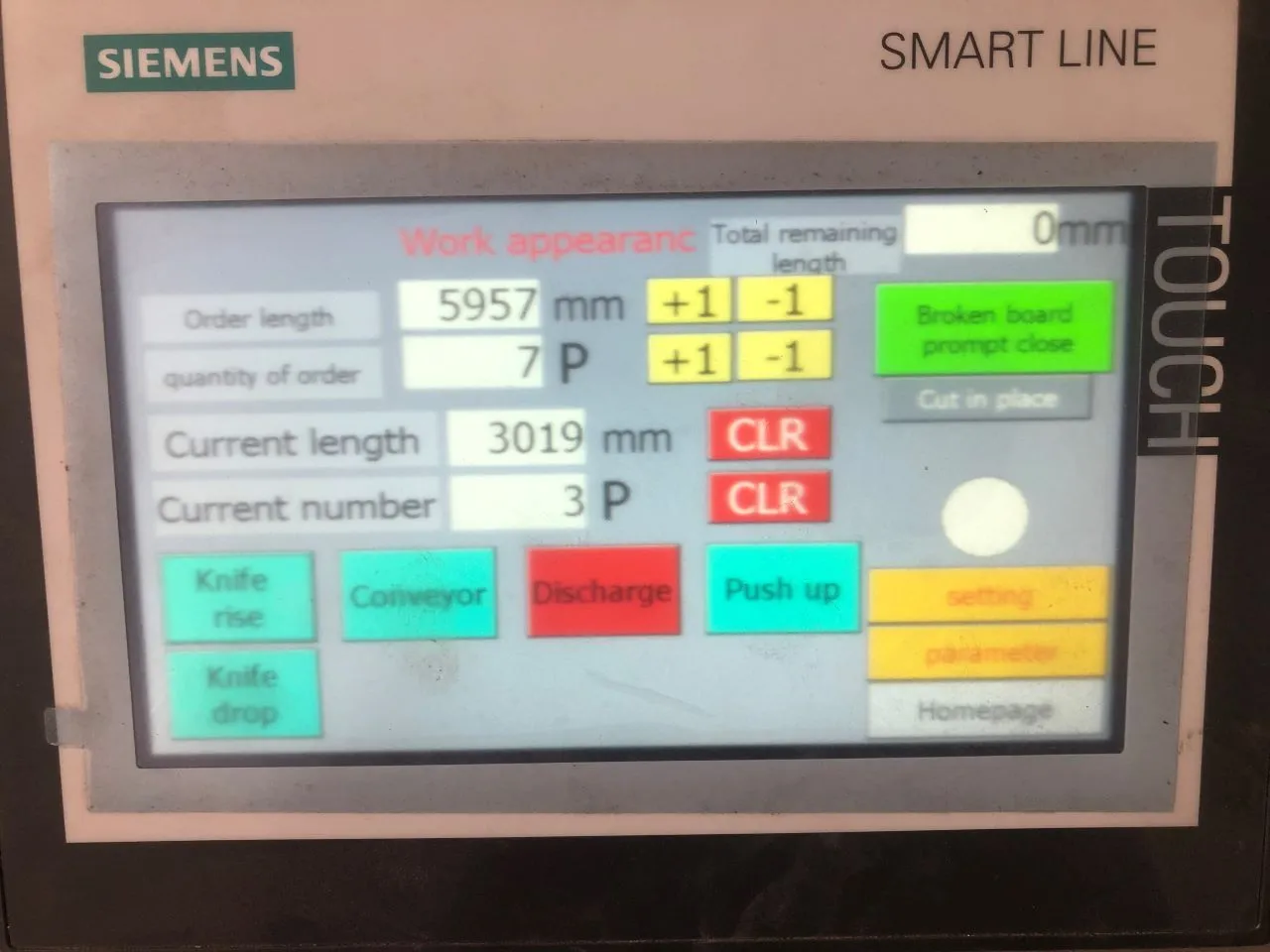
A PLC controlled roll forming machine uses a programmable logic controller to read sensors and command motors, hydraulic units, and the cutter. The PLC holds the logic. The HMI, or touch screen, lets the operator enter length, quantity, speed, and mode. An encoder measures the strip as it moves, and the PLC cuts when the count reaches your set length. PLCs date to 1968, when engineers introduced the first unit to replace hardwired relay panels in car plants. The IEC 61131-3 standard now defines their programming languages.
How Relay-Controlled Machines Work
Hardwired logic is what drives a machine that is controlled by relays. Through the use of permanent wiring, relays, contactors, timers, limit switches, and solenoid valves are all connected to one another, and each action follows a predetermined course. In the case of a straightforward start-and-stop line that creates a single profile, this method is simple to comprehend, and a great number of electricians are familiar with it. The disadvantage becomes apparent whenever anything is altered. The process of rewiring is often required when changing the sequence, and locating a defect may require inspecting a large number of terminals one at a time. A limited amount of warning information is provided by relay panels, and they only save a few settings.
Key Differences in Flexibility and Diagnostics
One of the most notable distinctions is adaptability. A programmable logic controller (PLC) may be reprogrammed to accommodate new profiles, cut sequences, or materials, while a relay panel maintains its preset logic until it is rewired by someone else. Not only does a PLC display alerts and status on the human-machine interface (HMI), but it also makes it simpler to link punching machines, stackers, and production counters. One thing to keep in mind is that a PLC does not guarantee accuracy on its own. Tooling, drive backlash, material straightness, and calibration are only a few of the factors that continue to influence cut length. Not only should purchasers evaluate the control cabinet, but they should also evaluate the whole system.
Advantages, Disadvantages, and Total Cost
PLC Advantages and Drawbacks
A PLC allows you to save recipes, do automated cutting, improve synchronisation, send alert signals, and simplify the process of adding on. These features are beneficial when you run several profile sizes or work numerous shifts since they reduce the number of manual modifications that operators need to make and allow them to locate defects more quickly. Despite this, the tradeoffs are quite real. There is often a higher initial cost associated with a PLC line, and your crew will need some training. In order to prevent a failed module from causing a prolonged halt in production, it is important to maintain a software backup, verify the compatibility of components, and store crucial replacement parts.
When Relay Control Still Makes Sense
My recommendation to every buyer is not to go with a PLC. It is possible to use relay control if you just need to operate one steady profile at a moderate output, if you need limited automation, and if you are required to adhere to a tight budget. It could be more suitable for a small workplace with electricians who are already familiar with relay circuits. In the next several years, you should ask yourself if you will add a second shift, a punching unit, or a second profile to your workforce. Rewiring at a later time might end up being more expensive than beginning with a PLC if the answer is yes.
Efficiency and Total Cost of Ownership
Compare the total cost of a PLC controlled roll forming machine, not only its purchase price. Count tooling, installation, training, energy, labor, maintenance, spare parts, downtime, and later upgrades. A PLC can reduce setup errors, speed up changeovers, and shorten troubleshooting, but actual output still depends on profile shape, steel grade, thickness, forming stations, and operator skill. Ask each supplier for test data, cutting tolerances, and changeover times. If possible, request a factory acceptance test using your own drawings and material, and watch the machine run before it ships.
How to Choose the Right System and What ZTRFM Offers
Match Control to Your Production Plan
Begin with the application you want to use, whether it be purlins, wall panels, roofing sheets, or bespoke parts. The next step is to verify the material, thickness, profile size, tolerance, output, and shifts. The relay control system is suitable for single-profile, low-volume operations. Multiple profiles, automated length control, and an extension in the future are all possible with a PLC. Also include help from the provider on the same checklist. Ask about the brands of the components, the electrical drawings, the software backups, the remote assistance, the installation, the training, the guarantee, and the lead times for the replacement parts. In comparison to a low price, a precise response to each topic informs you more about the product.
Technical Features Worth Checking
Examine the arrangement in its entirety. In addition to allowing for the entering of length and quantity, the HMI should also include manual and automated modes, alerts, counters, recipes, and a language that is simple for your operators to understand. The encoder and cutter should be adjusted to your desired speed and tolerance. When working on activities that are either more time-consuming or more stringent, servo tracking might be helpful. Additionally, verify the capacity of the decoiler, the alignment of the feed, the hydraulic system, emergency stops, overload protection, cabinet cooling, and determine whether or not the line is capable of accepting punching or stacking equipment in the future.
Common Purchasing Mistakes
One of the most typical errors is purchasing the item with the lowest price. There is a possibility that instrumentation, an automated decoiler, installation, training, export packaging, and replacement parts are not included in that quotation. The assumption that all PLC machines work in the same manner is another error. Results are impacted by a number of factors, including frame strength, rollers, motor, sensors, cutter, and software. Before the manufacturing process begins, you should verify that your final designs, steel grade, thickness, tolerance, and coil data are accurate. In order to prevent the machine from being under-specified, it is important to inform the manufacturer of any future profiles, greater speeds, or more punching.
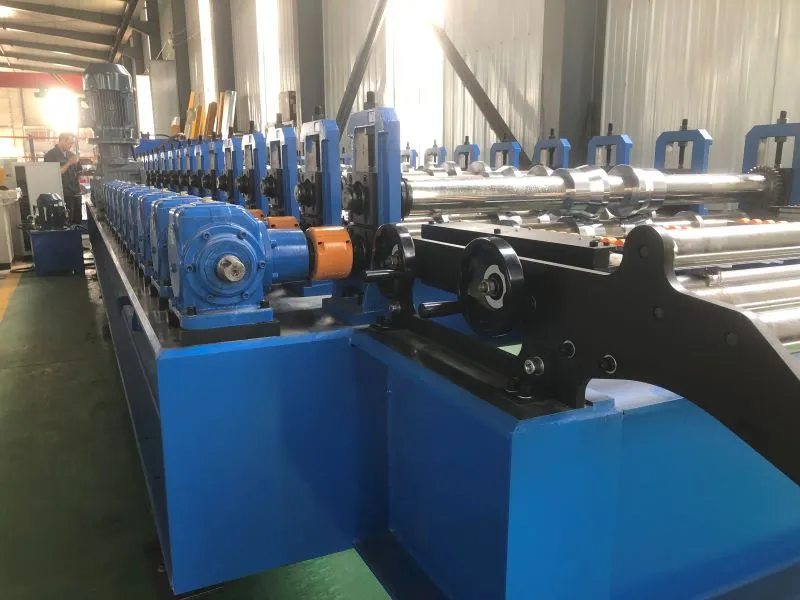
ZTRFM PLC Controlled Roll Forming Machine Specifications
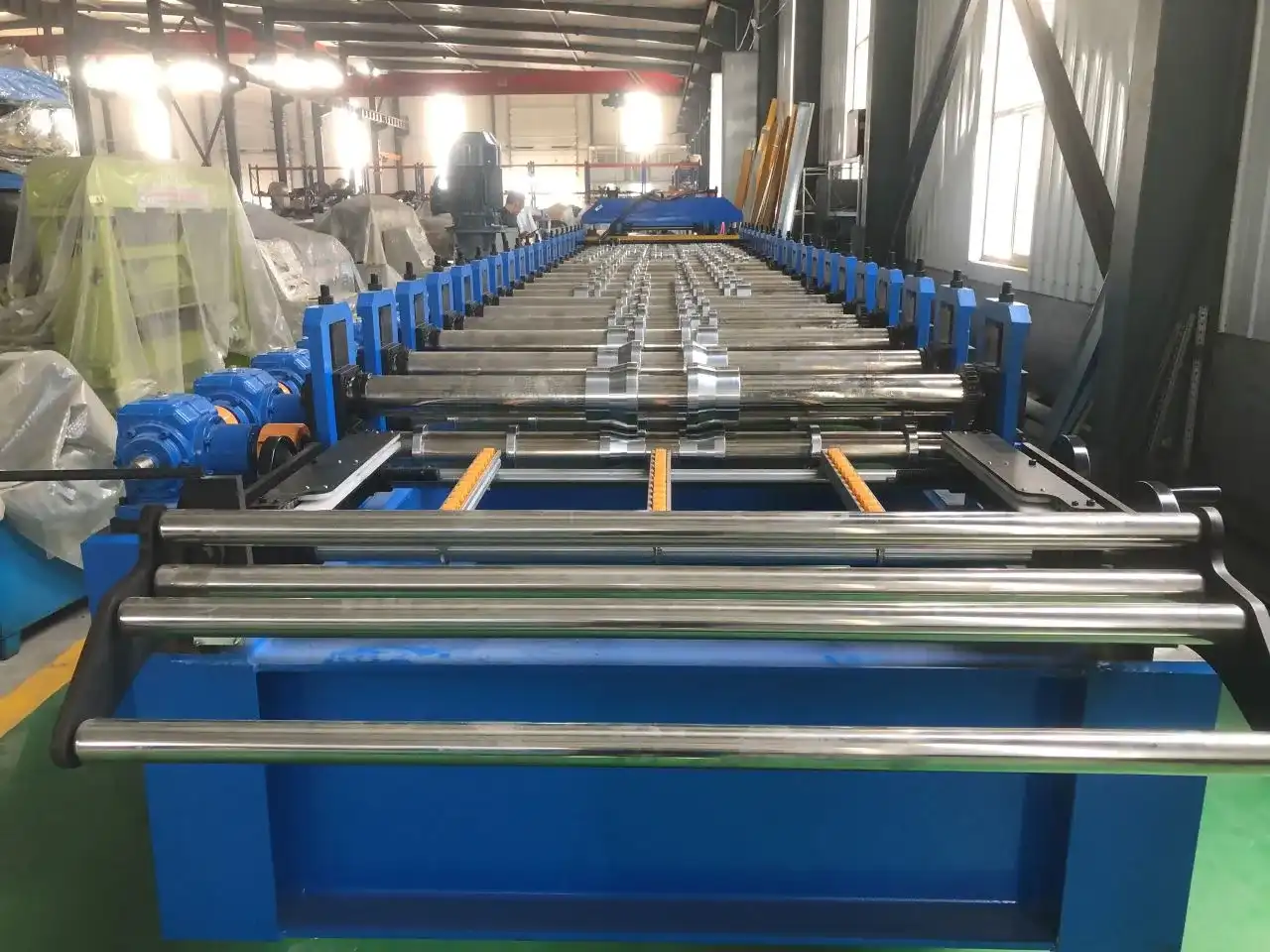
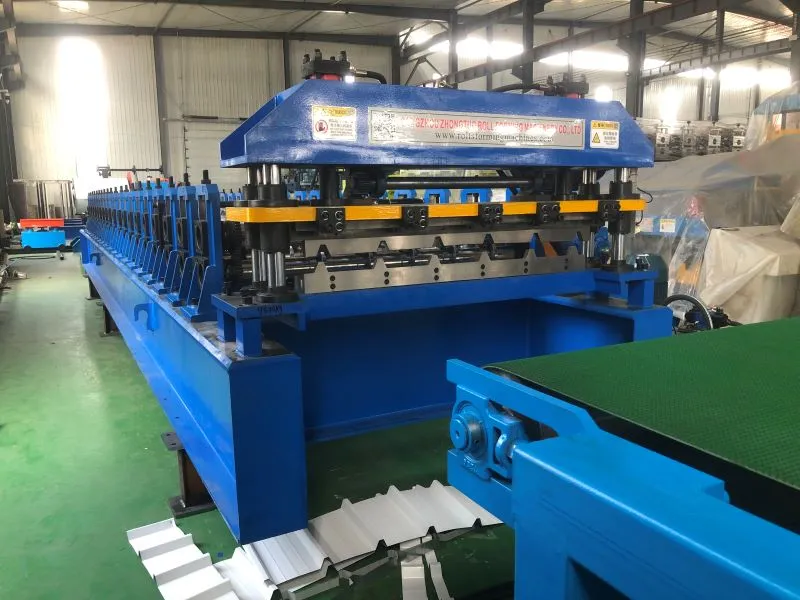
The entry machine that we use is equipped with a Siemens PLC and an Omron encoder. In PPGI, GI, Alzn, stainless steel, and aluminium, it may produce coils with thicknesses ranging from 0.3 to 0.8 millimetres. 18 forming stands, 40Cr rollers that have been hardened and chromed, and 42Cr shafts with a diameter of 75 mm are all included in its construction. There is a chain and gear gearbox that is powered by a primary motor that is 7.5 kW, and the cutter is powered by a hydraulic unit that is 4 kW. 15 to 20 meters per minute is the pace at which production occurs. We adjust the profile so that it corresponds to the drawing or sample you provided.
Conclusion
The choice between PLC and relay control comes down to production needs. Relay panels use fixed wiring, cost less, and suit one stable profile at low output, but they need rewiring for changes and offer limited diagnostics. A PLC controlled roll forming machine stores recipes, controls cut length, displays alarms, and accepts punching or stacking later, though it costs more at the start and needs trained staff. Accuracy still depends on tooling, drive condition, material, and calibration. Comparing total cost, which includes tooling, training, downtime, and upgrades, gives a clearer picture than comparing prices. For multiple profiles, longer shifts, or planned growth, PLC control is usually the stronger fit.
FAQ
1. Is a PLC always more accurate than relay control?
No. A PLC improves timing and length tracking, but tooling, drive backlash, material straightness, and calibration set the final tolerance. Judge the whole machine.
2. Can I add punching or stacking later?
Usually yes. PLC architecture accepts added equipment more easily than fixed relay wiring. Tell your supplier early, so the cabinet and program have room for it.
3. What affects the price of a PLC roll forming machine?
Profile requirements, automation level, machine capacity, installation, component brands, and service scope all affect price and delivery time. Servo tracking costs more than standard encoder length tracking.
4. Does ZTRFM offer remote support?
Yes. We provide remote diagnostics and cooperate with Siemens on cloud IoT and AI remote maintenance, which helps reduce downtime.
Request a PLC Controlled Roll Forming Machine Quote from ZTRFM
Looking for a PLC controlled roll forming machine supplier that builds to your drawing? Cangzhou Zhongtuo, known as ZTRFM, has made cold roll forming machines since 2014 and holds ISO 9001, CE, and CAS certificates. We export to over 150 countries and can bundle the decoiler, former, stacker, and spare parts. Send your profile, coil data, and voltage to zhongtuorollforming@gmail.comfor details.