- English
- French
- German
- Portuguese
- Spanish
- Russian
- Japanese
- Korean
- Arabic
- Irish
- Greek
- Turkish
- Italian
- Danish
- Romanian
- Indonesian
- Czech
- Afrikaans
- Swedish
- Polish
- Basque
- Catalan
- Esperanto
- Hindi
- Lao
- Albanian
- Amharic
- Armenian
- Azerbaijani
- Belarusian
- Bengali
- Bosnian
- Bulgarian
- Cebuano
- Chichewa
- Corsican
- Croatian
- Dutch
- Estonian
- Filipino
- Finnish
- Frisian
- Galician
- Georgian
- Gujarati
- Haitian
- Hausa
- Hawaiian
- Hebrew
- Hmong
- Hungarian
- Icelandic
- Igbo
- Javanese
- Kannada
- Kazakh
- Khmer
- Kurdish
- Kyrgyz
- Latin
- Latvian
- Lithuanian
- Luxembou..
- Macedonian
- Malagasy
- Malay
- Malayalam
- Maltese
- Maori
- Marathi
- Mongolian
- Burmese
- Nepali
- Norwegian
- Pashto
- Persian
- Punjabi
- Serbian
- Sesotho
- Sinhala
- Slovak
- Slovenian
- Somali
- Samoan
- Scots Gaelic
- Shona
- Sindhi
- Sundanese
- Swahili
- Tajik
- Tamil
- Telugu
- Thai
- Ukrainian
- Urdu
- Uzbek
- Vietnamese
- Welsh
- Xhosa
- Yiddish
- Yoruba
- Zulu
Poultry and Livestock Shed Panels: Equipment Selection
Poultry and livestock shed panels need the right equipment behind them, and a metal wall panel machine sits at the center of that choice. Start with the shed. Moisture, ammonia, washdowns, and temperature swings decide the panel profile, coating, and thickness. Then match those needs to the machine's forming stations, cutting system, controls, and output. A line that fits your profile, material, and volume gives steady panel quality and less scrap. This guide covers panel types, machine function, specification checks, common mistakes, and supplier questions, so you can request a quote with clear information.
Start With the Shed and the Panel
What Poultry and Livestock Sheds Demand From Wall Panels
The walls of poultry houses, pig barns, dairy buildings, and agricultural warehouses are subjected to a variety of environmental factors, including ammonia gas, humidity, cleaning chemicals, and temperature variations. In the beginning, these circumstances target coatings and joints that are weak. As a result, panels that maintain their shape minimize gaps, which improves insulation performance and makes washdowns simpler. I usually recommend to prospective purchasers that they make a note of the sort of shed, the environment, and the cleaning schedule before they look at any equipment. The coating, thickness, and profile are all determined by this list. Additionally, it has an effect on the machine since the line needed to make the material of choice must do it without scratching the paint or causing waves on parts that are flat.
Panel Types Used in Agricultural Buildings
A single-layer profiled sheet, corrugated and ribbed panels, concealed-fixing panels, and insulated sandwich panels are the typical options that farm builders use when making their selections. Due to their lower cost and quicker installation time, single-skin sheets are an excellent choice for ventilated barns and storage buildings. It is important for closed poultry houses to have insulated panels because they maintain a more consistent temperature inside. The screws are concealed by concealed-fixing profiles, which also provide a cleaner appearance; nevertheless, these profiles need precise shaping. Every category needs its own distinct line. A roll forming machine is required for a single-skin profile, but a sandwich panel requires additional core and bonding procedures to be completed. The panel design should be chosen initially, followed by the equipment.
Materials and Insulation Cores
Common coil options include galvanised steel, galvalume, and pre-painted steel (PPGI/PPGL). Galvalume is often used. Considering that zinc-coated steel sheet is covered by ASTM A653, purchasers are able to evaluate coating grades based on a common standard. Aluminium or stainless steel are two materials that may be used in tougher environments. Because of the softer nature of aluminium, rollers need to be smooth and strongly chromed in order to avoid galling. EPS, rock wool, and PIR/PUR cores are often considered by purchasers when it comes to insulated panels. Each of these cores has its own cost, fire, and thermal behaviour. Communicate your coil type and thickness to the provider as soon as possible, since they are the ones that determine the roller material and station pressure.
How a Metal Wall Panel Machine Works and How to Pick One
The Roll Forming Process Step by Step
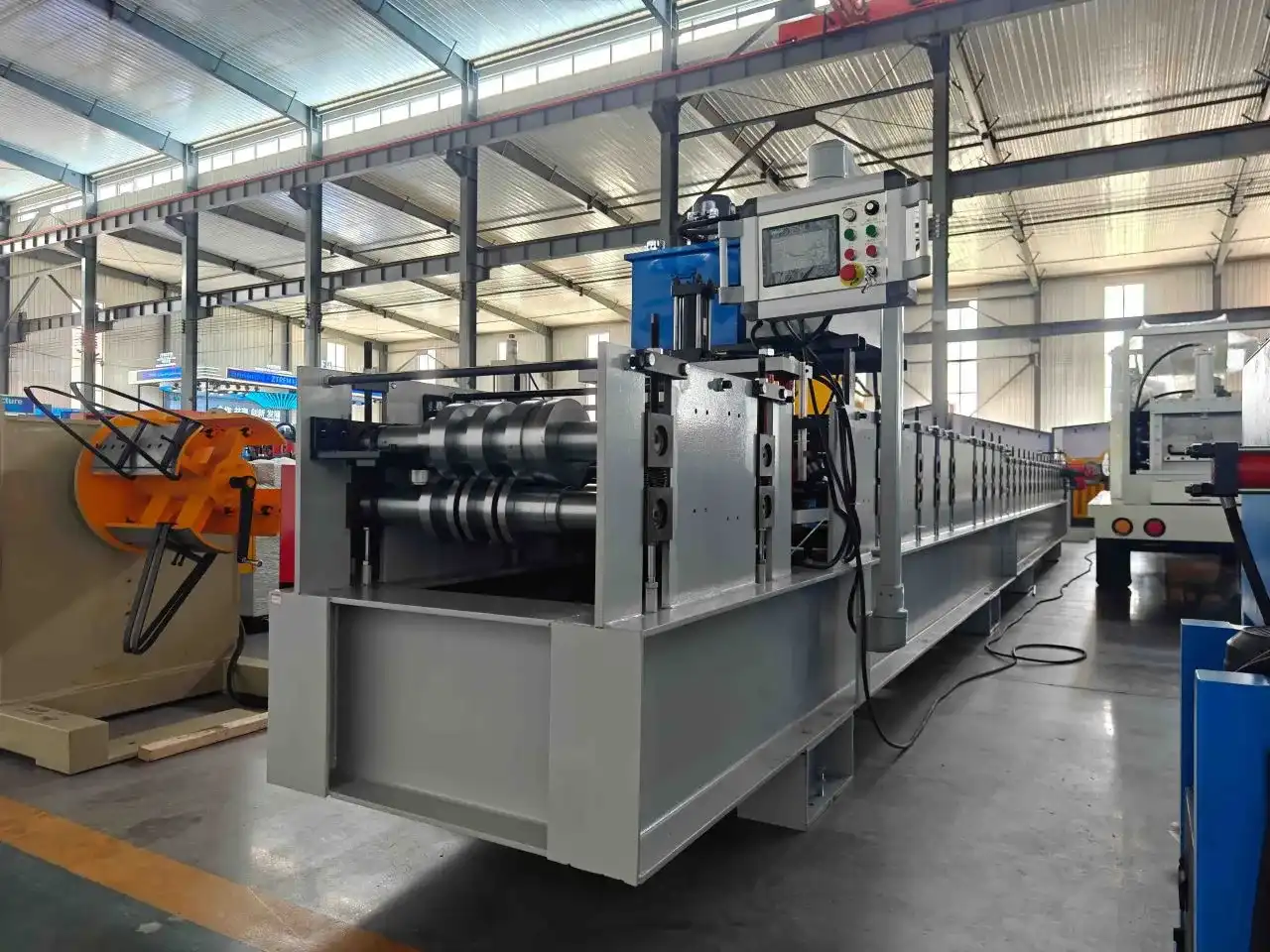
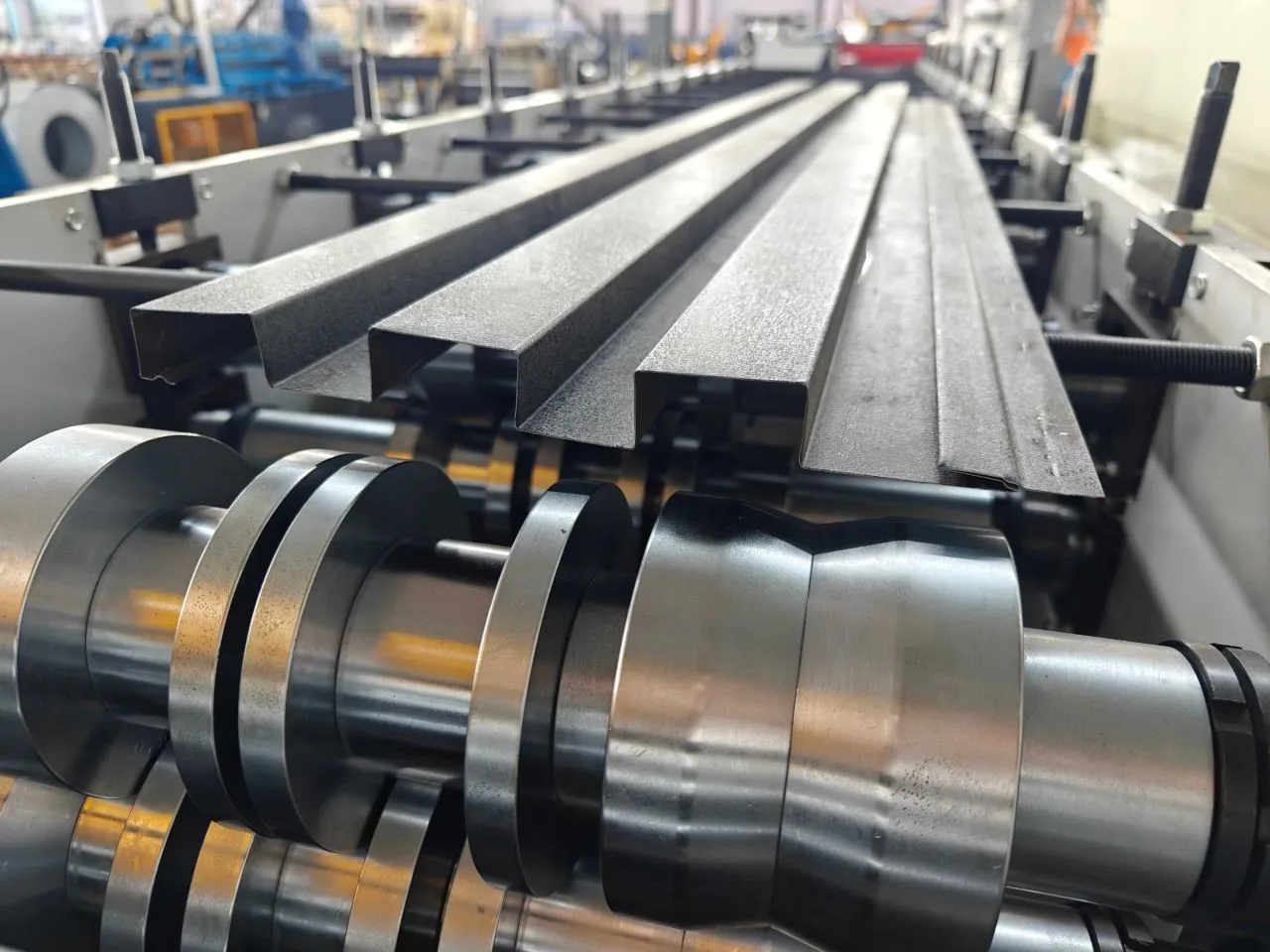
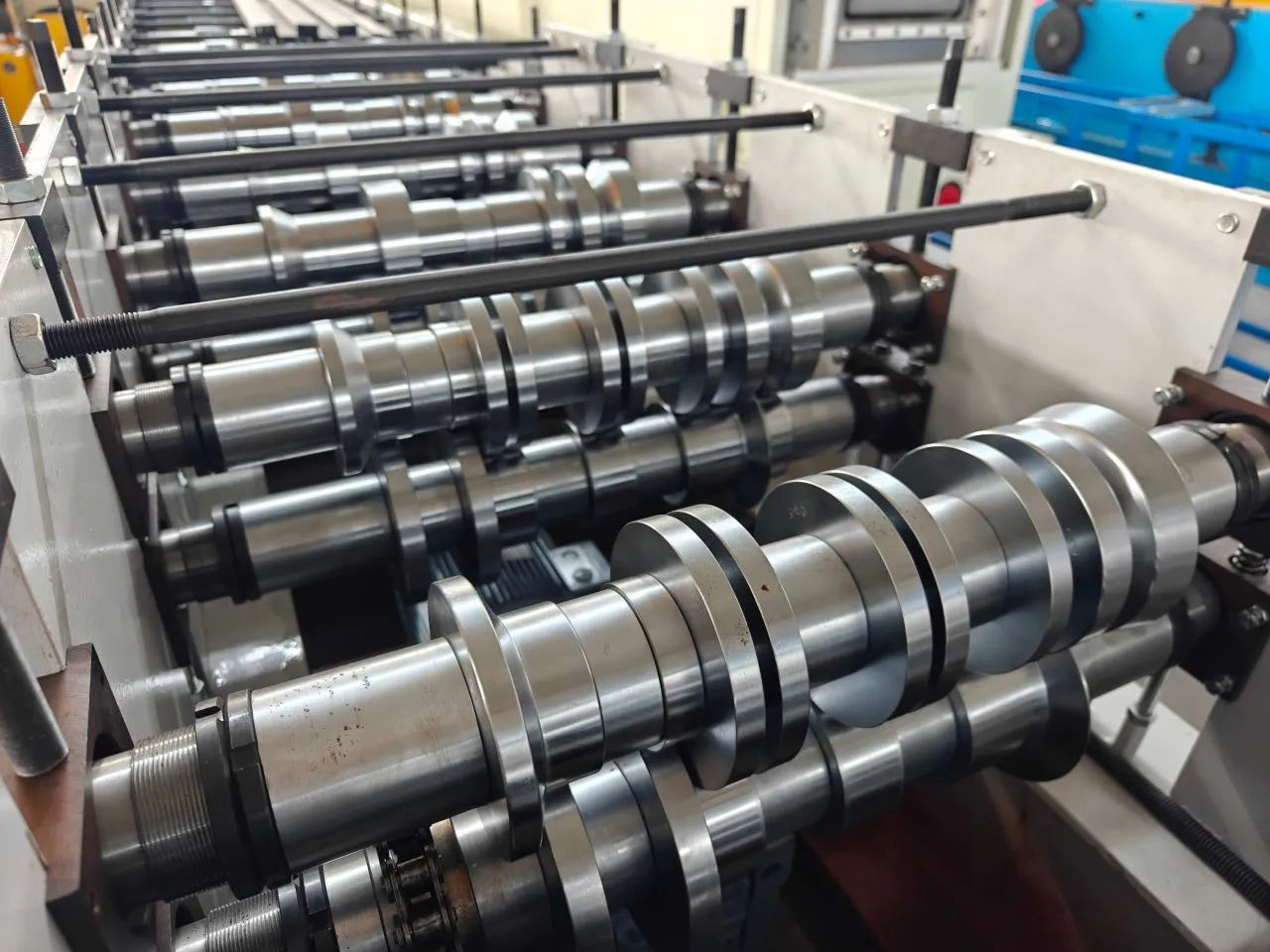
A metal wall panel machine is a cold roll forming line. It shapes flat coil into trapezoidal, corrugated, or concealed-fixing profiles through a series of roller stations, and each station bends the strip a little further. A press brake bends one fold at a time, but roll forming runs continuously. The usual flow is decoiling, guiding, leveling, forming, punching, cutting, and panel collection. Typical lines run at 15–40 meters per minute on 0.3–0.8 mm material. Because the machine cuts panels to length, you waste less metal on site and meet project deadlines more easily.
Key Components and What They Do
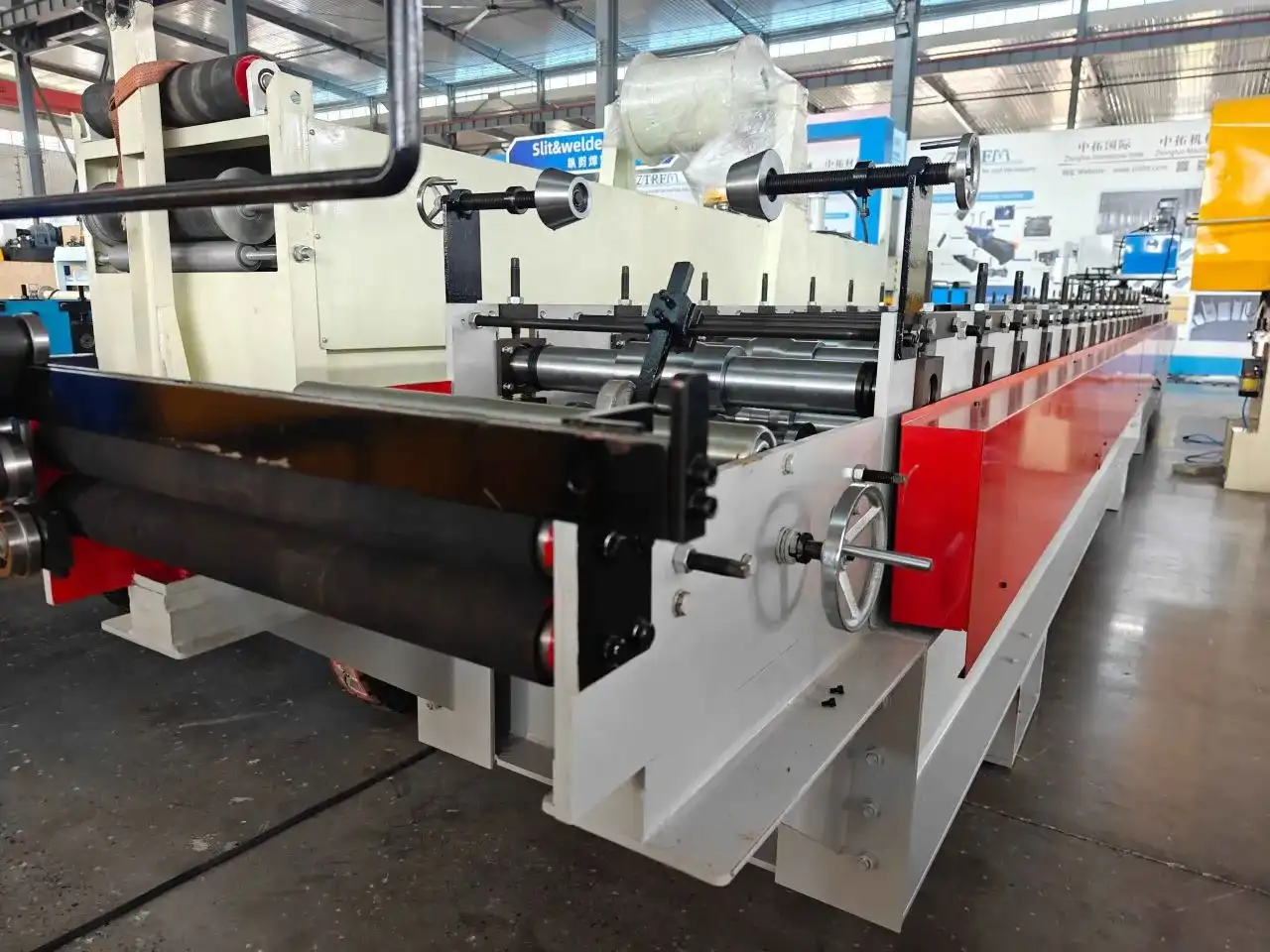
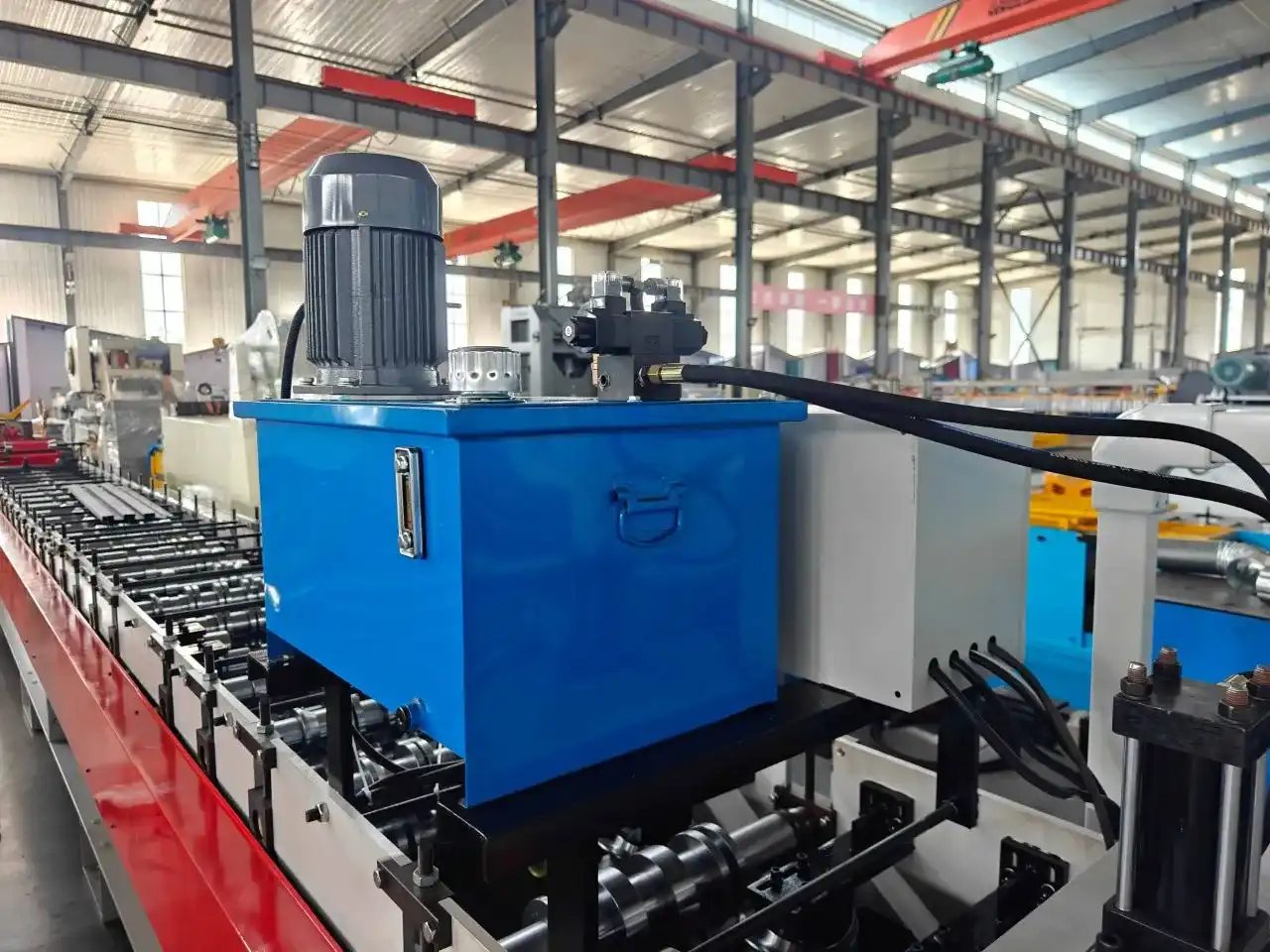
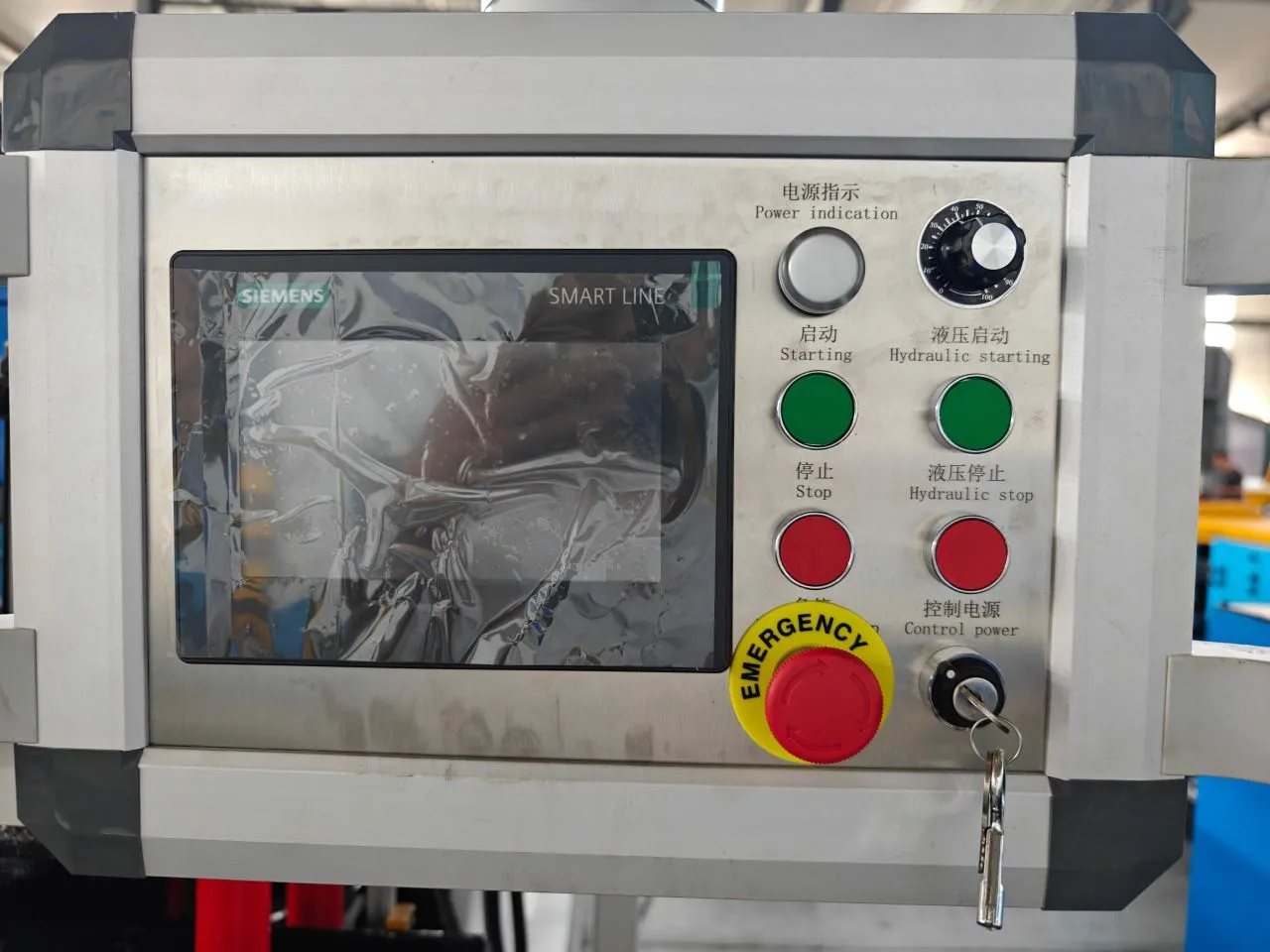
While the strip is being fed, the coil is being held by the decoiler. Because a bad entrance might cause the material to twist or bow, guides and a leveller are used to center the material. In order to preserve painted surfaces, forming rollers are often constructed from Cr12MoV or GCr15 steel, which has been heat-treated to HRC 58–62 and then hard chrome plated against corrosion. Under rolling pressure, the stations are maintained in a stable position by a side-stand frame. Cut length and speed are also controlled by the PLC. The Siemens PLC that is used in ZTRFM machines has recipe memory for each profile, which allows operators to remember previously recorded settings rather than having to re-enter them. At the end of the line is either a run-out table or stacker, as well as a hydraulic cutter.
Roll Forming Machine vs. Sandwich Panel Line
Panels of a single layer are produced using a roll-forming machine. Core preparation, glue application, lamination, compression, and edge treatment are all additional steps that are included in a sandwich panel line. There are occasions when purchasers confuse the two, and as a result, they obtain a quotation that omits half of the procedure. Check each item on the list of equipment one by one. Please let us know as soon as possible if you want to install insulated panels in the future. In addition to using multi-layer composite forming technology, ZTRFM is capable of constructing individualised joint details, profiles that are compatible with foam-fill, and an integrated film-laminating option. The way in which your single-skin line fits into that approach may be discussed.
Comparing Quotes Without Costly Mistakes
Match the Configuration to Your Demand
You may choose between automated and semi-automatic operation, single- and double-layer designs, standard and quicker speeds depending on actual orders, and automatic and semi-automatic operation. In order to complete one or two profiles, a small farm contractor could need a machine that is compact. Typically, a regional panel manufacturer would desire autonomous cutting and stacking capabilities, as well as a faster changeover. Typically, one machine is used to produce a single profile for optimal accuracy. Double-deck or cassette-change systems are able to cover several profiles in a very compact area; nevertheless, they have a higher initial cost. In order to meet the requirements of distributors that want private-label branding, quick-change tooling, and drawings that are protected by a non-disclosure agreement (NDA), ZTRFM provides OEM/ODM tooling and profile-to-order tooling.
Specifications and Quality Checks
All of the quotes should be compared on the same things, which include the following: the range of materials and thicknesses, the coil width, the effective panel width, the forming speed, the station count, the cutting technique, the control system, the power supply, the changeover process, and the safety guards. Create a written confirmation of the voltage and the local electrical requirements. Next, enquire about the tests. In most cases, vibration and uneven profiles are the results of a shaft run-out above 0.05 millimetres. Both the hydraulic cutter and the PLC encoder have been shown to be reliable during a full-load test using an actual coil. There should be no burrs on the cut edges, and the machine should not harm any coatings that have been pre-painted. Request samples of panels so that you may evaluate their dimensions and flatness.
Total Cost and Common Mistakes
The lowest quote for a metal wall panel machine often leaves out tooling, installation, training, or spare parts. Count all of them, plus energy, maintenance, and downtime. Cutter blades typically need sharpening or replacement every one to two years, depending on volume. The most common mistakes include buying based on top speed alone, overlooking corrosion and hygiene needs, skipping profile drawing checks, and ignoring floor space for coil storage, forklift access, and finished stacks. ZTRFM's Siemens cloud IoT and AI remote maintenance supports uptime, which can lower downtime costs.
Supplier, Installation, and Buying Process
How to Evaluate a Supplier
First, it is important to determine if you are dealing with a direct manufacturer, a trader, or an integrator since the level of responsibility varies. Enquire about the compatibility of profiles, the actual manufacturing pace, the brands of components, the delivery schedule, the guarantee, the replacement parts, and references from previous customers. Make a request for a technical proposal, layout drawings, electrical diagrams, manuals, a packing list, and processes for factory approval. 2014 saw the establishment of ZTRFM in Botou, Cangzhou, and the company now has certifications in ISO 9001, CE, and CAS. There are approximately 150 nations in which our machines are operational, and some of our reference customers include the Tata Group, the DS Group, and HADDAD SET. Contacting our engineers directly helps to lessen the likelihood of misunderstandings.
Installation, Training, and Maintenance
The preparation of the floor, alignment, electrical connection, hydraulic setup, coil handling, and safety clearance are the first steps in achieving efficient output, which is then followed by trial production. Operators should be trained on how to operate the programmable logic controller (PLC), how to modify the cutting, how to verify the profile, how to perform emergency stops, and how to clean regularly. The guidelines that OSHA provides for the protection of equipment are a helpful reference for guards and lockout procedures. Establish a routine that includes checks on a daily, weekly, monthly, and occasional basis. Panels that are bent or have an uneven width may often be traced back to the levelling and entering guides. Vibration is often an indication of shaft run-out. It is important to pay immediate attention to hydraulic leaks and sensor issues before they cause the line to halt.
The Buying Process and Final Checklist
First, determine the requirements for your panel and building. After that, you should provide an inquiry package that includes drawings, coil data, thickness, coating, insulation requirements, target production, destination, and minimum factory constraints. It is recommended that you request that the vendors segregate the equipment, options, tools, installation, training, shipping, and warranty. Take the time to check the samples, references, acceptance tests, and delivery goals before you sign the document. Take a last look at three different regions. Profile, material, breadth, length, and tolerance are all classified as technical. Total cost, paperwork, and response timeframes relate to commercial transactions. Long-term benefits include a faster rate of changeover, upgrading possibilities, reduced labour costs, and OEM support for future products.
Conclusion
Choosing equipment for poultry and livestock shed panels starts with the building, not the machine. Moisture, ammonia, and cleaning routines set the panel type, coating, and thickness. Those choices then define the roll forming line or the sandwich panel process that fits. A metal wall panel machine forms coil step by step through roller stations, so roller quality, leveling, cutting accuracy, and PLC control decide panel consistency. Comparing quotes on the same specifications, plus tooling, installation, training, spare parts, and downtime, gives a truer cost picture than price alone. Samples, test runs, clear documents, and supplier checks reduce risk, and proper installation, training, and maintenance protect output over time.
FAQ
1. Can one metal wall panel machine make several profiles?
Usually one machine forms one profile for best precision. Double-deck or cassette-change systems can handle several profiles, but they cost more upfront.
2. What affects equipment price?
Material range, station count, cutting and stacking automation, control system, tooling, and optional features such as film laminating all change the price. Installation, training, and spare parts also count.
3. Can the machine run aluminum coil?
Yes, but the rollers must be smooth and hard-chromed to prevent galling. Station pressure also needs adjustment because aluminum is softer than steel.
4. Why do panels twist or bow?
The cause is usually leveling. Adjust the entry guide or leveling shafts so the strip enters the center of the forming rollers.
Request a Metal Wall Panel Machine Quote From ZTRFM
Send your panel drawings, coil specifications, and target output to zhongtuorollforming@gmail.com. As a metal wall panel machine manufacturer founded in 2014, ZTRFM holds ISO 9001, CE, and CAS certifications. We offer OEM/ODM tooling, Siemens PLC control, and one-stop supply from a single machine to a full line with spare parts. We keep your drawings under NDA on request.