- English
- French
- German
- Portuguese
- Spanish
- Russian
- Japanese
- Korean
- Arabic
- Irish
- Greek
- Turkish
- Italian
- Danish
- Romanian
- Indonesian
- Czech
- Afrikaans
- Swedish
- Polish
- Basque
- Catalan
- Esperanto
- Hindi
- Lao
- Albanian
- Amharic
- Armenian
- Azerbaijani
- Belarusian
- Bengali
- Bosnian
- Bulgarian
- Cebuano
- Chichewa
- Corsican
- Croatian
- Dutch
- Estonian
- Filipino
- Finnish
- Frisian
- Galician
- Georgian
- Gujarati
- Haitian
- Hausa
- Hawaiian
- Hebrew
- Hmong
- Hungarian
- Icelandic
- Igbo
- Javanese
- Kannada
- Kazakh
- Khmer
- Kurdish
- Kyrgyz
- Latin
- Latvian
- Lithuanian
- Luxembou..
- Macedonian
- Malagasy
- Malay
- Malayalam
- Maltese
- Maori
- Marathi
- Mongolian
- Burmese
- Nepali
- Norwegian
- Pashto
- Persian
- Punjabi
- Serbian
- Sesotho
- Sinhala
- Slovak
- Slovenian
- Somali
- Samoan
- Scots Gaelic
- Shona
- Sindhi
- Sundanese
- Swahili
- Tajik
- Tamil
- Telugu
- Thai
- Ukrainian
- Urdu
- Uzbek
- Vietnamese
- Welsh
- Xhosa
- Yiddish
- Yoruba
- Zulu
How a hat channel roll forming machine differs from purlin lines
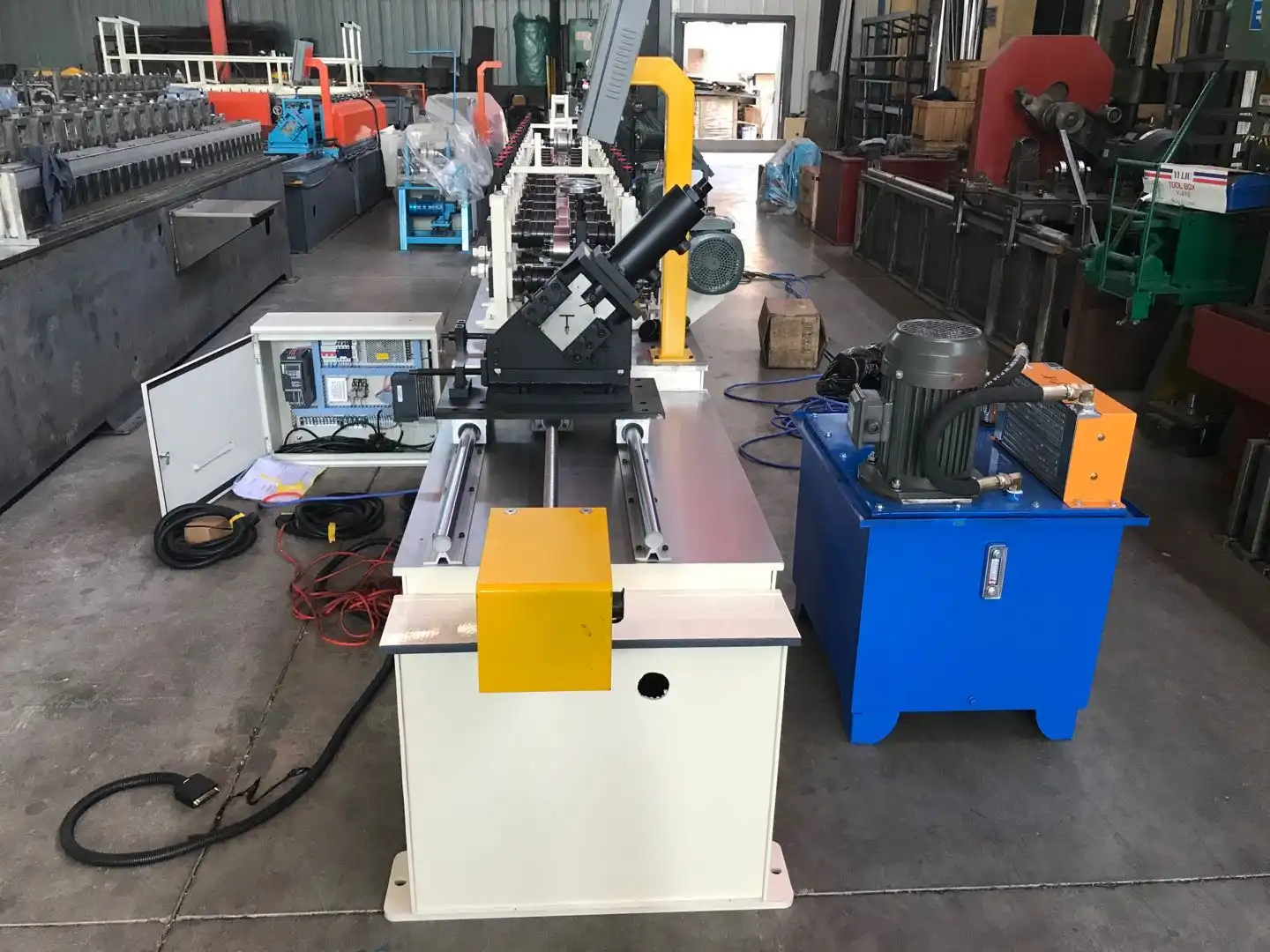
A hat channel roll forming machine is a continuous cold-roll forming system that converts flat GI or PPGI steel coil into hat-shaped profiles—flat crown, two vertical webs, and two outward flanges—used in interior framing. A purlin line, by contrast, produces structural C or Z sections for roof and wall support in primary steel buildings. The two machines share the same cold-forming principle, but differ sharply in material gauge, profile geometry, roller count, and end-use. Choosing the wrong line means wasted capital, so knowing that difference matters before you place an order.
Understanding the Fundamentals: Hat Channel Roll Forming Machines vs. Purlin Lines What a Hat Channel Roll Forming Machine Actually Does
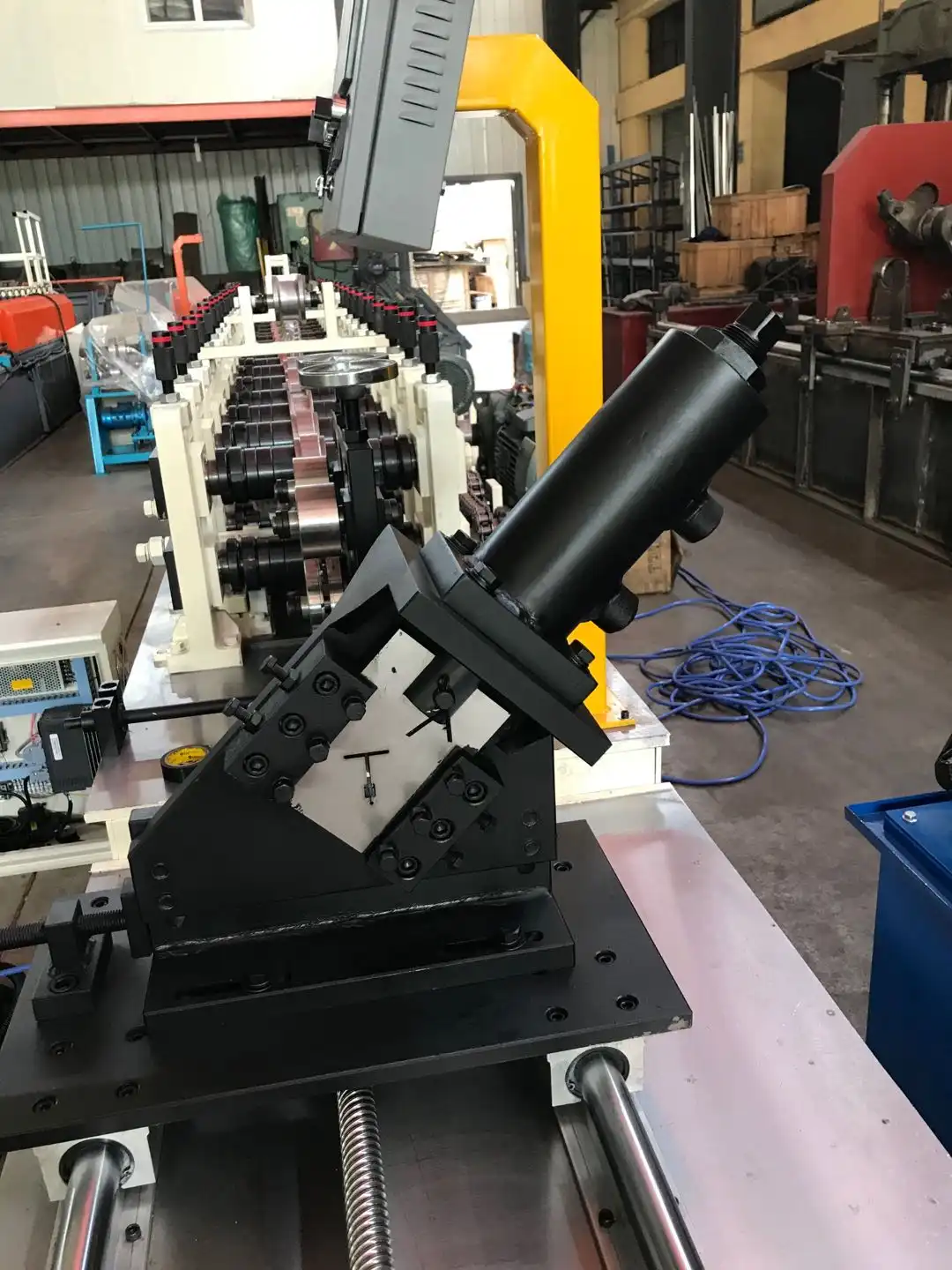
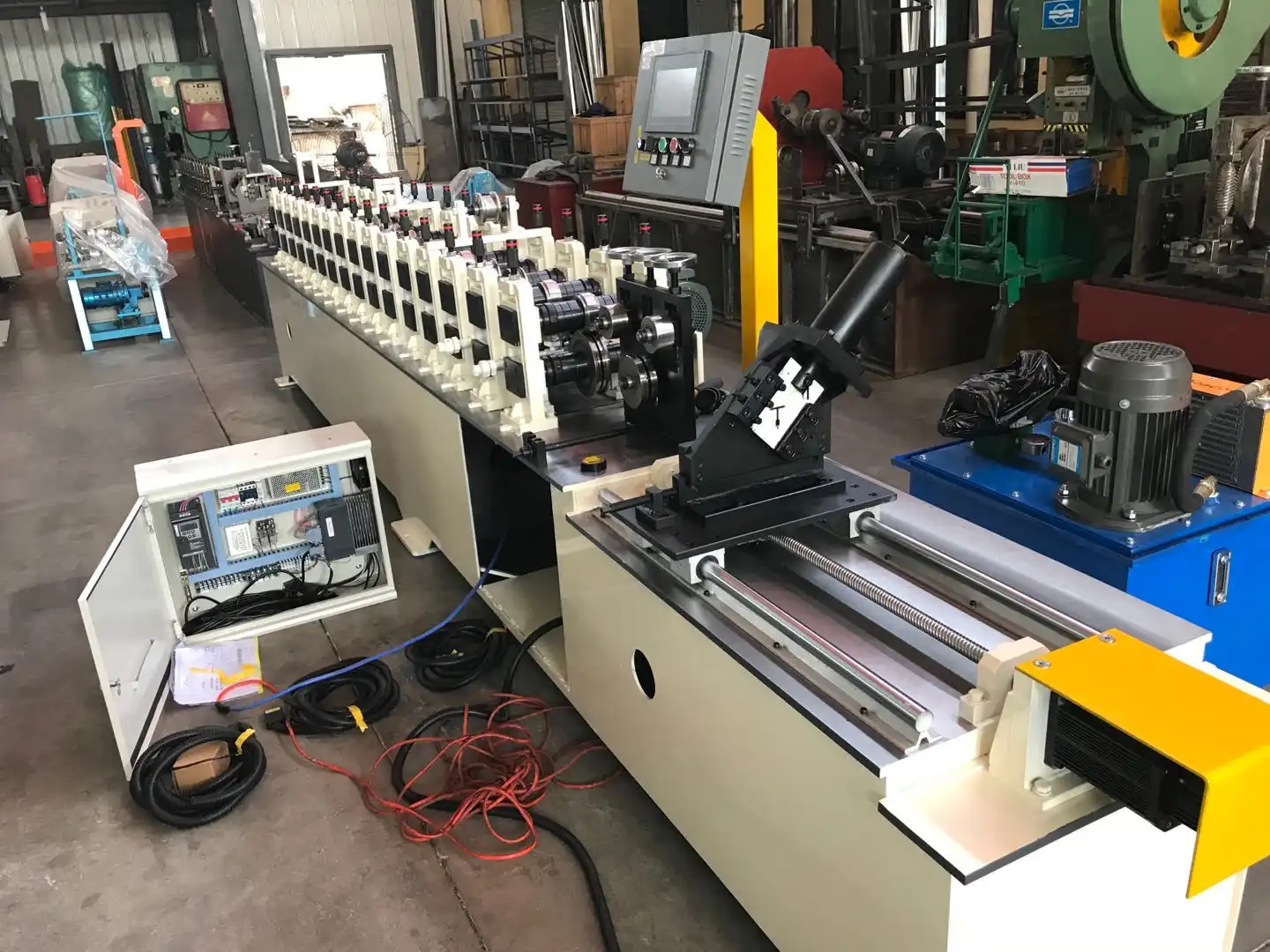
It takes light-gauge GI or PPGI strip, which is usually between 0.3 and 1 mm thick, and slowly bends it over 14 roller stations until it comes out of the line with a uniform hat (furring) shape. At each station, the track makes a small bend. So, the residual stress stays low, and coatings that have already been painted are kept safe. With its strong 50 mm shaft, 45# steel rollers that have been hard chrome-plated, and gearbox motion, this machine always keeps the sizes small. One is a hydraulic automatic decoiler that feeds the coil smoothly. If you need it, there is also a free manual decoiler.
What a Purlin Roll Forming Line Does
Purlin lines are made of structural steel coil that is at least 1.5 mm thick and no more than 3 mm thick. They make C-purlins and Z-purlins that are bolted directly to the main steel frames of warehouses, factories, and business roofs. As the gauge and profile flanges get bigger, purlin lines need better drive systems, shafts that are bigger and heavier, and more active forming angles. When the profiles are finished, they hold real roof loads, which means that structures that are safe are straight out of accurate measurements.
Core Mechanical Differences at a Glance
The main changes between the two types of machines are shown below in a table:
- Material gauge: Hat channel lines process 0.3–1.0 mm; purlin lines typically start at 1.5 mm and go up to 3.0 mm+.
- Roller stations: A hat channel line typically runs 14 stations; purlin lines often need 16–24 stations to form heavier flanges.
- End use: Hat channel profiles go into suspended ceilings, drywall partitions, and mezzanine linings; purlins carry structural roof and wall loads.
Hat channel lines have 14 stations for rollers, while purlin lines need 16–24 stations to make heavier flanges.
Ceilings, plaster walls, and loft linings are all constructed using hat channel forms. The roof and walls are held up by purlins.
Comparative Analysis: Performance, Efficiency, and Applicability
Production Speed and Throughput
On a well-tuned hat channel roll forming machine, a servo flying shear can run at 40–60 m/min for flat sections. Most stop-to-cut sets operate at 15–25 m/min. Purlin lines run more slowly, typically between 8 and 20 m/min. This is because stronger steel needs more time to rest after being formed. When a company that makes ceiling grids has a lot of orders, the cost per meter goes down because the hat channel production line moves faster.
Profile Complexity and Dimensional Precision
The geometry of hat profiles is easier than that of C or Z purlins. So they don't have to be made as many times and can be switched out for new tools more quickly. But being easy doesn't mean you can handle a lot of things. For interior framing systems, you need profiles that can fit standard gypsum clips and acoustic isolation mounts without having to shim them. This means that over a 6-meter run, the machine must hold within ±1 mm or better. Our 45# hard-chrome-plated steel rollers meet that need and keep coated surfaces from getting zinc on them.
Energy Consumption and Total Cost of Ownership
Because the base material is thinner and there are fewer forces working on it, hat channel lines consume less power than purlin lines. A mid-range purlin line might need 37 to 55 kW of power, but most hat channel lines only need 15 to 22 kW. Running costs go down over a plan with multiple shifts when less energy is used. With a gearbox transmission, power stays constant and long-term wear is lower than with a chain-only drive. This means that for the life of the machine, it costs less to maintain.
Evaluating Use Cases: When to Choose a Hat Channel Roll Forming Machine Over a Purlin Line?
Interior Construction and Drywall Framing
If you sell ceiling grids, drywall stud systems, or plasterboard furring channels, a purlin line is not the right tool for your business. That's not how purlin profiles are meant to be used, and the materials alone would make you lose money. It's possible to run a PPGI coil with painted surfaces because it has a special furring channel line that works with 0.3–1.0 mm GI/PPGI strip. The heavier forming rolls on a purlin line would damage or scratch these surfaces.
Light-Gauge Steel Villa and Prefab Construction
The hat channel roll forming machine can process the material thickness range required for LGSF (light-gauge steel frame), which uses pieces between 0.55 mm and 1.0 mm thick. This is a thickness range that the line can handle. These smaller pieces are used by builders in the US and other countries for mezzanine linings, ceiling tracks, and non-load-bearing internal walls. Producing these gauges would not be cost-effective on a purlin line, as its tooling profiles and roll gap adjustments are not suited for this range. One hat channel line can produce multiple internal frame profiles by swapping out cassettes or spacers, while a purlin line is limited to structural parts only.
OEM and Private-Label Production
For wholesalers who run private-label programs, each profile must have OEM brand marks, custom hole patterns, and inline embossing. Punching and embossing stations can be installed between the forming stations on Hat channel roll forming lines. Inline tools can't be used precisely on purlin lines because the thicker material and bigger shape make it impossible to do this. With a hat channel line and a PLC-controlled punch unit, you can give your customer a ceiling furring channel with service holes every 600 mm that is brand-new. A purlin line, on the other hand, can't.
Market Insight: Leading Brands and Suppliers for Hat Channel Roll Forming Machines and Purlin Lines
What to Look for in a Supplier
When evaluating any roll forming machine supplier, three factors matter above price: tooling quality, after-sales support, and certification. ISO 9001 and CE certification indicate that quality management and safety standards have been independently audited. Ask suppliers for hardness test reports on their rollers—GCr15 or 45# steel vacuum heat-treated to HRC 56–62 should be the baseline. Warranty terms and spare-parts availability in your region are equally important, especially if you run double or triple shifts.
How ZTRFM Positions in This Market
Cangzhou Zhongtuo Roll Forming Machine Co., Ltd. (ZTRFM), founded in 2014 in Botou—China's recognized roll-forming machinery hub—holds ISO 9001, CE, and CAS certification. The company's hat channel roll forming machine supplier record spans 150+ countries, with reference clients including Tata Group (India), DS Group (Korea), and HADDAD SET (Jordan). Siemens cloud IoT and AI remote maintenance support keeps uptime high for buyers who cannot afford unplanned stoppages. One-stop supply covers the decoiler, forming line, stacker, and spare parts under a single contract.
2024 Procurement Considerations
U.S. buyers sourcing a hat channel roll forming line for sale in 2024 should factor in freight lead times, commissioning costs, and local voltage compatibility. ZTRFM machines ship with configurable electrical panels to match 60 Hz supply standards common in North America. Request a sample profile run before committing to tooling—any reputable manufacturer should provide this before final payment.
Maintenance, Troubleshooting, and Long-Term Optimization Tips
Preventive Maintenance Schedule
Maintaining a line so that it lasts ten years is different from maintaining one so that it breaks down in two years. These are the main maintenance tasks that keep a hat channel line running:
- Weekly: Inspect roller surfaces for zinc buildup; wipe with a solvent cloth. Check gearbox oil level and listen for bearing noise.
- Monthly: Verify shaft alignment with a dial indicator; check cutting die gap (Cr12MoV dies last 500,000–1,000,000 cuts before sharpening is needed).
- Quarterly: Full hydraulic system check—fluid viscosity, hose condition, cylinder seals—especially critical for automatic decoiler performance.
The chrome-plated roller surfaces that protect your coil from damage are kept safe by these checks. They also cut down on unplanned downtime.
Common Issues and How to Fix Them
Profiles often bow along their length because the entry force from the decoiler is not even. For the second time, change the decoiler brake force and look at where the coil is. There is a change in the shape of the profile during the cutting cycle when the hat legs spread out at the cut ends. Add or change flare-control rollers upstream of the shear to fix this. More than one roller station needs to be moved to the right spot if the profile always twists.
IoT and Remote Diagnostics
Thanks to Siemens IoT integration, any internet-connected device can see the motor amperage, hydraulic oil temperature, and cut-cycle numbers right away. Unusual amperage spikes can often tell you that a roller bearing is worn before it breaks mechanically. This lets maintenance teams replace parts during planned downtime instead of having to stop the machine in the middle of a job.
Conclusion
A hat channel roll forming machine and a purlin line are made to do different tasks. For wall and ceiling systems, internal frames, and suspended ceilings, Hat channel lines work quickly with light-gauge GI/PPGI strip. There are lines called purlins that hold the main building frames together. When you use the right machine for the job, you protect your investment and keep the cost of production low per meter. If you want to make ceiling grids, frame drywall, or prefab villas, you should start with the hat channel line instead of a purlin line that has already been used.
FAQ
Q1: Can one line produce multiple hat channel sizes?
Yes. If you use spacer changes or quick-change cassette systems, you can make different flange widths on the same line. With big changes in height, like 20 mm vs. 80 mm, you might need two sets of tools to make sure the shape stays straight.
Q2: How does the machine handle high-tensile G550 steel?
In order to account for spring-back, the G550 steel needs to be over-bent at certain angles at each point. Because our 14-station layout spreads out the load, the material isn't put under too much stress in any one station.
Q3: Will forming damage pre-painted PPGI coatings?
Not at all. Rollers with hard chrome plating and synchronized rolling speeds keep the PPGI coil's surface finish during the forming pass by cutting down on friction.
Q4: What controls production speed?
Most of the time, stop-to-cut methods move 15–25 m/min. Servo flying shear devices can cut at speeds between 40 and 60 m/min and don't need to stop the strip while they cut it. This makes production runs that last a long time much more useful.
Get Your Hat Channel Roll Forming Line Quote from ZTRFM Today
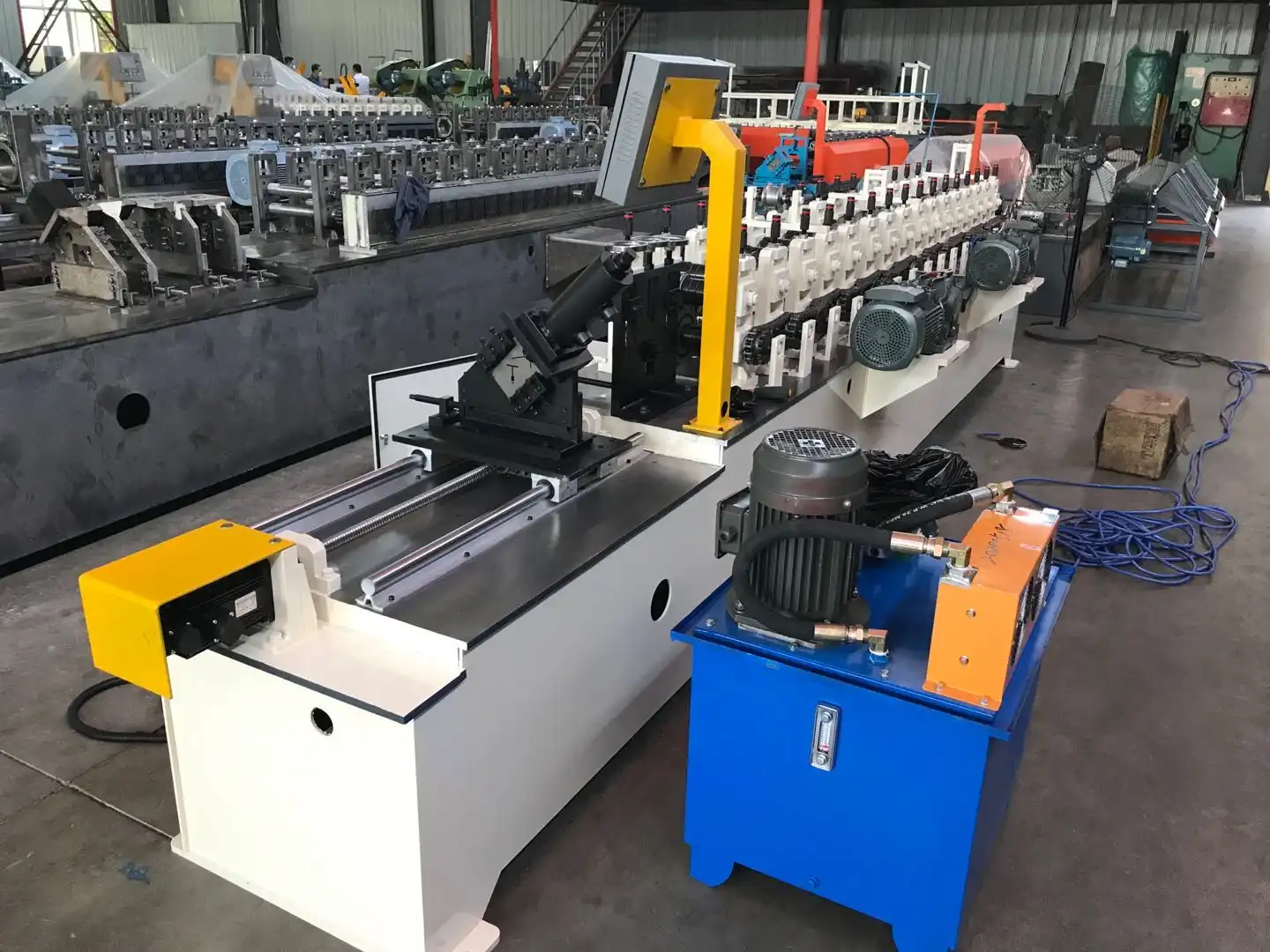
ZTRFM is where you can buy a hat channel roll forming machine. It has 14 roller stations, 50 mm solid shafts, 45# hard-chrome-plated steel rollers, a gearbox transmission, a hydraulic automatic decoiler, and a free-hand decoiler. It has been used in more than 150 countries and is certified by ISO 9001, CE, and CAS. It also comes with the Siemens IoT online support service. Email zhongtuorollforming@gmail.comto get a free price and a trial profile from our team.
References
1. Bhatt, P. & MacGinley, T. J. Steel Structures: Practical Design Studies. CRC Press, 2017.
2. Yu, Wei-wen & LaBoube, Roger A. Cold-Formed Steel Design. John Wiley & Sons, 2010.
3. American Iron and Steel Institute. North American Specification for the Design of Cold-Formed Steel Structural Members. AISI, 2016.
4. Halmos, George T. Roll Forming Handbook. CRC Press, 2006.
5. Steel Framing Industry Association. Technical Guide for Cold-Formed Steel Framing Products. SFIA, 2021.
6. Confederation of Indian Industry & Bureau of Indian Standards. Light Gauge Steel Framing for Housing — Code of Practice. BIS, 2019.