- English
- French
- German
- Portuguese
- Spanish
- Russian
- Japanese
- Korean
- Arabic
- Irish
- Greek
- Turkish
- Italian
- Danish
- Romanian
- Indonesian
- Czech
- Afrikaans
- Swedish
- Polish
- Basque
- Catalan
- Esperanto
- Hindi
- Lao
- Albanian
- Amharic
- Armenian
- Azerbaijani
- Belarusian
- Bengali
- Bosnian
- Bulgarian
- Cebuano
- Chichewa
- Corsican
- Croatian
- Dutch
- Estonian
- Filipino
- Finnish
- Frisian
- Galician
- Georgian
- Gujarati
- Haitian
- Hausa
- Hawaiian
- Hebrew
- Hmong
- Hungarian
- Icelandic
- Igbo
- Javanese
- Kannada
- Kazakh
- Khmer
- Kurdish
- Kyrgyz
- Latin
- Latvian
- Lithuanian
- Luxembou..
- Macedonian
- Malagasy
- Malay
- Malayalam
- Maltese
- Maori
- Marathi
- Mongolian
- Burmese
- Nepali
- Norwegian
- Pashto
- Persian
- Punjabi
- Serbian
- Sesotho
- Sinhala
- Slovak
- Slovenian
- Somali
- Samoan
- Scots Gaelic
- Shona
- Sindhi
- Sundanese
- Swahili
- Tajik
- Tamil
- Telugu
- Thai
- Ukrainian
- Urdu
- Uzbek
- Vietnamese
- Welsh
- Xhosa
- Yiddish
- Yoruba
- Zulu
Dies that keep a steel roof making machine accurate for years
When people ask me what distinguishes a lucrative roofing sheet company from a frustrating one, my response is always the same — die quality and die care. A highly maintained set of forming and cutting dies keeps a steel roof making machine producing panels within tolerance day in and day out. Ignore the dies, and you will see scrap rates go up, profiles go out of spec, and customers start to call with complaints. This book will show you what dies really do, what makes them last, and how to safeguard your investment from the first coil to the thousandth.
Understanding the Role of Dies in Steel Roof Making Machines
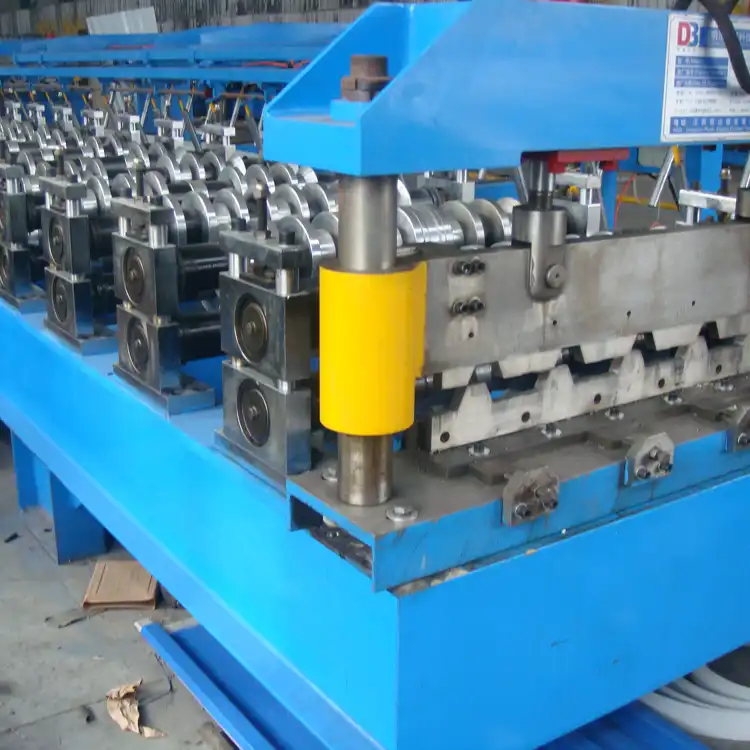
Die sets are the real tools that give each roofing panel its shape. In cold roll forming, they work station by station, slowly shaping a flat steel strip into the right shape. Knowing about the different types of dies helps you set reasonable expectations for maintenance.
Roll-Forming Dies
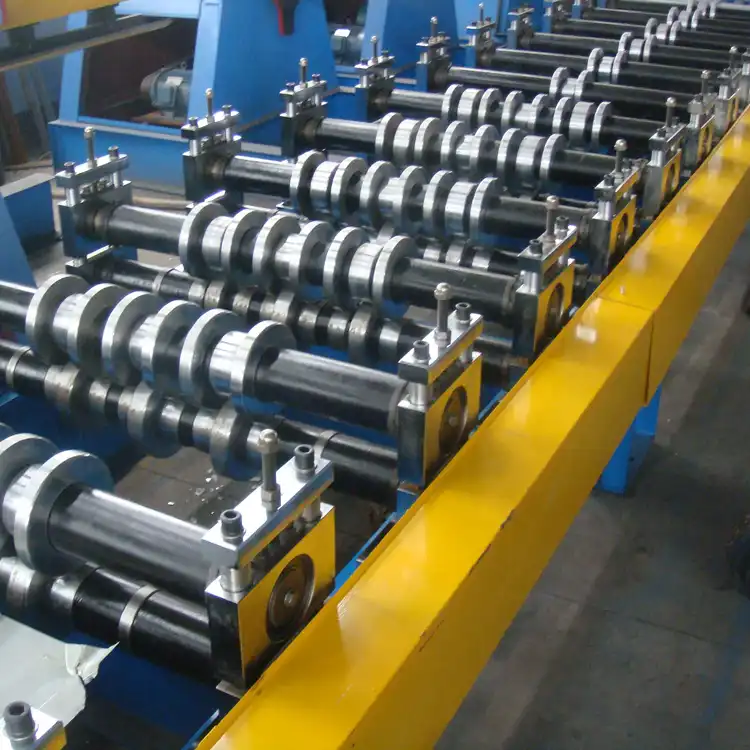
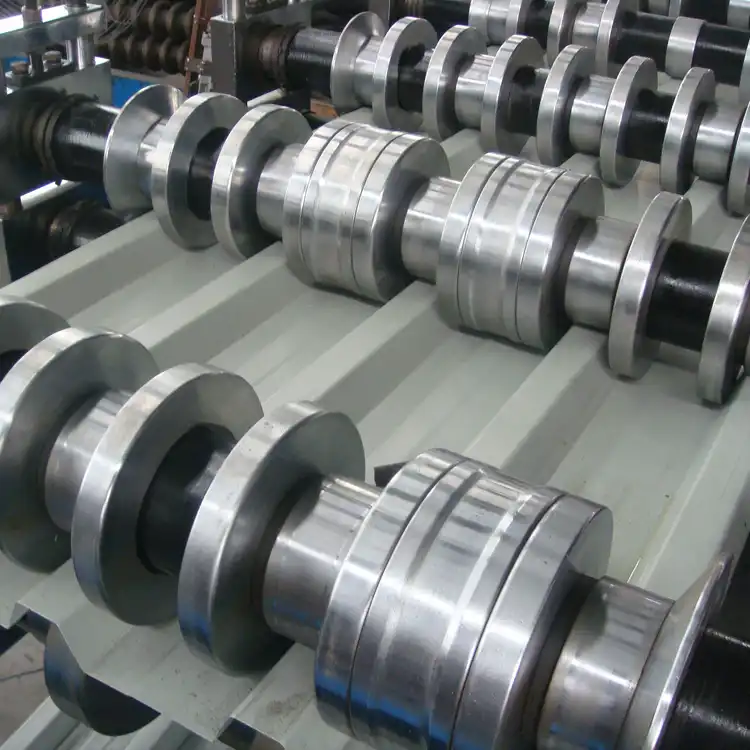
Roll-forming dies are the rollers that make the metal in stages at different places. Each roller pair on an 18-station line moves the strip a calculated amount closer to the final cross-section. The profiles used are R101 (1,250 mm cover width) or R72 (914 mm cover width). Roller hardness, which is usually between HRC 58 and 62 on chrome-plated 45# steel, tells us how long the shape will last before we can see wear.
Stamping and Pressing Dies
Some roofing designs have ribs or steps that are pressed into the middle of the panel to look nice. Under controlled hydraulic pressure, these features are made by stamping dies. Because the die surface wears unevenly, the emboss depth changes too. This weakens the structural rib and makes the product look bad.
Cutting Dies (Hydraulic Shear Blades)
The cutting die cuts each panel in half along its length. When using a hydraulic shear, the quality of the cut edge is directly controlled by the blade width compared to the thickness of the material. If the clearance settings are checked once a month, the Cr12 or Cr12MoV blades that are widely used on hydraulic shear systems can make 500,000 to 1,000,000 cuts before they need to be reground.
Key Factors Affecting Long-Term Die Accuracy
Die longevity is not accidental. It results from three overlapping factors: the material the die is made from, the precision built into its geometry, and how the steel roof making machine is operated every shift.
Die Material and Surface Treatment
Hard-chrome plating on roll-forming dies adds roughly 0.05 mm of surface hardness that resists scoring from pre-painted and galvanized coils. Heat treatment after CNC machining locks in dimensional stability so the die does not distort under cyclic loading. Tooling built from properly heat-treated alloy steel routinely outlasts untreated alternatives by a factor of three or more in high-volume production.
Tolerance Control in Profile Design
Profile developers working with the R101 or R72 geometry need to specify roller tolerances tightly — typically within ±0.05 mm on critical forming radii. Loose tolerances compound across 18 stations. What looks like a small gap at station 2 can produce a panel that is several millimeters off in flange height by station 18, pushing finished sheets outside the ±2 mm cutting accuracy spec the hydraulic shear is designed to hold.
Machine Settings and Alignment
Even the best dies wear prematurely when shaft alignment drifts, or roller gap pressure is set incorrectly. The 70 mm shafts on a standard 18-station former must be checked periodically with a dial indicator. Misalignment introduces side loads that erode die faces asymmetrically, shortening the interval between regrinds significantly.
Best Practices for Maintaining Dies to Ensure Machine Accuracy
The dies and the panels they make are both protected by regular maintenance. These tips work for all kinds of production lines, from those with just one machine to those with a full decoiler, former, and stacker.
Here are the main types of maintenance that keep dies working as they should:
- Weekly cleaning and lubrication: Remove metal fines and coating residue from roller surfaces after every production run. Apply an appropriate forming lubricant to reduce friction, especially when processing PPGI coils where paint adhesion to the roller is a risk.
- Monthly clearance checks on cutting blades: Adjust the hydraulic shear blade gap to match the current material thickness. For a 0.3–0.8 mm forming range, the gap setting changes meaningfully between the thinnest and thickest stock. An incorrect gap causes burrs or incomplete cuts.
- Quarterly dimensional inspection of roll profiles: Use a profile gauge or CMM scan to compare roller geometry against the original drawing. Any roller that deviates beyond the design tolerance should be reground or replaced before it pulls the entire forming sequence out of alignment.
The most common die failures that lead to higher scrap rates are surface scoring, edge chipping, and increasing profile drift. These steps can effectively stop these failures.
One production manager said that after putting in place a structured maintenance schedule and adding monthly blade clearance checks and quarterly roller scans to his team's work, the number of scrap sheets dropped by 30% over six months.
Using Sensor Data and Predictive Alerts
These days, Delta PLC control systems come with a 5.7-inch touchscreen that lets operators keep track of production and report problems right away. By keeping track of the number of cuts and the time between regrindings, maintenance teams can plan breaks before a blade fails and interrupts a full shift, instead of having to do something after the fact.
Comparing Die Solutions Across Steel Roof Making Machines
There isn't a single die system that has the best balance between cost and life. Buyers can make a better choice when they know the differences.
Traditional Dies vs. Coated Modular Systems
Most construction sheet forms are well handled by hard-chrome rollers, which are common in the sector. With coated modular roller systems on high-volume lines, the long-term tooling costs are cheaper, since the manufacturing surface layer may be replaced without throwing away the complete roller body. The price per station is greater initially, however.
Manual vs. Automated Die Adjustment
It is common that, on general-purpose steel roof making machines, when just one or two profiles are run, after changing the tools, the spacers have to be adjusted manually. When one line needs to convert between R101 and R72 profiles regularly, cost savings are obtained. This is because the automatic adjustment systems, controlled by a PLC, reduce the time to move from one profile to another from hours to minutes, and they reduce the chances of a human making a mistake during the set-up.
Selecting Dies for Your Production Goal
A trader shopping for a secondhand machine has distinct demands for tools than a profile maker who is creating a unique geometry from a photo. The first one requires time-proven standard profiles and a bunch of supplementary parts that are ready to go. This sort of firm requires a facility that can create new roller sets from a sample or DXF file and provide matching tools under a non-disclosure agreement, rapidly. This is what makes the expert maker different from the broad catalog seller.
How Choosing the Right Dies Boosts ROI and Production Efficiency
Precision dies eliminate the two largest hidden expenses of producing roofing sheets: waste material and unplanned downtime. One of the biggest reasons industrial roofing projects have to be redone is formed steel panels that don’t fit together precisely, according to information from The Metal Construction Association. This means that contractors anticipate tighter tolerances from the sheet suppliers they deal with.
A good die set with ±2 mm cutting precision can produce around 900 linear meters of completed panel per hour on a line running at 15 m/min. A line with worn dies and blade clearance drift might lose 5-10% of its production in rejected panels. It is a large loss every day when the price of steel coil is high.
In terms of deciding what machine to buy, those purchasers who consider the overall cost of ownership (die life, regrind frequency, replacement intervals, and downtime cost) always have superior long-term returns than those who solely consider the purchase price. Good tools pay for themselves when you have fewer stoppages and less junk to make.
Conclusion
In several lines of roofing sheet, a great deal of work is done by dies. If your panels are within spec on day one, day one thousand depends on what they’re made of, their form, and what kind of maintenance plan you have. The first thing to do is get a steel roof making machine with a good hydraulic cut and with adequately heated and chrome-plated wheels. Writing a maintenance strategy for it maintains the base robust.
FAQ
1. How long do forming rollers typically last before regrinding is needed?
Hard-chrome rollers usually run 2–3 million linear meters on a well-kept line that processes GI or PPGI coils at 0.3–0.8 mm before they need to be regrinded because of a change in geometry that can be seen. That time can be cut short by using rough stock, going faster during the forming process, or not using enough oil.
2. What signs indicate that die accuracy is declining?
If panel flange heights start to vary by more than 1–2 mm across a production run, cut edges show burrs or incomplete shear, or more panels are being rejected at the end-of-line quality check, these are all things to keep an eye on. These are safe early warning signs that the rollers or blades need to be checked.
3. Can the same die set handle both R101 and R72 profiles?
No, each shape needs its own set of rollers that are made to fit its rib design and cover width. A machine that is made to change tools quickly can switch between sets of tools, but each set is made for a certain shape.
4. How do I store spare roller sets to prevent corrosion?
Clean the roller surfaces, put a light oil on them to keep them from rusting, and store the sets on a rack in a dry place. Do not stack rollers right on top of each other, as the pressure from the contact can damage the chrome.
Get Accurate Panels Every Run — Talk to ZTRFM
Since 2014, ZTRFM has been designing and building cold roll forming equipment. They currently work with steel roof making machine makers, traders, and profile creators in more than 150 countries. The 18-station line we offer comes with a 5.5 kW main motor, 70 mm shafts for R101 and R72 shapes, and Delta PLC control. You can get profile-to-order tooling under an NDA. To get a standard sheet or quote, email our engineering team at zhongtuorollforming@gmail.com.
References
1. Metal Construction Association. Dimensional Tolerances for Metal Roofing and Siding Panels. Metal Construction Association, 2019.
2. Roberts, W. L. Cold Rolling of Steel. Marcel Dekker, 1978.
3. Halmos, George T. Roll Forming Handbook. CRC Press, 2006.
4. American Iron and Steel Institute. Steel Products Manual: Sheet Steel. AISI, 2020.
5. ISO. ISO 9001:2015 Quality Management Systems — Requirements. International Organization for Standardization, 2015.
6. Schuler GmbH. Metal Forming Handbook. Springer, 1998.