- English
- French
- German
- Portuguese
- Spanish
- Russian
- Japanese
- Korean
- Arabic
- Irish
- Greek
- Turkish
- Italian
- Danish
- Romanian
- Indonesian
- Czech
- Afrikaans
- Swedish
- Polish
- Basque
- Catalan
- Esperanto
- Hindi
- Lao
- Albanian
- Amharic
- Armenian
- Azerbaijani
- Belarusian
- Bengali
- Bosnian
- Bulgarian
- Cebuano
- Chichewa
- Corsican
- Croatian
- Dutch
- Estonian
- Filipino
- Finnish
- Frisian
- Galician
- Georgian
- Gujarati
- Haitian
- Hausa
- Hawaiian
- Hebrew
- Hmong
- Hungarian
- Icelandic
- Igbo
- Javanese
- Kannada
- Kazakh
- Khmer
- Kurdish
- Kyrgyz
- Latin
- Latvian
- Lithuanian
- Luxembou..
- Macedonian
- Malagasy
- Malay
- Malayalam
- Maltese
- Maori
- Marathi
- Mongolian
- Burmese
- Nepali
- Norwegian
- Pashto
- Persian
- Punjabi
- Serbian
- Sesotho
- Sinhala
- Slovak
- Slovenian
- Somali
- Samoan
- Scots Gaelic
- Shona
- Sindhi
- Sundanese
- Swahili
- Tajik
- Tamil
- Telugu
- Thai
- Ukrainian
- Urdu
- Uzbek
- Vietnamese
- Welsh
- Xhosa
- Yiddish
- Yoruba
- Zulu
Choosing between a metal roof deck roll forming machine and composite lines
Deciding between a dedicated metal roof deck roll forming machine and a full composite line is one of the most consequential equipment choices a deck manufacturer or steel contractor can make. The right call depends on your target profiles, gauge range, production volume, and long-term product mix. This guide breaks down the technical differences, cost trade-offs, and real-world performance factors so you can match the right equipment to your specific production goals — before you sign a purchase order.
Understanding Metal Roof Deck Roll Forming Machines and Composite Lines What a Deck Roll Forming Machine Actually Does
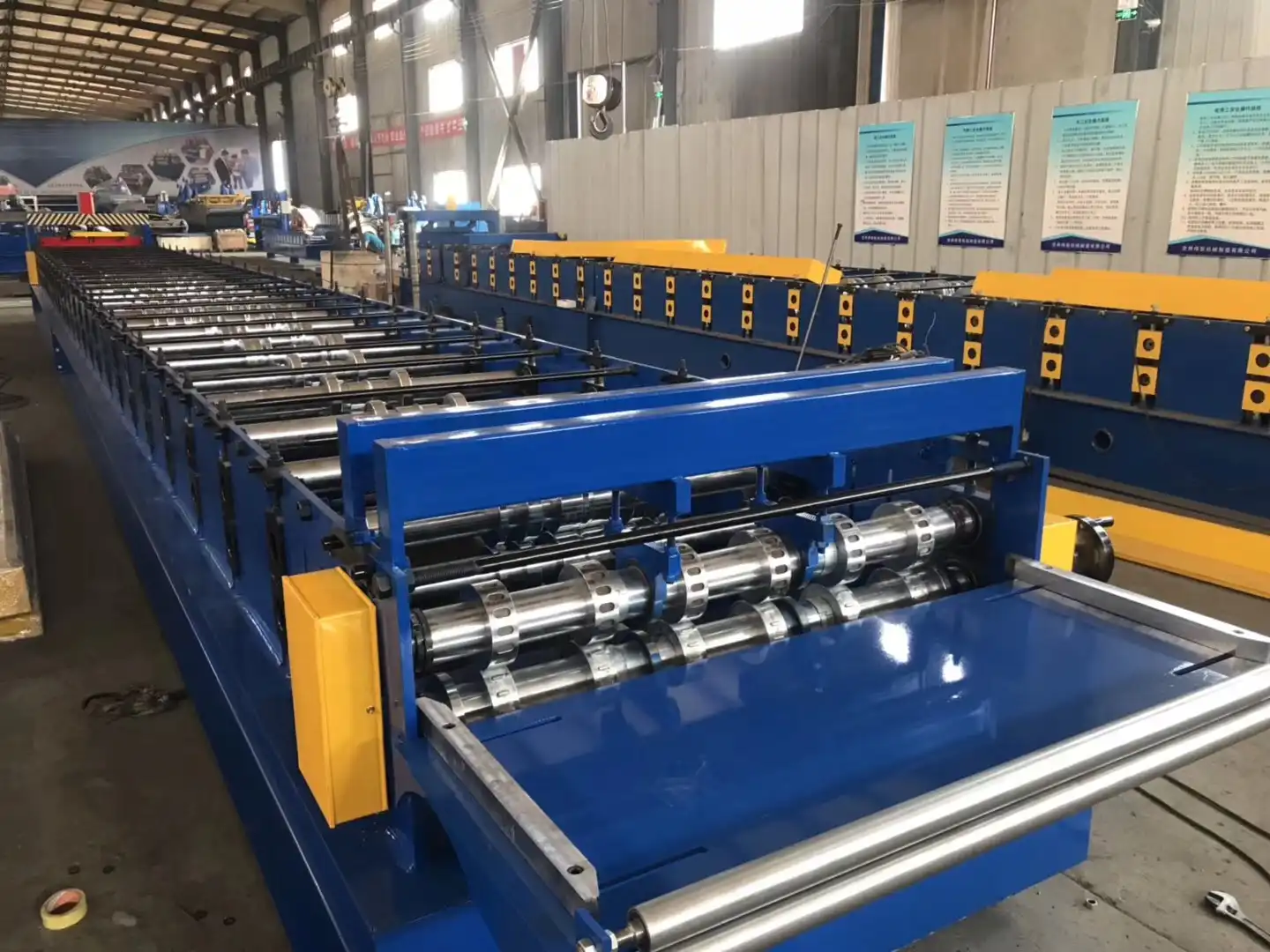
Galvanized or Galvalume coil, which is usually 0.8–1.2 mm thick and has a yield strength of 235 MPa, is cold-formed constantly into structural shapes like B-Deck, W-Deck, dovetail, or deep composite rib by a floor deck or roof deck roll forming machine. Forming speed is 10–20 m/min, and inline embossing rollers make grooves in the rib walls through friction. This creates the mechanical bond that makes composite concrete slabs work. Because the machine only does one thing, the drive, tools, and cutter are all made to fit the structural deck gauge.
What a Composite Line Adds
The roll forming part of a composite manufacturing line is part of a larger process train. This process train might have a continuous laminator, a polyurethane injector, or a facing-sheet layup station to make insulated sandwich panels or multi-layer wall and roof assemblies. The extra modules allow makers to make thermally rated panels in a single pass, which is great for cold storage or curtain wall projects. However, they require a lot more floor space, cost a lot more money, and require operators to have a lot more skills.
Where the Two Overlap and Diverge
Both types of tools can work with galvanized (Z275–Z600) or Galvalume coil and direct movements with a PLC. The difference is in the purpose: a deck roll forming line is made up of high-torque forming stands that are the right size for the structural gauge, CR12 mold steel cutters that have been quenched, and a hydraulic unit (usually 5.5 kW) that can shear-cut 1.2 mm steel without leaving any burrs. When making a composite line, layer bonding, surface temperature control, and panel width consistency are more important than deep-rib forming strength.
Core Criteria for Choosing Between Roll Forming Machines and Composite Lines
Production Volume and Profile Range
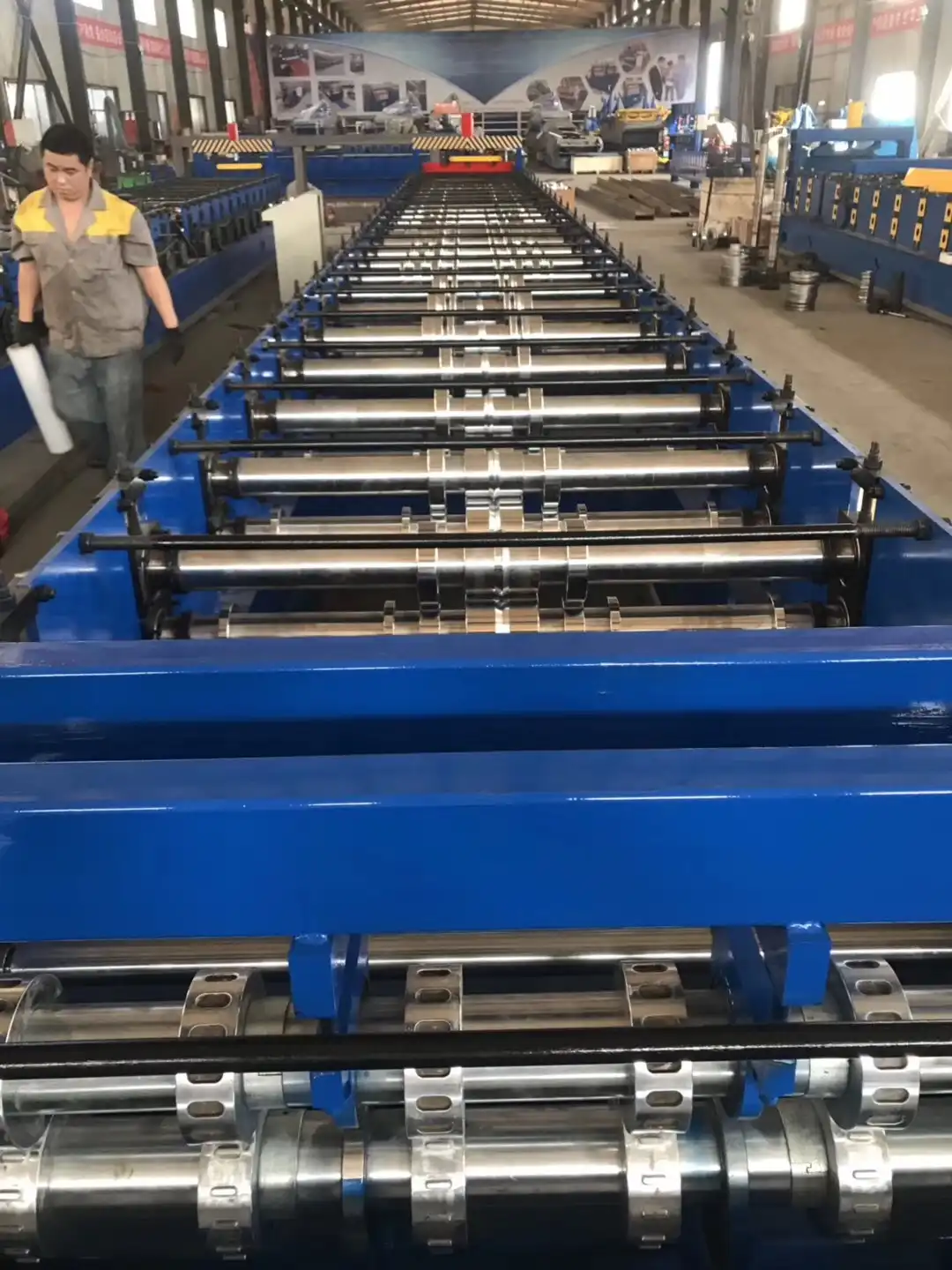
A dedicated metal roof deck roll forming machine will always do a better job than a composite line when it comes to throughput and unit cost if your order book is based on B-Deck, A/B rib (1.5"), or 3.0" composite floor deck for warehouse or high-rise projects. Line speeds of 10–20 m/min are equal to about 600–1,200 square meters per hour. This is much faster than a composite line, which is limited by the time it takes for the laminate to dry.
Capital Investment vs. Operational Flexibility
Here's how the two types of tools stack up against the most important financial factors that a buying team needs to consider:
- Dedicated deck roll former: Lower entry cost, faster ROI on single-profile runs, lower energy draw (3×11 kW main motors distribute load evenly), and simpler maintenance. Tooling changeover for a new profile requires a roll cassette swap, typically one to two shifts of downtime.
- Composite line: Higher capital outlay, longer payback period, but genuine versatility for insulated panel production. Justified only if your product catalogue genuinely includes both structural deck and thermally rated panels.
These differences have a direct effect on the prices of tenders. When deck manufacturers buy on construction-cycle bids, they need the lowest cost-per-meter. Composite lines have overhead costs that eat away at that margin unless the premium for insulated panels makes up for it.
Servo vs. Hydraulic Cutting Systems
Full line speed is enough for a hydraulic shear with CR12 mold-steel blades that runs at 15–20 MPa to easily cut through 1.0–1.2 mm structural deck. The length tolerance for servo flying-shear systems is better than that for hydraulic systems (±1.0 mm vs. ±1.5 mm), but they are more expensive and harder to use. Most US deck manufacturers that follow ASTM standards find that hydraulic cutting on a dedicated line gives them the best combination of accuracy and speed.
Technical Performance and Maintenance Insights
Key Specifications That Affect Output Quality
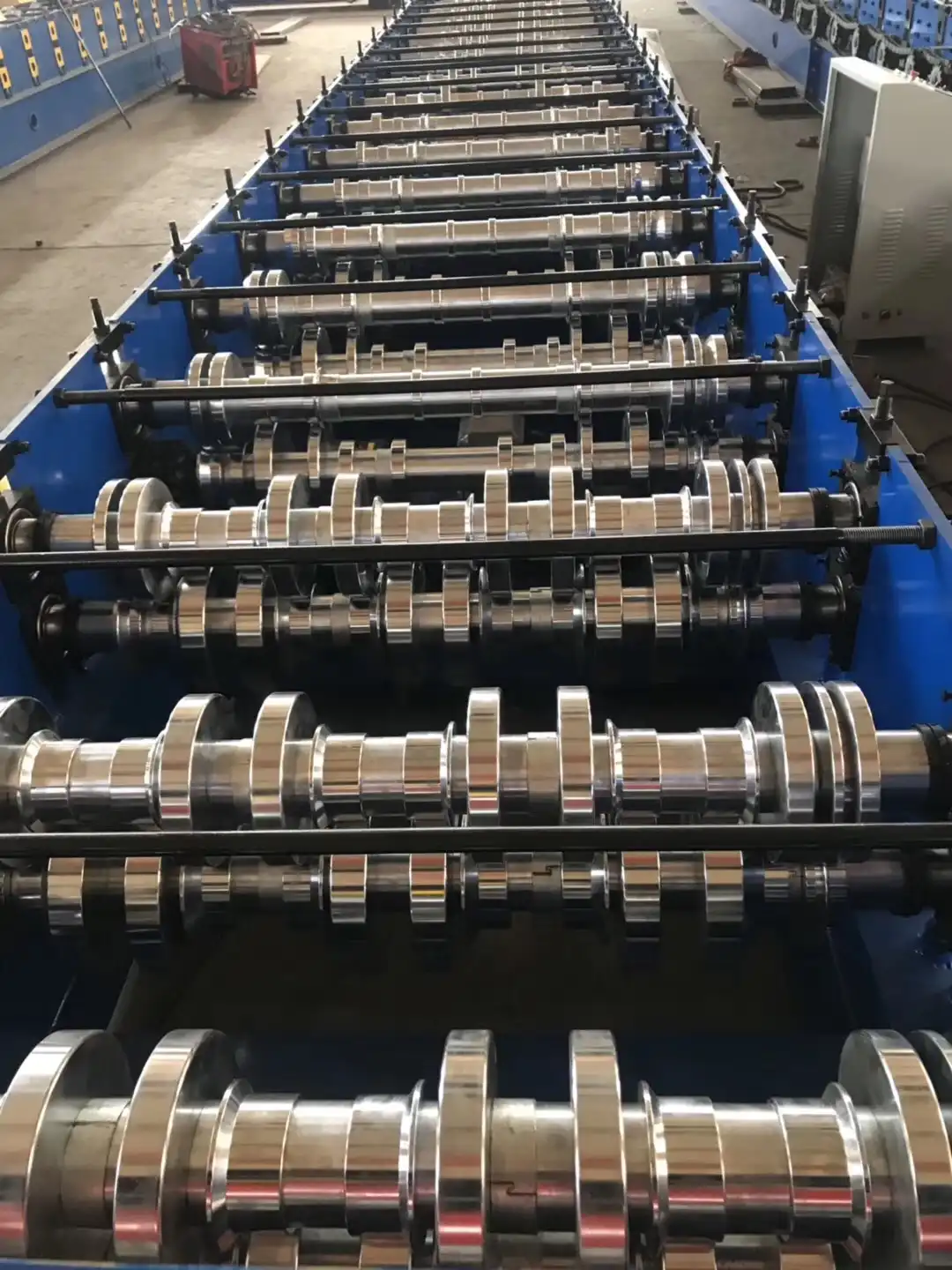
If a machine can hold rib geometry in high-strength galvanized coil without profile twist or spring-back depends on how the forming stands are built. When you form roller shafts with a 95 mm diameter out of No. 45 steel that has been chromed, they don't bend when deep-rib profiles apply side-load forces. The 120 mm diameter of the embossing shaft makes it easier to keep the emboss depth the same across the whole width of the coil, even though it has to handle more contact stress.
Routine Maintenance That Protects Uptime
A machine's lifetime cost is mostly determined by how much it costs to maintain. A structured schedule makes sure that the line runs at the right time:
- Weekly: Check lubrication on forming shaft bearings; inspect chrome surface of rollers for pitting caused by zinc buildup from galvanized coil.
- Monthly: Verify hydraulic pressure at the shear station; inspect CR12 cutter edges for micro-chipping; check PLC input/output signals and converter fault logs.
- Quarterly: Full alignment check on forming stands; measure rib height and cover width against CAD tolerance; review emboss depth with go/no-go gauge.
Cutting-blade life stays in the 100,000–200,000 cut range that structural deck production needs by sticking to this plan and getting OEM-spec extra parts instead of generic ones.
Energy Consumption and Sustainability
The three-phase, 11-kW main motor is spread out so that the power load is fairly spread across the drivetrain. This lowers the peak current draw and motor heat. This layout lowers the cost of energy per ton of formed deck compared to a single large motor. It also lowers the stress on gearboxes from heat, which is a real benefit in environments where production runs 24 hours a day.
Brand, Supplier, and Procurement Considerations
Certifications and Compliance Requirements
When people in the US buy structural deck equipment, they need to deal with sellers whose machines have quality standards that can be proven. Controlling the manufacturing process is covered by ISO 9001; electrical and mechanical safety is covered by CE certification; and claims about structural performance are backed up by CAS certification. These papers help with the internal approval of capital and limit responsibility when the deck made on the metal roof deck roll forming machine is used in an approved building.
Evaluating OEM and ODM Capability
True OEM partners can deliver custom rib geometry, such as a proprietary dovetail profile or a non-standard embossment pattern for a certain composite slab system. Catalog-only vendors, on the other hand, can't. Ask for written lead times for changing profiles, NDAs for profile IP, and examples of projects where custom tools were checked against a structural engineer's specifications before they were sent out.
New vs. Used vs. Custom-Built Equipment
When you buy a new machine from a well-known company, it comes with a guarantee, the latest drive technology (in this case, a Siemens PLC and converter), and help with setting it up in the plant. Buying used equipment is cheaper, but you don't know how much wear is on the rollers, gears, and cuts. Custom-built lines, which are ordered with the exact coil width, profile geometry, and decoiler capacity (10–30 T for high-volume deck runs), take longer to get but are already set up to meet your production needs from the start.
Practical Application Scenarios and Case Studies
High-Rise Composite Floor Deck Production
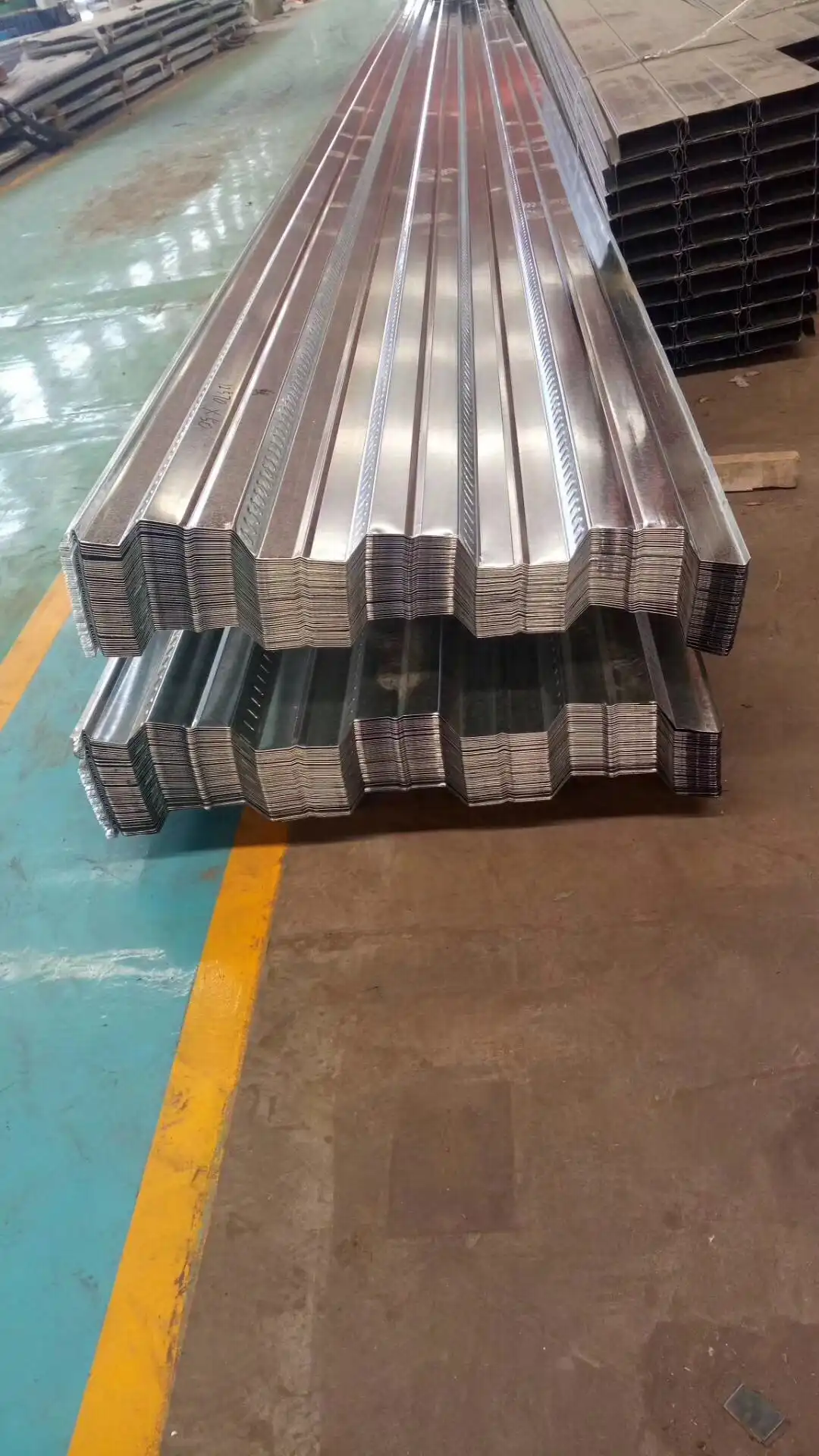
When building a multi-story steel frame building, the floor deck shape has to meet strict standards for shear-stud bearing and emboss-depth for composite action. For just-in-time deliveries to tower construction sites, a dedicated forming line with inline embossing makes a 3.0" composite deck at 0.9 mm gauge and works in continuous shifts. ZTRFM machines that have been installed for clients like Tata Group (India) and DS Group (Korea) work in this exact way, making structural deck profiles quickly and in large quantities.
Warehouse Mezzanine and Roof Deck Applications
Heavy-duty warehouse storage mezzanine decks need a 1.5" B/A rib shape in a 1.0–1.2 mm gauge to span open-web steel joists at standard 5–8 ft spacings without extra steel filler. A roll forming line set up for this profile moves at 15–18 m/min and uses hydraulic cutting to make panels that are cut to length orders within 1.5 mm. This design is the best choice for regional deck builders working on multiple warehouse jobs at the same time because it takes little time to set up between standard profiles.
Parking Structures and Permanent Form Deck
Parking garage decks are loaded and unloaded by wheels many times, so the rib shape and stamp depth must be the same across the whole panel width. For permanent concrete forms, the form deck needs to have the right total width so that workers can properly lap panels without having to trim them in the field. Tight length and width limits managed by a PLC are good for both uses with a purpose-built structural deck line.
Conclusion
It depends on the types of products you want to make and how much you want to make that you choose between a specialized structural deck roll former and a composite line. To make B-Deck, composite floor deck, and form deck in structural gauge, a purpose-built metal roof deck roll forming machine works faster, costs less per meter, and is easier to maintain than a composite line. Composite lines are only worth the extra money when your catalog really needs thermally insulated panel production along with structural profiles. When you match the machine to the majority of your output, you will see faster payback and less operating friction over the course of the production run.
FAQ
1. Can one deck roll forming machine produce multiple profile heights?
Most of the time, dedicated deck lines are made for a single profile family. You can switch between, say, a 1.5" B-Deck and a 2.0" deck on a cassette-change system, but it takes one to two shifts to do so. When making a lot of things, it's cheaper to use separate machines for each profile.
2. How do I verify emboss depth meets composite slab specifications?
Make sure the go/no-go gage you use is calibrated and matches the drawing from your structural engineer. Using the gap setting on the 120 mm embossing shaft, you can change the depth of the groove. At the start of each production run, make sure that the width of the whole coil is the same.
3. What coil thickness range does ZTRFM's deck line handle?
Galvanized or Galvalume coil from 0.8 mm to 1.2 mm at 235 MPa yield strength can be used on this line. It can cover normal US structural deck gauges from 22 ga to 18 ga.
4. What foundation does the machine require?
It is best to use a reinforced concrete pad that is level to within 1 mm/m. The machine's weight and the dynamic forming forces mean that the base needs to be stable in order to keep the profile accurate over time.
5. How long do the CR12 cutter blades last?
Under normal production conditions, quench-treated CR12 mold steel blades can make 100,000 to 200,000 cuts through 0.8 to 1.2 mm zinc deck before they need to be sharpened again.
Get the Right Deck Forming Line From ZTRFM
Customers in more than 150 countries have bought structural deck roll forming equipment from ZTRFM since 2014. The company is certified by ISO 9001, CE, and CAS. OEM profile tools, Siemens PLC control, and one-stop supply from decoiler to stacker are some of the things that our metal roof deck roll forming machine manufacturer can do. Get in touch with our expert team to talk about your profile needs and get a quote: Please email zhongtuorollforming@gmail.com.
References
1. Steel Deck Institute. SDI Manual of Construction with Steel Deck. Steel Deck Institute, 2017.
2. American Iron and Steel Institute. North American Specification for the Design of Cold-Formed Steel Structural Members. AISI, 2016.
3. ASTM International. ASTM A653/A653M: Standard Specification for Steel Sheet, Zinc-Coated (Galvanized) or Zinc-Iron Alloy-Coated (Galvannealed) by the Hot-Dip Process. ASTM, 2023.
4. Ghersi, A., and Landolfo, R. "Cold-Formed Steel Structures: Design and Applications." Journal of Constructional Steel Research, 2002.
5. Hancock, G. J. Cold-Formed Steel Structures to the AISI Specification. Marcel Dekker, 2001.
6. European Convention for Constructional Steelwork. European Recommendations for the Design of Profiled Steel Sheeting. ECCS, 2020.