- English
- French
- German
- Portuguese
- Spanish
- Russian
- Japanese
- Korean
- Arabic
- Irish
- Greek
- Turkish
- Italian
- Danish
- Romanian
- Indonesian
- Czech
- Afrikaans
- Swedish
- Polish
- Basque
- Catalan
- Esperanto
- Hindi
- Lao
- Albanian
- Amharic
- Armenian
- Azerbaijani
- Belarusian
- Bengali
- Bosnian
- Bulgarian
- Cebuano
- Chichewa
- Corsican
- Croatian
- Dutch
- Estonian
- Filipino
- Finnish
- Frisian
- Galician
- Georgian
- Gujarati
- Haitian
- Hausa
- Hawaiian
- Hebrew
- Hmong
- Hungarian
- Icelandic
- Igbo
- Javanese
- Kannada
- Kazakh
- Khmer
- Kurdish
- Kyrgyz
- Latin
- Latvian
- Lithuanian
- Luxembou..
- Macedonian
- Malagasy
- Malay
- Malayalam
- Maltese
- Maori
- Marathi
- Mongolian
- Burmese
- Nepali
- Norwegian
- Pashto
- Persian
- Punjabi
- Serbian
- Sesotho
- Sinhala
- Slovak
- Slovenian
- Somali
- Samoan
- Scots Gaelic
- Shona
- Sindhi
- Sundanese
- Swahili
- Tajik
- Tamil
- Telugu
- Thai
- Ukrainian
- Urdu
- Uzbek
- Vietnamese
- Welsh
- Xhosa
- Yiddish
- Yoruba
- Zulu
Zinc Build-Up on Floor Deck Rollers: Stop It Fast
Zinc build-up on floor deck rollers is one of the most overlooked causes of production loss in metal deck manufacturing. If you run a floor deck roll forming machine, you already know how fast a small zinc deposit can throw off your profile dimensions, slow your line speed, or force an unplanned shutdown. This guide walks you through exactly what causes the problem, how to stop it, and how to choose equipment that keeps it from coming back.
Understanding Zinc Build-Up on Floor Deck Rollers How Zinc Transfers to Roller Surfaces
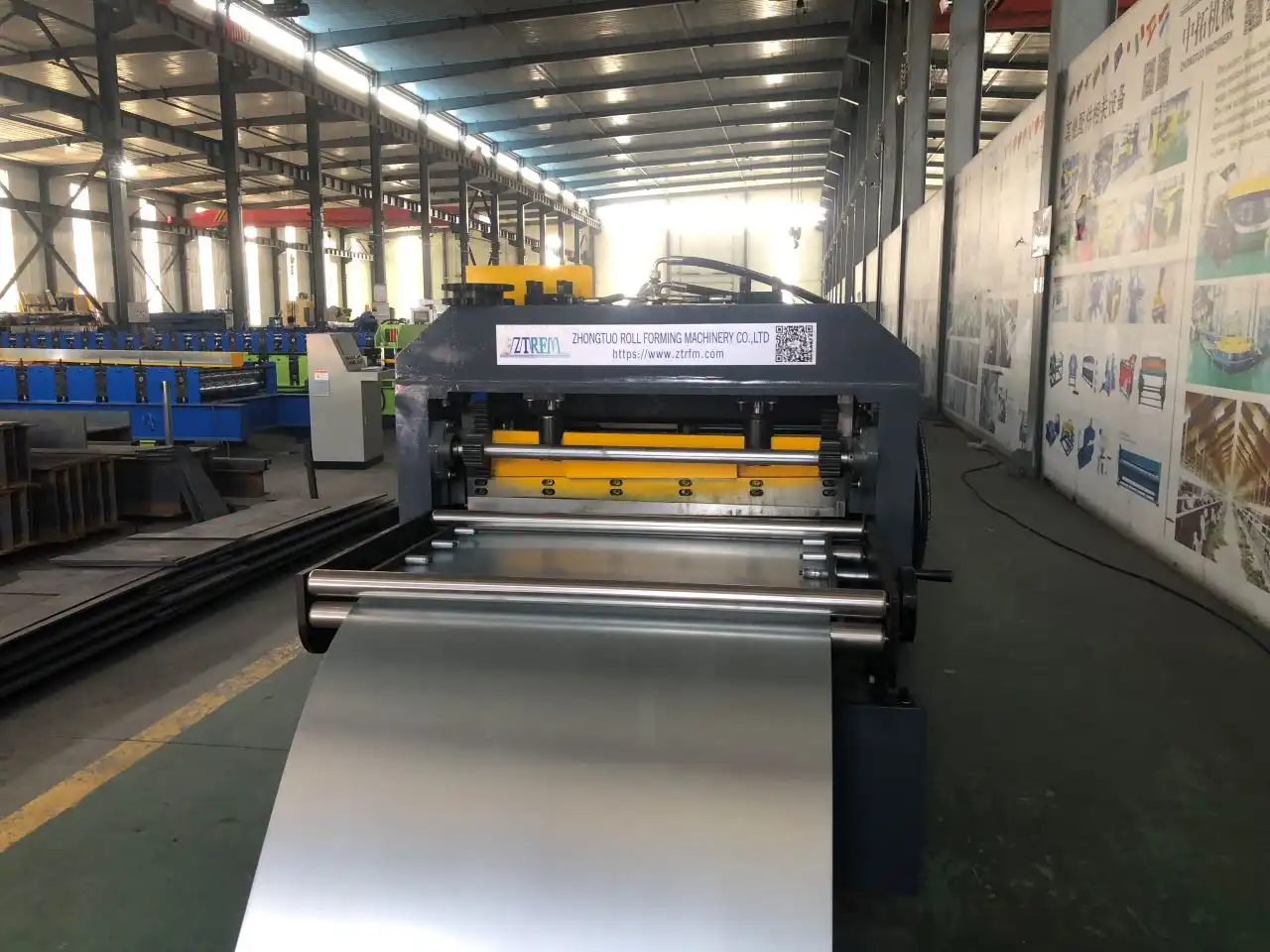
Galvanized steel sheets have a zinc coating that ranges from 60 to 275 g/m², based on the requirements. The rollers put pressure on the metal at different points during cold forming. Because of the pressure, there is friction and localized heat, which separates the zinc particles from the strip and bonds them to the roller surface. These tiny deposits add up over time to form a buildup that can be seen.
Why It Damages Profile Accuracy
The gap between mating rolls is changed by even a 0.1 mm zinc deposit on a forming roller. To meet the requirements of AISI S100 for structural engineering calculations, rib depth tolerances for composite floor decking must stay within ±1.0 mm. This very small difference is important. Zinc buildup makes the formed rib less deep, which weakens the mechanical connection between steel and concrete in composite slabs.
Common Misconceptions
A lot of operators think that light zinc smearing is not a problem. It's not. When pressure is applied over and over, a thin film of zinc hardens and acts almost like a shim. Not the first drop, but the effect that builds up over dozens of work hours is what really scares people. Skipping over early dust is the fastest way to have a production run thrown out.
Systematic Approach to Stopping and Preventing Zinc Build-Up
Early Detection Methods
Look at the rollers at the beginning and end of every shift. At key forming points, use a 0.05 mm feeler gauge to find changes in the gap. A handheld magnifier or borescope can help you see deposits inside deep-rib tooling that you can't see with your naked eye. It only takes minutes to catch zinc early, but it takes hours to miss it.
Root Causes to Address First
Most problems with zinc buildup are caused by three things. First, look at the quality of the coil's surface. Coils with too much free zinc or coatings that are rough shed more particles. Second, the type of roller: zinc sticks to normal mild steel rollers much more easily than to chrome-plated or hard-coated surfaces. Third is line speed. Going faster than the floor deck roll forming machine's rated speed (for example, more than 10–15 m/min for a 27-station line) increases friction heat and speeds up transfer.
You can put this useful list of things to do to keep your machine safe on your desk:
- Verify incoming coil zinc coating weight against spec before loading
- Confirm roller chrome plating is intact (minimum 0.05 mm Cr layer)
- Set line speed within rated parameters—do not push past 10 m/min on a standard 27-station deck line
- Apply a thin film of forming lubricant to the strip entry point each shift
- Log zinc deposit observations in a shift maintenance record
By going after the cause instead of just the symptom, these steps stop the recurrence instead of just delaying it.
Real-World Improvement Data
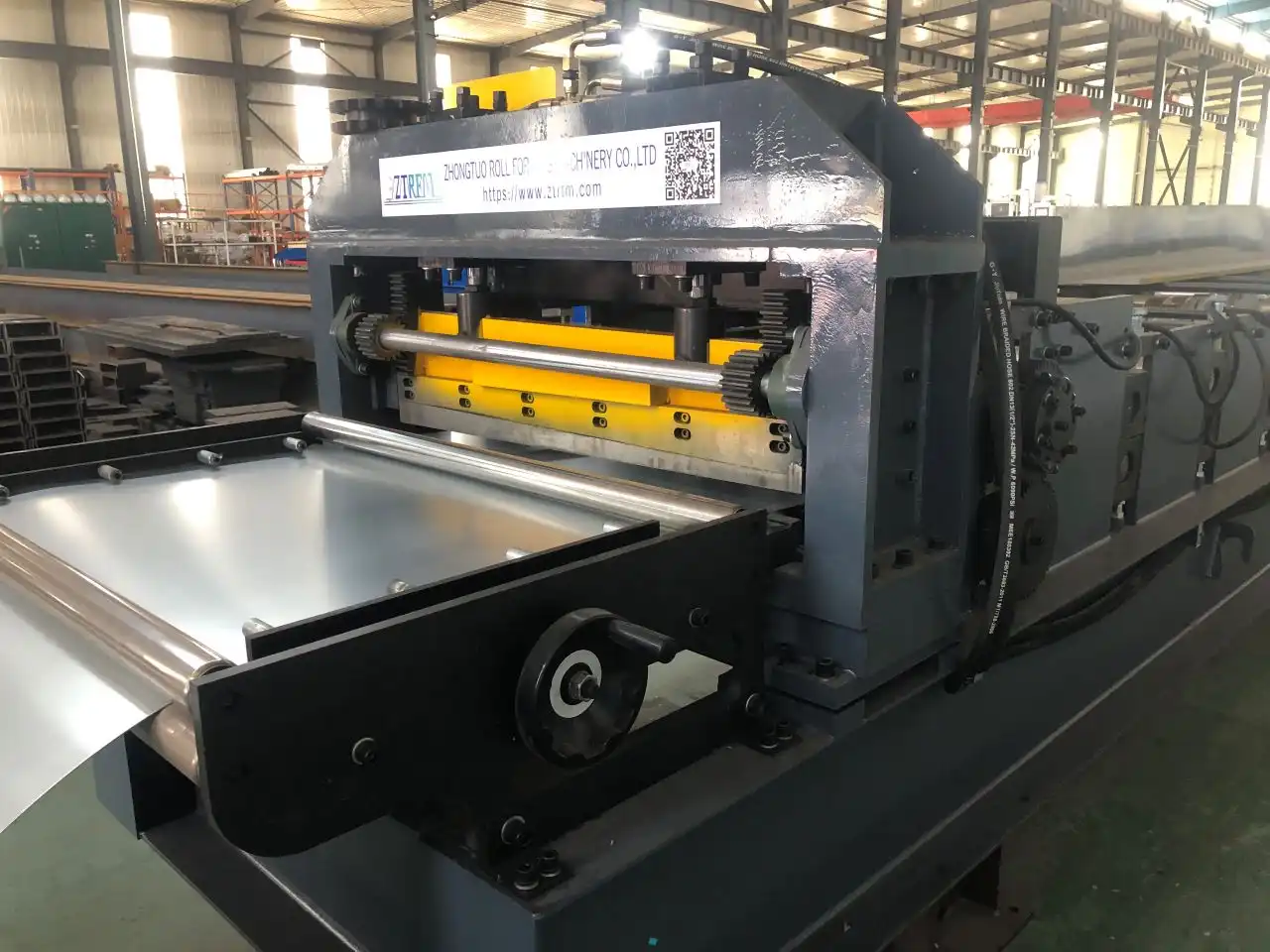
One company that makes structural steel decks said that unplanned stops for roller cleaning went down by 40% after they switched to chrome-plated rollers and added entry-point greasing. Not having to work dropped from 4.5 hours a week to less than 2 hours in the first month after the change.
Maintenance Tips to Tackle Zinc Build-Up Effectively
Routine Inspection Schedule
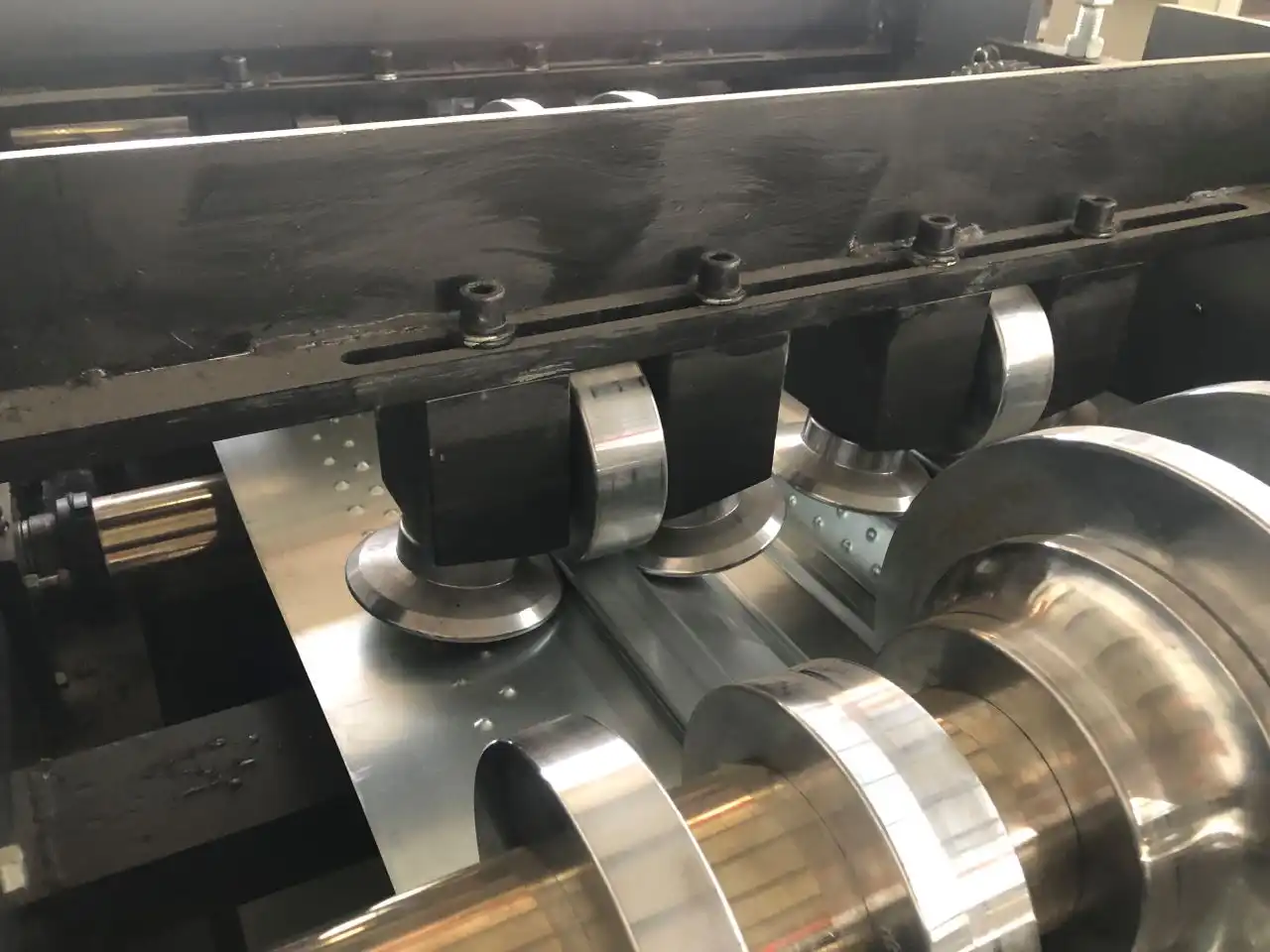
After every 8 hours of production, do an eye roller check. Take off the tools from stations 1–5 (the areas with the most pressure) every 40 hours and clean them with a brass wire brush and a mild alkaline cleaner. Brass tools can remove zinc without scratching the chrome underneath because they are not rough.
Cleaning Agents and Tools
Do not use acidic solvents on chrome-plated rolls; they will damage the plating and make it easier for zinc to stick in the future. With a soft brass brush and a cleaning solution that is pH-neutral or slightly alkaline, you can get rid of the buildup without hurting the roller surface. A wood or nylon scraper used at a low angle can get rid of tough deposits before chemical treatment.
Preventive vs. Corrective Maintenance Timing
Cleaning for preventative purposes every 40 hours takes about 30 to 45 minutes each time. When there is a lot of buildup, a corrective clean can lock down a line for 3 to 6 hours and may need roller resurfacing. There is no doubt in the math: planned repair is always the cheaper option.
Choosing the Right Floor Deck Roll Forming Machine to Minimize Zinc Build-Up
Roller Material and Surface Coating Standards
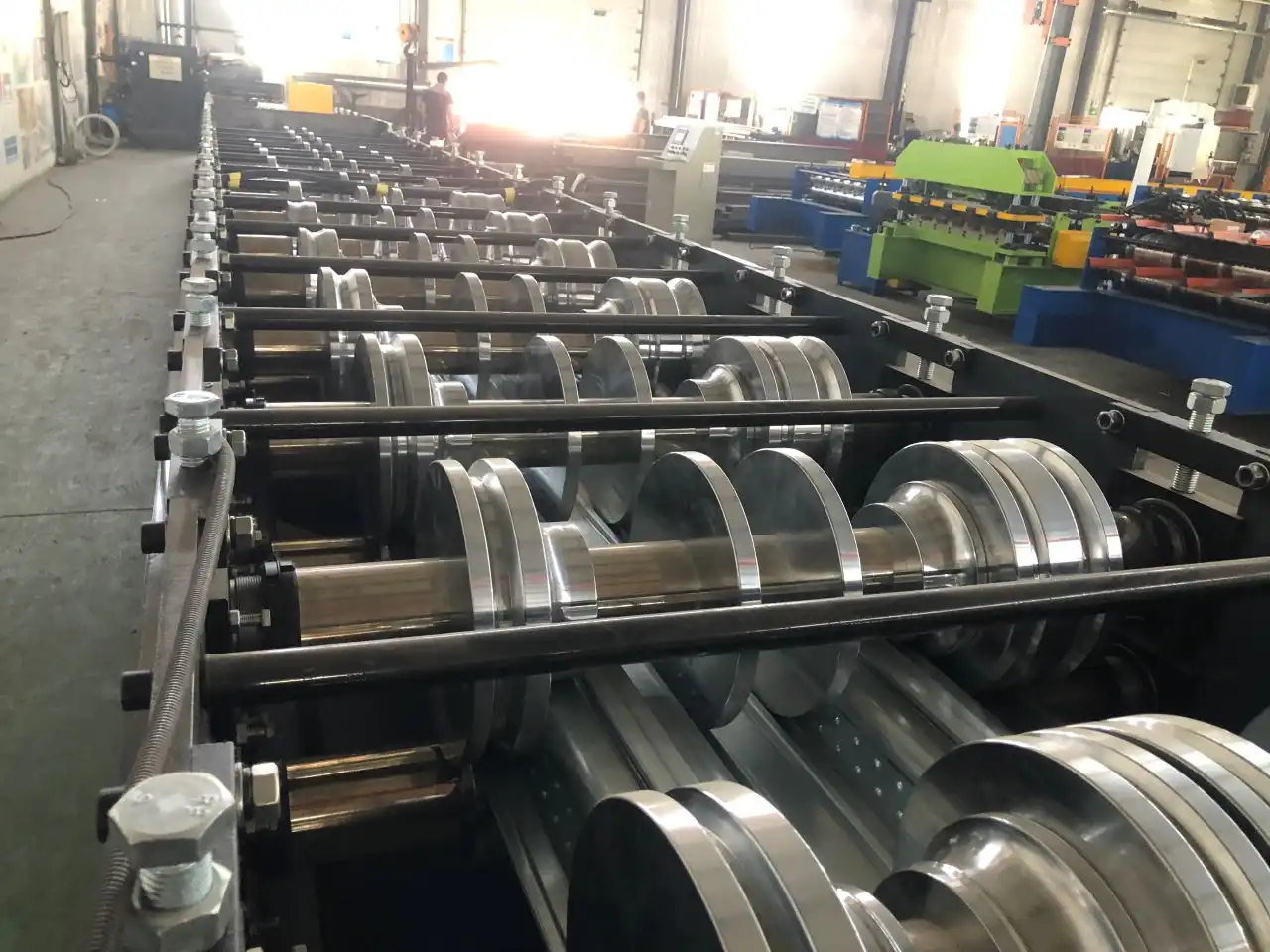
When buying zinc resistance, the roller specification is the most important thing to look at. Find 45# high-grade steel rods with GCr15 or Cr12 roller bodies that have been heat-treated to HRC 58–62. The width should be at least 95 mm. Zinc has a hard time sticking to a chrome plating layer that is at least 0.05 mm thick on the floor deck roll forming machine surface. Well-engineered composite deck lines always meet these standards.
Manual vs. Automatic Machines
When operators are trained correctly, manual lines give skilled workers direct control over speed and pressure, which helps lower zinc transfer. Automatic PLC-controlled lines (using Delta or Siemens controls) keep speed and pressure constant across shifts, so changes made by operators are no longer a risk. When producing a lot of zinc—say, more than 8 m/min of steady output—automatic control is the safer option.
Key Procurement Metrics
Before you buy a profiled steel deck roll-making line, make sure the seller meets these requirements:
- Roller material: 45# steel shafts, GCr15 or Cr12 roller bodies
- Chrome plating thickness: ≥0.05 mm on forming surfaces
- Number of forming stations: 25–36 for deep composite deck profiles
- Control system: Industrial PLC with inverter speed control
- Cutter material: Cr12 quenched steel for clean cuts without profile deformation
When you match the specs of your machine to your production rate and coil specs, you protect the quality of your output and make it easy to handle zinc buildup from the start.
Future Trends and Technologies to Combat Zinc Build-Up
Advanced Roller Coatings
The market for floor deck tools is getting thermal spray coatings, mostly tungsten carbide and ceramic composite coatings. In separate wear tests, these surfaces show zinc binding rates that are much lower than those for normal chrome plating. A number of companies that sell tools for structural steel now offer ceramic-coated rollers as an update for lines that are already in use.
Smart Sensor Integration
Inline vibration sensors and force monitoring systems can now find changes in the roller gap that aren't normal in real time. A station is warned before a profile flaw happens when zinc buildup moves the formed load by more than a certain amount. For high-speed production lines that use ASTM A653 galvanized coils to make composite decks, this technology is especially useful.
Self-Cleaning Surface Research
Journals of industrial engineering have released research that shows micro-textured roller surfaces move zinc particles out of contact zones while the metal is being formed. Even though they are still new, these designs look like they could cut down on the number of times that lab workers have to clean by up to 60%. When looking at new lines for the next 10 years, B2B buyers should ask providers what their plans are for adding these features.
Conclusion
It is possible to fix the issue of zinc buildup on floor deck roll forming machines. With the right roller materials, regular inspections, and cleaning products, most buildup can be stopped before it affects the quality of the profile. When looking at new equipment, the two things that will directly lower your long-term zinc management burden are the roller surface specifications and the speed consistency controlled by a PLC. Your production schedule depends on it, so act on deposits that come in early instead of late.
FAQ
1. How often should I inspect rollers for zinc build-up?
Visually check every 8 hours of production. The highest-pressure making stations should be cleaned thoroughly every 40 hours. If you use coils with zinc coatings that weigh more than 180 g/m², you may need to change the frequency.
2. Can zinc build-up cause structural defects in finished floor decks?
Adding zinc that changes the depth of the ribs by more than 1 mm can weaken the shear bond between the steel deck and the concrete in composite floor systems. This is a problem with the structure that is against AISI S100 and SDI design standards.
3. What is the most cost-effective fix for a small operation?
To begin, clean the brass brush every 40 hours and grease the entry-point strip. These two steps don't cost much and solve most zinc transfer problems without spending a lot of money.
4. Does roller chrome plating wear out?
Yes, chrome coating (0.05 mm standard) usually lasts between 12 and 18 months if it is used all the time. Once a year, check the state of the coating and replate or replace the rollers before the base metal shows. This is because zinc sticks to bare steel much more quickly.
5. Will switching to a thicker coil help?
Not right away. It's not true that thicker galvanized coils (0.8–1.5 mm) naturally lose more zinc. What drives transfer is the weight of the coating, not the thickness of the base. Quality of the coil coating is more important than changes in gauge.
Get Your Floor Deck Line Running Right — Talk to ZTRFM
Since 2014, ZTRFM has been making and selling cold roll forming machines to customers in over 150 countries. Their machines are approved by ISO9001, CE, and CAS. Our floor deck roll forming machines for sale have Cr12 quenched blades, chrome-plated rollers, and Delta PLC control systems that are made to work with galvanized coils every day without having zinc issues. You can get a quote by emailing our technical team at zhongtuorollforming@gmail.com.
References
1. Steel Deck Institute (SDI). SDI Manual of Construction with Steel Deck. Steel Deck Institute, 2017.
2. American Iron and Steel Institute (AISI). North American Specification for the Design of Cold-Formed Steel Structural Members (AISI S100). AISI, 2016.
3. ASTM International. ASTM A653/A653M: Standard Specification for Steel Sheet, Zinc-Coated (Galvanized) or Zinc-Iron Alloy-Coated (Galvannealed) by the Hot-Dip Process. ASTM International, 2023.
4. Roberts, W.L. Cold Rolling of Steel. Marcel Dekker, 1978.
5. Halmos, George T. Roll Forming Handbook. CRC Press, 2006.
6. Jeong, H.S., and Kim, J.H. "Wear Characteristics of Chrome-Plated Roll Dies in Cold Roll Forming of High-Strength Steel Sheets." Journal of Materials Processing Technology, 2009.