- English
- French
- German
- Portuguese
- Spanish
- Russian
- Japanese
- Korean
- Arabic
- Irish
- Greek
- Turkish
- Italian
- Danish
- Romanian
- Indonesian
- Czech
- Afrikaans
- Swedish
- Polish
- Basque
- Catalan
- Esperanto
- Hindi
- Lao
- Albanian
- Amharic
- Armenian
- Azerbaijani
- Belarusian
- Bengali
- Bosnian
- Bulgarian
- Cebuano
- Chichewa
- Corsican
- Croatian
- Dutch
- Estonian
- Filipino
- Finnish
- Frisian
- Galician
- Georgian
- Gujarati
- Haitian
- Hausa
- Hawaiian
- Hebrew
- Hmong
- Hungarian
- Icelandic
- Igbo
- Javanese
- Kannada
- Kazakh
- Khmer
- Kurdish
- Kyrgyz
- Latin
- Latvian
- Lithuanian
- Luxembou..
- Macedonian
- Malagasy
- Malay
- Malayalam
- Maltese
- Maori
- Marathi
- Mongolian
- Burmese
- Nepali
- Norwegian
- Pashto
- Persian
- Punjabi
- Serbian
- Sesotho
- Sinhala
- Slovak
- Slovenian
- Somali
- Samoan
- Scots Gaelic
- Shona
- Sindhi
- Sundanese
- Swahili
- Tajik
- Tamil
- Telugu
- Thai
- Ukrainian
- Urdu
- Uzbek
- Vietnamese
- Welsh
- Xhosa
- Yiddish
- Yoruba
- Zulu
Typical tolerances of a ceiling t bar roll forming machine line
When performing continuous cold forming, the buyer asks what the tolerance of the ceiling T bar roll forming machine is, which is the tolerance range for the profile size width, height, length, flatness, and cut accuracy. If we refer to industry norms and our factory data, the normal tolerances are ±0.5 mm for length per 3,600 mm bar, ±0.1 mm for profile height and flange width, and straightness is within 1 mm for the whole length.” These numbers have direct implications on how suspended ceiling grids accept acoustic tiles and conform to ASTM C635 modular spacing criteria.
Understanding Typical Tolerances in Ceiling T Bar Roll Forming
But tolerance is more than a figure on a sheet of paper. “It tells you if a finished T bar will fit the grid system on the job or not without having to shim it, recut it, or rework it.”
Key Dimensional Parameters and Their Standard Ranges
Buyers should look out for five things: profile height (±0.1 mm), bottom flange width (±0.1 mm), cut length (±0.5 mm for 3,600 mm), flatness (≤1 mm across whole length), and material thickness retention (within 5% of specification). 0.12-0.3 mm light gauge PPGI for the T bar top cap and 0.2-0.4 mm GI for the bottom web; a change of just 0.05 mm in the roller gap may cause the completed profile to bow.
Factors That Drive Tolerance Deviation
Three factors account for most of the occurrences that are out of tolerance in a manufacturing run. First, the variation in coil width in a batch of raw materials makes the producing load variable at each station. Secondly, the roller loses material, and this causes a gradual, silent change in the form of the gap. Third, during extended operations, the reference points move by minuscule amounts, just a few micrometers, because of the thermal expansion of the machine frame. That's enough to bring components on the edge of being in spec out.
Why Tolerance Matters for Downstream Users
The interior fit-out contractor will install 600 × 600 mm mineral fiber tiles with a cross-tee slot spacing of precisely 150mm (or 6 inches on US grids). The ±1 mm error compounds across 10 cross tees, so the tiles are 10 mm out of position and either rock or fall. So, tolerance knowledge is not only a fascinating technical exercise; it's a direct cost and safety challenge on every task.
Core Components That Govern Tolerance in a T Grid Forming Line
A growing line is only as accurate as its weakest part. Here's what each part does to help with accuracy in measurements.
Roll Station Configuration
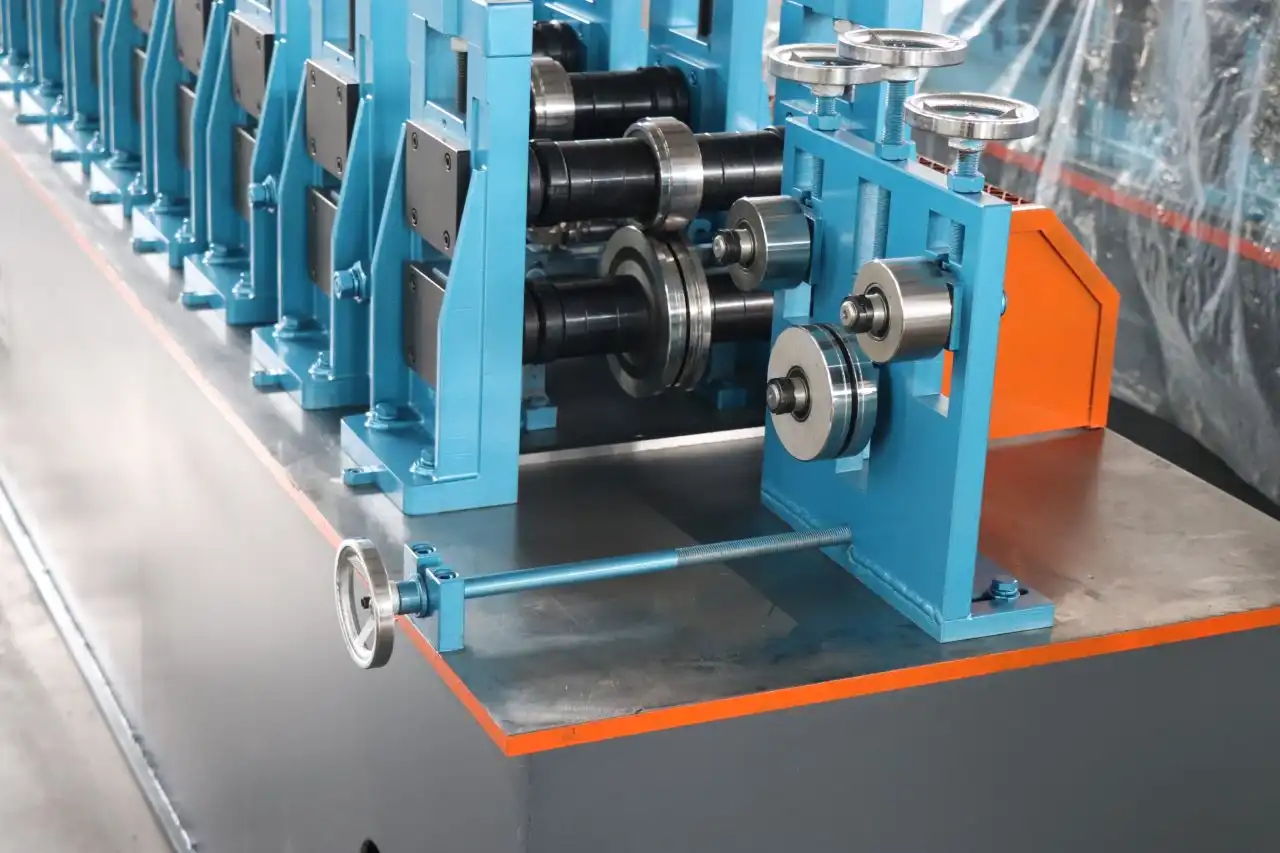
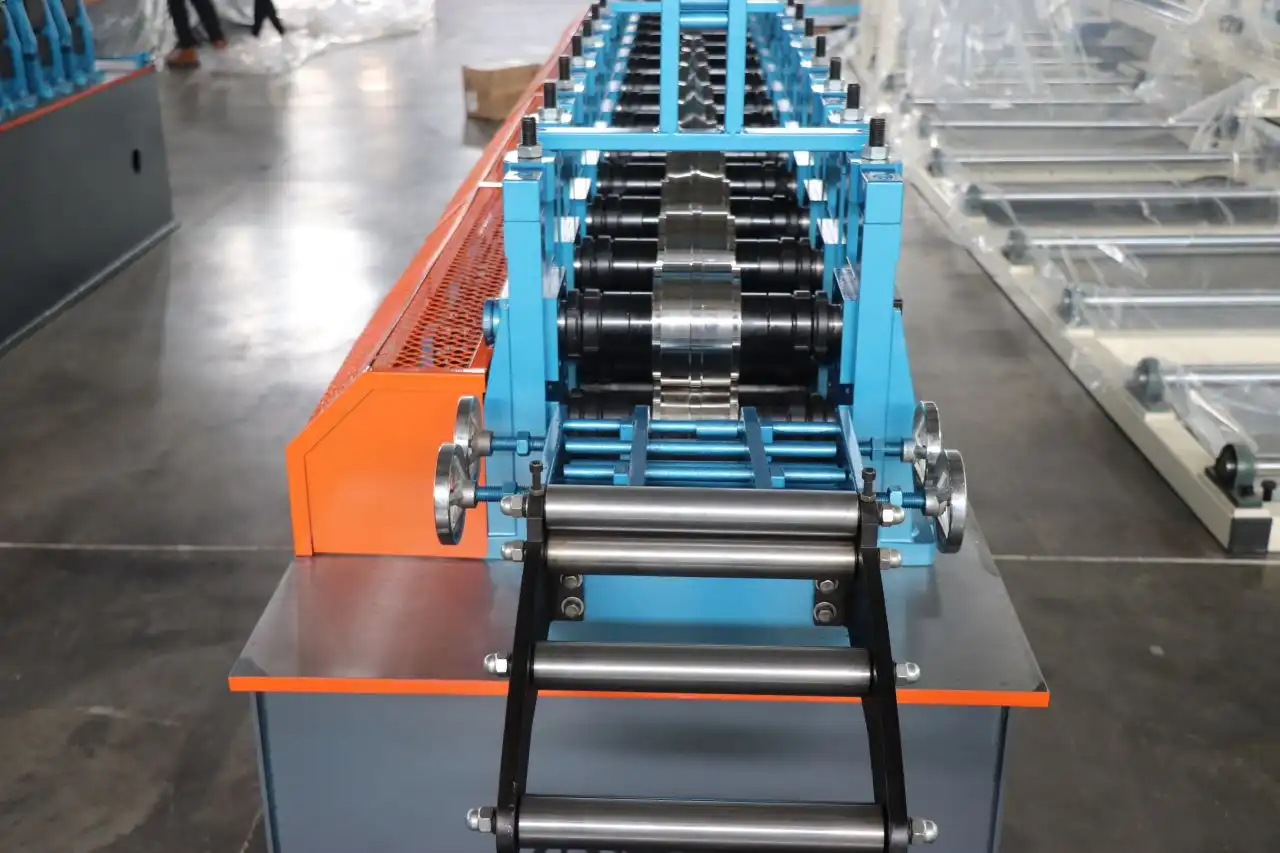
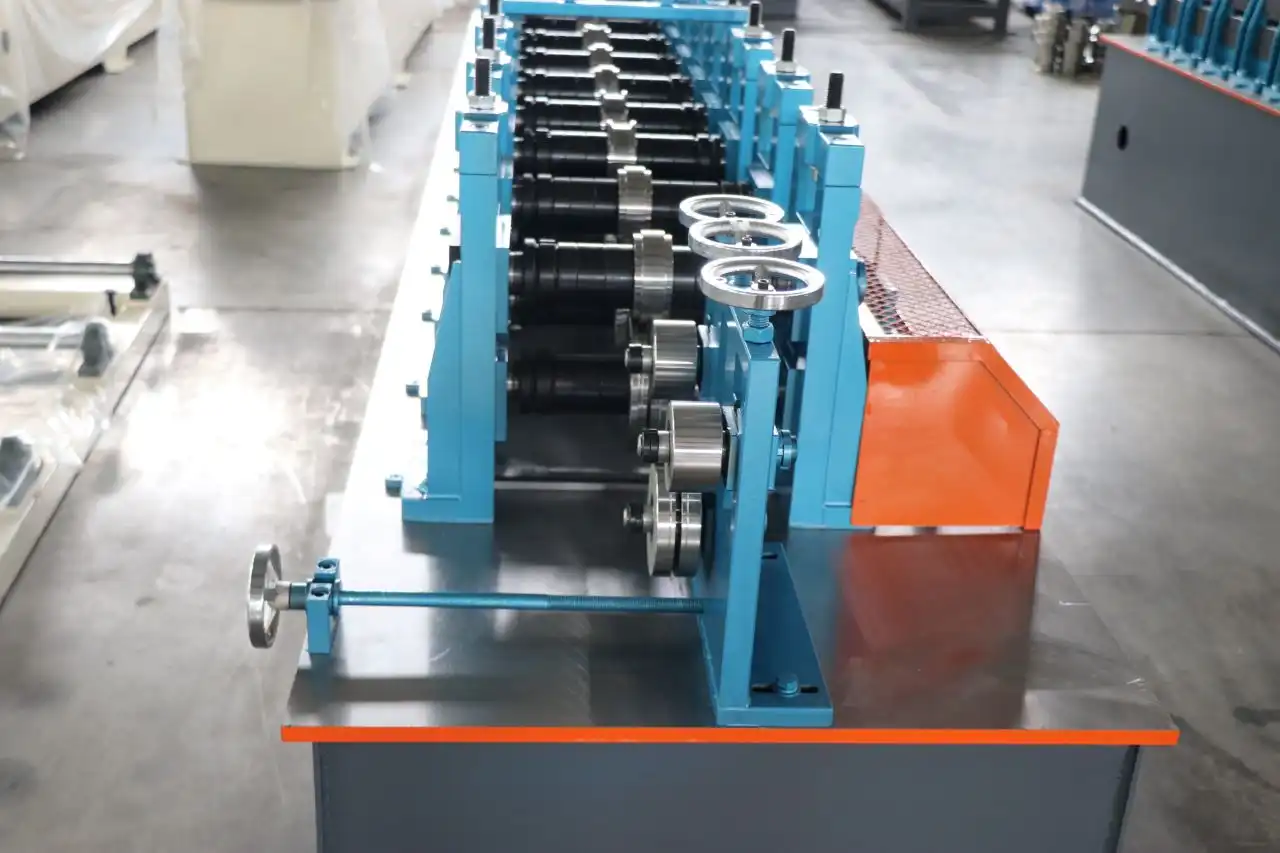
Our ceiling t bar roll forming machine features 18 stations for the main tee. The cross tee has 16 available positions. The more stations you have, the narrower the bends in each pass. This reduces the internal spring-back and ensures the stability of the profile shape. The rollers are manufactured from GB-Cr12 tool steel, heated to HRC 58-62, and chrome-plated to prevent the painted PPGI coils from cutting the surface.
PLC and Servo Control Systems
Real-time tracking is the most realistic technique to cope with thermal drift and speed variations. Servo-powered feed by Siemens PLC synchronizes all stations’ roller speeds. Length precision of ±0.5 mm may be achieved at working rates of 0-20 m/min with cutting going on at the same time. If the station speeds are out of synchronization, micro-slippage takes place and causes bending of the web of thin-gauge material.
Decoiler and Material Feed Handling
Our line’s decoiler can hold up to 1.5 tons, can operate with coils with inner sizes between 450 and 550 mm, and has a 45# steel rolling shaft with a diameter of 50mm. Consistent decoiler strip tension is the first line of defense against wavy edges and camber. A hydraulic tensioner holds the strip under constant tension as the coil diameter decreases along the run. This prevents the unpredictable slack that causes punch mistakes.
Optimizing Production to Hit and Hold Tight Tolerances
It's easy to get limits right the first time. Sticking to them during a full shift and multiple coil changes is what sets competitive makers apart from the rest.
Step-by-Step Tolerance Control Workflow
At every stage of a structured manufacturing process, precise measurements are maintained:
- Incoming material inspection: Check coil thickness at 3 locations per coil before loading. Hold for thickness variation> ±0.01 mm throughout a coil.
- First-off inspection. Run 3 meters of strip and measure all five important measurements before releasing the line to full speed.
- Mid-Run Spot Check: Take 1 sample every 500m; record findings. This detects roller wear before a variance adds up to a rejection threshold.
- End-of-coil Inspection: Separate the last 2 meters of each coil, since tension fluctuations during tail-out may compromise flatness.
And it’s the consistency in this arrangement that distinguishes a well-run facility from one that learns about tolerance difficulties after packing.
Common Causes of Tolerance Drift and How to Prevent Them
Wear and tear on roller bearings is the most typical cause for sluggish shifts in T bar output tolerances. If a bearing has a radial play of 0.05 mm, then that movement is directly transmitted to the strip. Checking bearings every 500 hours of usage and pulling them before they fail can dramatically minimize failure rates. A lot of first-run rejections are caused by operator errors such as setting the spacing too narrow after changing profiles. The danger may be reduced by providing setup papers with photographs for each profile size, and it does not require senior staff on each shift.
Real-World Impact: Tolerance Control in High-Volume Facilities
When firms manufacture suspended ceiling grids for major commercial projects such as office skyscrapers, retail malls, and hospital fit-outs, they often punch and run main tee production at 15–20 m/min. At such rates, 1 mm of length error at the cut station translates to 200 bars on a box into end clips that don't line up correctly and fail the click-lock test. Field rejection rates dropped considerably over the first 3 months when customers implemented the incoming coil check and mid-run spot check methodology.
Comparing T Bar Roll Forming Lines by Tolerance Performance
Not all forming lines deliver the same accuracy, and price differences often reflect genuine engineering distinctions rather than brand premiums.
Automatic Versus Semi-Automatic Lines
Fully automatic lines with servo feed, flying cut, and inline punching hold ±0.5 mm length tolerance at speed. Semi-automatic lines using stop-cut hydraulics achieve ±1.0 mm at best, and cycle interruptions introduce micro-vibrations that can affect flatness on thin-gauge strip. For buyers producing to ASTM C635 or equivalent standards, the length tolerance requirement of ±1.6 mm per 3,600 mm bar is manageable on semi-automatic equipment, but the ±0.5 mm target preferred by premium tile manufacturers is not.
Certifications and Quality Standards as Tolerance Proxies
ISO 9001 certification indicates that a supplier maintains documented process controls, calibration records, and corrective action procedures. CE marking confirms that the ceiling t bar roll forming machine meets European machinery safety directives, which include guarding and control reliability requirements that indirectly support tolerance consistency. Our lines carry ISO 9001, CE, and CAS certification, and they have been validated in production environments across 150+ countries, including reference installations with Tata Group in India and DS Group in Korea.
Matching Price Point to Tolerance Requirement
A ceiling T grid roll forming machine supplier offering prices significantly below market average is almost certainly using lower-grade roller steel, reduced station counts, or simpler control systems—each of which increases tolerance variation. Buyers should request a production video, a sample run report with dimensional data, and a salt spray test certificate for the PPGI surface before committing to a supplier.
Maintenance Practices That Protect Long-Term Tolerance Performance
Tolerance drift is largely a maintenance story. The machines that hold spec after three years of operation are the ones with structured upkeep programs.
Routine Inspection and Calibration Schedule
“Calibrate roller gaps with feeler gauges and reference profiles at the beginning of each production week. Check radial play of bearing every 500 hrs. Every 100,000 strokes, inspect the hydraulic cutting die for burring. A dull die will cause distortion at the cut end, which might impact the clip engagement length. Our PLC system has a stroke counter that warns operators when the die needs servicing.
Wear-Prone Parts and Replacement Strategy
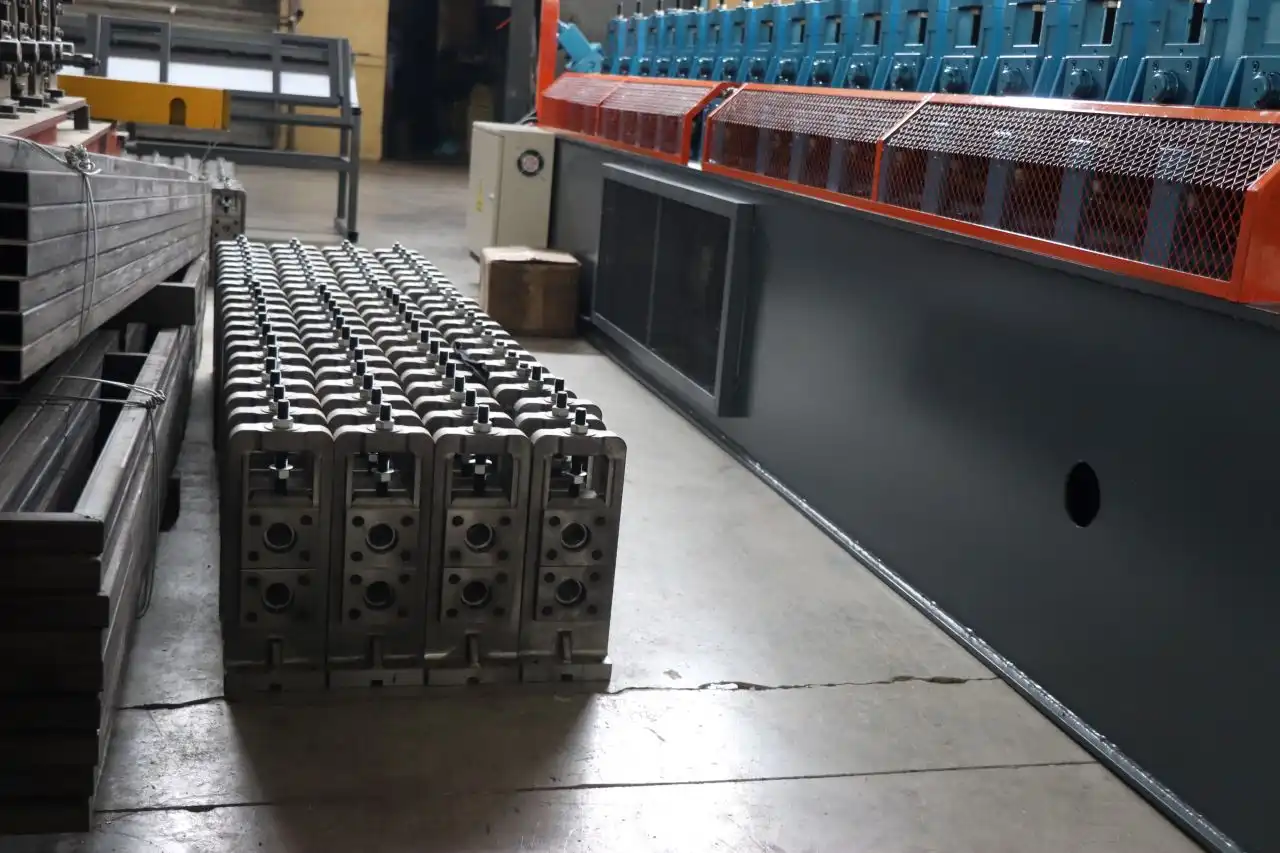
The parts that wear out quickest in a T bar line are the forming rollers at the stations with the tightest bends, the punching die and punch pin, and the strip guide inserts next to the decoiler. The premium over generic aftermarket parts is worth it for OEM replacement parts machined to original drawing tolerances because dimensional differences in a replacement roller, even 0.02 mm, can throw off the forming sequence and cause a systematic profile error that is hard to trace without the part history.
Training and Data Logging for Sustained Accuracy
A machine is only as good as the person who sets it up. Every new operator onboarding should include structured instruction on gap adjustment, die alignment, and PLC parameter entry. By bundling the dimension findings by coil batch, shift, and operator, a searchable record is created that allows for quick pattern detection. Whether you see a pattern in tolerance, the log will inform you whether it’s related to a certain coil supplier, a particular shift or a recent maintenance event.
Conclusion
The tolerance you can achieve on a T-bar line relies on the consistency of material, the quality of ceiling t bar roll forming machined parts, the quality of the process, and how frequently the line is maintained. The five characteristics – profile height, flange width, cut length, flatness, and thickness retention – all directly impact how well the fitting works on real-world job sites. People who evaluate suppliers on the basis of recorded tolerance data, accredited quality processes, and verified reference installations are more likely to make excellent long-term purchasing choices than those who merely compare price sheets. When you want to locate or define a ceiling grid forming line, you should begin with the accuracy criteria and work your way back to the machine specifications that can satisfy them.
FAQ
1. What is the typical length tolerance for a ceiling T bar forming line?
Using a servo-driven flying cut system, length tolerance for a 3,600 mm main tee holds at ±0.5 mm. Standard hydraulic stop-cut systems achieve ±1.0 mm. ASTM C635 permits ±1.6 mm, so both methods are compliant, but high-end commercial projects typically specify the tighter figure.
2. How often should roller gaps be recalibrated?
Gap calibration should occur at the start of each production week and after every profile changeover. If the line runs more than one shift daily, a quick reference check at each shift change—using a go/no-go gauge on a sample profile—catches drift before it produces a full batch of rejects.
3. Can a lower-cost T bar roll forming machine supplier deliver the same tolerances?
Price directly reflects station count, roller material grade, and control system quality. A machine with fewer forming stations and basic relay controls will produce wider tolerance bands at speed. If your contracts specify ASTM C635 or similar dimensional standards, verify tolerance claims with a witnessed production run rather than relying on specification sheets alone.
4. What material thickness range does your line process?
Our line processes 0.12–0.3 mm PPGI for the T bar top cap and 0.2–0.4 mm GI for the bottom web, across 18 stations for the main tee and 16 stations for the cross tee, at speeds up to 20 m/min with simultaneous punching and cutting.
Get Precise T Bar Profiles From a Ceiling T Bar Roll Forming Machine Supplier You Can Verify
Since 2014, ZTRFM has designed and built cold roll forming equipment in Botou, Cangzhou, which is known as the center of manufacturing for this type of equipment in China. You can buy our ceiling t bar roll forming machine. It is certified by ISO 9001, CE, and CAS, and it is used in factories in more than 150 countries. To get a sample run report and a free equipment proposal, send your profile drawing or tolerance requirements to zhongtuorollforming@gmail.com.
References
1. American Society for Testing and Materials. ASTM C635/C635M: Standard Specification for the Manufacture, Performance, and Testing of Metal Suspension Systems for Acoustical Tile and Lay-In Panel Ceilings. ASTM International, 2022.
2. Bhattacharyya, D., & Smith, P. D. Roll Forming of Sheet Metal: Principles and Industrial Practice. Elsevier, 2019.
3. Cold-Formed Steel Engineers Institute. CFSEI Technical Note: Dimensional Tolerances for Light-Gauge Steel Framing Members. CFSEI, 2021.
4. International Organization for Standardization. ISO 9001:2015 Quality Management Systems — Requirements. ISO, 2015.
5. Halmos, George T. Roll Forming Handbook. CRC Press / Taylor & Francis, 2006.
6. Sheet Metal and Air Conditioning Contractors' National Association. SMACNA Architectural Sheet Metal Manual, 7th ed. SMACNA, 2012.