- English
- French
- German
- Portuguese
- Spanish
- Russian
- Japanese
- Korean
- Arabic
- Irish
- Greek
- Turkish
- Italian
- Danish
- Romanian
- Indonesian
- Czech
- Afrikaans
- Swedish
- Polish
- Basque
- Catalan
- Esperanto
- Hindi
- Lao
- Albanian
- Amharic
- Armenian
- Azerbaijani
- Belarusian
- Bengali
- Bosnian
- Bulgarian
- Cebuano
- Chichewa
- Corsican
- Croatian
- Dutch
- Estonian
- Filipino
- Finnish
- Frisian
- Galician
- Georgian
- Gujarati
- Haitian
- Hausa
- Hawaiian
- Hebrew
- Hmong
- Hungarian
- Icelandic
- Igbo
- Javanese
- Kannada
- Kazakh
- Khmer
- Kurdish
- Kyrgyz
- Latin
- Latvian
- Lithuanian
- Luxembou..
- Macedonian
- Malagasy
- Malay
- Malayalam
- Maltese
- Maori
- Marathi
- Mongolian
- Burmese
- Nepali
- Norwegian
- Pashto
- Persian
- Punjabi
- Serbian
- Sesotho
- Sinhala
- Slovak
- Slovenian
- Somali
- Samoan
- Scots Gaelic
- Shona
- Sindhi
- Sundanese
- Swahili
- Tajik
- Tamil
- Telugu
- Thai
- Ukrainian
- Urdu
- Uzbek
- Vietnamese
- Welsh
- Xhosa
- Yiddish
- Yoruba
- Zulu
Tooling mistakes that ruin hat channel roll forming machine runs
Tooling mistakes are the major source of lost coil, scrap profiles, and unscheduled downtime in any hat channel roll forming machine operation. Whether you operate a drywall-framing factory or manage a private-label building-materials line, a single misplaced roller or a worn cutting die may ruin a whole production run in minutes. This book talks you through the most expensive tooling errors engineers and procurement teams make, why they happen, and how to avoid them before they cost you money.
Understanding the Core Tooling Components of Hat Channel Roll Forming Machines
To diagnose problems, you need a clear view of what the tooling system really does. Each part has a task to complete, and if one station fails, it will affect every other station downstream.
Rollers and Forming Stations
A normal line has 14 roller stations, each providing a slight, gradual bend to the GI or PPGI strip. Rollers of 45# steel, with strong chrome-plated surfaces, prevent zinc accumulation and preserve pre-painted coatings. Deflection on a solid shaft of 50 mm diameter is insignificant at high line speeds. Any surface pitting or chrome flaking on these rollers is imparted directly to the final hat contour.
Cutting Dies and Shear Systems
A cut-off die cuts final lengths from the continuous strip. The Cr12MoV cutting dies generally make 500,000-1,000,000 cuts before re-sharpening, depending on the strip thickness and blade-gap maintenance. A worn or improperly gapped die creates burrs on the cut ends, deforms the hat legs, and may cause the hydraulic shear system to overheat during long production runs.
Guides, Entry Tables, and Decoiler Alignment
Strip alignment begins at the decoiler. ZTRFM machines are supplied with a hydraulic automated decoiler as standard. A manual decoiler is supplied free of charge for lesser load applications. The misalignment at the entrance guide leads the strip to track sideways, loading one side of the forming rollers. A 1–2 mm lateral offset on the entry table is multiplied across 14 stations and leads to a completed profile which does not meet dimensional tolerance requirements.
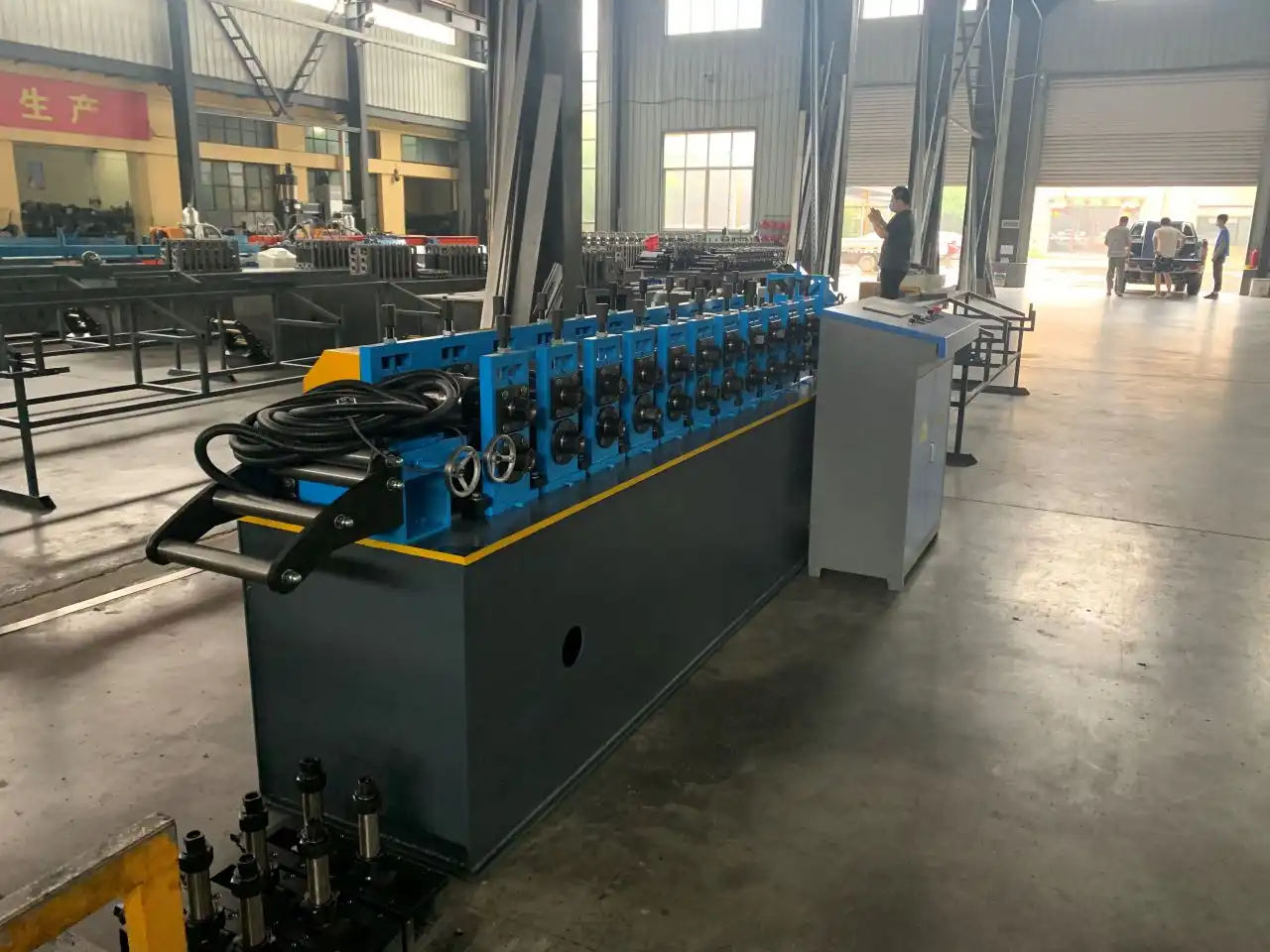
Common Tooling Mistakes That Cause Hat Channel Roll Forming Machine Failures
You can only use what you know about the different parts if you also know how they don't work together. On the factory floor, I see these four mistakes a lot:
Skipping Pre-Run Calibration
A lot of workers still believe that the way things were set up yesterday is the best way to do them today. When the temperature changes overnight, it makes the hydraulic oil less thick and the space between the wheels very small. That part is the GI strip's entire limit band at 0.3 mm. You should always check the roller gaps and entry-guide alignment again at the start of each shift when operating a top hat roll forming machine.
Running Worn Tooling Past Its Service Life
It's not always the case that rollers made of 45# steel are bright chromed. There is bare steel on the GI strip when the chrome layer wears away in places where there is a lot of contact. The profile flanges pile up and change shape because zinc sticks to the roller face. Industry data shows that about 40% of all non-conformances in light-gauge making lines are caused by tools that are too old. When the rollers have been used for 200 hours, they should be checked for chrome loss and replaced before the rate of scrap goes up.
Using Tooling Sets Not Matched to the Strip Specification
If you use tools made for 0.8 mm GI on 0.3 mm PPGI strip, they will put too much stress on it, and cracks and stretch marks will show up on the face of the flange. However, the same set under-forms 1.0 mm stock, which means the hat legs aren't able to bend enough. Before you load, you should always make sure that your tools' shapes fit the coil's width range (0.3–1.0 mm for this line) and yield strength.
Neglecting the Gearbox Transmission Drive
The gearbox transfer drive sends power from the motor to each roller station. When lubrication times aren't regular, gear wear can make stations move at different speeds. There is stress along the strip when the speed changes from station 7 to station 8. This stress shows up as a bow or twist in the finished hat shape. Check the engine oil once a month to see how much is there and how good it is. No matter how it looks, change it when the manufacturer says to.
One thing these four mistakes all have in common is that they can all be avoided by following a strict pre-run and regular repair plan. Making that process part of the normal way things are done is the best thing a plant manager can do.
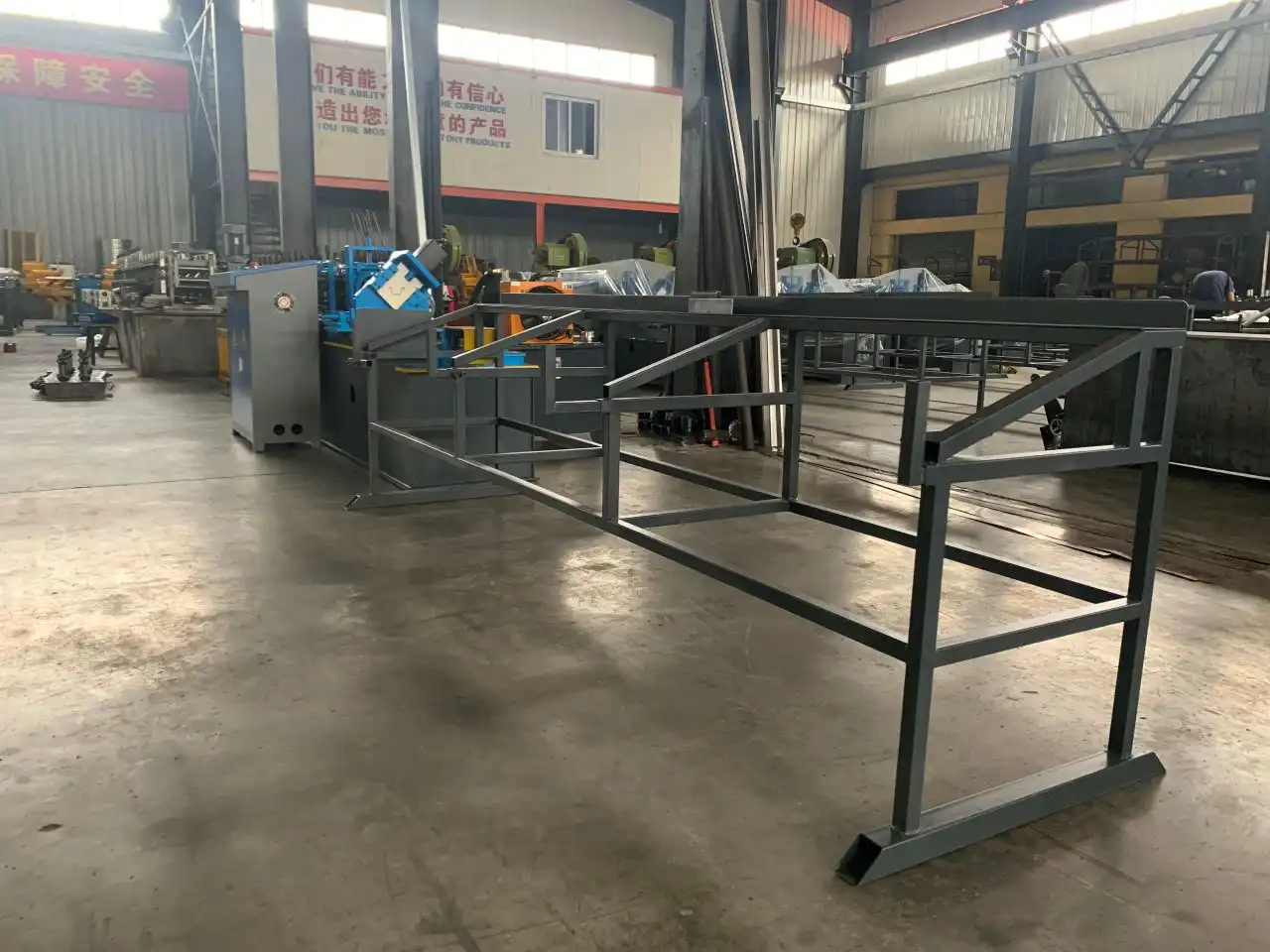
How to Prevent and Correct Tooling Mistakes for Smooth Machine Runs
Troubleshooting costs more when you have to do it. To keep a furring channel line in good shape, do these key things:
Establish a Written Calibration Protocol
Make a note of the roller gap sets, entry-guide positions, and hydraulic shear pressure for each profile on your stock list. Anyone can quickly go back to how things were set up yesterday if there is a written record. If you change the provider or the length of the strip, you should go back and update the calibration data.
Invest in Quality Tooling Materials
Because they are made of 45# steel and have been hard-chrome-plated, these rollers last a lot longer and stay the same size. When you order high-tensile G550 strip, make sure that the over-bend angles of the rollers are set to take spring-back into account. When scrap rates go down and re-runs are taken off the production plan, the extra money spent at the beginning is quickly caught up.
Partner With a Supplier Who Provides Spare Tooling Support
You need to be able to get extra rollers, cutting dies, and guide parts that fit so that you can keep making things. ZTRFM has all the extra parts you need for your top hat roll forming machine, including the decoiler, formed body, stacker, and more. This means you don't have to wait weeks for a new roller from a different company. Two clients, Tata Group and DS Group, have relied on this supply model to keep their plants running through multiple shifts.
Comparing Tooling Strategies: Manual vs. Automated Systems in Channel Roll Forming
It changes your freedom and your ability to make mistakes, whether you fix your tools by hand or with a servo.
Accuracy and Repeatability
How well someone can shift and change spacers by hand depends on how skilled they are. A trained worker can work well on a single profile, but it takes time and can be dangerous to switch between, say, a 25 mm hat and a 50 mm hat. When servo-controlled positioning systems are used, the gap setting is always the same, within ±0.02 mm, and it doesn't matter who does the work.
Cost-Benefit Across Production Volumes
Hand-held systems are less expensive for high-volume, single-profile lines because they don't need to be changed out very often. Because they lose less and switch profiles more quickly, automated cassette systems pay for themselves in less than two years in custom or OEM shops that change profiles every day. One example is making T-grid top and bottom strips, furring channels, and wall plates on the same floor.
Energy Consumption and Long-Term Wear
Rollers don't wear out as quickly in servo-feed systems because they only use the right amount of torque at each station. This is different from fixed-speed gearboxes. When it comes to standard production lines, gearbox transmission is still the best choice. It is better to use a servo feed when you need to change the speed or profile more than a fixed drive can handle well.
Troubleshooting Common Tooling Issues in Hat Channel Roll Forming Machines
When defects appear in the profile, a structured diagnosis saves time and prevents unnecessary tooling replacement.
Identifying Warping and Bow
Longitudinal bow is typically caused by unequal strip tension between the stations — check gearbox lubrication and roller gap symmetry first. Lateral bow is a sign of a misaligned entry-guide or a roller with uneven pressure over the strip width.
Diagnosing Uneven Edges and Flange Gaps
If there is flare at the cut ends, then the shear die gap is too large, or the die is worn. This is controlled by high-quality lines with flare-control rollers right before the cut station. When you see flare in the middle of the run, check the die gap, not the rollers.
When to Repair vs. Replace
Rollers with little chrome wear may be reground and re-plated, prolonging service life at a fraction of the replacement cost. Replace instead of refurbish when the steel substrate has fractures, the roller diameter has decreased below specification, or when dimensional non-conformances still exist after regrinding.
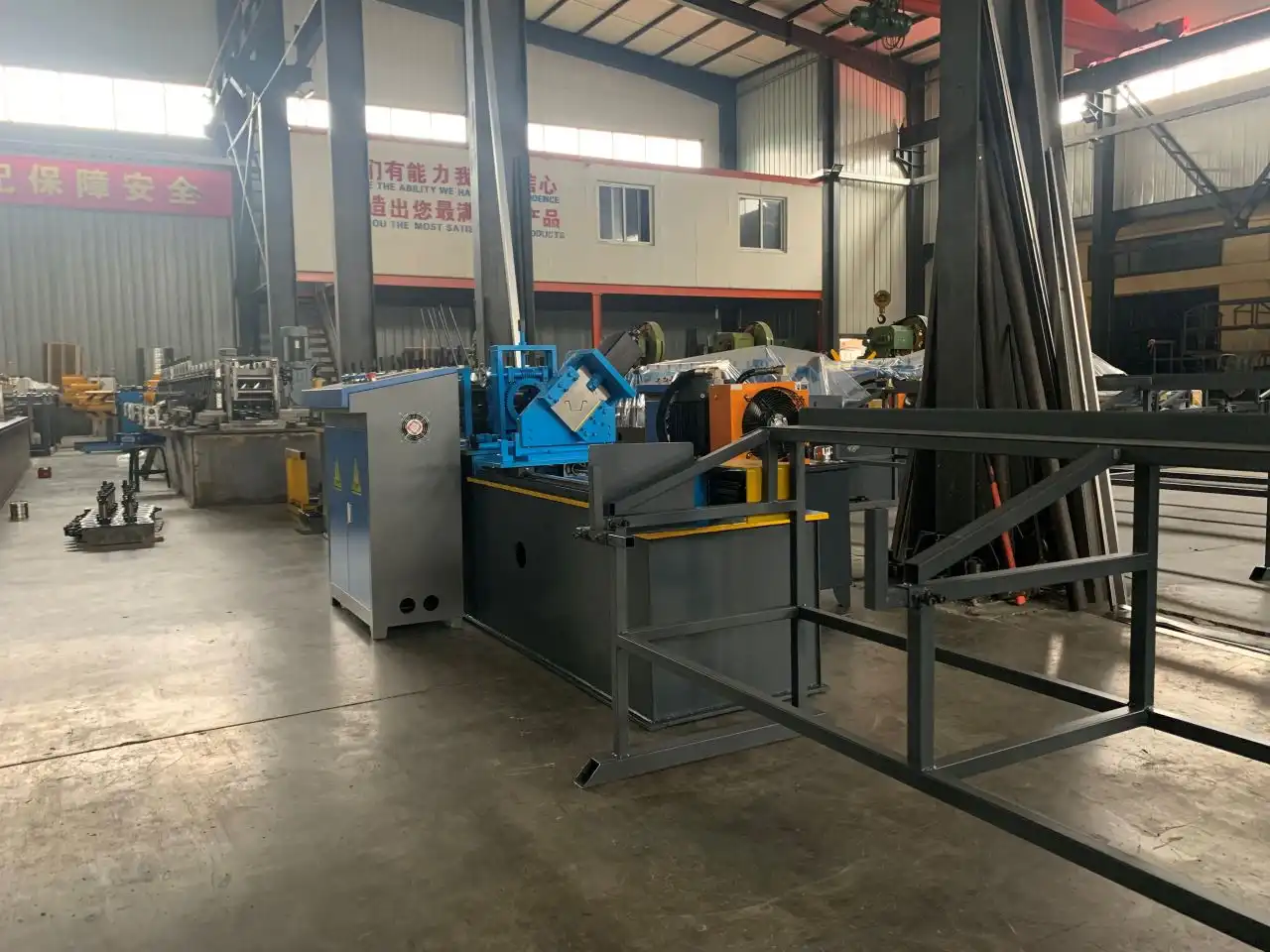
Conclusion
Good tools are the first step to ensure that hat channel roll forming machine profiles are always the same. Calibration errors, old dies, misaligned tools, and inadequate gearbox maintenance may all cause damage to the accuracy of the dimensions and the uptime of the line. Organized pre-shift inspections are required. Ensure the tooling parameters are for your strip range of 0.3–1.0 mm GI/PPGI. Purchase from a business that supplies real additional parts. This will help you meet your promised delivery deadlines and the money you paid on the equipment. Often, what makes a successful run into a costly scrap pile is how effectively the coil is prepped before it even gets to the first roller station.
FAQ
1. Can one line produce multiple hat channel sizes?
Yes. Width adjustments through spacers handle moderate size variation. Extreme differences—such as a 20 mm hat versus an 80 mm hat—usually require separate tooling sets to maintain profile geometry and avoid stress concentrations at the forming stations.
2. How long do cutting dies typically last?
Cr12MoV cutting dies last 500,000 to 1,000,000 cuts under normal conditions. Thicker strip and incorrect blade gaps shorten that range. Maintaining the correct blade gap is the single most effective way to extend die service life.
3. What signals a tooling problem before scrap appears?
Listen for irregular mechanical sounds at any station, watch for inconsistent flange widths on spot-checks, and monitor motor amperage. Rising amperage on a single station often means a roller is dragging due to wear or contamination before visible profile defects appear.
4. Can worn rollers be refurbished?
Yes, in most cases. Regrinding and re-plating is cost-effective when the steel substrate is intact. Retire the roller if core cracking is present or if repeated regrinding has reduced the diameter below the machine's minimum specification.
Ready to Stop Tooling Problems Before They Start? Talk to ZTRFM
An honest business called ZTRFM makes hat channel roll forming machines. It is based in Botou, Cangzhou. Their machines are used in over 150 countries, and ISO 9001, CE, and CAS check all of their goods. Our 14-station forming body, 50 mm solid shafts, hard-chrome-plated 45# steel rollers, and gearbox transmission drive are all fully stocked so that we can make 0.3–1.0 mm GI and PPGI strip constantly. When you order OEM profile-to-order dies from us, you'll also get matched spare tools and direct expert help. You can go to email us at zhongtuorollforming@gmail.com to get a specification sheet or a sample run.
References
1. Halmos, George T. Roll Forming Handbook. CRC Press, 2006.
2. American Iron and Steel Institute. North American Standard for Cold-Formed Steel Framing – General Provisions. AISI S240, 2020.
3. Society of Manufacturing Engineers. Tool and Manufacturing Engineers Handbook: Forming. SME, 1984.
4. Lange, Kurt. Handbook of Metal Forming. McGraw-Hill, 1985.
5. The Steel Construction Institute. Design of Light Gauge Steel Members and Sheeting. SCI Publication P264, 2002.
6. International Organization for Standardization. ISO 9001:2015 Quality Management Systems – Requirements. ISO, 2015.