- English
- French
- German
- Portuguese
- Spanish
- Russian
- Japanese
- Korean
- Arabic
- Irish
- Greek
- Turkish
- Italian
- Danish
- Romanian
- Indonesian
- Czech
- Afrikaans
- Swedish
- Polish
- Basque
- Catalan
- Esperanto
- Hindi
- Lao
- Albanian
- Amharic
- Armenian
- Azerbaijani
- Belarusian
- Bengali
- Bosnian
- Bulgarian
- Cebuano
- Chichewa
- Corsican
- Croatian
- Dutch
- Estonian
- Filipino
- Finnish
- Frisian
- Galician
- Georgian
- Gujarati
- Haitian
- Hausa
- Hawaiian
- Hebrew
- Hmong
- Hungarian
- Icelandic
- Igbo
- Javanese
- Kannada
- Kazakh
- Khmer
- Kurdish
- Kyrgyz
- Latin
- Latvian
- Lithuanian
- Luxembou..
- Macedonian
- Malagasy
- Malay
- Malayalam
- Maltese
- Maori
- Marathi
- Mongolian
- Burmese
- Nepali
- Norwegian
- Pashto
- Persian
- Punjabi
- Serbian
- Sesotho
- Sinhala
- Slovak
- Slovenian
- Somali
- Samoan
- Scots Gaelic
- Shona
- Sindhi
- Sundanese
- Swahili
- Tajik
- Tamil
- Telugu
- Thai
- Ukrainian
- Urdu
- Uzbek
- Vietnamese
- Welsh
- Xhosa
- Yiddish
- Yoruba
- Zulu
Is a ceiling t bar machine cheaper than bought components?
Yes — a ceiling t bar machine is almost always cheaper per linear meter than purchasing finished components at scale. Once your monthly output exceeds roughly 50,000 linear meters, the machine's cost per meter drops well below typical wholesale prices for imported T-bar profiles. Raw material costs (PPGI at 0.12–0.3 mm and GI at 0.2–0.4 mm) run significantly lower than the finished-component price, and a single roll forming line can convert that strip into main tees and cross tees at up to 20 m/min. The break-even point depends on line speed, scrap rate, and local labor costs, but the math consistently favors in-house production for medium-to-large operations.
Understanding Ceiling T Bar Machines and Bought Components What Is a Ceiling T Bar Machine?
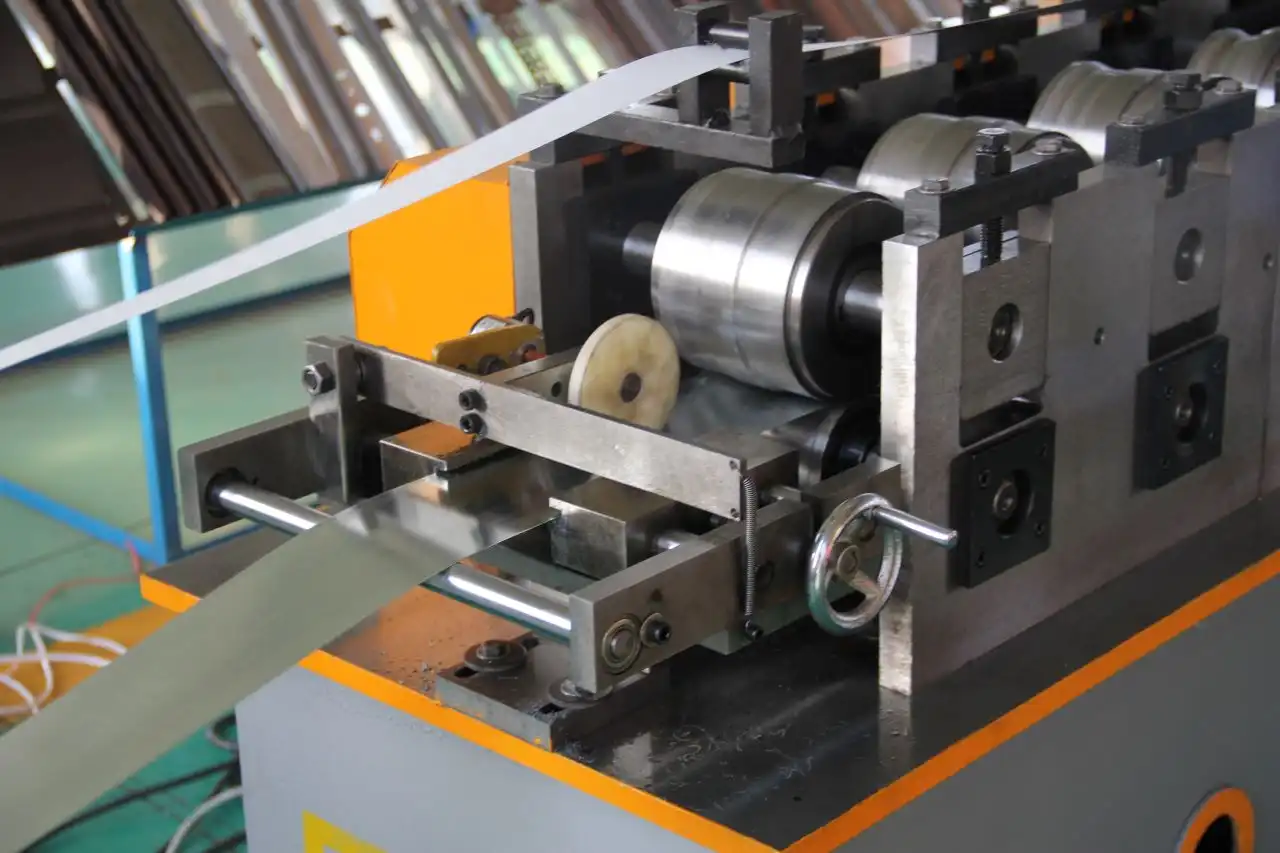
To make the structural parts of a suspended ceiling system, galvanized steel (GI) or pre-painted steel (PPGI) coil stock is fed through a ceiling T-bar machine, which is more specifically a T-grid roll forming line. On the line, there are wall angles, cross tees, and main tees. The machine comes with a 1.5-ton decoiler, straight cutting, a moving cut-off unit, an 18-station tool for making main tees, and a 16-station tool for making cross tees.
What Are "Bought Components"?
Finish ceiling grid parts can be bought from a maker or a wholesaler. Some of these are end clips, wall angles, cross tees (1,200 mm and 600 mm), and main tees (3,600 mm). The buying team sets the prices for these things by the piece or by the linear meter, and buying in bulk often gets you a discount. To meet different quality and size standards, different sources charge different prices, and wait times can grow during busy building times.
How Does Scale Change the Equation?
When you buy parts in small amounts, like for a single fit-out project, you save money on storage and capital costs. It costs more for the supplier to mark up, ship, and handle each meter when a lot of them are bought at once. Because you have a roll-making line, you don't have to make those marks. You also have direct control over the material's width, the profile's shape, and the surface finish.
Cost Analysis: Ceiling T Bar Machine vs Bought Components
Capital Expenditure Breakdown
An expertly made T-grid roll-making line that is fully automatic costs more than one that is only partially automatic or one that needs to be run by hand. The automatic line costs more at first, but each meter it runs for costs less because it can punch and cut at 0–20 m/min. Setting up a manual or semi-automatic line is cheaper, but the operator has to spend more time on it every shift.
Raw Material Cost vs Finished-Component Price
Most of the time, PPGI strip for the top flange of the T-bar (0.12–0.3 mm) and GI strip for the bottom (0.2–0.4 mm) weigh 30–45% less per kilogram than the same-weight T-bar that has been painted and packaged and bought from a distributor. When you add in freight and the markup for the distributor, the gap gets bigger. For a plant that makes 80,000 meters a month, that 10% difference can save enough material to pay for the line in just one to two years.
Hidden Costs on Both Sides
You have to pay for things like energy use, roller repairs, and new parts when you own a ceiling t grid machine. Rollers made of GB-Cr12 stay in good shape, but punching dies need to be sharpened every 100,000 strokes. It costs money to store parts, have freight come in, risk running out of stock, and have source prices change when you buy parts. When you figure out the total cost of ownership (TCO), you need to include both open and hidden costs.
When it comes to money, there are three types of costs: capital, material, and hidden. Do not compare the two ways of getting things without first going through either one.
Benefits of Using a Ceiling T Bar Machine Beyond Cost Savings
Dimensional Consistency and Quality Control
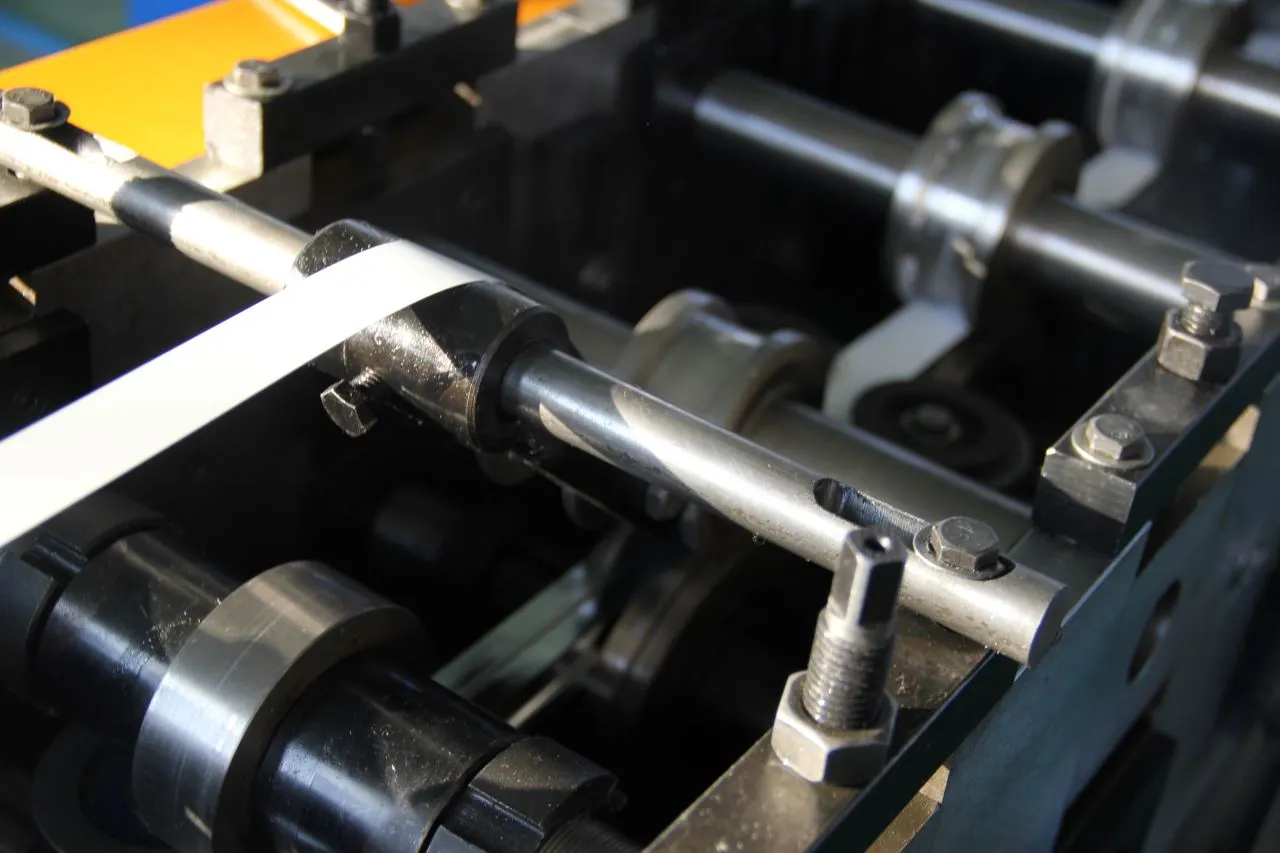
Profiles that can be made over and over again are made by rolling. The main tee shape is moved by 18 roller stations, which makes sure that the final profile is straight within 1 mm per 3,600 mm length. This is important for putting level ceiling grids and making sure that 600 x 600 mm mineral fiber tiles fit well. When you buy parts, each batch is different. These differences are generally fixed on the job site by shimming or re-cutting.
Customization Flexibility
This is what a roll forming line does best when you want to change the shape of a profile:
- Variable gauge: Switch between 0.12 mm and 0.3 mm PPGI for the top cap or 0.2–0.4 mm GI for the web without changing roller cassettes.
- Custom punching patterns: Inline servo-driven punches create slot spacing, dimple patterns, or service holes to your exact drawing.
- OEM surface finish: Pre-painted PPGI allows white, black, or custom RAL colors to run directly from the decoiler — no secondary painting step.
If you want to change the gauge for the web from 0.2 mm to 0.4 mm GI or for the top cap from 0.12 mm to 0.3 mm PPGI, you don't have to change the roller cassettes.
If you give us a picture, our inline servo-driven cuts will make service holes, dimple patterns, or slot spacing just the way you want them.
White, black, or custom RAL colors can be used right from the decoiler with pre-painted PPGI. There is no need for a second painting step.
Workplace Safety and Regulatory Compliance
Factory and warehouse workers who handle a lot of pre-cut T-bar stock by hand could get cuts or injuries from repetitive strain. In a roll forming line, coil stock is moved automatically through the decoiler and forming area. This means that people don't have to touch the sharp-edged strip for as long. Less work by hand also means less chance of measuring wrong, which helps make sure that the ASTM C635 standards for suspended ceiling systems are followed.
When Buying Components Might Make Sense: Decision Criteria for Procurement
Low-Volume or Project-Based Demand
A single business fit-out or a small group of prefab house units don't make enough square meters for a ceiling t grid machine to be worth the money. This is when getting finished T-bar from a trustworthy source is important because it keeps fixed costs low and keeps working capital from getting stuck in equipment.
Supplier Reliability and Lead Time Certainty
There are well-known wholesalers in some markets who always have enough stock to ship within days. An honest source may be more helpful than being able to make it yourself if you need to finish a job fast and only need a small amount. The buyer doesn't have to worry about the quality of the goods because authorized sellers are in charge of them.
Budget Constraints and Financing Options
You need either cash up front or a payment plan to buy a machine. When small and medium-sized businesses (SMEs) can't easily get loans, the interest they pay on them can be more than the money they save per meter by making their own goods. It makes sense to buy parts now while saving money for a line later. This is called a staged method.
Making the Right Choice: Machine or Components?
Total Cost of Ownership (TCO) Assessment
First, make a five-year TCO model that covers the costs of buying, setting up, training, energy, maintenance, and the risk of downtime. This will help you make the right choice. How many parts do you plan to make? How much is the price difference between raw strip and finished parts? The better choice is to buy the machine if the math shows that it will pay for itself in 24 months.
Volume Thresholds and ROI Milestones
Based on what people in the business have seen, it's clear that between 40,000 and 60,000 linear meters per month is the point at which rolling profiles in-house becomes cheaper than buying standard profiles. The per-meter savings add up quickly once you go over that amount. Below that point, being able to use bought parts often saves more money.
Tailored Recommendations by Buyer Type
What works best for one business may not work for another. A specialty line is most useful for companies that make ceiling grids and OEM private-label distributors who keep production going. There is a hybrid method that gives interior fit-out builders the best balance between cost and freedom when they have a lot of different jobs coming up. This is where they own a line of standard profiles and buy specialty items.
Conclusion
Buying finished parts is more expensive per square meter than a ceiling t bar machine when you need to make a lot of things. You can save money on raw materials, make more quickly, and be sure that all of the shapes are the same with this machine. The business case works well for firms that make private-label goods, ceiling grids, and drywall framing. Smaller workers and buyers who work on projects may still be able to use parts they bought in some cases. The things that matter are the monthly volume, the range of products, and the access to capital. An honest TCO model will give you the answer that is best for your business.
FAQ
1. How much can a manufacturer save annually by switching to in-house roll forming?
There is usually a 30 to 45 percent difference per kilogram between how much PPGI or GI strip costs and how much a finished component costs. How much you save depends on how much you buy and where you live. The extra profit of 60,000 square meters per month usually pays for the machine in 18–24 months. After that, it saves money every year.
2. What routine maintenance does a T-grid roll forming line require?
When everything is fine, GB-Cr12 rollers keep their tolerance well. Punching dies need to be sharpened about every 100,000 strokes. The PLC stroke counter will keep track of the die cycles and let you know when maintenance is due before burrs form on the cut edges. The hydraulic oil should be checked once a month.
3. Is an automatic line suitable for a small or medium enterprise?
Yes, if the number of orders each month makes it worth it. It's easier to start drawing with semi-automatic lines, but you can still make stable sketch forms with them. Small and medium-sized businesses can start with a basic line that goes from 0 to 20 m/min and add more as they need it. There are 450–550 mm coils and up to 1.5 tons of weight that the decoiler can handle. This is enough for most small and medium-sized manufacturing floors.
4. What material thicknesses does the machine handle?
If you want to use PPGI for the T-bar top cap, it should be 0.12 to 0.3 mm thick. For the bottom web, it should be 0.2 to 0.4 mm thick. That's all the thicknesses that are common in suspended ceiling systems in factories.
Get a Direct Quote from ZTRFM — Ceiling T Bar Machine Supplier
With the help of ZTRFM, cold roll forming lines have been designed and built since 2014. A lot of places around the world now use their machines. There are approvals for our T-grid lines from ISO 9001, CE, and CAS. They also have Siemens IoT-linked controls that let us keep an eye on them from afar. Talk to our tech team about the ceiling t bar machine we have for sale to find out more about it, how it works, and how much it costs. You can email us at zhongtuorollforming@gmail.com.
References
1. Steel Framing Industry Association (SFIA). Standard for Cold-Formed Steel Framing — General Provisions. 2020.
2. ASTM International. ASTM C635: Standard Specification for the Manufacture, Performance, and Testing of Metal Suspension Systems for Acoustical Tile and Lay-In Panel Ceilings. 2022.
3. Metal Construction News. Roll Forming Technology Advances in Light-Gauge Steel Production. 2021.
4. Construction Specifier. Suspended Ceiling Systems: Material Selection and Cost Benchmarking. 2022.
5. American Iron and Steel Institute (AISI). Cold-Formed Steel Design Manual. 2023.
6. RSMeans Data. Building Construction Cost Data: Interior Systems and Ceiling Assemblies. 2023.