- English
- French
- German
- Portuguese
- Spanish
- Russian
- Japanese
- Korean
- Arabic
- Irish
- Greek
- Turkish
- Italian
- Danish
- Romanian
- Indonesian
- Czech
- Afrikaans
- Swedish
- Polish
- Basque
- Catalan
- Esperanto
- Hindi
- Lao
- Albanian
- Amharic
- Armenian
- Azerbaijani
- Belarusian
- Bengali
- Bosnian
- Bulgarian
- Cebuano
- Chichewa
- Corsican
- Croatian
- Dutch
- Estonian
- Filipino
- Finnish
- Frisian
- Galician
- Georgian
- Gujarati
- Haitian
- Hausa
- Hawaiian
- Hebrew
- Hmong
- Hungarian
- Icelandic
- Igbo
- Javanese
- Kannada
- Kazakh
- Khmer
- Kurdish
- Kyrgyz
- Latin
- Latvian
- Lithuanian
- Luxembou..
- Macedonian
- Malagasy
- Malay
- Malayalam
- Maltese
- Maori
- Marathi
- Mongolian
- Burmese
- Nepali
- Norwegian
- Pashto
- Persian
- Punjabi
- Serbian
- Sesotho
- Sinhala
- Slovak
- Slovenian
- Somali
- Samoan
- Scots Gaelic
- Shona
- Sindhi
- Sundanese
- Swahili
- Tajik
- Tamil
- Telugu
- Thai
- Ukrainian
- Urdu
- Uzbek
- Vietnamese
- Welsh
- Xhosa
- Yiddish
- Yoruba
- Zulu
Solar EPC Guide: Choosing a Strut Channel Roll Forming Line
A strut channel roll forming line may be selected by considering the following five factors: the profile that you need, the steel that you purchase, the punching technique that you use, the output that you are able to sell, and the provider that is responsible for the equipment. With integrated punching and cutting, a solar strut channel roll forming machine turns galvanised coil into C-channel struts and PV mounting rails in one continuous run. This tutorial will show you how I analyse specs, pricing, and risk before putting out a request for quotation (RFQ), regardless of whether you are an EPC contractor with in-house fabrication, a racking manufacturer, a steel service center, or an equipment trader.
Understanding the Solar Strut Channel Roll Forming Machine What Is a Solar Strut Channel Roll Forming Machine?
According to SEIA and Wood Mackenzie, the United States added around 40 gigawatts of direct current (GWdc) of solar power in 2023. Each array requires mounting structures. Steel coil is fed through a succession of roller stands by the machine. These roller stands progressively bend the strip into C channels, U channels, rails, and slotted profiles. In addition to carrying cable trays and equipment frames, the output includes the capability to support photovoltaic modules that are installed on rooftops, ground-mounts, carports, and agricultural racks. The product is often referred to as Unistrut-style channel by customers in the United States, and the standard size of 41×41 mm corresponds to the 1-5/8 inch (41.3 mm) strut. The roll tooling and punching configuration is determined by the measurements of the profile width, height, lip form, and hole pattern. By using continuous shaping, scrap is kept to a minimum, and proportions are maintained from the very first piece to the very last.
How the Production Line Works
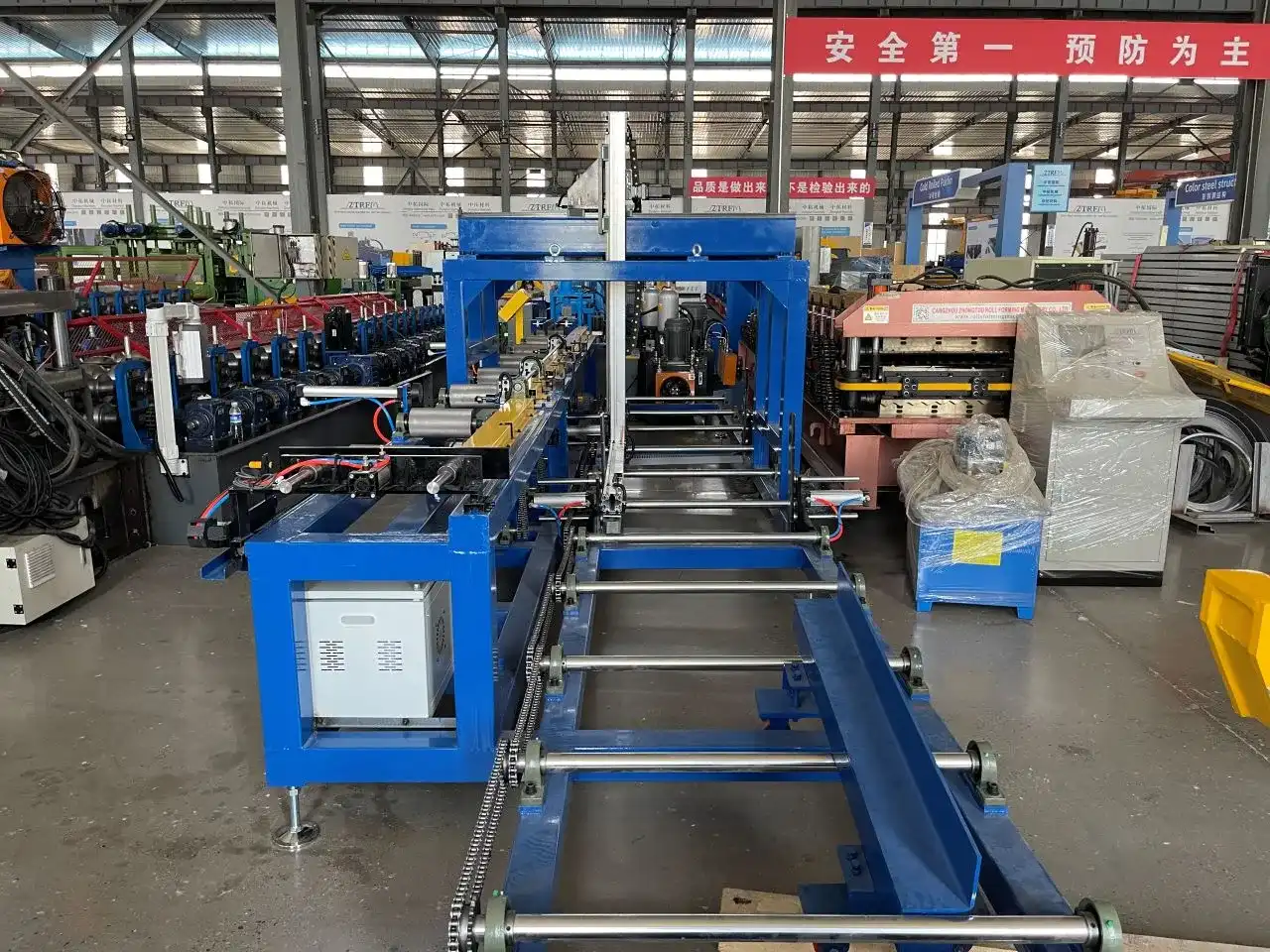
At the start of the line, a decoiler unwinds the coil and a leveller removes its curvature. Following that, the strip is pushed through the punching unit, which is responsible for cutting the slot holes, and then it is placed into the shaping stands. The steel is bent a little bit farther by each stand, which allows the strip to attain its ultimate form without putting an excessive amount of stress on the zinc coating. Following the completion of the channel, it is collected by a run-out table or stacker after being chopped to length by a hydraulic shear. In order to minimise zinc pickup, pre-galvanized strip requires rollers that have been polished and treated with chrome. On the other hand, heavier or higher-strength coil requires a more robust frame, shafts, and motor. Maintaining holes and lengths that are constant requires accurate feeding and strip alignment.
From Coil to Finished Product
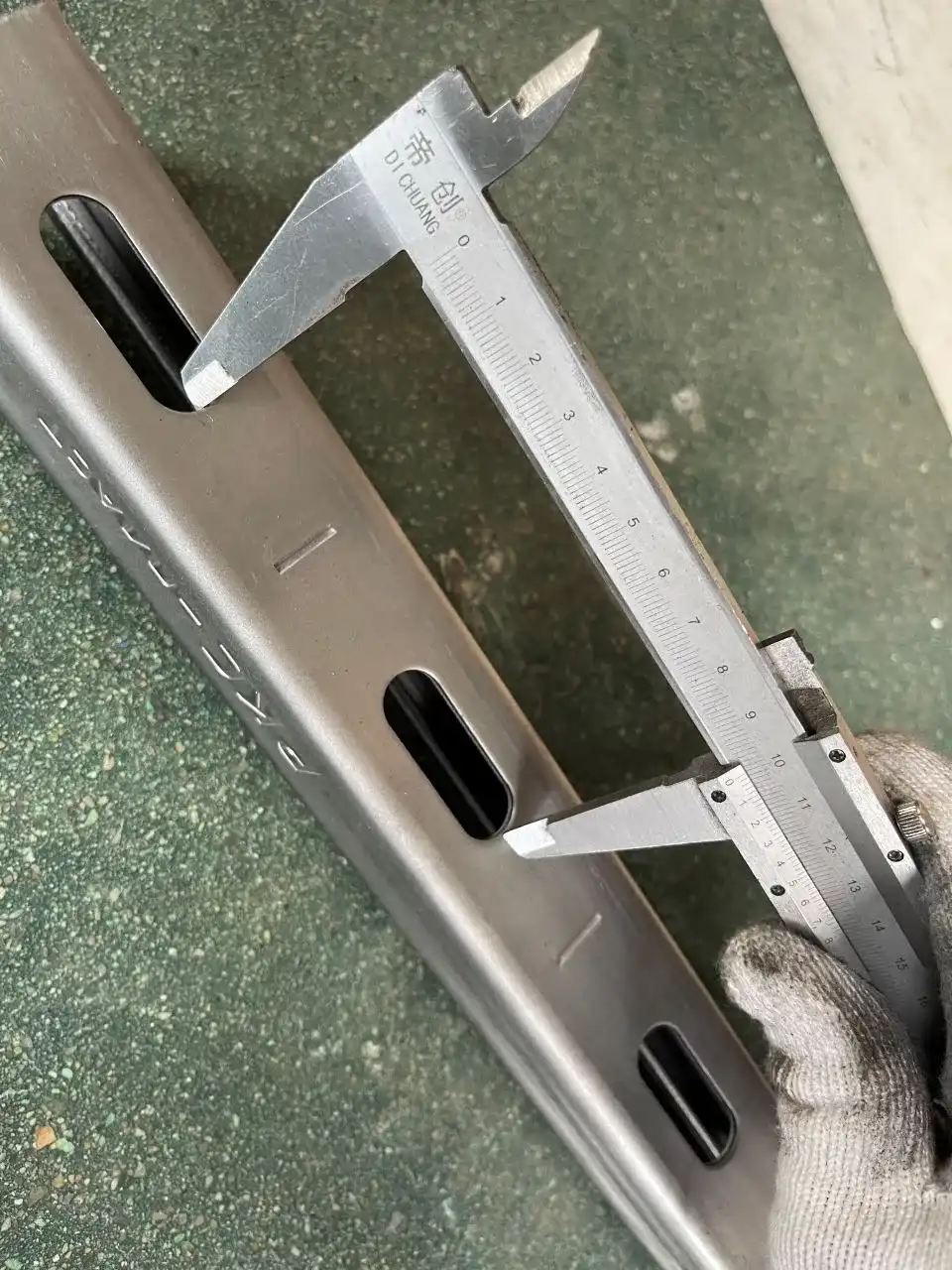
The following is the sequence in which our workflow is carried out: coil loading, decoiling, levelling, punching, roll shaping, cutting, stacking, inspection, and subsequent packing. Punching before forming suits hole patterns on the flat strip. Punching after forming suits holes in the finished channel walls. Online hydraulic punching, press punching, or offline punching are all options that ZTRFM provides, depending on the size of the batch and the intricacy of the hole. I examine each and every sample to determine the profile height and breadth, the channel opening, the lip size, the hole spacing, the length, the straightness, the twist, the coating condition, and the burrs. Because a test on your material informs you more than a brochure can, you should insist that any potential supplier provide you with sample records that were created from your own coil and drawings.
How to Choose a Solar Strut Channel Roll Forming Machine
Start With Your Production Scenario
The yearly demand, shift pattern, product mix, and whether the line serves your own EPC projects, outside clients, or OEM contracts should all be written down before comparing bids for a solar strut channel roll forming machine. Next, collect the necessary drawings, hole layouts, coil specs, completed lengths, tolerances, and surface requirements into a single location. Most important is the steel gauge. The ZTRFM line is capable of handling material with a thickness of 1.5–2.5 mm and a feeding width of 90–230 mm. This allows it to cover 14-gauge strut at around 1.9 mm. Confirm your gauge as soon as possible since heavier 12-gauge steel, which measures about 2.66 millimetres, falls outside of that range. Additionally, a single machine has the capability to manufacture many strut sizes, including 41×41, 41×21, and 41×62, by using a rapid roll change or servo adjustment.
Evaluate Capacity and Performance
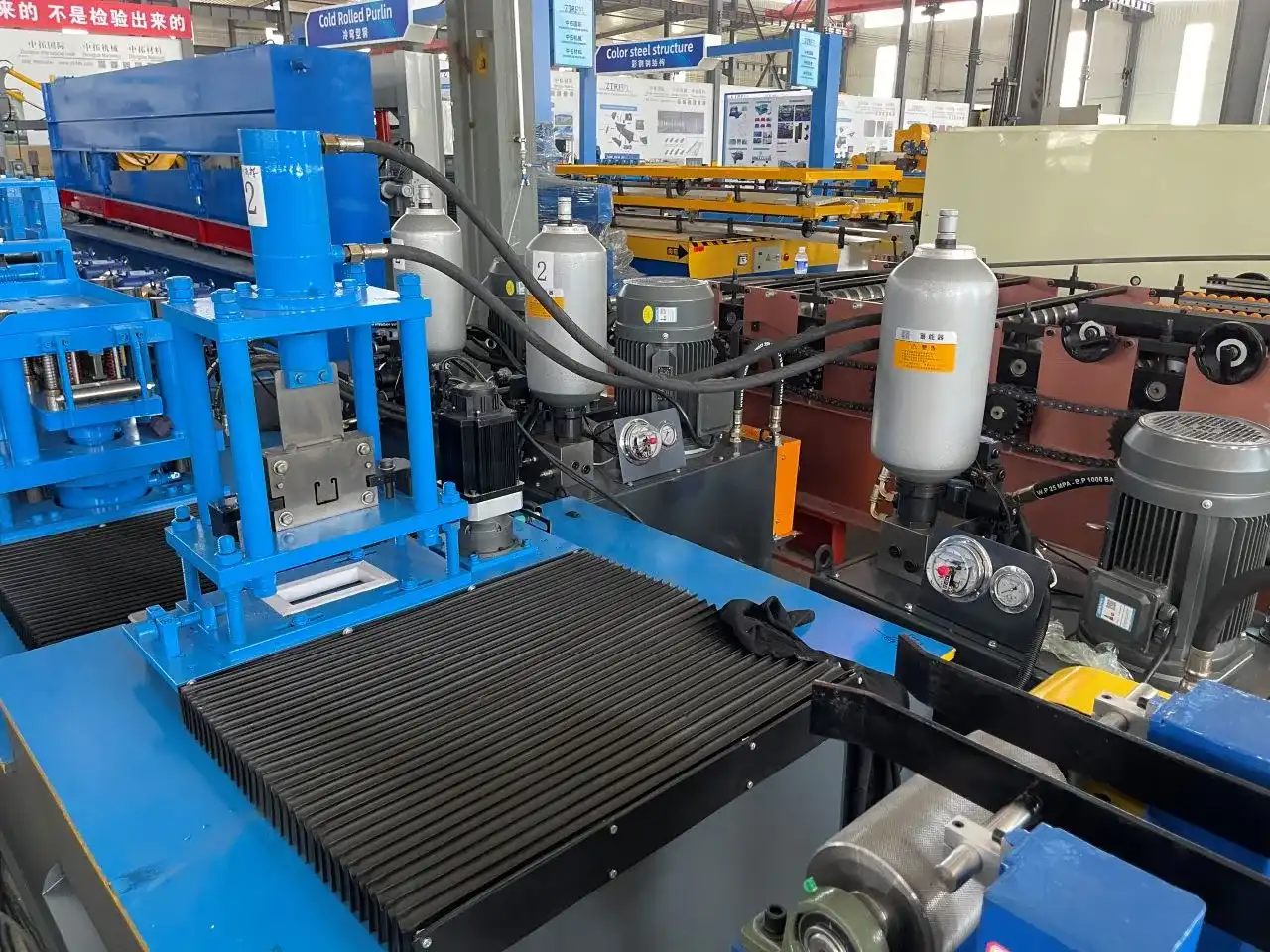
Potential purchasers are misled by theoretical speed; thus, it is advisable to use a straightforward formula: necessary capacity = yearly demand divided by effective production hours. Effective production hours exclude setup, coil changes, tooling adjustments, maintenance, and inspection. The formation of our line occurs at a rate of 8 meters per minute, which, in principle, is equivalent to 480 meters every hour. At that speed, six productive hours yield about 2,880 meters before scrap. Use your own shift data to estimate actual output. The punching cycle duration, cutting accuracy, changeover time, scrap rate, and energy consumption should also be compared before and after. In order for huge quantities to benefit from higher speeds, it is necessary that the forming stability, hole precision, and surface protection remain stable at that speed.
Roll Forming vs. Conventional Press Forming
Roll forming and press forming suit different jobs. By combining the processes of forming, punching, cutting, and handling into a single flow, roll forming is able to accommodate lengthy, repeating portions such as strut channels and rails while maintaining dimensions that are consistent across thousands of meters. When it comes to short pieces, small quantities, or irregular forms that need individual bends, a press brake or stamping press is still a viable option since the tooling for these machines is more straightforward. Determine the length of the profile, the order volume, the repeatability, and the customisation requirements rather than assuming that one technique will always be successful. Generally speaking, continuous roll forming results in less labour per meter when used for PV racking beams that are many meters in length.
ZTRFM Machine Specifications and Build Quality
Core Technical Parameters
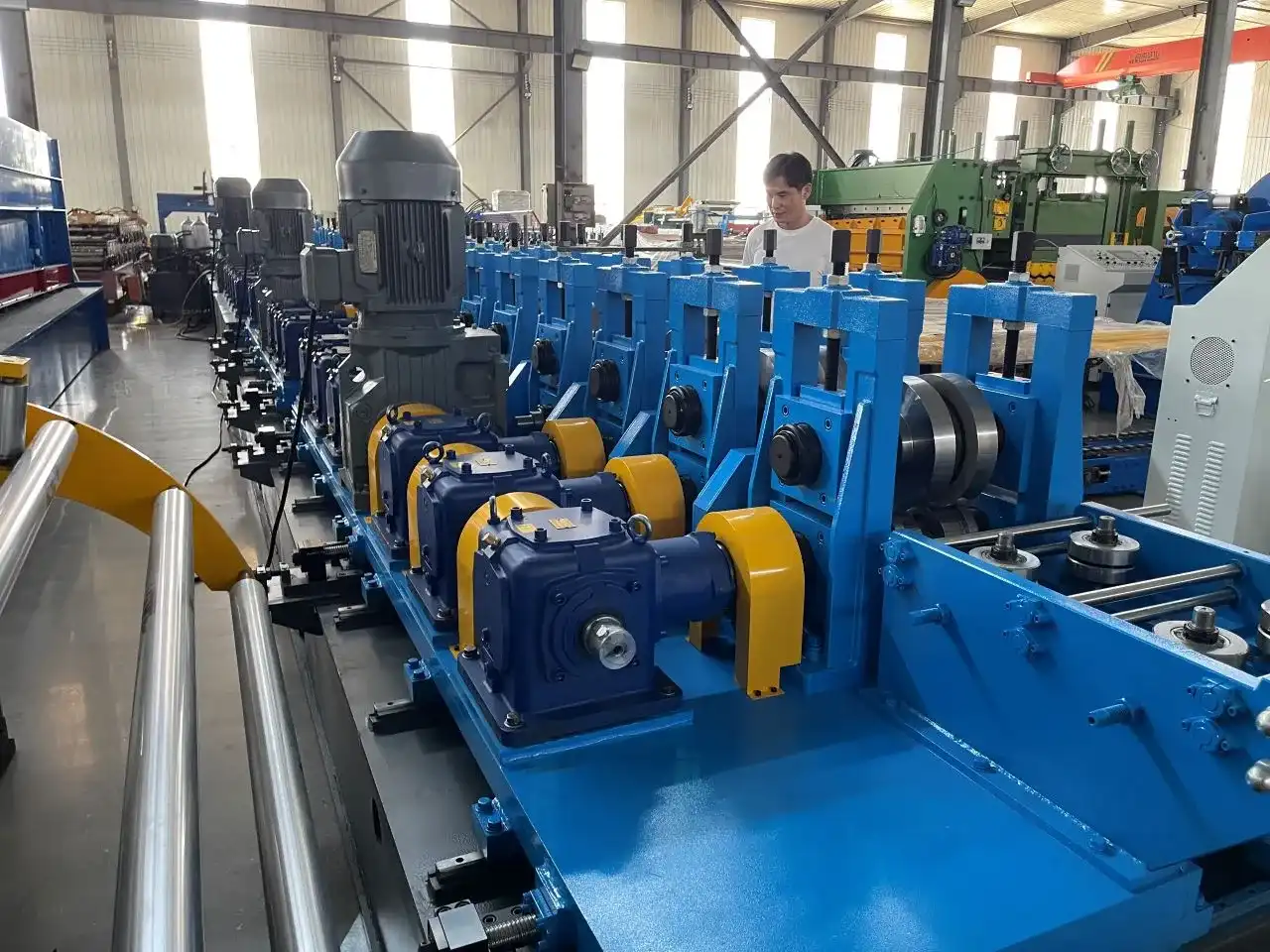
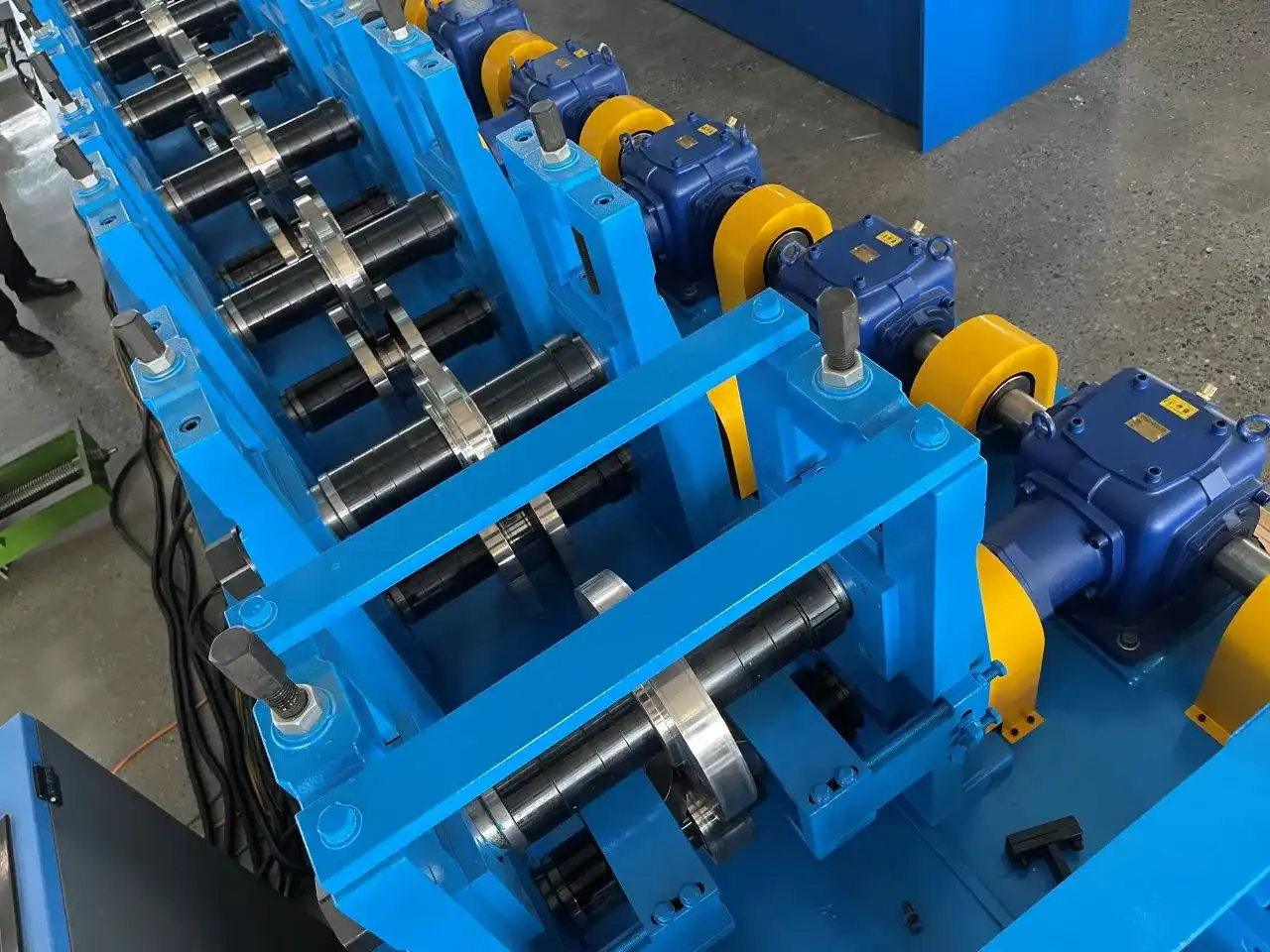
The ZTRFM solar strut channel roll forming machine has a primary motor that is 22 kW in power and a hydraulic station that is 11 kW in power at the shearing station. It is constructed with a body made of 25 mm 45# steel, 24 forming rollers, and shafts that are 80 mm in diameter and made of 45# forged steel. The power is transmitted to the stands by means of twin chains. The speed of the forming process is 8 meters per minute, and the tolerance is ±1.5 millimetres. A PLC with an HMI touchscreen handles length settings, piece counts, and alarms. The standard supply is 380 V, three-phase, 50 Hz. Tell us your plant's supply when requesting a quote so we can account for any changes.
Tooling Materials and Durability
It is the choice of material that determines how long a line maintains its precision. With chrome plating, the forming rollers are made of GCr15 steel, which is resistant to wear and reduces the amount of scratching that occurs on galvanised surfaces. In order to achieve clean cuts and a long edge life, the cutter blade is made of Cr12 mould steel that has been quenched to 58–62 HRC. When running 2.5 mm steel, deflection is limited by the 25 mm body plate and the 80 mm shafts. Request that each and every supplier provide a written list of these materials, which should include dimensions such as roller steel, shaft diameter, and blade hardness, so that you may compare the bids side by side. Two machines that seem to be similar on paper are differentiated by these particulars.
Flexible Punching and Custom Profiles
Slot hole precision is essential for ensuring that installers can accurately align and assemble mounting rails on site. ZTRFM offers three punching options for its solar strut channel roll forming machine: online hydraulic punching for high-volume production, press punching for complex hole patterns, and offline punching for small or customized batches. Depending on the machine configuration, quick roll changes or servo adjustments can allow a single production line to manufacture multiple strut channel sizes, reducing the need for separate equipment. Our engineering team uses AutoCAD, SolidWorks, and COPRA to develop profiles and design tooling for non-standard channel configurations. If you require customized slot patterns or specific rail heights to match your solar module mounting requirements, send us your technical drawings. Our team can then evaluate the punching layout, tooling requirements, and suitable production configuration.
Cost, Suppliers, and Procurement Risk
Price and Total Cost of Ownership
The price of the machine is determined by the complexity of the profile, the number of forming stations, the variety of materials, the punching type, the cutting technique, the size of the decoiler, stacking, tooling, and electrical setup. In addition, your actual cost takes into account freight, insurance, installation, commissioning, power, labour, spare parts, maintenance, downtime, and scrap. Request from your vendors that they provide separate quotes for the main machine, the decoiler, the leveller, the punching and cutting units, the PLC parts, the tooling, the spares, the training, and the warranty. When comparing all of the bids, use a single Incoterm, such as FOB or CIF, to ensure that the comparison is accurate. Before you put your approval on a purchase, be sure that you have included the cost of inland freight, port fees, and tax for U.S. delivery.
How to Compare Manufacturers
First, check whether the supplier builds its own machines or resells machines made by others. Check the candidate's expertise with galvanised steel, inline punching, export projects, and original equipment manufacturer work. Cangzhou Zhongtuo, which operates ZTRFM, was founded in 2014 in Botou, Cangzhou. certifications in ISO 9001, CE, and CAS are held by our company, and our equipment is now in operation in over 150 countries. Some of our reference customers are the Tata Group, DS Group, and HADDAD SET. In addition, be sure to enquire about the manufacturing of samples, factory acceptance testing, remote troubleshooting, operator training, the provision of replacement parts, and the conditions of the warranty, and collect the responses in written form.
Common Risks and Decision Priorities
The majority of problems begin when a customer chooses a machine before finalizing the profile. Among the other factors that contribute to this issue are insufficient pricing comparisons, reliance on theoretical speed, disregard for coil qualities, and inadequate after-sales terms. Complete designs, documented material requirements, authorised samples, a precise scope of supply, and realistic output statistics are all things that may be used to successfully prevent them. Share the requirement that your racking must comply with UL 2703 as soon as possible. In your contract, you should specify the following: tools, spares, installation, training, warranty, testing, delivery dates, and acceptance criteria. In most cases, EPC teams take into consideration the delivery schedule and the quality that is consistent, while manufacturers concentrate on capacity, tooling life, and changeover. Servo feeding, digital production records, and recipe storage for multi-profile runs are just some of the additional features that many purchasers are increasingly requesting.
Conclusion
Choose a solar strut channel roll forming machine based on the profile, steel gauge, and actual output your projects require. When compared to press forming, this sort of line is more suitable for lengthy, repetitive sections since it integrates decoiling, punching, shaping, and cutting into a single flow. Effective hours should be used to assess capacity, and the parameters that are stated, such as a thickness of 1.5–2.5 millimetres, 24 rollers, 80 millimetre shafts, and a speed of 8 meters per minute, must be consistent with your coil and drawings. Freight, installation, spares, and downtime are all included in the total cost, and supplier inspections should encompass materials, samples, certifications, and support. Risk in the procurement process is reduced by written scopes and authorised samples.
FAQ
1. Can one line produce both C and U profiles?
Indeed, provided that the roll tooling and punching scheme are suitable for both forms. Through the use of servo adjustment or rapid roll change, our line is capable of producing a variety of strut sizes. If you have odd lip forms or deep portions, you should include both designs since you could need additional stands or a modified tooling plan. Share with us the grade of the steel you use.
2. Should punching come before or after forming?
The design of the hole, its thickness, and the tolerance all have a role. When it comes to typical slot designs, it is normal practice to punch the flat strip before shaping it. Punching after forming suits holes in the finished channel walls. With the use of ZTRFM's online hydraulic press and offline options, we are able to tailor the process to the batch size and pattern that you have specified.
3. What should an RFQ include?
The profile drawings, the steel grade and thickness, the coil width, the slot arrangement, the goal output, the final lengths, the tolerances, the voltage, and the destination should all be included. Do not forget to mention if you want a stacker and a decoiler. We will be able to provide you with a recommendation for a configuration and an estimate for the delivery terms that you need, such as FOB or CIF. Depending on the configuration and the tooling, the delivery time will vary.
Request a Solar Strut Channel Roll Forming Line Proposal from ZTRFM
Are you planning to install a new strut line? For further information, please contact ZTRFM at zhongtuorollforming@gmail.com. Include your profile drawings, steel grade, slot arrangement, and production objective. If you need a solar strut channel roll forming machine, ZTRFM can provide details on its ISO 9001, CE, and CAS certifications. We will evaluate your requirements for forming and punching, provide a suggestion for a configuration, and create a detailed estimate.
References
1. ASTM International, Standard Specification for Steel Sheet, Zinc-Coated (Galvanized) by the Hot-Dip Process (A653/A653M), 2022
2. UL Solutions, UL 2703 Standard for Mounting Systems for Flat-Plate Photovoltaic Modules, 2015
3. Halmos, G. T., Roll Forming Handbook, CRC Press, 2005
4. SEIA and Wood Mackenzie, U.S. Solar Market Insight: 2023 Year in Review, 2024
5. National Renewable Energy Laboratory, U.S. Solar Photovoltaic System and Energy Storage Cost Benchmarks, 2023
6. Metal Framing Manufacturers Association, MFMA-4 Metal Framing Standards Publication, 2004