- English
- French
- German
- Portuguese
- Spanish
- Russian
- Japanese
- Korean
- Arabic
- Irish
- Greek
- Turkish
- Italian
- Danish
- Romanian
- Indonesian
- Czech
- Afrikaans
- Swedish
- Polish
- Basque
- Catalan
- Esperanto
- Hindi
- Lao
- Albanian
- Amharic
- Armenian
- Azerbaijani
- Belarusian
- Bengali
- Bosnian
- Bulgarian
- Cebuano
- Chichewa
- Corsican
- Croatian
- Dutch
- Estonian
- Filipino
- Finnish
- Frisian
- Galician
- Georgian
- Gujarati
- Haitian
- Hausa
- Hawaiian
- Hebrew
- Hmong
- Hungarian
- Icelandic
- Igbo
- Javanese
- Kannada
- Kazakh
- Khmer
- Kurdish
- Kyrgyz
- Latin
- Latvian
- Lithuanian
- Luxembou..
- Macedonian
- Malagasy
- Malay
- Malayalam
- Maltese
- Maori
- Marathi
- Mongolian
- Burmese
- Nepali
- Norwegian
- Pashto
- Persian
- Punjabi
- Serbian
- Sesotho
- Sinhala
- Slovak
- Slovenian
- Somali
- Samoan
- Scots Gaelic
- Shona
- Sindhi
- Sundanese
- Swahili
- Tajik
- Tamil
- Telugu
- Thai
- Ukrainian
- Urdu
- Uzbek
- Vietnamese
- Welsh
- Xhosa
- Yiddish
- Yoruba
- Zulu
Airport and Metro Ceiling and Partition Keel Lines
Ceiling and partition keel lines turn steel coil into framing for airport terminals, metro stations, and service corridors. While partition keel lines are responsible for the production of studs, tracks, and furring channels, a ceiling t grid roll forming machine is responsible for the production of main tees, cross tees, and wall angles that are used to hold ceiling panels. When it comes to public transportation projects, buyers want precise measurements, consistent production, and the ability to make rapid profile adjustments. Using this guide, you will be able to compare different kinds of machines, examine technical data, evaluate different suppliers, and create a line that is tailored to your profiles.
What Are Airport and Metro Ceiling and Partition Keel Lines? Ceiling T Grid Roll Forming Machines
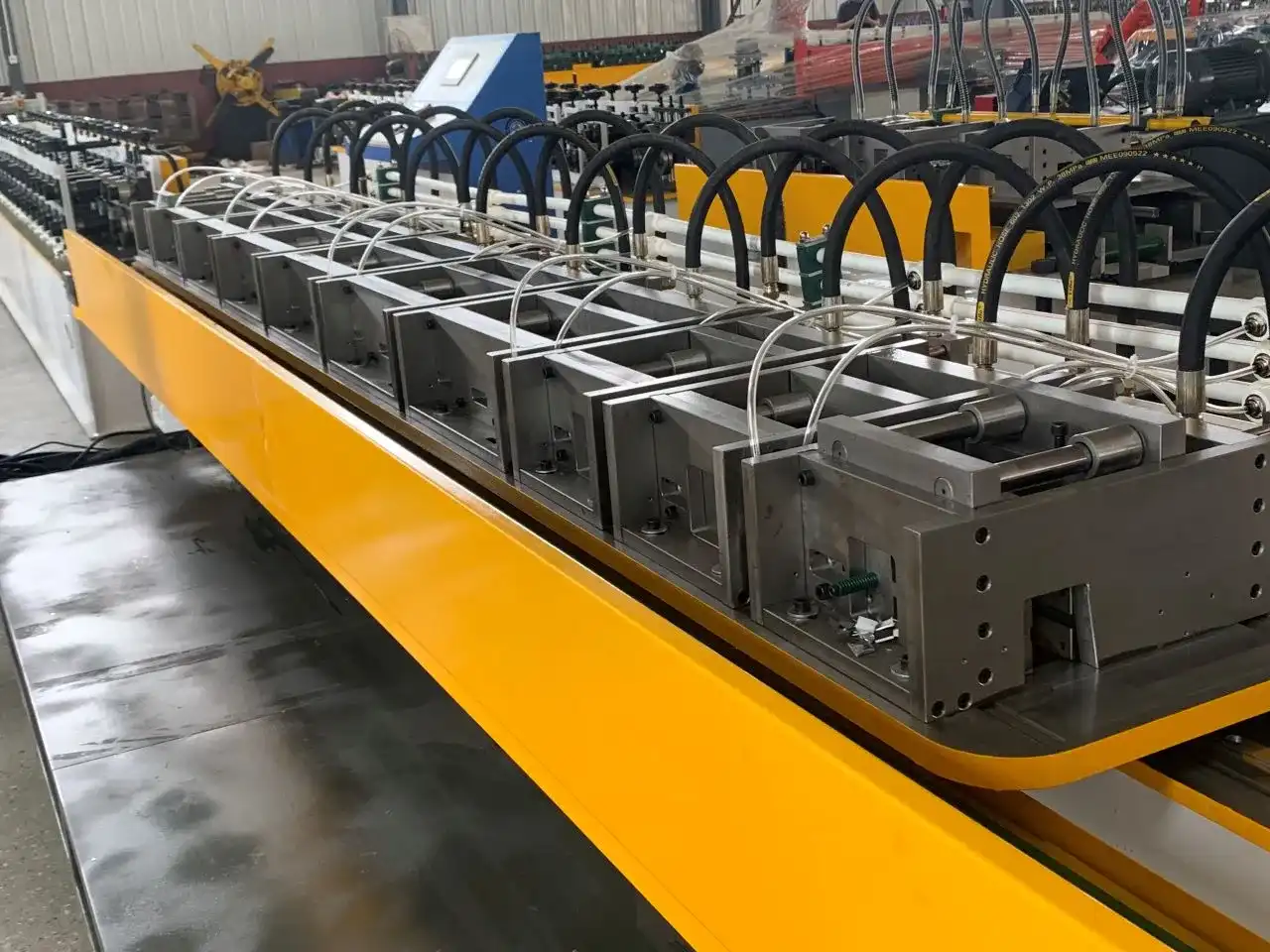
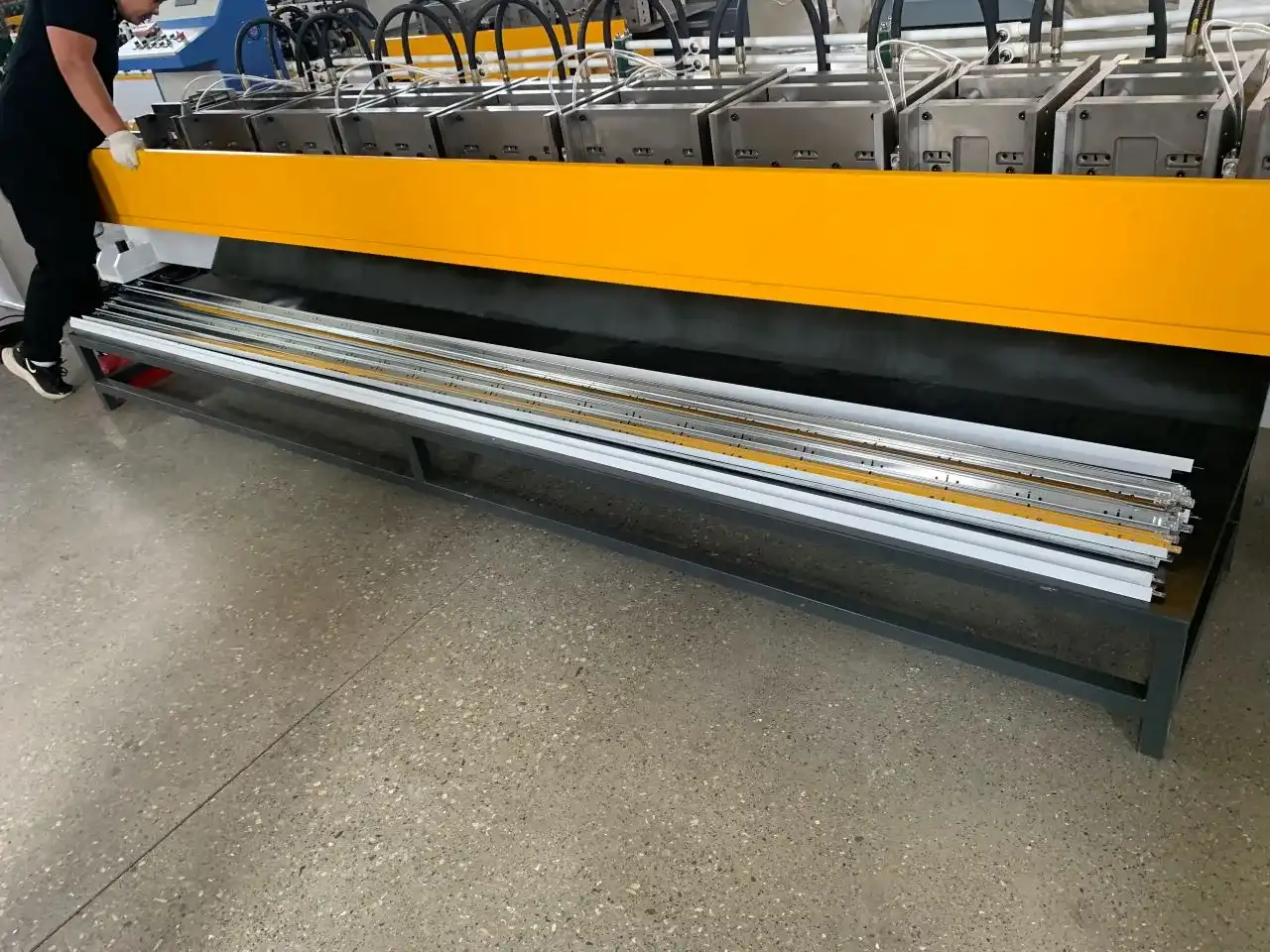
The tiles that are used in airport halls and metro concourses are carried by exposed ceiling grids. The line forms galvanised (GI) or pre-painted (PPGI) steel strip into main tees, cross tees, and wall angles. The primary tee extends the whole length of the chamber, and cross tees are designed to fit into gaps along its web. Standard ASTM C635/C635M is the standard for metal suspension systems that are used with acoustical tile and lay-in panel ceilings. Grid items are often checked to this standard by purchasers in the United States. In order to ensure that the coating on the visible face of the T bar remains intact, our T bar machine employs PPGI for the top strip and GI for the bottom strip.
Partition Keel Roll Forming Lines
A distinct function is performed by partition keel lines. Studs, tracks, furring channels, and ceiling channels are formed by them, and they are responsible for transporting plasterboard in walls and drops. ASTM C645 is the standard that governs nonstructural steel framing members in the United States, whereas AISI S100 is the standard that governs structural cold-formed members. The depth of these profiles is greater than that of a T bar, and the holes for pipes and wires are more meaningful. It is essential that the stud size and hole location remain consistent from the very first item to the very last. In spite of the fact that both a partition line and a T grid line use continuous roll forming, the roller sets required for each are significantly different.
Dedicated and Modular Configurations
A buyer that operates one consistent profile in large volume is a good candidate for a dedicated line. A buyer that services many markets and often uses different sizes is a good candidate for a modular line. In 18 of the stations, our T grid machine serves as the main tee, and in 16 of the stations, it represents the cross tee. We will be able to provide you with a separate keel line that has its own tooling if your design also includes studs and tracks. The whole equipment, including the decoiler, former, stacker, and replacement parts, is available from us. To begin, please send us your profile drawings, and we will let you know if one line or two would accommodate your orders.
How the Lines Work and What the Specifications Mean
From Coil to Profile
On a ceiling t grid roll forming machine, production starts at the decoiler. Ours is capable of holding a coil that weighs 1.5 tonnes and has an inner diameter that ranges from 450 to 550 millimetres. Guides feed the strip into forming stands, where the rollers bend it gradually. By gradually bending the PPGI strip, the paint is protected, and the form is maintained in a regular manner. The rolling shafts are made of 45# steel and have a diameter of 50 mm. The rollers are made of GB-Cr12 tool steel, which is resistant to wear even when used for extended periods of time. The profile then proceeds on to the punching, cutting, and collecting stages once it has been formed.
Punching, Cutting, and Controls
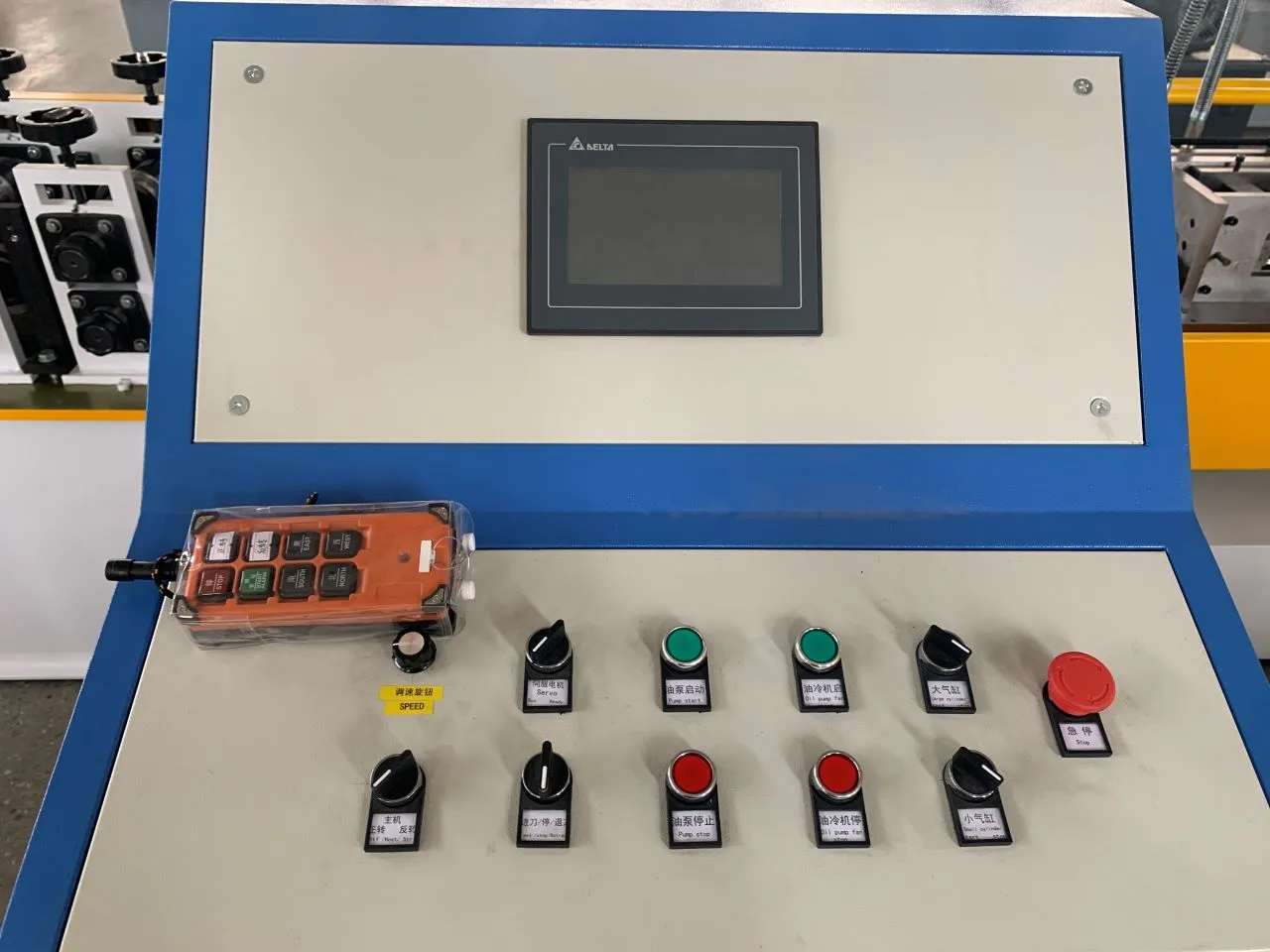
Slots and end details are required for main tees and cross tees in order for them to be able to lock together on site. When punching and cutting are both active, the working speed ranges from 0 to 20 meters per minute. Punching and cutting are both performed in the same line. Operators use the PLC and HMI to set length, batch quantity, and speed and to save settings for repeat orders. Complex punching can reduce actual throughput. Compare finished meters per shift to assess capacity.
Material and Thickness Data
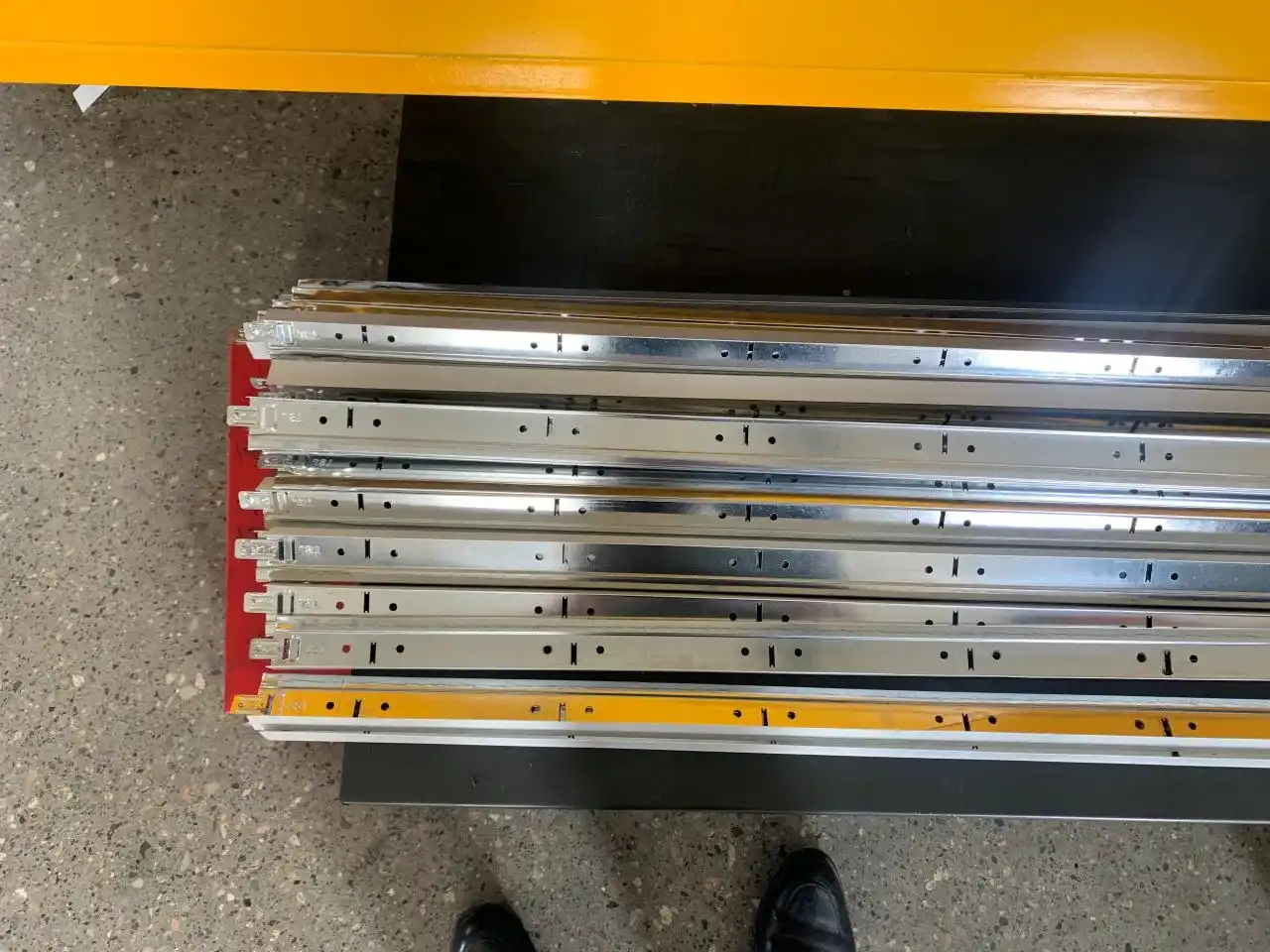
In the designs that you give to us, please use these numbers. PPGI is used at a thickness of 0.12–0.3 mm for the top strip of the T bar. A GI of 0.2–0.4 mm is used for the bottom strip. Because the thin strip is prone to twisting, the quality of the coils, the roller finish, and the straightening are just as important as the number of stations. Before making a purchase, we ask that you verify the coil width and yield strength with us, since both of these factors influence the roller design and the load on the motor. Include the following criteria in your acceptance test: straightness, length accuracy, hole location, and surface polish. This will ensure that all parties evaluate samples according to the same standard.
Choosing, Evaluating, and Pricing a Line
Choosing an Automatic Machine
First, consider the volume, product mix, and labour involved. The cost of manual and semi-automatic lines is lower, but they need a greater number of workers and provide results that are less stable. An automatic line feeds, punches, cuts, and stacks with limited operator intervention. The more straightforward option is to go with a dedicated line for a single steady profile. Take a look at quick-change tooling and saved recipes for a variety of grid sizes. Additionally, we provide OEM and ODM tooling that is customisable to your specifications. As a result of the fact that every coil switch stops production, wholesale purchasers should also compare coil changeover times.
Evaluating Suppliers
Before asking about your budget, a reliable provider would enquire about your profile. Obtain a formal proposal that details the output, the extent of the equipment, the tooling, the controls, and the acceptance tests on the project. Request trial samples as well as a video or tour of the plant. ZTRFM is certified to the ISO 9001, CE, and CAS standards, and ISO 9001 is a quality management standard that is widely recognised. Cangzhou Zhongtuo is a national high-tech firm that was established in 2014 and now exports equipment to more than 150 territories throughout the world. Additionally, be sure to enquire about training, commissioning, replacement parts, and remote assistance, particularly in the event that your delivery date is tied to a contract with an airport or metro.
Cost and Total Ownership
When comparing quotes for a ceiling t grid roll forming machine, check which equipment and services are included. The quote is subject to vary depending on the following factors: tooling accuracy, punching units, controls, cutting technique, stacker, and installation. Used machinery may seem to be inexpensive; yet, it often results in downtime due to worn rollers, outdated controls, and missing drawings. Request a price that includes a list of the machine's capabilities, including its scope, profiles, capacity, material, voltage and frequency, delivery, warranty, replacement parts, and training. When you include the cost of labour, electricity, scrap, maintenance, and changeover time, you can see how much it will cost over a number of years. The voltage and frequency of the plants in the United States should be shared early on so that the electrical cabinet may be matched to the location.
From Production to Installation and Project Use
Production and Inspection
The forming stands shape the web and flanges of each main tee. The line then punches the slots. In order for cross tees to be able to click onto the main tee, they need very precise lengths and end details. Studs and tracks may also require service holes. Take measurements using callipers to determine the height and breadth of the flanges on the samples, check the slot spacing against the design, and lay a long piece out on a level surface to see if it twists or bows. It is important to look for roller marks on PPGI paint since scratches reduce the protection against corrosion. To prevent completed lengths from bending or rusting while in transportation, they should be bundled, labelled, and wrapped.
Installation and Maintenance
Before the machine arrives, you should plan the floor according to the following: storage for the coils, clearance for the decoiler, foundation, electricity, air supply, and room for completed products. Before allowing samples to be approved, personnel do checks on the level, roller alignment, sensors, punch timing, cut length, and HMI settings during the commissioning process. In addition to lubricating bearings, inspecting rollers and blades, checking punch dies for wear, and tightening electrical connections, ensure that routine maintenance is performed. In the event that you see twist, burrs, scratches, or unequal lengths, you should go back to the cutter and trace the problem to the coil. Because of our partnership with Siemens, we are able to provide cloud Internet of Things and artificial intelligence remote maintenance, which reduces the amount of time spent waiting.
Airport and Metro Applications
Ceiling grids and partition frames are used in a variety of airport facilities, including reception rooms, luggage areas, retail zones, offices, and service corridors. The presence of dampness, vibration, and a confined working environment is created by metro stations and tunnels. The ASCE/SEI 7 standard establishes rules for nonstructural components like ceilings in areas of the United States that are prone to earthquakes. For these settings, it is necessary to have profiles that are consistent and link facts that are true. When you have finished reviewing the project designs, material requirements, and daily production objectives, you may next choose the line. Keeping big orders on time is a challenge for many manufacturers; therefore, they have begun using automated feeding, stored recipes, batch records, and remote help.
Conclusion
Matching the machine to the profile is essential for the successful installation of ceiling and partition keel lines in airports and metros. While a ceiling t grid roll forming machine is responsible for the production of main tees and cross tees, partition lines are responsible for the production of studs and tracks; each profile needs its own roller set. The ZTRFM T bar line is equipped with a 1.5-ton decoiler, 18 and 16 forming stations, a speed of 0–20 meters per minute, and punching and cutting capabilities. The PPGI measuring 0.12–0.3 mm and the GI measuring 0.2–0.4 mm are used. Pricing and peak speed are not the only factors that buyers should consider; they should also consider completed output, accuracy, supplier support, and overall ownership cost. When it comes to massive infrastructure orders, profiles are maintained consistently via careful examination, scheduled installation, and routine maintenance.
FAQ
1. What does a ceiling T-grid roll forming machine produce?
It produces main tees and cross tees. Both the top strip from PPGI, which measures 0.12–0.3 mm, and the bottom strip from GI, which measures 0.2–0.4 mm, are formed by our line.
2. Can one line make ceiling and partition profiles?
It is necessary to use separate roller sets for each profile. We will provide you with an estimate for separate tooling or a second keel line if you send us your designs.
3. What speed should I expect?
Our line runs at 0–20 m/min with punching and cutting. Compare finished output per shift when evaluating a line.
4. What information do you need for a quotation?
The profile drawings, the material, the thickness, the goal output, the voltage and frequency, and the packaging requirements should all be shared.
Request a Customized Ceiling T Grid and Partition Keel Line Proposal from ZTRFM
Making preparations for a supply contract at an airport or metro? Send ZTRFM an email at zhongtuorollforming@gmail.com with your profile drawings, as well as the material, thickness, and output you want to achieve. As a ceiling t grid roll forming machine manufacturer, ZTRFM holds ISO 9001, CE, and CAS certifications and offers OEM/ODM tooling. We will respond with a machine configuration and an itemised quote.
References
1. ASTM C635/C635M, Standard Specification for the Manufacture, Performance, and Testing of Metal Suspension Systems for Acoustical Tile and Lay-in Panel Ceilings, ASTM International, 2013
2. ASTM C645, Standard Specification for Nonstructural Steel Framing Members, ASTM International, 2014
3. AISI S100-16, North American Specification for the Design of Cold-Formed Steel Structural Members, American Iron and Steel Institute, 2016
4. ASCE/SEI 7-22, Minimum Design Loads and Associated Criteria for Buildings and Other Structures, American Society of Civil Engineers, 2022
5. Roll Forming Handbook, George T. Halmos, CRC Press, 2005
6. ISO 9001:2015, Quality Management Systems — Requirements, International Organization for Standardization, 2015