- English
- French
- German
- Portuguese
- Spanish
- Russian
- Japanese
- Korean
- Arabic
- Irish
- Greek
- Turkish
- Italian
- Danish
- Romanian
- Indonesian
- Czech
- Afrikaans
- Swedish
- Polish
- Basque
- Catalan
- Esperanto
- Hindi
- Lao
- Albanian
- Amharic
- Armenian
- Azerbaijani
- Belarusian
- Bengali
- Bosnian
- Bulgarian
- Cebuano
- Chichewa
- Corsican
- Croatian
- Dutch
- Estonian
- Filipino
- Finnish
- Frisian
- Galician
- Georgian
- Gujarati
- Haitian
- Hausa
- Hawaiian
- Hebrew
- Hmong
- Hungarian
- Icelandic
- Igbo
- Javanese
- Kannada
- Kazakh
- Khmer
- Kurdish
- Kyrgyz
- Latin
- Latvian
- Lithuanian
- Luxembou..
- Macedonian
- Malagasy
- Malay
- Malayalam
- Maltese
- Maori
- Marathi
- Mongolian
- Burmese
- Nepali
- Norwegian
- Pashto
- Persian
- Punjabi
- Serbian
- Sesotho
- Sinhala
- Slovak
- Slovenian
- Somali
- Samoan
- Scots Gaelic
- Shona
- Sindhi
- Sundanese
- Swahili
- Tajik
- Tamil
- Telugu
- Thai
- Ukrainian
- Urdu
- Uzbek
- Vietnamese
- Welsh
- Xhosa
- Yiddish
- Yoruba
- Zulu
Single-Layer vs. Composite Roof Tile Production Lines: Key Differences and Applications
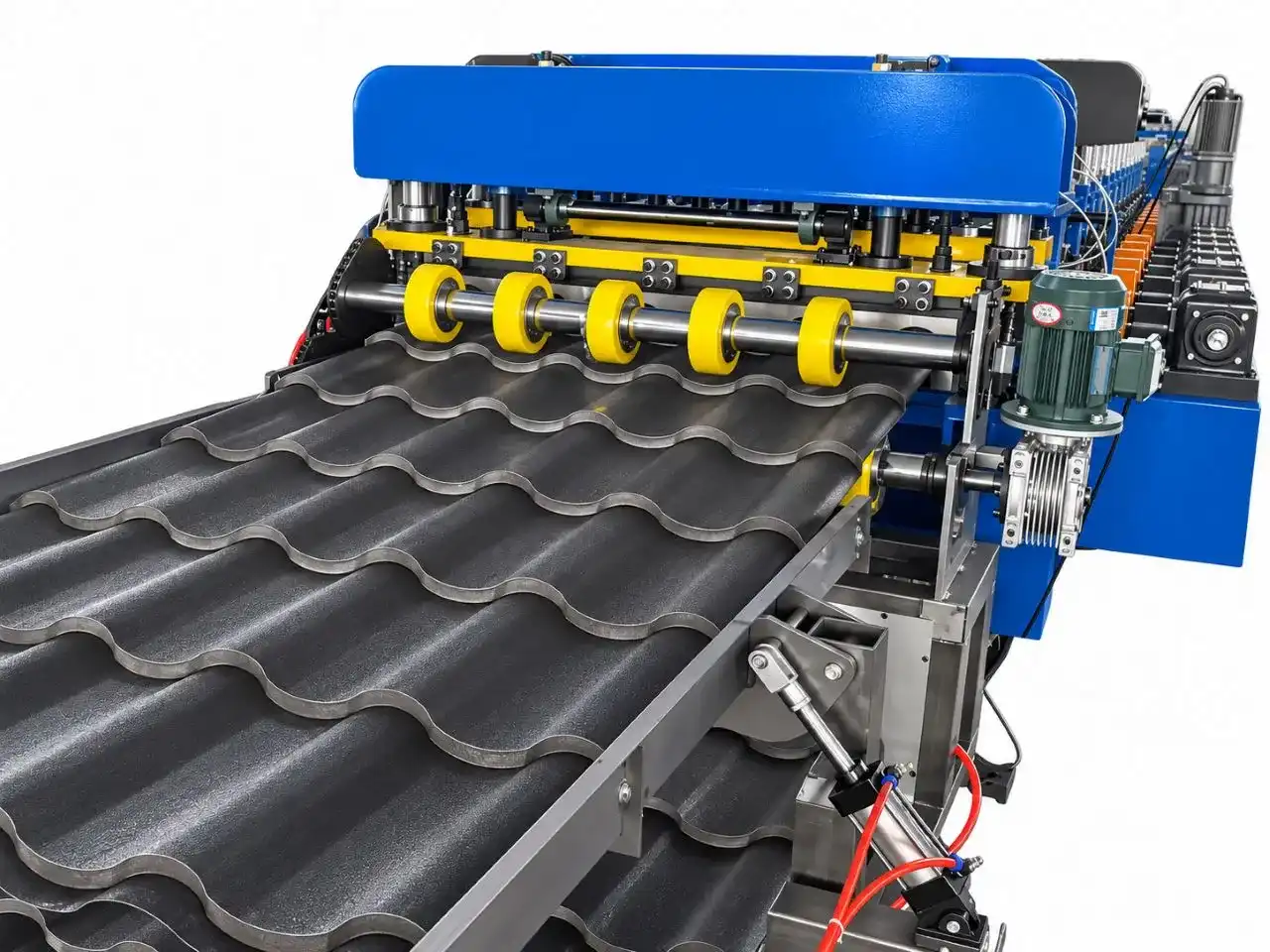
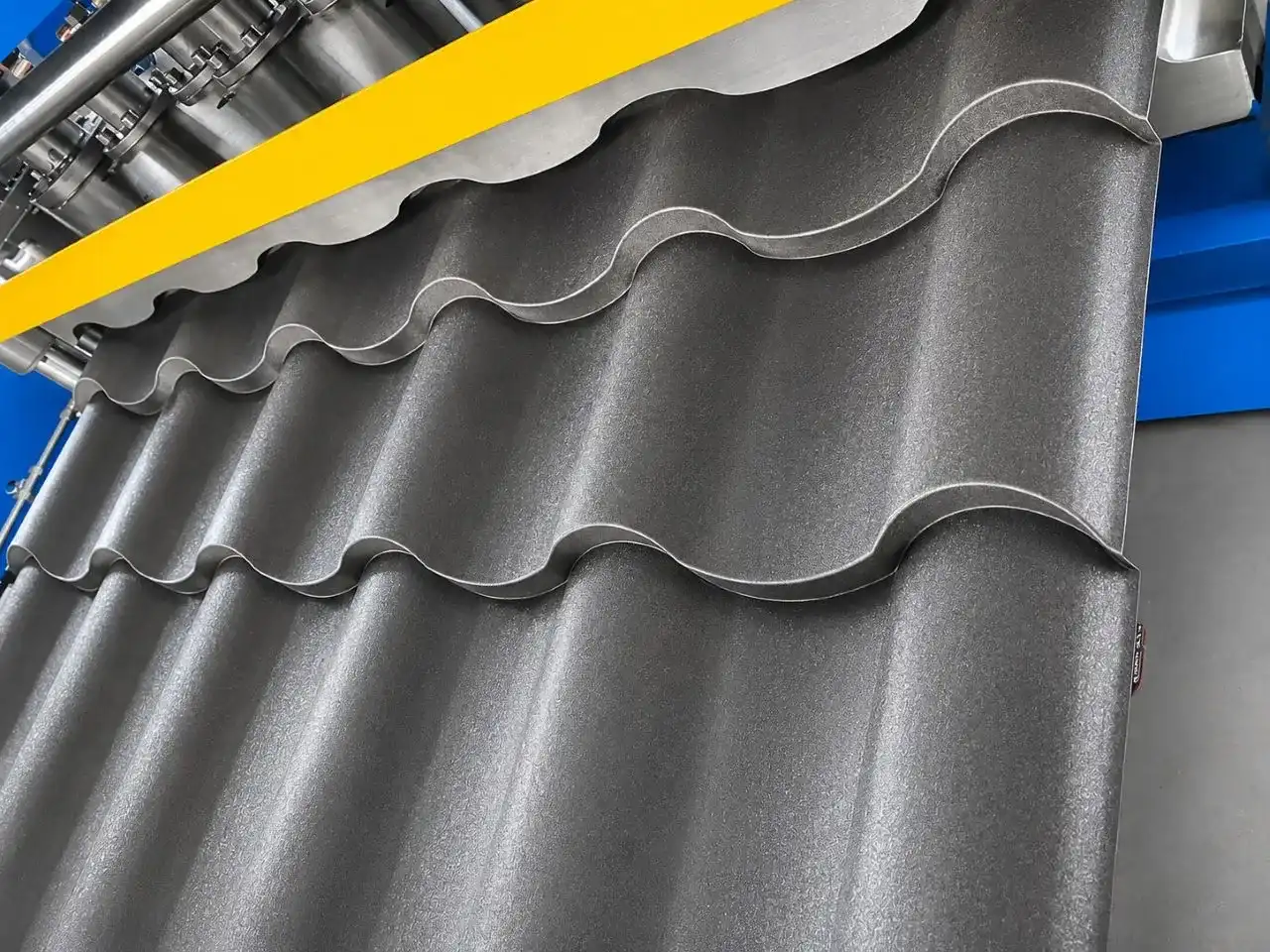
The main difference is simple. A single-layer line forms one metal coil into a finished tile-look panel in one continuous pass. A composite line joins two or more layers, or adds a surface coating such as stone chips, to change how the panel performs and looks. Single-layer lines suit standard, high-volume work like barns, warehouses, and residential reroofs. Composite lines suit premium products that need extra insulation or a heavier finish. An adamante tile roof machine from ZTRFM is a single-layer cold roll forming line for 0.3–0.5 mm GI and PPGI coil. It is built for buyers who want steady output and a lower startup risk.
Single-Layer and Composite Lines: Basic Definitions and Key Differences What a Single-Layer Line Does
To begin, I will begin with the single-layer line since this is the standard that the majority of roof panel businesses utilise. One steel coil is fed into a roll forming machine using a device called a decoiler. At each stop, the strip is bent slightly by a succession of roller stations, which continues until the profile that looks like tiles is achieved. A hydraulic flying shear is then used to cut the panels to the desired length without interrupting the production line. The completed sheet is then caught by a run-out table. Due to the fact that just one material follows one forming route, the setup time is rather short, and operators rapidly understand it.
What a Composite Line Adds
It is a basis upon which a composite line is built. The creation of a stone-coated panel may include the bonding of a second metal layer, the addition of an insulating core, or the application of a base coat and stone grains. Additional equipment, such as laminating stations, coating units, or curing space, is required for each additional step that is introduced. Each phase also requires a more stringent control over the temperature, alignment, and thickness of the material. One of the benefits is a panel that has a distinct feel, weight, or sound profile, which is something that certain premium consumers are willing to pay for. I am able to discuss these constructions with a customer who supplies a sample or a sketch since ZTRFM has technology that allows for the formation of multi-layer composites. Confirming the precise layer structure is something that I always recommend doing before beginning any quote.
Key Differences in Process, Cost, and Control
In the event that a customer requests a concise overview, I will compare the two kinds in the following manner. In contrast to composite lines, which use many layers or coatings, single-layer lines only need a single coil. Shear is the point at which a single-layer process comes to a halt, while a composite process adds more bonding or coating. It is less expensive to purchase and operate single-layer lines, and they need less floor area. There is a need for more careful monitoring of bond strength and quality in composite lines. Additionally, single-layer lines transition profiles more quickly, particularly when cassette tooling is used. Based on these factors, it is clear that the simpler option is not the less viable option. It is possible for a simple queue that operates throughout each shift to earn more than a more complicated queue that waits for a premium order.
Adamante Tile Roof Machine: Specifications and Working Principle
How the Forming Process Works
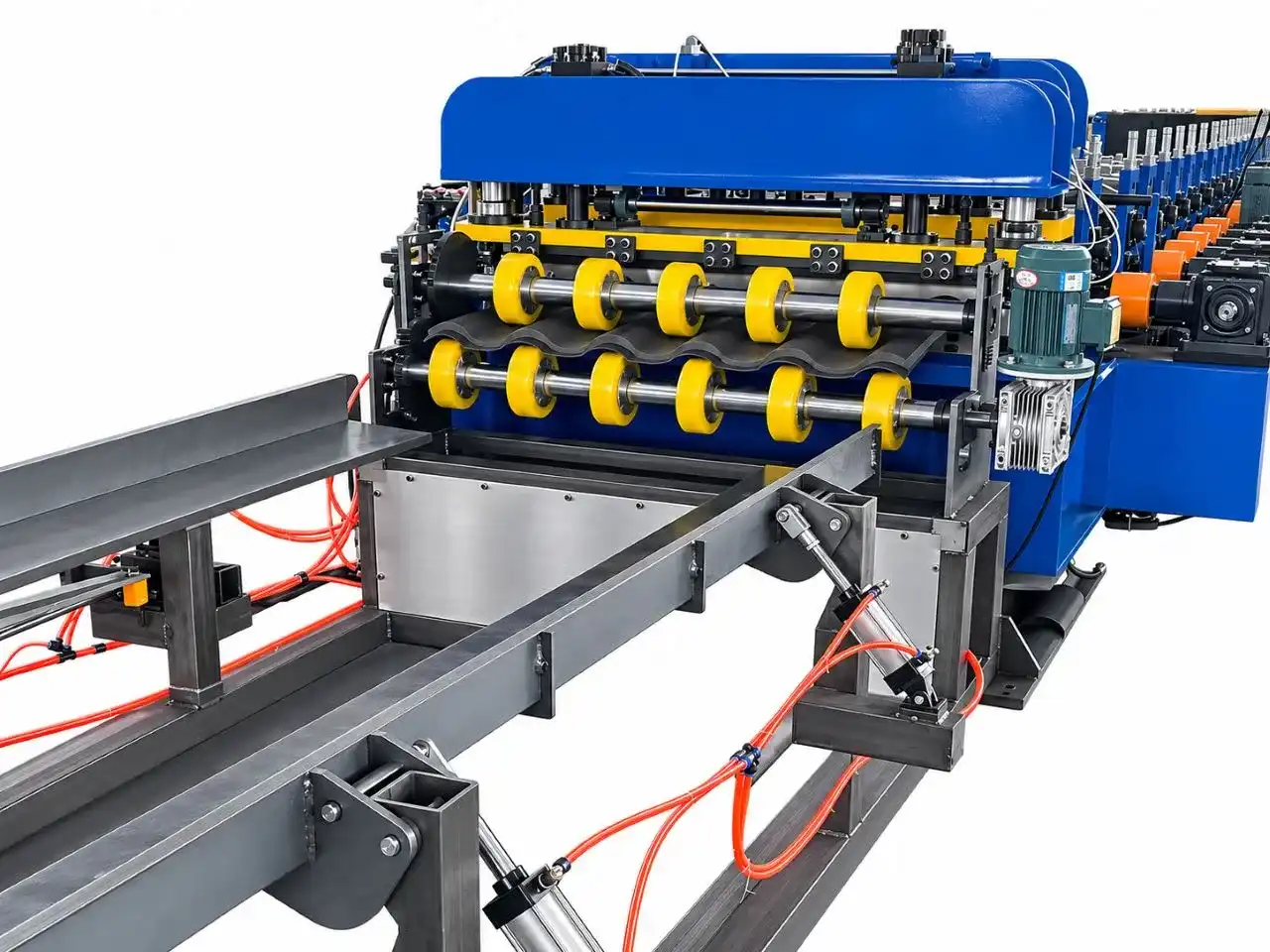
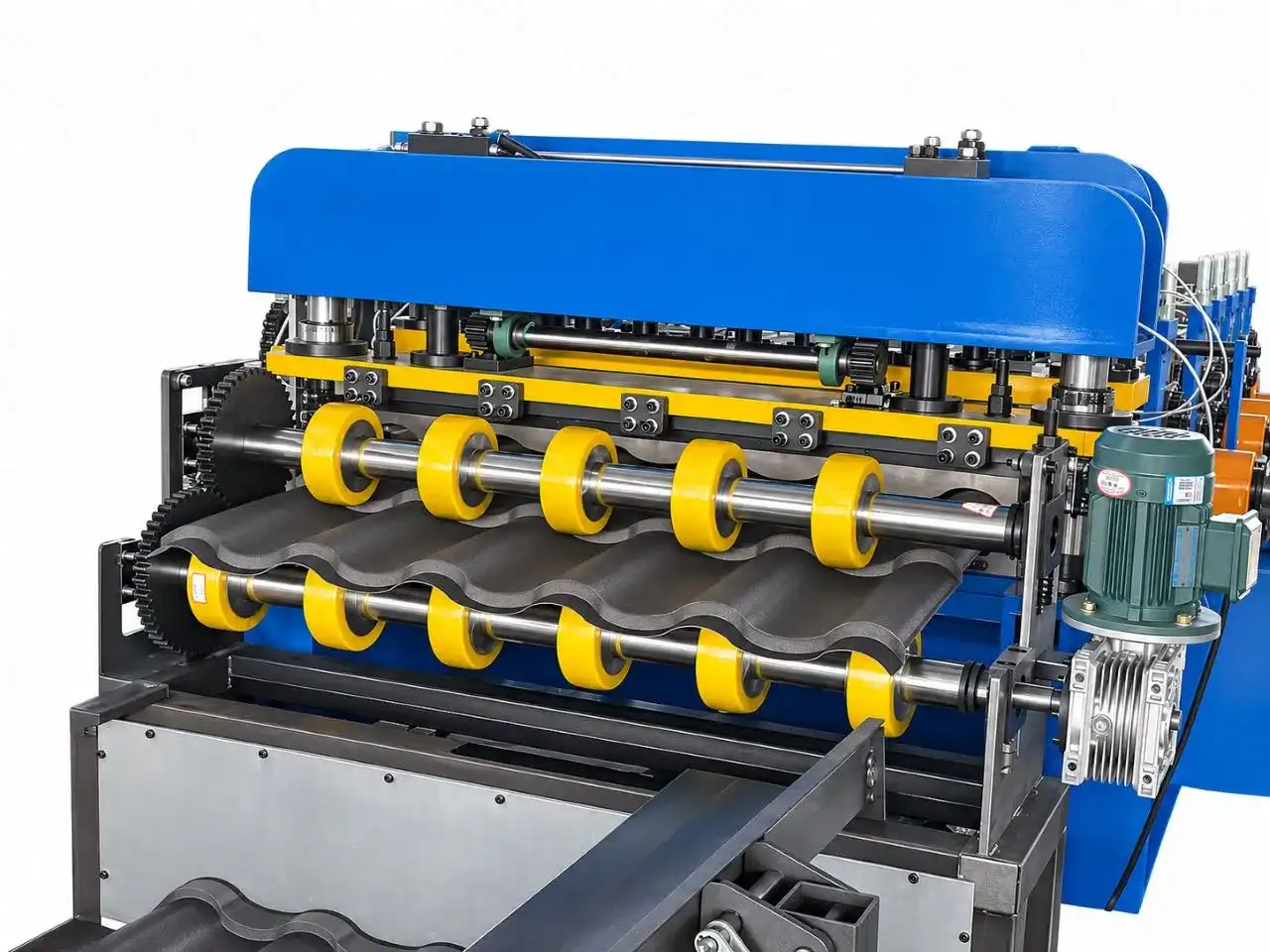
The adamante tile roof machine follows the standard roll forming sequence. First, the operator loads a coil onto the decoiler. The strip then enters the roll former, where 14 roller stations bend it step by step into the tile-look wave. A gearbox with bevel gears inside carries power from the 5.5 kW main motor to the rollers. After forming, the hydraulic flying shear cuts the panel at the set length while the line keeps moving, and the sheet slides onto the run-out table. Speed runs from 0 to 6 m/min. That pace is modest, but the line runs continuously, which suits shops that value steady daily output over peak speed.
Core Specifications at a Glance
When comparing quotations, numbers are the most important factor; thus, I present them in explicit form. With a coil feeding width of 1250 mm, the line is able to accommodate GI and PPGI coils with thicknesses ranging from 0.3 to 0.5 mm. The line speed ranges from 0 to 6 meters per minute, and the primary roll forming motor is 5.5 kilowatts. It includes 14 roller stations. With a shaft diameter of 80 millimetres, the frame is constructed out of hot-rolled H-beam, and the rollers are made out of high-grade 45-pound steel. Request that each of the suppliers provide you with the identical data sheet, and then compare each figure to the quotation. Comparing the specifications of two machines line by line reveals whether or not they cover the same machine. Please let us know as soon as possible if you want a broader gauge range, up to 1.2 mm, for bespoke orders.
Build Quality and Control
Not on the quotation, but after the first year, the quality of the build becomes apparent. As a result of our rollers being toughened and hard-chrome plated, painted PPGI surfaces are protected against scuffs that may occur during the forming process. The 80 mm shafts are resistant to bending, and the H-beam structure maintains roller alignment even when the load is applied. The panel length is determined by Siemens PLC control, and output is counted. We are able to inspect a defect without having to physically visit the location thanks to remote diagnostics provided by Siemens cloud IoT. Additionally, multi-profile shops have the option of using quick-change cassette tooling. Our plant in Botou, Cangzhou has been producing machines since 2014, and ZTRFM is certified to international standards such as ISO 9001, CE, and CAS. The goal of these particulars is to minimise downtime.
Applications and Buying Choices for U.S. Buyers
Where Each Line Fits
Single-layer lines serve a large share of U.S. demand, including agricultural barns, warehouses, industrial workshops, low-rise commercial roofs, prefab housing, site fencing, and wall cladding. Roofing contractors and prefab builders use them to produce panels in-house and control lead times. Composite lines suit premium residential and design-led projects where a stone-coated appearance or added insulation distinguishes the product. An adamante tile roof machine is another option for producing decorative tile-profile roofing panels. ASTM A653 covers zinc-coated steel sheet, while ASTM A755 covers prepainted steel sheet for exterior building products. Both line types should use coils that meet applicable standards. Popular U.S. profiles include PBR, R-panel, and snap-lock, so confirm your target profile before choosing.
Choosing the Automation Level
Both the volume and the cost of labour are vital to automation. It is more cost-effective to use a semi-automatic arrangement that requires human coil loading and stacking. Moderate output or a first manufacturing line may be accomplished with its use. A more complete system includes an automated stacker, which reduces the amount of manual labour required to handle stacks and maintains their neatness even as the number of stacks increases. One-stop solutions are available from ZTRFM, which range from a single machine to a whole line that includes a decoiler, former, stacker, and spare parts. A free manual decoiler is included with several of the models. Beginning with the core line and adding a stacker at a later time is something I would recommend doing if your order flow is still expanding. By using this strategy, early risk is reduced, and a clear upgrade route is maintained.
Cost, Testing, and Supplier Checks
This is only the beginning; the price per line is just one part. Compare the information that is included in each estimate, including the tonnage of the decoiler, spare roller sets, shipping conditions, and delivery penalty clauses. Due to the fact that several competing Chinese quotations specify FOB Tianjin or Qingdao with lead times ranging from 30 to 45 days, it is important to align them on the same parameters. In addition, purchasers in the United States anticipate a video acceptance test prior to shipping, and we are able to film a trial run using your own coil. You should supply a sample panel or a CAD design if you want bespoke profiles. An NDA that includes tooling drawings is available for us to sign. More than 150 nations are served by ZTRFM's machines, and some of the companies that serve as references include the Tata Group, the DS Group, and HADDAD SET.
Conclusion
Single-layer and composite roof tile production lines differ mainly in material path, process length, and cost. A single-layer line forms one coil in one pass, so it offers simpler setup, easier maintenance, and quicker profile changes. A composite line adds bonding or coating steps that can create premium products but demand tighter control and more floor space. The adamante tile roof machine discussed here is a single-layer line with 14 roller stations, 0.3–0.5 mm GI and PPGI capacity, a 1250 mm coil width, and a 5.5 kW motor. For U.S. buyers, the right choice follows the target profile, expected volume, automation level, and the total cost of the quote rather than the sticker price alone.
FAQ
1. What coil does this machine accept?
It accepts GI and PPGI coil from 0.3 to 0.5 mm thick, with a 1250 mm coil feeding width. Custom builds can extend the gauge range to 0.3–1.2 mm after technical review.
2. Is this a single-layer or composite machine?
This model is a single-layer cold roll forming line. ZTRFM also has multi-layer composite forming technology, so send your sample or drawing if you need a layered product.
Request a Customized Adamante Tile Roof Machine Proposal
Send your sample panel, CAD drawing, or coil details to ZTRFM at zhongtuorollforming@gmail.com, and our engineers will recommend a line that fits your profile and budget. As an adamante tile roof machine manufacturer in Botou, Cangzhou, we offer OEM and ODM tooling, Siemens PLC control, and one-stop supply from decoiler to stacker.