- English
- French
- German
- Portuguese
- Spanish
- Russian
- Japanese
- Korean
- Arabic
- Irish
- Greek
- Turkish
- Italian
- Danish
- Romanian
- Indonesian
- Czech
- Afrikaans
- Swedish
- Polish
- Basque
- Catalan
- Esperanto
- Hindi
- Lao
- Albanian
- Amharic
- Armenian
- Azerbaijani
- Belarusian
- Bengali
- Bosnian
- Bulgarian
- Cebuano
- Chichewa
- Corsican
- Croatian
- Dutch
- Estonian
- Filipino
- Finnish
- Frisian
- Galician
- Georgian
- Gujarati
- Haitian
- Hausa
- Hawaiian
- Hebrew
- Hmong
- Hungarian
- Icelandic
- Igbo
- Javanese
- Kannada
- Kazakh
- Khmer
- Kurdish
- Kyrgyz
- Latin
- Latvian
- Lithuanian
- Luxembou..
- Macedonian
- Malagasy
- Malay
- Malayalam
- Maltese
- Maori
- Marathi
- Mongolian
- Burmese
- Nepali
- Norwegian
- Pashto
- Persian
- Punjabi
- Serbian
- Sesotho
- Sinhala
- Slovak
- Slovenian
- Somali
- Samoan
- Scots Gaelic
- Shona
- Sindhi
- Sundanese
- Swahili
- Tajik
- Tamil
- Telugu
- Thai
- Ukrainian
- Urdu
- Uzbek
- Vietnamese
- Welsh
- Xhosa
- Yiddish
- Yoruba
- Zulu
How Does a Temporary Fence Post Roll Forming Machine Work? Applications and Benefits
A temporary fence post roll forming machine turns flat steel coil into finished posts. It passes the strip through a series of paired rolls, then punches and cuts it to length. Many buyers call similar equipment an upright pillar rolling forming machinebecause both produce long, repeatable profiles with accurate holes. The line runs continuously, so you get consistent dimensions, less handling, and steady output for fencing, event, construction, and storage markets. In this guide, I explain each stage, the main applications, the benefits, and the specs to check before you request a quote.
How the Machine Works from Coil to Finished Post
What the Machine Is
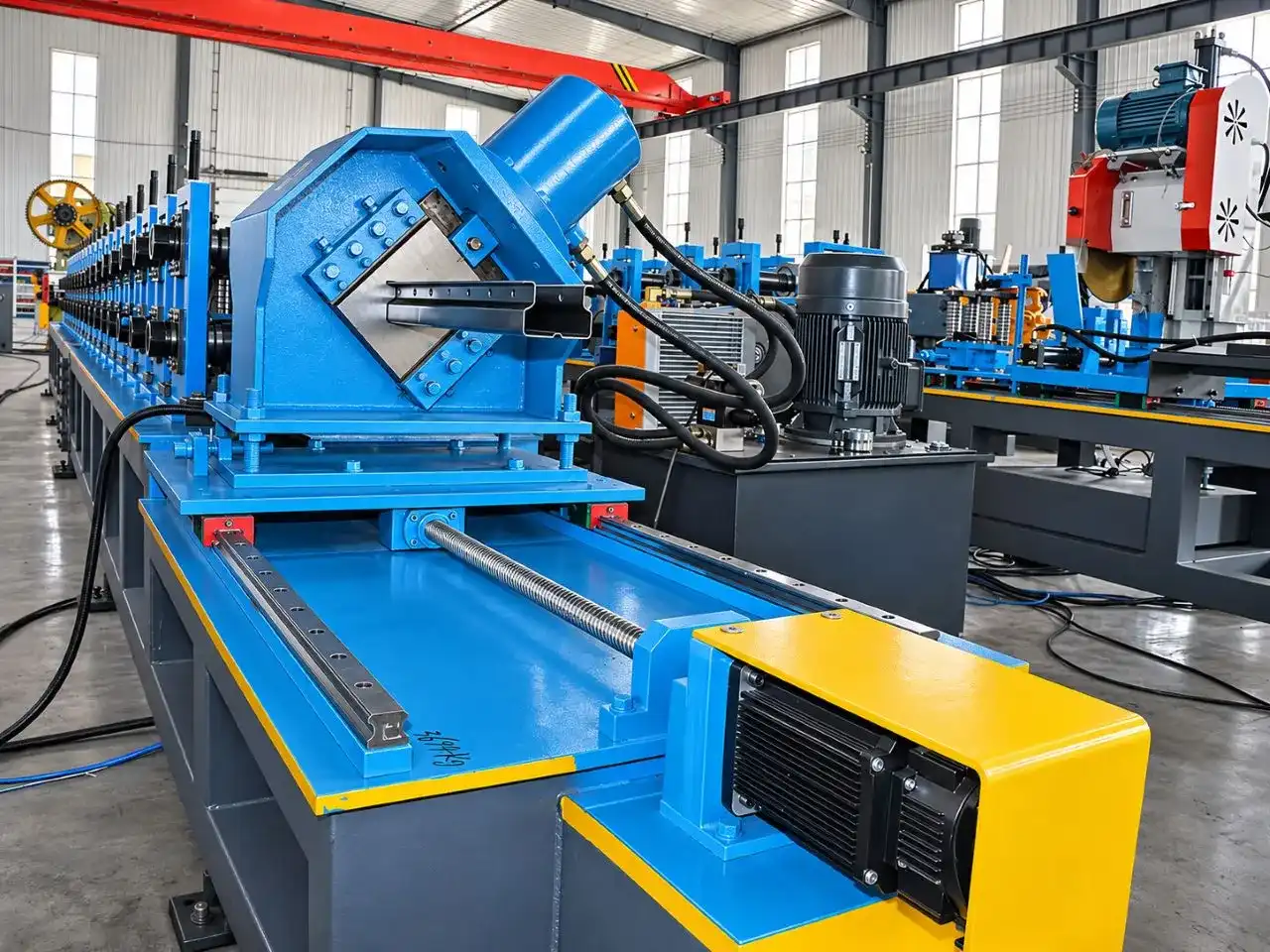
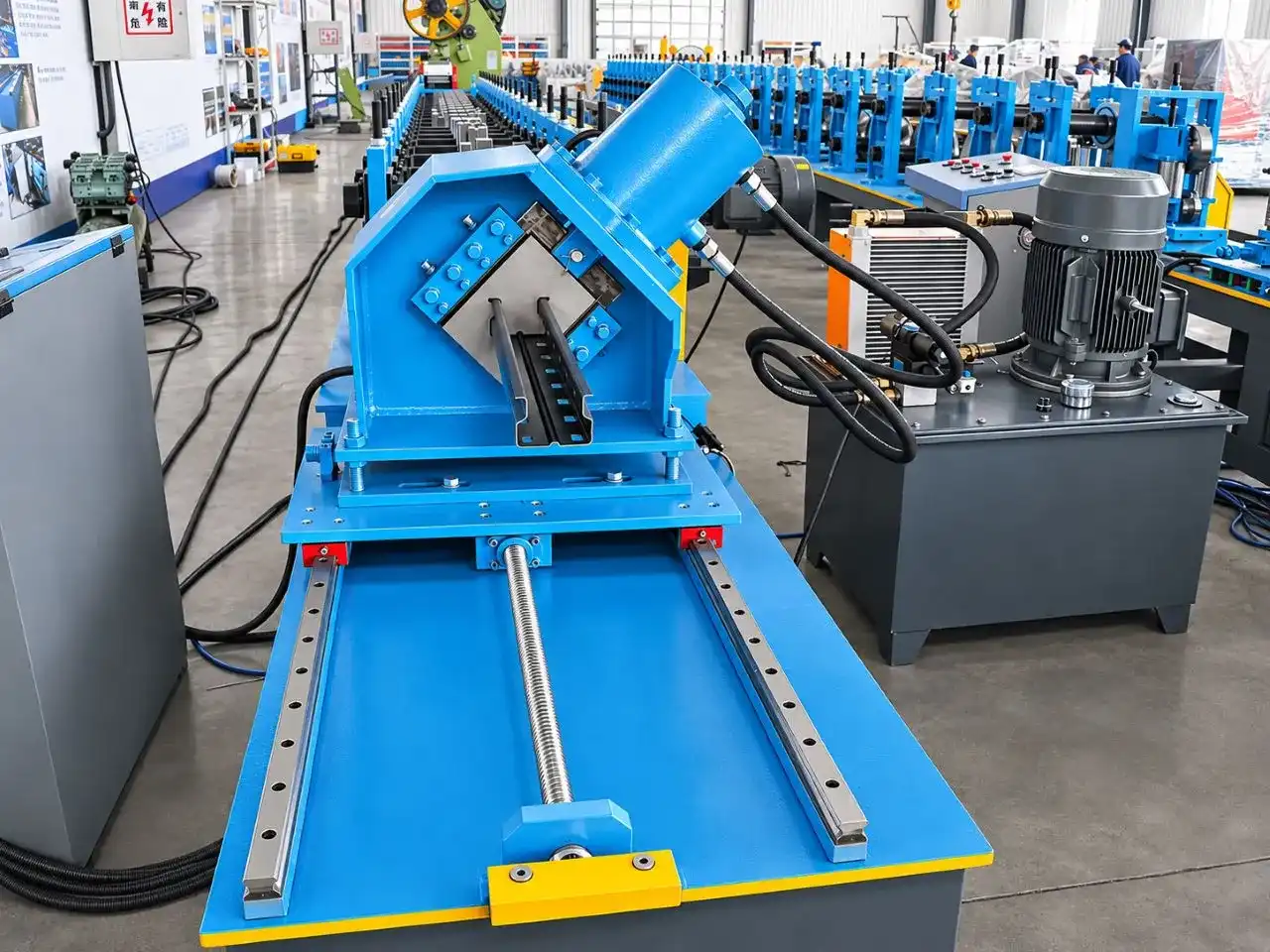
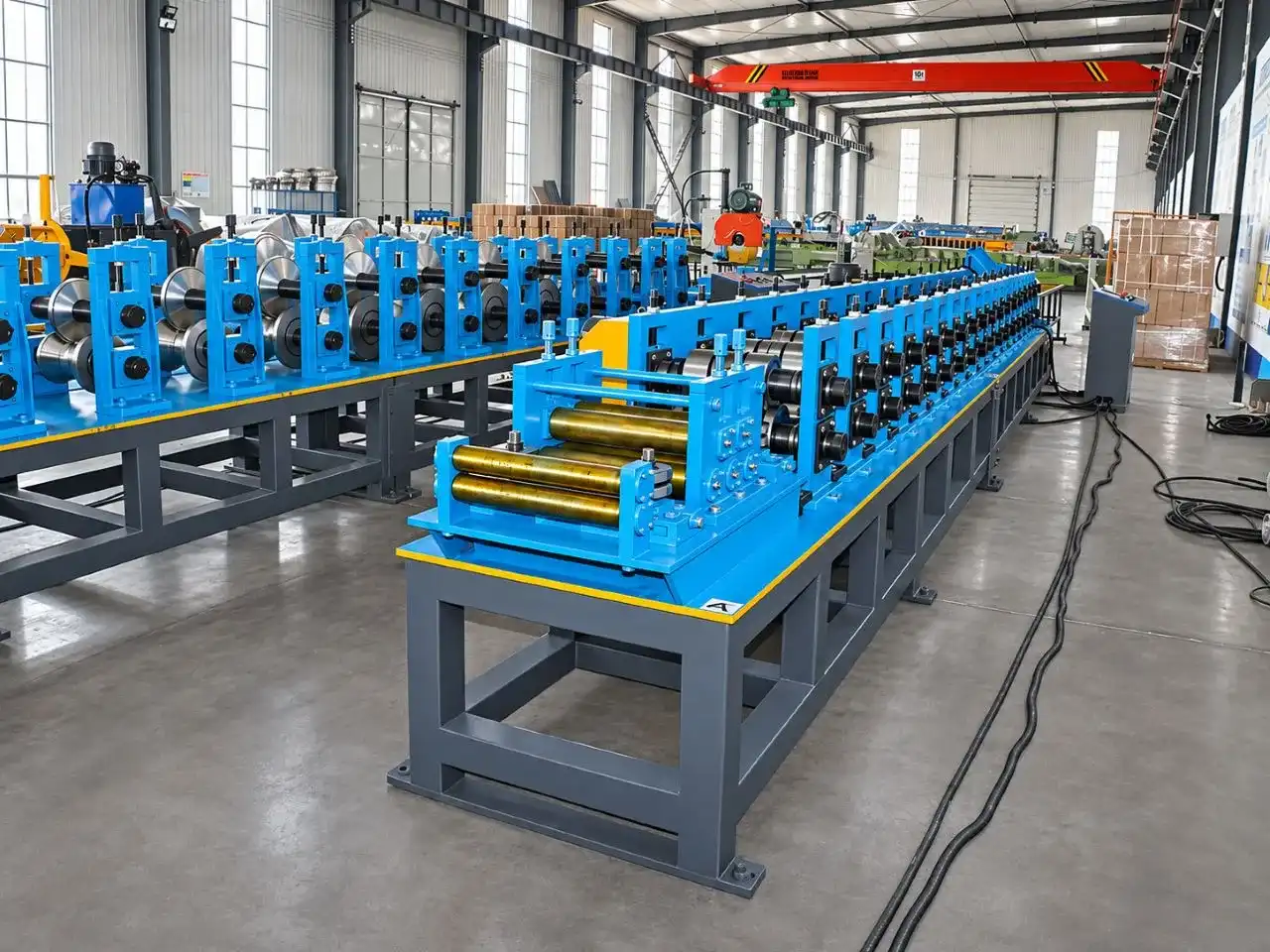
A manufacturing line that is developed around a single post shape, including its thickness, hole pattern, and completed length, is referred to as a temporary fence post roll forming machine. This distinguishes it from a roll former that may be used for a variety of purposes. This kind of equipment is sometimes referred to by terms such as upright pillar roll forming machine; nevertheless, the precise configuration of the machine is contingent upon the profile. Automatic loading, roll forming, punching, and cutting are all integrated into a single operation by our ZTRFM upright pillar roll forming machine. Handles galvanised steel plate with a thickness ranging from 1.5 to 2.5 millimetres and was created specifically for warehouse racking pillars. In the event that your post drawing falls within that range, we will be able to examine it and determine whether or not the same platform is suitable.
Stages of the Line
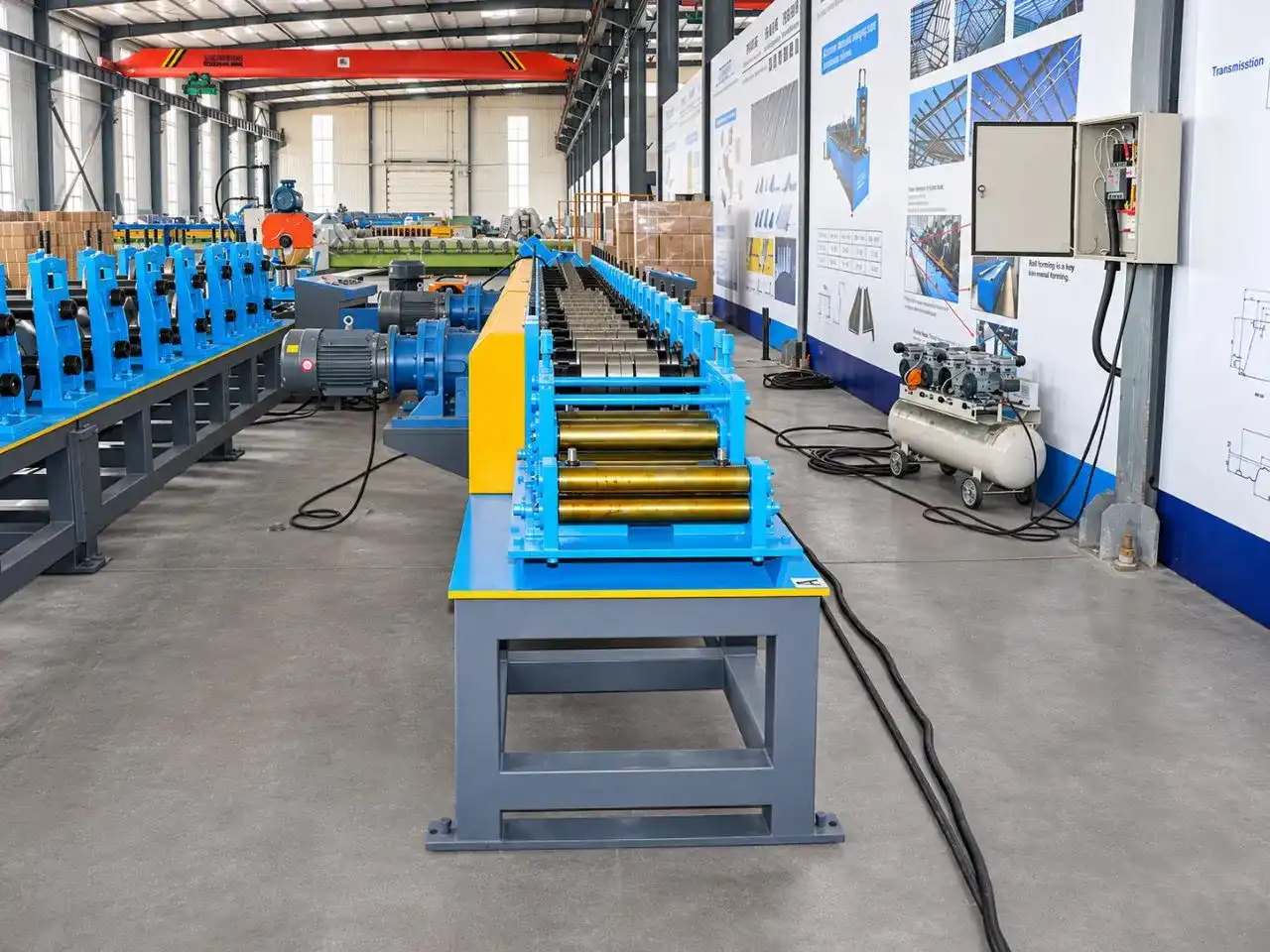
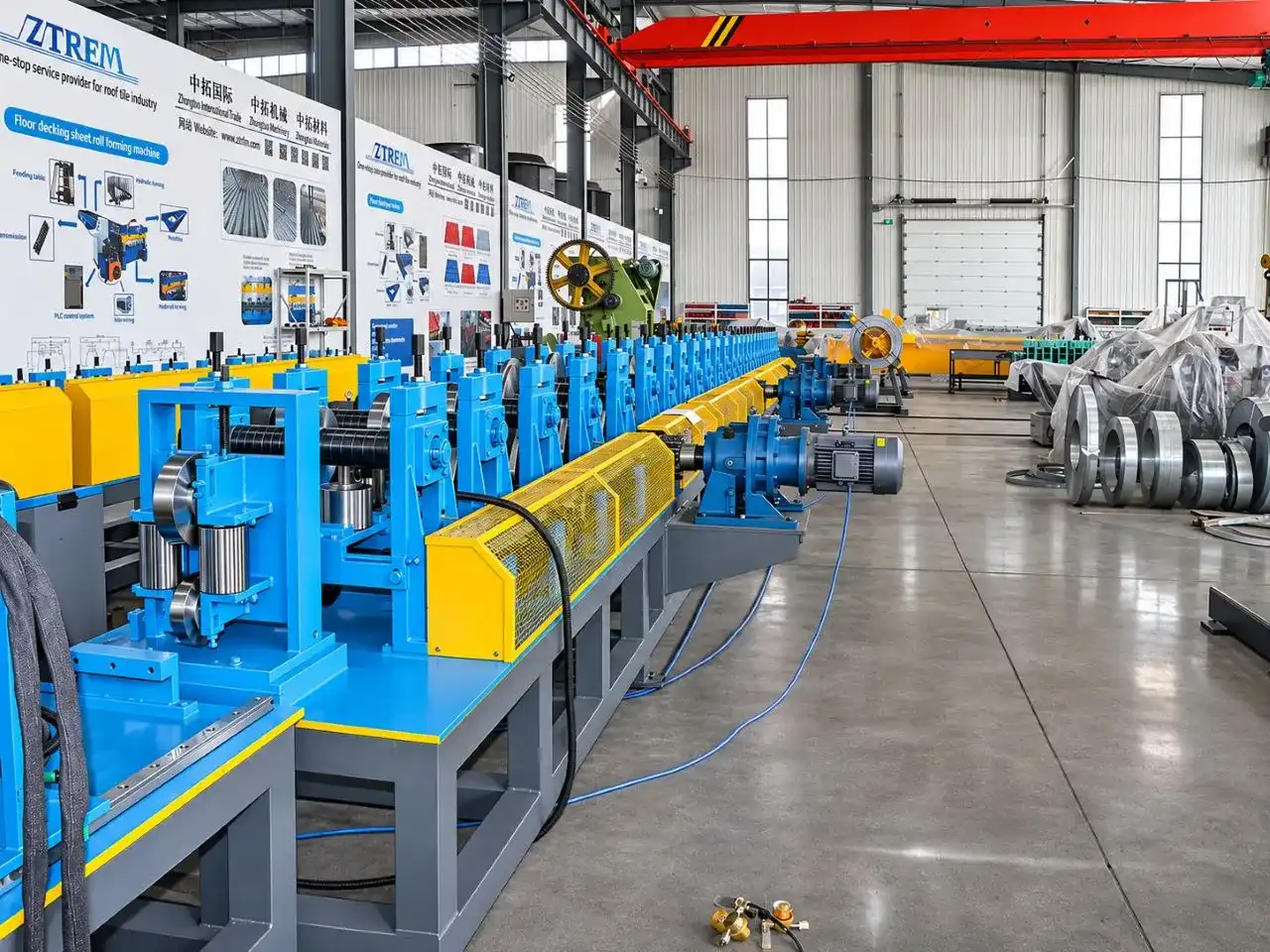
From the beginning of the line, the coils are loaded and then decoiled. The strip is then straightened by the levelling and guiding devices so that it may enter the rollers in a square position. Until the whole profile is visible, progressive forming stands will bend the steel slightly at each station until it is completely formed. When it comes to the design, punching might take place either before or after the shaping process. Every post is cut to the appropriate length by a cutting unit, and then the completed posts are moved to a collecting location. According to the Roll Forming Handbook, it is important to form steel in modest increments since steel is resistant to rapid and harsh bends, and progressive bending helps reduce breaking and deformation. The cutting time is included in the average speed of our machine, which ranges from 0 to 8 meters per minute.
Controls and Accuracy
Accuracy in an upright pillar rolling forming machine depends on the controls as much as the forming rolls. Feeding systems, encoders, and a PLC with an HMI keep strip positioning, punching, and cutting synchronized. The encoder tracks strip movement, so holes are punched at the programmed pitch and profiles are cut to the specified length. Hole spacing is critical for racking systems because beams must fit correctly at every level. On our machine, operators can change the profile size by adjusting the spacer without replacing the entire line. The standard power supply is 380V/50Hz, with customization available to match your plant. Confirm your site voltage before ordering.
Production Process, Applications, and Benefits
Production Process and Quality Checks
Before the machine even begins, a good production process should begin. Verifying the drawing, the steel grade, the thickness, the coil width, the tolerances, the hole positions, and the completed length is the first step that I would propose. After that, you should conduct a test using the real material to see whether or not the bends and punched holes are able to persist without breaking. Please make sure to communicate your material data as soon as possible. Our equipment is suitable for galvanised steel plate with a yield strength of 235 MPa or below. Examine the dimensions of the profile, the straightness, the hole pitch, the cut length, the burrs, and the state of the coating once production has begun. Because zinc-coated steel sheet is covered by ASTM A653, you should enquire for the corresponding certificate from your coil provider. Approve the samples before beginning the production of the bulk.
Applications
Construction fence, roadworks, events, exhibits, sports arenas, and temporary security zones are all functions that are served by posts that belong to this kind of line. Posts that are long-lasting, suitable for stacking, and uniform in size are sought by rental firms. In addition, upright pillars for warehouse racking, garage racking, supermarket racking, and automated warehouses are produced using the same method of forming. Because the uprights in racking are responsible for carrying the weight of the cargo, it is important that they be strong and have holes that are correct. Rack Manufacturers Institute's ANSI MH16.1 standard addresses the design, testing, and use of industrial steel storage racks. This standard was developed by the organization. Bear in mind that every profile requires its own tooling, or a machine that is designed for a family of profiles that are compatible with each other. It is uncommon for a single set of rolls to cover every form.
Benefits
Continuous forming with an upright pillar rolling forming machine reduces manual handling compared with batch fabrication. Integrated feeding, punching, and cutting help minimize measuring errors and scrap. Precision rolls and a rigid frame maintain consistent dimensions during long production runs, especially when manufacturing to customer drawings. Custom hole patterns support OEM, private-label, rental, and distribution customers. Our machine weighs approximately 16 tons and measures about 11000 × 1800 × 1800 mm, so floor space should be planned accordingly. It comes in blue and yellow, with other colors available on request. These advantages address common production challenges, including slow setups, inconsistent hole spacing, and wasted steel.
Choosing and Buying the Right Machine
Roll Forming vs. Other Methods
When it comes to high-volume runs of long, uniform posts, roll forming is often less expensive than press braking. Due to the fact that a press brake only bends one bend at a time, a post with several bends requires additional handling and manual setup. Prototypes, limited quantities, and diverse small batches are still good examples of situations where press brakes make sense. A second forming stage is required since punching-only methods are only capable of producing holes, but they are unable to shape the whole profile. While standard machines often ship sooner and have lower engineering costs, customised lines are designed to accommodate odd profiles or holes that are not standard. Find an approach that works with your volume and the products you sell. When you run thousands of posts that are similar to one another, a roll forming line is often a better match.
Key Specs to Check
Consider the speed that is being claimed. Determine your yearly production, the length of your posts, the layout of your holes, the amount of floor space you have, the power supply, and the availability of your operators. After that, examine the range of thicknesses, the grade of the material, the yield strength, the number of forming stations, the roll material, the structural stiffness of the frame, the cutting tolerance, and the punching accuracy. Please enquire about the useful speed, which should include cutting, such as our value of 0 to 8 meters per minute. Examine the controls as well, including the programmable logic controller (PLC), the human-machine interface (HMI), the recipe storage, the safety guarding, and the stacking. It is helpful to have a reference for guarding, such as the OSHA guidance on safeguarding equipment. Make a written request for the provision of spare-parts lists, paperwork, and warranty conditions.
Cost, Maintenance, and Supplier Support
The cost is determined by the complexity of the profile, the number of stations, the range of materials, the speed of the line, the punching and cutting systems, the automation, and the tooling. Take into consideration the total cost of ownership, which takes into account items such as power, labour, maintenance, replacement parts, downtime, shipping, installation, and training programs. Clearing away any debris made of steel, lubricating any spots that have been marked, and inspecting bearings, chains, guides, sensors, blades, and dies are all examples of basic yet routine maintenance. Twisting, bending, or off-pitch holes are often indicative of guide misalignment, roll wear, or sensor problems. Also known as "off-pitch holes." Cold roll forming machines have been manufactured by Cangzhou Zhongtuo since 2014. Our goods are certified to meet the standards of ISO9001, CE, and CAS, and we provide OEM, ODM, and one-stop service with our products. You may request a trial run of your material from any of your suppliers.
Conclusion
A temporary fence post roll forming machine converts steel coil into finished posts through decoiling, leveling, progressive forming, punching, and cutting, with encoders and PLC controls maintaining accurate hole pitch and length. An upright pillar rolling forming machine uses a similar process for racking components, although each profile requires matching tooling. Compared with press braking, roll forming suits high-volume production of uniform posts, while press brakes are better suited to prototypes and short batches. Purchasing decisions should consider clear drawings, material specifications, practical production speed, total cost of ownership, and sample trials. Regular maintenance helps maintain profile quality. For galvanized steel from 1.5 to 2.5 mm thick, these specifications provide a practical baseline for evaluating production lines.
FAQ
1. Is a temporary fence post machine the same as an upright pillar machine?
They can be similar, since both form long steel profiles with punched holes. The final design depends on your drawing, so send it to us for review.
2. What material does your machine process?
Our upright pillar rolling forming machine processes galvanized steel plate from 1.5 to 2.5 mm thick, with a yield strength of 235 MPa or lower.
Get a Custom Quote for Your Upright Pillar Rolling Forming Machine
Ready to discuss your post profile? ZTRFM, an upright pillar rolling forming machine manufacturer based in Cangzhou, offers OEM and ODM support and ships to over 150 countries. Email your drawing, steel grade, thickness, and target output to zhongtuorollforming@gmail.comfor details.