- English
- French
- German
- Portuguese
- Spanish
- Russian
- Japanese
- Korean
- Arabic
- Irish
- Greek
- Turkish
- Italian
- Danish
- Romanian
- Indonesian
- Czech
- Afrikaans
- Swedish
- Polish
- Basque
- Catalan
- Esperanto
- Hindi
- Lao
- Albanian
- Amharic
- Armenian
- Azerbaijani
- Belarusian
- Bengali
- Bosnian
- Bulgarian
- Cebuano
- Chichewa
- Corsican
- Croatian
- Dutch
- Estonian
- Filipino
- Finnish
- Frisian
- Galician
- Georgian
- Gujarati
- Haitian
- Hausa
- Hawaiian
- Hebrew
- Hmong
- Hungarian
- Icelandic
- Igbo
- Javanese
- Kannada
- Kazakh
- Khmer
- Kurdish
- Kyrgyz
- Latin
- Latvian
- Lithuanian
- Luxembou..
- Macedonian
- Malagasy
- Malay
- Malayalam
- Maltese
- Maori
- Marathi
- Mongolian
- Burmese
- Nepali
- Norwegian
- Pashto
- Persian
- Punjabi
- Serbian
- Sesotho
- Sinhala
- Slovak
- Slovenian
- Somali
- Samoan
- Scots Gaelic
- Shona
- Sindhi
- Sundanese
- Swahili
- Tajik
- Tamil
- Telugu
- Thai
- Ukrainian
- Urdu
- Uzbek
- Vietnamese
- Welsh
- Xhosa
- Yiddish
- Yoruba
- Zulu
Semi-Auto vs Full-Auto Roll Forming: ROI Compared
Semi-auto vs. full-auto roll forming comes down to one question: which setup repays your investment faster? A semi-automatic line costs less upfront but needs more people for coil loading, adjustment, and stacking. A fully automaticCZ purlin roll former adds computer control, servo feeding, and in-line punching and cutting, which lower labor per ton and shorten lead times. Full automation pays off when you run steady volume across several shifts. Semi-automation pays off when orders are modest or irregular. Below, I show how to compare both options with real numbers, so your decision rests on saleable output instead of a catalog speed.
Why ROI Matters More Than the Purchase Price What Semi-Automatic and Full-Automatic Mean
Handloading coils, setting the profile, triggering certain cuts, and carrying or stacking produced purlins are all tasks that are performed by operators in a semi-automatic line. An automated decoiler, servo feeding, in-line punching, length cutting, and a run-out table or stacker are all components that are additional to a full-automatic line. All of these components are handled from a computer control panel. C and Z purlins are produced by both kinds, and they are used in the construction of solar mounting structures, workshops, mezzanines, and warehouses. One of the most important distinctions is the number of jobs that a person must do between the coil and the final bundle. The labour cost, consistency, and the number of hours in a shift that create material that may be sold are all determined by this gap.
Costs That Decide Profitability
In the budget, the price of the machine is only one line item. Monthly profit is affected by a variety of factors, including labour, scrap, downtime, maintenance, energy, and floor space. Within the framework of Total Productive Maintenance, the work of Seiichi Nakajima addresses availability, performance, and quality as three distinct loss categories. A purlin line has the potential to lose output in each of these categories. It is detrimental to availability to wait for a coil replacement. Handling that is too slow is detrimental to performance. Mispunched holes are detrimental to quality. Before we talk about the pricing, I always make sure to get an estimate in each of the three categories when I am reviewing a quote with a customer.
Saleable Output Versus Rated Speed
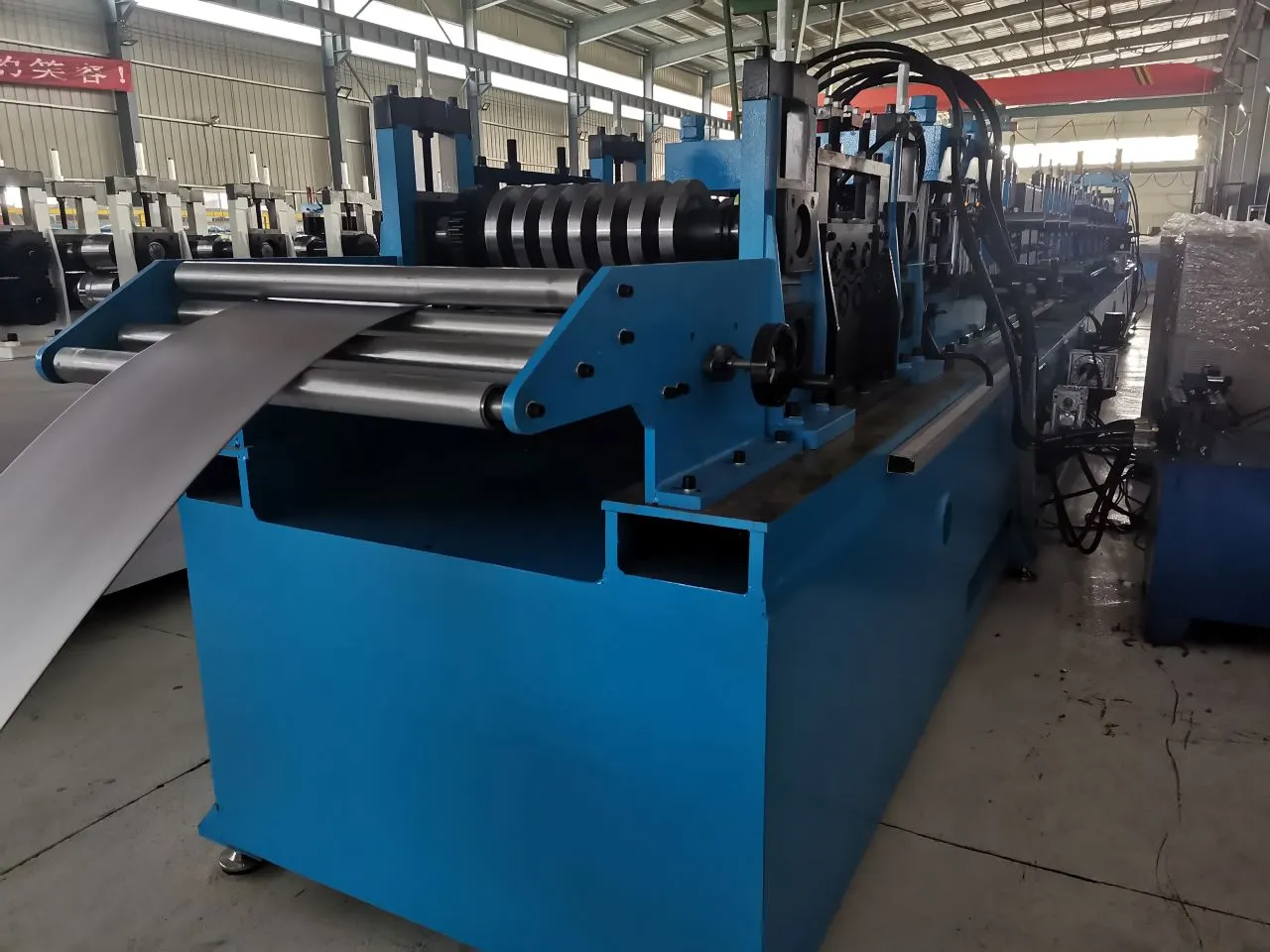
The speed of our line is between 15 and 22 meters per minute. At the maximum pace, this is equivalent to 1,320 meters per hour of continuous formation; however, no plant forms in a continuous manner. This number is reduced by a variety of factors, including inspections, stacking breaks, coil adjustments, and size changes. It is possible that a slower queue that pauses less often may provide fewer approved meters than a queue that builds at a rate of 20 meters per minute but waits on human stacking. Instead of measuring meters of accepted purlin each minute, I suggest recording meters of accepted purlin per shift. This particular number is the one that your bills are based on.
How Semi-Automatic and Full-Automatic Purlin Lines Work
The Production Workflow from Coil to Bundle
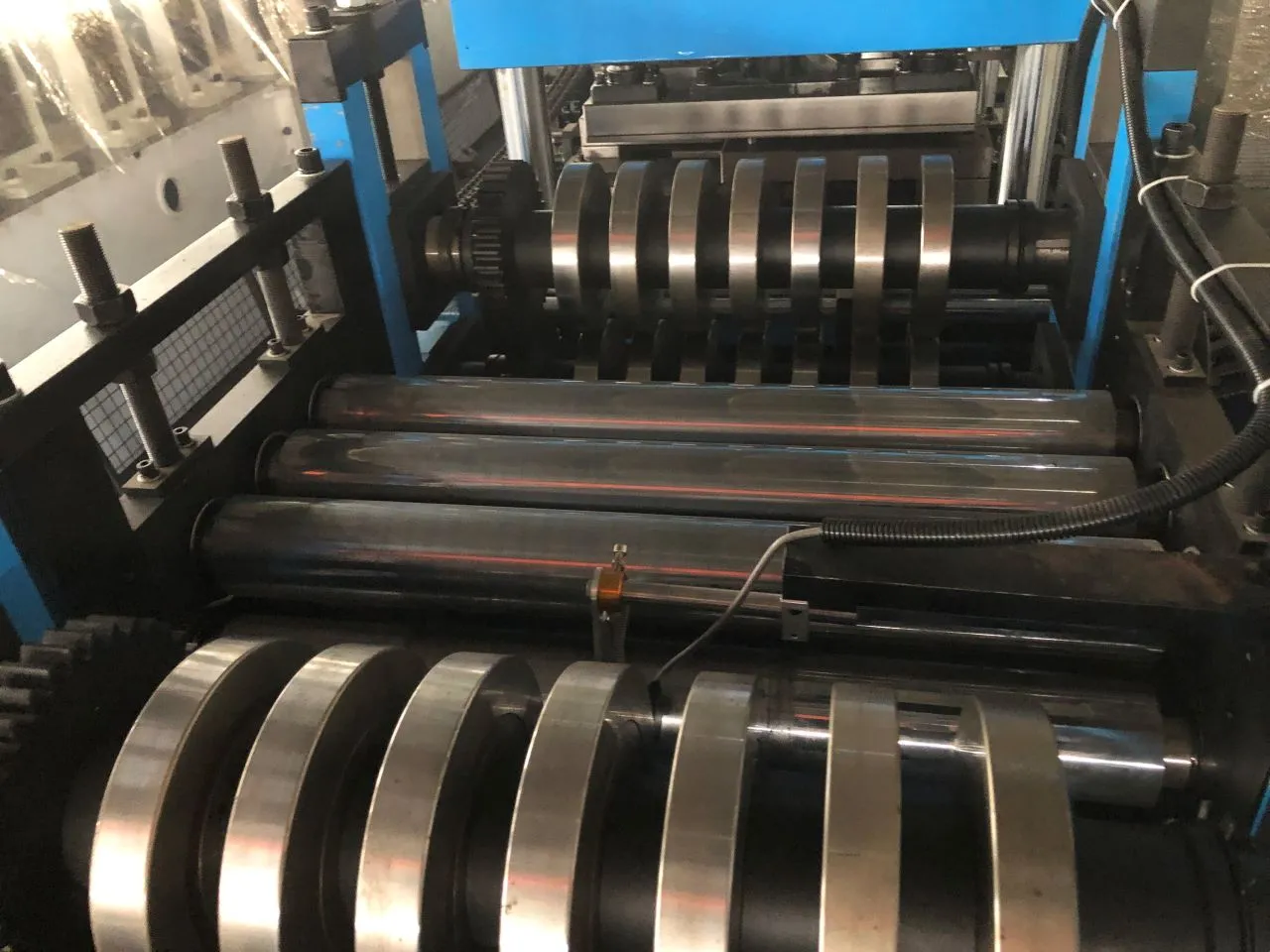
The decoiling, levelling, guiding, punching, roll forming, cutting, and collecting processes are the same for both kinds of lines. A decoiler is used to remove the coil set, and the coil is then sent through a leveller to complete the process. The strip is kept in a straight line as it is tracked into the punching device, which is responsible for creating the bolt holes. After that, the web and flanges are bent in stages by the forming stations, and a cutter is used to separate each purlin according to its length. A few of these stages are carried out manually by an operator on a line that is only partially automated. In a fully automated line, the controller arranges them in a certain order based on a previously saved arrangement.
C/Z Changeover and Profile Adjustment
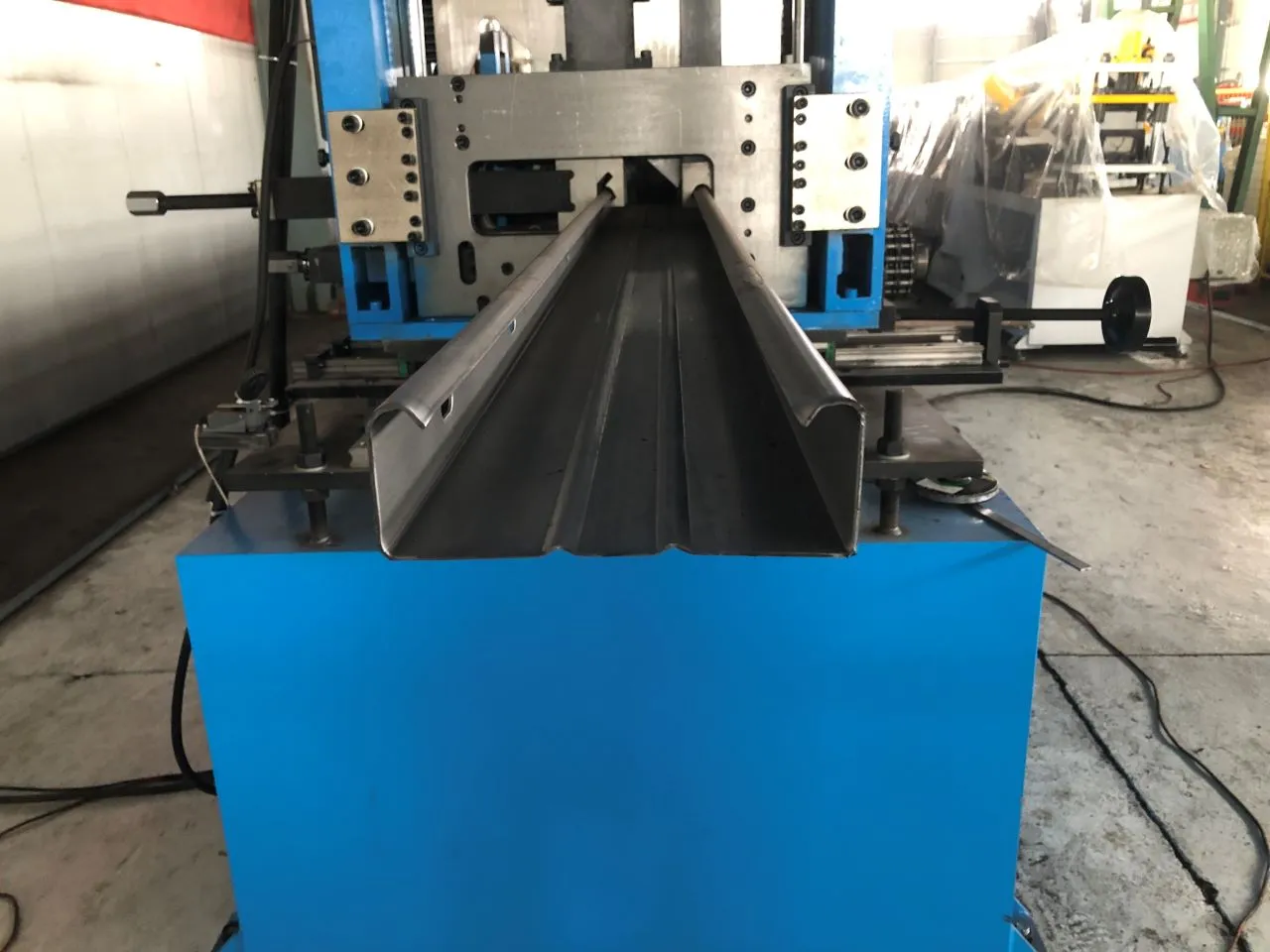
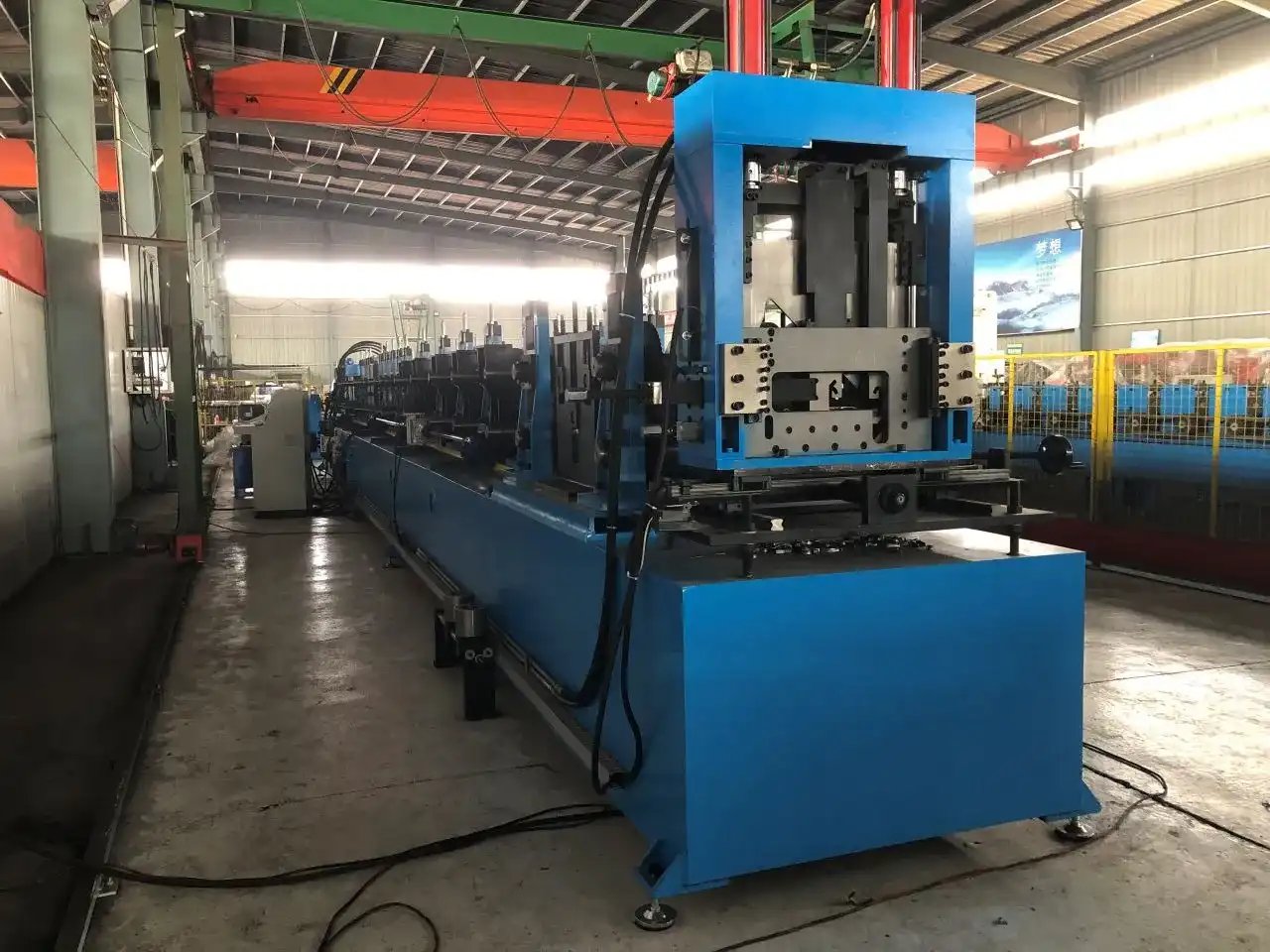
A CZ purlin roll former forms both profiles on one machine base by shifting or rearranging forming stations, so you avoid buying two separate lines. On manual versions, the crew adjusts stations and spacers by hand, which takes longer and depends on operator skill. With computer control, the operator enters dimensions at the panel. Our adjustable-size machine covers a profile height of 40–100 mm, and ZTRFM builds quick-change heads so the C-to-Z switch fits inside one shift. Ask every supplier for the written changeover time and exact steps, because "interchangeable" means different things at different factories.
Specifications to Compare
The following information should be documented for each estimate: the speed of forming, the thickness of the material, the dimensions of the profile, the punching accuracy, the cutting tolerance, the changeover time, the power requirement, and the number of operators. The purlin producing machine that we have operates at a speed of 15–22 meters per minute, works with galvanised steel, employs GCr15 shafts, and is controlled by a servo motor powered by a computer. In addition to its high level of hardness and resistance to wear, GCr15 is a high-carbon chromium steel. Typically, structural purlin work occurs within the gauge range of 1.0–3.5 mm; thus, it is important to verify that the machine is compatible with the coil that you want to purchase.
Semi-Auto vs Full-Auto ROI Comparison
A Simple ROI and Payback Formula
In the beginning, you should consider the yearly net gain, which is equal to the labour savings, the margin from the additional production, the avoided outsourcing, and the decreased scrap and rework. After that, in order to get the payback period in months, divide the additional investment by the monthly net gain. The return on investment (ROI) is calculated by dividing the yearly net gain by the additional investment and then multiplying the result by 100. "Extra investment" refers to the difference in price between the two choices, in addition to the additional costs of freight and installation. You should do the calculation twice, once with a low order volume and once with a high order volume during the busiest season. If repayment seems to be acceptable only in the complicated situation, then the semi-automatic alternative is the one that has the least amount of risk.
Where Full Automation Recovers Its Cost
Generally speaking, labour savings come first. In the event that an automated queue eliminates one or two operators during each shift, divide that number by your loaded hourly rate and the number of shifts you work annually. As a result of the fact that wages in the United States are often higher than those in many export markets, this line should be given significant consideration in the calculation. Due to the fact that in-line punching and cutting eliminate the need for separate drilling and sawing operations, the next step is to add margin from additional production hours. Consistent hole placements reduce the amount of rework that has to be done at the erection site, and speedier delivery makes it easier to secure assignments that have strict deadlines.
When Semi-Automatic Wins
Semi-automatic lines suit start-ups, small fabricators, and shops with irregular orders. The lower purchase price reduces capital risk, and operators already on payroll can handle manual tasks. If your line runs one shift a few days per week, automation savings may not justify the extra cost. A purlin service centre that cuts standard lengths for steady customers across multiple shifts usually benefits more from full automation. Dedicated C machines fit single-profile work, while an interchangeable CZ purlin roll former suits mixed orders. Ask whether a stacker or second punching unit can be added later.
Buying Checklist, Total Cost, and Supplier Selection
Technical Checklist
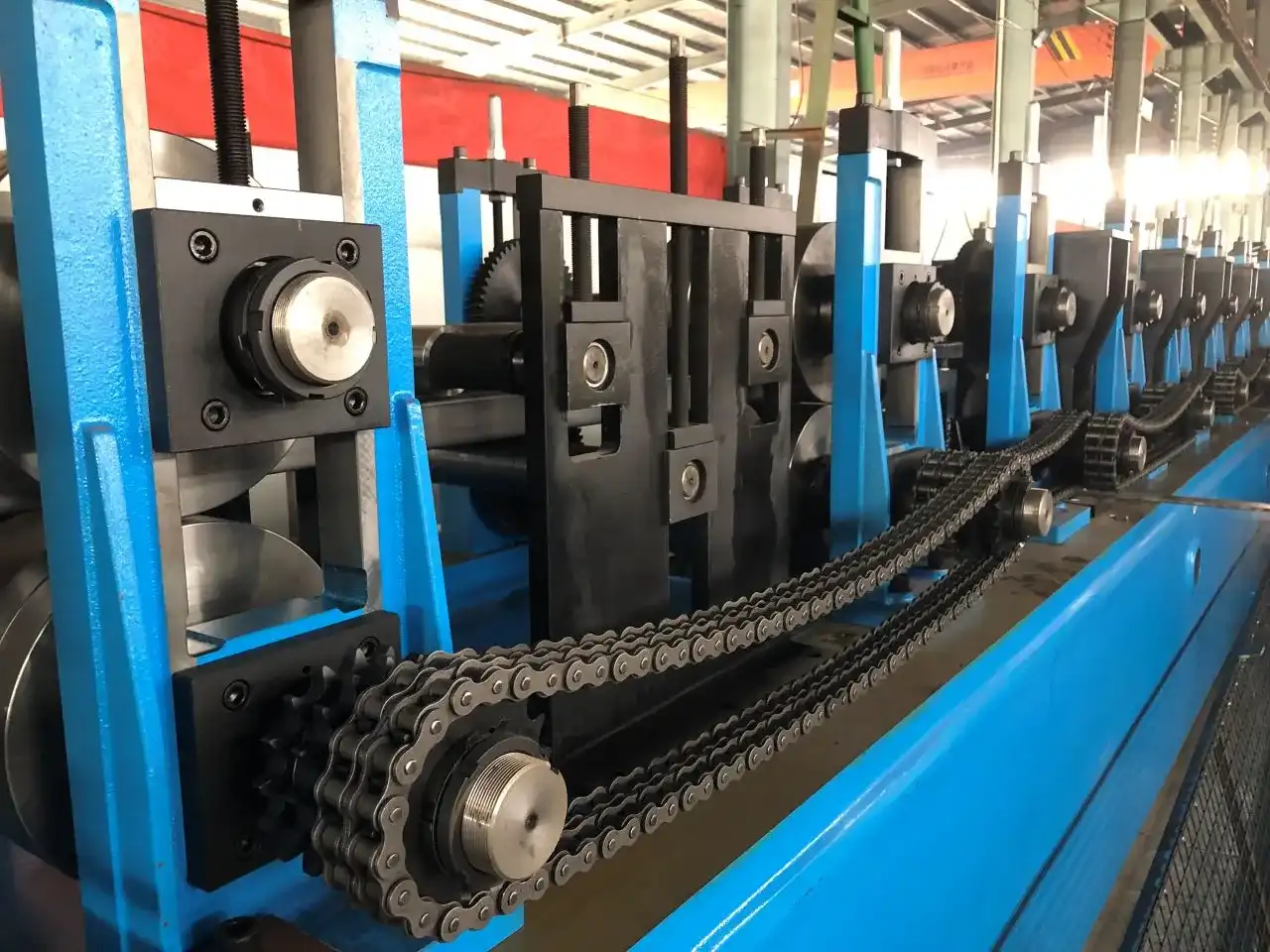
The frame, rollers, shafts, bearings, forming stations, decoiler capacity, servo feeder, punching tools, cutter, PLC functions, and safety guards should all be examined. Heavy frames made of H-steel assist to withstand vibration when the vehicle is under load, and ZTRFM provides both chain and gearbox transmissions, allowing you to coordinate the drive with your job cycle. Confirm the requirements for electrical power as well. The electricity that plants in the United States use is 60 Hz; thus, it is important to include both the voltage and the frequency when you are quoting. Additionally, evaluate the floor space, the storage of coils, and the processing of completed items. As a last step, enquire about the tolerances that your designed structures need, given that AISI S100 is the standard that controls the design of cold-formed steel members in North America.
Total Cost of Ownership
It is important that an estimate develop into a comprehensive cost picture that includes the following: tooling, installation, freight, insurance, customs, spare parts, electrical preparation, training, and support. The landed price of imports into the United States is subject to vary due to customs and port fees; thus, it is important to get a landed estimate. Punches, dies, cutting blades, bearings, sensors, and hydraulic seals are examples of consumables that should be counted. Additionally, it is important to request punching die sets and spare hole patterns at the beginning of the process. The decoiler, former, stacker, and replacement parts are all included in the whole package that ZTRFM provides. In order to keep equipment operating, our collaboration with Siemens enables cloud-based Internet of Things and artificial intelligence remote maintenance.
Purchasing Mistakes and Supplier Selection
Choosing the lowest price and discovering that tooling is missing are two examples of common blunders. Other examples include misunderstanding quoted speed with output, trusting imprecise interchangeability promises, and ignoring thickness limitations against the coil supply. Before you write your signature, be sure to write acceptance requirements for the dimensions, hole location, cutting precision, surface quality, safety, and continuous running measurements. The next step is to check the supplier by using videos of the machine, drawings, inspection records, trial production, and references from previous customers. ZTRFM was established in 2014 in Botou, Cangzhou. Aside from having ISO 9001, CE, and CAS certifications, the company also exports to more than 150 countries and provides OEM and ODM tooling along with non-disclosure agreements (NDAs) for section designs.
Conclusion
The better choice between semi-automatic and full-automatic purlin lines depends on measured returns, not on purchase price or rated speed. Labor, scrap, downtime, maintenance, and saleable output per shift determine profit, and a simple payback formula run under conservative and busy scenarios shows which option fits. Semi-automatic lines suit lower volumes and limited capital, while full automation pays back when volume is steady and labor is costly. A CZ purlin roll former adds value only when its changeover method, size range, and tooling match real orders. Landed cost, written acceptance standards, and supplier support complete the picture.
FAQ
1. When does full automation pay for itself?
Full automation pays back when your line runs several shifts and labor is a major cost. Use the payback formula with your own wages, volume, and scrap rates. If payback meets your target in a conservative scenario, automation is a sound choice.
2. Can one machine make both C and Z purlins?
Yes. A CZ purlin roll former forms both profiles on one machine base. Ask the supplier to confirm the size range, the changeover steps, and the changeover time in writing before you order.
3. What details should I send for an accurate quote?
Send profile drawings, steel type and thickness, coil width, hole patterns, finished lengths, target output, preferred automation level, voltage and frequency, and destination. These details let an engineer match the configuration to your orders and estimate landed cost.
Request a Customized CZ Purlin Roll Former ROI Proposal from ZTRFM
ZTRFM can compare semi-automatic and full-automatic options using your own numbers. Send your profile drawings, steel thickness, hole patterns, and target output to zhongtuorollforming@gmail.com, and our engineers will recommend a configuration. As a CZ purlin roll former manufacturer, we provide OEM tooling, servo punching options, and remote support.
References
1. North American Specification for the Design of Cold-Formed Steel Structural Members (AISI S100), 2016
2. Cold-Formed Steel Design, Wei-Wen Yu and Roger LaBoube, 2010
3. Roll Forming Handbook, George T. Halmos, 2005
4. Introduction to TPM: Total Productive Maintenance, Seiichi Nakajima, 1988
5. Metal Building Systems Manual, Metal Building Manufacturers Association, 2018
6. ISO 9001: Quality Management Systems – Requirements, 2015