- English
- French
- German
- Portuguese
- Spanish
- Russian
- Japanese
- Korean
- Arabic
- Irish
- Greek
- Turkish
- Italian
- Danish
- Romanian
- Indonesian
- Czech
- Afrikaans
- Swedish
- Polish
- Basque
- Catalan
- Esperanto
- Hindi
- Lao
- Albanian
- Amharic
- Armenian
- Azerbaijani
- Belarusian
- Bengali
- Bosnian
- Bulgarian
- Cebuano
- Chichewa
- Corsican
- Croatian
- Dutch
- Estonian
- Filipino
- Finnish
- Frisian
- Galician
- Georgian
- Gujarati
- Haitian
- Hausa
- Hawaiian
- Hebrew
- Hmong
- Hungarian
- Icelandic
- Igbo
- Javanese
- Kannada
- Kazakh
- Khmer
- Kurdish
- Kyrgyz
- Latin
- Latvian
- Lithuanian
- Luxembou..
- Macedonian
- Malagasy
- Malay
- Malayalam
- Maltese
- Maori
- Marathi
- Mongolian
- Burmese
- Nepali
- Norwegian
- Pashto
- Persian
- Punjabi
- Serbian
- Sesotho
- Sinhala
- Slovak
- Slovenian
- Somali
- Samoan
- Scots Gaelic
- Shona
- Sindhi
- Sundanese
- Swahili
- Tajik
- Tamil
- Telugu
- Thai
- Ukrainian
- Urdu
- Uzbek
- Vietnamese
- Welsh
- Xhosa
- Yiddish
- Yoruba
- Zulu
Roll Forming vs Press Brake: The 6-Metre Rule
The 6-metre rule is a quick screening guideline. When you make repeated roofing or wall panels longer than about six metres, roll forming usually beats a press brake. A trapezoidal sheet roll forming machine feeds coil continuously, cuts panels to length, and keeps the profile consistent. A press brake bends one sheet at a time and is limited by its bed length. Press brakes still win for short parts, flashing, and prototypes. Treat six metres as a starting filter, then check profile, material, volume, tolerance, and plant layout.
Roll Forming vs Press Brake: What Does the 6-Metre Rule Mean? The Rule in Plain Terms
Roll forming bends a steel or aluminium strip gradually through paired roller stations, so one pass produces a finished profile at any length. A press brake makes one bend at a time with a punch and die. Its bed length, commonly around 3 to 4 metres in general fabrication shops, limits panel size unless you add a longer or tandem machine. Six metres is roughly 20 feet, which sits close to common US custom panel lengths of 3 ft to 20 ft 10 in (about 0.9 to 6.35 metres). Beyond that range, handling a loose sheet becomes the bottleneck.
When Roll Forming Wins
A trapezoidal sheet roll forming machine pays off when panels are long, standardized, and ordered in volume. Think PBR, R-panel, and other exposed-fastener profiles for warehouses, barns, and low-rise commercial roofs. The coil loads once, so operators skip repeated sheet loading, squaring, and flipping. Dedicated rollers repeat the same rib height and pitch from the first panel to the thousandth. Wall cladding, fencing, and prefab housing envelopes follow the same logic. If one profile runs for hours every week, continuous forming usually lowers labour per panel compared with bending each sheet separately.
Where a Press Brake Still Fits
I would never tell a shop to drop its press brake. It handles short panels, prototypes, trim, closures, and flashing in small batches, and it changes geometry with a tool swap instead of a roller set. Many metal roofing shops run both machines: a roll former for the standard panels that bring in volume, and a brake for the custom pieces around them. That mix keeps the main line busy and the special orders flexible.
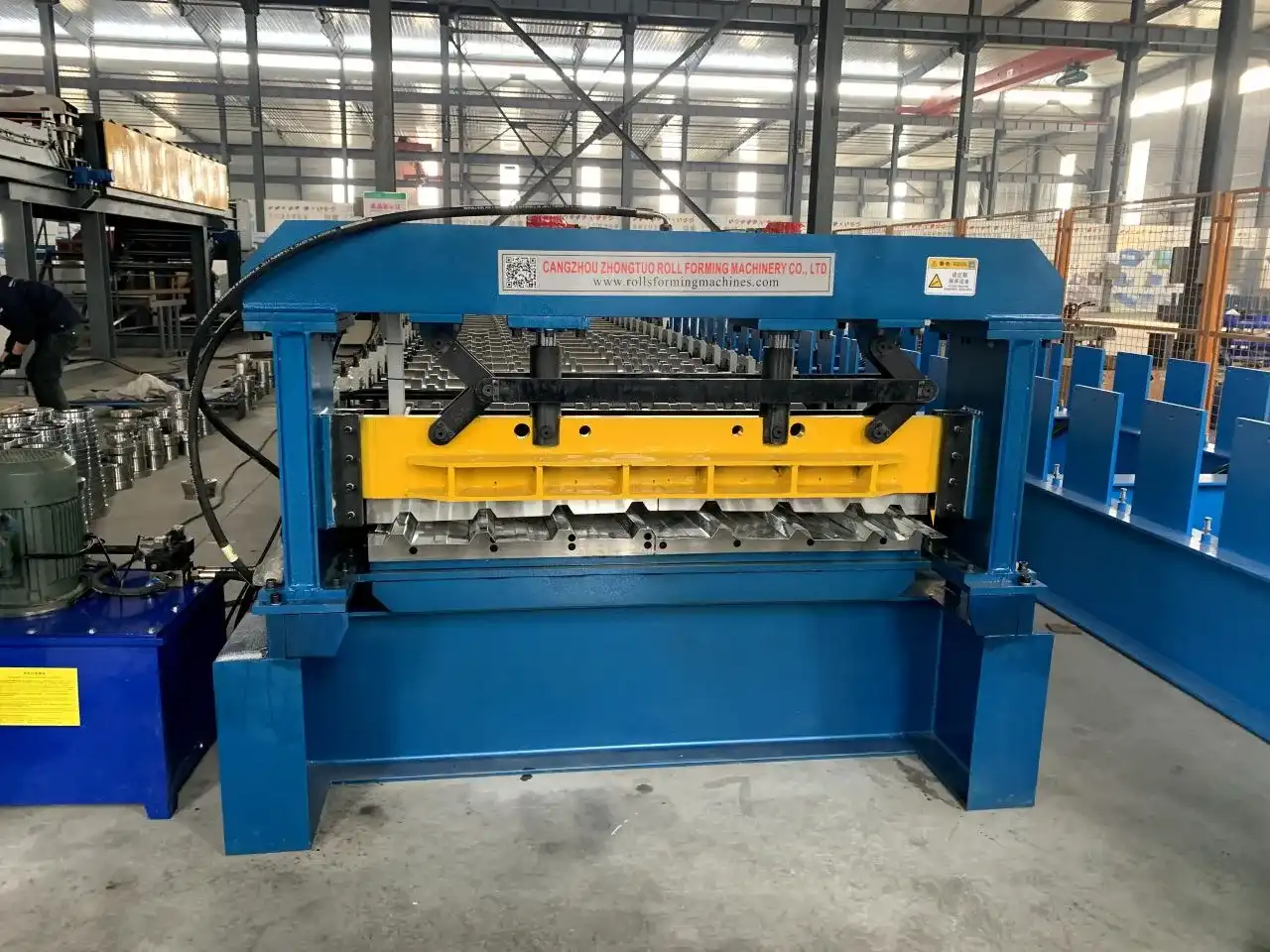
Trapezoidal Sheet Roll Forming Machine vs Press Brake: Technical Comparison
Output, Labour, and Speed
Rated forming speed alone can be misleading when evaluating a trapezoidal sheet roll forming machine. The ZTRFM line has a specified forming speed range of 0 to 60 metres per minute, but actual production output depends on factors such as panel length, material thickness, rib depth, coil weight, and the efficiency of sheet stacking and handling. Unlike a roll forming line, a press brake performs each bend in a separate stroke, and longer panels may require two operators for proper support and positioning. A flying shear allows the steel strip to continue moving during cutting, helping improve hourly output during continuous production runs. However, when manufacturing very short panels, cutting cycle times and stacking efficiency can become the main factors limiting overall productivity. Therefore, buyers should evaluate actual production capacity under their specific operating conditions rather than relying solely on the machine's rated speed.
Accuracy, Springback, and Surface Quality
Roll forming favours repeatability because hardened, chrome-plated rollers shape every rib the same way. The ZTRFM cutting tolerance is ±1 mm. Press brake accuracy depends on the operator, the back gauge, and tool wear across many bends, and springback needs compensation sheet by sheet. Surface care matters for PPGI. Polished rollers and correct alignment help prevent scratches, while edge wave and twisting usually point to alignment or coil problems. Check sample panels, nested stacks, and rib dimensions with calipers before you approve any machine.
Total Cost of Ownership
Purchase price is only one line item. Add tooling, decoiler capacity, scrap, energy, maintenance, downtime, and labour per panel. The ZTRFM line uses a 5.5 kW main motor and a 7.5 kW hydraulic station, a modest load for continuous production. A press brake may cost less upfront for a shop making short parts, but long panel runs add handling hours that never appear on the quotation. Compare cost per finished panel at your real monthly volume, not machine price alone.
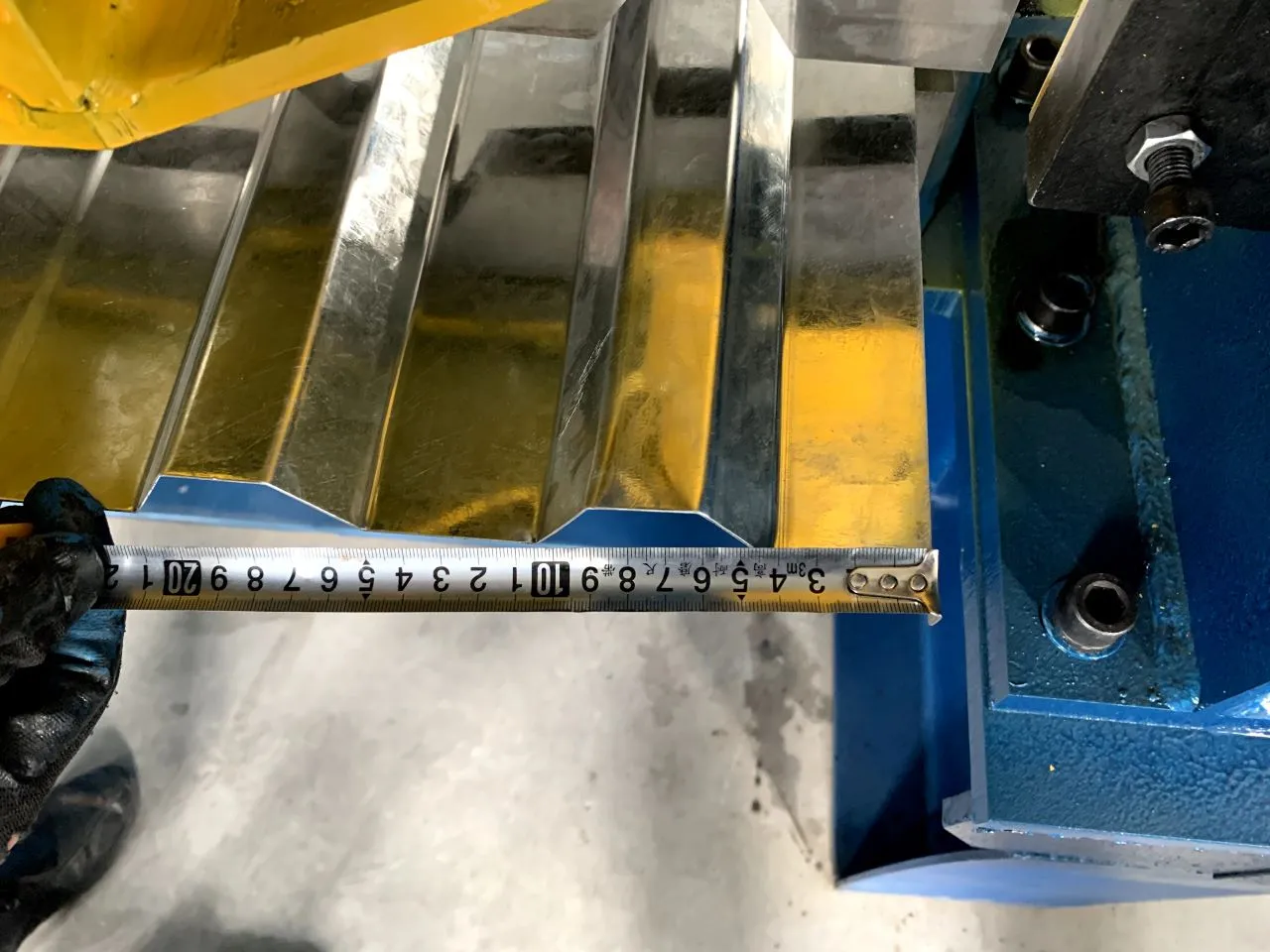
How a Trapezoidal Roof Sheet Roll Forming Machine Works
From Coil to Stacked Panel
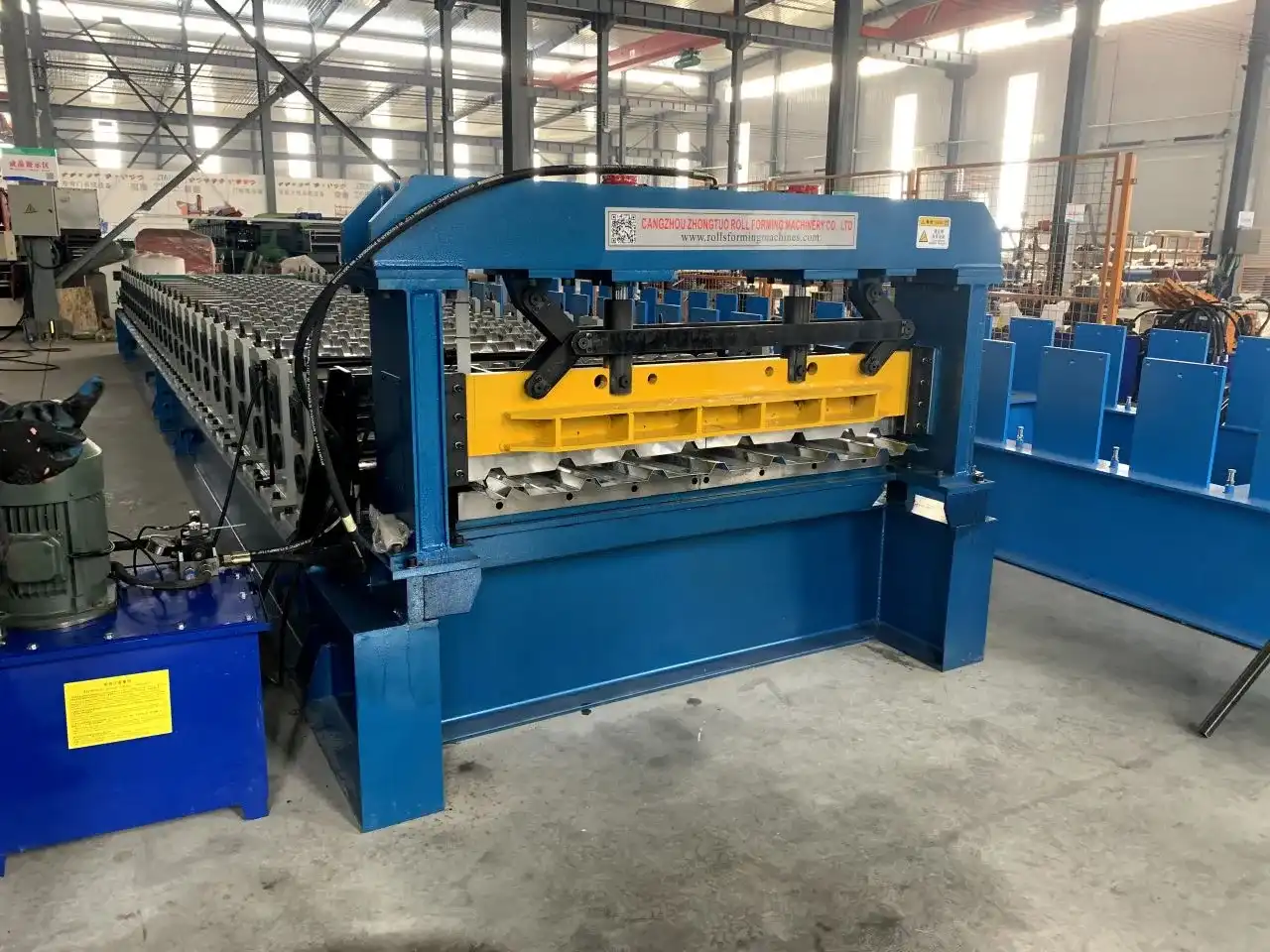
The line starts at the decoiler, and many ZTRFM models bundle a free manual decoiler. The strip passes through entry guides and a leveller, then through 26 roller stations that bend it step by step, which limits distortion and coating damage. A hydraulic flying shear cuts each panel while the strip keeps moving, and a run-out table carries the sheets to the stacking area. A stop-to-cut system halts the strip for every cut, which is simpler but slower. The Siemens PLC sets panel length and coordinates the hydraulic station.
Specifications to Request in a Quotation
A solid quotation lists material, thickness, width, stations, shaft, rollers, frame, motor, voltage, speed, and cutting details. Our trapezoidal sheet roll forming machine processes PPGI, GI, and aluminium from 0.3 to 1.0 mm, with 1000 mm or 1250 mm width options. It uses 26 roller stations, 80 mm solid shafts, 45# steel rollers with hard chrome plating, a 350 H steel frame, and a Cr12MoV cutting blade. Voltage is 380V, 50Hz, three-phase, and can be customized for your plant. Common US materials, such as 24 and 22 gauge steel and 0.032-inch aluminum, fall within the thickness range.
Single-Layer, Double-Layer, or Custom?
A single-layer machine suits one stable profile and simple operation. A double-layer design stacks two roller sets in one frame to save floor space, but it costs more and usually forms one profile at a time. Multi-profile shops can ask about quick-change cassette tooling to switch between profiles such as PBR and R-panel. OEM and ODM work covers non-standard widths, rib heights, thickness ranges, voltage, and integration with existing equipment. Send a sample panel or drawing, and our engineers can review whether your profile fits the line.
Supplier Evaluation, Decision Steps, and Maintenance
What to Check in a Supplier
Compare the scope of supply line by line: decoiler tonnage, spare roller sets, warranty, delivery terms, training, and testing. Then check the maker's history. Cangzhou Zhongtuo started in 2014 in Botou, Cangzhou, a hub for roll-forming machinery, and holds ISO 9001, CE, and CAS certifications. Its machines run in over 150 countries, and it is a national high-tech enterprise. Ask any supplier for a factory acceptance test and a pre-shipment trial-run video with your own coil, a request US buyers commonly make. Remote diagnostics through Siemens cloud IoT can shorten troubleshooting.
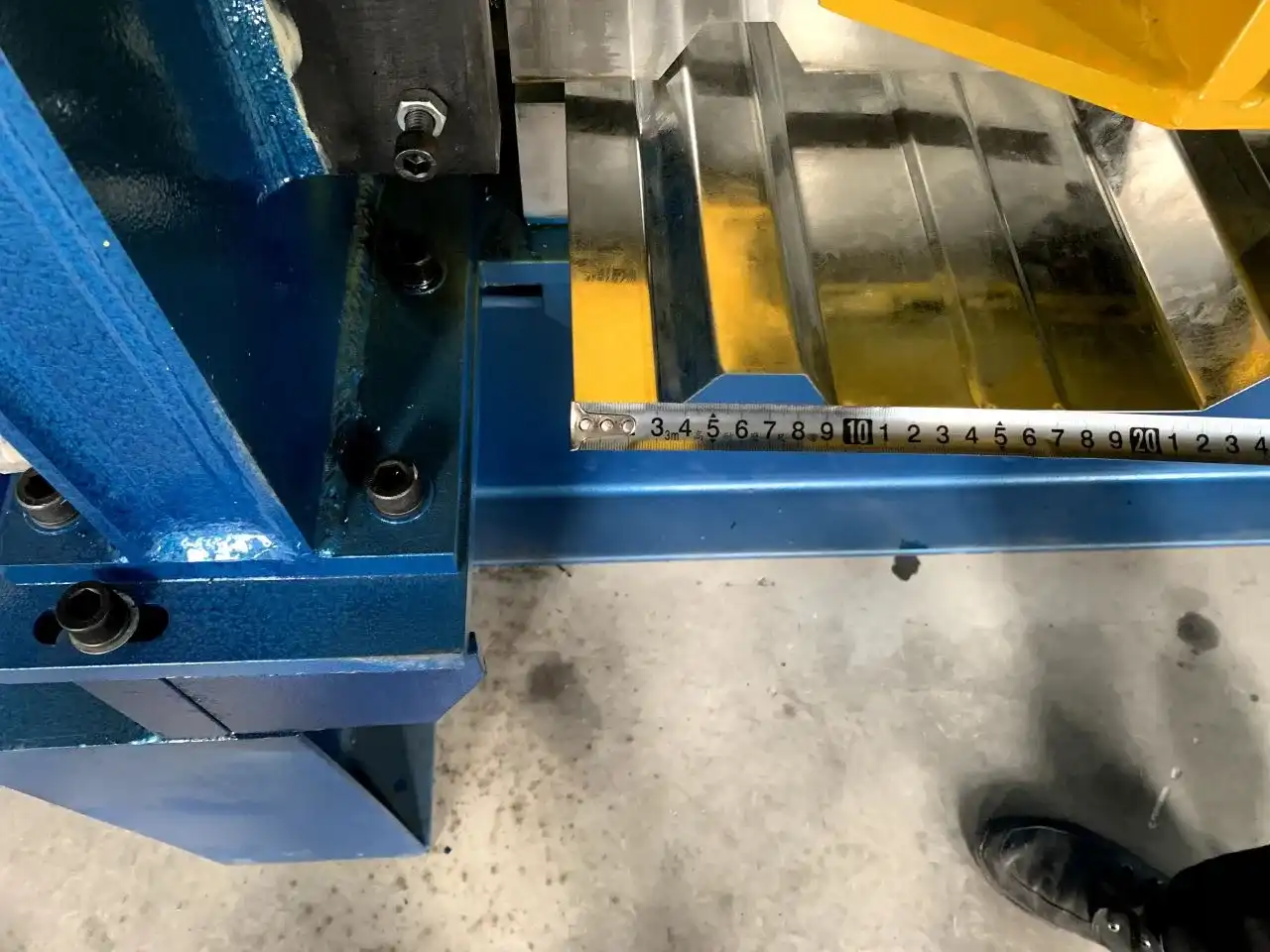
A Four-Step Decision Method
Step one: list monthly output, panel lengths, profiles, material grades, and tolerances. Step two: apply the six-metre filter. Repeated long panels point to roll forming, while short or irregular parts point to a press brake. Step three: add floor space, labour skills, changeover frequency, and maintenance resources to the cost picture. Step four: verify the choice with production samples, dimensional records, a speed check, and a surface inspection before you pay a deposit. This sequence turns a general rule into a decision you can defend to your finance team.
Daily Maintenance Habits
Clean the forming rollers, check guide alignment, inspect fasteners, watch the hydraulic oil level, and lubricate the specified points on a regular schedule. Check cutting blades for wear, since dull blades raise burrs. Keep electrical cabinets clean and dry, and stay within the approved material thickness and coil weight. When defects appear, match them to causes: edge wave often traces to alignment or coil flatness, wrong cut length to feeding slip, and scratches to debris on the rollers. Logging production conditions gives support engineers the facts they need to help quickly.
Conclusion
Roll forming and press braking each have a clear place. Six metres, about 20 feet, works as a first filter. Long, repeated, standardized trapezoidal roofing and wall panels favour a trapezoidal sheet roll forming machine, because the coil feeds continuously, the flying shear cuts to length, and hardened rollers repeat the same profile. Press brakes suit short, custom, low-volume, or complex parts and can run alongside a roll former. The comparison also showed that speed, accuracy, and total cost depend on thickness, profile, volume, and handling, not on purchase price alone. A sound decision confirms the quotation scope, tests samples, and plans maintenance before ordering.
FAQ
1. Is roll forming better for panels longer than six metres?
Usually yes for repeated profiles, because coil feeding avoids handling long loose sheets. Press brakes suit short or irregular parts. Check profile, volume, and tolerances before deciding.
2. Can one line cut different panel lengths?
Yes. The PLC and hydraulic shear cut to the length you set, with a ±1 mm tolerance. Panel length mainly affects handling and run-out table space.
3. Which materials can the machine process?
The specification covers PPGI, GI, and aluminium from 0.3 mm to 1.0 mm. Confirm your coil's exact thickness and coating before ordering.
4. What is the difference between flying and stop cut-off?
A stop cut halts the strip for every cut. A flying shear travels with the strip, so forming continues.
Request a Technical Evaluation
Send your profile drawing or sample panel, coil material and thickness, panel length, monthly output, and plant voltage to ZTRFM at zhongtuorollforming@gmail.com. As a trapezoidal sheet roll forming machine manufacturer founded in 2014 and certified to ISO 9001, CE, and CAS, we review your project, confirm the profile, and quote the full equipment scope in writing.
References
1. Roll Forming Handbook, 2005
2. Manufacturing Engineering and Technology, 2014
3. Fundamentals of Modern Manufacturing, 2020
4. Sheet Metal Forming Processes: Constitutive Modelling and Numerical Simulation, 2010
5. Metal Forming: Mechanics and Metallurgy, 2011
6. ASTM A653/A653M, 2022