- English
- French
- German
- Portuguese
- Spanish
- Russian
- Japanese
- Korean
- Arabic
- Irish
- Greek
- Turkish
- Italian
- Danish
- Romanian
- Indonesian
- Czech
- Afrikaans
- Swedish
- Polish
- Basque
- Catalan
- Esperanto
- Hindi
- Lao
- Albanian
- Amharic
- Armenian
- Azerbaijani
- Belarusian
- Bengali
- Bosnian
- Bulgarian
- Cebuano
- Chichewa
- Corsican
- Croatian
- Dutch
- Estonian
- Filipino
- Finnish
- Frisian
- Galician
- Georgian
- Gujarati
- Haitian
- Hausa
- Hawaiian
- Hebrew
- Hmong
- Hungarian
- Icelandic
- Igbo
- Javanese
- Kannada
- Kazakh
- Khmer
- Kurdish
- Kyrgyz
- Latin
- Latvian
- Lithuanian
- Luxembou..
- Macedonian
- Malagasy
- Malay
- Malayalam
- Maltese
- Maori
- Marathi
- Mongolian
- Burmese
- Nepali
- Norwegian
- Pashto
- Persian
- Punjabi
- Serbian
- Sesotho
- Sinhala
- Slovak
- Slovenian
- Somali
- Samoan
- Scots Gaelic
- Shona
- Sindhi
- Sundanese
- Swahili
- Tajik
- Tamil
- Telugu
- Thai
- Ukrainian
- Urdu
- Uzbek
- Vietnamese
- Welsh
- Xhosa
- Yiddish
- Yoruba
- Zulu
Gearbox vs. Chain Drive: Which Is Better for Heavy-Gauge Roll Formers?
When it comes to a heavy-gauge highway guardrail roll forming machine, a gearbox drive is often the superior option. It ensures that every forming shaft receives a consistent amount of torque, which enables the line to maintain its profile shape and hole location after extended shifts. In addition to having a cheaper initial cost, a chain drive is suitable for manufacturing workplaces that have strong maintenance habits, thinner steel, and lower production. The correct response is contingent on the thickness of the steel, the daily volume, the punching configuration, and the maintenance. In the following, I will compare the two methods, explain how each approach impacts the manufacturing of W-beams, and demonstrate how our 19-station gearbox-driven machine fits into the picture.
How the Two Drive Types Work and Perform The Power Path From Motor to Rollers
Power is sent from the primary motor of a roll former to the shafts that move the forming rollers. A speed reducer sits between the motor and the drive system. In a machine that is operated by a gearbox, the gear sets have a fixed engagement, which means that each station spins at a predetermined ratio. Instead, sprockets and roller chains are used in a machine that is powered by chains. This design is straightforward, and it is not difficult to locate replacement components. It is essential for chains to have the appropriate tension, consistent lubrication, and precise alignment. Poor tension, lubrication, or alignment can disrupt synchronization between stations. The fact that galvanised steel measuring between 2.0 and 4.0 millimetres pulls back against each roller pass is significant on a guardrail line.
Torque, Slippage, and Vibration
For thick steel, a high torque is required at a relatively slow line speed. Because our machine operates at speeds ranging from 6 to 10 meters per minute, torque is more important than peak speed. Meshing gear teeth transmit torque without the gradual elongation that occurs in a chain. Over time, the chain will get longer as a result of the wear that occurs at the pins and bushings of the chain. It is possible for a loose chain to result in vibration, additional noise, and uneven shaft speed. In addition, steel is dragged over a roller at an uneven speed, which might leave a mark on a zinc coating. A chain of the appropriate size can perform a variety of tasks, but it requires closer inspection when it is under severe stress. The amount of adjustment that a gearbox requires between service intervals is often lower.
Profile Accuracy and Punching Sync
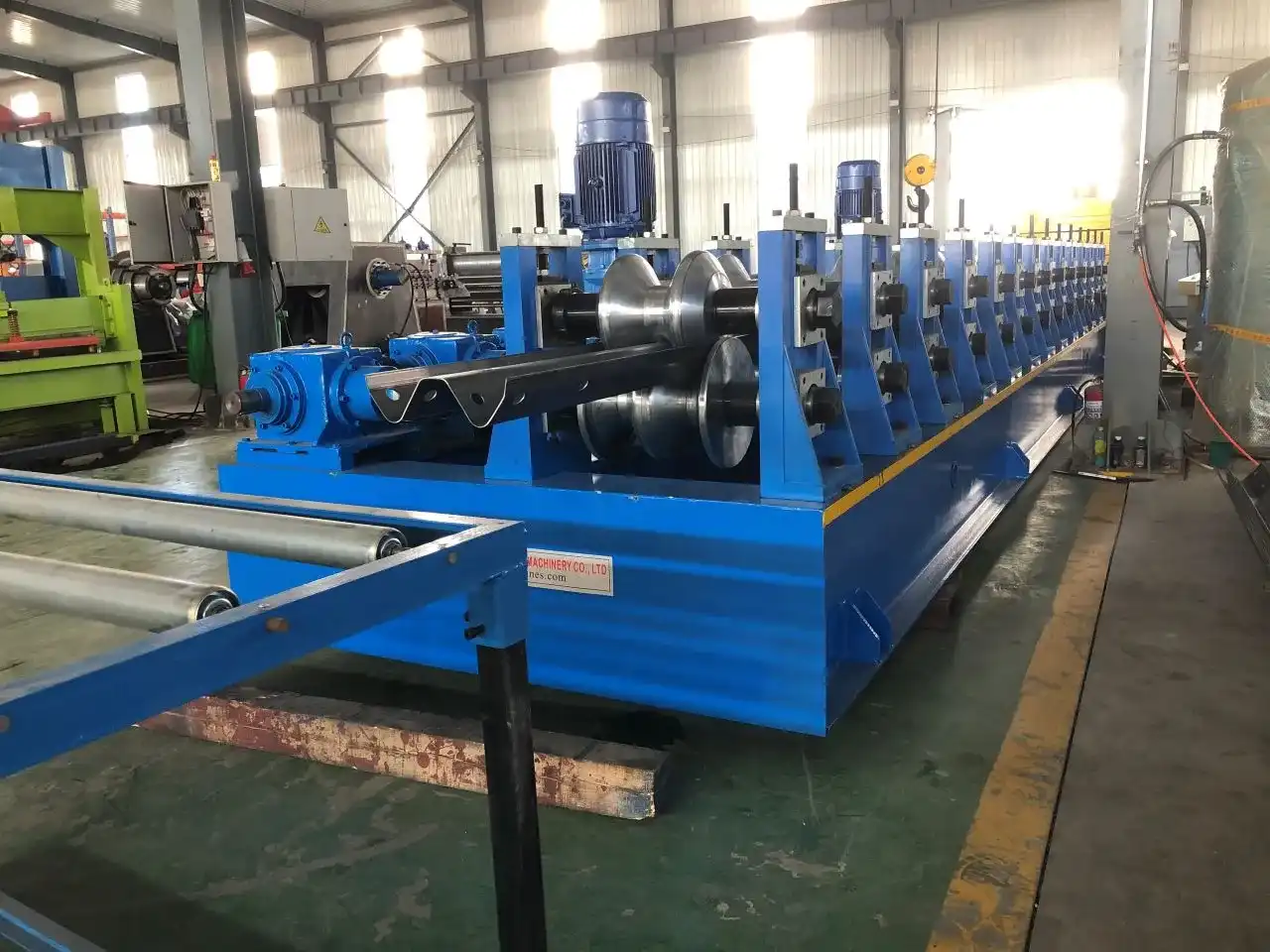
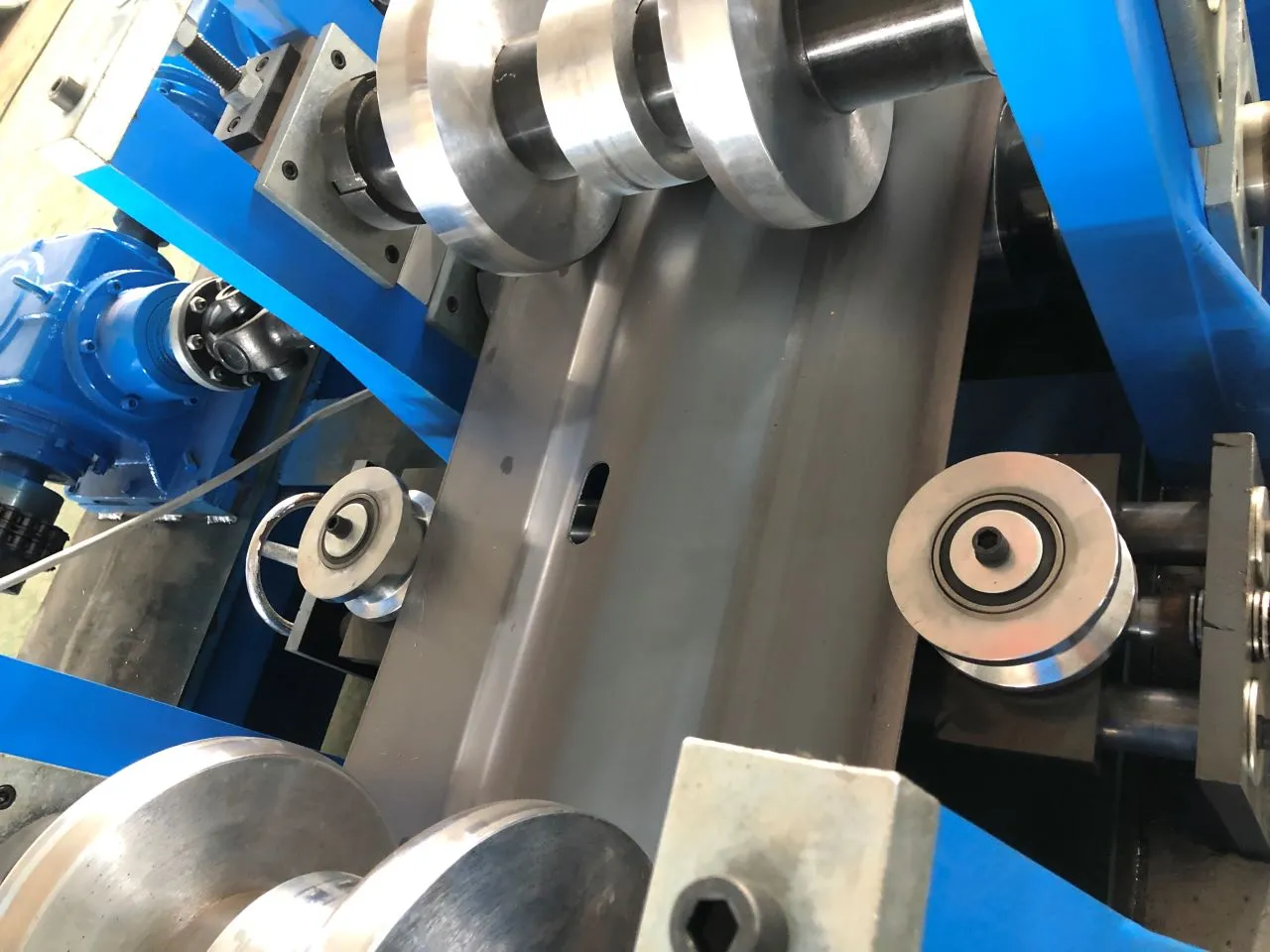
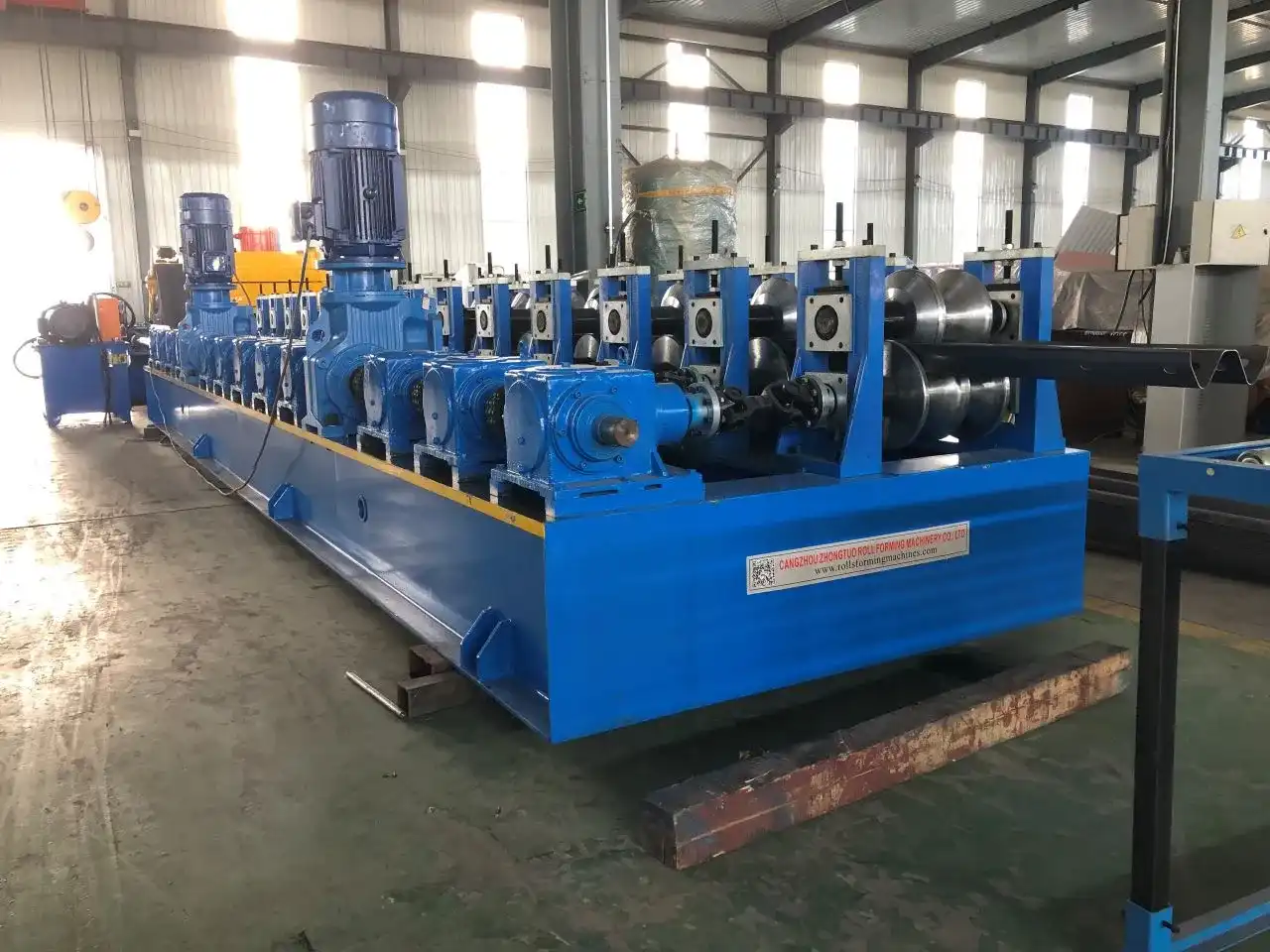
A stable shaft speed, a sturdy construction, and excellent tooling are the three factors that contribute to profile accuracy. The drive is only one factor in profile accuracy. GCr15 rollers that have been heat-treated are carried by our machine, which is equipped with 45# steel shafts that have been quenched and have a diameter of 100 mm. The alignment is maintained by a vertical frame made of cast iron and a body made of welded 400# H steel. HRB bearings are used to support the shafts. The gearbox ensures that all 19 stations continue to move in tandem, which provides the PLC with a more consistent line speed from which to operate while it is determining the timing of the hydraulic punch and shear. However, the location of the hole and the length of the cut are also affected by servo feeding, sensors, tooling wear, and coil straightness.
Maintenance, Cost, and Profile Fit
Maintenance and Service Life
Whether a highway guardrail roll forming machine uses gears or a chain, it needs regular maintenance. On a regular basis, a gearbox should have its oil changed, its seals and bearings inspected, and it should be monitored for heat, leaks, and strange noises. An increase in backlash, the play between gear teeth, can indicate wear. Frequent lubrication, tension adjustment, sprocket replacement, and alignment checks are all necessary maintenance and inspections for a chain. Elongation of the chain, rattling, and uneven formation are some of the warning signals that it exhibits. Chain parts are widely available, generally cost less, and can be replaced quickly. A gearbox requires a qualified hand and the appropriate oil, despite the fact that it is not done very often. Both the load and the quality of the lubricant, as well as the degree to which the crew adheres to the manual, are factors that determine the service life.
Energy Use and Total Cost of Ownership
Consider the energy consumption of the whole line rather than just the drive alone. The operating power of thirty kilowatts is one load. There is an increase in the total cost due to the hydraulic decoiler, punching press, shear, and standby time. Although the kind of drive might have a little impact on friction losses, other factors like line speed, idle time, and production planning can be just as significant. It is my recommendation that you compare the entire cost of ownership rather than the purchase price. Include the cost of replacement parts, lubricants, labour hours, downtime, and scrap from guardrails that do not meet specifications. During a large order, a chain machine that is less expensive may end up costing more in the long run if it pauses often. You should make sure that the production of your machine justifies the higher initial cost of a gearbox machine.
W-Beam vs. Thrie-Beam Requirements
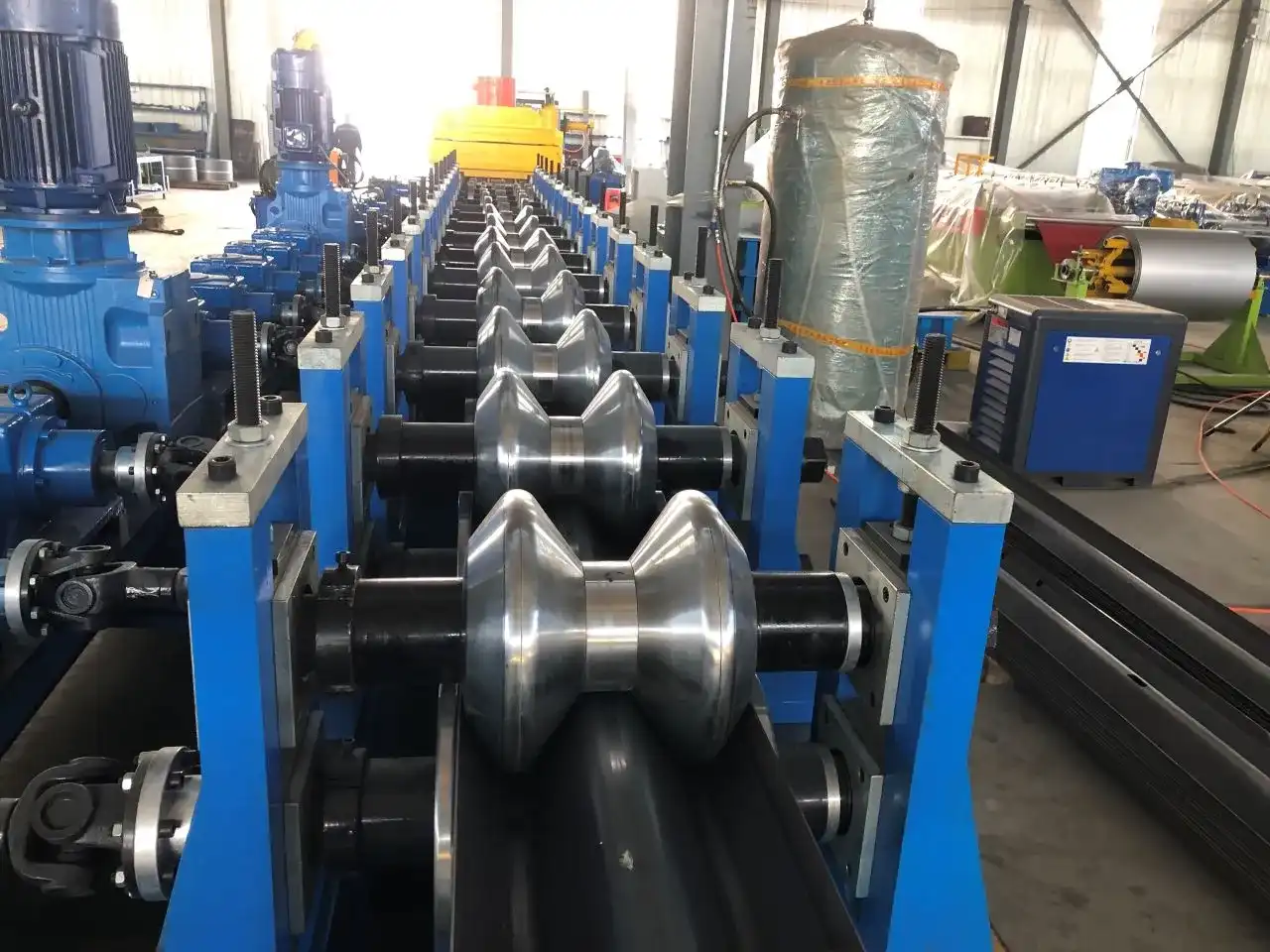
Corrugated sheet steel beams for highway guardrail are included in the scope of AASHTO M 180. In addition, W-beam and three-beam forms are included. Because it has three waves and a larger face, a three-beam requires a greater amount of power to create than a W-beam, which only has two waves. Using galvanised or hot-rolled steel, our machine creates two-wave W-beam guardrails with thicknesses ranging from 2.0 to 4.0 millimetres and widths ranging from 310 to 500 millimetres. My recommendation is to use a gearbox when punching inline, working with heavy W-beam steel, and at high volume. W-beam lines that are powered by chains may accommodate conventional profiles and have modest output. A gearbox is the most secure option for three-beam production; however, a chain that is adjusted well and maintained properly may still function.
Choosing the Right Drive for Your Guardrail Production Line
Automatic vs. Semi-Automatic Lines
An automatic line integrates the highway guardrail roll forming machine with a decoiler, leveller, hydraulic punch, cutter, and stacker. Because each component must function in tandem with the others, the drive stability is evaluated during each shift. Gearboxes are well-suited for certain kinds of continuous operations. The first step in our process is a hydraulic decoiler that can store between 5 and 10 tonnes of coil. Levelling, hydraulic punching for bolt and post holes, roll shaping, hydraulic or flying shear cutting, and an output table or stacker are the further processes that the strip goes through until it reaches its final destination. The production of a semi-automatic plant is lower, and the operator is more involved in the process. A chain drive may be useful in such a situation, provided that the crew checks the tension at the scheduled intervals.
What to Ask a Supplier Before You Buy
Request that each of the suppliers provide the same set of data so that it is simple to compare the prices. Please provide the following information: the steel grade and thickness range, the final profile drawing, the hole pattern, the cut-length tolerance, the motor power, the shaft diameter, the roller material, the bearing brand, and the drive type along with its ratio or chain size. Request information on the brands of PLCs and HMIs, hydraulic components, and electrical standards that are compatible with your facility, such as US voltage. You should also request foundation designs, manuals, spare-parts lists, training, and installation help. Additionally, you should request test videos, sample parts, and a factory acceptance test. The conditions of acceptance and the warranty coverage should be written down.
Our Two-Wave Machine Configuration
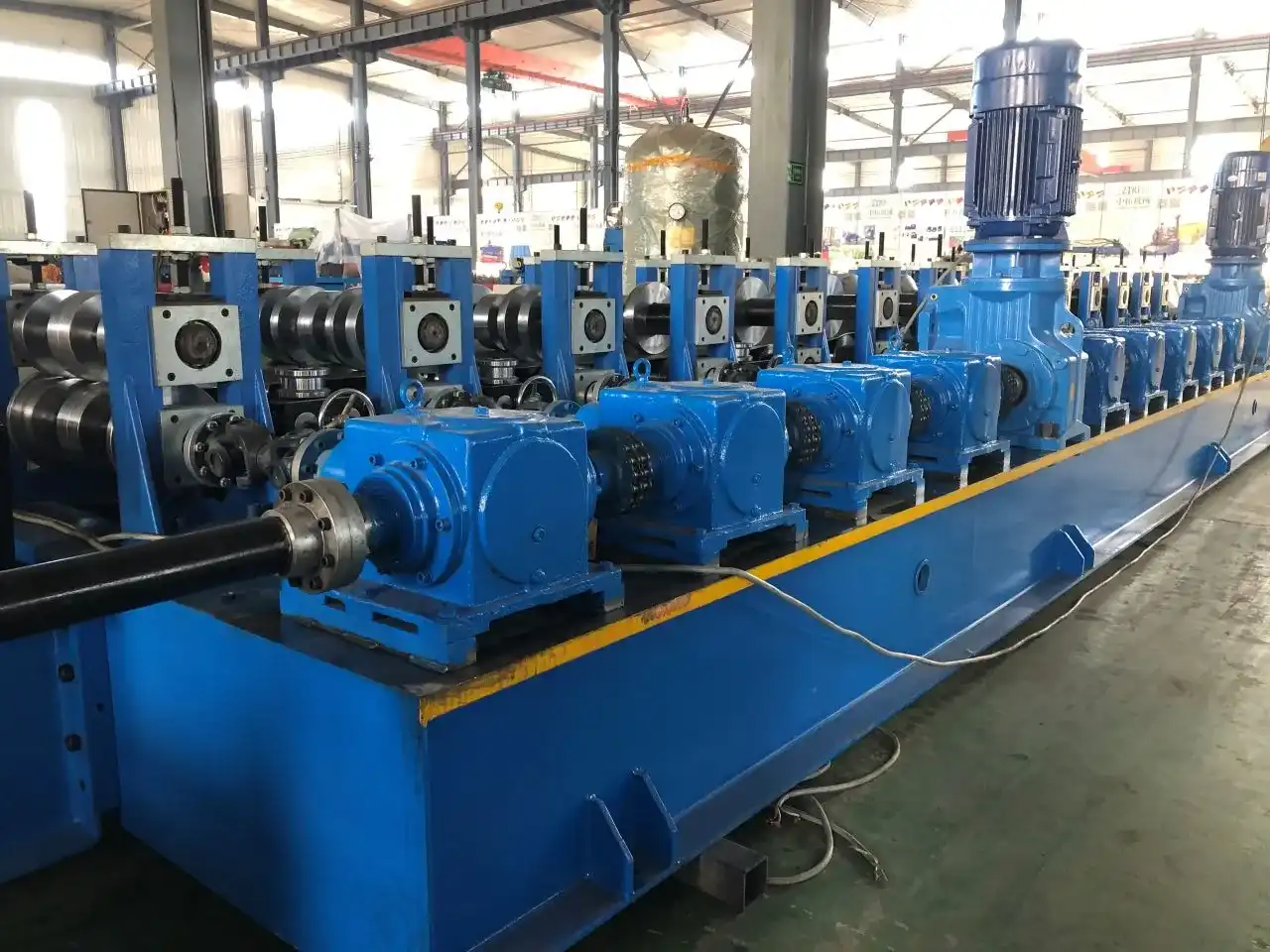
ZTRFM was founded in 2014 in Cangzhou, where it designs and builds cold roll forming machines. Our goods are certified to meet the standards of ISO9001, CE, and CAS, and they are exported to more than 150 countries. In addition to having 19 forming stations and a working capability of 30 kW, our two-wave guardrail machine is equipped with a gearbox. The cast iron vertical frame, welded 400# H steel body, and HRB bearings are the components that make up this device. It also has heat-treated GCr15 rollers and quenched 45# steel shafts measuring 100 mm in diameter. The length, punching, and cutting are all controlled by a PLC that has a touchscreen. We are able to alter the line to your designs in the event that you want certain hole patterns or characteristics that are local in nature. The cost is determined by factors such as the thickness, punching, cutting process, stacking, controls, shipping, and installation choices.
Conclusion
Both gearboxes and chain drives are capable of transmitting power from the motor to the forming rollers of a highway guardrail roll forming machine, but they respond differently under heavy loads. When it comes to thick galvanised steel, large volume, and automated lines with punching and cutting, gears are the ideal choice because they provide consistent torque with little adjustment time. Chains have a lower initial cost and are suitable for shops that maintain consistency in lubrication and tension checks, as well as shops with uniform profiles and modest production. The purchase price is just one component of the total cost of ownership; components like maintenance, energy consumption, and replacement parts are also included. Different forming forces are required for W-beam and three-beam profiles; thus, while making a decision, thickness and output objectives should be taken into consideration. While working with heavy-gauge guardrails, the gearbox is the more robust option by default.
FAQ
1. Is a gearbox always better for heavy-gauge steel?
Not always, but a gearbox is generally preferable for continuous production with thick galvanised steel. In the event that it is sized appropriately and kept on schedule, a chain is capable of functioning at a modest output.
2. Does the drive affect punching accuracy?
Yes, to a certain extent. When the punch and cutter are being timed, the PLC is provided with a steady drive that provides a consistent line speed. Other factors that are important include servo control, tooling, sensors, and coil straightness.
3. What are the main specifications of your machine?
It is equipped with 19 stations, a working power of 30 kW, gearbox transmission, and a working speed of between 6 and 10 meters per minute.
4. Can you build the line to my guardrail drawings?
Yes. We can customize the line to match your drawings. The profile drawing, the steel grade, the thickness, the coil size, and the production goal should be provided.
Request a Drive-System Recommendation for Your Guardrail Line
Provide ZTRFM with information on your profile drawing, the steel grade, the thickness, the coil size, and the daily output. Our team can recommend a drive, punching method, and line layout for your plant. Please send an email to zhongtuorollforming@gmail.comto discuss a highway guardrail roll forming machine for your production needs. In addition to providing warranty servicing, we also provide testing, installation, and operator training.
References
1. Roll Forming Handbook, 2005
2. Shigley's Mechanical Engineering Design, 2020
3. Machinery's Handbook, 2020
4. Roadside Design Guide (AASHTO), 2011
5. Manufacturing Engineering and Technology, 2014
6. Fundamentals of Machine Component Design, 2012