- English
- French
- German
- Portuguese
- Spanish
- Russian
- Japanese
- Korean
- Arabic
- Irish
- Greek
- Turkish
- Italian
- Danish
- Romanian
- Indonesian
- Czech
- Afrikaans
- Swedish
- Polish
- Basque
- Catalan
- Esperanto
- Hindi
- Lao
- Albanian
- Amharic
- Armenian
- Azerbaijani
- Belarusian
- Bengali
- Bosnian
- Bulgarian
- Cebuano
- Chichewa
- Corsican
- Croatian
- Dutch
- Estonian
- Filipino
- Finnish
- Frisian
- Galician
- Georgian
- Gujarati
- Haitian
- Hausa
- Hawaiian
- Hebrew
- Hmong
- Hungarian
- Icelandic
- Igbo
- Javanese
- Kannada
- Kazakh
- Khmer
- Kurdish
- Kyrgyz
- Latin
- Latvian
- Lithuanian
- Luxembou..
- Macedonian
- Malagasy
- Malay
- Malayalam
- Maltese
- Maori
- Marathi
- Mongolian
- Burmese
- Nepali
- Norwegian
- Pashto
- Persian
- Punjabi
- Serbian
- Sesotho
- Sinhala
- Slovak
- Slovenian
- Somali
- Samoan
- Scots Gaelic
- Shona
- Sindhi
- Sundanese
- Swahili
- Tajik
- Tamil
- Telugu
- Thai
- Ukrainian
- Urdu
- Uzbek
- Vietnamese
- Welsh
- Xhosa
- Yiddish
- Yoruba
- Zulu
Purlin Machine for Steel Building Contractors: What to Buy
The best purlin machine for steel building contractors matches your profiles, steel gauge, and order mix. If you produce both C and Z sections, a CZ purlin roll former is usually the most practical choice because one line covers wall girts and lapped roof purlins. Confirm your profile drawings, galvanized material grade, hole patterns, and output target before you compare prices. In this guide, I walk through the specifications, automation levels, supplier checks, and costs that matter, so you can request a precise quotation.
Start With Your Production Needs and Profile Choice Define Your Steel Building Production Requirements
Before I compare any machine, I write down what the line must produce. List the building types you serve, such as warehouses, workshops, mezzanines, or solar mounting frames. Then record the C and Z dimensions, steel grade, thickness, coil width, and monthly volume. Our line forms profile heights of 40–100 mm with typical structural gauges of 1.0–3.5 mm, so check your sections against those limits. Also separate rated speed from real output. A line rated at 15–22 m/min still loses time to coil changes, punching, cutting, and maintenance. Send approved drawings and hole layouts early, because the manufacturer uses them to size tooling, motor power, and frame.
C Purlin vs. Z Purlin: Which Section Fits the Job
C purlins suit wall girts, openings, and simple bolted connections. Z purlins are common in roof systems because they overlap at the supports, which creates continuous spans and adds stiffness over the lap. The structural design decides which section you need, so follow the engineer's drawings rather than a catalog name. Check web depth, flange width, lip size, and hole spacing for every section. In the United States, cold-formed members follow AISI S100, so your engineer of record should confirm that the finished profile matches the calculated section properties.
When a CZ Purlin Roll Former Makes Sense
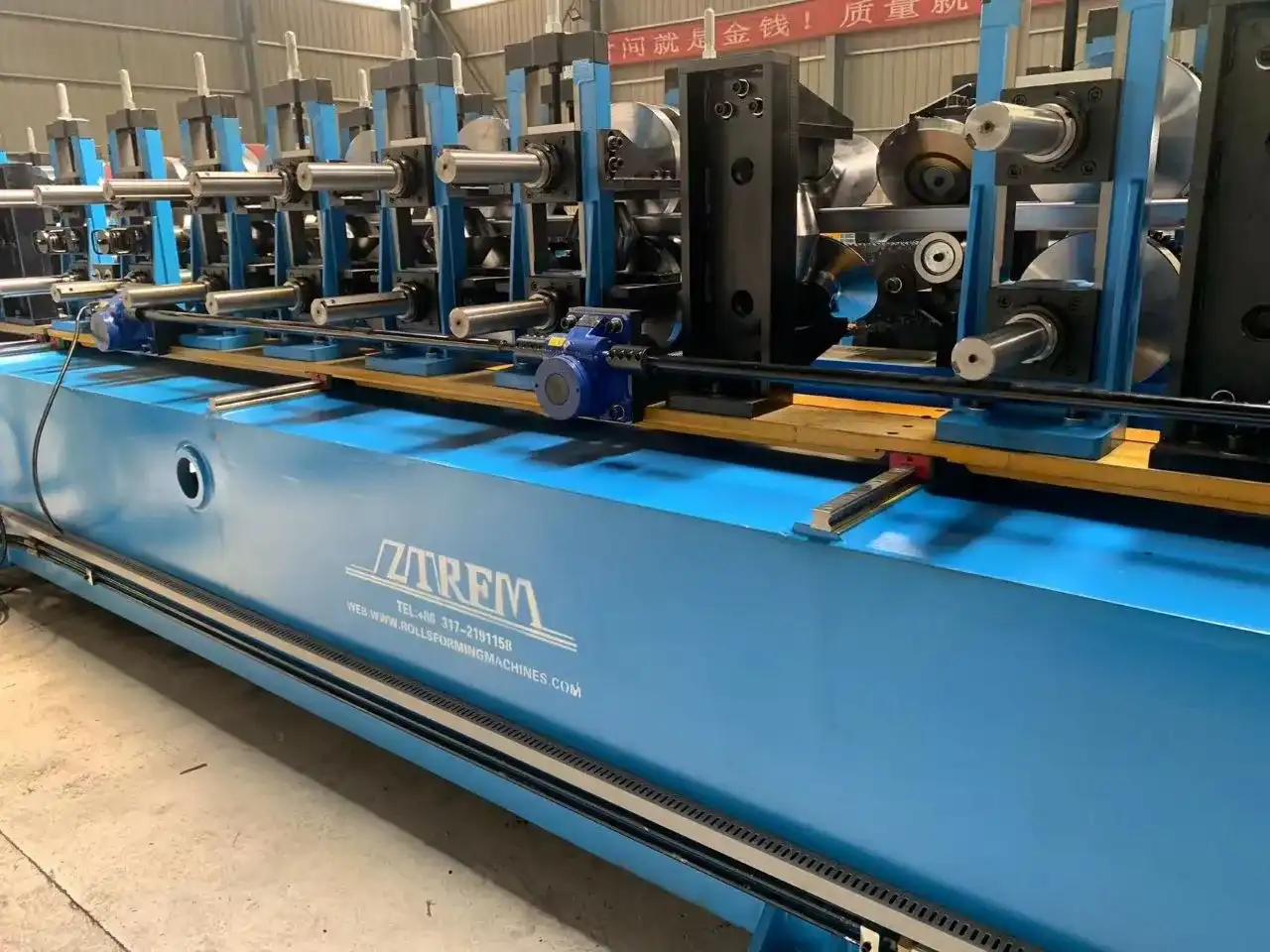
A CZ purlin roll former produces both C and Z sections on one machine base, so you avoid buying two separate lines. ZTRFM's CZ combined quick-change head lets a crew switch from C to Z within one shift, which suits fabricators with mixed orders. The trade-off is added mechanical complexity. Ask how the changeover works, how long it takes on your size range, and what tooling you must store. If you make only one profile all year, a dedicated C or Z machine costs less and stays simpler to maintain.
How a Purlin Roll Forming Line Works and What to Compare
Working Principle and Main Components
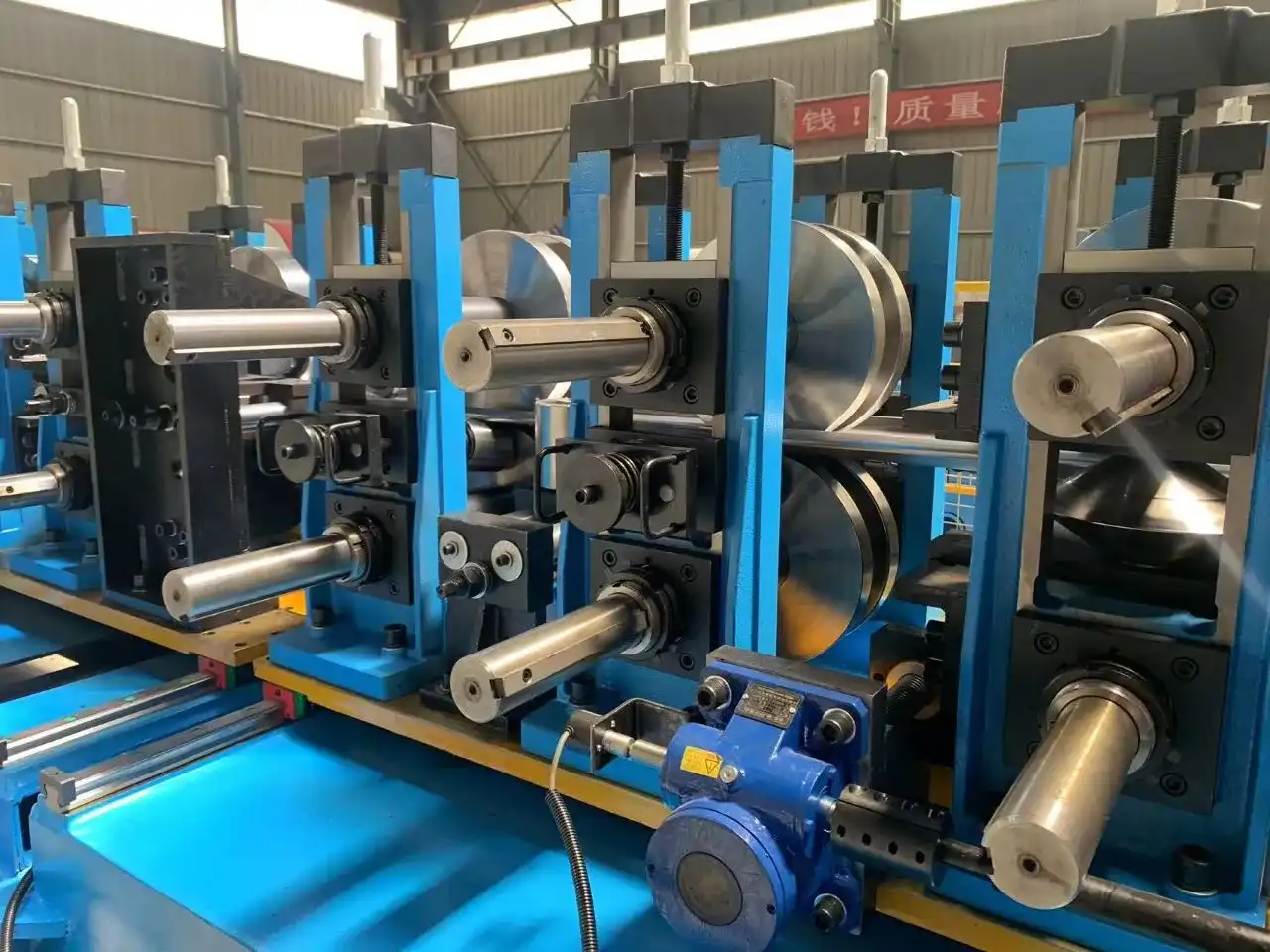
A CZ purlin roll former transforms galvanized steel coils into finished C- or Z-shaped purlins through a coordinated series of production stages. The decoiler feeds the steel strip into the line, while guiding and leveling systems help maintain proper alignment before the forming stations gradually shape the material. Depending on the machine configuration, the punching unit creates bolt holes, the cutting system trims each purlin to the required length, and the run-out table collects the finished products. A computerized control system coordinates production speed, piece counting, punching patterns, and equipment alarms. Consistent product quality depends on frame rigidity, roller design, and reliable control system integration. Our equipment uses GCr15 bearing steel for key shaft components, taking advantage of its hardness and wear resistance, while heavy-duty H-steel frames help maintain structural stability and alignment during operation.
Automatic vs. Semi-Automatic Operation
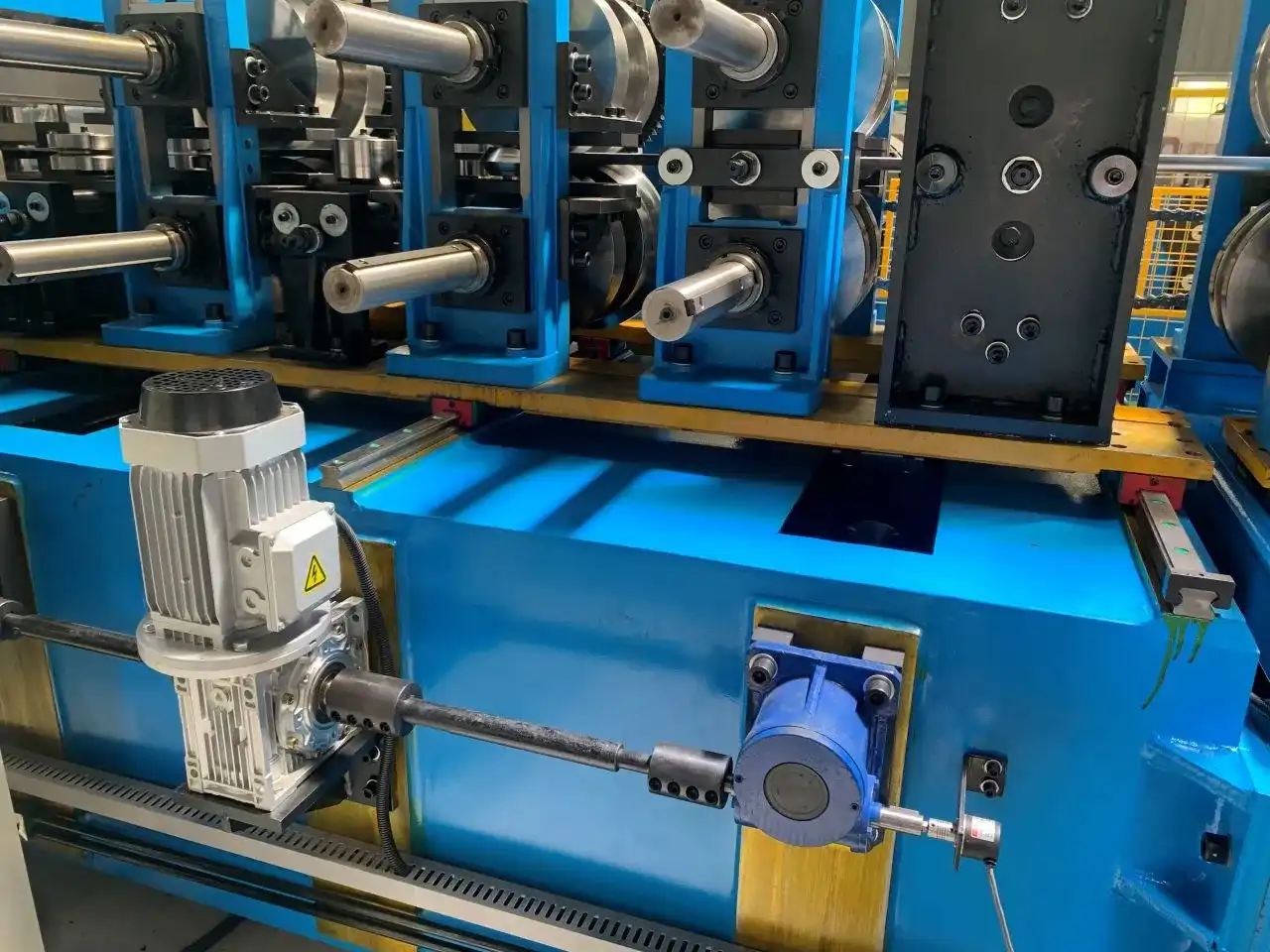
Automatic operation suits contractors who run daily or multiple shifts. With computer control, the line coordinates feeding, punching, forming, cutting, length measurement, and batch counting, so one operator can supervise more of the process. A semi-automatic machine needs more manual setup and handling, yet it may fit a smaller shop with project-based orders. Compare total cost of ownership, not only the invoice, and include commissioning, training, energy, spare parts, and labor. The ZTRFM line uses a servo motor as the main power. Servo punching is available as an option when hole accuracy and output matter most.
Technical Specifications to Compare Before You Request a Quote
Give every supplier the same data sheet so the quotes compare fairly. Ask for thickness range, steel grade, coil width, profile size, rated speed, installed power, and voltage. Galvanized coil is usually specified under ASTM A653, so state the coating designation you plan to run. US plants use 60 Hz power, so confirm voltage and frequency in writing, and ask how the electrical panel addresses standards such as NFPA 79. Compare chain and gearbox drives, since each has different maintenance needs; ZTRFM offers both. Request punching tolerances, a spare die set, and extra hole patterns, because these items decide how fast you can answer new orders.
Choose the Right Supplier, Budget, and Customization
How to Choose a Purlin Roll Former Manufacturer
Judge a supplier on engineering, testing, and service, not only the lowest price. Ask for drawings, electrical schematics, hydraulic diagrams, sample profiles, and acceptance procedures. Confirm who designs the tooling and whether the factory test run uses your section. ZTRFM was founded in 2014 in Botou, Cangzhou, China's roll forming machinery hub. We hold ISO 9001, CE, and CAS certifications and ship machines to more than 150 countries. Yanshan University backs our section engineering, and our cooperation with Siemens supports cloud IoT and AI remote maintenance. Ask any supplier how it handles installation, training, warranty, and spare parts.
Price and Total Ownership Cost
The price of a CZ purlin roll former depends on several factors, including profile flexibility, supported material thickness, production speed, automation level, punching methods, cutting systems, and tooling requirements. Buyers should request an itemized quotation covering the decoiler, roll forming machine, punching dies, cutting unit, control system, run-out table, spare parts, packaging, and shipping terms. Beyond the initial equipment price, additional costs may include freight, import duties, foundation preparation, electrical connections, operator training, and potential production downtime. Although purchasing a used production line may reduce upfront investment, missing technical drawings, worn rollers, and outdated control systems can increase maintenance expenses and delay production. Evaluating the total cost of ownership rather than the purchase price alone can help buyers make more informed investment decisions.
Customization for Different Steel Building Projects
Steel building projects vary, so ask what the machine can adjust. ZTRFM supplies adjustable sizes and builds profile-to-order OEM and ODM tooling, including sigma, omega, and hat sections. Hole-pattern programming covers different bolting layouts. If your designs are confidential, request an NDA on section tooling before you share drawings. Larger plants can order a full production line with decoiler, former, stacker, and spare parts. More flexibility adds tooling cost and complexity, so match each option to approved CAD drawings and a real order forecast.
Match the Machine to Your Business and Finish With a Checklist
Recommended Choice by Buyer Type
Contractors and fabricators with steady projects usually do best with an automatic CZ purlin roll former that offers stable output and fast changeover. Smaller shops with one dominant profile may choose a semi-automatic dedicated machine. Service centers selling cut-to-length sections need repeatable hole patterns and spare die sets. Prefab building manufacturers and solar framing producers should check galvanized coating compatibility and hole accuracy. Equipment traders typically want standard C/Z lines with punching and clear spare-part lists. Wholesale buyers should request chain versus gearbox options, frame grade, and motor power in writing.
ZTRFM C/Z Purlin Making Machine at a Glance
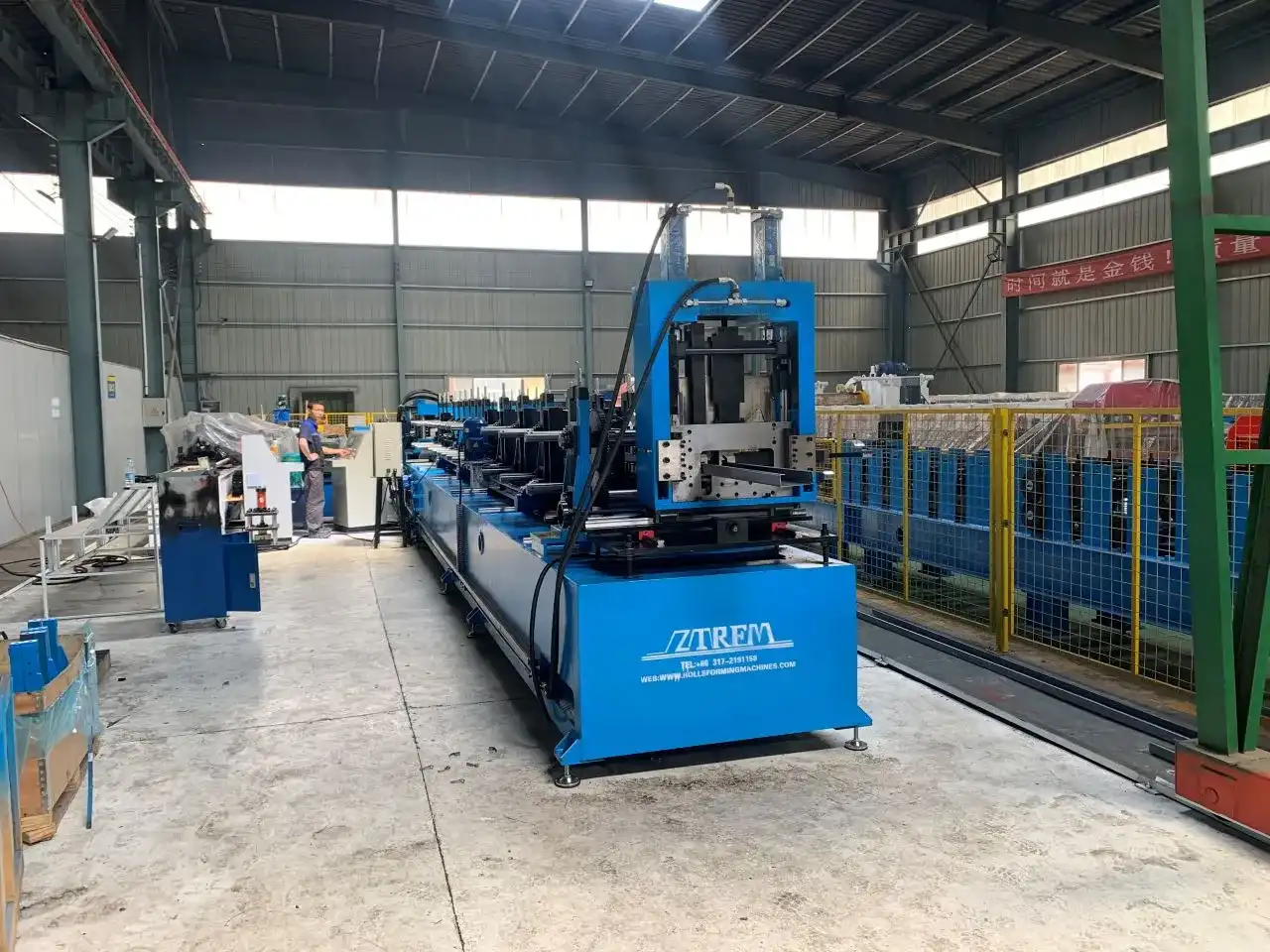
Here is what our C/Z purlin making machine offers, so you can hold it against other quotes. The line forms galvanized steel at 15–22 m/min with adjustable sizes and profile heights of 40–100 mm. GCr15 shafts carry the forming rollers, a servo motor supplies main power, and computer control runs automatic operation. Typical gauge covers 1.0–3.5 mm structural steel, with inline punching for bolt holes. These specifications fit warehouse, workshop, mezzanine, and solar-farm framing.
Final Buying Checklist
Before you sign, confirm the technical and commercial points in writing. Technical items include approved drawings, steel grade, thickness, coil size, speed, output, punching pattern, cutting tolerance, roller and shaft material, control system, and safety guarding that meets OSHA machine guarding rules. Commercial items include machine configuration, accessories, payment terms, delivery date, Incoterms, packing, installation, training, warranty, and spare parts. Request a factory acceptance test with your profile, and check reference projects. ZTRFM has supplied clients such as Tata Group, DS Group, and HADDAD SET.
Conclusion
The right purlin machine starts with your own profiles, steel grade, and order mix. C and Z purlins serve different structural roles, so a CZ purlin roll former suits contractors who make both, while a dedicated machine fits single-profile production. Quality depends on frame rigidity, roller and shaft material, punching accuracy, and control, and automatic operation fits steady, multi-shift output. Comparing quotes against identical specifications, with itemized tooling, spare parts, and shipping terms, reveals the true ownership cost. Supplier checks on drawings, factory testing, certification, and service support, plus a written checklist, reduce purchasing risk. Matching these factors to your production plan leads to a sound equipment choice.
FAQ
1. What does a CZ purlin roll former do?
It forms both C and Z purlins from galvanized coil on one machine base, with inline punching for bolt holes.
2. How fast does the ZTRFM line run?
Line speed is 15–22 m/min. Real output depends on coil changes, punching, cutting, and setup time.
3. What thickness can the machine handle?
Typical structural gauge is 1.0–3.5 mm. Confirm your steel grade and profile size with us before ordering.
4. What information do you need for a quote?
Send profile drawings, steel grade, thickness, hole patterns, target output, and your voltage and frequency.
Request a CZ Purlin Roll Former Quote from ZTRFM
Ready to compare options? ZTRFM, a CZ purlin roll former manufacturer in Botou, Cangzhou, builds C/Z purlin making machines with servo power, GCr15 shafts, and computer control, backed by ISO 9001, CE, and CAS certification. Email your profile drawings, steel grade, and output target to zhongtuorollforming@gmail.com, and our engineers will recommend a suitable configuration.
References
1. North American Specification for the Design of Cold-Formed Steel Structural Members (AISI S100), American Iron and Steel Institute, 2016
2. ASTM A653/A653M, Standard Specification for Steel Sheet, Zinc-Coated (Galvanized) or Zinc-Iron Alloy-Coated (Galvannealed) by the Hot-Dip Process, ASTM International, 2020
3. Metal Building Systems Manual, Metal Building Manufacturers Association, 2018
4. Cold-Formed Steel Design, 5th Edition, Wei-Wen Yu, Roger A. LaBoube, and Helen Chen, Wiley, 2020
5. NFPA 79, Electrical Standard for Industrial Machinery, National Fire Protection Association, 2021
6. Roll Forming Handbook, George T. Halmos, CRC Press, 2005